
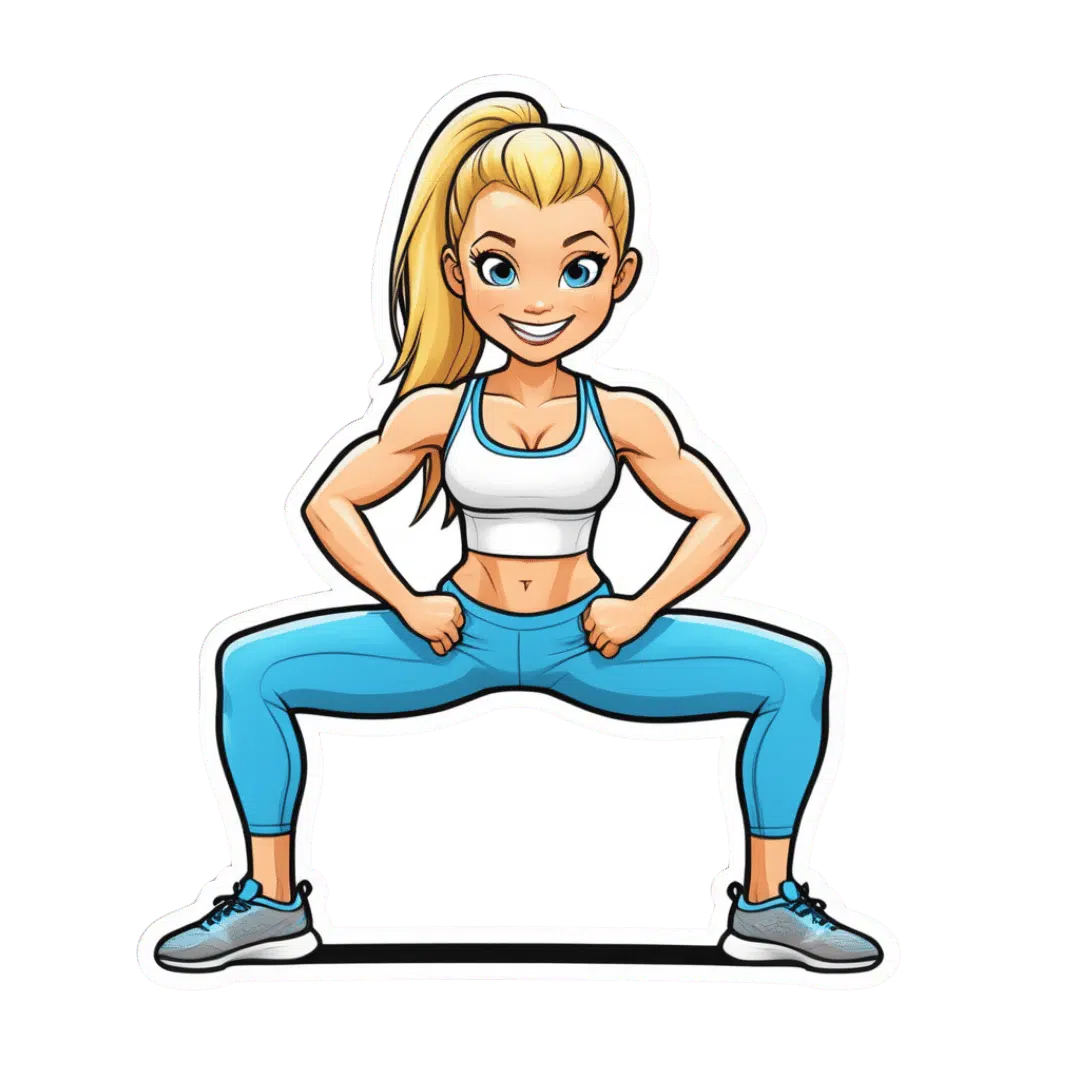
Two Unusual Moves For Pelvic Health

10almonds is reader-supported. We may, at no cost to you, receive a portion of sales if you purchase a product through a link in this article.

Dr. Brianne Grogan explains:

Get ready for it…

At the very least, the visuals she recommends are indeed unusual:

  • “Blueberry picking mini squats” involve squatting back as if sitting into a chair while relaxing the pelvic floor muscles. As you rise, exhale and engage the pelvic floor by visualizing “plucking a blueberry” with the muscles around your vagina and anus. We’ll be honest; we’re not convinced she’s ever picked blueberries. However, the movement shown not only activates the pelvic floor but also works the glutes and deep abs. The focus is on coordinating breath, muscle release on the way down, and gentle contraction on the way up.
  • “Smoothie kegels” use the imagery of sucking a thick smoothie up a straw to guide the pelvic floor muscles into a slow, strong lift. Hold the “suck” for 5–10 seconds, then fully release and imagine the smoothie flowing back down as you relax and open the pelvic floor. This exercise allows a focus on both the contraction and the complete relaxation, and can be performed while sitting, standing, or lying down—with a small ball or rolled towel under you to help enhance awareness and blood flow to the area.

A fascinating set of imagery indeed.

For more on all of this, plus visual demonstrations (no blueberries or straws involved), see:

Click Here If The Embedded Video Doesn’t Load Automatically!

Want to learn more?

You might also like:

Pelvic Floor Exercises (Not Kegels!) To Prevent Urinary Incontinence

Take care!

Don’t Forget…

Did you arrive here from our newsletter? Don’t forget to return to the email to continue learning!

Learn to Age Gracefully

Join the 98k+ American women taking control of their health & aging with our 100% free (and fun!) daily emails:

  • Saunas: Health Benefits (& Caveats)

    10almonds is reader-supported. We may, at no cost to you, receive a portion of sales if you purchase a product through a link in this article.

    The Heat Is On

    In Tuesday’s newsletter, we asked you your (health-related) opinion on saunas, and got the above-depicted, below-described, set of responses:

    • About 53% said it is “a healthful activity with many benefits”
    • About 25% said it is “best avoided; I feel like I’m dying in there”
    • About 12% said “it feels good and therefore can’t be all bad”

    So what does the science say?

    The heat of saunas carries a health risk: True or False?

    False, generally speaking, for any practical purposes. Of course, anything in life comes with a health risk, but statistically speaking, your shower at home is a lot more dangerous than a sauna (risk of slipping with no help at hand).

    It took a bit of effort to find a paper on the health risks of saunas, because all the papers on PubMed etc coming up for those keywords were initially papers with “reduces the risk of…”, i.e. ways in which the sauna is healthy.

    However, we did find one:

    ❝Contraindications to sauna bathing include unstable angina pectoris, recent myocardial infarction, and severe aortic stenosis.

    Sauna bathing is safe, however, for most people with coronary heart disease with stable angina pectoris or old myocardial infarction.

    Very few acute myocardial infarctions and sudden deaths occur in saunas, but alcohol consumption during sauna bathing increases the risk of hypotension, arrhythmia, and sudden death, and should be avoided. ❞

    ~ Dr. Matti Hannuksela & Dr. Samer Ellahham

    Source: Benefits and risks of sauna bathing

    So, very safe for most people, safe even for most people with heart disease, but there are exceptions so check with your own doctor of course.

    And drinking alcohol anywhere is bad for the health, but in a sauna it’s a truly terrible idea. As an aside, please don’t drink alcohol in the shower, either (risk of slipping with no help at hand, and this time, broken glass too).

    On the topic of it being safe for most people’s hearts, see also:

    Beneficial effects of sauna bathing for heart failure patients

    As an additional note, those who have a particular sensitivity to the heat, may (again please check with your own doctor, as your case may vary) actually benefit from moderate sauna use, to reduce the cardiovascular strain that your body experiences during heatwaves (remember, you can get out of a sauna more easily than you can get out of a heatwave, so for many people it’s a lot easier to do moderation and improve thermoregulatory responses):

    Passive heat therapy: a promising preventive measure for people at risk of adverse health outcomes during heat extremes

    Sauna usage can bring many health benefits: True or False?

    True! Again, at least for most people. As well as the above-discussed items, here’s one for mortality rates in healthy Finnish men:

    Sauna bathing and mortality risk: unraveling the interaction with systolic blood pressure in a cohort of Finnish men

    Not only that, also…

    ❝The Finnish saunas have the most consistent and robust evidence regarding health benefits and they have been shown to decrease the risk of health outcomes such as hypertension, cardiovascular disease, thromboembolism, dementia, and respiratory conditions; may improve the severity of musculoskeletal disorders, COVID-19, headache and flu, while also improving mental well-being, sleep, and longevity.

    Finnish saunas may also augment the beneficial effects of other protective lifestyle factors such as physical activity.

    The beneficial effects of passive heat therapies may be linked to their anti-inflammatory, cytoprotective and anti-oxidant properties and synergistic effects on neuroendocrine, circulatory, cardiovascular and immune function.

    Passive heat therapies, notably Finnish saunas, are emerging as potentially powerful and holistic strategies to promoting health and extending the healthspan in all populations. ❞

    ~ Dr. Jari Laukkanen & Dr. Setor Kunutsor

    Source: The multifaceted benefits of passive heat therapies for extending the healthspan: A comprehensive review with a focus on Finnish sauna

    (the repeated clarification of “Finnish sauna” is not a matter of fervent nationalism, by the way, but rather a matter of disambiguating it from Swedish sauna, which has some differences, most notably a lack of steam)

    That reminds us: in Scandinavia, it is usual to use a sauna naked, and in Finland in particular, it is a common social activity amongst friends, coworkers, etc. In the US, many people are not so comfortable with nudity, and indeed, many places that provide saunas, may require the wearing of swimwear. But…

    Just one problem: if you’re wearing swimwear because you’ve just been swimming in a pool, you now have chlorinated water soaked into your swimwear, which in the sauna, will become steam + chlorine gas. That’s not so good for your health (and is one reason, beyond tradition and simple normalization, for why swimwear is usually not permitted in Finnish saunas).

    Want to read more?

    You might like our previous main feature,

    Turning Up The Heat Against Diabetes & Alzheimer’s ← you guessed it, sauna may be beneficial against these too

    Take care!

    Share This Post

  • Owning Your Menopause: Fitter, Calmer, Stronger in 30 Days –  by Kate Rowe-Ham

    10almonds is reader-supported. We may, at no cost to you, receive a portion of sales if you purchase a product through a link in this article.

    Likely written in response to the popularity of “Thinner, Leaner, Stronger”, this book has different goals: being fitter, calmer, and stronger.

    Which, at the end of the day, must surely be an improvement. While society certainly wants us (women in general, and at least some men) to be thinner and leaner, it’s not always what’s best for us, whereas fitter and calmer? It’s hard to go wrong with that.

    Much of the book is given over to detailing the processes involved in menopause, and the ways in which changes can be managed with diet, exercise, and other lifestyle interventions. For example, the author herself quit alcohol partially because she knew it was sabotaging her hormone metabolism (amongst many other things, of course). She also recommends HRT and discusses it in depth, but notes that there are some exceptions, details those too, and leaves us to make our own decisions in consultation with our own medical providers.

    The “30 days” in the subtitle refers to an exercise plan and meal plan, and yes, the latter includes recipes. The recipes themselves are a little on the basic side for this reviewer’s taste, but then, perhaps that leaves room for personalization, so it is not so bad.

    You’ll notice that we haven’t talked a lot about “calmer”, the reason is that neither does she; it’s mostly a recurrent theme presented as a result of following the other advices, and thus getting to better health in a stress-free fashion. She does discuss recovery and sleep, though.

    The style is light pop-science, as one might expect from someone who is a personal trainer by career, not a research scientist or medical doctor. The author is British, so you will see spellings such as “oestrogen”, but we’ll trust this is not an insurmountable barrier to understanding.

    Bottom line: if you are navigating menopause and want to stay healthy (or maybe even level up your health and fitness), this book can help with that.

    Click here to check out Owning Your Menopause, and get fitter, calmer, and stronger in 30 days!

    Share This Post

  • Can Reflexology Shoes Improve Your Focus?

    10almonds is reader-supported. We may, at no cost to you, receive a portion of sales if you purchase a product through a link in this article.

    It’s Q&A Day at 10almonds!

    Have a question or a request? We love to hear from you!

    In cases where we’ve already covered something, we might link to what we wrote before, but will always be happy to revisit any of our topics again in the future too—there’s always more to say!

    No question/request too big or small 😎

    ❝What about shoes with insoles for reflexology, like the new ones with neuroscience claims. Are they legit?❞

    First, a disclaimer-laden answer: probably by “legit” you mean “do they work to improve brain function?”, but it’s hard to uncouple “legit” from “legitimate” in the litigious sense. So, we will say, we are but a humble health science publication, and cannot comment on the legality of any company’s products or claims.

    We can comment on more concrete scientific questions though, such as: does the evidence support claims that such shoes improve brain function?

    In which case, the answer is: no

    What you have to bear in mind is how a lot of companies will make claims that are technically true (for legal reasons) but functionally meaningless (in any practical sense that most readers would read it).

    For example, let’s look at one such example that’s been making headlines lately, perhaps it’s even what you saw. It’s Nike’s new “neuroscience-based footwear”, which they describe with such statements as:

    Nike is launching a new type of shoe designed to help athletes lock in their mindset pre- and post-competition.

    The Mind 001 and Mind 002 are the first neuroscience-based footwear from Nike that tap into the mind-body connection by activating sensory receptors in the feet.

    Nike is introducing its first neuroscience-based footwear: two mind-altering silhouettes designed to help athletes lock in their mindset before and after competition. Scientifically shown to activate key sensory areas of the brain via underfoot stimulation, the Nike Mind 001 mule and Mind 002 sneaker deepen an athlete’s awareness, helping ground them in their bodies and bring them back to the present moment.

    Source: Nike Debuts its First Neuroscience-Based Footwear to Help Athletes Feel Calm, Focused and Present

    These sound like strong claims, but let’s break it down a little:

    designed to help athletes lock in their mindset pre- and post-competition

    When this writer was small, she designed a pair of shoes to help her walk on water (there were shoe-sized pieces of wood attached under them, on the basis that wood floats).

    Were they designed to help our intrepid writer to walk on water? Yes, they were. That was literally what they were designed to do.

    Did they actually enable her to walk on water? No, they did not.

    So, always watch out for such phrases as “designed to”, “intended to”, “aimed at helping”, and so forth.

    Now, as for…

    Scientifically shown to activate key sensory areas of the brain via underfoot stimulation

    That’s a fair claim! But it’s also not what it might seem like. The reality is, anything that you can experience will activate key sensory areas in the brain. If it didn’t, then you wouldn’t experience it, because how could you, if it didn’t activate the relevant sensory areas in your brain?

    And so on, with various other true claims.

    Can they help anything?

    Yes! Shoes are very relevant things for our health.

    For example, shoes with “zero-drop”, i.e. with no incline/decline, and the inside sole of the foot is parallel to the floor (so, not like the featured image for this article, which are by no means high heels, but you can see the heel is raised more than the toes, and there’s a gradient between the two, as is common in most “flat” shoes that aren’t really flat), support good foot health for most people, and foot health is indeed the foundation of a lot of other good health, much like if your car tires are bad, the rest of your car won’t stay in good condition for long.

    We wrote about the zero-drop issue here: Steps For Keeping Your Feet A Healthy Foundation

    …which is consistent with such science as: Foot strike patterns and collision forces in habitually barefoot versus shod runners

    However, some other things are less evidence-based, for example:

    Are Grounding Mats Grounded In Good Science?

    …and:

    Reflexology: What The Science Says

    Want to learn more?

    You might also like:

    The Foot Book – by Dr. Todd Brennan & Dr. Leslie Johnston

    Take care!

    Share This Post

  • Syphilis Is Killing Babies. The U.S. Government Is Failing to Stop the Disease From Spreading.

    10almonds is reader-supported. We may, at no cost to you, receive a portion of sales if you purchase a product through a link in this article.

    ProPublica is a Pulitzer Prize-winning investigative newsroom. Sign up for The Big Story newsletter to receive stories like this one in your inbox.

    Karmin Strohfus, the lead nurse at a South Dakota jail, punched numbers into a phone like lives depended on it. She had in her care a pregnant woman with syphilis, a highly contagious, potentially fatal infection that can pass into the womb. A treatment could cure the woman and protect her fetus, but she couldn’t find it in stock at any pharmacy she called — not in Hughes County, not even anywhere within an hour’s drive.

    Most people held at the jail where Strohfus works are released within a few days. “What happens if she gets out before I’m able to treat her?” she worried. Exasperated, Strohfus reached out to the state health department, which came through with one dose. The treatment required three. Officials told Strohfus to contact the federal Centers for Disease Control and Prevention for help, she said. The risks of harm to a developing baby from syphilis are so high that experts urge not to delay treatment, even by a day.

    Nearly three weeks passed from when Strohfus started calling pharmacies to when she had the full treatment in hand, she said, and it barely arrived in time. The woman was released just days after she got her last shot.

    Last June, Pfizer, the lone U.S. manufacturer of the injections, notified the Food and Drug Administration of an “impending stock out” that it anticipated would last a year. The company blamed “an increase in syphilis infection rates as well as competitive shortages.”

    Across the country, physicians, clinic staff and public health experts say that the shortage is preventing them from reining in a surge of syphilis and that the federal government is downplaying the crisis. State and local public health authorities, which by law are responsible for controlling the spread of infectious diseases, report delays getting medicine to pregnant people with syphilis. This emergency was predictable: There have been shortages of this drug in eight of the last 20 years.

    Yet federal health authorities have not prevented the drug shortages in the past and aren’t doing much to prevent them in the future.

    Syphilis, which is typically spread during sex, can be devastating if it goes untreated in pregnancy: About 40% of babies born to women with untreated syphilis can be stillborn or die as newborns, according to the CDC. Infants that survive can suffer from deformed bones, excruciating pain or brain damage, and some struggle to hear, see or breathe. Since this is entirely preventable, a baby born with syphilis is a shameful sign of a failing public health system.

    In 2022, the most recent year for which the CDC has data available, more than 3,700 babies were infected with syphilis, including nearly 300 who were stillborn or died as infants. More than 50% of these cases occurred because, even though the pregnant parent was diagnosed with syphilis, they were never properly treated.

    That year, there were 200,000 cases identified in the U.S., a 79% increase from five years before. Infection rates among pregnant people and babies increased by more than 250% in that time; South Dakota, where Strohfus works, had the highest rates — including a more than 400% increase among pregnant women. Statewide, the rate of babies born with the disease, a condition known as congenital syphilis, jumped more than 40-fold in just five years.

    And that was before the current shortage of shots.

    In Mississippi, the state with the second highest rate of syphilis in pregnant women, Dr. Caroline Weinberg started having trouble this summer finding treatments for her clinic’s patients, most of whom are uninsured, live in poverty or lack transportation. She began spending hours each month scouring medicine suppliers’ websites for available doses of the shots, a form of penicillin sold under the brand name Bicillin L-A.

    “The way people do it for Taylor Swift, that’s how I’ve been with the Bicillin shortage,” Weinberg said. “Desperately checking the websites to see what I can snag.”

    The shortage is driving up infection rates even further.

    In a November survey by the National Coalition of STD Directors, 68% of health departments that responded said the drug shortage will cause syphilis rates in their area to increase, further crushing the nation’s most disadvantaged populations.

    “This is the most basic medicine,” said Meghan O’Connell, chief public health officer for the Great Plains Tribal Leaders’ Health Board, which represents 18 tribal communities in South Dakota and three other states. “We allow ourselves to continue to not have enough, and it impacts so many people.”

    ProPublica examined what the federal government has done to manage the crisis and the ways in which experts say it has fallen short.

    The government could pressure Pfizer to be more transparent.

    Twenty years ago, there were at least three manufacturers of the syphilis shot. Then Pfizer, one of the manufacturers, purchased the other two companies and became the lone U.S. supplier.

    Pfizer’s supply has fallen short since then. In 2016, the company announced a shortage due to a manufacturing issue; it lasted two years. Even during times when Pfizer had not notified the FDA of an official shortage, clinics across the country told ProPublica, the shots were often hard to get.

    Several health officials said they would like to see the government use its power as the largest purchaser of the drug to put pressure on Pfizer to produce adequate supplies and to be more transparent about how much of the drug they have on hand, when it will be widely available and how stable the supply will be going forward.

    In response to questions, Pfizer said there are two reasons its supply is falling short. One, the company said, was a surge in use of the pediatric form of the drug after a shortage of a different antibiotic last winter. Pfizer also blamed a 70% increase in demand for the adult shots since last February, which it described as unexpected.

    Public health experts say the increase in cases and subsequent rise in demand was easy to see coming. Officials have been raising the alarm about skyrocketing syphilis cases for years. “If Pfizer was truly caught completely off guard, it raises significant questions about the competency of the company to forecast obvious infectious disease trends,” a coalition of organizations wrote to the White House Drug Shortage Task Force in September.

    Pfizer said it is consistently communicating with the CDC and FDA about its supply and that it has been transparent with public health groups and policymakers.

    The FDA has a group dedicated to addressing drug shortages. But Valerie Jensen, associate director of that staff, said the FDA can’t force manufacturers to make more of a drug. “It is up to manufacturers to decide how to respond to that increased demand.” she said. “What we’re here to do is help with those plans.”

    Pfizer said it had a target of increasing production by about 20% in 2023 but faced delays toward the end of the year. The company did not explain the reason for those delays.

    The company said it has invested $38 million in the last five years in the Michigan facility where it makes the shots and that it is increasing production capacity. It also said it is adding evening shifts at the facility and actively recruiting and training new workers. Pfizer said it also reduced manufacturing time from 110 to 50 days. By the end of June, the company expects the supply to recover, which it described as having eight weeks of inventory based on its forecast demands with no disruptions in sight.

    The government could manufacture the drug itself.

    Having only one supplier for a drug, especially one of public health importance, makes the country vulnerable to shortages. With just one manufacturer, any disruption — contamination at a plant, a shortage of raw materials, a severe weather event or a flawed prediction of demand — can put lives at risk. What’s ultimately needed, public health experts say, is another manufacturer.

    Congressional Democrats recently introduced a bill that would authorize the U.S. Department of Health and Human Services to manufacture generic drugs in exactly this scenario, when there are few manufacturers and regular shortages. Called the Affordable Drug Manufacturing Act, it would also establish an office of drug manufacturing.

    This same bill was introduced in 2018, but it didn’t have bipartisan support and was never taken up for a vote. Sen. Elizabeth Warren, the Massachusetts Democrat who introduced the bill in the Senate, said she’s hopeful this time will be different. Lawmakers from both parties understand the risks created by drug shortages, and COVID-19 helped everyone understand the role the government can play to boost manufacturing.

    Still, it’s unlikely to be passed with the current gridlock in Congress.

    The government could reserve syphilis drugs for infected patients.

    Responding to the shortage of shots to treat the disease, the CDC in July asked health care providers nationwide to preserve the scarce remaining doses for people who are pregnant. The shots are considered the gold standard treatment for anyone with syphilis, faster and with fewer side effects than an alternative pill regimen. And for people who are pregnant, the pills are not an option; the shots are the only safe treatment.

    Despite that call, the military is giving shots to new recruits who don’t have syphilis, to prevent outbreaks of severe bacterial respiratory infections. The Army has long administered this treatment at boot camps held at Fort Leonard Wood, Fort Moore and Fort Sill. The Army has been unable to obtain the shots several times in the past few years, according to the U.S. Army Center for Initial Military Training. But the Defense Health Agency’s pharmacy operations center has been working with Pfizer to ensure military sites can get them, a spokesperson for the Defense Health Agency said.

    “Until we think about public health the way we think about our military, we’re not going to see a difference,” said Dr. John Vanchiere, chief of pediatric infectious diseases at Louisiana State University Health Shreveport.

    Some public health officials, including Alaska’s chief medical officer, Dr. Anne Zink, questioned whether the military should be using scarce shots for prevention.

    “We should ask if that’s the best use,” she said.

    Using antibiotics to prevent streptococcal outbreaks is a well-established, evidence-based public health practice that’s also used by other branches of the armed services, said Lt. Col. Randy Ready, a public affairs officer with the Army’s Initial Military Training center. “The Army continues to work with the CDC and the entire medical community in regards to public health while also taking into account the unique missions and training environments our Soldiers face,” including basic training, Ready said in a written statement.

    The government isn’t stockpiling syphilis drugs.

    In rare instances, the federal government has created stockpiles of drugs considered key to public health. In 2018, confronting shortages of various drugs to treat tuberculosis, the CDC created a small stockpile of them. And the federal Administration for Strategic Preparedness and Response keeps a national stockpile of supplies necessary for public health emergencies, including vaccines, medical supplies and antidotes needed in case of a chemical warfare attack.

    In November, the Biden administration announced it was creating a new syphilis task force. When asked why the federal government doesn’t stockpile syphilis treatments, Adm. Rachel Levine, the HHS official who leads the task force, said officials don’t routinely stockpile drugs, because they have expiration dates.

    In a written statement, an HHS spokesperson said that Bicillin has a shelf life of two years and that the Strategic National Stockpile “does not deploy products that are commercially available.” In general, the spokesperson wrote, stockpiles are most effective before a national shortage begins and can’t overcome the problems of limited suppliers or fragile supply chains. “There is also a risk that stockpiles can exacerbate shortages, particularly when supply is already low, by removing drugs from circulation that would have otherwise been available,” the spokesperson wrote.

    Stephanie Pang, a senior director with the coalition of STD directors, said that given the critical role of this drug and the severe access concerns, she thinks a stockpile is necessary. “I don’t have another solution that actually gets drugs to patients,” Pang said.

    The government could declare a federal emergency.

    Some public health officials say the federal government needs to treat the syphilis crisis the way it did Ebola or monkeypox.

    Declare a federal emergency, said Dr. Michael Dube, an infectious disease specialist for more than 30 years. That would free up money for more public health staff and fund more creative approaches that could lead to a long-term solution to the near-constant shortages, he said. “I’d hate to have to wait for some horrible anecdotes to get out there in order to get the public’s and the policymakers’ minds on it,” said Dube, who oversees medical care for AIDS Healthcare Foundation wellness clinics across the country.

    Citing an alarming surge in syphilis cases, the Great Plains Tribes wrote to the HHS secretary last week asking that the agency declare a public health emergency in their areas. In the request, they asked HHS to work globally to find adequate syphilis treatment and send the needed medicine to the Great Plains region.

    During the 2014 outbreak of Ebola in West Africa, Congress gave hundreds of millions of dollars to HHS to help develop new rapid tests and vaccines. Facing a global outbreak of monkeypox in 2022, a White House task force deployed more than a million vaccines, regularly briefed the public and sent extra resources to Pride parades and other places where people at risk were gathered.

    Levine, leader of the federal syphilis task force, countered that declaring an emergency wouldn’t make much of a difference. The government, she said, already has a “dramatic and coordinated response” involving several agencies.

    The FDA recently approved an emergency import of a similar syphilis treatment made by a French manufacturer that had plenty on hand. According to the company, Provepharm, the imported shots are enough to cover approximately one or two months of typical use by all people in the U.S. (The FDA would not say how many doses Provepharm sent, and the company said it was not allowed to reveal that number under the federal rules governing such emergency imports.)

    Clinics applaud that development. But many of them can’t afford the imported shots.

    The government could do more to rein in the cost.

    Clinics and hospitals that primarily serve low-income patients often qualify for a federal program that allows them to purchase drugs at steeply discounted prices. Pharmaceutical companies that want Medicaid to cover their outpatient drugs must participate in the program.

    One factor in determining the discount price is whether a pharmaceutical company has raised the price of a drug by more than the rate of inflation. Because Pfizer has hiked the price of its Bicillin shots significantly over the years, the government requires that it be sold to qualifying clinics for just pennies a dose. Otherwise, a single Pfizer shot can retail for upwards of $500. The French shots are comparable in retail price and not eligible for the discount program.

    Several clinic directors also said they worried that drug distributors were reserving the limited supply of the Pfizer shot for organizations that could pay full price. For several days in January, for example, the website of Henry Schein, a medical supplier, showed doses of the shot available at full price, while doses at the penny pricing were out of stock, according to screenshots shared with ProPublica. When asked whether it was only selling shots at full price, a spokesperson for Henry Schein did not respond to the question.

    Local health departments that qualify for the discount program told ProPublica they’ve had to pay full price at other distributors, because it was the only stock available.

    The Health Resources and Services Administration, the federal agency that regulates the discount program, said that a drug manufacturer is ultimately responsible for ensuring that when supplies are available, they are available at the discounted price. When asked about this, Pfizer said that it has “one inventory that is distributed to our trade partners” and that hospitals and clinics that qualify for the discount program are “responsible for ensuring compliance with the program and orders through the wholesaler accordingly.” The company added, “Pfizer plays no part in this process.”

    In October, on Weinberg’s regular search for shots for her Mississippi clinic, she found doses of Bicillin for sale at the discounted price and purchased 40. “The idea that we’re supposed to be hoarding treatment is a horrific compact,” she said. Word got out that the clinic, called Plan A, has some shots, and other clinics began sending pregnant patients there.

    The clinic’s supply is dwindling. Weinberg is happy to get the shots to patients who need them. But she’s not sure how much longer her reserve will last — or if she’ll be able to find more when they’re gone.

    Don’t Forget…

    Did you arrive here from our newsletter? Don’t forget to return to the email to continue learning!

    Learn to Age Gracefully

    Join the 98k+ American women taking control of their health & aging with our 100% free (and fun!) daily emails:

  • Reporting on psychedelics research or legislation? Proceed with caution

    10almonds is reader-supported. We may, at no cost to you, receive a portion of sales if you purchase a product through a link in this article.

    More cities and states are introducing bills to decriminalize and regulate access to psychedelic drugs, which could potentially become another option to treat mental health conditions and substance use disorders. But the substances remain illegal under U.S. federal law and scientific evidence about their effectiveness is still far from conclusive.

    This month alone, California lawmakers introduced a bill to allow people 21 and older to consume psychedelic mushrooms under medical supervision. In Massachusetts, lawmakers are working on a bill that would legalize psilocybin, the active ingredient of psychedelic mushrooms. And Arizona legislators have also introduced a bill that would make psychedelic mushrooms available as a mental health treatment option.

    Last December, Congress passed legislation that included funding for psychedelic clinical trials for active-duty service members. And in January this year, the Department of Veterans Affairs announced that it will begin funding research on MDMA, also known as ecstasy, and psilocybin, to treat veterans with post-traumatic stress disorder and depression. This is the first time since the 1960s that the VA is funding research on such compounds, according to the department.

    The rise of proposed and passed legislation in recent years necessitates more journalistic coverage. But it’s important for journalists to go beyond what the bills and lawmakers say and include research studies about psychedelics and note the limitations of those studies.

    Major medical organizations, including the American Psychiatric Association, have not yet endorsed psychedelics to treat psychiatric disorders, except in clinical trials, due to inadequate scientific evidence.

    The authors of a 2023 study published in the journal Therapeutic Advances in Psychopharmacology, also advise “strong caution” regarding the hype around the potential medical use of psychedelics. “There is not enough robust evidence to draw any firm conclusions about the safety and efficacy of psychedelic therapy,” they write.

    Scientists are still trying to better understand how psychedelics work, what’s the best dose for treating different mental health conditions and how to reduce the risk of potential side effects such as intense emotional experiences or increased heart rate and blood pressure, the authors of a February 2024 study published in the journal Progress in Neuro-Psychopharmacology and Biological Psychiatry write.

    In a 2022 study published in JAMA Psychiatry, Dr. Joshua Siegel and his colleagues at Washington University in St. Louis write that while legislative reform for psychedelic drugs is moving forward rapidly, several issues have not been addressed, including:

    • A mechanism for verifying the chemical content of drugs that are obtained from outside the medical establishment.
    • Licensure and training criteria for practitioners who wish to provide psychedelic treatment.
    • Clinical and billing infrastructure.
    • Assessing potential interactions with other drugs.
    • How the drugs should be used in populations such as youths, older adults and pregnant people.

    “Despite the relative rapidity with which some have embraced psychedelics as legitimate medical treatments, critical questions about the mechanism of action, dose and dose frequency, durability of response to repeated treatments, drug-drug interactions, and the role that psychotherapy plays in therapeutic efficacy remain unanswered,” Siegel and colleagues write.

    What are psychedelics?

    Psychedelics are among the oldest class of mind-altering substances, used by humans for thousands of years in traditional or religious rituals.

    In 2021, 74 million people 12 years and older reported using hallucinogens, according to the National Survey on Drug Use and Health.

    The terms “psychedelics” and “hallucinogens” are used interchangeably in public discourse, but scientifically, hallucinogens fall into three groups based on chemical structure and mechanism of action, according to NIH’s National Institute on Drug Abuse:

    • Psychedelic drugs, also called “classic psychedelics” or simply “psychedelics,” mainly affect the way the brain processes serotonin, a chemical that carries messages between nerve cells in the brain and the body. These drugs can bring on vivid visions and affect a person’s sense of self, according to NIDA. Drugs in this category include:
      • Psilocybin is the active ingredient in psychedelic mushrooms, also known as “magic” mushrooms or shrooms. It’s a Schedule 1 drug in the U.S. under the Controlled Substances Act, which means it has a high potential for abuse and has no accepted medical use. However, some states have decriminalized it, according to NIDA. The drug has also been given the Breakthrough Therapy designation from the FDA, a process to speed up the development and review of drugs, for the treatment of major depressive disorder.
      • LSD, or lysergic acid diethylamide, is a synthetic chemical made from a fungus that infects rye. It’s a Schedule 1 drug.
      • DMT, or dimethyltryptamine, found in certain plants native to the Amazon rainforest, has been used in religious practices and rituals. The plants are sometimes used to make a tea called ayahuasca. DMT can also be made in the lab as a white powder. DMT is generally smoked or consumed in brews like ayahuasca. It’s a Schedule 1 drug.
      • Mescaline, a chemical compound found in a small cactus called peyote, has been used by Indigenous people in northern Mexico and the southwestern U.S. in religious rituals. Mescaline can also be produced in the lab. Mescaline and peyote are Schedule 1 drugs.
    • Dissociative drugs affect how the brain processes glutamate, an abundant chemical released by nerve cells in the brain that plays an important role in learning and memory. These drugs can make people feel disconnected from their bodies and surroundings. Drugs in this category include:
      • PCP, or phencyclidine, was developed in the 1950s as an injectable anesthetic but was discontinued because patients became agitated and delusional. Today it is an illegal street drug. It’s a Schedule 2 drug, which means it has a high potential for abuse, but lower compared to Schedule 1 drugs.
      • Ketamine, a drug developed in the 1960s and used as an anesthetic in the Vietnam War, is approved by the FDA as an anesthetic. It has been shown to play a role in pain management and treatment of depression. It is also illegally used for its hallucinogenic effects. It is a Schedule 3 drug, which means it has a moderate to low potential for physical and psychological dependence. A chemically-similar drug called esketamine is approved by the FDA for the treatment of depression that doesn’t respond to standard treatment.
    • Other hallucinogens, which affect different brain functions and can cause psychedelic and potentially dissociative effects, include:
      • MDMA, or ecstasy, is a synthetic drug that’s a stimulant and hallucinogen. It is a Schedule 1 drug. It has been given the Breakthrough Therapy designation from the FDA for the treatment of PTSD.
      • Salvia is an herb in the mint family that has hallucinogenic effects. It is not a federally controlled drug, but it is controlled in some states, according to the DEA.
      • Ibogaine is derived from the root bark of a West African shrub and is a stimulant and hallucinogen. It is a Schedule 1 drug.

    Research on psychedelics

    There was a wave of studies on psychedelics, particularly LSD, in the 1950s and 1960s, but they came to a halt when the U.S. declared a “War on Drugs” in 1971 and tightened pharmaceutical regulations. There was little research activity until the early 1990s when studies on drugs such as MDMA and DMT began to emerge.

    In 2006, researchers at Johns Hopkins University published a seminal double-blind study in which two-thirds of participants — who had never taken psychedelics previously — said their psychedelic sessions were among the most meaningful experiences of their lives.

    “These studies, among others, renewed scientific interest in psychedelics and, accordingly, research into their effects has continued to grow since,” Jacob S. Aday and colleagues write in a 2019 study published in Drug Science, Policy and Law.

    In their paper, Aday and colleagues argue that 2018 may be remembered as the true turning point in psychedelic research due to “advances within science, increased public interest, and regulatory changes,” such as psilocybin receiving the “breakthrough therapy” status from the FDA.

    Today, there are numerous ongoing clinical trials on the therapeutic potential of psychedelics for different conditions, including substance use disorders and mental health conditions such as depression, anxiety and post-traumatic stress disorder.

    Given the growing number of studies on psychedelics, the Food and Drug Administration issued a draft guidance in June 2023 for clinical trials with psychedelic drugs, aiming to help researchers design studies that will yield more reliable results for drug development.

    The systematic reviews highlighted below show that there’s a lack of robust study designs in many psychedelic clinical trials. Some have small sample sizes. Some include participants who have used psychedelics before, so when they participate in a randomized controlled clinical trial, they know whether they are receiving psychedelic treatment or a placebo. Or, some include participants who may have certain expectations due to positive coverage in the lay media, hence creating bias in the results.

    If you’re covering a study about psychedelics…

    It’s important for journalists to pay close attention to study design and speak with an expert who is not involved in the study.

    In a February 2024 blog post from Harvard Law School’s Petrie-Flom Center, Leiden University professors Eiko I. Fried and Michiel van Elk share several challenges in psychedelic research:

    • “Conclusions are dramatically overstated in many studies. This ranges from conclusions in the results sections, abstracts, and even titles of papers not consistent with the reported results.”
    • “There is emerging evidence that adverse events resulting from psychedelic substances are both common and underreported.”
    • Some studies don’t have control groups, which can create problems for interpreting results, “because treatments like psychedelics need to be compared against a placebo or other treatment to conclude that they work beyond the placebo effect or already existing, readily available treatments.”
    • “Participants in psychedelic studies usually know if they are in the treatment or control group, which artificially increases the apparent efficacies of psychedelics in clinical studies.”
    • Small sample sizes can affect the statistical power and generalizability of the findings. “Small samples also mean that results are not representative. For example, participants with severe or comorbid mental health problems are commonly excluded from psychedelic studies, and therefore results may look better in these studies than in real-world psychiatric settings.”
    • Many studies do not include long-term follow-ups of participants. “Studying how these people are feeling a few days or weeks after they receive treatment is not sufficient to establish that they are indeed cured from depression.”

    Fried and van Elk also have a useful checklist for assessing the quality and scientific rigor of psychedelic research in their 2023 study “History Repeating: Guidelines to Address Common Problems in Psychedelic Science,” published in the journal Therapeutic Advances in Psychopharmacology.

    Journalists should also remind their audiences that the drugs are still illegal under federal law and can pose a danger to health.

    In California, the number of emergency room visits involving the use of hallucinogens increased by 54% between 2016 and 2022, according to a January 2024 study published in Addiction. Meanwhile, the law enforcement seizure of psychedelic mushrooms has risen dramatically, increasing nearly four-fold between 2017 and 2022, according to a February 2024 study published in the journal Drug and Alcohol Dependence.

    Below, we have curated and summarized five recent studies, mostly systematic reviews and meta-analyses, which examine various aspects of psychedelic drugs, including legislative reform; long-term effects; efficacy and safety for the treatment of anxiety, depression and PTSD; and participation of older adults in clinical trials. The research summaries are followed by recommended reading.

    Research roundup

    Psychedelic Drug Legislative Reform and Legalization in the US
    Joshua S. Siegel, James E. Daily, Demetrius A. Perry and Ginger E. Nicol. JAMA Psychiatry, December 2022.

    The study: Most psychedelics are Schedule I drugs federally, but state legislative reforms are changing the prospects of the drugs’ availability for treatment and their illegal status. For a better understanding of the legislative reform landscape around Schedule I psychedelic drugs, researchers collected all bills and ballot initiatives related to psychedelic drugs that were introduced into state legislatures between 2019 and September 2022. They used publicly available sources, including BillTrack50, Ballotpedia and LexisNexis.

    The findings: In total, 25 states considered 74 bills, although the bills varied widely in their framework. A majority proposed decriminalization but only a few would require medical oversight and some would not even require training or licensure, the authors write. Ten of those bills became law in seven states — Colorado, Connecticut, Hawaii, New Jersey, Oregon, Texas and Washington. As of August 1, 2022, 32 bills were dead and 32 remained active.

    The majority of the bills — 67 of them — referred to psilocybin; 27 included both psilocybin and MDMA; 43 proposed decriminalization of psychedelic drugs.

    To predict the future legalization of psychedelics, the authors also created two models based on existing medical and recreational marijuana reform. Using 2020 as the year of the first psychedelic decriminalization in Oregon, their models predict that 26 states will legalize psychedelics between 2033 and 2037.

    In the authors’ words: “Despite the relative rapidity with which some have embraced psychedelics as legitimate medical treatments, critical questions about the mechanism of action, dosing and dose frequency, durability of response to repeated treatments, drug-drug interactions, and the role psychotherapy plays in therapeutic efficacy remain unanswered. This last point is critical, as a significant safety concern associated with drugs like psilocybin, MDMA, or LSD is the suggestibility and vulnerability of the patient while under the influence of the drug. Thus, training and clinical oversight is necessary to ensure safety and also therapeutic efficacy for this divergent class of treatments.”

    Who Are You After Psychedelics? A Systematic Review and a Meta-Analysis of the Magnitude of Long-Term Effects of Serotonergic Psychedelics on Cognition/Creativity, Emotional Processing and Personality
    Ivana Solaja, et al. Neuroscience & Behavioral Reviews, March 2024.

    The study: Many anecdotal reports and observational studies have reported that psychedelics, even at microdoses, which are roughly one-tenth of a typical recreational dose, may enhance certain aspects of cognition and/or creativity, including coming up with new, useful ideas. Cognition is a “range of intellectual functions and processes involved in our ability to perceive, process, comprehend, store and react to information,” the authors explain. There are established relationships between impaired cognitive functioning and mental health disorders.

    Due to limitations such as a lack of rigorous study designs, various populations in the studies and lack of documented dosage, it’s difficult to draw any conclusions about changes that last at least one week as a result of consuming psychedelics.

    The authors screened 821 studies and based on the criteria they had set, found 10 to be eligible for the review and meta-analysis. The drugs in the studies include psilocybin, ayahuasca and LSD.

    The findings: Overall, there was little evidence that these psychedelics have lasting effects on creativity. Also, there was not sufficient evidence to determine if this group of psychedelics enhances cognition and creativity in healthy populations or improves cognitive deficits in the study populations.

    Pooled data from three studies showed lasting improvement in emotional processing — perceiving, expressing and managing emotions.

    The studies offered little evidence suggesting lasting effects of psychedelics on personality traits.

    In the authors’ words: “Results from this study showed very limited evidence for any lasting beneficial effects across these three psychological constructs. However, preliminary meta-analytic evidence suggested that these drugs may have the potential to cause lasting improvement in emotional recognition time. Future studies investigating these constructs should employ larger sample sizes, better control conditions, standardized and validated measures and longer-term follow-ups.”

    The Impact of Psychedelics on Patients with Alcohol Use Disorder: A Systematic Review with Meta-Analysis
    Dakota Sicignano, et al. Current Medical Research and Opinion, December 2023.

    The study: Researchers are exploring the psychedelics’ potential for the treatment of alcohol use disorder, which affected nearly 30 million Americans in 2022. The authors of this study searched PubMed from 1960 to September 2023 for studies on the use of psychedelics to treat alcohol use disorder. Out of 174 English-language studies, they selected six studies that met the criteria for their analysis.

    The findings: LSD and psilocybin are promising therapies for alcohol use disorder, the authors report. However, five of the six trials were conducted in the 1960s and 1970s and may not reflect the current treatment views. Also, four of the six studies included patients who had used psychedelics before participating in the study, increasing the risk of bias.

    In the authors’ words: “Despite the existence of several clinical trials showing relatively consistent benefits of psychedelic therapy in treating alcohol use disorder, there are important limitations in the dataset that must be appreciated and that preclude a conclusive determination of its value for patient care at this time.”

    Older Adults in Psychedelic-Assisted Therapy Trials: A Systematic Review
    Lisa Bouchet, et al. Journal of Psychopharmacology, January 2024.

    The study: People 65 years and older have been underrepresented in clinical trials involving psychedelics, including the use of psilocybin for the treatment of depression and anxiety. About 15% of adults older than 60 suffer from mental health issues, the authors note. They wanted to quantify the prevalence of older adults enrolled in psychedelic clinical trials and explore safety data in this population. They searched for English-language studies in peer-reviewed journals from January 1950 to September 2023. Of 4,376 studies, the authors selected 36. The studies involved psilocybin, MDMA, LSD, ayahuasca, and DPT (dipropyltryptamine), which is a less-studied synthetic hallucinogen.

    The findings: Of the 1,400 patients participating in the selected studies, only 19 were 65 and older. Eighteen received psychedelics for distress related to cancer or other life-threatening illnesses. In a trial of MDMA-assisted therapy for PTSD, only one older adult was included. Adverse reactions to the drugs among older patients, including heart and gastrointestinal issues were resolved within two days and didn’t have a long-lasting impact.

    In the authors’ words: “Although existing data in older adults is limited, it does provide preliminary evidence for the safety and tolerability of [psychedelic-assisted therapy] in older patients, and as such, should be more rigorously studied in future clinical trials.”

    Efficacy and Safety of Four Psychedelic-Assisted Therapies for Adults with Symptoms of Depression, Anxiety, and Posttraumatic Stress Disorder: A Systematic Review and Meta-Analysis
    Anees Bahji, Isis Lunsky, Gilmar Gutierrez and Gustavo Vazquez. Journal of Psychoactive Drugs, November 2023.

    The study: LSD, psilocybin, ayahuasca and MDMA have been approved for clinical trials on psychedelic-assisted therapy of mental health conditions in Canada and the U.S. However, major medical associations, including the American Psychiatric Association, have argued that there is insufficient scientific evidence to endorse these drugs for treating mental health disorders. To better understand the current evidence, researchers reviewed 18 blinded, randomized controlled trials, spanning 2008 through 2023. Most studies were conducted in the U.S. or Switzerland.

    The findings: The studies overall suggest preliminary evidence that psychedelic drugs are mostly well-tolerated. Psilocybin and MDMA therapies may offer relief from depression and PTSD symptoms for at least a year. Most studies also used therapy and psychological support along with psychedelics.

    In the authors’ words: “Despite the promising evidence presented by our study and previous reviews in the field, the evidence base remains limited and underpowered. Long-term efficacy and safety data are lacking,” the authors write. “Future steps should encourage and highlight the need for more robust larger scale randomized controlled trials with longer follow-up periods, and efforts to address regulatory and legal barriers through the collaborations between researchers, healthcare professionals, regulatory bodies, and policymakers.”

    This article first appeared on The Journalist’s Resource and is republished here under a Creative Commons license.

    Don’t Forget…

    Did you arrive here from our newsletter? Don’t forget to return to the email to continue learning!

    Learn to Age Gracefully

    Join the 98k+ American women taking control of their health & aging with our 100% free (and fun!) daily emails:

  • Can you ‘microdose’ exercise?

    10almonds is reader-supported. We may, at no cost to you, receive a portion of sales if you purchase a product through a link in this article.

    Microdosing” originally meant taking tiny amounts of psychedelics (such as mushrooms) to enhance mood or performance, with fewer side effects.

    But the term has taken off to mean anything where you incorporate a much lower “dose” of something – and still reap the benefits.

    So, does this work for exercise? If you can’t make time for a 30-minute run, will shorter bursts of activity do anything for your health?

    Here’s what the evidence says.

    Natalia Lebendinskaia/Getty

    The minimum you should move

    According to the World Health Organization (WHO), adults should aim each week for either a minimum of 150 minutes of moderate intensity aerobic exercise – meaning it’s hard to hold a conversation – or 75 minutes of vigorous intensity – you are gasping for air at the end of it. Or you can do a combination of moderate and vigorous activity.

    This can include activities such as brisk walking, cycling, running, swimming or rowing, and team sports such as football and basketball.

    If you exercise every day, you’d need to do 20–30 minutes of these activities. Or you might do a couple of longer training sessions or matches two or three times a week.

    WHO guidelines also recommend including muscle-strengthening activities (such as lifting weights, or high-impact exercise like sprinting) at least twice a week.

    What counts as exercise?

    Incidental activity – unplanned or everyday movement, such as playing with kids or walking to the bus stop – may contribute to your physical activity levels over the week.

    So, yes, housework can count. For example, chores like mopping and vacuuming tend to have a similar physical demand as going for a walk.

    While this activity wouldn’t be considered vigorous, it could contribute to your moderate intensity minutes.

    So, do smaller chunks work?

    Yes, the good news is doing small amounts of exercise throughout the day is just as effective as doing one long session.

    In fact, it may have some additional benefits.

    A 2019 review of 19 studies looked at this question, involving more than 1,000 participants. It found multiple, shorter “chunks” of exercise in a day improved heart and lung fitness and blood pressure as much as doing one longer session.

    And there was some evidence these chunks actually led to more weight loss and lower cholesterol.

    The most common way this exercise was compared in the 19 studies was with one group doing three ten-minute bouts of exercise five days a week, and another doing one 30-minute session, five days a week.

    Even very short bouts might help

    Another 2019 study in young adults examined the effect of short “exercise snacks” on fitness. While small, it had some interesting and positive results.

    The exercise “snack” group did three very short sessions per day, three times a week, for six weeks. Each session involved a light two-minute warm-up, followed by a 20-second maximal effort sprint – where you push as hard as you can – and then a one-minute cool-down.

    In total: just three minutes and 20 seconds of exercise, three times a day, three days a week.

    The control group did one session a day, three days a week, but it was longer – a total of ten minutes. It involved a two-minute warm-up, followed by three  20-second sprints, with three minutes of light recovery between sprints, then a one-minute cool-down.

    The “snack” group saw significant improvements in aerobic fitness, which is one of the strongest predictors of your risk of dying early and overall health.

    Similar research has suggested this same approach can have positive effects on lowering cholesterol levels. However, it may not provide enough total exercise time to lose weight.

    Shorter – but harder?

    The research outlined above suggests the shorter your exercise session, the harder you need to push.

    So you might need to adapt your exercise to increase intensity. For example, one minute of maximal intensity exercise might be worth two minutes of moderate intensity exercise.

    Basically, if you’re short on time you will get more bang-for-your-buck by going harder.

    So, is it worth still doing longer sessions?

    For health and general fitness, the research suggests there aren’t downsides to breaking a long workout into smaller chunks.

    But there are some reasons you might still want to keep exercising longer.

    If you are training for a longer duration event (maybe a 10 kilometre run, a 30km ride, or even a marathon), you will need to do some longer sessions. This will ensure your muscles and joints are prepared to tolerate the demands of the event, and help your body adapt to maximise performance on the day.

    For mental health, there is also some evidence to suggest doing more than the recommended minimum exercise might be better.

    For example, two recent meta-analyses (studies which review the available evidence) found that around one hour of moderate intensity exercise a day can significantly improve anxiety and depression symptoms.

    But these studies didn’t compare the benefits of one session versus chunks, so it’s likely you can still break up your exercise across the day and feel an effect.

    The bottom line

    Any exercise is better than none. If you struggle for time, as little as three minutes a day, spread across three sessions, can have a positive effect on our health.

    But don’t forget – the shorter the session, the harder it needs to be.

    Hunter Bennett, Lecturer in Exercise Science, University of South Australia

    This article is republished from The Conversation under a Creative Commons license. Read the original article.

    Don’t Forget…

    Did you arrive here from our newsletter? Don’t forget to return to the email to continue learning!

    Learn to Age Gracefully

    Join the 98k+ American women taking control of their health & aging with our 100% free (and fun!) daily emails: