
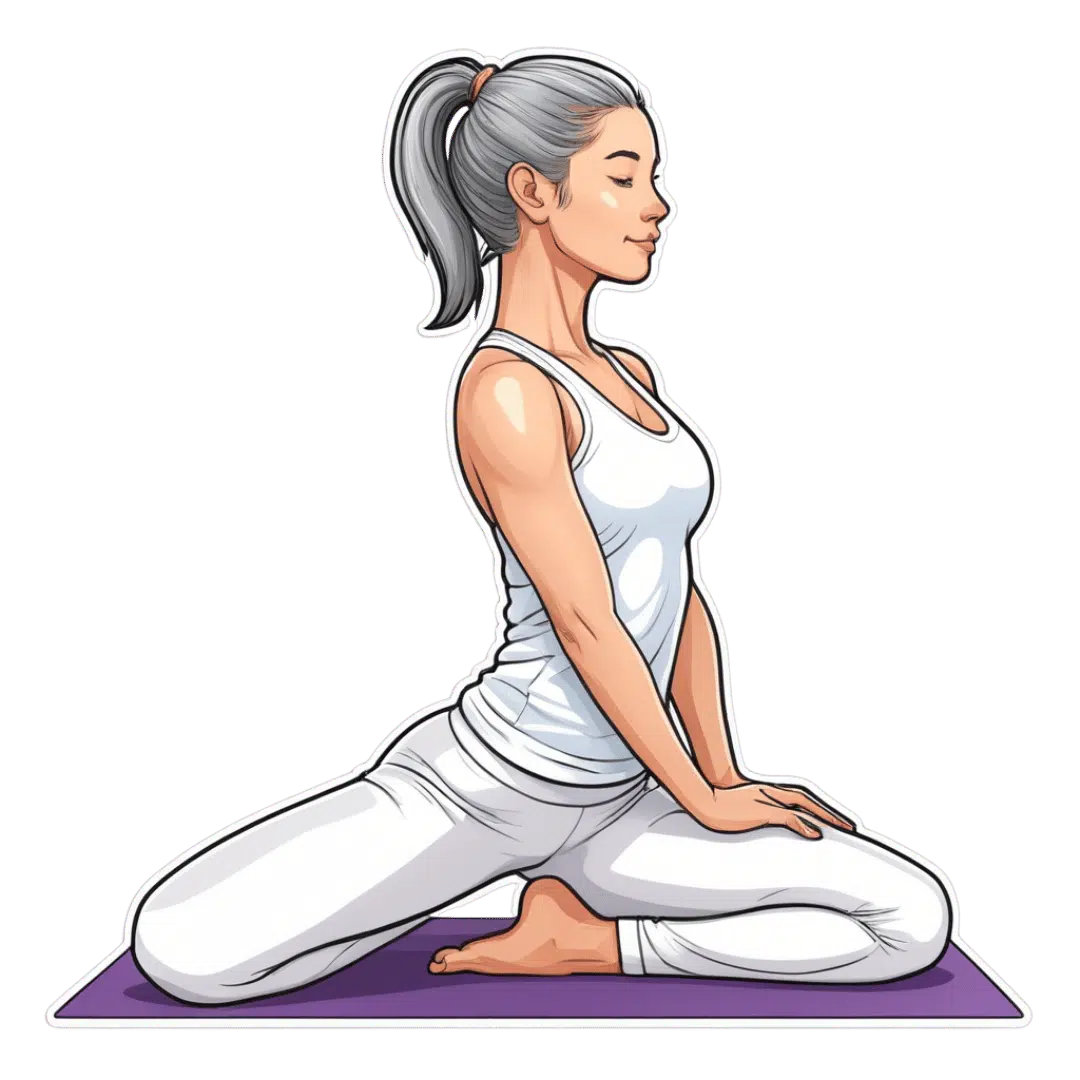
How to Sit On Your Heels (Seiza For Everyone)
10almonds is reader-supported. We may, at no cost to you, receive a portion of sales if you purchase a product through a link in this article.
When it comes to ways to sit that aren’t so bad for your health, seiza (the traditional Japanese seated position, as shown in the video thumbnail) is not a bad one. However, for people unaccustomed to it, it can be challenging at first.
Here’s how to get there:
One part at a time
As with Asian squats, Slav squats, resting squats, sitting squats, deep squats, or whatever else we want to call them today… Comfort (or difficulty) with seiza isn’t about ethnicity or genetics—it reflects joint mobility and muscle conditioning. And no, it’s not too late! You didn’t have to be doing this from babyhood to get comfortable with it.
If you can get into seiza already, then simply gradually building up how long you sit that way is one way to progress.
However, if you can’t get into seiza already, and/or just want to get to the point of being comfortable with it more quickly, then here are some mobility drills that will make the process a lot quicker and easier:
- Partial seiza on hands and knees: start on your hands and knees, then slowly lower yourself towards your heels, noting the point (and location) at which discomfort arises. Use this as a daily drill to build comfort and increase range over time, backing off whenever pain increases.
- Glute activation from a couch: sit in seiza on a couch (facing the couch while you do it, so your feet are over the edge. so there will be little or no pressure on your ankles, depending on your position). Slowly lower your hips while squeezing your glutes. This trains your glutes and hamstrings to support your descent, reducing strain on your knees and quads.
- Quad strengthening with eccentric control: using a couch for support, press the tops of your feet down while slowly lowering your body. Focus on slow, controlled eccentric contraction of the quads. Aim for 5–10 reps and adjust range as needed.
- Top-of-foot and shin engagement for plantar flexion: with each ankle as flat as possible, press your toes upward against your hand. This strengthens underused muscles on the top of your foot and shin, improving ankle mobility for seiza.
- Inner thigh engagement with yoga block: place a yoga block (or even gentler: a cushion) between your knees and gently squeeze for 30–60 seconds. This targets inner thigh muscles, helping you bring your knees closer together more comfortably in seiza.
If you do these often for a while, you’ll be sitting in seiza comfortable in no time.
Writer’s bonus tip: a lot of people unused to seiza alleviate discomfort in their knees and/or ankles by leaning forwards and taking some weight on their hands. This is usually done with terrible posture and is ruining the back. So, if you get the urge to do that, then: 1) don’t 2) if you really want to lean forward, then instead of using your hands against the floor, rest your forearms against the floor instead. Doing this will naturally align your spine healthily, like most versions of the “Child’s pose” in yoga.
One last note: if you have a health condition pertaining to one or more of the following: ankles, knees, spine, circulation, then please do speak with a physiotherapist first, to see if any modifications are sensible/needed in your case. Done right, seiza should promote good health in all of those things, but if you already have a problem there before starting, you could inadvertently make something worse.
For more on all of this plus visual demonstrations, enjoy:
Click Here If The Embedded Video Doesn’t Load Automatically!
Want to learn more?
You might also like:
Take care!
Don’t Forget…
Did you arrive here from our newsletter? Don’t forget to return to the email to continue learning!
Recommended
Learn to Age Gracefully
Join the 98k+ American women taking control of their health & aging with our 100% free (and fun!) daily emails:
-
Be A Plant-Based Woman Warrior – by Jane Esselstyn & Ann Esselstyn
10almonds is reader-supported. We may, at no cost to you, receive a portion of sales if you purchase a product through a link in this article.
Notwithstanding the title, this book is not about being a woman or a warrior, but let us share what one reviewer on Amazon wrote:
❝I don’t want to become a plant based woman warrior. The sex change would be traumatic for me. However, as a man who proudly takes ballet classes and Pilates, I am old enough not to worry about stereotypes. When I see a good thing, I am going to use it❞
The authors, a mother-and-daughter team in their 80s and 50s respectively, do give a focus on things that disproportionally affect women, and rectifying those things with diet, especially in one of the opening chapters.
Most the book, however, is about preventing/reversing things that can affect everyone, such as heart disease, diabetes, inflammation and the autoimmune diseases associated with such, and cancer in general, hence the dietary advice being good for most people (unless you have an unusually restrictive diet).
We get an overview of the pantry we should cultivate and curate, as well as some basic kitchen skills that will see us well for the rest of the book, such as how to make oat flour and other similar mini-recipes, before getting into the main recipes themselves.
About the recipes: they are mostly quite simple, though often rely on having pre-prepared items from the mini-recipes we mentioned earlier. They’re all vegan, mostly but not all gluten-free, whole foods, no added sugar, and as for oil… Well, it seems to be not necessarily oil-free, but rather oil-taboo. You see, they just don’t mention it. For example, when they say to caramelize onions, they say to heat a skillet, and when it is hot, add the onions, and stir until browned. They don’t mention any oil in the ingredients or in the steps. It is a mystery. 10almonds note: we recommend olive oil, or avocado oil if you prefer a milder taste and/or need a higher smoke point.
Bottom line: the odd oil taboo aside, this is a good book of simple recipes that teaches some good plant-based kitchen skills while working with a healthy, whole food pantry.
Click here to check out Be A Plant-Based Woman Warrior, and be a plant-based woman warrior!
Or at the very least: be a plant-based cook regardless of gender, hopefully without war, and enjoy the additions to your culinary repertoire
Share This Post
-
Papaya vs Passion Fruit – Which is Healthier?
10almonds is reader-supported. We may, at no cost to you, receive a portion of sales if you purchase a product through a link in this article.
Our Verdict
When comparing papaya to passion fruit, we picked the passion fruit.
Why?
In terms of macros, passion fruit wins against most contenders with its very high fiber content, and that’s true here too; passion fruit has more than 6x the fiber, as well as about 2x the carbs and more than 4x the protein, giving it an easy win in the macros category.
In the category of vitamins, papaya has more of vitamins B9, C, E, and K, while passion fruit has more of vitamins A, B2, B3, B6, and choline. Thus, a marginal win for passion fruit, or perhaps a tie if we want to take into consideration that papaya has 15x the vitamin E content, which is rather more of a margin of different than the rest of the vitamins being compared here.
When it comes to minerals, things are less balanced again; papaya has more calcium, while passion fruit has more copper, iron, magnesium, manganese, phosphorus, potassium, and zinc. An easy win for passion fruit.
Adding up the sections makes for a clear overall win for passion fruit, but by all means enjoy either or both; diversity is good!
Want to learn more?
You might like:
What’s Your Plant Diversity Score?
Enjoy!
Share This Post
-
Darwin’s Bed Rest: Worthwhile Idea?
10almonds is reader-supported. We may, at no cost to you, receive a portion of sales if you purchase a product through a link in this article.
It’s Q&A Day at 10almonds!
Have a question or a request? You can always hit “reply” to any of our emails, or use the feedback widget at the bottom!
In cases where we’ve already covered something, we might link to what we wrote before, but will always be happy to revisit any of our topics again in the future too—there’s always more to say!
As ever: if the question/request can be answered briefly, we’ll do it here in our Q&A Thursday edition. If not, we’ll make a main feature of it shortly afterwards!
So, no question/request too big or small
❝I recall that Charles Darwin (of Evolution fame) used to spend a day a month in bed in order to maintain his physical and psychological equilibrium. Do you see merit in the idea?❞
Well, it certainly sounds wonderful! Granted, it may depend on what you do in bed :p
Descartes did a lot of his work from bed (and also a surprising amount of it while hiding in an oven, but that’s another story), which was probably not so good for the health.
As for Darwin, his health was terrible in quite a lot of ways, so he may not be a great model.
However! Certainly taking a break is well-established as an important and healthful practice:
How To Rest More Efficiently (Yes, Really)
❝I don’t like to admit it but I am getting old. Recently, I had my first “fall” (ominous word!) I was walking across some wet decking and, before I knew what had happened, my feet were shooting forwards, and I crashed to the ground. Luckily I wasn’t seriously damaged. But I was wondering whether you can give us some advice about how best to fall. Maybe there are some good videos on the subject? I would like to be able to practice falling so that it doesn’t come as such a shock when it happens!❞
This writer has totally done the same! You might like our recent main feature on the topic:
…if you’ll pardon the pun
Enjoy!
Share This Post
Related Posts
-
Apricot vs Avocado – Which is Healthier?
10almonds is reader-supported. We may, at no cost to you, receive a portion of sales if you purchase a product through a link in this article.
Our Verdict
When comparing apricot to avocado, we picked the avocado.
Why?
Both are great, but…
In terms of macros,apricot has slightly more carbs, while avocado has more than 30x the fat (famously healthy fats, including a good ratio of omega-3 and omega-6), and more than 3x the fiber. So, an easy win for avocado here.
In the category of vitamins, apricot has 13x the vitamin A, while avocado has several times more of vitamins B1, B2, B3, B5, B6, B7, B9, E, K, and choline, winning.
Looking at minerals, apricot is not higher in any minerals, while avocado has more copper, iron, magnesium, manganese, phosphorus, selenium, and zinc; another clear win for avocado.
In other matters, apricot has some specific anticancer properties that avocado can’t boast, so apricot does win one point here.
Adding up the sections makes for an overwhelming overall win for avocado, but by all means enjoy either or both; diversity is good!
Want to learn more?
You might like:
Top 8 Fruits That Prevent & Kill Cancer
Enjoy!
Don’t Forget…
Did you arrive here from our newsletter? Don’t forget to return to the email to continue learning!
Learn to Age Gracefully
Join the 98k+ American women taking control of their health & aging with our 100% free (and fun!) daily emails:
-
Here’s how to help protect your family from norovirus
10almonds is reader-supported. We may, at no cost to you, receive a portion of sales if you purchase a product through a link in this article.
What you need to know
- Norovirus is a very contagious infection that causes vomiting and diarrhea.
- The best way to help protect against norovirus is to wash your hands often with soap and warm water, since hand sanitizer may not be effective at killing the virus.
- If someone in your household has symptoms of norovirus, isolate them away from others, watch for signs of dehydration, and take steps to help prevent it from spreading.
If you feel like everyone is sick right now, you’re not alone. Levels of respiratory illnesses like COVID-19, flu, and RSV remain remain high in many states, and the U.S. is also battling a wave of norovirus, one of several viruses that cause a very contagious infection of the stomach and intestines.
Although norovirus infections are more common during the colder months—it’s also called the “winter vomiting disease”—the virus can spread at any time. Right now, however, cases have more than doubled since last year’s peak.
Read on to learn about the symptoms of norovirus, how it spreads, and what to do if someone in your household gets sick.
What are the symptoms of norovirus?
Norovirus is a very contagious infection that causes vomiting and diarrhea, which typically begins 12 to 48 hours after exposure to the virus. Additional symptoms may include stomach pain, body aches, headaches, and a fever. Norovirus typically resolves within three days, but people who are infected may still be contagious for up to two days after symptoms resolve.
Norovirus may cause dehydration, or a dangerous loss of fluids, especially in young children and older adults. See a health care provider if you or someone in your household shows signs of dehydration, which may include decreased urination, dizziness, a dry mouth and throat, sleepiness, and crying without tears.
How can you help protect against norovirus?
You can get norovirus if you have close contact with someone who is infected, touch a contaminated surface and then touch your mouth or nose, or consume contaminated food or beverages.
The best way to help protect yourself and others against norovirus is to wash your hands often with soap and warm water, since hand sanitizer may not be effective at killing the virus. Other ways to help protect yourself may include cooking food thoroughly and washing fruits and vegetables before eating them.
You can get sick with norovirus even if you’ve had it before, since there are many different strains.
How can families help protect against the spread of norovirus at home?
If someone in your household has symptoms of norovirus, isolate them away from others and watch for signs of dehydration. If you are sick with norovirus, do not prepare food for others in your household and use a separate bathroom, if possible.
When cleaning up after someone who has norovirus, wear rubber, latex, or nitrile gloves. Then wash your hands thoroughly.
Clean surfaces using a solution containing five to 25 tablespoons of bleach (that’s 12.5 fluid ounces, or just over ¾ cup), per gallon of water. Leave the bleach-water mix on surfaces for at least five minutes before wiping it off.
For more information, talk to your health care provider.
This article first appeared on Public Good News and is republished here under a Creative Commons license.
Don’t Forget…
Did you arrive here from our newsletter? Don’t forget to return to the email to continue learning!
Learn to Age Gracefully
Join the 98k+ American women taking control of their health & aging with our 100% free (and fun!) daily emails:
-
Travelling overseas? You could be at risk of measles. Here’s how to ensure you’re protected
10almonds is reader-supported. We may, at no cost to you, receive a portion of sales if you purchase a product through a link in this article.
On March 26 NSW Health issued an alert advising people to be vigilant for signs of measles after an infectious person visited Sydney Airport and two locations in western New South Wales.
The person recently returned from Southeast Asia where there are active measles outbreaks in several countries including Vietnam, Thailand and Indonesia.
The NSW alert follows a string of similar alerts issued around Australia in recent days and weeks.
If you’re travelling overseas soon, you could be at risk of measles. Here’s what to know to ensure you’re protected.
Julia Suhareva/Shutterstock First, what is measles?
Measles is one of the most contagious viral illnesses. It spreads through the air when a person breathes, coughs or sneezes. On average, one person can infect 12 to 18 others who are not immune.
Initial symptoms include fever, a runny nose, cough and conjunctivitis. Then a non-itchy rash usually starts around the hairline before spreading around the body.
Measles is most common in children, and they’re also most vulnerable to getting very sick with the virus. Measles is severe in around one in ten children. Complications can include ear infection, diarrhoea and pneumonia, and, more rarely, encephalitis (brain swelling).
However, adults can also catch and spread the disease, making up 10–20% of measles cases during outbreaks.
Vaccination has saved millions of lives
The first measles vaccine was licensed for public use in 1963, and it changed the trajectory of this disease. In the 21st century alone, measles vaccination is thought to have saved more than 60 million lives globally.
The measles vaccine is free through Australia’s National Immunisation Program. It’s routinely given at 12 and 18 months of age. The first dose is combined with mumps and rubella (the MMR vaccine) and the second adds protection against chickenpox, or varicella (MMRV).
False suggestions the measles vaccination is linked with disorders such as autism have been thoroughly disproven. The vaccine is very safe and highly effective.
Measles is one of the most contagious viruses there is. fotohay/Shutterstock However, because the vaccine is made from a live virus, people with weakened immune systems (for example, those receiving chemotherapy for cancer or pregnant women) cannot have the vaccine even though they’re at higher risk of severe measles. Their safety depends on high community immunisation rates to reduce the spread of the virus.
Because measles is so infectious, at least 95% of the population needs to be immune to prevent its spread.
Immunity occurs from either two doses of measles vaccine or past infection. Measles vaccination was introduced in Australia in 1968. Most adults born before the mid-1960s would still be immune from a past infection. But vaccination is recommended for everyone else who is not immune.
Immunity gaps are opening up
Gaps in immunity to measles have opened up around the world due to challenges in delivering routine immunisations during the COVID pandemic, and, in some cases, reduced acceptance of vaccination.
In 2023 only 83% of the world’s children received at least one dose of measles vaccine by their first birthday, down from 86% in 2019. This is not enough to halt spread.
The withdrawal of US government funding from many global health programs, including a measles surveillance network that supports testing and outbreak responses, is throwing fuel on the fire.
In Australia, small but progressive declines in the uptake of childhood vaccines over the past five years and immunity gaps in other age groups means our risk of outbreaks in increasing.
Rates of childhood vaccination coverage have been declining slightly. Inna photographer/Shutterstock For example, coverage of the MMR vaccine at 24 months declined 0.4 percentage points between 2022 and 2023 (from 95.3% to 94.9% in Indigenous children and 95.1% to 94.7% in children overall).
On-time vaccination rates – within 30 days of the recommended age – are also falling. The proportion of children who had their MMR vaccine on time dropped from 75.3% to 67.2% for non-Indigenous children and 64.7% to 56% for Indigenous children between 2020 and 2023.
Measles outbreaks are increasing in Australia and across the world
Measles cases are rapidly rising across the globe and more cases are arriving from overseas into Australia. So far in 2025, 37 cases have been reported compared to 57 in all of 2024, 26 in 2023 and seven in 2022. Most cases have been imported from overseas, but we’ve ascertained eight cases so far in 2025 were locally acquired.
Many of the countries experiencing the largest measles outbreaks are popular travel destinations for Australians, including India, Thailand, Indonesia and Vietnam.
But few countries are free of measles. The United States, Canada, the United Kingdom and various countries in Europe are all tackling outbreaks.
As the incubation period – the gap between exposure and symptoms – is around seven to ten days, travellers may enter the country without knowing they’re about to become ill and potentially spread the virus to others.
Protecting yourself and your family
Although the usual age for the first measles dose is 12 months, the MMR vaccine can be given to babies as young as six months who are travelling to measles hotspots or during outbreaks.
This early measles vaccine dose does not replace those given at 12 and 18 months, but will help protect the infant in the interim.
It’s important all adults, particularly those planning overseas travel, know their vaccination or infection history. If you don’t, talk to your health-care provider about being vaccinated.
Everyone who doesn’t have immunity from an infection should have two lifetime doses. Some adults, including those who have migrated from overseas, may have had none or only one dose when they were younger. If you’re unsure, there’s no harm in receiving a vaccine if you’ve had measles or have been fully vaccinated already.
If you come back from overseas and need medical care, inform your health-care provider about your symptoms and recent travel before attending a clinic in person.
Archana Koirala, Paediatrician and Infectious Diseases Specialist; Clinical Researcher, University of Sydney and Kristine Macartney, Professor, Discipline of Paediatrics and Child Health, University of Sydney
This article is republished from The Conversation under a Creative Commons license. Read the original article.
Don’t Forget…
Did you arrive here from our newsletter? Don’t forget to return to the email to continue learning!
Learn to Age Gracefully
Join the 98k+ American women taking control of their health & aging with our 100% free (and fun!) daily emails:


