
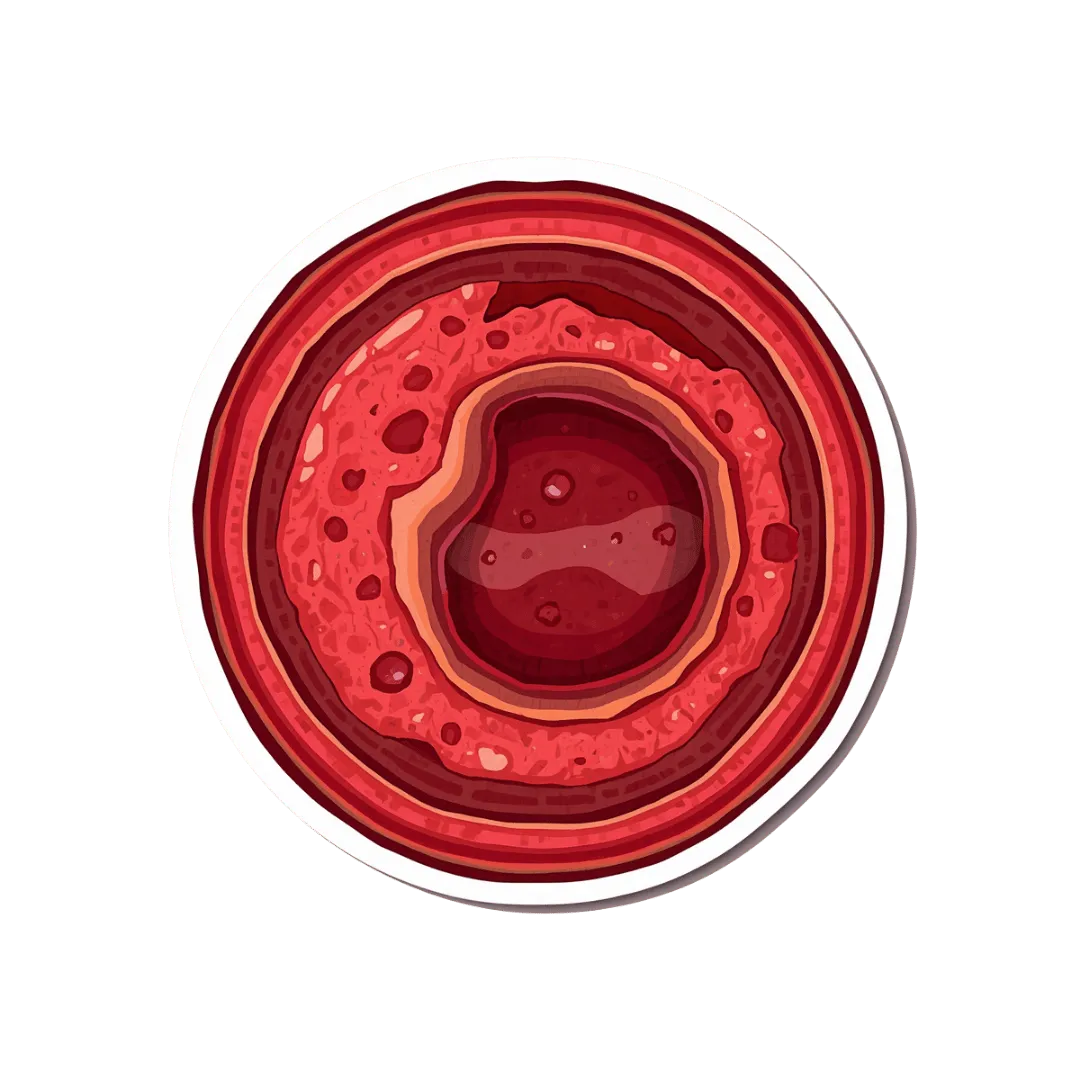
How Blood Pressure Works
10almonds is reader-supported. We may, at no cost to you, receive a portion of sales if you purchase a product through a link in this article.
Did you know? If you took out all your blood vessels and laid them end-to-end, you’d die (and the resultant testament to your odd way of dying would be 95,000 km long)?
That’s a silly (albeit true) fact, and as it turns out, not only is moving your blood around those 95,000 km of blood vessels quite a feat, but also, keeping the pressure constant while doing so is a truly remarkable accomplishment:
Under pressure
Your circulatory system contains about 95,000 kilometers of blood vessels, circulating roughly four to five liters of blood repeatedly to transport oxygen, glucose, and amino acids throughout your body, amounting to over 7,500 liters moved daily.
Now imagine if you had to move 7,500 liters along 95,000 km using cars, but with the caveat that you’re driving under the conditions of the 1994 movie “Speed”, that is to say, if you at any point get stuck in traffic, you die.
So, blood pressure must always be within a certain “Goldilocks zone”, to keep things moving without either stalling (heart failure) or exploding (hemorrhage), bearing in mind that a plaque rupture can create blood clots that block circulation, causing a heart attack if blood flow to your heart stops, or a stroke if blood flow to your brain is interrupted.
- How blood pressure works: blood pressure is the force blood exerts against vessel walls, peaking during systole when your heart contracts, and dropping during diastole when your heart rests between beats.
- Normal blood pressure range: a healthy reading is typically below 120/80 mmHg, with systolic pressure between 90–120 mmHg and diastolic pressure between 60–80 mmHg.
- What raises blood pressure: thicker blood, increased blood volume from salt-related water retention, and stress hormones like epinephrine and norepinephrine can all increase pressure by making blood harder to move, or narrowing vessels.
Happily, despite constant pressure and (hopefully) billions of heartbeats over a lifetime, healthy arteries are elastic and have evolved to handle these demands effectively.
We just have to keep them that way!
For more on all of this, enjoy:
Click Here If The Embedded Video Doesn’t Load Automatically!
Want to learn more?
You might also like:
What Most People Don’t Know About Blood Pressure
Take care!
Don’t Forget…
Did you arrive here from our newsletter? Don’t forget to return to the email to continue learning!
Recommended

Learn to Age Gracefully
Join the 98k+ American women taking control of their health & aging with our 100% free (and fun!) daily emails:
-
GLP-1 Drugs: Safe For Pregnancy Or Not?
10almonds is reader-supported. We may, at no cost to you, receive a portion of sales if you purchase a product through a link in this article.
…and other items from this week’s health news:
Beyond “Ozempic babies”
Briefly heralded as a potential boon to fertility (and advised against because of potential risks), GLP-1 receptor agonists have been re-examined in the context of pregnancy.
In this most recent study of 10,781 women, 232 pregnancies occurred within six months of starting treatment. Being on contraception reduced the risk of pregnancy by 40%, which is also the approximate percentage of pregnancies overall that were unplanned (though doubtlessly it is not a perfect overlap).
In terms of safety: animal studies show risks like fetal growth restriction, while limited human data (including a 2024 study of 938 pregnancies) found no higher risk of major birth defects compared with insulin (bearing in mind, GLP-1 RAs were initially most widely prescribed for the treatment of type 2 diabetes, before truly taking off as weight loss drugs).
Read in full: Are GLP-1 drugs safe for women planning pregnancy?
Related: What are “Ozempic babies”? Can the drug really increase your chance of pregnancy?
When the temperature goes up, so does sugar consumption
It’s not about food! No, not even about ice creams (mostly, anyway).
Rather, hot weather especially drives consumption of chilled, sugary drinks, which in turn raises risks of obesity, diabetes, cardiovascular disease, and certain cancers.
This most recent research analyzed food purchase data from 60,000 US households between 2004–2019 to measure added sugar intake in relation to weather conditions over time.
What they found: added sugar intake rises as temperatures increase, especially between 12–30℃ (54–86℉). After that, sugar intake still continues to rise with temperature rises, but the rise becomes less sharp. Outdoor workers were most affected, and higher-income groups were less affected, possibly due to access to air-conditioned environments.
Read in full: Climate change is fueling unhealthy sugar consumption in the US
Related: 4 surprising ways climate change is hurting your lungs
Fast food making a fast exit?
In recent years, one-third of US adults ate fast food on any given day. Which sounds like a lot, and it is, but 11.7% of daily calories came from fast food, which is a reduction from the 14.1% of the previous decade.
But, this wasn’t the same across of the population as whole, because intake fell most sharply in younger adults (19.0% in 2013–14 to 15.2% in 2021–23), whereas there was negligible change in the numbers for older age brackets.
And when it comes to body types, there were differences, but perhaps not so big as many might imagine: adults in the “obesity” category of BMI consumed 13.7% of daily calories from fast food, compared with 10.8% in the “overweight” category and 9.8% in the “normal” category.
Now, BMI’s a woeful system and it’s likely that BMI’s many flaws will have confounded that data somewhat, but the overall picture is not unreasonable (and the age-related data was unaffected by this).
Read in full: Fast food’s grip on American diets weakens as younger adults cut back
Related: How Likely Is It That Ultra-Processed Foods (UPFs) Will Kill You?
Take care!
Share This Post
-
Blackberries vs Elderberries – Which is Healthier?
10almonds is reader-supported. We may, at no cost to you, receive a portion of sales if you purchase a product through a link in this article.
Our Verdict
When comparing blackberries to elderberries, we picked the elderberries.
Why?
It was super-close! But…
In terms of macros, blackberries technically have more protein, but the numbers are truly tiny, and let’s face it, nobody is eating blackberries for the protein. Meanwhile, elderberries have more fiber and carbs. We consider this a win for elderberries, based on total fiber and total macronutrients, but if you want to consider the carbs and fiber against each other, you might want to call this round a tie.
In the category of vitamins, blackberries have more of vitamins B5, B9, E, K, and choline, while elderberries have more of vitamins A, B1, B2, B6, and C. Thus, a tie here.
When it comes to minerals, blackberries have more copper, magnesium, manganese, and zinc, while elderberries have more calcium, iron, phosphorus, potassium, and selenium, adding up to marginal win for elderberries.
Looking at polyphenols, both are great but elderberries have more (mostly anthocyanins, whence the color, but also quercetin, and in both cases blackberries are good but elderberries have so much more).
Adding up the sections makes for an overall win for elderberries (grow them in your garden if you can, as stores don’t often sell elderberries), but by all means enjoy either or both; diversity is good!
Want to learn more?
You might like:
Herbs For Evidence-Based Health & Healing ← elderberry significantly hastens recovery from upper respiratory viral infections 😎
Enjoy!
Share This Post
-
You Are Not a Before Picture – by Alex Light
10almonds is reader-supported. We may, at no cost to you, receive a portion of sales if you purchase a product through a link in this article.
It’s that time of year, and many of us are looking at what we’ll do in the coming days, weeks, and months to level-up our health. So… Is this a demotivational book?
Quite the opposite! It’s rather a case of an often much-needed reminder to ensure that our plans are really our own, and really are what’s best for us. Why wouldn’t they be, you ask?
Much of diet culture (ubiquitous! From magazine covers to movie stars to the models advertising anything from health insurance to water filters) has us reaching for “body goals” that are not possible without a different skeleton and genes and compromises and post-production edits.
Alex Light—herself having moved from the fashion and beauty industry into health education—sets out in a clear, easy-reading manner, how we can look after ourselves, not be neglectful of our bodies, and/but also not get distracted into unhelpful, impossible, castles-in-the-air.
Bottom line: you cannot self-hate your way into good health, and good health will always be much more attainable than a body that’s just not yours. This book can help you sort out which is which.
Share This Post
Related Posts
-
Chard vs Kale – Which is Healthier?
10almonds is reader-supported. We may, at no cost to you, receive a portion of sales if you purchase a product through a link in this article.
Our Verdict
When comparing chard to kale, we picked the kale.
Why?
It wasn’t close!
In terms of macros, kale has more than 2x the fiber, carbs, and protein, winning this round easily.
In the category of vitamins, chard has more of vitamins B5, K, and choline, while kale has more of vitamins A, B1, B2, B3, B6, B9, and C, making a convincing win for kale.
When it comes to minerals, chard has more magnesium, while kale has more calcium, copper, manganese, phosphorus, potassium, and zinc; another easy win for kale.
Another thing to bear in mind is that kale has more polyphenols, including kaempferol and quercetin. So that’s another point in kale’s favor.
Adding up the sections makes for a clear overall win for kale, but by all means enjoy either or both; diversity is good!
Want to learn more?
You might like:
Enjoy!
Don’t Forget…
Did you arrive here from our newsletter? Don’t forget to return to the email to continue learning!
Learn to Age Gracefully
Join the 98k+ American women taking control of their health & aging with our 100% free (and fun!) daily emails:
-
Blood biomarkers could detect earliest signs of Alzheimer’s disease, and slow its progression
10almonds is reader-supported. We may, at no cost to you, receive a portion of sales if you purchase a product through a link in this article.
Alzheimer’s disease, a progressive neurodegenerative disorder that affects millions worldwide, has a long preclinical stage. It potentially begins decades before clinical symptoms become apparent.
But as our new research suggests, blood biomarkers in combination with self-reported memory concerns could offer an early clue to how Alzheimer’s disease develops across the life course.
This means midlife could be a critical window for promoting brain health.
For our study, we used data from the world-leading Dunedin Study at the University of Otago, which has been following a cohort of people for more than 50 years.
We found a certain protein known as pTau181 was associated with self-reported concerns about memory and thinking skills.
Notably, study participants were only 45 years old at the time of assessment. People typically aren’t diagnosed with dementia until their 70s or older.
In recent years, we’ve seen advances in pharmaceutical treatments for Alzheimer’s disease. However, these are not cures. At best, they slow disease progression but they don’t preserve or restore cognitive function lost during more advanced stages.
It is likely these treatments work best when taken early, which makes it more important to identify the earliest signs of Alzheimer’s disease.
Getty Images Preventing dementia
Different types of dementia can look similar during the early stages of disease, but the treatment and course of progression differ significantly for each type of dementia.
In the past, Alzheimer’s disease could only be definitively diagnosed postmortem, or more recently with invasive testing such as a lumbar puncture. But researchers are now working on identifying blood biomarkers that could offer a minimally invasive way to identify people at higher risk of developing Alzheimer’s disease.
Detecting Alzheimer’s disease in its earliest stages could provide an opportunity for prevention and offer the greatest benefits for brain health and ageing.
This may involve lifestyle changes, such as supporting people to be physically active and continuing to engage in social activities, and addressing modifiable risk factors such as hypertension or hearing loss.
Preventive approaches work more effectively the earlier they are implemented. Studying middle-aged populations is therefore important for identifying early risk profiles for Alzheimer’s, long before the disease would be diagnosed.
When forgetfulness becomes a sign of disease
As people get older, they often notice their memory isn’t as good as it used to be.
Forgetfulness is common and usually benign as people age. But in some people, these memory issues may indicate something else is going on.
Recent research shows subtle subjective changes in cognition often occur long before diagnosis and might be the first moment the disease is felt.
Screening for biological markers, in combination with subjective reports of memory function, could help distinguish the earliest signs of Alzheimer’s disease pathology from normal ageing.
Proteins such as pTau181 are much higher in people with Alzheimer’s disease, but we don’t know yet when this protein begins to accumulate.
Our findings add to the growing evidence that the earliest signs of dementia may show up long before diagnosis. They also show that self-reported cognitive concerns may be an early warning sign for Alzheimer’s, even in midlife.
Interestingly, we didn’t find that the pTau181 biomarker was associated with MRI brain scan measures or cognitive test performance at age 45.
There are at least two possible explanations for this.
Perhaps pTau181 increases during the earliest stages of Alzheimer’s disease, when people first start to notice their memory worsening but no changes are shown yet in MRI scans. Or it could be that elevated pTau181 is not related to Alzheimer’s disease risk in midlife, and the protein is only useful for detecting Alzheimer’s in older adults.
We don’t know enough yet, but will be following the same group of people as they get older to continue this research.
Ashleigh Barrett-Young, Research Fellow in Brain Health, University of Otago
This article is republished from The Conversation under a Creative Commons license. Read the original article.
Don’t Forget…
Did you arrive here from our newsletter? Don’t forget to return to the email to continue learning!
Learn to Age Gracefully
Join the 98k+ American women taking control of their health & aging with our 100% free (and fun!) daily emails:
-
Hazelnuts vs Almonds – Which is Healthier?
10almonds is reader-supported. We may, at no cost to you, receive a portion of sales if you purchase a product through a link in this article.
Our Verdict
When comparing hazelnuts to almonds, we picked the almonds.
Why?
It’s closer than you might think! But we say almonds do come out on top.
In terms of macronutrients, almonds have notably more protein, while hazelnuts have notably more fat (healthy fats, though). Almonds are also higher in both carbs and fiber. Looking at Glycemic Index, hazelnuts’ GI is low and almonds’ GI is zero. We could call the macros category a tie, but ultimately if we need to prioritize any of these things, it’s protein and fiber, so we’ll call this a nominal win for almonds.
When it comes to vitamins, hazelnuts have more of vitamins B1, B5, B6, B9 C, and K. Meanwhile, almonds have more of vitamins B2, B3, E, and choline. So, a moderate win for hazelnuts.
In the category of minerals, almonds retake the lead with more calcium, magnesium, phosphorus, potassium, selenium, and zinc, while hazelnuts boast more copper and manganese. A clear win for almonds.
Adding up the categories, this makes for a marginal win for almonds. Of course, both of these nuts are very healthy (assuming you are not allergic), and best is to enjoy both if possible.
Want to learn more?
You might like to read:
Take care!
Don’t Forget…
Did you arrive here from our newsletter? Don’t forget to return to the email to continue learning!
Learn to Age Gracefully
Join the 98k+ American women taking control of their health & aging with our 100% free (and fun!) daily emails:


