
Eating disorders don’t just affect teen girls. The risk may go up around pregnancy and menopause too
10almonds is reader-supported. We may, at no cost to you, receive a portion of sales if you purchase a product through a link in this article.
Eating disorders impact more than 1.1 million people in Australia, representing 4.5% of the population. These disorders include binge eating disorder, bulimia nervosa, and anorexia nervosa.
Meanwhile, more than 4.1 million people (18.9%) are affected by body dissatisfaction, a major risk factor for some types of eating disorders.
But what image comes to mind first when you think of someone with an eating disorder or body image concerns? Is it a teenage girl? If so, you’re definitely not alone. This is often the image we see in popular media.
Eating disorders and body image concerns are most common in teenage girls, but their prevalence in adults, particularly in women, aged in their 30s, 40s and 50s, is actually close behind.
So what might be going on with girls and women in these particular age groups to create this heightened risk?
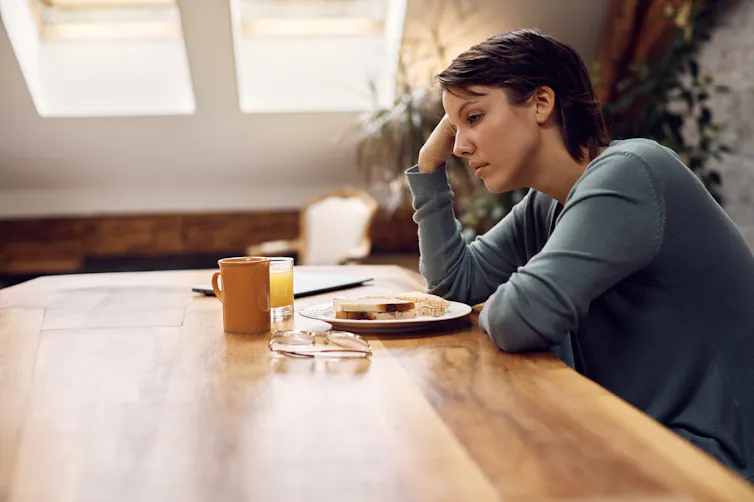
The 3 ‘P’s
We can consider women’s risk periods for body image issues and eating disorders as the three “P”s: puberty (teenagers), pregnancy (30s) and perimenopause and menopause (40s, 50s).
A recent report from The Butterfly Foundation showed the three highest prevalence groups for body image concerns are teenage girls aged 15–17 (39.9%), women aged 55–64 (35.7%) and women aged 35–44 (32.6%).
We acknowledge there’s a wide age range for when girls and women will go through these phases of life. For example, a small proportion of women will experience premature menopause before 40, and not all women will become pregnant.
Variations in the way eating disorder symptoms are measured across different studies can make it difficult to draw direct comparisons, but here’s a snapshot of what the evidence tells us.
Puberty
In a review of studies looking at children aged six to adolescents aged 18, 30% of girls in this age group reported disordered eating, compared to 17% of boys. Rates of disordered eating were higher as children got older.
Pregnancy
During pregnancy, eating disorder prevalence is estimated at 7.5%. Almost 70% of women are dissatisfied with their body weight and figure in the post-partum period.

Perimenopause
It’s estimated more than 73% of midlife women aged 42–52 are unsatisfied with their body weight. However, only a portion of these women would have been going through the menopause transition at the time of this study.
The prevalence of eating disorders is around 3.5% in women over 40 and 1–2% in men at the same stage.
So what’s going on?
Although we’re not sure of the exact mechanisms underlying eating disorder and body dissatisfaction risk during the three “P”s, it’s likely a combination of factors are at play.
These life stages involve significant reproductive hormonal changes (for example, fluctuations in oestrogen and progesterone) which can lead to increases in appetite or binge eating and changes in body composition. These changes can result in concerns about body weight and shape.
These stages can also represent a major change in identity and self-perception. A girl going through puberty may be concerned about turning into an “adult woman” and changes in attitudes of those around her, such as unwanted sexual attention.
Pregnancy obviously comes with significant body size and shape changes. Pregnant women may also feel their body is no longer their own.
While social pressures to be thin can stop during pregnancy, social expectations arguably return after birth, demanding women “bounce back” to their pre-pregnancy shape and size quickly.
Women going through menopause commonly express concerns about a loss of identity. In combination with changes in body composition and a perception their appearance is departing from youthful beauty ideals, this can intensify body dissatisfaction and increase the risk of eating disorders.
These periods of life can each also be incredibly stressful, both physically and psychologically.
For example, a girl going through puberty may be facing more adult responsibilities and stress at school. A pregnant woman could be taking care of a family while balancing work and other demands. A woman going through menopause could potentially be taking care of multiple generations (teenage children, ageing parents) while navigating the complexities of mid-life.
Research has shown interpersonal problems and stressors can increase the risk of eating disorders.

We need to do better
Unfortunately most of the policy and research attention currently seems to be focused on preventing and treating eating disorders in adolescents rather than adults. There also appears to be a lack of understanding among health professionals about these issues in older women.
In research I (Gemma) led with women who had experienced an eating disorder during menopause, participants expressed frustration with the lack of services that catered to people facing an eating disorder during this life stage. Participants also commonly said health professionals lacked education and training about eating disorders during menopause.
We need to increase awareness among health professionals and the general public about the fact eating disorders and body image concerns can affect women of any age – not just teenage girls. This will hopefully empower more women to seek help without stigma, and enable better support and treatment.
Jaycee Fuller from Bond University contributed to this article.
If this article has raised issues for you, or if you’re concerned about someone you know, call Lifeline on 13 11 14. For concerns around eating disorders or body image visit the Butterfly Foundation website or call the national helpline on 1800 33 4673.
Gemma Sharp, Professor, NHMRC Emerging Leadership Fellow & Senior Clinical Psychologist, The University of Queensland; Amy Burton, Lecturer in Clinical Psychology, University of Technology Sydney, and Megan Lee, Assistant Professor, Psychology, Bond University
This article is republished from The Conversation under a Creative Commons license. Read the original article.
Don’t Forget…
Did you arrive here from our newsletter? Don’t forget to return to the email to continue learning!

Recommended
Learn to Age Gracefully
Join the 98k+ American women taking control of their health & aging with our 100% free (and fun!) daily emails:
-
Eye Drops: Safety & Alternatives
10almonds is reader-supported. We may, at no cost to you, receive a portion of sales if you purchase a product through a link in this article.
It’s Q&A Day at 10almonds!
Have a question or a request? You can always hit “reply” to any of our emails, or use the feedback widget at the bottom!
In cases where we’ve already covered something, we might link to what we wrote before, but will always be happy to revisit any of our topics again in the future too—there’s always more to say!
As ever: if the question/request can be answered briefly, we’ll do it here in our Q&A Thursday edition. If not, we’ll make a main feature of it shortly afterwards!
So, no question/request too big or small
❝Before important business meetings my father used to use eye drops to add a “sparkle” to his eyes. I think that is a step too far, but what, short of eye drops, can we do to keep our eyes bright throughout the day?❞
Firstly, we’d indeed not recommend eye drops unless advised to do so by your doctor to treat a specific health condition:
- Infections from over-the-counter artificial tears
- Are my eye drops safe to use?
- More eye drops recalled due to infection danger
Those eye drops that “add sparkle” are often based on astringents such as witch hazel. This means that the capillaries in the eye undergo vasoconstriction, becoming much less visible and the eye thus appears much whiter and thus brighter.
There isn’t a way to do the same thing from the inside, as taking a vasoconstrictor will simply increase your general blood pressure, making the capillaries of your eyes more, rather than less, visible.
However, what you can do is…
- look after your general vasculature (cardiovascular health)
- in particular, reduce hypertension
- that includes limiting salt
- stay away from vasoconstrictors (including caffeine)
- reduce your resting cortisol levels
- that certainly also means reducing alcohol consumption
- maintain good hydration
Take care!
Share This Post
-
Hard to Kill – by Dr. Jaime Seeman
10almonds is reader-supported. We may, at no cost to you, receive a portion of sales if you purchase a product through a link in this article.
We’ve written before about Dr. Seeman’s method for robust health at all ages, focussing on:
- Nutrition
- Movement
- Sleep
- Mindset
- Environment
In this book, she expands on these things far more than we have room to in our little newsletter, including (importantly!) how each interplays with the others. She also follows up with an invitation to take the “Hard to Kill 30-Day Challenge”.
That said, in the category of criticism, it’s only 152 pages, and she takes some of that to advertise her online services in an effort to upsell the reader.
Nevertheless, there’s a lot of worth in the book itself, and the writing style is certainly easy-reading and compelling.
Bottom line: this book is half instructional, half motivational, and covers some very important areas of health.
Click here to check out “Hard to Kill”, and enjoy robust health at every age!
Share This Post
-
Palliative care as a true art form
10almonds is reader-supported. We may, at no cost to you, receive a portion of sales if you purchase a product through a link in this article.
How do you ease the pain from an ailment amidst lost words? How can you serve the afflicted when lines start to blur? When the foundation of communication begins to crumble, what will be the pillar health-care professionals can lean on to support patients afflicted with dementia during their final days?
The practice of medicine is both highly analytical and evidence based in nature. However, it is considered a “practice” because at the highest level, it resembles a musician navigating an instrument. It resembles art. Between lab values, imaging techniques and treatment options, the nuances for individualized patient care so often become threatened.
Dementia, a non-malignant terminal illness, involves the progressive cognitive and social decline in those afflicted. Though there is no cure, dementia is commonly met in the setting of end-of-life care. During this final stage of life, the importance of comfort via symptomatic management and communication usually is a priority in patient care. But what about the care of a patient suffering from dementia? While communication serves as the vehicle to deliver care at a high level, medical professionals are suddenly met with a roadblock. And there … behind the pieces of shattered communication and a dampened map of ethical guidelines, health-care providers are at a standstill.
It’s 4:37 a.m. You receive a text message from the overnight nurse at a care facility regarding a current seizure. After lorazepam is ordered and administered, Mr. H, a quick-witted 76-year-old, stabilizes. Phenobarbital 15mg SC qhs was also added to prevent future similar events. You exhale a sigh of relief.
Mr. H. has been admitted to the floor 36 hours earlier after having a seizure while playing poker with colleagues. Since he became your patient, he’s shared many stories from professional and family life with you, along with as many jokes as he could fit in between. However, over the course of the next seven days, Mr. H. would develop aspiration pneumonia, progressing to ventilator dependency and, ultimately, multi-organ failure with rapid cognitive decline.
What strategies and tools would you use to maximize the well-being of your patient during his decline? How would you bridge the gap of understanding between the patient’s family and health-care team to provide the standard of care that all patients are owed?
To give Mr. H. the type of care he would have wanted, upon his hospital admission, he should have been questioned about his understanding of illness along with the goals of care of the medical team. The patient should have been informed that it is imperative to adhere to the medical regimen implemented by his team along with the risks of not doing so. In the event disease-related complications arose, advanced directives should have been documented to avoid any unnecessary measures.
It is important to note, that with each change in status of the patient’s health status, the goal of treatment must be reassessed. The patient or surrogate decision-maker’s understanding of these goals is paramount in maintaining the patient’s autonomy. It is often said that effective communication is the bedrock of a healthy relationship. This is true regardless of type of relationship.
This is why I and Megan Vierhout wrote Integrated End of Life Care in Dementia: A Comprehensive Guide, a book targeted at providing a much-needed road map to navigate the many challenges involved in end-of-life care for individuals with dementia. Ultimately, our aim is to provide a compass for both health-care professionals and the families of those affected by the progressive effects of dementia. We provide practical advice on optimizing communication with individuals with dementia while taking their cognitive limitations, preferences and needs into account.
I invite you to explore the unpredictable terrain of end-of-life care for patients with dementia. Together, we can pave a smoother, sturdier path toward the practice of medicine as a true art form.
This article is republished from healthydebate under a Creative Commons license. Read the original article.
Share This Post
Related Posts
-
The 80/10/10 Diet – by Dr. Douglas Graham
10almonds is reader-supported. We may, at no cost to you, receive a portion of sales if you purchase a product through a link in this article.
Reviewer’s note: by a quirk of happenstance, the edition I read was a Spanish translation. I will assume that everything true of the Spanish version is true of the original English.
The main premise of this book is that a good way to eat for good health, is not the low-carb diet that many advise, but rather, a diet of 80% carbohydrates, 10% protein, and 10% fat.
The crux, however, lies in what foods make up those macros, because this is most certainly not an “anything goes if it fits in the macros” dietary approach.
Instead, the book makes the argument that we humans are, like our nearest primate cousins, evolved to thrive on a diet that’s very high in fruit, enjoys an assortment of other plants, and has a modest amount of animal products making up most of the protein and fat parts.
This argument it lays out in a well-researched and compelling fashion, with references, and quite a bit of data, which can be found tabulated in-line as well as in an appendix at the back. Speaking of appendices, we also find sample menus, frequently asked questions, and (which to this reviewer felt like padding) “stories of personal success with the 80/10/10 diet”.
Bottom line: not everyone will want to eat this way, but for those who do, this book lays out the scientific foundation as well as the practicalities of application, to make it easy to implement and sustain.
Click here to check out The 80/10/10 Diet, and get frugivorous!
Don’t Forget…
Did you arrive here from our newsletter? Don’t forget to return to the email to continue learning!
Learn to Age Gracefully
Join the 98k+ American women taking control of their health & aging with our 100% free (and fun!) daily emails:
-
What the Air You Breathe May Be Doing to Your Brain
10almonds is reader-supported. We may, at no cost to you, receive a portion of sales if you purchase a product through a link in this article.
For years, the two patients had come to the Penn Memory Center at the University of Pennsylvania, where doctors and researchers follow people with cognitive impairment as they age, as well as a group with normal cognition.
Both patients, a man and a woman, had agreed to donate their brains after they died for further research. “An amazing gift,” said Edward Lee, the neuropathologist who directs the brain bank at the university’s Perelman School of Medicine. “They were both very dedicated to helping us understand Alzheimer’s disease.”
The man, who died at 83 with dementia, had lived in the Center City neighborhood of Philadelphia with hired caregivers. The autopsy showed large amounts of amyloid plaques and tau tangles, the proteins associated with Alzheimer’s disease, spreading through his brain.
Researchers also found infarcts, small spots of damaged tissue, indicating that he had suffered several strokes.
By contrast, the woman, who was 84 when she died of brain cancer, “had barely any Alzheimer’s pathology,” Lee said. “We had tested her year after year, and she had no cognitive issues at all.”
The man had lived a few blocks from Interstate 676, which slices through downtown Philadelphia. The woman had lived a few miles away in the suburb of Gladwyne, Pennsylvania, surrounded by woods and a country club.
The amount of air pollution she was exposed to — specifically, the level of fine particulate matter called PM2.5 — was less than half that of his exposure. Was it a coincidence that he had developed severe Alzheimer’s while she had remained cognitively normal?
With increasing evidence that chronic exposure to PM2.5, a neurotoxin, not only damages lungs and hearts but is also associated with dementia, probably not.
“The quality of the air you live in affects your cognition,” said Lee, the senior author of a recent article in JAMA Neurology, one of several large studies in the past few months to demonstrate an association between PM2.5 and dementia.
Scientists have been tracking the connection for at least a decade. In 2020, the influential Lancet Commission added air pollution to its list of modifiable risk factors for dementia, along with common problems like hearing loss, diabetes, smoking, and high blood pressure.
Yet such findings are emerging when the federal government is dismantling efforts by previous administrations to continue reducing air pollution by shifting from fossil fuels to renewable energy sources.
“‘Drill, baby, drill’ is totally the wrong approach,” said John Balmes, a spokesperson for the American Lung Association who researches the effects of air pollution on health at the University of California-San Francisco.
“All these actions are going to decrease air quality and lead to increasing mortality and illness, dementia being one of those outcomes,” Balmes said, referring to recent environmental moves by the White House.
(Oona Zenda/KFF Health News) Many factors contribute to dementia, of course. But the role of particulates — microscopic solids or droplets in the air — is drawing closer scrutiny.
Particulates arise from many sources: emissions from power plants and home heating, factory fumes, motor vehicle exhaust, and, increasingly, wildfire smoke.
Of the several particulate sizes, PM2.5 “seems to be the most damaging to human health,” Lee said, because it is among the smallest. Easily inhaled, the particles enter the bloodstream and circulate through the body; they can also travel directly from the nose to the brain.
The research at the University of Pennsylvania, the largest autopsy study to date of people with dementia, included more than 600 brains donated over two decades.
Previous research on pollution and dementia mostly relied on epidemiological studies to establish an association. Now, “we’re linking what we actually see in the brain with exposure to pollutants,” Lee said, adding, “We’re able to do a deeper dive.”
The study participants had undergone years of cognitive testing at Penn Memory. With an environmental database, the researchers were able to calculate their PM2.5 exposure based on their home addresses.
The scientists also devised a matrix to measure how severely Alzheimer’s and other dementias had damaged donors’ brains.
Lee’s team concluded that “the higher the exposure to PM2.5, the greater the extent of Alzheimer’s disease,” he said. The odds of more severe Alzheimer’s pathology at autopsy were almost 20% greater among donors who had lived where PM2.5 levels were high.
Another research team recently reported a connection between PM2.5 exposure and Lewy body dementia, which includes dementia related to Parkinson’s disease. Generally considered the second most common type after Alzheimer’s, Lewy body accounts for an estimated 5% to 15% of dementia cases.
In what the researchers believe is the largest epidemiological study to date of pollution and dementia, they analyzed records from more than 56 million beneficiaries with traditional Medicare from 2000 to 2014, comparing their initial hospitalizations for neurodegenerative diseases with their exposure to PM2.5 by ZIP codes.
“Chronic PM2.5 exposure was linked to hospitalization for Lewy body dementia,” said Xiao Wu, an author of the study and a biostatistician at the Mailman School of Public Health at Columbia University.
After controlling for socioeconomic and other differences, the researchers found that the rate of Lewy body hospitalizations was 12% higher in U.S. counties with the worst concentrations of PM2.5 than in those with the lowest.
To help verify their findings, the researchers nasally administered PM2.5 to laboratory mice, which after 10 months showed “clear dementia-like deficits,” senior author Xiaobo Mao, a neuroscientist at the Johns Hopkins School of Medicine, wrote in an email.
The mice got lost in mazes that they had previously dashed through. They had earlier built nests quickly and compactly; now their efforts were sloppy, disorganized. At autopsy, Mao said, their brains had atrophied and contained accumulations of the protein associated with Lewy bodies in human brains, called alpha-synuclein.
A third analysis, published this summer in The Lancet, included 32 studies conducted in Europe, North America, Asia, and Australia. It also found “a dementia diagnosis to be significantly associated with long-term exposure to PM2.5” and to certain other pollutants.
Whether so-called ambient air pollution — the outdoor kind — increases dementia because of inflammation or other physiological causes awaits the next round of research.
Although air pollution has declined in the United States over two decades, scientists are calling for still stronger policies to promote cleaner air. “People argue that air quality is expensive,” Lee said. “So is dementia care.”
President Donald Trump, however, reentered office vowing to increase the extraction and use of fossil fuels and to block the transition to renewable energy. His administration has rescinded tax incentives for solar installations and electric vehicles, Balmes noted, adding, “They’re encouraging continuing to burn coal for power generation.”
The administration has halted new offshore wind farms, announced oil and gas drilling in the Arctic National Wildlife Refuge in Alaska, and moved to stop California’s plan to transition to electric cars by 2035. (The state has challenged that action in court.)
“If policy goes in the opposite direction, with more air pollution, that’s a big health risk for older adults,” Wu said.
Last year, under the Biden administration, the Environmental Protection Agency set tougher annual standards for PM2.5, noting that “the available scientific evidence and technical information indicate that the current standards may not be adequate to protect public health and welfare, as required by the Clean Air Act.”
In March, the EPA’s new chairman announced that the agency would be “revisiting” those stricter standards.
The New Old Age is produced through a partnership with The New York Times.
KFF Health News is a national newsroom that produces in-depth journalism about health issues and is one of the core operating programs at KFF—an independent source of health policy research, polling, and journalism. Learn more about KFF.
This article first appeared on KFF Health News and is republished here under a Creative Commons Attribution-NonCommercial-NoDerivatives 4.0 International License.
Don’t Forget…
Did you arrive here from our newsletter? Don’t forget to return to the email to continue learning!
Learn to Age Gracefully
Join the 98k+ American women taking control of their health & aging with our 100% free (and fun!) daily emails:
-
Foods For & Against Hiatus Hernia
10almonds is reader-supported. We may, at no cost to you, receive a portion of sales if you purchase a product through a link in this article.
It’s Q&A Day at 10almonds!
Have a question or a request? We love to hear from you!
In cases where we’ve already covered something, we might link to what we wrote before, but will always be happy to revisit any of our topics again in the future too—there’s always more to say!
As ever: if the question/request can be answered briefly, we’ll do it here in our Q&A Thursday edition. If not, we’ll make a main feature of it shortly afterwards!
So, no question/request too big or small 😎
❝How does diet impact hiatus hernias?❞
Short answer: indirectly
More useful answer:
- Diet that favors obesity is more likely to result in getting a hiatus hernia, because obesity is one of the risk factors for it.
- Once you have a hiatus hernia, one of the more likely consequences is gastroesophageal reflux disease (GERD).
- Diet that is high in acids, fats, and/or spices will tend to worsen the GERD symptoms, as will alcohol.
We’ll cover the relevant dietary decisions involved in a moment, but first, for anyone wondering:
What actually is a hiatus hernia?
- A hernia (in general) is when an organ, or more often just part of an organ, “escapes” from where it is supposed to be kept in place, and thus finds itself somewhere it shouldn’t. The result is not usually very dangerous (although some can be, depending on what and where it is), and/but it’s often painful.
- A hiatus hernia is a hernia in which part of the stomach finds itself above the diaphragm, sneaking up where the esophagus makes its way through. This is usually periodic in nature, i.e. it doesn’t go there and get stuck and stay there; it sometimes slips back down, but easily makes its way back up again in response to certain conditions. On which note…
Calming it down (and keeping it down)
Since obesity is a risk factor, losing weight is indicated if you’re carrying excess fat. We’ll keep it simple here for the sake of space, but the biggest dietary risk factor for obesity is excessive quick-release carbs without sufficient fiber to accompany them.
So, to reverse that, getting plenty of fiber is good, as is getting plenty of protein to increase satiety signals, and getting at least enough good quality carbs and fats to give you enough energy that your body doesn’t think starvation is at hand (which perceived threat it would respond to by slowing down your metabolism and storing fat wherever/however possible).
For a more comprehensive approach that’s easy* to apply, see: How To Lose Weight (Healthily!)
*Unless there are other factors, e.g. food poverty and/or comorbidities that make healthy eating more difficult. But even in those cases, it’s good to know what to aim for, to be able to make the best choices where choices are available.
As a quick aside, we’re focusing on the food-related side of things because the question was about diet, but please do understand there are other risk factors for hernia that are more important than diet, including:
- genetic risk factors that you can’t control at all, and can only really be aware of as an extra cause for caution (either by health genomics services or by knowing about a family history of hernia)
- aging which you technically can control somewhat because the pace of biological aging is not set in stone (but as it stands, old age is coming for us all sooner or later if something else doesn’t get us first)
- frequent/hard coughing, sneezing, and/or vomiting, which are not usually optional activities, and this means that other maladies can lead to an increased risk of hernia through no fault of our own
Now, let us assume you already have a hiatus hernia and would like it to kindly stop herniating.
One thing to do is the same as we ideally would have done to avoid it, which is (again) weight loss, if applicable.
Another thing to do is to tailor one’s diet to reduce the symptoms of GERD, which as we mentioned up top, is one of the common consequences of hiatus hernia.
GERD has no known cure once established, but its symptoms can be managed by:
- Healthy eating (Mediterranean diet is, as usual, great)
- Weight loss (if and only if obese)
- Avoiding trigger foods (acidic, spicy, fatty*)
- Eating smaller meals
- Practicing mindful eating
- Staying upright for 3–4 hours after eating
And of course, don’t smoke, and ideally don’t drink alcohol.
*about avoiding fatty foods when we told you above to get at least enough good quality fats: the trick here is to enjoy high-quality fats little and often**, and avoid unduly oily cooking. And certainly, deep-frying anything is not what you want here.
**about “little and often”: this is very important, because part of the problem that causes GERD, and this is exacerbated in hiatus hernia, is physical in nature. Your stomach is somewhat stretchy but still limited in size. How much it can expand does depend on some other factors, for example, if you have more abdominal fat, it will have less room to expand—because the fat is packing it inwards and the stomach contents must push against that, meaning that by the laws of motion and fluid mechanics, the weight of fat from the outside exerts a force that can squeeze the stomach contents (per GERD) and/or the stomach itself (per hiatus hernia) up in the direction of your esophagus. With this in mind, “little and often” means there is, at any given time, less in your stomach and thus less chance of having your stomach contents (or indeed the stomach itself) pushed so far up that it ends up making its way out.
You can read more about GERD (and the different ways it can go from there), here:
NICE | Gastro-oesophageal reflux disease
Note: this above page refers to it as “GORD”, because of the British English spelling of “oesophagus” rather than “esophagus”. It’s the exact same organ and condition, just a different spelling.
Take care!
Don’t Forget…
Did you arrive here from our newsletter? Don’t forget to return to the email to continue learning!
Learn to Age Gracefully
Join the 98k+ American women taking control of their health & aging with our 100% free (and fun!) daily emails:


