
Do I have insomnia? 5 reasons why you might not

10almonds is reader-supported. We may, at no cost to you, receive a portion of sales if you purchase a product through a link in this article.

Even a single night of sleep trouble can feel distressing and lonely. You toss and turn, stare at the ceiling, and wonder how you’ll cope tomorrow. No wonder many people start to worry they’ve developed insomnia.

Insomnia is one of the most talked-about sleep problems, but it’s also one of the most misunderstood.

But just because you can’t sleep, it doesn’t mean you have insomnia. You might have another sleep disorder, or none at all.
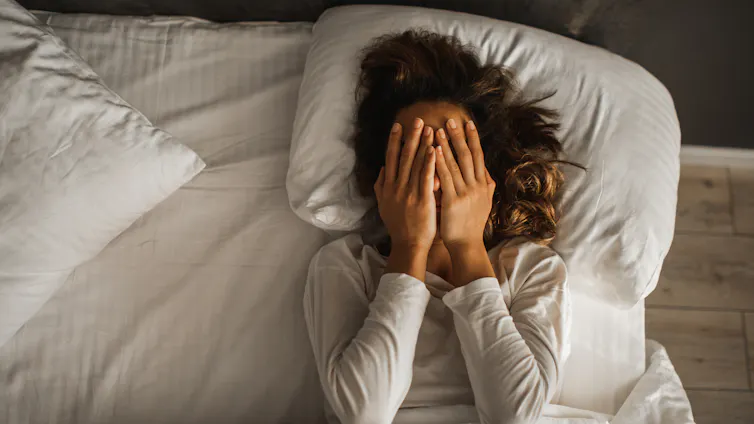
Oleg Breslavtsev/Getty

What is insomnia?

Let’s clear up some terms, and separate short-term or intermittent sleep problems from what health professionals call “insomnia disorder”.

Sleep problems can involve being awake when you want to be asleep. This could be lying in bed for ages trying to fall asleep, waking in the middle of the night for hours, or waking up too early. Having a sleep problem is a subjective experience – you don’t need to tally up lost hours to prove it’s a problem.

But insomnia disorder is the official term to describe a more problematic and persistent pattern of sleep difficulties. And this long-term or chronic sleep disorder has clear diagnostic criteria. These include at least three nights a week of poor sleep, lasting three months or more. These criteria help researchers and clinicians make sure they’re talking about the same thing, and not confusing it with another sleep problem.

So, what are some reasons why a sleep problem might not be insomnia?

1. It’s short term, or comes and goes

About a third of adults will have a bout of “acute insomnia” in a given year. This short-term problem is typically triggered by stress, illness or big life changes.

The good news is that about 72% of people with acute insomnia return to normal sleep after a few weeks.

Insomnia disorder is a longer-term, persistent problem.

2. It doesn’t affect you the next day

Some people lie awake at night but still function well during the day. More fragmented and less refreshing sleep is also a near-universal part of ageing.

So if your sleep problem doesn’t significantly affect you the next day, it usually isn’t considered to be insomnia.

For people with insomnia, the struggle with sleep spills into the day and affects their mood, energy, concentration and wellbeing. Worry and distress about not sleeping can then make the problem worse, which creates a frustrating cycle of worrying and not sleeping.

3. It’s more about work or caring

If you feel tired during the day, an important question is whether you’re giving yourself enough time to sleep. Sometimes sleep problems reflect a “sleep opportunity” that is too short or too irregular.

Work schedules, child care, or late-night commitments can cut sleep short, and sleep can slip down the priority list. In these cases, the problem is insufficient sleep, not insomnia.

You might have noisy neighbours or an annoying cat. These can also affect your sleep, and reduce your “sleep opportunity”.

The average healthy adult gets around seven hours sleep (though this varies widely). For someone who needs seven, it usually means setting aside about eight to allow for winding down, drifting off, and waking overnight.

4. It’s another sleep disorder

Other sleep disorders can look like insomnia, such as:

  • obstructive sleep apnoea (when your breathing stops multiple times during sleep) can cause frequent awakenings through the night and daytime sleepiness
  • restless legs syndrome creates an irresistible urge to move your legs in the evening that often interferes with falling asleep. It’s often described as jittery feelings or having “creepy crawlies”, and is often undiagnosed
  • circadian rhythm problems, such as being a natural night owl in an early-bird world, can also lead to trouble falling asleep.

5. Medications and substances are interfering

Caffeine, alcohol and nicotine all create insomnia symptoms and worsen the quality of sleep.

Certain medications can also interfere with sleep, such as stimulants (for conditions such as attention-deficit hyperactivity disorder or ADHD) and beta-blockers (for various heart conditions).

These issues need to be considered before labelling the problem as insomnia. However, it’s important to keep taking your medication as prescribed and discuss any concerns with your doctor.

Getting the right help

If your sleep is worrying you, the best first step is to see your GP. They can help rule out other causes, review your medications, or refer you for a sleep study if needed.

However, once insomnia becomes frequent, chronic (long term) and distressing, you can worry too much about your sleep, constantly check or track your sleep, or try too hard to sleep, for instance by spending too much time in bed. These psychological and behavioural mechanisms can backfire, and make good sleep even less likely.

That’s why “cognitive behavioural therapy for insomnia” (or CBT-I) is recommended as the first-line treatment.

This is more effective, and longer-lasting than sleeping pills. This therapy is available via specially trained GPs, and sleep psychologists. You can take part in person or online.

In the meantime

If you’re in a rough patch of sleep:

  • remind yourself that short runs of poor sleep usually settle on their own
  • avoid lying in bed panicking if you wake at 3.30am. Instead, step out of bed or use the time in a way that feels restful
  • keep a consistent wake-up time, even after a poor night. Try to get some morning sunlight to reset your body clock
  • make sure you’re putting aside the right amount of time for sleep – not too little, not too much.

Amelia Scott, Honorary Affiliate and Clinical Psychologist at the Woolcock Institute of Medical Research, and Macquarie University Research Fellow, Macquarie University

This article is republished from The Conversation under a Creative Commons license. Read the original article.

Don’t Forget…

Did you arrive here from our newsletter? Don’t forget to return to the email to continue learning!

Learn to Age Gracefully

Join the 98k+ American women taking control of their health & aging with our 100% free (and fun!) daily emails:

  • Hard to Kill – by Dr. Jaime Seeman

    10almonds is reader-supported. We may, at no cost to you, receive a portion of sales if you purchase a product through a link in this article.

    We’ve written before about Dr. Seeman’s method for robust health at all ages, focussing on:

    • Nutrition
    • Movement
    • Sleep
    • Mindset
    • Environment

    In this book, she expands on these things far more than we have room to in our little newsletter, including (importantly!) how each interplays with the others. She also follows up with an invitation to take the “Hard to Kill 30-Day Challenge”.

    That said, in the category of criticism, it’s only 152 pages, and she takes some of that to advertise her online services in an effort to upsell the reader.

    Nevertheless, there’s a lot of worth in the book itself, and the writing style is certainly easy-reading and compelling.

    Bottom line: this book is half instructional, half motivational, and covers some very important areas of health.

    Click here to check out “Hard to Kill”, and enjoy robust health at every age!

    Share This Post

  • How Walking Affects Your Body

    10almonds is reader-supported. We may, at no cost to you, receive a portion of sales if you purchase a product through a link in this article.

    â€Ĥand do you really need to take 10,000 steps per day?

    A step in the right direction

    There are many benefits of walking, including:

    • Immediate mental health benefits: a single walk can improve your mood, reduce anxiety, and ease symptoms of depression, partly through increased endorphin release and reduced cortisol levels.
    • Cardiovascular adaptations: within weeks of walking more, your muscles develop a better blood supply, your heart pumps blood more efficiently, and your body becomes better at delivering oxygen where it is needed.
    • Heart health improvements: after several months, regular walking can lower blood pressure and thus reduce the risk of heart attack and stroke.
    • Long-term disease prevention: consistent walking supports weight management and is associated with a lower risk of type 2 diabetes, several cancers, and dementia.

    As for that about 10,00 steps? Although 10,000 steps per day is a popular target*, research shows that for most people, health benefits occur with any increase in daily steps, and after 8,000 steps per day, there are diminishing marginal returns on additional steps after that.

    *Which was not for any scientific reason, but rather because it was popularized by a Japanese initiative, and the Japanese kanji for “10,000” looks a bit like a person walking, which is why that number was chosen: 万

    A big factor (and especially a big problem in the US) is whether or not neighborhoods are walkable. It’s well-established that living in areas where destinations can be reached on foot encourages more activity, reduces dependence on cars, improves air quality, and lowers greenhouse gas emissions. Indeed, a study in Hong Kong found that older adults living in more walkable neighborhoods reported less loneliness and greater life satisfaction than those in less walkable neighborhoods.

    For more on all of this, enjoy:

    Click Here If The Embedded Video Doesn’t Load Automatically!

    Want to learn more?

    You might also like:

    Walkingâ€Ĥ Better.

    Take care!

    Share This Post

  • Lower Cholesterol Naturally

    10almonds is reader-supported. We may, at no cost to you, receive a portion of sales if you purchase a product through a link in this article.

    Lower Cholesterol, Without Statins

    We’ll start this off by saying that lowering cholesterol might not, in fact, be critical or even especially helpful for everyone, especially in the case of women. We covered this more in our article about statins:

    Statins: His & Hers?

    â€Ĥwhich was largely informed by the wealth of data in this book:

    The Truth About Statins – by Dr. Barbara H. Roberts

    â€Ĥwhich in turn, may in fact put a lot of people off statins. We’re not here to tell you don’t use them—they may indeed be useful or even critical for some people, as Dr. Roberts herself also makes makes clear. But rather, we always recommend learning as much as possible about what’s going on, to be able to make the most informed choices when it comes to what often might be literally life-and-death decisions.

    On which note, if anyone would like a quick refresher on cholesterol, what it actually is (in its various forms) and what it does, why we need it, the problems it can cause anyway, then here you go:

    Demystifying Cholesterol

    Now, with all that in mind, we’re going to assume that you, dear reader, would like to know:

    • how to lower your LDL cholesterol, and/or
    • how to maintain a safe LDL cholesterol level

    Because, while the jury’s out on the dangers of high LDL levels for women in particular, it’s clear that for pretty much everyone, maintaining them within well-established safe zones won’t hurt.

    Here’s how:

    Relax

    Or rather, manage your stress. This doesn’t just reduce your acute risk of a heart attack, it also improves your blood metrics along the way, and yes, that includes not just blood pressure and blood sugars, but even triglycerides! Here’s the science for that, complete with numbers:

    What are the effects of psychological stress and physical work on blood lipid profiles?

    With that in mind, here’sâ€Ĥ

    How To Manage Chronic Stress (Even While Chronically Stressed)

    Not chemically “relaxed”, though

    While relaxing is important, drinking alcohol and smoking are unequivocally bad for pretty much everything, and this includes cholesterol levels:

    Can We Drink To Good Health? ← this also covers popular beliefs about red wine and heart health, and the answer is no, we cannot

    As for smoking, it is good to quit as soon as possible, unless your doctor specifically advises you otherwise (there are occasional situations where something else needs to be dealt with first, but not as many some might like to believe):

    Addiction Myths That Are Hard To Quit

    If you’re wondering about cannabis (CBD and/or THC), then we’d love to tell you about the effect these things have on heart health in general and cholesterol levels in particular, but the science is far too young (mostly because of the historic, and in some places contemporary, illegality cramping the research), and we could only find small, dubious, mutually contradictory studies so far. So the honest answer is: science doesn’t know this one, yet.

    Exerciseâ€Ĥ But don’t worry, you can still stay relaxed

    When it comes to heart health, the most important thing is keeping moving, so getting in those famous 150 minutes per week of moderate exercise is critical, and getting more is ideal.

    240 minutes per week is a neat 40 minutes per day, by the way and is very attainable (this writer lives a 20-minute walk away from where she does her daily grocery shopping, thus making for a daily 40-minute round trip, not counting the actual shopping).

    See: The Doctor Who Wants Us To Exercise Less, And Move More

    If walking is for some reason not practical for you, here’s a whole list of fun options that don’t feel like exercise but are:

    No-Exercise Exercise!

    Manage your hormones

    This one is mostly for menopausal women, though some people with atypical hormonal situations may find it applicable too.

    Estrogen protects the heartâ€Ĥ Until it doesn’t:

    Menopause can bring increased cholesterol levels and other heart risks. Here’s why and what to do about it

    See also: World Menopause Day: Menopause & Cardiovascular Disease Risk

    Here’s a great introduction to sorting it out, if necessary:

    Dr. Jen Gunter: What You Should Have Been Told About Menopause Beforehand

    Eat a heart-healthy diet

    Shocking nobody, but it has to be said, for the sake of being methodical. So, what does that look like?

    What Matters Most For Your Heart? Eat More (Of This) For Lower Blood Pressure

    (it’s fiber in the #1 spot, but there’s a list of most important things there, that’s worth checking out and comparing it to what you habitually eat)

    You can also check out the DASH (Dietary Approaches to Stop Hypertension) edition of the Mediterranean diet, here:

    Four Ways To Upgrade The Mediterranean Diet

    As for saturated fat (and especially trans-fats), the basic answer is to keep them to minimal, but there is room for nuance with saturated fats at least:

    Can Saturated Fats Be Healthy?

    And lastly, do make sure to get enough omega 3 fatty-acids:

    What Omega-3s Really Do For Us

    And enjoy plant sterols and stanols! This would need a whole list of their own, so here you go:

    Take These To Lower Cholesterol! (Statin Alternatives)

    Take care!

    Share This Post

  • Finish What You Start – by Peter Hollins

    10almonds is reader-supported. We may, at no cost to you, receive a portion of sales if you purchase a product through a link in this article.

    For some people, getting started is the problem. For others of us, getting started is the easy part! We just need a little help not dropping things we started.

    There are summaries at the starts and ends of sections, and many “quick tips” to get you back on track.

    As a taster: one of these is “temptation bundling“, combining unpleasant things with pleasant. A kind of “spoonful of sugar” approach.

    Hollins also discusses hyperbolic discounting (the way we tend to value rewards according to how near they are, and procrastinate accordingly). He offers a tool to overcome this, too, the “10–10–10 rule“.

    Also dealt with is “the preparation trap“, and how to know when you have enough information to press on.

    For a lot of us, the places we’re most likely to drop a project is 20% in (initial enthusiasm wore off) or 80% in (“it’s nearly done; no need to worry about it”). Those are the times when the advices in this book can be particularly handy!

    All in all, a great book for seeing a lot of things to completion.

    Get your copy of “Finish What You Start” from Amazon today!

    Don’t Forget…

    Did you arrive here from our newsletter? Don’t forget to return to the email to continue learning!

    Learn to Age Gracefully

    Join the 98k+ American women taking control of their health & aging with our 100% free (and fun!) daily emails:

  • Pomegranate vs Starfruit – Which is Healthier?

    10almonds is reader-supported. We may, at no cost to you, receive a portion of sales if you purchase a product through a link in this article.

    Our Verdict

    When comparing pomegranate to starfruit, we picked the pomegranate.

    Why?

    In terms of macros, pomegranate has more fiber, carbs, and protein, winning this first round easily.

    In the category of vitamins, pomegranate has more of vitamins B1, B2, B6, B7, B9, E, and K, while starfruit has more of vitamins A, B3, and C, yielding a 7:3 win to pomegranate

    Looking at minerals, pomegranate has more calcium, copper, iron, magnesium, manganese, phosphorus, potassium, and zinc, while starfruit has only more selenium, making this an easy win for pomegranate.

    In other considerations, pomegranate has some additional health benefits, but as you’ll read from the link below, they’re mainly in the peel which most people don’t eat.

    Still adding up the sections makes for a clear overall win for pomegranate, but do by all means enjoy either or both, as diversity is best!

    Want to learn more?

    You might like:

    Pomegranate’s Health Gifts Are Mostly In Its Peel

    Enjoy!

    Don’t Forget…

    Did you arrive here from our newsletter? Don’t forget to return to the email to continue learning!

    Learn to Age Gracefully

    Join the 98k+ American women taking control of their health & aging with our 100% free (and fun!) daily emails:

  • A free shower is the least older people can expect, but aged care funding misses one key point

    10almonds is reader-supported. We may, at no cost to you, receive a portion of sales if you purchase a product through a link in this article.

    This week, we learned older people in home-based aged care will no longer have to pay out-of-pocket for showering, dressing and continence care.

    This backflip will provide relief for those currently receiving services under the Support at Home program and the 100,000 or so people on the waiting list for home care.

    For people with continence issues, wounds and other issues that make showering essential, this is welcome news and something both advocates and consumers have been calling for.

    This announcement comes as the government grapples with the cost of providing health care in various forms, prompting major changes to the National Disability Insurance Scheme, aged care and private health insurance.

    In fact, the government plans to pay for increased funding for aged care, including the Support at Home program, by scrapping the additional private health insurance rebate for the over-65s.

    One key issue now is how Australia subsidises this type of aged care without shifting excessive costs onto future generations.

    Jacob Wackerhausen/Getty

    Equitable but at what cost?

    A key push of the Support at Home program, which started in November 2025, is that people who can afford it should fund more of their own care. The aim of this so-called “vertical equity” is to ensure the system is sustainable.

    In theory, this protects funding for those who need it most. In practice, it has raised questions about whether it has undermined access to necessary care.

    There’s a list with three types of services requiring the person receiving care to contribute at different levels:

    • Clinical support services require no co-contribution, regardless of means. This includes services such as wound care or podiatry.
    • Independence (including personal care) requires a contribution of 5–50% of the fee depending on income and assets. This currently includes services such as showering, social support and respite care.
    • Everyday living requires the biggest contribution of 17.5–80%. This includes cleaning, home maintenance and gardening.

    Let’s see what this means in dollar terms. Currently, if a shower costs about A$100 an hour (not unreasonable given this hourly rate has to include superannuation, travel, workers compensation, for instance), a person on a full aged pension would have to pay $5 per shower and a person at full rates would pay $50.

    You can see how this adds up quickly with payments also required for other services, such as cleaning and gardening eating into a fixed age pension. Getting help to shower every day becomes impossible – particularly with higher rates paid at the weekend.

    Some people may be able to get friends and neighbours to help with some tasks, such as mowing the lawn or putting out the bins. But showering is intensely personal. It isn’t something you want to have to ask of a friend.

    However, the recent announcement means personal care – showering, dressing, continence care – moves from being classified as “independence” which attracted a co-payment to “clinical support”, which requires the participant to pay nothing out-of-pocket.

    This ensures a different type of equity, known as “horizontal equity”. In other words, everyone with similar clinical needs can access the same support.

    But there’s a flip side. This change means people who could afford to contribute to personal care will no longer need to do so. This increases the share of costs borne by taxpayers.

    Why are there different subsidies?

    When people start to have difficulty managing their daily activities, they often turn to requesting help doing the cleaning, cooking and gardening rather than working on improving or regaining their capacity to do those tasks.

    The idea behind setting varied prices for the different types of services is to shift this pattern.

    It’s to encourage people to get the clinical support they need and promote capacity building – via using services with no out-of-pocket costs – so people can continue to manage daily living at home. This may mean bringing in a physiotherapist to help someone move about, and maintain muscle mass and stability, making it easier for them to manage at home.

    This logic makes sense early on, where people are capable of reversing or preventing frailty. We want to encourage people to stay active and well. But this isn’t always possible.

    Requiring co-payments for support services – such as support to prepare meals or do the laundry under the everyday living category – when capacity can’t be regained can feel like a punitive measure. It’s this part of the funding equation that the latest announcement doesn’t touch on.

    How about the future?

    Currently, we don’t know if the Support at Home program is delivering its intended effect of increasing access to clinical and capacity building services while charging more for those who can afford it to pay for their care.

    But we have a great opportunity to find out. We can compare the types of services people receive under the previous version of the home aged-care scheme before November 2025 (which some people are still on) with the current scheme.

    As the Support at Home program matures, we also need to review the level and type of services that attract co-payments. We need to understand if people are forgoing some types of care due to the co-payments and whether other adjustments to the program are needed.

    As people progress and need more care, we may need to consider whether co-payments for certain services are still a good idea, or are creating new inequities. As one example, cleaning may need to be provided without a co-payment for people with greater care needs and less ability to pay.

    We also need to consider whether wealthier older people should pay more.

    A delicate balance

    This announcement addresses a clear and important equity concern by removing financial barriers to essential personal care. But it also highlights the delicate balance governments must strike in designing a sustainable aged-care system – one that protects access for those with the greatest needs, while fairly sharing costs across the community.

    As Support at Home matures, equity will need to be monitored and government must be prepared to make changes where needed.

    Getting that balance right will be crucial to ensuring older Australians can age with dignity, without causing intergenerational inequity by shifting excessive costs onto future generations.

    Tracy Comans, Professor, School of Public Health, The University of Queensland; The University of Melbourne

    This article is republished from The Conversation under a Creative Commons license. Read the original article.

    Don’t Forget…

    Did you arrive here from our newsletter? Don’t forget to return to the email to continue learning!

    Learn to Age Gracefully

    Join the 98k+ American women taking control of their health & aging with our 100% free (and fun!) daily emails: