
Chicken Skin: Do You Have Keratosis Pilaris, Or Something Else?
10almonds is reader-supported. We may, at no cost to you, receive a portion of sales if you purchase a product through a link in this article.
Dr. Andrea Suarez explains how to stop this from happening:
Keratin, Kerat-out
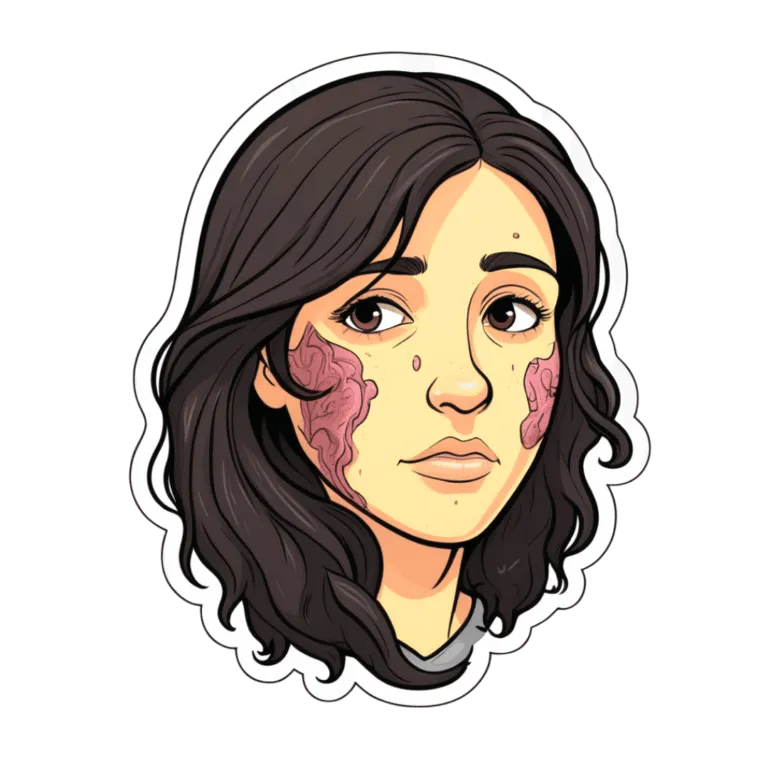
Dry skin cannot shed keratin properly, so it accumulates around hair follicles, creating small, rough, sandpaper-like bumps. Depending on various conditions (and your baseline skin pigmentation), can be anywhere from pale white (dead skin) through to dark brown. If it’s unusually pink or red, that’s probably inflammation.
Notably, the bumps are dry and rough rather than painful, and any itch is usually mild unless your skin is extremely dry, and there may be no itch at all.
There are some lookalikes, which are either related conditions (like folliculitis) or unrelated (like acne). Here’s what to watch out for.
- Folliculitis: inflamed hair follicles caused by bacteria, yeast, or irritation, often red, tender, itchy, or pus-filled, and commonly triggered by shaving, sweating, or friction.
- Follicular erythema from hair removal: redness around hair follicles that appears shortly after shaving, waxing, or plucking and usually settles within a few days, unlike keratosis pilaris which lingers.
- Eczema (atopic dermatitis): can resemble keratosis pilaris but is typically very itchy, may ooze or weep, and involves inflamed skin beyond the hair follicle itself.
- Pityrosporum folliculitis (fungal acne): uniform, itchy red bumps caused by yeast overgrowth, often worsens with heat, humidity, and sweating, and commonly affects the forehead, chest, and upper back.
- Milia: tiny white keratin-filled cysts that are not linked to a hair follicle, are not inflamed, and do not respond to moisturizers or exfoliating acids.
- Acne: larger, deeper, often painful or pus-filled lesions that may scar or leave dark marks, which is not typical of keratosis pilaris.
So, if it is keratosis pilaris, how to deal with it?
The main thing is consistent use of moisturizers containing keratolytics such as urea, lactic acid, glycolic acid, and/or salicylic acid to smooth skin and improve hydration.
Improvement usually takes 4–6 weeks of regular use, and ongoing maintenance is needed because the condition tends to recur if left unchecked. You can also help reduce its recurrence if you keep showers short and not too hot, pat your skin dry instead of rubbing, moisturize immediately after bathing, and use a humidifier in otherwise dry environments.
When to see a dermatologist: if the bumps are painful, itchy, spreading, or unresponsive to over-the-counter treatments, or if it is unclear what condition is present, then it’s time to let a professional take a look.
For more on all of this plus some visual illustrations, enjoy:
Click Here If The Embedded Video Doesn’t Load Automatically!
Want to learn more?
You might also like:
Beyond Castor: Vegetable Oils That Regenerate Your Skin
Take care!
Don’t Forget…
Did you arrive here from our newsletter? Don’t forget to return to the email to continue learning!
Recommended
Learn to Age Gracefully
Join the 98k+ American women taking control of their health & aging with our 100% free (and fun!) daily emails:
-
Heal Your Gut, Save Your Brain – by Dr. Partha Nandi
10almonds is reader-supported. We may, at no cost to you, receive a portion of sales if you purchase a product through a link in this article.
The gut-brain axis is well-known, at least to those of us who care to learn about health science, which of course includes everyone reading this (because that’s why you’re here, after all). However, its importance cannot be overstated when it comes to the connection between gut health and brain health, both in terms of the good and the bad.
Dr. Nandi explores and explains this in terms of correct systemic functioning and pathology—in other words, what goes on and what can go wrong. As it happens, what goes on is a lot, and what can go wrong is also a lot, and it’s important to understand how, in order to prevent it and keep our brain healthy.
This is not just about general brain health, by the way. Not that that would be bad; general brain health is a great thing to have. But, the focus here is on the involvement of gut health (for better or for worse) in the specific contexts of stroke, Alzheimer’s, and Parkinson’s, with several chapters dedicated to each of the aforementioned brain health threats, covering how gut health affects the risks, and how specifically to change course to avoid it in each case.
Oh, and three more chapters (i.e. one additional chapter for each of those diseases) with recipes optimized to improve your gut-brain health in the best of ways, to avoid stroke, Alzheimer’s, and Parkinson’s, respectively. Of course, all are good against each; this isn’t a zero-sum game. But, some things have specialities that others don’t, and Dr. Nandi highlights such cases for us.
The style is (aside from the recipes) high-end pop-science, with scientific references at a rate of several per page (sometimes several per paragraph), yet very comprehensible, and while he explains everything as he goes, he also does provide a glossary at the back, so that’s good too.
Bottom line: if you have a gut and a brain and would like to keep both in the best possible working order, this book will help you to do so.
Click here to check out Heal Your Gut, Save Your Brain, and do exactly that!
Share This Post
-
Overcoming Tendonitis – by Dr. Steven Low & Dr. Frank Skretch
10almonds is reader-supported. We may, at no cost to you, receive a portion of sales if you purchase a product through a link in this article.
If you assumed tendonitis to be an inflammatory condition, you’re not alone. However, it’s not; the “-itis” nomenclature is a misnomer, and while one can rarely go wrong with reducing chronic/systemic inflammation, it’s not the cure for tendonitis.
What, then, is tendonitis and what does cure it? It’s a non-inflammatory proliferation disorder, meaning, something is growing (or in this case, simply being replaced) in a way it shouldn’t. As to fixing it, that’s more complex.
This book does cover 20 interventions (sorted into “major” and “minor”), ranging from exercise therapies to surgery, with many things between. It also examines popular myths that do not help, such as rest, ice, heat, and analgesics.
The style of this book is hard science, but don’t worry, it explains everything along the way. It does however mean that if you’re not very accustomed to wading through scientific material, you can’t just dip into the middle of the book and be guaranteed to understand what’s going on. Indeed, before even getting to discussing tendonitis/tendinopathy, the first chapter is very reassuringly dedicated to “understanding the levels and classification of evidence in studies”, along with the assorted scales and guidelines of the Center for Evidence-Based Medicine.
The rest, however, is about the etiology, diagnosis, and treatment of tendonitis and tendinopathy more generally. One interesting thing is that, according to the abundant high-quality evidence presented in this book, what works for one body part’s tendonitis does not necessarily work for another body part, so we get quite a part-by-part rundown.
Bottom line: this book has a wealth of useful, applicable information about management of tendonitis, making it indispensable if you or a loved one suffer from such—but settle in, because it’s not a light read.
Click here to check out Overcoming Tendonitis, and overcome tendonitis!
Share This Post
-
Online Reaction Tests & Women’s Cognitive Health (Test Yours!)
10almonds is reader-supported. We may, at no cost to you, receive a portion of sales if you purchase a product through a link in this article.
A team of researchers looked into the use of online reaction tests (in which, for example, one clicks whenever a certain prompt is shown, or for more of a cognitive challenge, one presses a numerical key when the corresponding digit is shown) to cognitive health in women at different ages.
Why women? To quote the man who had the honor of being the first-listed author on the study (something that happens mysteriously often in science),
❝Women have long been under-represented in healthy aging research, despite making up more than half the population. We developed an easy way to measure cognitive function in the home, without the need for individuals to travel to clinics or receive home visits. Our research shows that testing of cognitive function in the home largely acceptable, easy and convenient❞
About that convenience: they used data from the UK Women’s Cohort Study, which involved over 35,000 British women, and then specifically focused on a follow-up study of 768 participants aged 48–85.
Of the two kinds of online reaction tests we described up top, they used the numerical kind. The participants also filled in a questionnaire about their personal traits (demographic data, mostly, though things like self-reported level of health literacy, and how they would rate their overall health).
What they found
The findings included:
- Younger women were more likely to participate, with participation rates dropping from 89% at age 45 to 44% at age 65.
- Each higher level of education increased the likelihood of volunteering by 7%.
- Women who rated themselves as having “high” intelligence were 19% more likely to participate than those who considered themselves of “average” intelligence.
- Women with lower self-reported health literacy made fewer errors, possibly due to taking longer to decide on answers—consistent with findings from older adults.
You can read the full paper itself here: Health literacy in relation to web-based measurement of cognitive function in the home: UK Women’s Cohort Study
Why this matters
We wrote, a little while ago, about the use of online games (of a specific kind) to improve cognitive function:
Synergistic Brain-Training: Let The Games Begin (But It Matters What Kind) ← the good news is, these are very accessible too
When it comes to rapid and/but correct reactions, this becomes really critical:
How (And Why) To Train Your Pre-Frontal Cortex ← Dr. Sandra Chapman advocates strongly for this, and it’s closely related to working memory and the ability to focus
Want to test yours?
Here are two ways to do it (now, for free, without needing to sign up for anything; the tests are right there on the page):
- HumanBenchmark.com’s Reaction Time Test ← this one’s just a “click when the red panel turns green” test, but the merit here is that it compares your scores to a very large dataset of other people
- Keypress Reaction Time Test ← this one’s the kind that was used in the study, and requires pressing the correct numerical key when the corresponding digit is shown on the screen. You can make it easier or harder by restricting or increasing the range of numbers it uses (default setting is to use the numbers 1, 2, 3, 4, 5, and 6)
Enjoy!
Share This Post
Related Posts
-
Make Your Saliva Better For Your Teeth
10almonds is reader-supported. We may, at no cost to you, receive a portion of sales if you purchase a product through a link in this article.
A new study has highlighted the importance of lifestyle factors in shaping the oral microbiome—that is to say, how the things we do affect the bacteria that live in our mouths:
Nepali oral microbiomes reflect a gradient of lifestyles from traditional to industrialized
Neither the study title nor the abstract elucidate how, exactly, one impacts the other, but the study itself does (of course) contain that information; we read it, and the short version is:
In terms of the extremes of “most traditional” to “most industrialized”, foragers have the most diverse oral microbiomes (that’s good), and people with an American industrialized lifestyle had the least diverse oral microbiomes (that’s bad). Between the two extremes, we see the gradient promised by the title.
If you do feel like checking it out, Figure 3 in the paper illustrates this nicely.
Also illustrated in the above-linked Figure 3 is oral microbiome composition. In other words (and to oversimplify it rather), how good or bad our mouth bacteria are for us, independent of diversity (so for example, are there more of this or that kind of bacteria).
Once again, there is a gradient, only this time, the ends of it are even more polarized: foragers have a diverse oral microbiome rich with healthy-for-humans bacteria, while people with an American industrialized lifestyle might not have the diversity, but do have a large number of bad-for-humans bacteria.
While many lifestyle factors are dietary or quasi-dietary, e.g. what kinds of foods people eat, whether they drink alcohol, whether they smoke or use gum, etc, many lifestyle factors were examined, including everything from medications and exercise, to things like kitchen location and what fuel is predominantly used, to education and sexual activity and many other things that we don’t have room for here.
You can see how each lifestyle factor stacked up, in Figure 5.
Why it matters
Our oral microbiome affects many aspects of health, including:
- Locally: caries, periodontal diseases, mucosal diseases, oral cancer, and more
- Systemically: gastrointestinal diseases in general, IBS in particular, nervous system diseases, Alzheimer’s disease, endocrine diseases, all manner of immune/autoimmune diseases, and more
Nor are the effects it has mild; oral microbiome health can be a huge factor, statistically, for many of the above. You can see information and data pertaining to all of the above and more, here:
Oral microbiomes: more and more importance in oral cavity and whole body
What to do about it
Take care of your oral microbiome, to help it to take care of you. As well as the above-mentioned lifestyle factors, it’s worth noting that when it comes to oral hygiene, not all oral hygiene products are created equal:
Toothpastes & Mouthwashes: Which Kinds Help, And Which Kinds Harm?
Additionally, you might want to consider gentler options, but if you do, take care to opt for things that science actually backs., rather than things that merely trended on social media.
This writer (hi, it’s me) is particularly excited about the science and use of the miswak stick, which comes from the Saladora persica tree, and has phytochemical properties that (amongst many other health-giving effects) improve the quality of saliva (i.e., improve its pH and microbiome composition). In essence, your own saliva gets biochemically nudged into being the safest, most effective mouthwash.
There’s a lot of science for the use of S. persica, and we’ve discussed it before in more detail than we have room to rehash today, here:
Less Common Oral Hygiene Options
If you’d like to enjoy these benefits (and also have the equivalent of a toothbrush that you can carry with you at all times and does not require water*), then here’s an example product on Amazon 😎
*don’t worry, it won’t feel like dry-brushing your teeth. Remember what we said about what it does to your saliva. Basically, you chomp it once, and your saliva a) increases and b) becomes biological tooth-cleaning fluid. The stick itself is fibrous, so the end of it frays in a way that makes a natural little brush. Each stick is about 5”×¼” and you can carry it in a little carrying case (you’ll get a couple with each pack of miswak sticks), so you can easily use it in, say, the restroom of a restaurant or before your appointment somewhere, just as easily as you could use a toothpick, but with much better results. You may be wondering how long a stick lasts; well, that depends on how much you use it, but in this writer’s experience, each stick lasts about a month maybe, using it at least 2–3 times per day, probably rather more since I use it after each meal/snack and upon awakening.
(the above may read like an ad, but we promise you it’s not sponsored and this writer’s just enthusiastic, and when you read the science, you will be too)
Enjoy!
Don’t Forget…
Did you arrive here from our newsletter? Don’t forget to return to the email to continue learning!
Learn to Age Gracefully
Join the 98k+ American women taking control of their health & aging with our 100% free (and fun!) daily emails:
-
HRT Side Effects & Troubleshooting
10almonds is reader-supported. We may, at no cost to you, receive a portion of sales if you purchase a product through a link in this article.
This is Dr. Heather Hirsch. She’s a board-certified internist, and her clinical expertise focuses on women’s health, particularly in midlife and menopause, and its intersection with chronic diseases (ranging from things associated with sexual health, to things like osteoporosis and heart disease).
So, what does she want us to know?
HRT can be life-changingly positive, but it can be a shaky start
Hormone Replacement Therapy (HRT), and in this context she’s talking specifically about the most common kind, Menopausal Hormone Therapy (MHT), involves taking hormones that our body isn’t producing enough of.
If these are “bioidentical hormones” as used in most of the industrialized world and increasingly also in N. America, then this is by definition a supplement rather than a drug, for what it’s worth, whereas some non-bioidentical hormones (or hormone analogs, which by definition function similarly to hormones but aren’t the same thing) can function more like drugs.
We wrote a little about his previously:
Hormone Replacement Therapy: A Tale Of Two Approaches
For most people most of the time, bioidentical hormones are very much the best way to go, as they are not only more effective, but also have fewer side effects.
That said, even bioidentical hormones can have some undesired effects, so, how to deal with those?
Don’t worry; bleed happy
A reprise of (usually quite light) menstrual bleeding is the most common side effect of menopausal HRT.
This happens because estrogen affects* the uterus, leading to a build-up and shedding of the uterine lining.
*if you do not have a uterus, estrogen can effect uterine tissue. That’s not a typo—here we mean the verb “effect”, as in “cause to be”. It will not grow a new uterus, but it can cause some clumps of uterine tissue to appear; this means that it becomes possible to get endometriosis without having a uterus. This information should not be too shocking, as endometriosis is a matter of uterine tissue growing inconveniently, often in places where it shouldn’t, and sometimes quite far from the uterus (if present, or its usual location, if absent). However, the risk of this happening is far lower than if you actually have a uterus:
What you need to know about endometriosis
Back to “you have a uterus and it’s making you wish you didn’t”:
This bleeding should, however, be light. It’ll probably be oriented around a 28-day cycle even if you are taking your hormones at the same dose every day of the month, and the bleeding will probably taper off after about 6 months of this.
If the bleeding is heavier, all the time, or persists longer than 6 months, then speak to your gynecologist about it. Any of those three; it doesn’t have to be all three!
Bleeding outside of one’s normal cycle can be caused by anything from fibroids to cancer; statistically speaking it’s probably nothing too dire,but when your safety is in question, don’t bet on “probably”, and do get it checked out:
When A Period Is Very Late (i.e., Post-Menopause)
Dr. Hirsch recommends, as possible remedies to try (preferably under your gynecologist’s supervision):
- lowering your estrogen dose
- increasing your progesterone dose
- taking progesterone continuously instead of cyclically
And if you’re not taking progesterone, here’s why you might want to consider taking this important hormone that works with estrogen to do good things, and against estrogen to rein in some of estrogen’s less convenient things:
Progesterone Menopausal HRT: When, Why, And How To Benefit
(the above link contains, as well as textual information, an explanatory video from Dr. Hirsch herself)
Get the best of the breast
Calm your tits. Soothe your boobs. Destress your breasts. Hakuna your tatas. Undo the calamity beleaguering your mammaries.
Ok, more seriously…
Breast tenderness is another very common symptom when starting to take estrogen. It can worry a lot of people (à la “aagh, what is this and is it cancer!?”), but is usually nothing to worry about. But just to be sure, do also check out:
Keeping Abreast Of Your Cancer Risk: How To Triple Your Breast Cancer Survival Chances
Estrogen can cause feelings of breast fullness, soreness, nipple irritation, and sometimes lactation, but this later will be minimal—we’re talking a drop or two now and again, not anything that would feed a baby.
Basically, it happens when your body hasn’t been so accustomed to normal estrogen levels in a while, and suddenly wakes up with a jolt, saying to itself “Wait what are we doing puberty again now? I thought we did menopause? Are we pregnant? What’s going on? Ok, checking all systems!” and then may calm down not too long afterwards when it notes that everything is more or less as it should be already.
If this persists or is more than a minor inconvenience though, Dr. Hirsch recommends looking at the likely remedies of:
- Adjust estrogen (usually the cause)
- Adjust progesterone (less common)
- If it’s progesterone, changing the route of administration can ameliorate things
What if it’s not working? Is it just me?
Dr. Hirsch advises the most common reasons are simply:
- wrong formulation (e.g. animal-derived estrogen or hormone analog, instead of bioidentical)
- wrong dose (e.g. too low)
- wrong route of administration (e.g. oral vs transdermal; usually transdermal estradiol is most effective but many people do fine on oral; progesterone meanwhile is usually best as a pessary/suppository, but many people do fine on oral)
Writer’s example: in 2022 there was an estrogen shortage in my country, and while I had been on transdermal estradiol hemihydrate gel, I had to go onto oral estradiol valerate tablets for a few months, because that’s what was available. And the tablets simply did not work for me at all. I felt terrible and I have a good enough intuitive sense of my hormones to know when “something wrong is not right”, and a good enough knowledge of the pharmacology & physiology to know what’s probably happening (or not happening). And sure enough, when I got my blood test results, it was as though I’d been taking nothing. It was such a relief to get back on the gel once it became available again!
So, if something doesn’t seem to be working for you, speak up and get it fixed if at all possible.
See also: What You Should Have Been Told About Menopause Beforehand
Want to know more from Dr. Hirsch?
You might like this book of hers, which we haven’t reviewed yet, but present here for your interest:
Enjoy!
Don’t Forget…
Did you arrive here from our newsletter? Don’t forget to return to the email to continue learning!
Learn to Age Gracefully
Join the 98k+ American women taking control of their health & aging with our 100% free (and fun!) daily emails:
-
Get Well, Stay Well – by Dr. Gemma Newman
10almonds is reader-supported. We may, at no cost to you, receive a portion of sales if you purchase a product through a link in this article.
Dr. Gemma Newman is a GP (British equivalent of what in America is called a “family doctor”) who realized she was functioning great as a diagnostic flowchart interpreter and pill dispensary, but not actually doing much of what she got into the job to do: helping people.
Her patients were getting plenty of treatments, but not getting better. Often, they were getting worse. And she knew why: they come in for treatment for one medical problem, when they have six and a half medical problems probably a stack of non-medical problems that contributed to them,
So, this book sets out to do what she tries to do in her office, but often doesn’t have the time: treat the whole person.
In it, she details what areas of life to look at, what things are most likely to contribute to wellness/unwellness (be those things completely in your power or not), and how to—bit by bit—make all the parts better, and keep them that way.
The writing style is conversational, and while it’s heavily informed by her professional competence, there’s no arcane science here; it’s more about the system of bringing everything together harmoniously.
Bottom line: if you think there’s more to wellness than can be represented on an annual physicals chart, then this is the book to help you get/keep on top of things.
Click here to check out Get Well, Stay Well, and do just that!
Don’t Forget…
Did you arrive here from our newsletter? Don’t forget to return to the email to continue learning!
Learn to Age Gracefully
Join the 98k+ American women taking control of their health & aging with our 100% free (and fun!) daily emails:


