
Are you over 75? Here’s what you need to know about vitamin D
10almonds is reader-supported. We may, at no cost to you, receive a portion of sales if you purchase a product through a link in this article.
Vitamin D is essential for bone health, immune function and overall wellbeing. And it becomes even more crucial as we age.
New guidelines from the international Endocrine Society recommend people aged 75 and over should consider taking vitamin D supplements.
But why is vitamin D so important for older adults? And how much should they take?
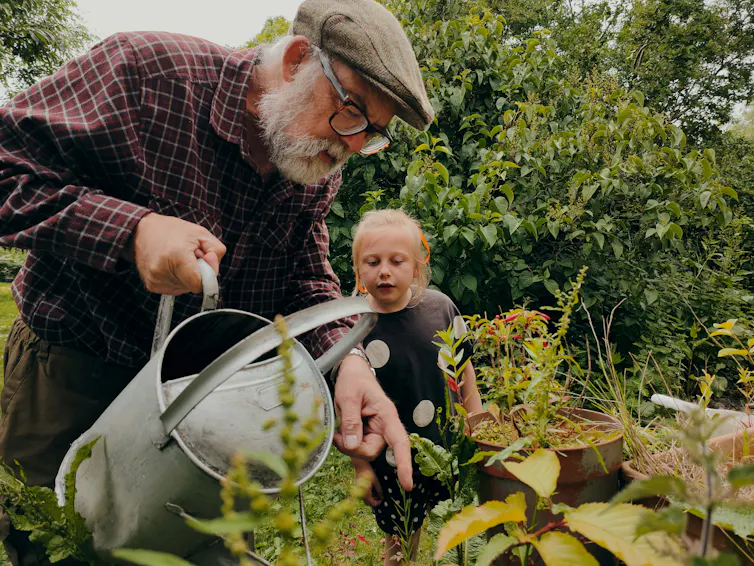
Young people get most vitamin D from the sun
In Australia, it is possible for most people under 75 to get enough vitamin D from the sun throughout the year. For those who live in the top half of Australia – and for all of us during summer – we only need to have skin exposed to the sun for a few minutes on most days.
The body can only produce a certain amount of vitamin D at a time. So staying in the sun any longer than needed is not going to help increase your vitamin D levels, while it will increase your risk of skin cancer.
But it’s difficult for people aged over 75 to get enough vitamin D from a few minutes of sunshine, so the Endocrine Society recommends people get 800 IU (international units) of vitamin D a day from food or supplements.
Why you need more as you age
This is higher than the recommendation for younger adults, reflecting the increased needs and reduced ability of older bodies to produce and absorb vitamin D.
Overall, older adults also tend to have less exposure to sunlight, which is the primary source of natural vitamin D production. Older adults may spend more time indoors and wear more clothing when outdoors.
As we age, our skin also becomes less efficient at synthesising vitamin D from sunlight.
The kidneys and the liver, which help convert vitamin D into its active form, also lose some of their efficiency with age. This makes it harder for the body to maintain adequate levels of the vitamin.
All of this combined means older adults need more vitamin D.
Deficiency is common in older adults
Despite their higher needs for vitamin D, people over 75 may not get enough of it.
Studies have shown one in five older adults in Australia have vitamin D deficiency.
In higher-latitude parts of the world, such as the United Kingdom, almost half don’t reach sufficient levels.
This increased risk of deficiency is partly due to lifestyle factors, such as spending less time outdoors and insufficient dietary intakes of vitamin D.
It’s difficult to get enough vitamin D from food alone. Oily fish, eggs and some mushrooms are good sources of vitamin D, but few other foods contain much of the vitamin. While foods can be fortified with the vitamin D (margarine, some milk and cereals), these may not be readily available or be consumed in sufficient amounts to make a difference.
In some countries such as the United States, most of the dietary vitamin D comes from fortified products. However, in Australia, dietary intakes of vitamin D are typically very low because only a few foods are fortified with it.
Why vitamin D is so important as we age
Vitamin D helps the body absorb calcium, which is essential for maintaining bone density and strength. As we age, our bones become more fragile, increasing the risk of fractures and conditions like osteoporosis.
Keeping bones healthy is crucial. Studies have shown older people hospitalised with hip fractures are 3.5 times more likely to die in the next 12 months compared to people who aren’t injured.
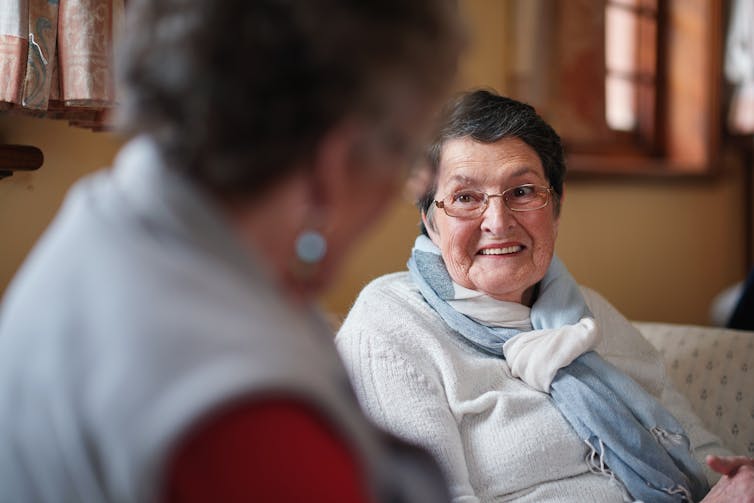
Vitamin D may also help lower the risk of respiratory infections, which can be more serious in this age group.
There is also emerging evidence for other potential benefits, including better brain health. However, this requires more research.
According to the society’s systematic review, which summarises evidence from randomised controlled trials of vitamin D supplementation in humans, there is moderate evidence to suggest vitamin D supplementation can lower the risk of premature death.
The society estimates supplements can prevent six deaths per 1,000 people. When considering the uncertainty in the available evidence, the actual number could range from as many as 11 fewer deaths to no benefit at all.
Should we get our vitamin D levels tested?
The Endocrine Society’s guidelines suggest routine blood tests to measure vitamin D levels are not necessary for most healthy people over 75.
There is no clear evidence that regular testing provides significant benefits, unless the person has a specific medical condition that affects vitamin D metabolism, such as kidney disease or certain bone disorders.
Routine testing can also be expensive and inconvenient.
In most cases, the recommended approach to over-75s is to consider a daily supplement, without the need for testing.
You can also try to boost your vitamin D by adding fortified foods to your diet, which might lower the dose you need from supplementation.
Even if you’re getting a few minutes of sunlight a day, a daily vitamin D is still recommended.
Elina Hypponen, Professor of Nutritional and Genetic Epidemiology, University of South Australia and Joshua Sutherland, PhD Candidate – Nutrition and Genetic Epidemiology, University of South Australia
This article is republished from The Conversation under a Creative Commons license. Read the original article.
Don’t Forget…
Did you arrive here from our newsletter? Don’t forget to return to the email to continue learning!
Recommended
Learn to Age Gracefully
Join the 98k+ American women taking control of their health & aging with our 100% free (and fun!) daily emails:
-
Holy Basil: What Does (And Doesn’t) It Do?
10almonds is reader-supported. We may, at no cost to you, receive a portion of sales if you purchase a product through a link in this article.
First, a quick clarification:
- Ocimum sanctum is the botanical name given to what in English we call holy basil, and is what we will be discussing today. It’s also called “tulsi“, so if you see that name around, it is the same plant.
- Ocimum basilicum is the botanical name given to culinary basil, the kind you will find in your local supermarket. This one looks similar, but it has a different taste (culinary basil is sweeter) and a different phytochemical profile, and is certainly not the same plant.
We have touched on holy basil before, in our article:
Herbs For Evidence-Based Health & Healing
…where we listed that it helps boost immunity, per:
It’s popularly also consumed in the hopes of getting many other benefits, including:
- Calming effects on the mood (anti-stress)
- Accelerated wound-healing
- Anticancer activity
So, does it actually do those things?
Against stress
We literally couldn’t find anything. It’s often listed as being adaptogenic (reduces stress) in the preamble part of a given paper’s abstract, but we could find no study in any reputable journal that actually tested its effects against stress, and any citations for the claim just link to other papers that also include it in the preamble—and while “no original research” is a fine policy for, say, Wikipedia, it’s not a great policy when it comes to actual research science.
So… It might! There’s also no research (that we could find) showing that it doesn’t work. But one cannot claim something works on the basis of “we haven’t proved it doesn’t”.
For wound healing
Possibly! We found one (1) paper with a small (n=29) sample, and the results were promising, but that sample size of 29 was divided between three groups: a placebo control, holy basil, and another herb (which latter worked less well). So the resultant groups were tiny, arguably to the point of statistical insignificance. However, taking the study at face value and ignoring the small sample size, the results were very promising, as the holy basil group enjoyed a recovery in 4 weeks, rather than the 5 weeks recovery time of the control group:
Herbal remedies for mandibular fracture healing
An extra limitation that’s worth noting, though, is that healing bone is not necessarily the same as healing other injuries in all ways, so the same results might not be replicated in, say, organ or tissue injuries.
Against cancer
This time, there’s lots of evidence! Its mechanism of action appears to be severalfold:
- Anti-inflammatory
- Antioxidant
- Antitumor
- Chemopreventive
Because of the abundance of evidence (including specifically against skin cancer, lung cancer, breast cancer, and more), we could list studies all day here, but instead we’ll just link this one really good research review that has a handy navigation menu on the right, where you can see how it works in each of the stated ways.
Here’s the paper:
An Update on the Therapeutic Anticancer Potential of Ocimum sanctum L.: “Elixir of Life”
Want to try some?
We don’t sell it, but here for your convenience is an example product on Amazon 😎
Enjoy!
Share This Post
-
Beat Osteoporosis with Exercise – by Dr. Karl Knopf
10almonds is reader-supported. We may, at no cost to you, receive a portion of sales if you purchase a product through a link in this article.
There are a lot of books about beating osteoporosis, and yet when it comes to osteoporosis exercises, it took us some work to find a good one. But, this one’s it!
A lot of books give general principles and a few sample exercises. This one, in contrast, gives:
- An overview of osteopenia and osteoporosis, first
- A brief overview of non-exercise osteoporosis considerations
- Principles for exercising a) to reduce one’s risk of osteoporosis b) if one has osteoporosis
- Clear explanations of about 150 exercises that fit both categories
This last item’s important, because a lot of popular advice is exercises that are only good for one or the other (given that a lot of things that strengthen a healthy person’s bones can break the bones of someone with osteoporosis), so having 150 exercises that are safe and effective in both cases, is a real boon.
That doesn’t mean you have to do all 150! If you want to, great. But even just picking and choosing and putting together a little program is good.
Bottom line: if you’d like a comprehensive guide to exercise to keep you strong in the face of osteoporosis, this is a great one.
Click here to check out Beat Osteoporosis With Exercise, and stay strong!
Share This Post
-
Plums vs Strawberries – Which is Healthier?
10almonds is reader-supported. We may, at no cost to you, receive a portion of sales if you purchase a product through a link in this article.
Our Verdict
When comparing plums to strawberries, we picked the strawberries.
Why?
Both are great! Absolutely top-tier fruits. However, even within the top tier, there are distinctions:
In terms of of macros, plums have more carbs while strawberries have more fiber; we’ll take the extra fiber for the win here.
In the category of vitamins, plums have more of vitamins A, B1, B2, and K, while strawberries have more of vitamins B6, B9, C, E, and choline, thus scoring a marginal win for strawberries in this round.
When it comes to minerals, plums have (slightly) more copper, while strawberries have more calcium, iron, magnesium, manganese, phosphorus, selenium, and zinc. One more win for strawberries.
In terms of phytochemicals, plums have a higher total mass of polyphenols, and so win this round, although strawberries scored well too.
Adding up the sections makes for an overall win for strawberries, but by all means enjoy either or both; diversity is good!
Want to learn more?
You might like:
Top 8 Fruits That Prevent & Kill Cancer
Enjoy!
Share This Post
Related Posts
-
Why do some people need less sleep than others? A gene variation could have something to do with it
10almonds is reader-supported. We may, at no cost to you, receive a portion of sales if you purchase a product through a link in this article.
Have you ever noticed how some people bounce out of bed after just a few hours of sleep, while others can barely function without a solid eight hours?
Take Margaret Thatcher, for example. The former British prime minister was known for sleeping just four hours a night. She worked late, rose early, and seemed to thrive on little sleep.
But for most of us, that kind of sleep schedule would be disastrous. We’d be groggy, unfocused, and reaching for sugary snacks and caffeinated drinks by mid-morning.
So why do some people seem to need less sleep than others? It’s a question that’s fascinated scientists for years. Here’s what we know so far.
Maria Korneeva/Getty Images Natural short sleepers
There is a small group of people who don’t need much sleep. We call them natural short sleepers. They can function perfectly well on just four to six hours of sleep each night, often for their entire lives.
Generally they don’t feel tired, they don’t nap, and they don’t suffer the usual negative consequences of sleep deprivation. Scientists call this the natural short sleep phenotype – a biological trait that allows people to get all the benefits of sleep in less time.
In 2010 researchers discovered genetic mutations that help explain this phenomenon. Natural short sleepers carry rare variants in certain genes, which seem to make their sleep more efficient.
More recently, a 2025 study assessed a woman in her 70s with one of these rare mutations. Despite sleeping just six hours a night for most of her life, she remained physically healthy, mentally sharp, and led a full, active life. Her body, it seems, was simply wired to need less sleep.
We’re still learning about how common these genetic mutations are and why they occur.
Not everyone who sleeps less is a natural short sleeper
But here’s the catch: most people who think they’re natural short sleepers aren’t. They’re just chronically sleep-deprived. Often, their short sleep is due to long work hours, social commitments, or a belief sleeping less is a sign of strength or productivity.
In today’s hustle culture, it’s common to hear people boast about getting by on only a few hours of sleep. But for the average person, that’s not sustainable.
The effects of short sleep build up over time, creating what’s known as a “sleep debt”. This can lead to poor concentration, mood swings, micro-sleeps (brief lapses into sleep), reduced performance and even long-term health risks. For example, short sleep has been linked to an increased risk of obesity, diabetes, high blood pressure and cardiovascular disease (heart disease and stroke).
The weekend catch-up dilemma
To make up for lost sleep during the week, many people try to “catch up” on weekends.
This can help repay some of the sleep debt that has accumulated in the short term. Research suggests getting one to two extra hours of sleep on the weekend or taking naps when possible may help reduce the negative effects of short sleep.
However, it’s not a perfect fix. Weekend catch-up sleep and naps may not fully resolve sleep debt. The topic remains one of ongoing scientific debate.
A recent large study suggested weekend catch-up sleep may not offset the cardiovascular risks associated with chronic short sleep.
Catching up on sleep on the weekends may not fully resolve your ‘sleep debt’. Ground Picture/Shutterstock What’s more, large swings in sleep timing can disrupt your body’s internal clock, and sleeping in too much on weekends may make it harder to fall asleep on Sunday night, which can mean starting the working week less rested.
Increasing evidence indicates repeated cycles of irregular sleep may have an important influence on general health and the risk of early death, potentially even more so than how long we sleep for.
Ultimately, while moderate catch-up sleep might offer some benefits, it’s no substitute for consistent, high-quality sleep throughout the week. That said, maintaining such regularity can be particularly challenging for people with non-traditional schedules, such as shift workers.
So, was Thatcher a true natural short sleeper?
It’s hard to say. Some reports suggest she napped during the day in the back of a car between meetings. That could mean she was simply sleep-deprived and compensating for an accumulated sleep debt when she could.
Separate to whether someone is a natural short sleeper, there are a range of other reasons people may need more or less sleep than others. Factors such as age and underlying health conditions can significantly influence sleep requirements.
For example, older adults often experience changes in their circadian rhythms and are more likely to suffer from fragmented sleep due to conditions such as arthritis or cardiovascular disease.
Sleep needs vary from person to person, and while a lucky few can thrive on less, most of us need seven to nine hours a night to feel and function our best. If you’re regularly skimping on sleep and relying on weekends to catch up, it might be time to rethink your routine. After all, sleep isn’t a luxury – it’s a biological necessity.
Kelly Sansom, Research Associate, College of Medicine and Public Health, Flinders University; Research Associate, Centre for Healthy Ageing, Murdoch University and Peter Eastwood, Deputy Vice Chancellor, Research and Innovation, Murdoch University
This article is republished from The Conversation under a Creative Commons license. Read the original article.
Don’t Forget…
Did you arrive here from our newsletter? Don’t forget to return to the email to continue learning!
Learn to Age Gracefully
Join the 98k+ American women taking control of their health & aging with our 100% free (and fun!) daily emails:
-
Hurts To Bend Or Crouch Down? Try These 3 Easy Fixes
10almonds is reader-supported. We may, at no cost to you, receive a portion of sales if you purchase a product through a link in this article.
Dr. Alyssa Kuhn, arthritis expert, shows us how:
Three ways
It has to do with mobility, body mechanics, and habituation:
- Wall tilt with arm raise: stand with your back against a wall, feet slightly forward, and tilt your hips back so your lower back presses into the wall. Maintain that contact as you raise one arm, then the other, resisting your back’s tendency to arch. Keep your arms lower if your back lifts off the wall, and progress to raising both arms together once stable. This strengthens your core and corrects anterior pelvic tilt.
- Pillow press sit-back: sit on a chair holding a pillow at chest height. As you sit back, press the pillow straight out in front of you; bring it back as you stand up. This teaches you to bend at your hips first, not your knees, reducing knee strain and building hip and glute strength. Once it feels natural, remove the chair but imagine it’s still behind you, keeping the same hip-first motion while pressing the pillow.
- Heel-toe balance shifts: with light upper-body support, lift your heels, then your toes, alternating to train forwards-backwards balance control. Once steady, reduce the support and when you’re ready, try it without holding on, keeping a wall behind you for safety. This improves balance and confidence when bending down.
Once you feel stable and stronger, rehearse the real action—picking up an object from a low step or the floor, or tying a shoelace—using proper hip movement and controlled weight shifts to build comfort and confidence.
For more on all of this plus visual demonstrations, enjoy:
Click Here If The Embedded Video Doesn’t Load Automatically!
Want to learn more?
You might also like:
What Most People Are Missing When Trying To Touch Their Toes
Take care!
Don’t Forget…
Did you arrive here from our newsletter? Don’t forget to return to the email to continue learning!
Learn to Age Gracefully
Join the 98k+ American women taking control of their health & aging with our 100% free (and fun!) daily emails:
-
The Science Of New Year’s Pre-Resolutions
10almonds is reader-supported. We may, at no cost to you, receive a portion of sales if you purchase a product through a link in this article.
The Science Of New Year’s Pre-Resolutions
There’s a military dictum that “prior preparation and planning prevents piss-poor performance”.
Would it surprise you to know that soldiers going on the attack are not focused on the goal? Rather, they are focused on the process.
With drills and mnemonics, everything that can be controlled for in advance is; every action, every reaction, everything that can go wrong, and all the “if x then y” decisions in between pre-battle PREWAR and PAWPERSO and post-battle PACESDO (all mnemonic acronyms; the content is not important here but the principle is).
In short: take Murphy’s Law into account now, and plan accordingly!
The same goes for making your plans the winning kind
If you want your resolutions to work, you may need to make pre-resolutions now, so that you’re properly prepared:
- Do you want to make an exercise habit? Make sure now that you have the right clothes/shoes/etc, make sure that they fit you correctly, make sure you have enough of them that you can exercise when one set’s in the wash, etc.
- What grace will you allow yourself if tired, unwell, busy? What’s your back-up plan so that you still do what you can at those times when “what you can” is legitimately a bit less?
- If it’s an outdoors plan, what’s your plan for when it’s rainy? Snowy? Dangerously hot?
- What are the parameters for what counts? Make it measurable. How many exercise sessions per week, what duration?
- Do you want to make a diet habit? Make sure that you have in the healthy foods that you want to eat; know where you can and will get things. We’re often creatures of habit when it comes to shopping, so planning will be critical here!
- Do you want to cut some food/drink/substance out? Make sure you have a plan to run down or otherwise dispose of your current stock first. And make sure you have alternatives set up, and if it was something you were leaning on as a coping strategy of some kind (e.g. alcohol, cannabis, comfort-eating, etc), make sure you have an alternative coping strategy, too!
See also: How To Reduce Or Quit Alcohol
We promised science, so here it comes
Approach-oriented resolutions work better than avoidance-oriented ones.
This means: positively-framed resolutions work better than negatively-framed ones.
On a simple level, this means that, for example, resolving to exercise three times per week is going to work better than resolving to not consume alcohol.
But what if you really want to quit something? Just frame it positively. There’s a reason that Alcoholics Anonymous (and similar Thing Anonymous groups) measure days sober, not relapses.
So it’s not “I will not consume alcohol” but “I will get through each day alcohol-free”.
Semantics? Maybe, but it’s also science:
Why January the 1st? It’s a fresh start
Resolutions started on the 1st of January enjoy a psychological boost of a feeling of a fresh start, a new page, a new chapter.
Similar benefits can be found from starting on the 1st of a month in general, or on a Monday, or on some date that is auspicious to the person in question (religious fasts tied to calendar dates are a fine example of this).
Again, this is borne-out by science:
The Fresh Start Effect: Temporal Landmarks Motivate Aspirational Behavior
Make it a habit
Here be science:
How do people adhere to goals when willpower is low? The profits (and pitfalls) of strong habits
As for how to do that?
How To Really Pick Up (And Keep!) Those Habits
Trim the middle
No, we’re not talking about your waistline. Rather, what Dr. Ayelet Fischbach refers to as “the middle problem”:
❝We’re highly motivated at the beginning. Over time, our motivation declines as we lose steam. To the extent that our goal has a clear end point, our motivation picks up again toward the end.
Therefore, people are more likely to adhere to their standards at the beginning and end of goal pursuit—and slack in the middle. We demonstrate this pattern of judgment and behavior in adherence to ethical standards (e.g., cheating), religious traditions (e.g., skipping religious rituals), and performance standards (e.g., “cutting corners” on a task).
We also show that the motivation to adhere to standards by using proper means is independent and follows a different pattern from the motivation to reach the end state of goal pursuit❞
Read: The end justifies the means, but only in the middle
How to fix this, then?
Give yourself consistent, recurring, short-term goals, with frequent review points. That way, it’s never “the middle” for long:
The fresh start effect: temporal landmarks motivate aspirational behavior
See also:
How do people protect their long-term goals from the influence of short-term motives or temptations?
Finally…
You might like this previous main feature of ours that was specifically about getting oneself through those “middle” parts:
How To Keep On Keeping On… Long Term!
Enjoy!
Don’t Forget…
Did you arrive here from our newsletter? Don’t forget to return to the email to continue learning!
Learn to Age Gracefully
Join the 98k+ American women taking control of their health & aging with our 100% free (and fun!) daily emails:
- Do you want to make an exercise habit? Make sure now that you have the right clothes/shoes/etc, make sure that they fit you correctly, make sure you have enough of them that you can exercise when one set’s in the wash, etc.


