

9 Reasons To Avoid Mobility Training
10almonds is reader-supported. We may, at no cost to you, receive a portion of sales if you purchase a product through a link in this article.
Why might someone not want to do mobility training? Here are some important reasons:
Make an informed choice
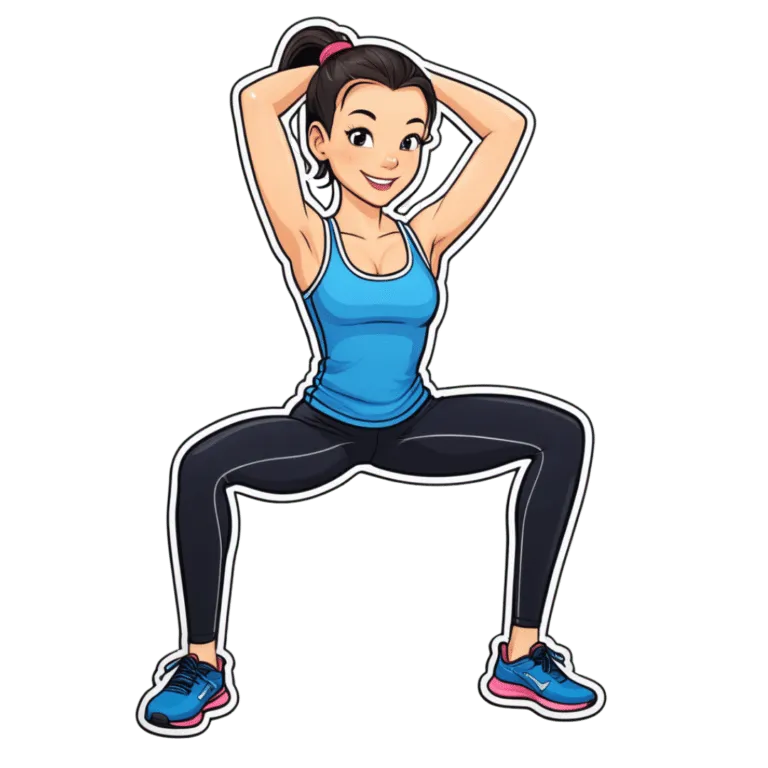
Here’s Liv’s hit-list of reasons to skip mobility training:
- Poor Circulation: Avoid mobility training if you don’t want to improve or maintain good blood circulation, which aids muscle recovery and reduces soreness.
- Low Energy Levels: Mobility training increases oxygen flow to the brain and muscles, boosting energy. Skip it if you prefer feeling sluggish!
- Digestive Health: Stretches that rotate the torso aid digestion and relieve bloating. Definitely best to avoid it if you’re uninterested in improving digestive health.
- Joint Health: Mobility work stimulates synovial fluid production, reducing joint friction and promoting longevity. You can skip it if you don’t care about comfortable movement.
- Sleep Quality: Gentle stretching triggers relaxation, aiding restful sleep. Avoid it if you enjoy restless nights!
- Pain Tolerance: Stretching trains the nervous system to handle discomfort better. Skip it if you prefer suffering 🙂
- Headache Reduction: Mobility work relieves tension in the neck and shoulders, reducing the occurrence and severity of headaches. No need to do it if you’re fine with frequent headaches.
- Immune System Support: Mobility training boosts lymphatic circulation, aiding the immune system. Avoid it if you prefer your immune system to get exciting in a bad way.
- Stress Reduction: Mobility exercises release endorphins and lower cortisol levels, reducing stress. So, it is certainly best to skip it if you prefer feeling stressed and enjoy the many harmful symptoms of high cortisol levels!
For more on all of these, enjoy:
Click Here If The Embedded Video Doesn’t Load Automatically!
Want to learn more?
You might also like to read:
Mobility As Though A Sporting Pursuit: Train For The Event Of Your Life!
Take care!
Don’t Forget…
Did you arrive here from our newsletter? Don’t forget to return to the email to continue learning!
Recommended
Learn to Age Gracefully
Join the 98k+ American women taking control of their health & aging with our 100% free (and fun!) daily emails:
-
Three Daily Servings of Beans?
10almonds is reader-supported. We may, at no cost to you, receive a portion of sales if you purchase a product through a link in this article.
It’s Q&A Day at 10almonds!
Have a question or a request? We love to hear from you!
In cases where we’ve already covered something, we might link to what we wrote before, but will always be happy to revisit any of our topics again in the future too—there’s always more to say!
As ever: if the question/request can be answered briefly, we’ll do it here in our Q&A Thursday edition. If not, we’ll make a main feature of it shortly afterwards!
So, no question/request too big or small
❝Not crazy about the Dr.s food advice. Beans 3X a day?❞
For reference, this is in response to our recent article on the topic of 12 things to aim to get a certain amount of each day:
So, there are a couple of things to look at here:
Firstly, don’t worry, it’s a guideline and an aim. If you don’t hit it on a given day, there is always tomorrow. It’s just good to know what one is aiming for, because without knowing that, achieving it will be a lot less likely!
Secondly, the beans/legumes/pulses category says three servings, but the example serving sizes are quite small, e.g. ½ cup cooked beans, or ¼ cup hummus. And also as you notice, dips/pastes/sauces made from beans count too. So given the portion sizes, you could easily get two servings in by breakfast (and two servings of whole grains, too) if you enjoy frijoles refritos, for example. Many of the recipes we share on this site have “stealth” beans/legumes/pulses in this fashion
Take care!
Share This Post
-
Worried after sunscreen recalls? Here’s how to choose a safe one
10almonds is reader-supported. We may, at no cost to you, receive a portion of sales if you purchase a product through a link in this article.
Most of us know sunscreen is a key way to protect areas of our skin not easily covered by clothes from excessive ultraviolet (UV) radiation.
But it’s been a rough year for sunscreens.
In June, testing by Choice identified 16 products on Australian shelves that don’t provide the SPF protection they claimed.
In July, the Therapeutic Goods Administration (TGA) released a review recommending the amount of certain chemical ingredients allowed in sunscreens should be lowered.
Since then, several other sunscreens have been recalled or are under review, either due to manufacturing defects or concerns about poor SPF cover.
All this has left many of us feeling confused about which sunscreens are safe, effective and do what they say on the label.
Here’s what you need to know so you can stay safe this summer.
Kindel Media/Pexels The good news first
There’s very little evidence sunscreens cause cancer and plenty of evidence they prevent skin cancer.
This is vital in Australia, where two in three people will get skin cancer at some point in their lives.
One randomised controlled trial in Queensland, run over four and a half years between 1992 and 1996, asked 1,621 people to either use sunscreen every day or continue their usual use (usually one or two days a week or not at all).
It found using sunscreen every day reduced the numbers of squamous cell carcinomas by 40%, compared to the group that didn’t change their habits. Ten years after the study, the number of invasive melanomas was reduced by 73% in the daily sunscreen group.
Significantly, this study was conducted in the 90s using SPF 16 sunscreen. Modern sunscreens are expected to routinely provide SPF 30+ or 50+ protection.
Companies should provide the SPF levels they’re advertising. But this research shows even sub-par sunscreen (by modern standards) provides significant protection with daily use.
Making sure SPF claims stack up
In Australia, the TGA regulates how SPF is assessed in sunscreens, but doesn’t do the testing itself. Instead, companies perform or outsource the testing, which must be done on human skin, and provide the TGA with their results.
But when Choice independently tested 20 Australian sunscreens, it found 16 did not meet the SPF factor on the label.
An ABC investigation pinpointed two potential sources of the problems: a poor quality base ingredient manufactured by Wild Child Laboratories, and suspicious SPF testing data from Princeton Consumer Research, which many of the brands relied on.
The TGA has since recommended that people stop using 21 products that contain the Wild Child base, listed here.
What about the chemical ingredients?
The TGA regularly reviews scientific research to make sure Australian sunscreens keep up with advances in safety and effectiveness. To be sold in Australia, sunscreens must use active ingredients from a specific list, limited at maximum concentrations.
July’s safety review found evidence that two permitted ingredients – homosalate and oxybenzone – can cause hormone disruptions in some animals exposed to high doses for a long time. These doses were far higher than someone would be exposed to from sunscreen – even at the maximum usage – thanks to the TGA’s ingredient limits.
Still, chemical risks are managed strictly. The amount absorbed during consistent, high-dose sunscreen use, year-round, must be less than 1% of the dose known to cause problems in animals.
The new results suggest that absorption could go over this “margin of safety”. So the TGA has recommended the amount allowed be reduced.
Homosalate and oxybenzone are not being banned, and you don’t need to throw out sunscreens containing these ingredients.
But if the idea of using them makes you nervous, you can check ingredient lists and buy sunscreens without them.
What should I look for in a sunscreen?
When buying a sunscreen there are four non-negotiables. It must have:
- 30+ or 50+ SPF
- broad spectrum UV protection (filters both UVB and UVA rays)
- water-resistant (for staying power in Australia’s sweaty climate)
- TGA approval mark on the packaging (“AUST L” followed by a number).
Sunscreen only works if you use it, so choose a sunscreen you like enough to actually wear.
There are milks, gels and creams, unscented, matte, tinted and many other varieties. Since faces are often the most sensitive, many people use a specialty sunscreen for the face and a cheaper, general one for the rest of the body.
Spray-on sunscreen is not recommended, however, because it’s too hard to apply enough.
You need to apply more than you think
Sunscreen works best when you apply it 20 minutes before you go into the sun, and reapply every two hours and after swimming, sport or towel drying.
How you apply it affects how well it works. You need about one teaspoon each for:
- your face and neck
- back
- chest and abdomen
- each arm and leg.
It’s also common to miss your ears, hands, feet and back of the neck – don’t forget these either.
Sunscreen usually lasts two to three years stored below 30°C, so keep an eye on the use-by date and follow any instructions about shaking before use.
If the sunscreen seems to have separated into thinner and thicker layers even after shaking, the ingredients providing SPF may not be mixed evenly throughout and might not work properly.
But remember – sunscreen isn’t a suit of armour
If you’re planning to be out in the sun for more than a few minutes at a time, slip on sun-protective clothing and slap on a hat. Use sunscreen to protect the areas you can’t easily cover.
Slide on sunnies and seek shade where possible to complete your sun-protection practice for a burn-free summer.
Katie Lee, Postdoctoral Researcher, Dermatology Research Centre, The University of Queensland
This article is republished from The Conversation under a Creative Commons license. Read the original article.
Share This Post
-
Vital Aspects of Holistic Wellness
10almonds is reader-supported. We may, at no cost to you, receive a portion of sales if you purchase a product through a link in this article.
It’s Q&A Day!
Have a question or a request? You can always hit “reply” to any of our emails, or use the feedback widget at the bottom!
This newsletter has been growing a lot lately, and so have the questions/requests, and we love that! In cases where we’ve already covered something, we might link to what we wrote before, but will always be happy to revisit any of our topics again in the future too—there’s always more to say!
As ever: if the question/request can be answered briefly, we’ll do it here in our Q&A Thursday edition. If not, we’ll make a main feature of it shortly afterwards!
So, no question/request too big or small
Q: I am interested in the following: Aging, Exercise, Diet, Relationships, Purpose, Lowering Stress
You’re going to love our Psychology Sunday editions of 10almonds! You might like some of these…
- Relationships: Seriously Useful Communication Skills!
- Purpose: Are You Flourishing? (There’s a Scale)
- Managing stress: Lower Your Cortisol! (Here’s Why & How)
- Also about managing stress: Sunday Stress-Buster
- Also applicable to stress: How To Set Your Anxiety Aside
Share This Post
Related Posts
-
Why Intermittent Fasting (& GLP-1 Drugs!) Might Not Work For You
10almonds is reader-supported. We may, at no cost to you, receive a portion of sales if you purchase a product through a link in this article.
GLP-1 receptor agonists such as Ozempic, Wegovy, Mounjaro, and all the others are ubiquitous these days, in wealthy industrialized nations at least.
And while they have their downsides (see: Most People Who Start GLP-1 RAs Quit Them Within A Year (Here’s Why)), it’s generally considered uncontentious that they do, at least, work strongly for weight loss.
In a similar vein, intermittent fasting has a very good reputation too: Intermittent Fasting: What’s The Truth?
But for some people, neither will deliver as expected:
Intermittent fasting is great for weight loss, unless…
…your body is in a state of obesity, in which case, it no longer works the same way.
Researchers (Dr. Helena Neudorf et al.) discovered that fasting (and ketogenic-style diets) affect metabolism and immune response differently according to obesity levels.
A quick note on that: because of the cellular processes at hand, the reason for this is almost certainly about adiposity, not mass, but the study used BMI as the metric, which wasn’t helpful. Indeed, they even referred the the lower-BMI study participants as “lean”, which again, is about adiposity not size. A bodybuilder will generally have a high BMI, and yet will be very lean. Meanwhile, someone who just happens to be unusually tall may have a very low BMI despite higher body fat percentage. So, that’s a limitation here.
Despite the failings of BMI (which are many), chances are good that in their study population, BMI correlated to adiposity, so one figure may grudgingly be used as a stand-in for the other.
See also: When BMI Doesn’t Measure Up
Ketogenic-style diets are mentioned here because they are very low-carb, which tends to prompt some physiological responses similar to fasting.
As a result, the ketogenic diet is generally good for fat loss in the short term: Ketogenic Diet: Burning Fat Or Burning Out?
Anyway, how Dr. Neudorf and her team discovered this was by with blood samples taken before, during and after fasting to measure hormones, metabolites, metabolic rate, inflammation and T-cell activity.
What they found:
- Low BMI group (called “lean”): immune cells adapted by burning more fat, and fasting shifted their immune system towards a more balanced, anti-inflammatory state
- High BMI group (called: “with obesity”): participants had more pro-inflammatory T cells, continued producing inflammatory signals after fasting, showed smaller increases in ketones, and had weaker chemical reactions linked to immune regulation
You can read the paper in full, here: Altered immunometabolic response to fasting in humans living with obesity
As an aside: “humans living with obesity” seems to this writer like a really odd way of saying it, it’d be like describing me as “a human living with long hair” or something. In all likelihood, it was an effort at “person first” language, something that’s generally only brought out when talking about an attribute that society considers negative, while not having that attribute. Same vibe as “people with autism” (autistic people, in contrast, will tend to say “autistic people”). Note also that in the study paper, there’s a double-standard that makes this motivation clear: they had no problem saying “lean participants”, and did not feel the need to euphemize this as “humans living with leanness”. Fat justice activist Aubrey Gordon has written about this kind of thing a lot, and you can read about some of it here: Fat’s Real Barriers To Health ← including the stigmatization that occurs precisely because of people overcompensating for a fear of offence by dancing around “the f-word” (fat) like many research papers do. “Fat”, she says, is a morally neutral word.
What about GLP-1 drugs?
This one’s simpler: for almost any drug, some people are simply “non-responders”, meaning that for some reason (often a genetic factor, often not known for sure why), the drug will simply not work as it does for most people.
For GLP-1 receptor agonists, there is a portion of the general population for whom they simply will not work, and so far there is no known way of predicting it (probably at someone point it’ll be figured out, and this writer’s money would be on it being either a SNP mutation or a microbiome thing). So, you roll the dice, you take the GLP-1 drug, you wait and see, and there’s a 15% chance (that doesn’t sound like a lot, but it’s about 1 in 6, in other words, the same probability as rolling a “1” on a fair, six-sided die).
You can read about how that can go, here: Ozempic didn’t work for me. I was furious—and ashamed
Ok, so, what to do instead?
Check out:
How To Lose Weight (Healthily!) ← for a gentle, sustainable, way that has about the highest probability of success
Take care!
Don’t Forget…
Did you arrive here from our newsletter? Don’t forget to return to the email to continue learning!
Learn to Age Gracefully
Join the 98k+ American women taking control of their health & aging with our 100% free (and fun!) daily emails:
-
How To Make Drinking Less Harmful
10almonds is reader-supported. We may, at no cost to you, receive a portion of sales if you purchase a product through a link in this article.
Making Drinking Less Harmful
We often talk of the many ways alcohol harms our health, and we advocate for reducing (or eliminating) its consumption. However, it’s not necessarily as easy as all that, and it might not even be a goal that everyone has. So, if you’re going to imbibe, what can you do to mitigate the harmful effects of alcohol?
There is no magical solution
Sadly. If you drink alcohol, there will be some harmful effects, and nothing will completely undo that. But there are some things that can at least help—read on to learn more!
Coffee
It’s not the magical sober-upperer that some would like it to be, but it is good against the symptoms of alcohol intoxication, and slightly reduces the harm to your body, because it is:
- Hydrating (whereas alcohol is dehydrating)
- A source of antioxidants (whereas alcohol causes oxidative stress, which has nothing to do with psychological stress, and is a kind of cellular damage)
- A stimulant, assuming it is not decaffeinated (it’s worth noting that its stimulant effects work partly by triggering vasoconstriction, which is the opposite of the vasodilation caused by alcohol)
To this end, the best coffee for anti-alcohol effects should be:
- Caffeinated, and strong
- Long (we love espresso, but we need hydration here and that comes from volume!)
- Without sugar (you don’t want to create an adverse osmotic gradient to draw water back out from your body)
As for milk/cream/whatever, have it or don’t, per your usual preference. It won’t make any difference to the alcohol in your system.
Antioxidants, polyphenols, flavonoids, and things with similar mechanisms
We mentioned that coffee contains antioxidants, but if you want to really bring out the heavy guns, taking more powerful antioxidants can help a lot. If you don’t have the luxury of enjoying berries and cacao nibs by the handful, supplements that have some similar benefits are a perfectly respectable choice.
For example, you might want to consider green tea extract:
L-theanine 200mg (available on Amazon)
Specialist anti-alcohol drugs
These are somewhat new and the research is still ongoing, but for example:
Dihydromyricetin (DHM) as a novel anti-alcohol intoxication medication
In short, DHM is a flavonoid (protects against the oxidative stress caused by alcohol, and has been found to reduce liver damage—see the above link) and also works on GABA-receptors (reduces alcohol withdrawal symptoms after cessation of drinking, and thus also reduces hangovers).
Once again: the marketing claims of such drugs may be bold, but there’s a lot that’s not known and they’re not a magic pill. They do NOT mean you can take them alongside drinking and drink what you like with impunity. However, they may help mitigate some of the harmful effects of alcohol. If you wish to try them, these can be purchased at pharmacies or online, for example:
Alcohol Defense Capsules (available on Amazon)
Bottom line
Alcohol is bad for your health and none of the above will eliminate the health risks. But, if you’re going to have alcohol, then having the above things as well may at least somewhat reduce the harm done.
Don’t Forget…
Did you arrive here from our newsletter? Don’t forget to return to the email to continue learning!
Learn to Age Gracefully
Join the 98k+ American women taking control of their health & aging with our 100% free (and fun!) daily emails:
-
Cranberries vs Redcurrants – Which is Healthier?
10almonds is reader-supported. We may, at no cost to you, receive a portion of sales if you purchase a product through a link in this article.
Our Verdict
When comparing cranberries to redcurrants, we picked the redcurrants.
Why?
It’s that time of year!
First know: here we’re comparing raw cranberries to raw redcurrants, with no additives in either case. If you buy jelly made from either, or if you buy dried fruits but the ingredients list has a lot of added sugar and often some vegetable oil, then that’s going to be very different.
But for now… Let’s look at just the fruits:
In terms of macros, redcurrants are higher in carbs, but also higher in fiber, and have the lower glycemic index as cranberries have nearly 2x the GI. Thus, a first round win for redcurrants.
In the category of vitamins, cranberries have more of vitamins A, B5, and E, while redcurrants have more of vitamins B1, B2, B6, B9, C, and K, In other words, a clear win for redcurrants.
Looking at minerals, cranberries boast a little more manganese; they also have about 2x the sodium. Meanwhile, redcurrants sweep even more convincingly with a lot more calcium, copper, iron, magnesium, phosphorus, potassium, selenium, and zinc, meaning redcurrants win their third round in a row.
In other considerations, both berries have generous amounts of assorted phytochemicals (especially polyphenols, including flavonoids and others), and/but nothing to set one ahead of the other. So, a tie in this round. Unless…
- if you have a tendency to UTIs, the cranberries win as they are very effective at reducing those
- if you have kidney problems, then redcurrants win as cranberries can increase the risk of kidney stones
…however, since we are adding things up for the readership as a whole, we’ll say those two things cancel each other out, and this declare a fourth-round tie.
Adding up the sections shows a clear overall win for redcurrants, but as for pretty much any berries that aren’t poisonous, both of these are great choices for most people most of the time.
Want to learn more?
You might like to read:
Health Benefits Of Cranberries (But: You’d Better Watch Out)
Take care!
Don’t Forget…
Did you arrive here from our newsletter? Don’t forget to return to the email to continue learning!
Learn to Age Gracefully
Join the 98k+ American women taking control of their health & aging with our 100% free (and fun!) daily emails:


