Why eating disorder recovery is about more than what you eat or weigh

10almonds is reader-supported. We may, at no cost to you, receive a portion of sales if you purchase a product through a link in this article.

Recovering from an eating disorder can be long and complex.

Treatment typically focuses on reducing the unhelpful behaviours and thoughts that characterise these disorders. These include extreme dieting, binge eating, purging, negative body image, and โ€“ in some (but not all) cases โ€“ having a very low body weight.

But when recovery focuses on a clinical checklist of symptoms, such as reaching a healthy weight, it may ignore other important aspects of getting better.

Eating disorders are not just physical. They are complex mental health conditions that severely disrupt peopleโ€™s relationship with themselves, their bodies and other people. So the psychological aspects of recovery, and the way people feel about it, also plays an important role.

Our new research shows when peopleโ€™s broader wellbeing improves โ€“ such as developing a sense of self-acceptance or hope โ€“ they are more likely to report a โ€œpersonalโ€ recovery from an eating disorder, even if they still have some clinical symptoms.
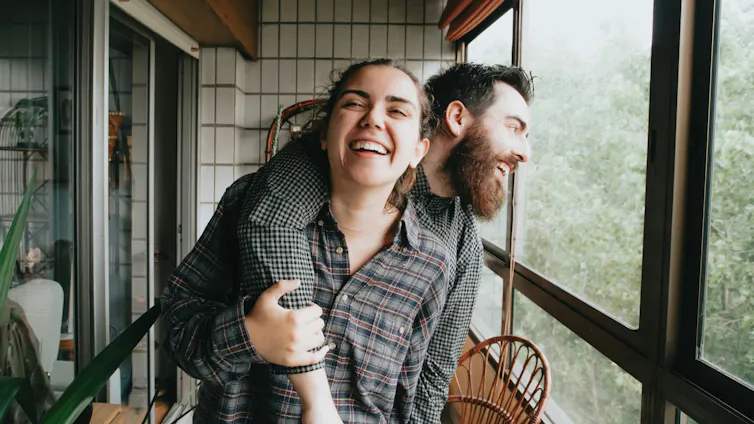
A.C./Unsplash

How is recovery measured?

There is no one definition of eating disorder recovery.

But most research has focused on clinical symptoms. This means an absence of diagnostic criteria (for example, no binge eating or purging) over a specific timeframe, such as a 12-month period, to meet the definition of recovery.

Emerging research points to the importance of โ€œpersonal recoveryโ€ meaning that dimensions of psychological wellbeing are essential.

For example, a 2020 review of studies focusing on perspectives of people with eating disorders showed supportive relationships, hope, identity, meaning and purpose, empowerment, and self-compassion were central to their recovery process.

People with eating disorders also report that including these as goals (rather than just focusing on clinical symptoms) feels relevant and empowering, while emerging research shows this can improve long-term outcomes and improve quality of life, meaning people may be less likely to relapse.

But there still hasnโ€™t been much research on how both personal and clinical aspects can be incorporated into treatment and recovery.

Understanding how to include these aspects in treatment is urgent, given eating disorders are among the most life-threatening psychiatric disorders, and recovery is often slow.

What we did and what we found

Our new study surveyed 234 adults who have lived through or are currently experiencing an eating disorder. Most identified as female (89%), and the average age was 28.

Overall, we found less than a quarter of participants (22.6%) met the criteria for clinical improvement, meaning many were still dieting or preoccupied with food and body image.

But more than half (52.1%) felt they had achieved personal recovery. This included experiencing self-acceptance, positive relationships, personal growth, reduced eating disorder behaviours, resilience and greater autonomy.

Clinical improvement in symptoms did make personal recovery more likely. But nearly two-thirds (63.9%) of those who self-identified as personally recovered did not meet the clinical definition, meaning they still experienced some eating disorder symptoms.

This points to a possible disconnect between definitions of recovery that focus on symptoms and what recovery actually means to the people living it.

We also explored whether personal recovery looked different depending on someoneโ€™s eating disorder diagnosis.

All participants had a past or current diagnosis of anorexia nervosa (68.4%), bulimia nervosa (8.5%) or binge eating disorder (8.1%).

But, we found no meaningful differences in personal recovery rates across these diagnoses. This suggests the experience of personal recovery may be broadly similar regardless of the specific eating disorder a person has faced.

Why does this matter?

When treatment success is measured almost entirely through symptom checklists and clinical criteria, we risk missing โ€“ and failing to celebrate โ€“ the progress that may matter the most to the person in front of us.

We suggest people seeking recovery from an eating disorder should be asked early on about what recovery looks like to them, not just what the clinical guidelines say it should look like. This might also improve the currently low rates of people seeking help for eating disorders. It may help clinicians set goals that are meaningful and better reflect the psychological nature of eating disorders, not just the physical aspects.

If thereโ€™s something that feels important to your recovery, itโ€™s worth raising with your treatment team. Recovery can look different for everyone, and your personal goals matter.

For example, wellbeing goals could involve reconnecting with relationships, rebuilding a sense of identity, or simply feeling more in control of daily life, alongside improving clinical symptoms.

This is also significant because funding for eating disorder services and policy decisions still often lean heavily on clinical benchmarks. If these donโ€™t capture aspects of personal recovery, we are likely underestimating how many people are getting better, and potentially designing services around a narrower picture of recovery than the evidence actually supports.


If you have a history of an eating disorder or suspect you may have one, you can contact the Butterfly Foundationโ€™s national helpline on 1800 334 673, or via online chat.

Catherine Houlihan, Senior Lecturer in Clinical Psychology, University of the Sunshine Coast; Andrew Allen, Senior Lecturer in Clinical Psychology, University of the Sunshine Coast; Dan Fassnacht, Associate Professor in Psychology, University of the Sunshine Coast, and Kathina Ali, Senior Lecturer in Clinical Psychology, University of the Sunshine Coast

This article is republished from The Conversation under a Creative Commons license. Read the original article.

Don’t Forget…

Did you arrive here from our newsletter? Don’t forget to return to the email to continue learning!

Learn to Age Gracefully

Join the 98k+ American women taking control of their health & aging with our 100% free (and fun!) daily emails:

  • Sculptra, COโ‚‚ Laser, Red Light Therapy: What Really Works vs Skin Aging?

    10almonds is reader-supported. We may, at no cost to you, receive a portion of sales if you purchase a product through a link in this article.

    Dr. Andrea Suarez, dermatologist, gives us the insider insights:

    On the face of itโ€ฆ

    There are a lot of different treatments available for skin rejuvenation, and these are some of them. But when we look beneath the surface, there are some important distinctions. But first, let’s examine what skin aging actually is:

    Our skin ages when collagen production declines, fibroblast activity decreases, elastic fibers fragment, UV exposure accelerates DNA and structural damage, chronic inflammation increases, and deeper changes such as fat loss and bone resorption contribute to hollowing.

    All this adds up to one important conclusion: a single treatment rarely addresses everything, i.e. ongoing treatments will be needed for anything meaningful, because the skin’s turnover rate is such that it can never be a “one-shot and it’s done” affair.

    As for the treatments mentioned in the title today:

    • Sculptra is an injectable made of poly-L-lactic acid that stimulates fibroblasts in your dermis to gradually increase collagen over months, improving volume loss and overall skin quality rather than spot-filling fine lines or acne scars.
    • COโ‚‚ laser resurfacing is a powerful dermatologic tool for wrinkles, texture, sun damage, pigmentation, and certain scars, with outcomes heavily dependent on provider expertise and proper patient selection. There are still some further distinctions though:
      • Fully ablative COโ‚‚ laser therapy removes the entire treated surface and triggers significant collagen remodeling but involves more downtime and risk, whereas
      • Fractional COโ‚‚ laser therapy creates microscopic channels that allow faster healing, fewer complications, and meaningful collagen stimulation.
    • Red Light Therapy (RLT), including red and near-infrared wavelengths, penetrates your skin to support mitochondrial energy, reduce inflammation, and stimulate collagen, making this useful for wound healing, post-procedure recovery, and long-term maintenance when used consistently.
      • Note: at-home LED devices require regular use to maintain benefits, vary widely in quality and safety, and should be chosen carefully based on hard science, rather than based on marketing claims or multiple colored light settings.

    You can use these synergistically, because COโ‚‚ laser targets surface damage and initiates deep remodeling, Sculptra supports gradual collagen production and volume restoration, and red light therapy helps reduce inflammation and maintain collagen, which means that using them together can bring you broader improvements than any single one alone (for most people; check with a dermatologist for personal suitability, of course).

    If you’re going to stack them, then resurfacing procedures like COโ‚‚ are typically performed first due to controlled injury and healing needs, followed by injectables such as Sculptra after recovery, with red light therapy giving its strongest benefits during recovery or as maintenance.

    For more on all of this, enjoy:

    Click Here If The Embedded Video Doesnโ€™t Load Automatically!

    Want to learn more?

    You might also like:

    Casting Yourself In A Healthier Light โ† our main feature about the science of RLT specifically

    Take care!

    Share This Post

  • 28-Day FAST Start Day-by-Day โ€“ by Gin Stephens

    10almonds is reader-supported. We may, at no cost to you, receive a portion of sales if you purchase a product through a link in this article.

    We have previously reviewed Gin Stephensโ€™ other book, โ€œFast. Feast. Repeat.โ€, so whatโ€™s so special about this one that it deserves reviewing too?

    This one is all about troubleshooting the pitfalls that many people find when taking up intermittent fasting.

    To be clear: the goal here is not a โ€œ28 days and yay you did it, put that behind you nowโ€, but rather โ€œ28 days and you are now intermittently fasting easily each day and can keep it up without difficultyโ€. As for the difficulties that may arise early in the 28 daysโ€ฆ

    Not just issues of willpower, but also the accidental breaks. For example, some artificial sweeteners, while zero-calorie, trigger an insulin response, which breaks the fast on the metabolic level (avoiding that is the whole point of IF). Lots of little tips like that peppered through the book help the reader to stop accidentally self-sabotaging their progress.

    The author does talk about psychological issues too, and also how it will feel different at first while the liver is adapting, than later when it has already depleted its glycogen reserves and the body must burn body fat instead. Information like that makes it easier to understand that some initial problems (hunger, getting โ€œhangryโ€, feeling twitchy, or feeling light-headed) will last only a few weeks and then disappear.

    So, understanding things like that makes a big difference too.

    The style of the book is simple and clear pop-science, with lots of charts and bullet points and callout-boxes and the like; it makes for very easy reading, and very quick learning of all the salient points, of which there are many.

    Bottom line: if youโ€™ve tried intermittent fasting but struggled to make it stick, this book can help you get to where you want to be.

    Click here to check out 28-Day FAST Start, and start!

    Share This Post

  • Dried Apricots vs Carrots โ€“ Which is Healthier?

    10almonds is reader-supported. We may, at no cost to you, receive a portion of sales if you purchase a product through a link in this article.

    Our Verdict

    When comparing dried apricots to carrots, we picked the dried apricots.

    Why?

    And first, why this comparison? Well, they’re both pleasantly refreshing vitamin A heavyweights (hence their color, though vitamin B6 does also contribute to that), but mainly it came about because of this writer having a desk snack of dried apricots, whereas in summer she’s more likely to have raw carrots (for posterity: this one was written in winter). And, which is healthier? Well, that’s the question, so…

    In terms of macros, dried apricots have more fiber, carbs, and protein, making them the more nutritionally dense option in this category.

    In the category of vitamins, dried apricots have more of vitamins B2, B3, B5, B6, and E, while carrots have more of vitamins A, B1, B9, C, and K, for a 5:5 tie (and yes, the margins of difference are quite similar too, so there’s no reasonable tiebreaker in this round).

    Looking at minerals, dried apricots have more calcium, copper, iron, magnesium, manganese, phosphorus, potassium, selenium, and zinc, while carrots are not higher in any minerals, unless we want to count that they are higher in sodium, which is not usually considered a plus for most of us in the industrialized world. In any case, an overwhelming win for apricots in the minerals category.

    In other considerations, they’re comparable for polyphenols, but apricots have some specific anticancer properties that carrots can’t boast, so that’s an extra point in dried apricots’ favor here.

    Adding up the sections makes for a clear overall win for dried apricots, but by all means enjoy either or both, as carrots really are also great, and diversity is invariably best of all!

    Want to learn more?

    You might like:

    Top 8 Fruits That Prevent & Kill Cancer

    Enjoy!

    Share This Post

  • Taking prescription opioids for too long can be harmful. Here’s how to cut back and stop

    10almonds is reader-supported. We may, at no cost to you, receive a portion of sales if you purchase a product through a link in this article.

    Opioids, such as oxycodone, morphine, codeine, tramadol and fentanyl, are commonly prescribed to manage pain. You might be given a prescription when experiencing pain, or after surgery or an injury.

    But while opioids may relieve pain in the short term, they provide little to no lasting improvement in pain or function beyond a few weeks for people whose pain isnโ€™t caused by cancer.

    Opioids can also cause side effects such as nausea, constipation and drowsiness, as well as serious risks such as dependence and overdose.

    Over the past decade, Australia has introduced initiatives to reduce opioid use and related harm. This includes new guidelines that recommend reducing the dose or stopping opioids when the risks of continuing outweigh the benefits.

    Many people can reduce or stop opioids without their pain worsening. Some people even experience less pain. However, for some people, reducing or stopping opioids can result in worse pain, mental health crises and even suicide.

    Our new research, published today in the New England Journal of Medicine, explains how to safely reduce and stop taking prescription opioids.

    Maskot/Getty Images

    How do you know when itโ€™s time to stop? Then what?

    Determining whether it is appropriate to reduce or stop opioids depends on several factors unique to each person. These include:

    • why opioids were prescribed
    • how long theyโ€™ve been used
    • what other treatments youโ€™ve tried
    • how the medication affects your pain, function and quality of life
    • your life circumstances.

    If itโ€™s appropriate to trial reducing or stopping opioids, guidelines from Australia, the United Kingdom and the United States emphasise the following principles:

    1) Shared decision-making

    Shared decision-making is where health-care professionals and patients work together to set goals, weigh risks and benefits, and make informed choices.

    This means collaboratively designing an opioid reduction plan that reflects the personโ€™s needs, preferences and circumstances, rather than imposing a one-size-fits-all approach.

    Research shows shared decision-making may lead to better outcomes, and patients value this process.

    2) Reduce gradually

    Stopping opioids suddenly can cause withdrawal symptoms such as anxiety, insomnia, and stomach upset. Rapid dose reductions can also increase the risk of overdose, mental distress and suicide.

    To avoid these risks, opioids should be reduced gradually over weeks, months or even longer. The process should be flexible, allowing for pauses or adjustments to the reduction plan if needed.

    When someone takes lower doses of opioids over time, their bodyโ€™s tolerance decreases. If they return to a higher dose, there is a risk of overdose. For this reason, health-care professionals may recommend having naloxone available. This is a medication that can reverse an opioid overdose.

    3) Set up other supports

    Supportive strategies should be used before, during and after reducing opioids. These can include:

    • physical therapies such as physiotherapy
    • psychological approaches such as mindfulness
    • non-opioid medications
    • mental health support from health-care professionals, friends and family
    • education about pain self-management.

    The evidence supporting specific interventions is often limited or uncertain. Choosing a strategy will depend on your individual preferences and access. The best approach is likely a combination of several different supports.

    4) See your health-care provider for ongoing monitoring

    Regular monitoring from a health-care professional is recommended during and after opioid reduction to assess pain, function, withdrawal symptoms and wellbeing.

    This can help to ensure that any issues are identified early and are addressed.

    If someone experiences a clear decline in their quality of life, for example, it may be necessary to pause or stop the taper and revisit it later, provide extra supports or implement strategies to manage withdrawal symptoms.

    We need a health system that supports this process

    Making opioid reduction safer and more effective requires putting these principles into practice. But many patients and health-care professionals still face challenges when doing so.

    Itโ€™s best practice to access a team-based pain management program with support from a doctor, physiotherapist and psychologist, among other providers, to manage pain and reduce the use of opioids. But access to these services remains limited in many parts of Australia.

    Physio works with patient in a clinic
    Not everyone has access to team-based pain management. Hispanolistic/Getty Images

    Consumer organisations and professional bodies have called for greater access to team-based pain services so more people, especially those living in rural and under-served areas, can access support.

    Australian health-care professionals have also requested more education and training in pain management, prescribing and opioid reduction, as well as stronger evidence about what works, for whom and why. This is so theyโ€™re better able to tailor their care to each personโ€™s needs.

    Other strategies such as reducing the amount of opioids prescribed โ€“ including after surgery โ€“ have also been proposed to help prevent long-term opioid use and the need for reduction plans later on.

    Aili Langford, Pharmacist, Lecturer, NHMRC Emerging Leadership Fellow, Sydney Pharmacy School, The University of Sydney, University of Sydney and Christine Lin, Professor, Institute for Musculoskeletal Health, University of Sydney

    This article is republished from The Conversation under a Creative Commons license. Read the original article.

    Don’t Forget…

    Did you arrive here from our newsletter? Don’t forget to return to the email to continue learning!

    Learn to Age Gracefully

    Join the 98k+ American women taking control of their health & aging with our 100% free (and fun!) daily emails:

  • Elderberries vs Cranberries โ€“ Which is Healthier?

    10almonds is reader-supported. We may, at no cost to you, receive a portion of sales if you purchase a product through a link in this article.

    Our Verdict

    When comparing elderberries to cranberries, we picked the elderberries.

    Why?

    In terms of macros, elderberry has slightly more carbs and 2x the fiber, the ratio of which gives elderberries the lower glycemic index also. A win for elderberries, then.

    Looking at the vitamins, elderberries have more of vitamins A, B1, B2, B3, B6, B9, and C, while cranberries have more vitamin B5. An easy win for elderberries in this category.

    In the category of minerals, we see a similar story: elderberries have more calcium, copper, iron, phosphorus, potassium, selenium, and zinc, while cranberries have (barely) more magnesium. Another clear win for elderberries.

    Both of these fruits have additional โ€œspecialโ€ properties, and itโ€™s worth noting that:

    • elderberries’ bonus properties include that they significantly hasten recovery from upper respiratory tract viral infections.
    • cranberriesโ€™ bonus properties (including: famously very good at reducing UTI risk) come with some warnings, including that they may increase the risk of kidney stones if you are prone to such, and also that cranberries have anti-clotting effects, which are great for heart health but can be a risk of youโ€™re on blood thinners or have a bleeding disorder.

    You can read about both of these fruitsโ€™ special properties in more detail below:

    Want to learn more?

    You might like to read:

    Enjoy!

    Don’t Forget…

    Did you arrive here from our newsletter? Don’t forget to return to the email to continue learning!

    Learn to Age Gracefully

    Join the 98k+ American women taking control of their health & aging with our 100% free (and fun!) daily emails:

  • How Healthy Are Afternoon Naps?

    10almonds is reader-supported. We may, at no cost to you, receive a portion of sales if you purchase a product through a link in this article.

    Itโ€™s Q&A Day at 10almonds!

    Have a question or a request? We love to hear from you!

    In cases where weโ€™ve already covered something, we might link to what we wrote before, but will always be happy to revisit any of our topics again in the future tooโ€”thereโ€™s always more to say!

    No question/request too big or small ๐Ÿ˜Ž

    โIs it good for the health to take afternoon naps? Or is it better to just sleep at night?โž

    It depends on you! There are potential benefits to napping, for example:

    Generally considered best is simply the famous 7โ€“9 hours at night (yes, including at older ages): Why You Probably Need More Sleep

    โ€ฆand sleep efficiency does matter too: Why 7 Hours Sleep Is Not Enough

    โ€ฆwhich in turn, is influenced by factors other than just length and depth: The 6 Dimensions Of Sleep (And Why They Matter)

    However, as we’ve said before elsewhere, often what is best is not necessarily what is attainable, so if you struggle to get the aforementioned sleep quantity and quality, then you might want to consider: How To Nap Like A Pro (No More โ€œSleep Hangoversโ€!)

    There are more considerations, though, for example:

    One important thing to bear in mind: naps are not special

    By this we mean: it might feel special to you at the time, taking a little slice of time for yourself, but scientifically speaking, it’s no more special than longer sleep, and in fact, it’s often less restorative, minute for minute, if you don’t time it perfectly.

    The reason we mention this is because there is a sizeable (albeit revolving door) subculture of enthusiasts of polyphasic sleeping (i.e. sleeping more than once per day, by napping one or more times) with the goal of sleeping fewer hours in total by making sleep more efficient.

    It does not work, except insofar as it can allow you to survive a crisis that is stopping you from sleeping properly. But this is sleep’s equivalent of “fight or flight”, it’s the body’s admittedly very impressive “emergency mode” that is not good to use on a daily basis!

    Learn more: Adverse impact of polyphasic sleep patterns in humansโ€”Report of the National Sleep Foundation sleep timing and variability consensus panel

    (if you want to know just how bad it isโ€ฆ the top-listed โ€œsimilar articleโ€ is entitled โ€œSuicidal Ideationโ€)

    For more on the woes of trying to force one’s body into polyphasic sleeping in order to sleep less in total, we covered this some years ago: Polyphasic Sleepโ€ฆ Super-Schedule Or An Idea Best Put To Rest?

    One last thing: if you’re finding you need to nap a lot, then:

    1. You probably should indeed nap
    2. That is probably something you should get checked out, though

    For example, researchers (Dr. Ruixueย Cai et al.) tracked 1,338 older adults (aged 56+) for up to 19 years using wearable devices to objectively measure daytime napping patterns, and found that longer naps, more frequent naps, and naps taken in the morning were all linked to higher all-cause mortality in later life.

    Specifically, each extra hour of daytime napping was associated with a 13% higher mortality risk, each additional daily nap with a 7% increase, and morning nappers had a 30% higher risk compared to afternoon nappers.

    Now, these findings show correlation, not causation, meaning excessive napping likely reflects underlying issues such as neurodegeneration, cardiovascular disease, or circadian rhythm disruption, rather than being a case of the naps being the culprit causing death.

    So to recap the main point of this last bit: if you’re finding you have to nap a lot, you should probably get that checked out, because while not itself dangerous so far as best current science can say, it may be a sign that “something wrong is not right”.

    You can read this paper here: Objectively Measured Daytime Napping Patterns and All-Cause Mortality in Older Adults

    Want to learn more?

    This is the book on sleep:

    Why We Sleep โ€“ by Dr. Matthew Walker

    Enjoy!

    Don’t Forget…

    Did you arrive here from our newsletter? Don’t forget to return to the email to continue learning!

    Learn to Age Gracefully

    Join the 98k+ American women taking control of their health & aging with our 100% free (and fun!) daily emails: