Which nut butter is healthiest – peanut, almond or cashew?

10almonds is reader-supported. We may, at no cost to you, receive a portion of sales if you purchase a product through a link in this article.

Once, the only nut butter on the supermarket shelf was peanut butter. Now you can also buy almond, cashew, hazelnut and macadamia nut butters, or blends.

So which is the healthiest nut butter to spread on your toast?

As we’ll see, the healthiest is not just about the actual nut. It’s also about what else goes in the jar.
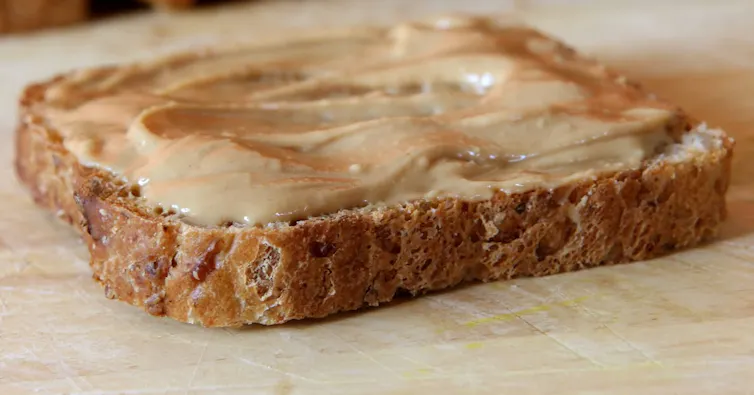
Robert Owen-Wahl/Pexels

What do they all have in common?

All nut butters are made from ground nuts that provide healthy monounsaturated and polyunsaturated fats, plant-based protein, fibre. They also provide essential minerals, such as magnesium, potassium, zinc and iron.

Across decades of research, regularly eating nuts is associated with a lower risk of heart disease and premature death. That benefit appears whether the nut is peanut, almond or cashew or any other type of nut.

But many commercial products contain vegetable oils, palm oil, salt, sugar, or stabilisers to improve texture and shelf life. These added ingredients dilute the nutritional quality and increase salt or kilojoules without providing any health benefits.

Choosing a nut butter made only from nuts (or nuts with minimal salt) means you get the full nutritional value.

How do I choose a nut butter?

Check the ingredients list. The healthiest options contain just one ingredient – nuts. Some added salt is fine, if minimal. But avoid products with seed oils (such as canola oil), palm oil, fillers or added sugars.

Looking at the nutrients in each nut butter per serve (a tablespoon, about 16 grams) can highlight how they differ. The numbers vary slightly by brand. But when the product contains 100% nuts, the numbers don’t generally change dramatically between nuts.

To keep things simple, we’ve focused on peanut, almond and cashew butters:

  • protein: peanut butter wins slightly for protein content, at 3.84g per tablespoon, making it a solid choice for post-workout snacks or adding extra protein to your day. However, almond (3.36g) and cashew butters (2.82g) aren’t far behind. So they still contribute meaningful protein to your diet
  • fat: almond butter takes the top spot for healthy fats (8.88g per tablespoon), followed closely by peanut (7.98g) and cashew butter (7.9g). The fats in nuts are mainly heart-healthy monounsaturated and polyunsaturated fats, which have been associated with improved cholesterol levels and reduced inflammation
  • carbohydrates: cashew butter contains the most carbohydrates (4.42g per tablespoon), which might be important if you’re looking for quick energy before a workout or if you have type 1 diabetes and are adjusting your medication based on your carbohydrate intake. Then comes peanut butter (3.49g), followed by almond butter (3.01g)
  • fibre: almond butter takes the lead for fibre (1.65g per tablespoon) followed by peanut butter (1.06g). Cashew butter lags significantly behind (0.32g), about one-fifth of the almond butter’s content. This makes cashew butter the weakest option if you’re relying on nut butter to contribute to your daily fibre intake
  • calcium: almond butter dramatically outperforms the others for calcium, with 55.5 milligrams per tablespoon. This offers about eight times more than peanut butter (6.56mg) and cashew butter (6.88mg). This makes almond butter an excellent choice for bone health, especially if you avoid dairy
  • potassium: both peanut and almond butter tie for potassium content (120mg per tablespoon). This makes them useful for supporting healthy blood pressure and muscle function. Cashew butter contains 87.4mg
  • iron: cashew butter leads the pack for iron (0.805mg for tablespoon), followed by almond butter (0.558mg) and peanut butter (0.304mg). This is particularly relevant for people with higher iron needs, such as those menstruating, pregnant or breastfeeding, or people following plant-based diets. But overall, nut butters are not a meaningful source of iron
  • zinc: cashew butter (0.826mg per tablespoon) offers nearly twice the zinc of peanut butter (0.445mg). Almond butter’s zinc content is in the middle (0.526mg). This makes cashew butter valuable for immune function and wound healing
  • selenium: cashew butter provides the most selenium (1.84 micrograms per tablespoon), an important antioxidant mineral that supports thyroid function. Peanut butter comes in second (1.2µg), while almond butter contains notably less (0.384µg)
  • magnesium: almond butter leads for magnesium (44.6mg per tablespoon). Close behind is cashew butter (41.3mg), then peanut butter (25.4mg). This mineral is crucial for muscle relaxation, sleep quality and energy production.

In a nutshell

Each nut butter has distinct nutritional advantages:

  • peanut butter leads in protein and ties with almond butter for potassium, making it ideal for muscle support and feeling full
  • almond butter is the standout for calcium, and is also higher in fibre, magnesium and heart-healthy fats. This makes it an excellent choice for bone health, digestion and cardiovascular support
  • cashew butter is naturally sweet and is the strongest source of minerals such as iron, zinc and selenium. These are essential for immune function, energy production and thyroid health. However, it is the lowest in both protein and fibre. So while it contributes valuable micronutrients, it’s better suited as an occasional option rather than a primary protein source.

Any concerns?

Often, almond and cashew butters are processed on equipment that’s been used to process peanuts or other nuts. So traces of one nut may appear in another nut butter, which is stated on the label. So if you have a specific nut allergy, check labels carefully.

The cost also varies. Almond and cashew butters are usually slightly more expensive (at around A$2.40 per 100g) compared with about $1.82 per 100g for peanut butter.

What now?

No single nut butter reigns supreme as each brings different nutritional strengths.

The smartest approach would be to keep more than one on hand, choose versions made from 100% nuts, and let your taste preferences and nutritional goals guide you.

Lauren Ball, Professor of Community Health and Wellbeing, The University of Queensland and Emily Burch, Accredited Practising Dietitian and Lecturer, Southern Cross University

This article is republished from The Conversation under a Creative Commons license. Read the original article.

Don’t Forget…

Did you arrive here from our newsletter? Don’t forget to return to the email to continue learning!

Learn to Age Gracefully

Join the 98k+ American women taking control of their health & aging with our 100% free (and fun!) daily emails:

  • Do Probiotics Work For Weight Loss?

    10almonds is reader-supported. We may, at no cost to you, receive a portion of sales if you purchase a product through a link in this article.

    It’s Q&A Day at 10almonds!

    Have a question or a request? We love to hear from you!

    In cases where we’ve already covered something, we might link to what we wrote before, but will always be happy to revisit any of our topics again in the future too—there’s always more to say!

    As ever: if the question/request can be answered briefly, we’ll do it here in our Q&A Thursday edition. If not, we’ll make a main feature of it shortly afterwards!

    So, no question/request too big or small

    ❝Can you talk about using probiotics for weight loss? Thanks❞

    Great question! First, a quick catch-up:

    How Much Difference Do Probiotic Supplements Make, Really?

    Our above-linked article covers a number of important benefits of probiotic supplements, but we didn’t talk about weight loss at all. So let’s examine whether probiotics are useful for weight loss.

    Up-front summary: the science is unclear

    This 2021 systematic review found that they are indeed very effective:

    ❝The intake of probiotics or synbiotics could lead to significant weight reductions, either maintaining habitual lifestyle habits or in combination with energy restriction and/or increased physical activity for an average of 12 weeks.

    Specific strains belonging to the genus Lactobacillus and Bifidobacterium were the most used and those that showed the best results in reducing body weight.

    Both probiotics and synbiotics have the potential to help in weight loss in overweight and obese populations.❞

    Source: Effects of Probiotics and Synbiotics on Weight Loss in Subjects with Overweight or Obesity: A Systematic Review

    This slightly older (2015) systematic review and meta-analysis found the opposite:

    ❝Collectively, the RCTs examined in this meta-analysis indicated that probiotics have limited efficacy in terms of decreasing body weight and BMI and were not effective for weight loss.❞

    Source: Probiotics for weight loss: a systematic review and meta-analysis

    And in case that’s not balanced enough, this 2020 randomized controlled trial got mixed results:

    ❝Regression analysis performed to correlate abundance of species following supplementation with body composition parameters and biomarkers of obesity found an association between a decrease over time in blood glucose and an increase in Lactobacillus abundance, particularly in the synbiotic group.

    However, the decrease over time in body mass, BMI, waist circumstance, and body fat mass was associated with a decrease in Bifidobacterium abundance.❞

    Source: Effects of Synbiotic Supplement on Human Gut Microbiota, Body Composition and Weight Loss in Obesity

    Summary

    Probiotics may or may not work for weight loss.

    In all likelihood, it depends on the blend of cultures contained in the supplement. It’s possible that Lactobacillus is more beneficial for weight loss than Bifidobacterium, which latter may actually reduce weight loss.

    Or it might not, because that was just one study and correlation ≠ causation!

    We’d love to give you a hard-and-fast answer, but if the data doesn’t support a hard-and-fast answer, we’re not going to lie to you.

    What we can say for sure though is that probiotics come with very many health benefits, so whether or not weight loss is one of them, they’re a good thing to have for most people.

    Some further articles that may interest you:

    Take care!

    Share This Post

  • Beetroot vs Green Beans – Which is Healthier?

    10almonds is reader-supported. We may, at no cost to you, receive a portion of sales if you purchase a product through a link in this article.

    Our Verdict

    When comparing beetroot to green beans, we picked the beetroot.

    Why?

    Both have their merits!

    In terms of macros, there’s really nothing between them and we’re calling this first category a tie.

    In the category of vitamins, beetroot has more of vitamins B5, B6, B7, and B9, while green beans have more of vitamins A, B1, B2, B3, C, E, and K, winning.

    Looking at minerals, beetroot has more copper, phosphorus, potassium, selenium, and zinc, while green beans have more calcium, yielding a 5:1 win to beetroot here.

    In other considerations, beetroot has more nitrates, more polyphenols, and a generous betalain content, especially betanin, for a compelling win in this round.

    Adding up the sections makes for an overall win for beetroot, but by all means do enjoy either or both, as diversity is best!

    Want to learn more?

    You might like:

    Beetroot For More Than Just Your Blood Pressure

    Enjoy!

    Share This Post

  • Correct An Upper Spine Hump (Simple Stretch & Exercise)

    10almonds is reader-supported. We may, at no cost to you, receive a portion of sales if you purchase a product through a link in this article.

    Generally called a neck hump in this video, it can be in the cervical (neck) vertebrae or it can be in the thoracic (upper back) vertebrae. It’s also known as a dowager’s hump, buffalo hump, or kyphosis.

    However, it can be fixed:

    What to do

    First understand the cause: it generally comes from poor posture, especially from prolonged desk work or phone use.

    With that in mind…

    1. Posture adjustments: lean back in a chair to counter gravity’s pull on your head. Avoid slumping; keep your head aligned with your spine.
    2. Stretching: lie flat on the floor without pillows to restore spinal alignment. Gradually reduce pillow height during sleep to decrease neck hyperflexion.
    3. Neck retraction: pull chin straight back while keeping your eyes looking forwards. Hold for 15 seconds, gradually increasing to 60 seconds. Perform 10 repetitions, resting between sets.
    4. Strengthening: lean forward and pull the chin back against gravity. Hold, or repeat for 10 repetitions. Over time, increase duration to a minute.

    For more on all of this plus visual demonstrations, enjoy:

    Click Here If The Embedded Video Doesn’t Load Automatically!

    Want to learn more?

    You might also like to read:

    The Pains That Good Posture Now Can Help You Avoid Later

    Take care!

    Share This Post

  • Collard Greens vs Savoy Cabbage – Which is Healthier?

    10almonds is reader-supported. We may, at no cost to you, receive a portion of sales if you purchase a product through a link in this article.

    Our Verdict

    When comparing collard greens to savoy cabbage, we picked the collards.

    Why?

    Both are excellent! But…

    In terms of macros, the collards have more fiber, carbs, and protein, making them the “more food per food” option in this category.

    In the category of vitamins, collards have more of vitamins, A, B2, B3, and C, while savoy cabbage has more of vitamins B1, B5, and B6. That’s already a 4:1 win for collards, plus the margins of difference are greater for collards too, winning this round easily.

    Looking at minerals, collard greens have more calcium, iron, magnesium, manganese, potassium, and selenium, while savoy cabbage has more copper, phosphorus, and zinc, yielding to collards a 6:3 win here, plus the margins of difference are once again much greater for collards, so this round’s quite one-sided too.

    In other considerations, both are great for polyphenols, but collards have more, as well as other beneficial phytochemicals (with assorted carotenoids featuring highly), giving another round to collards.

    Adding up the sections makes for a very clear overall win for collard greens, but by all means do enjoy either or both; savoy cabbage is great too; it just doesn’t look it when standing next to collards!

    Want to learn more?

    You might like:

    Brain Food? The Eyes Have It! ← this is about leafy greens, and their lutein in particular

    Enjoy!

    Don’t Forget…

    Did you arrive here from our newsletter? Don’t forget to return to the email to continue learning!

    Learn to Age Gracefully

    Join the 98k+ American women taking control of their health & aging with our 100% free (and fun!) daily emails:

  • Holistic Approach To Resculpting A Face Affected By Hypothyroidism, PCOS, Or Menopause

    10almonds is reader-supported. We may, at no cost to you, receive a portion of sales if you purchase a product through a link in this article.

    Mila Magnani has PCOS and hypothyroidism, but the principles are the same for menopause because both menopause and PCOS are a case of a hormone imbalance resulting in androgenic effects, so there’s a large amount of overlap.

    Obviously, a portion of the difference in the thumbnail is a matter of angle and make-up, but as you can see in the video itself, there’s also a lot of genuine change underneath, too:

    Stress-free method

    Firstly, she bids us get lab tests and work with a knowledgeable doctor to address potential thyroid, hormonal, or nutrient imbalances. Perhaps we already know at least part of what is causing our problems, but even if so, it doesn’t hurt to take steps to rule the others out. Imagine spending ages unsuccessfully battling PCOS or menopause, only to discover it was a thyroid issue, and you were fighting the wrong battle!

    Magnani used a natural route to manage her PCOS and hypothyroidism, while acknowledging that medication is fine too; it’s usually cheaper and more convenient—and there’s a lot more standardization for medications than there is for supplements, which makes it a lot easier to navigate, find what works, and keep getting the exact same thing once it does work.

    Other things she recommends include:

    • Lymphatic drainage: addressing the lymphatic system to reduce puffiness. Techniques include lymphatic drainage massage, stretching, rebounding (trampoline), and dry brushing. She emphasizes that for facial de-puffing, it’s important to treat the whole upper body, not just the face.
    • Low-impact exercise: she switched from high-intensity workouts to low-impact exercises like nature walking and gentle stretching to reduce stress and improve health.
    • Nervous system regulation: she worked on nervous system regulation by means of journaling, breathwork, and stimulating the vagus nerve, which improved sleep and reduced stress and anxiety. These things, of course, have knock-on benefits for almost every part of health.
    • Diet: she adopted a low-glycemic diet, reduced salt intake, and cooked at home to avoid water retention caused by high sodium in restaurant meals.
    • Natural diuretics: she uses teas like hibiscus and chamomile to reduce puffiness after consuming high-sodium foods.
    • Sauna and sweating: consider a sauna mat or hot baths to detox and reduce swelling; that’s what she uses in lieu of a convenient sauna.

    You may be wondering how quickly you can expect results: it took 3–6 months of daily effort to see significant changes, and she now maintains the routine less frequently (every 2–3 days, instead of daily).

    For more on all this, enjoy:

    Click Here If The Embedded Video Doesn’t Load Automatically!

    Want to learn more?

    You might also like to read:

    Take care!

    Don’t Forget…

    Did you arrive here from our newsletter? Don’t forget to return to the email to continue learning!

    Learn to Age Gracefully

    Join the 98k+ American women taking control of their health & aging with our 100% free (and fun!) daily emails:

  • Avocado vs Cherries – Which is Healthier?

    10almonds is reader-supported. We may, at no cost to you, receive a portion of sales if you purchase a product through a link in this article.

    Our Verdict

    When comparing avocado to cherries, we picked the avocado.

    Why?

    Both have their merits! But…

    In terms of macros, avocados have 4x the fiber, 2x the protein, and famously healthy fats, while cherries have more carbs—so this round’s an easy win for avocado.

    In the category of vitamins, avocado has more of vitamins B1, B2, B3, B5, B6, B7, B9, E, and K, while cherries have more vitamin A, so that’s another rather one-sided win for avocados.

    Looking at minerals, avocados have more copper, iron, magnesium, manganese, phosphorus, potassium, selenium, and zinc, while cherries have more calcium, chalking up one more win to avocados.

    In other considerations, cherries have a bunch of beneficial phytochemicals (you can read about them in the “learn more” section below), so that’s a point in their favor, finally.

    Adding up the sections makes for a clear overall win for avocados, but cherries are great too, so by all means do enjoy either or both, as diversity is best!

    Want to learn more?

    You might like:

    Cherries’ Very Healthy Wealth Of Benefits!

    Enjoy!

    Don’t Forget…

    Did you arrive here from our newsletter? Don’t forget to return to the email to continue learning!

    Learn to Age Gracefully

    Join the 98k+ American women taking control of their health & aging with our 100% free (and fun!) daily emails: