What Does Hypermobile Posture Look Like?

10almonds is reader-supported. We may, at no cost to you, receive a portion of sales if you purchase a product through a link in this article.

Is this how you stand and/or walk?

Every which way and loose

Posture, with hypermobility, can be quite paradoxical—for example, it can be either overly stiff for protection, or overly loose with poor control, often alternating between bracing and collapsing.

Some things to watch out for:

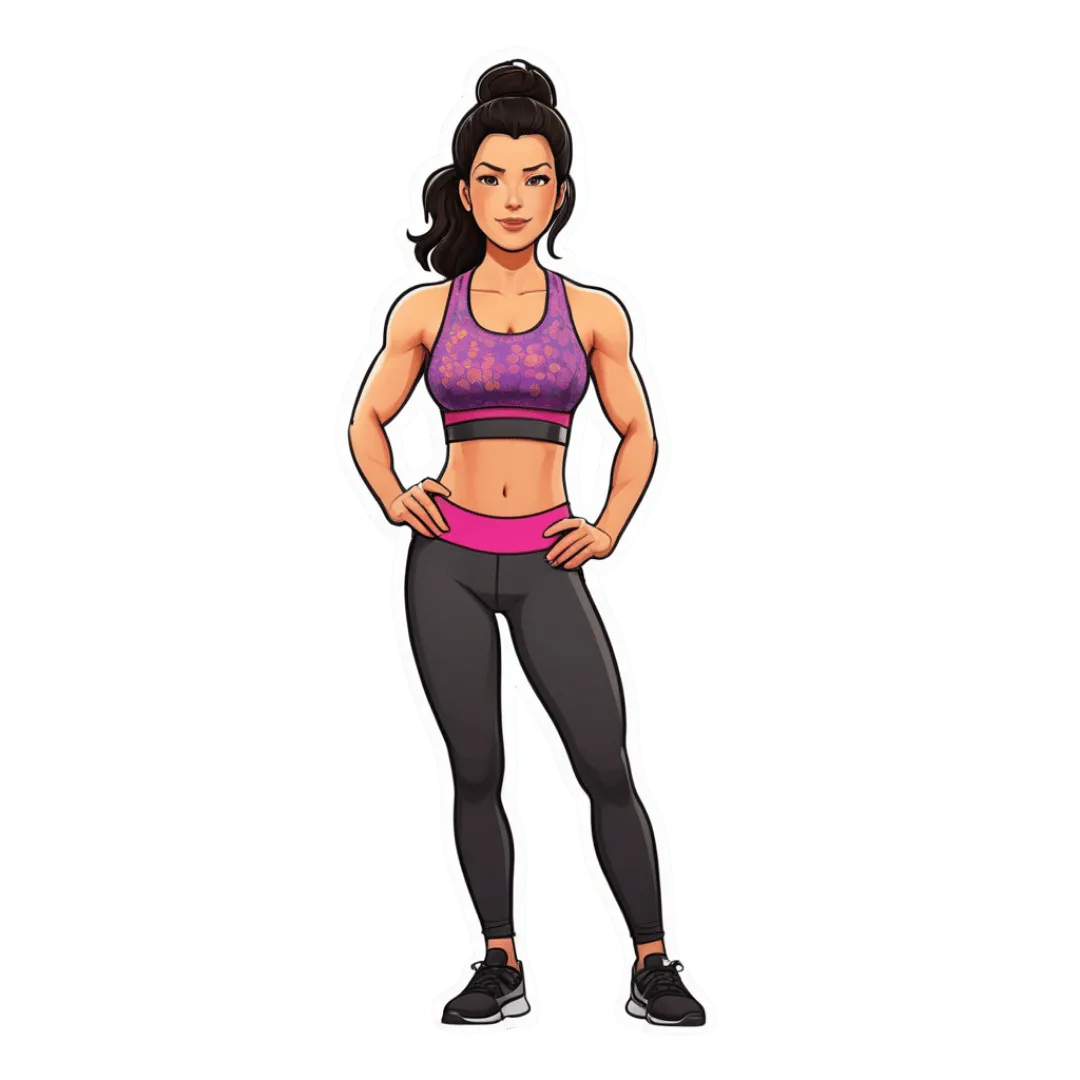
  • Standing posture: favoring one leg over both, locking your knees backwards or keeping a slight constant bend, your pelvis tucked under and/or shifted forwards.
  • Walking pattern: feet turned out, glute clenching, and/or excessive leg rotation where your leg rolls in then your knee swings out as weight transfers.
  • Joint behaviour: frequent hyperextension, especially in your knees, elbows, fingers, or spine, plus excessive fidgeting or moving into end-range positions even while standing still.
  • Upper body signs: exaggerated hand gestures, frequent neck movement, shoulder tension, and a tendency to overextend your neck or back beyond neutral.

Confession: your writer here is currently writing this while standing on one leg, hip cocked, as she types with her very spidery fingers, and proofreading with a tilted head like a dog that thinks things might make more sense at 45°. This video is taking no prisoners today, it seems.

In the video, we also learn about unusual flexibility positions like curling our toes, sitting in extreme folded postures, “W-sitting,” or “frog-leg” positions that feel natural but may stress our joints.

Notably, the main visual clue isn’t just flexibility, but rather also instability, where our body uses compensations like muscle gripping, locking joints, or shifting alignment to create support.

For once, there’s no real call-to-action here; we cannot re-posture our way out of having hypermobility. If our body’s built this way, it’s built this way, and that’s that (per current science anyway; who knows what future developments may be discovered).

However, it can be good to recognize the signs and symptoms, such that we can better understand what’s going on.

For more on all of this plus visual demonstrations, enjoy:

Click Here If The Embedded Video Doesn’t Load Automatically!

Want to learn more?

You might also like:

What Your Hands Can Tell You About Your Health ← about some hypermobility signs that can show up in our hands

Take care!

Don’t Forget…

Did you arrive here from our newsletter? Don’t forget to return to the email to continue learning!

Learn to Age Gracefully

Join the 98k+ American women taking control of their health & aging with our 100% free (and fun!) daily emails:

  • Sarah Raven’s Garden Cookbook – by Sarah Raven

    10almonds is reader-supported. We may, at no cost to you, receive a portion of sales if you purchase a product through a link in this article.

    Note: the US Amazon site currently (incorrectly) lists the author as “Jonathan Buckley”. The Canadian, British, and Australian sites all list the author correctly as Sarah Raven, and some (correctly) credit Jonathan Buckley as the photographer she used.

    First, what it’s not: a gardening book. Beyond a few helpful tips, pointers, and “plant here, harvest here” instructions, this book assumes you are already capable of growing your own vegetables.

    She does assume you are in a temperate climate, so if you are not, this might not be the book for you. Although! The recipes are still great; it’s just you’d have to shop for the ingredients and they probably won’t be fresh local produce for the exact same reason that you didn’t grow them.

    If you are in a temperate climate though, this will take you through the year of seasonal produce (if you’re in a temperate climate but it’s in for example Australia, you’ll need to make a six-month adjustment for being in the S. Hemisphere), with many recipes to use not just one ingredient from your garden at a time, but a whole assortment, consistent with the season.

    About the recipes: they (which are 450 in number) are (as you might imagine) very plant-forward, but they’re generally not vegan and often not vegetarian. So, don’t expect that you’ll produce everything yourself—just most of the ingredients!

    Bottom line: if you like cooking, and are excited by the idea of growing your own food but are unsure how regularly you can integrate that, this book will keep you happily busy for a very long time.

    Click here to check out Sarah Raven’s Garden Cookbook, and level-up your home cooking!

    Share This Post

  • Arugula vs Chard – Which is Healthier?

    10almonds is reader-supported. We may, at no cost to you, receive a portion of sales if you purchase a product through a link in this article.

    Our Verdict

    When comparing arugula to chard, we picked the chard.

    Why?

    In terms of macros, there’s really nothing between them. They’re identical on fiber down to one decimal place (both in the USDA database as 1.6g/100g), they have the same carbs down to a rounding error (technically chard is in the same database as having +0.06 g/100g), and no meaningful difference in protein (per the same database again, it’s 0.78g/100g difference, but let’s be serious, your saliva has more protein than that*). So, we can comfortably call this round a tie.

    *Ish. It depends on various factors including how hydrated you are, whether you are on any meds that thicken your saliva, and whether you have any medical conditions that increase/decrease your amylase production (that’s the enzyme that breaks down starch, and like most enzymes, it’s a protein, and in saliva, its the one that makes up most of the protein count). But generally speaking, saliva is usually considered to be a little under 1% protein.

    In the category of vitamins, arugula has more of vitamins B5 and B9, while chard has more of vitamins A, B3, B6, C, E, and K, by quite some margins of difference, and it’s worth noting that chard is a particularly good source of vitamin K. Thus, an easy win for chard in this round.

    Looking at minerals, arugula has more calcium, phosphorus, and zinc, while chard has more copper, iron, magnesium, manganese, and selenium, winning its second round in a row.

    In other considerations, chard has more polyphenols, including a good offering of kaempferol and quercetin, so that’s another point in chard’s favor.

    Adding up the sections makes for a clear overall win for chard, but by all means do enjoy either or both, as diversity is great!

    Want to learn more?

    You might like:

    Enjoy!

    Share This Post

  • How Emotions Are Made – by Dr. Lisa Feldman Barrett

    10almonds is reader-supported. We may, at no cost to you, receive a portion of sales if you purchase a product through a link in this article.

    We’ve previously reviewed Dr. Barrett’s (also good) book Seven And A Half Lessons About The Brain, and this one is very different, and of more practical use:

    The main thrust of the book is: the bioessentialist model of emotions is flawed; there is also no Platonic perfect form of any given emotion, and in fact emotions are constructed by the brain as a learned adaptive response.

    She argues this from the dual vectors of on the one hand hard sciences of affective neuroscience and clinical psychology, and on the other hand sociology and anthropology.

    In the category of criticism: Dr. Barrett, a very well-known and well-respected cognitive neuroscientist, is not an expert on sociology and anthropology, and some of her claims there are verifiably false.

    However, most of the book is given over the psychophysiology, which is entirely her thing, and she explains it clearly and simply while backing everything up with mountains of data.

    The usefulness of this book is chiefly: if we understand that emotions are not innate and are instead constructed adaptive (and sometimes maladaptive) neurological responses to stimuli and associations, we can set about rewiring things a little in accord with what’s actually more beneficial to us. The book also outlines how.

    Bottom line: if you’d like to be able to not merely manage emotions as they are, but also prune and/or grow them from the stem up, then this book provides a robustly scientific approach for doing that.

    Click here to check out How Emotions Are Made, and get more discerning about yours!

    Share This Post

  • Delicious Quinoa Avocado Bread

    10almonds is reader-supported. We may, at no cost to you, receive a portion of sales if you purchase a product through a link in this article.

    They’re gluten-free, full of protein and healthy fats, generous with the fiber, easy to make, and tasty too! What’s not to love? Keep this recipe (and its ingredients) handy for next time you want healthy burger buns or similar:

    You will need

    • 2½ cups quinoa flour
    • 2 cups almond flour (if allergic, just substitute more quinoa flour)
    • 1 avocado, peeled, pitted, and mashed
    • zest and juice of 1 lime
    • 2 tbsp ground flaxseed
    • 1 tsp baking powder
    • ½ tsp MSG or 1 tsp low-sodium salt
    • Optional: seeds, oats, or similar for topping the buns

    Method

    (we suggest you read everything at least once before doing anything)

    1) Preheat the oven to 350℉/175℃.

    2) Mix the flaxseed with ⅓ cup warm water and set aside.

    3) Mix, in a large bowl, the quinoa flour and almond flour with the baking powder and the MSG or salt.

    4) Mix, in a separate smaller bowl, the avocado and lime.

    5) Add the wet ingredients to the dry, slowly, adding an extra ½ cup water as you do, and knead into a dough.

    6) Divide the dough into 4 equal portions, each shaped into a ball and then slightly flattened, to create a burger bun shape. If you’re going to add any seeds or similar as a topping, add those now.

    7) Bake them in the oven (on a baking sheet lined with baking paper) for 20–25 minutes. You can check whether they’re done the same way you would a cake, by piercing them to the center with a toothpick and seeing whether it comes out clean.

    8) Serve when sufficiently cooled.

    Enjoy!

    Want to learn more?

    For those interested in some of the science of what we have going on today:

    Take care!

    Don’t Forget…

    Did you arrive here from our newsletter? Don’t forget to return to the email to continue learning!

    Learn to Age Gracefully

    Join the 98k+ American women taking control of their health & aging with our 100% free (and fun!) daily emails:

  • Kidney Beans or Black Beans – Which is Healthier?

    10almonds is reader-supported. We may, at no cost to you, receive a portion of sales if you purchase a product through a link in this article.

    Our Verdict

    When comparing kidney beans to black beans, we picked the black beans.

    Why?

    First, do note that black beans are also known as turtle beans, or if one wants to hedge one’s bets, black turtle beans. It’s all the same bean. As a small linguistic note, kidney beans are known as “red beans” in many languages, so we could have called this “red beans vs black beans”, but that wouldn’t have landed so well with our largely anglophone readership. So, kidney beans vs black beans it is!

    They’re certainly both great, and this is a close one today…

    In terms of macros, they’re equal on protein and black beans have more carbs and/but also more fiber. So far, so equal—or rather, if one pulls ahead of the other here, it’s a matter of subjective priorities.

    In the category of vitamins, they’re equal on vitamins B2, B3, and choline, while kidney beans have more of vitamins B6, B9, C, and K, and black beans have more of vitamins A, B1, B5, and E. In other words, the two beans are still tied with a 4:4 split, unless we want to take into account that that vitamin E difference is that black beans have 29x more vitamin E, in which case, black beans move ahead.

    When it comes to minerals, finally the winner becomes apparent; while kidney beans have a little more manganese and zinc, on the other hand black beans have more calcium, copper, iron, magnesium, phosphorus, potassium, and selenium. However, it should be noted that honestly, the margins aren’t huge here and kidney beans are almost as good for all of these minerals.

    In short, black beans win the day, but kidney beans are very close behind, so enjoy whichever you prefer, or better yet, both! They go great together in tacos, burritos, or similar, by the way.

    Want to learn more?

    You might like to read:

    Take care!

    Don’t Forget…

    Did you arrive here from our newsletter? Don’t forget to return to the email to continue learning!

    Learn to Age Gracefully

    Join the 98k+ American women taking control of their health & aging with our 100% free (and fun!) daily emails:

  • Cauliflower vs Kale – Which is Healthier?

    10almonds is reader-supported. We may, at no cost to you, receive a portion of sales if you purchase a product through a link in this article.

    Our Verdict

    When comparing cauliflower to kale, we picked the kale.

    Why?

    Both of these plants are the same species (Brassica oleracea), but one cultivar is definitely more nutritionally dense than the other:

    In terms of macros, kale has more fiber, carbs, and protein, winning.

    In the category of vitamins, cauliflower has more vitamin B5 (so, the vitamin whose name literally means “found everywhere” and it’s almost impossible to be deficient in it unless literally starving to death), while kale has more of vitamins A, B1, B2, B3, B6, B7, B9, C, E, and K, winning by a huge margin.

    Looking at minerals, cauliflower has a tiny bit more zinc, while kale has a lot more calcium, copper, iron, magnesium, manganese, phosphorus, potassium, and selenium, winning its third round in a row easily.

    In other considerations, kale also has more polyphenols, so that’s another point in its favor.

    Adding up the sections makes for a very one-sided win for kale, but by all means do enjoy either or both, as cauliflower really is nutritionally great; it just doesn’t look it when standing next to kale!

    Want to learn more?

    You might like:

    Superfood Kale & Dill Pâté ← don’t love salads? You don’t have to! Here’s a great (and tasty!) additional way to add more kale to your diet.

    Enjoy!

    Don’t Forget…

    Did you arrive here from our newsletter? Don’t forget to return to the email to continue learning!

    Learn to Age Gracefully

    Join the 98k+ American women taking control of their health & aging with our 100% free (and fun!) daily emails: