
Want straighter teeth or a gap between? Don’t believe TikTok – filing them isn’t the answer

10almonds is reader-supported. We may, at no cost to you, receive a portion of sales if you purchase a product through a link in this article.

After decades of Hollywood showcasing white-picket-fence celebrity smiles, the world has fallen for White Lotus actor Aimee Lou Wood’s teeth.

Wood was bullied for her looks in her youth and expressed gratitude for the positive comments she received about her teeth since appearing on White Lotus. She also joked that people shouldn’t take to drastic measures like filing teeth to copy her famous gap.

But social media influencers are promising that teeth filing is a quick way to achieve a straight smile. Some influencers even use electric nail drills to cut gaps between their front teeth.

A few of my patients admit to taking a nail file to “buff” or file jagged edges off their teeth. Many do this without understanding what they are cutting away.

Here’s why you should think twice about filing your teeth at home, and why we as dentists or orthodontists occasionally resort to this.

When might a dentist file a tooth?

Dentists and orthodontists occasionally file a tooth’s enamel, known as enameloplasty, to conservatively smooth-down a chipped tooth, or even-out a smile.

But adjustments to a person’s smile are minute, and always limited to the superficial enamel layer of the tooth.

Why don’t dentists routinely file teeth?

Dentists and orthodontists are particular about what and when we cut because teeth don’t grow back like fingernails or hair.

So what is a tooth? A tooth is like an egg, with an outer diamond-like lustrous crystal enamel coat that envelops the hard yet springy dentine.

The enamel and dentine envelop a central chamber – containing blood vessels, cells and nerves – called the pulp.

The outer periphery of the pulp is surrounded by and nourishes special dentine-making cells called odontoblasts.

The odontoblasts are similar to our bone-making cells but don’t have the capacity to regenerate. These cells eventually give way to age-related changes or trauma.

Our enamel-making cells die when our teeth cut through our gums as children, which means we can no longer make new, or repair damaged, enamel.

So damaged enamel or dentine on the outer surface of the tooth cannot self-repair.

Cutting your teeth without sealing and filling them can leave the tooth exposed, destroying the previously well-insulated pulp and causing sensitivity and pain.

Infections can occur because the bacteria from the plaque inside your mouth travels into the tooth and inflames the pulp.

And just like a cut on your skin, the pulp inflames and swells as part of the healing process. But your pulp is encased in a hard enamel-dentine chamber, so it has no room to expand and swell, leading to a throbbing toothache.

What can you do if you want to change your teeth?

You can change your smile without compromising the integrity of your teeth. Dentists can even create or close gaps.

And we will always offer conservative options, including “no treatment”, to keep as many of your teeth whole and healthy as possible.

Sometimes, your dentists and or orthodontists may offer options to:

  • use braces to move teeth. Moving teeth can create a different smile, and sometimes change the shape and position of your jaws, lips and cheeks
  • whiten teeth to remove superficial stains to make your smile look more visually even
  • adapt white resin fillings or veneers to add and change the shape of teeth, with little or no tooth cutting required.

If you’re concerned about the look of your teeth, talk to your dentist or orthodontist about options that won’t damage your teeth and make them last the distance.

Don’t forget that Aimee Lou Wood’s iconic smile makes her stand out from the crowd. Your smile is what makes you special, and is part of who you are.

Arosha Weerakoon, Senior Lecturer and General Dentist, School of Dentistry, The University of Queensland

This article is republished from The Conversation under a Creative Commons license. Read the original article.

Don’t Forget…

Did you arrive here from our newsletter? Don’t forget to return to the email to continue learning!
Learn to Age Gracefully

Join the 98k+ American women taking control of their health & aging with our 100% free (and fun!) daily emails:

  • Why PCOS IS Now PMOS (What It Means In Practical Terms)

    10almonds is reader-supported. We may, at no cost to you, receive a portion of sales if you purchase a product through a link in this article.

    It’s Q&A Day at 10almonds!

    Have a question or a request? We love to hear from you!

    In cases where we’ve already covered something, we might link to what we wrote before, but will always be happy to revisit any of our topics again in the future too—there’s always more to say!

    No question/request too big or small 😎

    ❝Is there anything that’s actually changed with PCOS now being PMOS, or is it just a name change?❞

    Yes and yes! That is to say:

    • Yes, it is technically just a name change
    • Yes, there are expected positive knock-on effects of this change

    First, let’s quickly recap what the name change actually is, so that we can talk about why the change was made and what we can expect to see in the category of positive effects resulting from this change:

    The name was: polycystic ovary syndrome (PCOS)

    The name is now: polyendocrine metabolic ovarian syndrome (PMOS)

    The old name is a little bit misleading, since not only are ovarian cysts not a required symptom, but there isn’t even, on average, an increase in abnormal ovarian cysts.

    The new name, in contrast, de-emphasizes that aspect and instead brings attention to the endocrine and metabolic aspects.

    This was talked about before, for example in this guest article on our own site: PCOS affects 1 in 8 women worldwide, yet it’s often misunderstood. A name change might help

    This is important, because PMOS is linked to infertility, pregnancy complications, acne, excess hair growth, depression, anxiety, eating disorders, Type 2 diabetes, heart disease, and reduced quality of life, with metabolic complications occurring earlier and more frequently than in people without the condition.

    Almost all of these things have far more to do with the hormonal and metabolic side of things, rather than being anything to do with cysts (which, when they do occur, are also a result of those things, being characterized by disrupted follicle development caused by hormonal signalling disturbances).

    As for how this change is expected to help, advocates hope the new terminology will reduce stigma, improve understanding among physicians, encourage more whole-body treatment approaches, and ensure patients with varying symptoms receive better long-term support.

    Of these things, probably the “whole-body treatment approaches” are going to have the biggest positive impact on people’s lives.

    Want to learn more?

    If you will kindly overlook that these articles were written with the old name, then do check out:

    Take care!

    Share This Post

  • The Yoga of Breath – by Richard Rosen

    10almonds is reader-supported. We may, at no cost to you, receive a portion of sales if you purchase a product through a link in this article.

    You probably know to breathe through your nose, and to breathe with your diaphragm. But did you know you’re usually only breathing through one nostril at a time, and alternate between nostrils every few hours? And did you know how to breathe through both nostrils equally instead, and the benefits that can bring?

    The above is one example of many, of things that make this book stand out from the crowd when it comes to breathing exercises. Author Richard Rosen has a deep expertise in this topic, and explains everything clearly and comprehensively, without leaving room for ambiguity.

    While most of the book focuses on the mechanics and physical techniques of breathing, he does also cover some more mindstate-related things too—without which, it wouldn’t be yoga.

    If the book has a downside, it’s that its comprehensive nature could be off-putting to readers new to breathing work in general. However, since he does explain everything from the ground up, that’s no reason to be put off this book, iff you’re serious about learning.

    Bottom line: if you’d like a deeper understanding of breathwork than “breathe slowly through your nose, using your diaphragm”, this book will teach you depths of breathing you probably didn’t know were possible.

    Click here to check out The Yoga of Breath, and catch yours!

    Share This Post

  • How to Vary Breakfast for Digestion?

    10almonds is reader-supported. We may, at no cost to you, receive a portion of sales if you purchase a product through a link in this article.

    It’s Q&A Day at 10almonds!

    Have a question or a request? You can always hit “reply” to any of our emails, or use the feedback widget at the bottom!

    In cases where we’ve already covered something, we might link to what we wrote before, but will always be happy to revisit any of our topics again in the future too—there’s always more to say!

    As ever: if the question/request can be answered briefly, we’ll do it here in our Q&A Thursday edition. If not, we’ll make a main feature of it shortly afterwards!

    So, no question/request too big or small

    ❝Would appreciate your thoughts on how best to promote good digestion. For years, my breakfast has consisted of flaxseeds, sunflower seeds, and almonds – all well ground up – eaten with a generous amount of kefir. This works a treat as far as my digestion is concerned. But I sometimes wonder whether it would be better for my health if I varied or supplemented this breakfast. How might I do this without jeopardising my good digestion?❞

    Sounds like you’re already doing great! Those ingredients are all very nutrient-dense, and grinding them up improves digestion greatly, to the point that you’re getting nutrients your body couldn’t get at otherwise. And the kefir, of course, is a top-tier probiotic.

    Also, you’re getting plenty of protein and healthy fats in with your carbs, which results in the smoothest blood sugar curve.

    As for variety…

    Variety is good in diet, but variety within a theme. Our gut microbiota change according to what we eat, so sudden changes in diet are often met with heavy resistance from our gut.

    • For example, people who take up a 100% plant-based diet overnight often spend the next day in the bathroom, and wonder what happened.
    • Conversely, a long-time vegan who (whether by accident or design) consumes meat or dairy will likely find themself quickly feeling very unwell, because their gut microbiota have no idea what to do with this.

    So, variety yes, but within a theme, and make any changes gradual for the easiest transition.

    All in all, the only obvious suggestion for improvement is to consider adding some berries. These can be fresh, dried, or frozen, and will confer many health benefits (most notably a lot of antioxidant activity).

    Enjoy!

    Share This Post

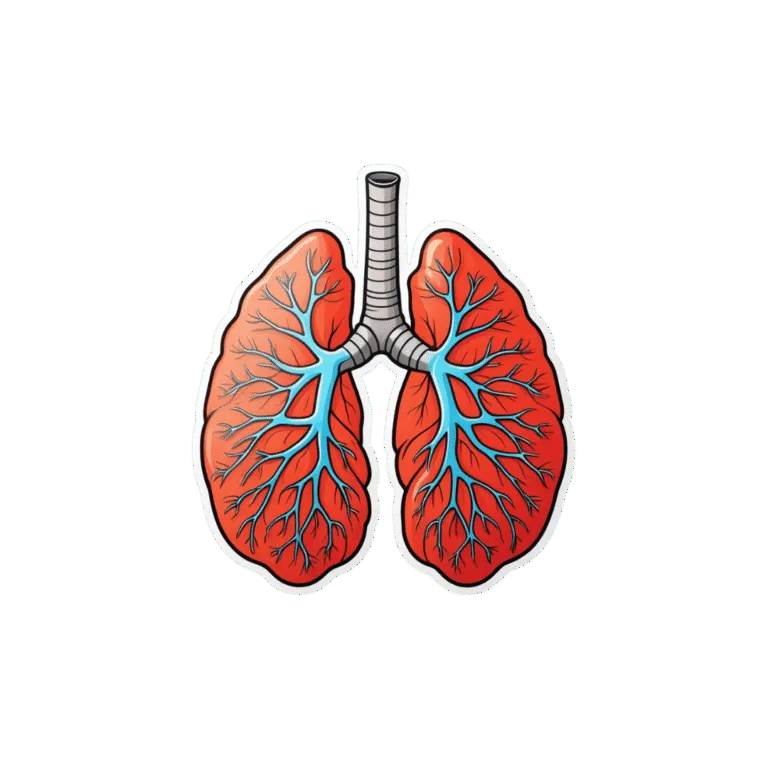
  • Why Chronic Obstructive Pulmonary Disease (COPD) Is More Likely Than You Think

    10almonds is reader-supported. We may, at no cost to you, receive a portion of sales if you purchase a product through a link in this article.

    Chronic Obstructive Pulmonary Disease (COPD): More Likely Than You Think

    COPD is not so much one disease, as rather a collection of similar (and often overlapping) diseases. The main defining characteristic is that they are progressive lung diseases. Historically the most common have been chronic bronchitis and emphysema, though Long COVID and related Post-COVID conditions appear to have been making inroads.

    Lung cancer is generally considered separately, despite being a progressive lung disease, but there is crossover too:

    COPD prevalence is increased in lung cancer, independent of age, sex and smoking history

    COPD can be quite serious:

    Life expectancy and years of life lost in Chronic Obstructive Pulmonary Disease: Findings from the NHANES III Follow-up Study

    “But I don’t smoke”

    Great! In fact we imagine our readership probably has disproportionately few smokers compared to the general population, being as we all are interested in our health.

    But, it’s estimated that 30,000,000 Americans have COPD, and approximately half don’t know it. Bear in mind, the population of the US is a little over 340,000,000, so that’s a little under 9% of the population.

    Click here to see a state-by-state breakdown (how does your state measure up?)

    How would I know if I have it?

    It typically starts like any mild respiratory illness. Likely shortness of breath, especially after exercise, a mild cough, and a frequent need to clear your throat.

    Then it will get worse, as the lungs become more damaged; each of those symptoms might become stronger, as well as chest tightness and a general lack of energy.

    Later stages, you guessed it, the same but worse, and—tellingly—weight loss.

    The reason for the weight loss is because you are getting less oxygen per breath, making carrying your body around harder work, meaning you burn more calories.

    What causes it?

    Lots of things, with smoking being up at the top, or being exposed to a lot of second-hand smoke. Working in an environment with a lot of air pollution (for example, working around chemical fumes) can cause it, as can inhaling dust. New Yorkers: yes, that dust too. It can also develop from other respiratory illnesses, and some people even have a genetic predisposition to it:

    Alpha-1 antitrypsin deficiency: a commonly overlooked cause of lung disease

    Is it treatable?

    Treatment varies depending on what form of it you have, and most of the medical interventions are beyond the scope of this article. Suffice it to say, there are medications that can be taken (including bronchodilators taken via an inhaler device), corticosteroids, antibiotics and antivirals of various kinds if appropriate. This is definitely a “see your doctor” item though, because there are is far too much individual variation for us to usefully advise here.

    However!

    There are habits we can do to a) make COPD less likely and b) make COPD at least a little less bad if we get it.

    Avoiding COPD:

    • Don’t smoke. Just don’t.
      • Avoid second-hand smoke if you can
    • Avoid inhaling other chemicals/dust that may be harmful
    • Breathe through your nose, not your mouth; it filters the air in a whole bunch of ways
      • Seriously, we know it seems like nostril hairs surely can’t do much against tiny particles, but tiny particles are attracted to them and get stuck in mucous and dealt with by our immune system, so it really does make a big difference

    Managing COPD:

    • Continue the above things, of course
    • Exercise regularly, even just light walking helps; we realize it will be difficult
    • Maintain a healthy weight if you can
      • This means both ways; COPD causes weight loss and that needs to be held in check. But similarly, you don’t want to be carrying excessive weight either; that will tire you even more.
    • Look after the rest of your health; everything else will now hit you harder, so even small things need to be taken seriously
    • If you can, get someone to help / do your household cleaning for you, ideally while you are not in the room.

    Where can I get more help/advice?

    As ever, speak to your doctor if you are concerned this may be affecting you. You can also find a lot of resources via the COPD Foundation’s website.

    Take care of yourself!

    Don’t Forget…

    Did you arrive here from our newsletter? Don’t forget to return to the email to continue learning!

    Learn to Age Gracefully

    Join the 98k+ American women taking control of their health & aging with our 100% free (and fun!) daily emails:

  • What is PNF stretching, and will it improve my flexibility?

    10almonds is reader-supported. We may, at no cost to you, receive a portion of sales if you purchase a product through a link in this article.

    Whether improving your flexibility was one of your new year’s resolutions, or you’ve been inspired watching certain tennis stars warming up at the Australian Open, maybe 2025 has you keen to focus on regular stretching.

    However, a quick Google search might leave you overwhelmed by all the different stretching techniques. There’s static stretching and dynamic stretching, which can be regarded as the main types of stretching.

    But there are also some other potentially lesser known types of stretching, such as PNF stretching. So if you’ve come across PNF stretching and it piques your interest, what do you need to know?

    Undrey/Shutterstock

    What is PNF stretching?

    PNF stretching stands for proprioceptive neuromuscular facilitation. It was developed in the 1940s in the United States by neurologist Herman Kabat and physical therapists Margaret Knott and Dorothy Voss.

    PNF stretching was initially designed to help patients with neurological conditions that affect the movement of muscles, such as polio and multiple sclerosis.

    By the 1970s, its popularity had seen PNF stretching expand beyond the clinic and into the sporting arena where it was used by athletes and fitness enthusiasts during their warm-up and to improve their flexibility.

    Although the specifics have evolved over time, PNF essentially combines static stretching (where a muscle is held in a lengthened position for a short period of time) with isometric muscle contractions (where the muscle produces force without changing length).

    PNF stretching is typically performed with the help of a partner.

    There are 2 main types

    The two most common types of PNF stretching are the “contract-relax” and “contract-relax-agonist-contract” methods.

    The contract-relax method involves putting a muscle into a stretched position, followed immediately by an isometric contraction of the same muscle. When the person stops contracting, the muscle is then moved into a deeper stretch before the process is repeated.

    For example, to improve your hamstring flexibility, you could lie down and get a partner to lift your leg up just to the point where you begin to feel a stretch in the back of your thigh.

    Once this sensation eases, attempt to push your leg back towards the ground as your partner resists the movement. After this, your partner should now be able to lift your leg up slightly higher than before until you feel the same stretching sensation.

    This technique was based on the premise that the contracted muscle would fall “electrically silent” following the isometric contraction and therefore not offer its usual level of resistance to further stretching (called “autogenic inhibition”). The contract-relax method attempts to exploit this brief window to create a deeper stretch than would otherwise be possible without the prior muscle contraction.

    The contract-relax-agonist-contract method is similar. But after the isometric contraction of the stretched muscle, you perform an additional contraction of the muscle group opposing the muscle being stretched (referred to as the “agonist” muscle), before the muscle is moved into a static stretch once more.

    Again, if you’re trying to improve hamstring flexibility, immediately after trying to push your leg towards the ground you would attempt to lift it back towards the ceiling (this bit without partner resistance). You would do this by contracting the muscles on the front of the thigh (the quadriceps, the agonist muscle in this case).

    Likewise, after this, your partner should be able to lift your leg up slightly higher than before.

    The contract-relax-agonist-contract method is said to take advantage of a phenomenon known as “reciprocal inhibition.” This is where contracting the muscle group opposite that of the muscle being stretched leads to a short period of reduced activation of the stretched muscle, allowing the muscle to stretch further than normal.

    What does the evidence say?

    Research has shown PNF stretching is associated with improved flexibility.

    While it has been suggested that both PNF methods improve flexibility via changes in nervous system function, research suggests they may simply improve our ability to tolerate stretching.

    It’s worth noting most of the research on PNF stretching and flexibility has focused on healthy populations. This makes it difficult to provide evidence-based recommendations for people with clinical conditions.

    And it may not be the most effective method if you’re looking to improve your flexibility in the long term. A 2018 review found static stretching was better for improving flexibility compared to PNF stretching. But other research has found it could offer greater immediate benefits for flexibility than static stretching.

    At present, similar to other types of stretching, research linking PNF stretching to injury prevention and improved athletic performance is relatively inconclusive.

    PNF stretching may actually lead to small temporary deficits in performance of strength, power, and speed-based activities if performed immediately beforehand. So it’s probably best done after exercise or as a part of a standalone flexibility session.

    A man stretching his hamstring overlooking the ocean.
    Static stretching may be a more effective way to improve flexibility over the long-term. GaudiLab/Shutterstock

    How much should you do?

    It appears that a single contract-relax or contract-relax-agonist-contract repetition per muscle, performed twice per week, is enough to improve flexibility.

    The contraction itself doesn’t need to be hard and forceful – only about 20% of your maximal effort should suffice. The contraction should be held for at least three seconds, while the static stretching component should be maintained until the stretching sensation eases.

    So PNF stretching is potentially a more time-efficient way to improve flexibility, compared to, for example, static stretching. In a recent study we found four minutes of static stretching per muscle during a single session is optimal for an immediate improvement in flexibility.

    Is PNF stretching the right choice for me?

    Providing you have a partner who can help you, PNF stretching could be a good option. It might also provide a faster way to become more flexible for those who are time poor.

    However, if you’re about to perform any activities that require strength, power, or speed, it may be wise to limit PNF stretching to afterwards to avoid any potential deficits in performance.

    Lewis Ingram, Lecturer in Physiotherapy, University of South Australia and Hunter Bennett, Lecturer in Exercise Science, University of South Australia

    This article is republished from The Conversation under a Creative Commons license. Read the original article.

    Don’t Forget…

    Did you arrive here from our newsletter? Don’t forget to return to the email to continue learning!

    Learn to Age Gracefully

    Join the 98k+ American women taking control of their health & aging with our 100% free (and fun!) daily emails:

  • Practical Optimism – by Dr. Sue Varma

    10almonds is reader-supported. We may, at no cost to you, receive a portion of sales if you purchase a product through a link in this article.

    We’ve written before about how to get your brain onto a more positive track (without toxic positivity), but there’s a lot more to be said than we can fit into an article, so here’s a whole book packed full with usable advice.

    The subtitle claims “the art, science, and practice of…”, but mostly it’s the science of. If there’s art to be found here, then this reviewer missed it, and as for the practice of, well, that’s down to the reader, of course.

    However, it is easy to use the contents of this book to translate science into practice without difficulty.

    If you’re a fan of acronyms, initialisms, and other mnemonics (such as the rhyming “Name, Claim, Tame, and Reframe”), then you’ll love this book as they come thick and fast throughout, and they contribute to the overall ease of application of the ideas within.

    The writing style is conversational but with enough clinical content that one never forgets who is speaking—not in the egotistical way that some authors do, but rather, just, she has a lot of professional experience to share and it shows.

    Bottom line: if you’d like to be more optimistic without delving into the delusional, this book can really help a lot with that (in measurable ways, no less!).

    Click here to check out Practical Optimism, and brighten up your life!

    Don’t Forget…

    Did you arrive here from our newsletter? Don’t forget to return to the email to continue learning!

    Learn to Age Gracefully

    Join the 98k+ American women taking control of their health & aging with our 100% free (and fun!) daily emails: