
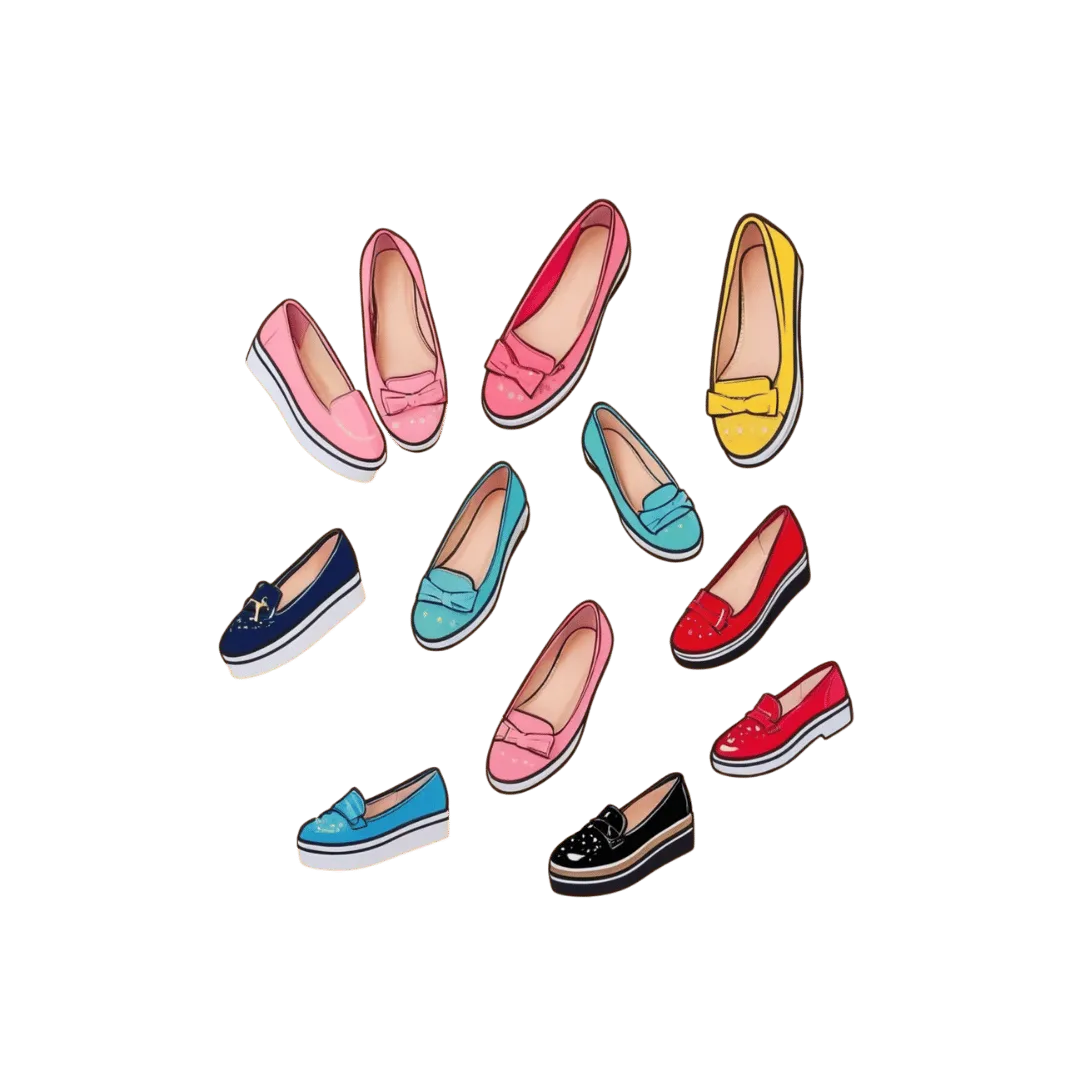
These shoes are best for hip and knee arthritis, according to science
10almonds is reader-supported. We may, at no cost to you, receive a portion of sales if you purchase a product through a link in this article.
People with hip and knee osteoarthritis are advised to wear “appropriate footwear” to minimise their pain.
Does that mean heels are out? Does it matter if you wear runners or something a little stiffer? How about using insoles?
Our research, including our latest clinical trial published today in Annals of Internal Medicine, provides some answers.
We show that stable, more supportive shoes aren’t necessarily the best option, despite what you might have heard.

What is osteoarthritis?
Osteoarthritis is a condition that affects the tissues in and around a joint, including bone, cartilage, ligaments and muscles. It is more common in older people, and people with excess body weight. It causes joint pain and stiffness, and can lead to disability.
About 2.35 million Australians have osteoarthritis and this number is predicted to increase as the population ages and obesity rates rise.
Osteoarthritis commonly affects the hip and knee joints, making it difficult to walk. There is no cure, so self-management is important.
That includes wearing the right type of shoes.
How can shoes affect symptoms?
There are many causes of osteoarthritis, but excessive force inside the joint when someone is walking is thought to play a role. Excessive joint forces can also increase the chance of osteoarthritis worsening over time.
Shoes are our connection to the ground and can influence how forces are transmitted up the leg during every step. Some shoe features are particularly important.
Shoes with higher heels increase joint forces. For example, shoes with six-centimetre heels increase knee forces by an average 23% compared to walking barefoot.
Some shoes come with supportive features, such as insoles that support the arches. Other supportive features include being made with a stiffer material in the sole or heel.
Many people, and clinicians, think these stable and supportive shoe features are best for people with osteoarthritis.
But biomechanical research shows shoes with these supportive features actually increase knee force by up to 15% compared to shoes without them. Arch-supporting insoles also increase knee force by up to 6% when added to shoes.
So, are flatter, flexible shoes without stable supportive features – such as ballet flats – better for knee and hip osteoarthritis?
Not necessarily. We also need to look at people’s pain.
What we found
Our biomechanical research from 2017 in people with knee osteoarthritis showed flat flexible shoes reduced knee forces by an average 9% compared to stable supportive shoe styles.
This suggests flat flexible shoes could be better for osteoarthritis. To find out, we conducted two clinical trials to look at people’s pain levels.
Our new clinical trial involved 120 people with hip osteoarthritis.
They were randomised to wear different types of flat flexible shoes, such as flexible ballet flats, or different types of stable supportive shoes, such as supportive runners. People were asked to wear their shoes for at least six hours a day. After six months we measured the change in hip pain when they walked.
We found flat flexible shoes were no better than stable supportive shoes for reducing hip pain.
These findings differ to those from our 2021 clinical trial in 164 people with knee osteoarthritis. In that trial, we found wearing stable supportive shoes for six months reduced knee pain when walking by an average 63% more than wearing flat flexible shoes.
It’s unclear why findings differed between the knee and hip. But it might be because joint forces are higher in knee compared to hip osteoarthritis, and so there may be greater potential for stable supportive shoes to reduce knee forces, and therefore knee pain.
In both trials, more complications, such as foot pain, were reported by people who wore flat flexible shoes. This might be because these shoe styles provide less protection for the feet.
So which shoes should I wear?
For people with knee osteoarthritis, stable supportive shoes are likely to be more beneficial than flat flexible ones.
For people with hip osteoarthritis, neither shoe type is better than the other for improving hip pain.
But for all older people – including those with hip and knee osteoarthritis – it is sensible to avoid ill-fitting shoes, as well as shoes with high or narrow heels, due to an increased risk of falls.
For younger people with knee or hip osteoarthritis but who are not at risk of falls, it may still be advisable to avoid high heels given their potential to increase joint forces.
Who should you talk to?
If you are concerned about your hip or knee osteoarthritis, talk to your GP or other health-care provider, such as a podiatrist or physiotherapist.
Other non-surgical treatments, such as exercise, weight management, nutrition and some pain medicines can help.
Kade Paterson, Associate Professor of Musculoskeletal Health, The University of Melbourne and Rana Hinman, Professor in Physiotherapy, The University of Melbourne
This article is republished from The Conversation under a Creative Commons license. Read the original article.
Don’t Forget…
Did you arrive here from our newsletter? Don’t forget to return to the email to continue learning!

Recommended
Learn to Age Gracefully
Join the 98k+ American women taking control of their health & aging with our 100% free (and fun!) daily emails:
-
Surgery won’t fix my chronic back pain, so what will?
10almonds is reader-supported. We may, at no cost to you, receive a portion of sales if you purchase a product through a link in this article.
This week’s ABC Four Corners episode Pain Factory highlighted that our health system is failing Australians with chronic pain. Patients are receiving costly, ineffective and risky care instead of effective, low-risk treatments for chronic pain.
The challenge is considering how we might reimagine health-care delivery so the effective and safe treatments for chronic pain are available to millions of Australians who suffer from chronic pain.
One in five Australians aged 45 and over have chronic pain (pain lasting three or more months). This costs an estimated A$139 billion a year, including $12 billion in direct health-care costs.
The most common complaint among people with chronic pain is low back pain. So what treatments do – and don’t – work?
Opioids and invasive procedures
Treatments offered to people with chronic pain include strong pain medicines such as opioids and invasive procedures such as spinal cord stimulators or spinal fusion surgery. Unfortunately, these treatments have little if any benefit and are associated with a risk of significant harm.
Spinal fusion surgery and spinal cord stimulators are also extremely costly procedures, costing tens of thousands of dollars each to the health system as well as incurring costs to the individual.
Addressing the contributors to pain
Recommendations from the latest Australian and World Health Organization clinical guidelines for low back pain focus on alternatives to drug and surgical treatments such as:
- education
- advice
- structured exercise programs
- physical, psychological or multidisciplinary interventions that address the physical or psychological contributors to ongoing pain.
Pain education is central. Monkey Business Images/Shutterstock Two recent Australian trials support these recommendations and have found that interventions that address each person’s physical and psychological contributors to pain produce large and sustained improvements in pain and function in people with chronic low back pain.
The interventions have minimal side effects and are cost-effective.
In the RESOLVE trial, the intervention consists of pain education and graded sensory and movement “retraining” aimed to help people understand that it’s safe to move.
In the RESTORE trial, the intervention (cognitive functional therapy) involves assisting the person to understand the range of physical and psychological contributing factors related to their condition. It guides patients to relearn how to move and to build confidence in their back, without over-protecting it.
Why isn’t everyone with chronic pain getting this care?
While these trials provide new hope for people with chronic low back pain, and effective alternatives to spinal surgery and opioids, a barrier for implementation is the out-of-pocket costs. The interventions take up to 12 sessions, lasting up to 26 weeks. One physiotherapy session can cost $90–$150.
In contrast, Medicare provides rebates for just five allied health visits (such as physiotherapists or exercise physiologists) for eligible patients per year, to be used for all chronic conditions.
Private health insurers also limit access to reimbursement for these services by typically only covering a proportion of the cost and providing a cap on annual benefits. So even those with private health insurance would usually have substantial out-of-pocket costs.
Access to trained clinicians is another barrier. This problem is particularly evident in regional and rural Australia, where access to allied health services, pain specialists and multidisciplinary pain clinics is limited.
Higher costs and lack of access are associated with the increased use of available and subsidised treatments, such as pain medicines, even if they are ineffective and harmful. The rate of opioid use, for example, is higher in regional Australia and in areas of socioeconomic disadvantage than metropolitan centres and affluent areas.
So what can we do about it?
We need to reform Australia’s health system, private and public, to improve access to effective treatments for chronic pain, while removing access to ineffective, costly and high-risk treatments.
Better training of the clinical workforce, and using technology such as telehealth and artificial intelligence to train clinicians or deliver treatment may also improve access to effective treatments. A recent Australian trial, for example, found telehealth delivered via video conferencing was as effective as in-person physiotherapy consultations for improving pain and function in people with chronic knee pain.
Advocacy and improving the public’s understanding of effective treatments for chronic pain may also be helpful. Our hope is that coordinated efforts will promote the uptake of effective treatments and improve the care of patients with chronic pain.
Christine Lin, Professor, University of Sydney; Christopher Maher, Professor, Sydney School of Public Health, University of Sydney; Fiona Blyth, Professor, University of Sydney; James Mcauley, Professor of Psychology, UNSW Sydney, and Mark Hancock, Professor of Physiotherapy, Macquarie University
This article is republished from The Conversation under a Creative Commons license. Read the original article.
Share This Post
-
Parents find Health Star Ratings confusing and unhelpful. We need a better food labelling system
10almonds is reader-supported. We may, at no cost to you, receive a portion of sales if you purchase a product through a link in this article.
Food labels are intended to support healthy choices. But not all labelling schemes are equal.
Australia currently uses a voluntary Health Star Rating system. Food manufacturers can choose to add a star label to their packaging to indicate how it compares to other similar products. Or they can choose not to show a star rating on a product at all.
The Australian government is now considering making it mandatory.
But our new research on parenting and food in Australia found the Health Star Ratings are often confusing, misunderstood and have little credibility among shoppers.
If Health Stars are mandated, the system will also need a major overhaul to be trusted and useful for shoppers.
Gustavo Fring/Pexels How do Health Star Ratings work?
The government set up the front-of-pack Health Star Rating system in 2014 in collaboration with the food industry, public health and consumer groups.
Product ratings range from (bad) ½ to (good) 5 stars.
Calories, saturated fat, sugars and sodium decrease the rating. Fibre, protein, and the content of fruit, vegetables, nuts and legumes increase it.
The good and bad offset each other. This means companies can strategically formulate products to boost the rating and mask unhealthy ingredients.
Processing and additives – such as sweeteners, colouring, emulsifiers, preservatives and artificial flavourings – are not part of the calculation.
Previous research has found the ratings can incentivise ultra-processed foods over minimally and unprocessed foods, and misrepresent healthfulness. Some researchers have also suggested practical ways to modify the rating algorithm to account for processing.
The Health Star Rating’s own consumer research found 74% of consumers do not understand that the rating cannot be used to compare dissimilar products.
What parents told us
In our interviews with 34 parents in Australia, participants often described the Health Star Ratings as “misleading”, “not helpful” and “on the wrong product”. One participant called it the “fake health star rating”.
They gave many examples:
Like you might buy 100% orange juice or fruit juice and it might have only half a star health star rating, but then you can buy like a box of processed muesli bars and it will have five stars. – Mother of three high school aged children, urban WA
Coco Pops or Nutrigrain have three and a half star rating, and what exactly does that mean? – Mother of one primary school aged child, urban WA
Participants wondered if the Health Stars were something companies paid for, a “marketing thing”.
Positivity bias
Part of the problem with the Health Stars is the positivity bias of the symbol. As one participant put it, “All stars are good. Right?”
Another noted their children comment on the stars, saying “but look Mum, it’s five stars.”
However, parents were not convinced:
A lot of packaged stuff is rated as five stars. I’m like yeah, well, don’t know about that. It’s still packaged. – Mother of two primary school aged children, urban NSW
Participants thought discretionary foods should not have any stars. As one participant said:
The other day, we saw a mud cake and it has a two out of five star health rating. How can that be a two out of five star?… Like there should not even be a star available for this. – Mother of pre-school aged child, urban NSW
Burden on parents
Parents often disregarded the rating. For example:
This particular thing, you know, had all sorts of additives, had actually had a much higher rating than something that actually didn’t have any additives… what I ended up buying was rated slightly lower. – Mother of two primary school aged children, rural Victoria
Instead participants used ingredients lists, apps such as Yuka, and “hours of internet research” to guide healthier choices.
But there was a sense of frustration that the burden was on them. Participants said:
I feel like food labels are extremely deceptive and by producers, purposely confusing. – Mother of one primary school aged child, urban SA
It has to be government driven because companies won’t change unless they’re forced to by the government. – Father of two primary school aged children, urban Tasmania
We need a food labelling system that works
Still, the parents we spoke to think a front-of-pack system is valuable. As one participant explained:
I do think if I had a better system for that, that would get a lot of use. – Mother of two primary school aged children, urban NSW
Parents repeatedly stated a desire for transparency over food, for information they can trust and food policies that prioritise consumer health.
As one mother put it, the “multi-billion dollar” food industry will not do this on their own, and “that’s where the government needs to step in.”
If Health Stars are mandatory, how could labelling be overhauled?
Chile, Mexico, Brazil and other countries, including Canada from 2026, are now using “stop-sign” warnings to steer consumers away from the least healthy products. Large Black Octagons alert consumers to high sugar, sodium and saturated fats, and ultra-processing.
Starting in 2026, a new front-of-package symbol will be required on many Canadian foods and drinks that are high in saturated fat, sugars or salt. Canada.ca/en/health Evidence shows these warning labels have improved nutrition and public health in other countries and could be an option for Australia.
We need to mandate a fit-for-purpose food labelling system that supports healthy eating. Governments should centre the voices of consumers in these and other national food policies to ensure they work as intended.
Juliet Bennett, Postdoctoral Research Fellow, University of Sydney; Alex Broom, Professor of Sociology & Director, Sydney Centre for Healthy Societies, University of Sydney, and David Raubenheimer, Leonard P. Ullman Chair in Nutritional Ecology, Nutrition Theme Leader Charles Perkins Centre, Chair Sydney Food and Nutrition Network, University of Sydney
This article is republished from The Conversation under a Creative Commons license. Read the original article.
Share This Post
-
Eat To Beat Cancer
10almonds is reader-supported. We may, at no cost to you, receive a portion of sales if you purchase a product through a link in this article.
Controlling What We Can, To Avoid Cancer
Every time a cell in our body is replaced, there’s a chance it will be cancerous. Exactly what that chance is depends on very many factors. Some of them we can’t control; others, we can.
Diet is a critical, modifiable factor
We can’t choose, for example, our genes. We can, for the most part, choose our diet. Why “for the most part”?
- Some people live in a food desert (the Arctic Circle is a good example where food choices are limited by supply)
- Some people have dietary restrictions (whether by health condition e.g. allergy, intolerance, etc or by personal-but-unwavering choice, e.g. vegetarian, vegan, kosher, halal, etc)
But for most of us, most of the time, we have a good control over our diet, and so that’s an area we can and should focus on.
Choose your animal protein wisely
If you are vegan, you can skip this section. If you are not, then the short version is:
- Fish: almost certainly fine
- Poultry: the jury is out; data is leaning towards fine, though
- Red meat: significantly increased cancer risk
- Processed meat: significantly increased cancer risk
For more details (and a run-down on the science behind the above super-summarized version):
- Do We Need Animal Products To Be Healthy? ← A mythbuster article that outlines many health properties (good and bad) of animal products
- The Whys and Hows of Cutting Meats Out Of Your Diet ← A life-hack article about acting on that information
Skip The Ultra-Processed Foods
Ok, so this one’s probably not a shocker in its simplest form:
❝Studies are showing us is that not only do the ultraprocessed foods increase the risk of cancer, but that after a cancer diagnosis such foods increase the risk of dying❞
Source: Is there a connection between ultraprocessed food and cancer?
There’s an unfortunate implication here! If you took the previous advice to heart and cut out [at least some] meat, and/but then replaced that with ultra-processed synthetic meat, then this was not a great improvement in cancer risk terms.
Ultra-processed meat is worse than unprocessed, regardless of whether it was from an animal or was synthetic.
In other words: if you buy textured soy pieces (a common synthetic meat), it pays to look at the ingredients, because there’s a difference between:
- INGREDIENTS: SOY
- INGREDIENTS: Rehydrated Textured SOY Protein (52%), Water, Rapeseed Oil, SOY Protein Concentrate, Seasoning (SULPHITES) (Dextrose, Flavourings, Salt, Onion Powder, Food Starch Modified, Yeast Extract, Colour: Red Iron Oxide), SOY Leghemoglobin, Fortified WHEAT Flour (WHEAT Flour, Calcium Carbonate, Iron, Niacin, Thiamin), Bamboo Fibre, Methylcellulose, Tomato Purée, Salt, Raising Agent: Ammonium Carbonates
Now, most of those original base ingredients are/were harmless per se (as are/were the grapes in wine—before processing into alcohol), but it has clearly been processed to Hell and back to do all that.
Choose the one that just says “soy”. Or eat soybeans. Or other beans. Or lentils. Really there are a lot of options.
About soy, by the way…
There is (mostly in the US, mostly funded by the animal agriculture industry) a lot of fearmongering about soy. Which is ironic, given the amount of soy that is fed to livestock to be fed to humans, but it does bear addressing:
❝Soy foods are safe for all cancer patients and are an excellent source of plant protein. Studies show soy may improve survival after breast cancer❞
Source: Food risks and cancer: What to avoid
(obviously, if you have a soy allergy then you should not consume soy—for most people, the above advice stands, though)
Advanced Glycation End-Products
These (which are Very Bad™ for very many things, including cancer) occur specifically as a result of processing animal proteins and fats.
Note: not even necessarily ultra-processing, just processing can do it. But ultra-processing is worse. What’s the difference, you wonder?
The difference between “ultra-processed” and just “processed”:
- Your average hotdog has been ultra-processed. It’s not only usually been changed with many artificial additives, it’s also been through a series of processes (physical and chemical) and ends up bearing little relation to the creature it came from.
- Your bacon (that you bought fresh from your local butcher, not a supermarket brand of unknown provenance, and definitely not the kind that might come on the top of frozen supermarket pizza) has been processed. It’s undergone a couple of simple processes on its journey “from farm to table”. Remember also that when you cook it, that too is one more process (and one that results in a lot of AGEs).
Read more: What’s so bad about AGEs?
Note if you really don’t want to cut out certain foods, changing the way you cook them (i.e., the last process your food undergoes before you eat it) can also reduce AGES:
Advanced Glycation End Products in Foods and a Practical Guide to Their Reduction in the Diet
Get More Fiber
❝The American Institute for Cancer Research shows that for every 10-gram increase in fiber in the diet, you improve survival after cancer diagnosis by 13%❞
Source: Plant-based diet is encouraged for patients with cancer
Yes, that’s post-diagnosis, but as a general rule of thumb, what is good/bad for cancer when you have it is good/bad for cancer beforehand, too.
If you’re thinking that increasing your fiber intake means having to add bran to everything, happily there are better ways:
Level-Up Your Fiber Intake! (Without Difficulty Or Discomfort)
Enjoy!
Share This Post
Related Posts
-
How stigma perpetuates substance use
10almonds is reader-supported. We may, at no cost to you, receive a portion of sales if you purchase a product through a link in this article.
In 2022, 54.6 million people 12 and older in the United States needed substance use disorder (SUD) treatment. Of those, only 24 percent received treatment, according to the most recent National Survey on Drug Use and Health.
SUD is a treatable, chronic medical condition that causes people to have difficulty controlling their use of legal or illegal substances, such as alcohol, tobacco, prescription opioids, heroin, methamphetamine, or cocaine. Using these substances may impact people’s health and ability to function in their daily life.
While help is available for people with SUD, the stigma they face—negative attitudes, stereotypes, and discrimination—often leads to shame, worsens their condition, and keeps them from seeking help.
Read on to find out more about how stigma perpetuates substance use.
Stigma can keep people from seeking treatment
Suzan M. Walters, assistant professor at New York University’s Grossman School of Medicine, has seen this firsthand in her research on stigma and health disparities.
She explains that people with SUD may be treated differently at a hospital or another health care setting because of their drug use, appearance (including track marks on their arms), or housing situation, which may discourage them from seeking care.
“And this is not just one case; this is a trend that I’m seeing with people who use drugs,” Walters tells PGN. “Someone said, ‘If I overdose, I’m not even going to the [emergency room] to get help because of this, because of the way I’m treated. Because I know I’m going to be treated differently.’”
People experience stigma not only because of their addiction, but also because of other aspects of their identities, Walters says, including “immigration or race and ethnicity. Hispanic folks, brown folks, Black folks [are] being treated differently and experiencing different outcomes.”
And despite the effective harm reduction tools and treatment options available for SUD, research has shown that stigma creates barriers to access.
Syringe services programs, for example, provide infectious disease testing, Narcan, and fentanyl test strips. These programs have been proven to save lives and reduce the spread of HIV and hepatitis C. SSPs don’t increase crime, but they’re often mistakenly “viewed by communities as potential settings of drug-related crime;” this myth persists despite decades of research proving that SSPs make communities safer.
To improve this bias, Walters says it’s helpful for people to take a step back and recognize how we use substances, like alcohol, in our own lives, while also humanizing those with addiction. She says, “There’s a lack of understanding that these are human beings and people … [who] are living lives, and many times very functional lives.”
Misconceptions lead to stigma
SUD results from changes in the brain that make it difficult for a person to stop using a substance. But research has shown that a big misconception that leads to stigma is that addiction is a choice and reflects a person’s willpower.
Michelle Maloney, executive clinical director of mental health and addiction recovery services for Rogers Behavioral Health, tells PGN that statements such as “you should be able to stop” can keep a patient from seeking treatment. This belief goes back to the 1980s and the War on Drugs, she adds.
“We think about public service announcements that occurred during that time: ‘Just say no to drugs,’” Maloney says. “People who have struggled, whether that be with nicotine, alcohol, or opioids, [know] it’s not as easy as just saying no.”
Stigma can worsen addiction
Stigma can also lead people with SUD to feel guilt and shame and blame themselves for their medical condition. These feelings, according to the National Institute on Drug Abuse, may “reinforce drug-seeking behavior.”
In a 2020 article, Dr. Nora D. Volkow, the director of NIDA, said that “when internalized, stigma and the painful isolation it produces encourage further drug taking, directly exacerbating the disease.”
Overall, research agrees that stigma harms people experiencing addiction and can make the condition worse. Experts also agree that debunking myths about the condition and using non-stigmatizing language (like saying someone is a person with a substance use disorder, not an addict) can go a long way toward reducing stigma.
Resources to mitigate stigma:
- CDC: Stigma Reduction
- National Harm Reduction Coalition: Respect To Connect: Undoing Stigma
- NIDA:
- Shatterproof: Addiction language guide (Disclosure: The Public Good Projects, PGN’s parent company, is a Shatterproof partner)
This article first appeared on Public Good News and is republished here under a Creative Commons license.
Don’t Forget…
Did you arrive here from our newsletter? Don’t forget to return to the email to continue learning!
Learn to Age Gracefully
Join the 98k+ American women taking control of their health & aging with our 100% free (and fun!) daily emails:
-
Your Skin Microbiome & The Sun
10almonds is reader-supported. We may, at no cost to you, receive a portion of sales if you purchase a product through a link in this article.
Should we soak up the sun for its health benefits, protect our skin from it at all costs? Is sunscreen the one skincare product that everyone truly needs, or is it just adding chemicals to our skin? What’s the truth in a world full of conflicting information?
We’ve tackled some of these questions before, diving into the science of the pros and cons, including:
…and:
And now, today, we’re going to be talking about some entirely new science!
An extra layer of protection
Who would win:
- a 4,600,000,000-year-old ongoing nuclear fusion event whose superheated plasma is held in place by its own immense gravity well, or
- some single-celled organisms that were born a few minutes ago?
The answer is that the latter can, in fact, help to protect us against the former.
Re “born a few minutes ago”: if you’ll pardon the rhetorical device (per “born yesterday” etc), what we mean here is that the life cycle of such microbes is very short, so while your microbiome is as old as you are (albeit in ship of Theseus sort of way), any individual living microbes will not be more than some minutes old.
We mention this not as a matter of mere interesting trivia, but rather because it has practical implications: when it comes to our microbiome (or microbiomes, depending on whether we want to count different sites on/in our body separately, as is often useful, even if technically they all do interact with each other thus they could be considered one big diverse microbiome too), it is a living community that needs to be given the right circumstances to perpetuate and favorably mutate itself constantly.
It’s not something that can be optimized and then just taken for granted. Because sure, given good conditions, an optimized microbiome will then continue to self-perpetuate, mutate as it goes, and by virtue of natural selection, continue to persist against threats. But if not given good conditions? You could wreak havoc with it and take weeks or more for it to recover. And if those bad conditions are chronic, it might never recover.
So, more on healthy microbiome curation later, but first, the exciting new science!
Teaser:
❝This pivotal study shows that microbial communities are not passive victims of environmental stress but dynamic regulators of immune responses, capable of metabolizing UV-induced skin products such as cis-urocanic acid. This newly uncovered role of microbial metabolism in modulating UV tolerance reshapes our understanding of the skin barrier — not just as a structural shield but as a metabolically active, microbially regulated interface. With increasing concerns about UV exposure, skin aging, and cancer, a deeper understanding of this axis offers promising avenues for therapy and prevention.❞
~ Dr. Anna Di Nardo (not one of the study authors, just a physician-scientist expert in the field)
In few words: researchers have discovered that certain bacteria on our skin help protect us from sun damage and also play a role in controlling our immune system.
How this works: when sunlight (especially UVB rays) hits our skin, it changes a natural chemical there (namely: trans-urocanic acid) into a dangerous form (namely: cis-urocanic acid), which also incidentally weakens the immune system. Some skin bacteria can break down this harmful chemical with an enzyme they produce (namely: urocanase). This enables the skin to better manage its skin exposure; specifically, controlling responses to UV exposure.
This is exciting, because it’s the first evidence of a direct link between UV rays, a skin molecule, and microbial activity affecting health outcomes, not just passively, but through active metabolism.
You can read the paper itself here:
Great! How can we make use of this information?
Per the researchers’ conclusions, these insights could change how we think about sun protection, immune-related skin diseases, skin cancer, and more. The note also that future sun care could include microbiome-aware treatments that adjust bacterial metabolism to improve skin health after sun exposure.
And in the meantime? Generally speaking when it comes to microbiome health (any microbiome; gut, oral, skin, etc), a good rule of thumb is “if in doubt, just leave it alone and let it do its thing”.
This might sound like passive “do-nothing” advice, and in a way it is, but a lot of people don’t do nothing, and when it comes to the skin microbiome in particular, it’s very common for people to invest a lot of time and energy into killing everything that moves, so the advice here is “stop doing that”.
Which doesn’t mean you mustn’t wash; by all means, feel free to wash, but gently.
We’ve written a bit about this before:
And if you already have sun-damaged skin…
Undo The Sun’s Damage To Your Skin
Take care!
Don’t Forget…
Did you arrive here from our newsletter? Don’t forget to return to the email to continue learning!
Learn to Age Gracefully
Join the 98k+ American women taking control of their health & aging with our 100% free (and fun!) daily emails:
-
Undo It! – by Dr. Dean Ornish & Anne Ornish
10almonds is reader-supported. We may, at no cost to you, receive a portion of sales if you purchase a product through a link in this article.
Of course, no lifestyle changes will magically undo Type 1 Diabetes or Cerebral Palsy. But for many chronic diseases, a lot can be done. The question is,how does one book cover them all?
As authors Dr. Dean Ornish and Anne Ornish explain, very many chronic diseases are exacerbated, or outright caused, by the same factors:
- Gene expression
- Inflammation
- Oxidative stress
This goes for chronic disease from heart disease to type 2 diabetes to cancer and many autoimmune diseases.
We cannot change our genes, but we can change our gene expression (the authors explain how). And certainly, we can control inflammation and oxidative stress.
Then first part of the book is given over to dietary considerations. If you’re a regular 10almonds reader, you won’t be too surprised at their recommendations, but you may enjoy the 70 recipes offered.
Attention is also given to exercising in ways optimized to beat chronic disease, and to other lifestyle factors.
Limiting stress is important, but the authors go further when it comes to psychological and sociological factors. Specifically, what matters most to health, when it comes to intimacy and community.
Bottom line: this is a very good guide to a comprehensive lifestyle overhaul, especially if something recently has given you cause to think “oh wow, I should really do more to avoid xyz disease”.
Click here to check out Undo It, and better yet, prevent it in advance!
Don’t Forget…
Did you arrive here from our newsletter? Don’t forget to return to the email to continue learning!
Learn to Age Gracefully
Join the 98k+ American women taking control of their health & aging with our 100% free (and fun!) daily emails:


