The facts about ultra-processed foods

10almonds is reader-supported. We may, at no cost to you, receive a portion of sales if you purchase a product through a link in this article.

  • Ultra-processed foods contain at least one industrially produced ingredient, such as artificial sweeteners, preservatives, or other additives.ย 
  • Research suggests diets high in certain ultra-processed foods may be linked to health risks, but most studies are observational and cannot prove cause and effect. Researchers have not established that these foods directly cause health problems.
  • Recent state restrictions on ultra-processed foods aim to improve health. But some experts warn they could limit major sources of nutrition for low-income families, disabled individuals, and older adults.ย 

Last summer, U.S. health officials announced plans to address concerns about ultra-processed foods. Although the announcement linked the foods to an โ€œepidemicโ€ of chronic disease, the science on their health effects is still evolving. There is no single scientific consensus on exactly how to define an ultra-processed food.

Hereโ€™s what we know so far.

What are ultra-processed foods?

Ultra-processed foods are extremely common, accounting for up to 70 percent of the American diet

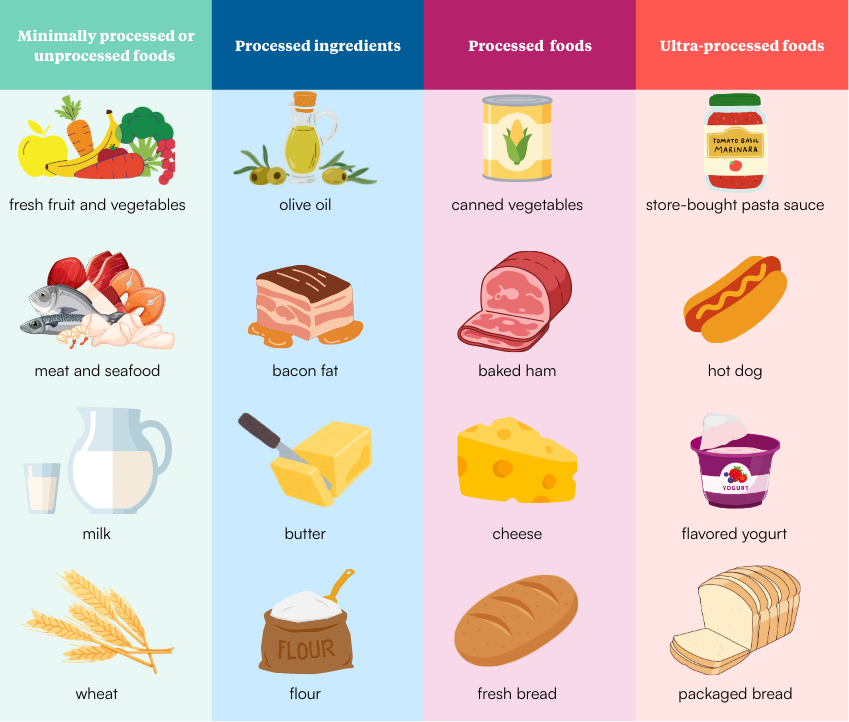
The term โ€œprocessingโ€ refers to anything that changes ingredients from their natural state. Meat, produce, and grains that have been washed, chopped, ground, juiced, cooked, fermented, pasteurized, or refrigerated are all considered processed. 

The distinction between processed and ultra-processed foods isnโ€™t always clear or consistent.

Unprocessed or minimally processed foods

Unprocessed or minimally processed foods are in their natural state or slightly altered from it. Minimal processing typically makes foods safer and more convenient to eat and has little effect on their nutritional value. An apple picked from a tree is unprocessed; fresh apple slices are minimally processed. Raw milk is unprocessed (and unsafe to consume), while pasteurized milk is minimally processed. 

Processed ingredients

Processed culinary ingredients are used in food preparation. They are made from unprocessed foods through pressing, churning, grinding, refining, or milling.

These include cooking fats, salt and pepper, ground herbs, natural and refined sweeteners, and milled grains like flour, rice, and oats. 

Processed foods

When processed ingredients are used to prepare unprocessed foods, the result is processed foods. Fresh-baked bread, canned fruit, pickles, cheese, and many homemade meals fall into this category.

Ultra-processed foods

Ultra-processed foods are made using one or more industrially produced ingredients. These may include: 

  • Artificial sweeteners, colors, and flavors
  • Hydrogenated fatsย 
  • Emulsifiers and thickening agents
  • Preservatives that extend shelf life
  • Other additives, including fortified nutrients like iron and vitamin B

What does science tell us about ultra-processed foods?

Ultra-processed foods have come under increased scrutiny in recent years, with some researchers and policymakers calling for regulation. However, policies are complicated by the lack of a universally accepted definition of โ€œultra-processed food.โ€

โ€œHealth authorities across the globe have rejected using the โ€˜ultra-processed foodโ€™ concept as a basis for public health policy, citing its lack of scientific consensus,โ€ wrote the International Food & Beverage Alliance in a November 2025 statement

Eating ultra-processed foods is associated with health risks.

Many studies have identified links between diets high in ultra-processed foods and health risks. A large 2024 BMJ analysis of previous research included data from nearly 10 million people. 

The analysis found that higher consumption of ultra-processed foods was potentially associated with 32 negative health outcomes. The strongest associations were for obesity, type 2 diabetes, cardiovascular disease, and โ€œcommon mental disorders.โ€

Research consistently shows that people who consume more ultra-processed foods are at higher risk of weight gain, type 2 diabetes, and cardiovascular conditions. This is particularly true for ultra-processed foods high in sugar, sodium, and saturated fats but low in nutrients.

โ€œConsuming [ultra-processed foods] has two main problems,โ€ said Angela Zivkovic, a nutrition researcher at the University of California, Davis. 

โ€œWe can more easily overconsume calories and thus gain weight, but also that we may be missing the nutrients that we would be getting if we were instead consuming nutrient-dense whole foods.โ€

Many health organizations advise reducing intake of ultra-processed foods, particularly those high in salt, sugar, and saturated fats, and replacing them with more nutrient-dense options.

Research on the direct health impacts of ultra-processed food is extremely limited.

Despite consistent associations, there is limited evidence that ultra-processed foods directly cause disease.

In the BMJ analysis, none of the included research studies were rated โ€œhigh quality,โ€ and much of the evidence was categorized as โ€œweakโ€ or merely โ€œsuggestive.โ€ For example, evidence linking ultra-processed foods to overall cancer risk was rated โ€œvery lowโ€ quality. Evidence for a link with Crohnโ€™s disease (chronic inflammation of the digestive tract) was considered โ€œweak.โ€

Most research relies on people self-reporting what they remember eating, which can introduce errors.

โ€œWe have no way of telling whether the association between the reported intake of [ultra-processed foods] and the disease outcome is due to the intake of [ultra-processed foods] or whether it is a reflection of an overall diet and lifestyle,โ€ added Zivkovic.

โ€œVery few studies that can actually evaluate the direct impacts of [ultra-processed foods] have been performed.โ€ 

โ€œUltra-processedโ€ does not equal โ€œunhealthy.โ€

The term โ€œultra-processed foodโ€ may bring to mind soda, candy, and chips. But many ultra-processed foods are common parts of healthy diets.

Milk alternatives, packaged bread, breakfast cereal, store-bought pasta sauce, and flavored yogurt are all ultra-processed foods. 

Foods fortified with vitamins and minerals are also classified as ultra-processed, often with significant health benefits. 

In 1998, the U.S. required enriched grains to be fortified with folic acid, a nutrient essential for early nervous system development. Fortification has been credited with dramatically reducing certain serious birth defects.

What is the health impact of restricting ultra-processed foods? 

In August, federal health officials commended six states that banned the purchase of certain highly processed foods with federal Supplemental Nutrition Assistance Program benefits

As of January, at least 18 states have SNAP restrictions, and five others have proposed similar policies. The restrictions include many snack foods, frozen meals, sweetened drinks, packaged desserts, gums, and dried fruits.
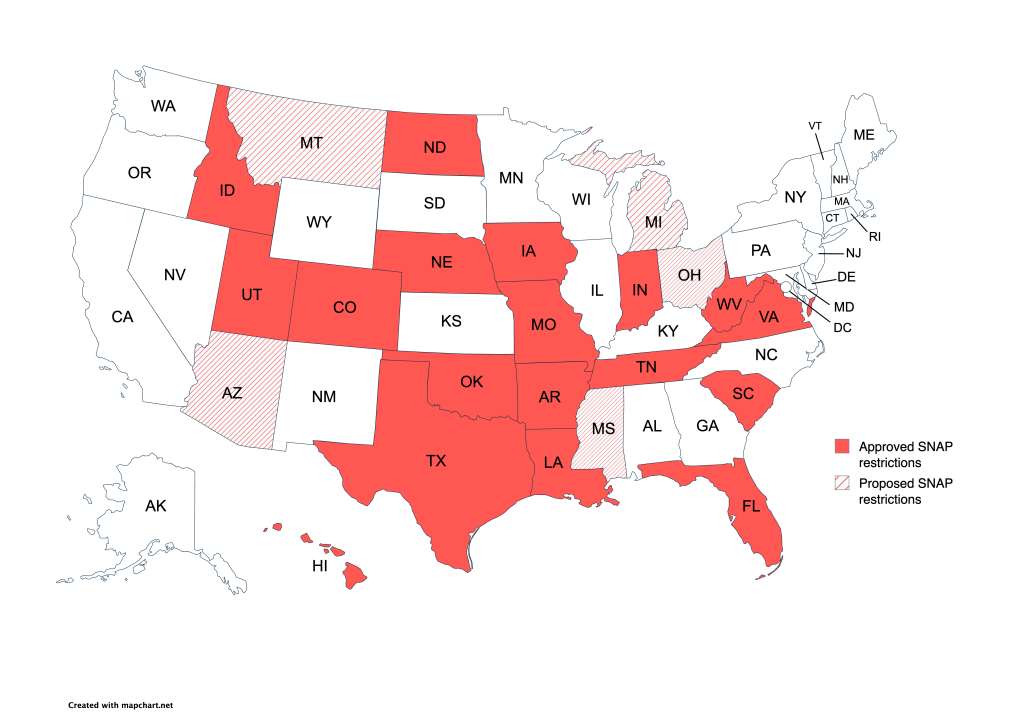
Source: United States Department of Agriculture, January 28, 2026.

While these policies are intended to promote health, some nutrition experts warn they may limit access to affordable and readily available foods for people with low incomes or disabilities. 

Ultra-processed foods are often inexpensive, widely available, and shelf-stable. For many households, they provide a significant share of daily calories and nutrients. For others, they are what families can afford and have the time, equipment, or ability to prepare. 

About one in 10 Americans live in food deserts, without easy access to a full-service grocery store. In some of these areas, shelf-stable and packaged foods are among the most consistently available options.

Some experts argue that restricting access to ultra-processed foods does not address the underlying barriers to healthy eating, such as cost, transportation, and neighborhood food access.

โ€œFor many households, processed foods provide convenience, affordability and stability,โ€ wrote Beverley Oโ€™Hara, a nutrition researcher at Leeds Beckett University, in a 2025 The Conversation article.

โ€œShaming people for eating the foods they can afford or grew up with ignores the realities of everyday life.โ€

Itโ€™s also unclear whether restrictions meaningfully change overall diets. 

โ€œRandomized controlled trials that have tested the effects of different limitations or incentives on SNAP purchases demonstrate thatโ€ฆthere are no meaningful differences on individualsโ€™ overall dietary intake,โ€ said Kate W. Bauer, a nutrition scientist at the University of Michigan, in a 2025 interview

Bauer cited a 2016 clinical trial that found SNAP restrictions were effective only when paired with incentives that made fresh foods more affordable. 

โ€œBefore considering restrictions, we need to address structural barriers like food deserts, transportation limitations, and the higher cost of nutritious foods,โ€ Bauer continued. 

โ€œThe focus should be on improving food environments rather than restricting choices within inadequate environments.โ€

For more information, talk to your health care provider.

This article first appeared on Public Good News and is republished here under a Creative Commons Attribution-NoDerivatives 4.0 International License.

Don’t Forget…

Did you arrive here from our newsletter? Don’t forget to return to the email to continue learning!

Learn to Age Gracefully

Join the 98k+ American women taking control of their health & aging with our 100% free (and fun!) daily emails:

  • Getting Your Messy Life In Order

    10almonds is reader-supported. We may, at no cost to you, receive a portion of sales if you purchase a product through a link in this article.

    Getting Your Messy Life In Order

    Weโ€™ve touched on this before by recommending the book, but today weโ€™re going to give an overview of the absolute most core essentials of the โ€œGetting Things Doneโ€ method. If youโ€™re unfamiliar, this will be enough to get you going. If youโ€™re already familiar, this may be a handy reminder!

    First, you’ll need:

    • A big table
    • A block of small memo paper squaresโ€”post-it note sized, but no need to be sticky.
    • A block of A4 printer paper
    • A big trash bag

    Gathering everything

    Gather up not just all your to-dos, but: all sources of to-dos, too, and anything else that otherwise needs “sorting”.

    Put them all in one physical placeโ€”a dining room table may have enough room. You’ll need a lot of room because you’re going to empty our drawers of papers, unopened (or opened and set aside) mail. Little notes you made for yourself, things stuck on the fridge or memo boards. Think across all areas of your life, and anything you’re “supposed” to do, write it down on a piece of paper. No matter what area of your life, no matter how big or small.

    Whether it’s “learn Chinese” or “take the trash out”, write it down, one item per piece of paper (hence the block of little memo squares).

    Sorting everything

    Everything you’ve gathered needs one of three things to happen:

    • You need to take some action (put it in a “to do” pile)
    • You may need it later sometime (put it in a “to file” pile)
    • You don’t need it (put it in the big trash bag for disposal)

    What happens next will soothe you

    • Dispose of the things you put for disposal
    • File the things for filing in a single alphabetical filing system. If you don’t have one, you’ll need to get one, so write that down and add it to the “to do” pile.
    • You will now process your “to dos”

    Processing the “to dos”

    The pile you have left is now your “inbox”. It’s probably huge; later it’ll be smaller, maybe just a letter-tray on your desk.

    Many of your “to dos” are actually not single action items, they’re projects. If something requires more than one step, it’s a project.

    Take each item one-by-one. Do this in any order; you’re going to do this as quickly as possible! Now, ask yourself: is this a single-action item that I could do next, without having to do something else first?

    • If yes: put it in a pile marked “next action”
    • If no: put it in a pile marked “projects”.

    Take a sheet of A4 paper and fold it in half. Write “Next Action” on it, and put your pile of next actions inside it.

    Take a sheet of A4 paper per project and write the name of the project on it, for example “Learn Chinese”, or “Do taxes”. Put any actions relating to that project inside it.

    Likely you don’t know yet what the first action will be, or else it’d be in your “Next Action” pile, so add an item to each project that says “Brainstorm project”.

    Processing the “Next Action” pile

    Again you want to do this as quickly as possible, in any order.

    For each item, ask yourself “Do I care about this?” If the answer is no, ditch that item, and throw it out. That’s ok. Things change and maybe we no longer want or need to do something. No point in hanging onto it.

    For each remaining item, ask yourself “can this be done in under 2 minutes?”.

    • If yes, do it, now. Throw away the piece of paper for it when you’re done.
    • If no, ask yourself:”could I usefully delegate this to someone else?” If the answer is yes, do so.

    If you can’t delegate it, ask yourself: “When will be a good time to do this?” and schedule time for it. A specific, written-down, clock time on a specific calendar date. Input that into whatever you use for scheduling things. If you don’t already use something, just use the calendar app on whatever device you use most.

    The mnemonic for the above process is “Do/Defer/Delegate/Ditch”

    Processing projects:

    If you don’t know where to start with a project, then figuring out where to start is your “Next Action” for that project. Brainstorm it, write down everything you’ll need to do, and anything that needs doing first.

    The end result of this is:

    • You will always, at any given time, have a complete (and accessible) view of everything you are “supposed” to do.
    • You will always, at any given time, know what action you need to take next for a given project.
    • You will always, when you designate “work time”, be able to get straight into a very efficient process of getting through your to-dos.

    Keeping on top of things

    • Whenever stuff “to do something with/about” comes to you, put it in your physical “inbox” placeโ€”as mentioned, a letter-tray on a desk should suffice.
    • At the start of each working day, quickly process things as described above. This should be a small daily task.
    • Once a week, do a weekly review to make sure you didn’t lose sight of something.
    • Monthly, quarterly, and annual reviews can be a good practice too.

    How to do those reviews? Topic for another day, perhaps.

    Or:

    Check out the website / Check out GTD apps / Check out the book

    Share This Post

  • Is white rice bad for me? Can I make it lower GI orย healthier?

    10almonds is reader-supported. We may, at no cost to you, receive a portion of sales if you purchase a product through a link in this article.

    Rice is a culinary staple in Australia and around the world.

    It might seem like a given that brown rice is healthier than white and official public health resources often recommend brown rice instead of white as a โ€œhealthy swapโ€.

    But Australians definitely prefer white rice over brown. So, whatโ€™s the difference, and what do we need to know when choosing rice?

    Dragne Marius/Unsplash

    What makes rice white or brown?

    Rice โ€œgrainsโ€ are technically seeds. A complete, whole rice seed is called a โ€œpaddyโ€, which has multiple parts:

    1. the โ€œhullโ€ is the hard outer layer which protects the seed
    2. the โ€œbranโ€, which is a softer protective layer containing the seed coat
    3. the โ€œgermโ€ or the embryo, which is the part of the seed that would develop into a new plant if was germinated
    4. the โ€œendospermโ€, which makes up most of the seed and is essentially the store of nutrients that feeds the developing plant as a seed grows into a plant.

    Rice needs to be processed for humans to eat it.

    Along with cleaning and drying, the hard hulls are removed since we canโ€™t digest them. This is how brown rice is made, with the other three parts of the rice remaining intact. This means brown rice is regarded as a โ€œwholegrainโ€.

    White rice, however, is a โ€œrefinedโ€ grain, as it is further polished to remove the bran and germ, leaving just the endosperm. This is a mechanical and not a chemical process.

    Whatโ€™s the difference, nutritionally?

    Keeping the bran and the germ means brown rice has more magnesium, phosphorus, potassium B vitamins (niacin, folate, riboflavin and pyridoxine), iron, zinc and fibre.

    The germ and the bran also contain more bioactives (compounds in foods that arenโ€™t essential nutrients but have health benefits), like oryzanols and phenolic compounds which have antioxidant effects.

    Brown rice
    Brown rice is cleaned and dried and the hard hulls are removed. Sung Min/Shutterstock

    But that doesnโ€™t mean white rice is just empty calories. It still contains vitamins, minerals and some fibre, and is low in fat and salt, and is naturally gluten-free.

    White and brown rice actually have similar amounts of calories (or kilojoules) and total carbohydrates.

    There are studies that show eating more white rice is linked to a higher risk of type 2 diabetes. But it is difficult to know if this is down to the rice itself, or other related factors such as socioeconomic variables or other dietary patterns.

    What about the glycaemic index?

    The higher fibre means brown rice has a lower glycaemic index (GI), meaning it raises blood sugar levels more slowly. But this is highly variable between different rices within the white and brown categories.

    The GI system uses low (less than 55), medium (55โ€“70) and high (above 70) categories. Brown rices fall into the low and medium categories. White rices fall in the medium and high.

    There are specific low-GI types available for both white and brown types. You can also lower the GI of rice by heating and then cooling it. This process converts some of the โ€œavailable carbohydratesโ€ into โ€œresistant starchโ€, which then functions like dietary fibre.

    Are there any benefits to white rice?

    The taste and textural qualities of white and brown rices differ. White rice tends to have a softer texture and more mild or neutral flavour. Brown rice has a chewier texture and nuttier flavour.

    So, while you can technically substitute brown rice into most recipes, the experience will be different. Or other ingredients may need to be added or changed to create the desired texture.

    Removing more of the outer layers may also reduce the levels of contaminants such as pesticides.

    We donโ€™t just eat rice

    Friends eat dinner on a rooftop terrace
    Youโ€™ll likely have vegetables and protein with your rice. Chay_Tee/Shutterstock

    Comparing white and brown rice seems like an easy way to boost nutritional value. But just because one food (brown rice) is more nutrient-dense doesnโ€™t make the other food (white rice) โ€œbadโ€.

    Ultimately, itโ€™s not often that we eat just rice, so we donโ€™t need the rice we choose to be the perfect one. Rice is typically the staple base of a more complex dish. So, itโ€™s probably more important to think about what we eat with rice.

    Adding vegetables and lean proteins to rice-based dishes can easily add the micronutrients, bioactives and fibre that white rice is comparatively lacking, and this can likely do more to contribute to diet quality than eating brown rice instead.

    Emma Beckett, Adjunct Senior Lecturer, Nutrition, Dietetics & Food Innovation – School of Health Sciences, UNSW Sydney

    This article is republished from The Conversation under a Creative Commons license. Read the original article.

    Share This Post

  • Who Initiates Sex & Why It Matters

    10almonds is reader-supported. We may, at no cost to you, receive a portion of sales if you purchase a product through a link in this article.

    In an ideal world, it wouldn’t matter any more than who first says “let’s get something to eat” when hungry. But in reality, it can cause serious problems on both sides:

    Fear and loathing?

    The person who initiates gets the special prize of an n% chance of experiencing rejection, and then what? Try again, and again, and risk seeming pushy? Or leave the ball in the other person’s court, where it may then go untouched for the next few months, because (in the most positive scenario) they were waiting for you to initiate at a better time for them?

    The person who does not initiate, and/but does not want sex at that time, gets the special prize of either making their partner feel unwanted, insecure, and perhaps unloved, or else grudgingly consenting to sex that’s going to be no fun while your heart’s not in it, and thus create the same end result plus you had an extra bad experience?

    So, that sucks all around:

    • Initiating touch (sex or cuddling) can feel like a test of being wanted, whereupon a lack of initiation or response may be misinterpreted as a lack of love or appreciation.
    • Meanwhile, non-reciprocation might stem from exhaustion or unrelated issues. For many, it’s a physiological lottery.

    10almonds note: not discussed in this video, but for many couples, problems can also arise because one partner or another just isn’t showing up with the expected physical signs of physiological arousal, so even if they say (and mean!) an enthusiastic “yes”, their body’s signs get misread as a “not really, though”, resulting in one partner feeling rejected, and both feeling inadequateโ€”on account of something that was completely unrelated to how the person actually felt about the prospect of sex*.

    *Sometimes, physiological arousal will simply not accompany psychological arousal, no matter how sincere the latter. And on the flipside, sometimes the signs of physiological arousal will just show up without psychological arousal. The human body is just like that sometimes. We all must listen to our partners’ words, not their genitals!

    The solution to this problem is thus the same as the solution to the rest of the problem that is discussed in the video, and it’s: good communication.

    That can be easier said than done, of courseโ€”not everyone is at their most eloquent in such situations! Which is why it can be important to have those conversations first outside of the bedroom when the stakes are low/non-existent.

    Even with the best communication, a more general, overarching non-reciprocity (real or perceived) of sexual desire can cause bitterness, resentment, and can ultimately be relationship-ending if a resolution that’s acceptable to everyone involved is not found.

    Ultimately, the work as a couple must begin from within as individualsโ€”addressing self-worth issues to better navigate love and intimacy.

    For more on all of this, enjoy:

    Click Here If The Embedded Video Doesnโ€™t Load Automatically!

    Want to learn more?

    You might also like to read:

    Relationships: When To Stick It Out & When To Call It Quits

    Take care!

    Share This Post

  • Ramadan is almost here. 5 tips to boost your wellbeing and energy levels if youโ€™reย fasting

    10almonds is reader-supported. We may, at no cost to you, receive a portion of sales if you purchase a product through a link in this article.

    Ramadan is one of the most significant months of the Islamic lunar calendar. It marks the time when the Quran was revealed to Prophet Mohammed (peace be upon him).

    Almost 2 billion Muslims worldwide observe this month of prayer and reflection, which includes fasting between two prayers, Fajr at dawn and Maghrib at sunset.

    Ramadan is about purifying the mind, body and soul, and practising self-restraint. Itโ€™s a time for spiritual growth and dedication to God (or Allah in Arabic). Ramadan also brings people together for meals and celebrations, with a focus on helping those less fortunate.

    Depending on where you live, Ramadan can mean going 12 to 19 hours without eating or drinking anything, including water.

    Our research shows choosing balanced, nutrient-dense foods and drinks can result in better wellbeing and greater energy levels than following your usual diet during Ramadan.

    Hereโ€™s what to consider if youโ€™re fasting for Ramadan.

    Drazen Zigic/Shutterstock

    Do you have any health issues?

    Healthy Muslims are expected to fast during Ramadan once they have reached puberty.

    Frail older adults are exempt from fasting, as are pregnant, breastfeeding and menstruating women. Anyone who cannot participate in fasting can make up for the missed fasting days later.

    People with chronic illness or mental health may be exempt if fasting poses a risk to their health. If you suffer from chronic illness, such as diabetes, heart disease or kidney problems, and want to fast, consult your GP first.

    Fasting can have severe health consequences for people with certain medical conditions and those who rely on prescription medication. Some medications need to be taken at a specific time (and some with food) to be safe and effective.

    If youโ€™re not drinking enough water during Ramadan, your body might also handle some medications differently: they may not work as well or cause side effects.

    For people who can safely fast, here are five tips to maintain your wellbeing during Ramadan.

    1. Plan ahead

    In preparation for Ramadan, stock up on essentials. Plan your meals and hydration in advance, to stay on top of your nutritional intake.

    Start reducing your caffeine gradually in the week leading to Ramadan, so your body can adjust. This can help prevent or reduce the fasting headaches that many experience at the beginning of Ramadan.

    Move your meals gradually towards Suhoor and Iftar times, so your body gets used to the new mealtimes.

    Man shops for groceries
    Plan your meals ahead of time. Ground Picture/Shutterstock

    2. Stay hydrated

    Staying hydrated is important during Ramadan. Women should aim to drink 2.1 litres of water or fluids (such as coconut water, clear soups, broths or herbal teas) each day. Men should aim for 2.6 litres.

    Limit the intake of sugary or artificially sweetened drinks and enjoy fresh fruit juice only in moderation. Sugary drinks cause a rapid increase in blood sugar levels. The body responds by releasing insulin, causing a drop in blood sugar, which can leave you feeling fatigued, irritable and hungry.

    Increase your hydration by including water-rich foods, such as cucumbers and watermelon, in your diet.

    3. Get your nutrients early

    Before dawn, have a nutrient-rich, slow-digesting meal, along with plenty of water.

    Select healthy nutrient-dense food with proteins and fats from lean meats, fish, chickpeas, tofu, nuts and seeds.

    Choose whole grain products, a variety of vegetables and fruits, and fermented foods, such as kimchi and pickles, which can support your digestion.

    When you prepare your meals, consider grilling, steaming or air frying instead of deep frying.

    Stay away from processed foods such as cakes, ice cream, chips and chocolates, as they often lack essential nutrients and are high in sugar, salt and fat. Processed foods also tend to be low in fibre and protein, which are crucial for maintaining a feeling of fullness.

    4. Avoid the temptation to overeat in the evening

    At sunset, many Muslims come together with family and friends for the fast-breaking evening meal (Iftar). During these occasions, it may be tempting to overindulge in sweets, salty snacks and fatty dishes.

    But overeating can strain the digestive system, cause discomfort and disrupt sleep.

    Person picks up a date
    Start with something small. Tekkol/Shutterstock

    Instead, listen to your bodyโ€™s signals, control your portions, and eat mindfully โ€“ this means slowly and without distractions.

    Start with something small, such as a date and a glass of water. You may choose to complete the Maghrib prayer before returning for your main meal and more fluids.

    5. Keep moving

    Finally, try to include some light exercise into your schedule, to maintain your fitness and muscle mass, and promote sleep.

    But avoid heavy workouts, sauna and intensive sports while fasting, as these may increase dehydration, which can increase your risk of feeling faint and falling.

    Romy Lauche, Deputy Director (Research), National Centre for Naturopathic Medicine, Southern Cross University; Fatima El-Assaad, Senior Research Fellow, Microbiome Research Centre, UNSW Sydney, and Jessica Bayes, Postdoctoral Research Fellow at the National Centre for Naturopathic Medicine, Southern Cross University

    This article is republished from The Conversation under a Creative Commons license. Read the original article.

    Don’t Forget…

    Did you arrive here from our newsletter? Don’t forget to return to the email to continue learning!

    Learn to Age Gracefully

    Join the 98k+ American women taking control of their health & aging with our 100% free (and fun!) daily emails:

  • Which Bell Peppers To Pick?

    10almonds is reader-supported. We may, at no cost to you, receive a portion of sales if you purchase a product through a link in this article.

    Bell Peppers: A Spectrum Of Specialties

    We were going to do this as part of our ongoing โ€œThis Or That?โ€ challenge, but as there are four main types all with many different benefits, we thought this bunch of fruits deserved a main feature.

    And yes, theyโ€™re botanically fruits, even if culinarily used as vegetablesโ€”much like tomatoes, famously!

    Theyโ€™re all the same (but also very much not)

    A thing to know is that whether bell peppers be green, yellow, orange, or red, theyโ€™re all the same plant, Capiscum anuum. All that differs is how early or late theyโ€™re harvested.

    Notwithstanding the โ€œCapiscumโ€ genus, they donโ€™t contain capsaicin (as is found in hot peppers). Capsaicinโ€™s a wonderful phytochemical:

    Capsaicin For Weight Loss And Against Inflammation

    โ€ฆbut today weโ€™re all about the bell peppers.

    So, letโ€™s see how they stack up!

    ๐Ÿ’š Green for lutein

    Lutein is especially important for the eyes and [the rest of the] brain, to the point that thereโ€™s now an Alzheimerโ€™s test that measures lutein concentration in the eye:

    Reduce Your Alzheimerโ€™s Risk

    Green peppers have most of this important carotenoid, though the others all have some too. See also:

    Brain Food? The Eyes Have It!

    ๐Ÿ’› Yellow for vitamin C

    Yellow peppers are technically highest in vitamin C, but all of them contain far more than the daily dose per fruit already, so if thereโ€™s any color of pepper thatโ€™s nutritionally the most expendable, itโ€™s yellow, since any other color pepper can take its place.

    Watch out, though! Cooking destroys vitamin C, so if you want to get your Cs in, youโ€™re going to want to do it raw.

    ๐Ÿงก Orange for zeaxanthin and cryptoxanthins

    Similar in their benefits to lutein, these antioxidant carotenoids are found most generously in orange peppers (20x as much as in yellow, 10x as much as in red, and slightly more than in green).

    โค๏ธ Red for vitamins A & B6

    Red peppers are richest by far in vitamin A, with one fruit giving the daily dose already. The others have about 10% of that, give or take.

    Red peppers also have the most vitamin B6, though the others also have nearly as much.

    โค๏ธ Red for lycopene

    We must do a main feature for lycopene sometime, as unlike a lot of antioxidant carotenoids, lycopene is found in comparatively very few foods (most famously itโ€™s present in tomatoes).

    Red is the only color of pepper to have lycopene.

    10almonds tip: to get the most out of your lycopene, cook these ones!

    Lycopene becomes 4x more bioavailable when cooked:

    Lycopene in tomatoes: chemical and physical properties affected by food processing โ† this paper is about tomatoes but lycopene is lycopene and this applies to the lycopene in red peppers, too

    And the overall winner isโ€ฆ

    You! Because you get to eat all four of them

    Enjoy!

    Don’t Forget…

    Did you arrive here from our newsletter? Don’t forget to return to the email to continue learning!

    Learn to Age Gracefully

    Join the 98k+ American women taking control of their health & aging with our 100% free (and fun!) daily emails:

  • Is there much COVID around? Do I need the new booster shot LP.8.1?

    10almonds is reader-supported. We may, at no cost to you, receive a portion of sales if you purchase a product through a link in this article.

    COVID rarely rates a mention in the news these days, yet it hasnโ€™t gone away.

    SARS-CoV-2, the virus that causes COVID, is still with us. It continues to infect thousands of Australians each month, still puts vulnerable people into hospital, sadly still causes deaths and leaves a steady stream of people living with disability from long COVID.

    As the virus continues to evolve, booster vaccines have been updated to better match the version of the virus currently circulating.

    Hereโ€™s what we know about how much COVID is around, prominent viral subvariants and the latest booster shots.

    The graph above shows Australiaโ€™s COVID notifications for the past 24 months taken from the National Notifiable Disease Surveillance System.

    Although the December 2025 data are incomplete, we can see that in November 2025 there were still nearly 8,000 notifications nationally.

    Two clear peaks appear: a summer wave in January and a winter wave in June. While 2025 levels are lower than those seen in 2024, the virus continues a pattern of rolling, seasonal mini-waves โ€“ just quieter ones than in previous years.

    Of course, these numbers underestimate the number of true infections because most people no longer test for COVID or report positive results.

    Luis Alvarez/Getty

    Which versions of the virus are circulating?

    At the moment, Australia is seeing a mixture of the subvariants NB.1.8.1, PQ.17, PE.1.4, RE.1.1, and an increasingly common arrival, LP.8.1.

    The World Health Organization classifies LP.8.1 as a โ€œvariant under monitoringโ€. Thatโ€™s because of its rapid growth and its strong ability to evade existing immunity.

    Each subvariant is simply a virus that has picked up a slightly different set of mutations as it continues to evolve. All of the above subvariants belong to the broader Omicron family and are descendants of JN.1. They share many core mutations that help them partially escape immunity, but each has added its own small tweaks.

    Because they are so closely related genetically, they tend to cause similar illness and respond similarly to vaccines and prior infection.

    In other words, these are not brand-new strains, but rather a swarm of closely related offshoots jockeying for position.

    Booster shot has been updated

    Given this ongoing evolution, our vaccines need occasional updating. For instance, in 2024, the Therapeutic Goods Administration (TGA) approved a new booster based on the JN.1 subvariant โ€“ the best available match at the time. Since then, however, the viral family tree has continued to branch.

    Now in 2025, the TGA has registered Pfizerโ€™s LP.8.1 vaccine, designed specifically to target the spike protein of LP.8.1. This vaccine should now be becoming available across Australia. It uses the same mRNA platform as earlier versions but updates the immune profile to better reflect the subvariants currently circulating.

    We donโ€™t yet have head-to-head vaccine effectiveness studies comparing the LP.8.1 vaccine directly with the previous JN.1 boosters.

    Instead, decisions to approve an updated booster vaccine rely on immunogenicity data (how strongly the vaccine stimulates neutralising antibodies) and experience from earlier vaccines.

    Early laboratory data suggest the LP.8.1 update should generate stronger neutralising responses against LP.8.1-like viruses than a JN.1 vaccine, while still offering good cross-protection to other JN.1 descendants such as NB.1.8.1.

    Who is eligible for the new booster?

    Whether Australians are โ€œrecommendedโ€ or are asked to โ€œconsiderโ€ a free COVID booster, and how often, depends on their age and risk.

    Healthy adults aged 18โ€“64 are eligible for a booster every 12 months. The advice is to consider a dose, particularly if a new vaccine becomes available that better matches circulating strains.

    For older Australians and those with a weakened immune system, the recommendation is stronger, reflecting their higher risk of severe disease.

    Children are only recommended a booster every 12 months if they are aged 5โ€“17 and immunocompromised.

    You can also check your eligibility online. And you can find the closest place to get vaccinated by searching for a โ€œCOVID-19 vaccine clinicโ€. This includes nearby pharmacies, which often have walk-in availability, as well as GP clinics, where youโ€™d generally have to book ahead.

    How safe is the vaccine?

    Because the vaccine is so new, we do not have long-term safety data on it. However, a statement from the manufacturer Pfizer says the safety profile should be similar to their previous mRNA-based vaccines.

    According to the vaccine surveillance system AusVaxSafety, 24% of people had a mild and short-lived reaction after being vaccinated with Pfizerโ€™s earlier JN.1 vaccine. This included pain, redness and swelling at the injection site, fatigue, headache or muscle and joint pain. Fewer than 1% reported seeing a doctor or going to the emergency department after vaccination.

    Why vaccination still matters

    COVID has become less disruptive, but it has not disappeared. A single infection can still result in days or weeks of illness, missed work, and, for some people, long-term complications.

    Vaccination remains one of the simplest ways to reduce the risk of severe outcomes, especially for people who have not had a booster in more than a year.

    Elderly people are one of the highest risk groups for severe COVID, yet only 32% of Australians over 75 are up to date with their booster shot.

    Updating our vaccines to match the virus gives our immune system the best chance to recognise new subvariants quickly. That, ultimately, keeps more Australians out of hospital.

    As we prepare for the festive season and summer holidays, itโ€™s easy for a COVID booster to fall off our to-do list. But with many pharmacies accepting vaccination walk-ins, itโ€™s never been easier to protect yourself and your family, and help keep community transmission low.

    Adrian Esterman, Professor of Biostatistics and Epidemiology, University of South Australia

    This article is republished from The Conversation under a Creative Commons license. Read the original article.

    Don’t Forget…

    Did you arrive here from our newsletter? Don’t forget to return to the email to continue learning!

    Learn to Age Gracefully

    Join the 98k+ American women taking control of their health & aging with our 100% free (and fun!) daily emails: