
Premature babies are given sucrose for pain relief – but new research shows it doesn’t stop long-term impacts on development

10almonds is reader-supported. We may, at no cost to you, receive a portion of sales if you purchase a product through a link in this article.

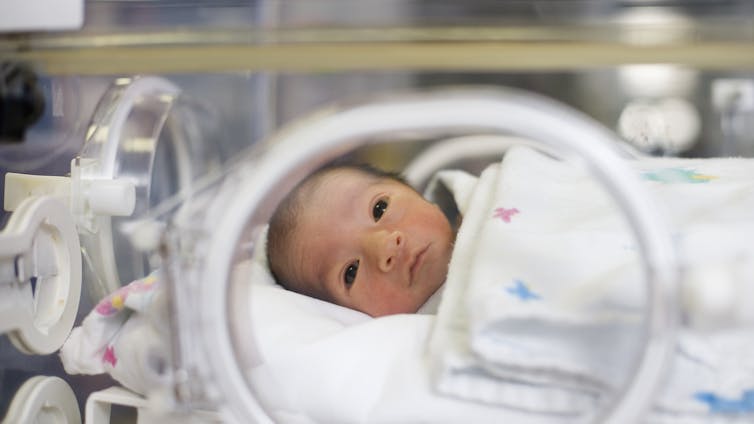
Infants born very preterm spend weeks or even months in the neonatal intensive care unit (NICU) while their immature brains are still developing.

During this time, they receive up to 16 painful procedures every day. The most common is a routine heel prick used to collect a blood sample. Suctioning of the infant’s airways is also common.

While many of these procedures provide critical care, we know they are acutely painful. Even tearing tape off the skin can be painful.

We also know, from decades of research, that preterm babies’ exposure to daily painful invasive procedures is related to altered brain development, stress functioning and poorer cognitive and behavioural outcomes.

The commonest strategy to manage acute pain in preterm babies is to give them sucrose, a sugar solution. But my recent research with Canadian colleagues shows this doesn’t stop these long-term impacts.

In New Zealand, there is no requirement to document all procedures or pain treatments. But as the findings from our Canadian study show, we urgently need research to improve long-term health outcomes for children born prematurely.
Getty Images

Long-term effects of pain in early life

We collected data on the number of procedures, clinical exposures and sucrose doses from three NICUs across Canada.

One of these sites does not use sucrose for acute pain management. This meant we were able to compare outcomes for children who received sucrose during their NICU stay and those who did not, without having to randomly assign infants to different care as you would in a randomised controlled trial – the gold standard approach.

At 18 months of age, when children born preterm are typically seen for a follow-up, parents report on their child’s behaviour. Our findings replicate earlier research: very preterm babies who were exposed to painful procedures early in life showed more anxiety and depressive symptoms by toddlerhood.

Our findings are similar regarding a child’s cognition and language, backing results from other studies. We found no link between preterm babies’ later behaviour and how much sucrose they were given to manage pain.

Sucrose is thought to activate centres of the brain that modulate pain and lead to the release of endorphins, but the exact mechanism remains unclear. It has become the worldwide standard of care for acute neonatal pain, but it doesn’t seem to be helping in the long term.

Improving pain treatment

About 1 in 13 babies are born preterm each year in Aotearoa New Zealand. Some 1-2% are very preterm, two to four months early. Māori and other ethnic minorities are at higher risk.

Studies in New Zealand show children born very preterm have up to a three-fold risk of emotional disorders in preschool and by school age. This remains evident through adulthood.

Sucrose may stop preterm babies from showing signs of pain, but physiological and neurological pain responses nevertheless happen.

As is the case internationally, sucrose is used widely in New Zealand, but there is considerable variation in protocols of use across hospitals. No national guidelines for best practice exist.

Infant pain should be assessed, but international data suggest this isn’t always the case. What’s more, pain isn’t always managed. Routine assessment of pain and parent education videos are useful initiatives to encourage pain management.

Minimising the number of procedures is recommended by international bodies. Advances in clinical care, including the use of less invasive ventilation support and the inclusion of parents in the daily care of their infant, have seen the number of procedures decrease.

Pain management guidelines also help, but whether these changes improve outcomes in the long term, we don’t know yet.

We do know there are other ways of treating neonatal pain and minimising long-term impacts. Placing a newborn on a parent’s bare chest, skin-to-skin, effectively reduces short and long-term effects of neonatal pain.

For times when whānau are not able to be in the NICU, we have limited evidence that other pain management strategies, such as expressed breast milk, are effective. Our recent research cements this: sucrose isn’t helping as we thought.

Understanding which pain management strategies should be used for short and long-term benefits of this vulnerable population could make a big difference in the lives of these babies.

This requires additional research and a different approach, while considering what is culturally acceptable in Aotearoa New Zealand. If the strategies we are currently using aren’t working, we need to think creatively about how to limit the impact of pain on children born prematurely.

Mia McLean, Senior lecturer, Auckland University of Technology

This article is republished from The Conversation under a Creative Commons license. Read the original article.

Don’t Forget…

Did you arrive here from our newsletter? Don’t forget to return to the email to continue learning!

  • What is frozen shoulder? And will I need surgery?
    Frozen shoulder can make simple tasks – such as lifting your arm, sleeping on your side, getting out of bed, putting on a bra, driving or playing with your kids – painful and challenging. This condition usually starts with pain suddenly developing in the shoulder and stiffness. Over time, the pain and stiffness get worse….

Learn to Age Gracefully

Join the 98k+ American women taking control of their health & aging with our 100% free (and fun!) daily emails:

  • Easing Lower Back Pain

    10almonds is reader-supported. We may, at no cost to you, receive a portion of sales if you purchase a product through a link in this article.

    Lower back pain often originates from an unexpected culprit: your pelvis. Similar to how your psoas can contribute to lower back pain, when your pelvis tilts forward due to tight hip flexors, it can misalign your spine, leading to discomfort and pain. As WeShape shows us in the below video, one simple stretch can help realign your pelvis and significantly ease lower back pain.

    Why Your Pelvis Matters

    Sitting for long periods causes your hip flexors to shorten, leading to an anterior pelvic tilt. This forward tilt puts pressure on your spine and SI joint, causing pain and discomfort in the lower back. To help resolve this, you can work on correcting your pelvic alignment, helping to significantly reduce this pressure and alleviate related pain. And no, this doesn’t require any spinal cord stimulation.

    Easy Variations for All

    A lot of you recognise the stretch in this video; it’s quite a well-known kneeling stretch. But, unlike other guides, WeShape also provides a fantastic variation for those who aren’t mobile enough for the kneeling variation

    So, if you can’t comfortably get down on the ground, WeShape outlines a brilliant standing variation. So, regardless of your mobility, there’s an option for you!

    See both variations here:

    Excited to reduce your lower back pain? We hope so! Let us know if you have any tips that you’d like to share with us.

    Share This Post

  • Do “Natural” Painkillers Really Work?

    10almonds is reader-supported. We may, at no cost to you, receive a portion of sales if you purchase a product through a link in this article.

    It’s Q&A Day at 10almonds!

    Have a question or a request? We love to hear from you!

    In cases where we’ve already covered something, we might link to what we wrote before, but will always be happy to revisit any of our topics again in the future too—there’s always more to say!

    As ever: if the question/request can be answered briefly, we’ll do it here in our Q&A Thursday edition. If not, we’ll make a main feature of it shortly afterwards!

    So, no question/request too big or small 😎

    ❝A friend of mine has hip pain, especially after walking, and prefers to avoid ordinary painkillers. I’ve seen a natural products mentioned and wondered if you would recommend them, or suggest any other natural options for pain relief❞

    There are definitely natural pain relief options that work, albeit sometimes with drawbacks. There are plenty more that don’t work better than placebo.

    But first, let’s talk about placebo: when something “doesn’t work better than placebo”, it’s easy to think that that means it doesn’t help. In reality, it does!

    After all, placebo may be “all in your head”—but so is your ability to perceive pain.

    For more on that, check out: How To Leverage Placebo Effect For Yourself

    However, let’s say you want to know whether something is likely to work better than placebo. A fair question.

    How to check whether a product is likely to work better than placebo

    First: look at the ingredients. Is there anything that stands out here as having an obvious mechanism of action? That can include “this thing has a calming/relaxing effect” even if it doesn’t directly touch pain itself, but if that’s the case, it’s worth bearing in mind when weighing up options.

    Tip: if you want to Google an ingredient to find out whether it works, then whatever you write in the search bar, add the following:

    site:pubmed.ncbi.nlm.nih.gov

    You might want to save that line to your phone’s Notes app or something. That way, it’ll just return results from PubMed, which is a large online repository of most of the world’s peer-reviewed scientific literature. So, you’ll get actually verified information, rather than just what someone wrote on the Internet.

    Alternatively you can just bookmark PubMed itself and directly use their own search feature, here: https://pubmed.ncbi.nlm.nih.gov/

    Next: look at the ingredients again. Have we checked this is not a case of “this thing sounds like this other thing but it’s not”? This happens a lot with, for example, hemp products that are relying on medicinal cannabis marketing but do not actually contain THC (or sometimes, do not even contain CBD). See also: Do CBD Gummies Work? ← the answer is “sometimes”, and this page explains why and also links to further articles we’ve written on the science of CBD and, separately, THC specifically.

    Next: look at the ingredients yet again. Watch out for “made with real…” claims. If something actually contains the ingredient, they don’t usually say “made with real…”, they just list the ingredient. Often, what “made with real…” means is that an ingredient that is present was derived from the marketed ingredient, rather than actually being the marketed ingredient. We see this a lot on food products that are “made with real fruit”, for example, and what it really means it that they used sugar. The same switcheroo is often employed shamelessly when it comes to herbal products and the like.

    Next: look at the dosage. Similar to the previous item; does this have something that technically has a certain effect, but the dosage here is so small as to be practically homeopathic?

    On a tangential note there: homeopathy does not, by the way, outperform placebo (and sometimes does worse): Homeopathy: Evidence So Tiny That It’s Not there?

    Natural Options that work

    Here are some we’ve written about previously:

    And for a specialized biomechanical approach for the situation you described:

    Just the hips

    As for reducing/managing hip pain specifically, we wrote about that here:

    Head Over Hips

    For those who learning from short videos, here’s a trio of helpers (along with our own text-based overview for each):

    And for those who prefer just reading, here’s a book we reviewed on the topic:

    11 Minutes to Pain-Free Hips – by Melinda Wright

    Take care!

    Share This Post

  • Lung cancer screening hopes to save lives. But we also need to watch for possible harms

    10almonds is reader-supported. We may, at no cost to you, receive a portion of sales if you purchase a product through a link in this article.

    There is much to commend about Australia’s lung cancer screening program, which started on July 1.

    The program is based on gold-standard trial evidence showing this type of screening is likely to reduce lung cancer deaths.

    Some people will have their life prolonged due to this screening, which involves taking low-dose CT scans to look for lung cancer in people with a significant smoking history.

    In some of these people, cancer will be detected at an early stage, and they can be treated. Without screening, these people may have died of cancer because it would have been detected at a later, incurable stage.

    However, for some people, screening could also harm.

    How can screening harm?

    Screening for disease, including cancer, can cause harm – during screening, diagnosis and treatment.

    With lung cancer screening, a positive scan can prompt an invasive lung biopsy. This is where a sample of lung tissue is obtained with a special needle guided by imaging, or through surgery under anaesthesia.

    If, after examination under the microscope, the pathologist thinks there is lung cancer, then more extensive surgery and other treatments will likely follow, all of which have a risk of side effects.

    The diagnostic label “lung cancer” itself is distressing, and the stigma attached to the diagnosis may worsen this distress.

    These harms and risks may be considered acceptable if the treatment prevents the person’s cancer from progressing.

    However, as with other cancers, screening is likely to also cause overdiagnosis and overtreatment. That is, some of the lesions picked up through screening and diagnosed as cancer, would have never caused any trouble if they’d been left alone. If these lesions were left undetected (and untreated), they would never have caused symptoms or shortened the person’s life.

    But all patients with a cancer diagnosis will be offered treatment – including surgery, radiotherapy and cancer drugs. Yet patients who really have an indolent (non-lethal) lesion have the same risk of harm from diagnosis and treatment as others, but without potentially benefiting from treatment.

    A related issue is that of “incidental findings”. Reports from lung cancer screening programs overseas show there is a large potential to find things other than cancer on the CT scan.

    For instance, some people have lung “nodules” (small spots on the scan) that fall short of being suspicious for cancer, but nonetheless need close monitoring with repeat scans for a while. For these people, we need to make sure health-care workers follow protocols that prevent unnecessary intervention in a nodule that is not growing.

    The scans can also pick up other conditions. These include calcium in coronary arteries, small aneurysms of the aorta (bulges in the body’s largest artery), or abnormalities in abdominal organs such as the liver.

    Some of these “incidental findings” may lead to early detection of disease that can be treated. However, in many cases the findings would not have caused any issues if they’d been left undetected, another example of overdiagnosis. These patients experience risks from further cascades of interventions triggered by the incidental finding, but without these interventions improving their health.

    The potential for overdiagnosis and overtreatment is greater if screening extends beyond the high-risk group with a history of heavy smoking. Some people who don’t meet the eligibility criteria may still want to be screened. For example, lung cancer awareness campaigns may lead to people who don’t smoke requesting screening. If screening staff decide to refer them for imaging, this may result in unofficial “leakage” of the screening program to include people at lower risk of cancer.

    For example in the United States, an estimated 45% of scans done in its screening program are for people who do not meet eligibility criteria. In China, about 64% of those screened may be technically ineligible.

    We see the results of this in a number of Asian countries with widespread, non-targeted screening, including of people who do not smoke. This has resulted in high rates of cancer diagnosis – much higher than we would expect in this low-risk group – and even higher rates of lung surgeries.

    These surgeries, which involve cutting into the chest wall to remove lung tissue, carry significant operative risks. They may also cause longer-term impacts by removing normal lung tissue.

    Regular independent evaluation needed

    In Australia, for the eligible population with a significant smoking history, we anticipate net benefit, on balance, from the screening program.

    However, if unintended consequences from screening are higher in real life than in the trials, then this could tip it the other way into net harm.

    So, regular independent re-evaluation of the program is needed to ensure anticipated benefits are realised and harms are kept to a minimum.

    This should include analysis of data across the population to look for signs of benefit, such as decreases in rates of advanced-stage lung cancer and deaths.

    These data should also be scrutinised for signs of harm from overdiagnosis and overtreatment – including of both cancer and non-cancer conditions.

    There is much excitement about the potential for lung cancer screening to prevent some Australians from dying from this devastating disease. We too have cautious optimism the program could make a real difference.

    But we can’t let this optimism blind us to the potential for harm.

    This is the next article in our ‘Finding lung cancer’ series, which explores Australia’s first new cancer screening program in almost 20 years. Read other articles in the series.

    More information about the program is available. If you need support to quit smoking, call Quitline on 13 78 48.

    Katy Bell, Professor of Clinical Epidemiology, Sydney School of Public Health, University of Sydney; Brooke Nickel, NHMRC Emerging Leader Research Fellow, University of Sydney, and Mark Morgan, Professor of general practice, Bond University

    This article is republished from The Conversation under a Creative Commons license. Read the original article.

    Share This Post

  • Why do some people need less sleep than others? A gene variation could have something to do with it

    10almonds is reader-supported. We may, at no cost to you, receive a portion of sales if you purchase a product through a link in this article.

    Have you ever noticed how some people bounce out of bed after just a few hours of sleep, while others can barely function without a solid eight hours?

    Take Margaret Thatcher, for example. The former British prime minister was known for sleeping just four hours a night. She worked late, rose early, and seemed to thrive on little sleep.

    But for most of us, that kind of sleep schedule would be disastrous. We’d be groggy, unfocused, and reaching for sugary snacks and caffeinated drinks by mid-morning.

    So why do some people seem to need less sleep than others? It’s a question that’s fascinated scientists for years. Here’s what we know so far.

    Maria Korneeva/Getty Images

    Natural short sleepers

    There is a small group of people who don’t need much sleep. We call them natural short sleepers. They can function perfectly well on just four to six hours of sleep each night, often for their entire lives.

    Generally they don’t feel tired, they don’t nap, and they don’t suffer the usual negative consequences of sleep deprivation. Scientists call this the natural short sleep phenotype – a biological trait that allows people to get all the benefits of sleep in less time.

    In 2010 researchers discovered genetic mutations that help explain this phenomenon. Natural short sleepers carry rare variants in certain genes, which seem to make their sleep more efficient.

    More recently, a 2025 study assessed a woman in her 70s with one of these rare mutations. Despite sleeping just six hours a night for most of her life, she remained physically healthy, mentally sharp, and led a full, active life. Her body, it seems, was simply wired to need less sleep.

    We’re still learning about how common these genetic mutations are and why they occur.

    Not everyone who sleeps less is a natural short sleeper

    But here’s the catch: most people who think they’re natural short sleepers aren’t. They’re just chronically sleep-deprived. Often, their short sleep is due to long work hours, social commitments, or a belief sleeping less is a sign of strength or productivity.

    In today’s hustle culture, it’s common to hear people boast about getting by on only a few hours of sleep. But for the average person, that’s not sustainable.

    The effects of short sleep build up over time, creating what’s known as a “sleep debt”. This can lead to poor concentration, mood swings, micro-sleeps (brief lapses into sleep), reduced performance and even long-term health risks. For example, short sleep has been linked to an increased risk of obesity, diabetes, high blood pressure and cardiovascular disease (heart disease and stroke).

    The weekend catch-up dilemma

    To make up for lost sleep during the week, many people try to “catch up” on weekends.

    This can help repay some of the sleep debt that has accumulated in the short term. Research suggests getting one to two extra hours of sleep on the weekend or taking naps when possible may help reduce the negative effects of short sleep.

    However, it’s not a perfect fix. Weekend catch-up sleep and naps may not fully resolve sleep debt. The topic remains one of ongoing scientific debate.

    A recent large study suggested weekend catch-up sleep may not offset the cardiovascular risks associated with chronic short sleep.

    A man sitting at a laptop rubbing his eye.
    Catching up on sleep on the weekends may not fully resolve your ‘sleep debt’. Ground Picture/Shutterstock

    What’s more, large swings in sleep timing can disrupt your body’s internal clock, and sleeping in too much on weekends may make it harder to fall asleep on Sunday night, which can mean starting the working week less rested.

    Increasing evidence indicates repeated cycles of irregular sleep may have an important influence on general health and the risk of early death, potentially even more so than how long we sleep for.

    Ultimately, while moderate catch-up sleep might offer some benefits, it’s no substitute for consistent, high-quality sleep throughout the week. That said, maintaining such regularity can be particularly challenging for people with non-traditional schedules, such as shift workers.

    So, was Thatcher a true natural short sleeper?

    It’s hard to say. Some reports suggest she napped during the day in the back of a car between meetings. That could mean she was simply sleep-deprived and compensating for an accumulated sleep debt when she could.

    Separate to whether someone is a natural short sleeper, there are a range of other reasons people may need more or less sleep than others. Factors such as age and underlying health conditions can significantly influence sleep requirements.

    For example, older adults often experience changes in their circadian rhythms and are more likely to suffer from fragmented sleep due to conditions such as arthritis or cardiovascular disease.

    Sleep needs vary from person to person, and while a lucky few can thrive on less, most of us need seven to nine hours a night to feel and function our best. If you’re regularly skimping on sleep and relying on weekends to catch up, it might be time to rethink your routine. After all, sleep isn’t a luxury – it’s a biological necessity.

    Kelly Sansom, Research Associate, College of Medicine and Public Health, Flinders University; Research Associate, Centre for Healthy Ageing, Murdoch University and Peter Eastwood, Deputy Vice Chancellor, Research and Innovation, Murdoch University

    This article is republished from The Conversation under a Creative Commons license. Read the original article.

    Don’t Forget…

    Did you arrive here from our newsletter? Don’t forget to return to the email to continue learning!

    Learn to Age Gracefully

    Join the 98k+ American women taking control of their health & aging with our 100% free (and fun!) daily emails:

  • Blackberries vs Blueberries – Which is Healthier?

    10almonds is reader-supported. We may, at no cost to you, receive a portion of sales if you purchase a product through a link in this article.

    Our Verdict

    When comparing blackberries to blueberries, we picked the blackberries.

    Why?

    They’re both great! But the humble blackberry stands out (and is an example of the rule-of-thumb “foods that are darker are often more nutrient-dense”).

    In terms of macros, blackberries have 2x the fiber and for what it’s worth (which isn’t much because the numbers are tiny) 2x the protein, while blueberries have 2x the carbs. An easy first-round win for blackberries.

    When it comes to vitamins, blackberries have notably more of vitamins A, B3, B5, B9, C, and E, while blueberries have a little more of vitamins B1, B2, and B6. Another clear win for blackberries.

    In the category of minerals, blackberries have a lot more calcium, copper, iron, magnesium, manganese, phosphorus, potassium, selenium, and zinc, while blueberries are not higher in any minerals, so that’s a total win for blackberries in this round!

    In other considerations, blueberries are famous for their antioxidants, but blackberries actually equal them. The polyphenol content varies from one fruit to another, but they are both loaded with an abundance (thousands) of antioxidants, especially anthocyanins. So this round’s most reasonably a tie.

    Adding up the sections makes for a clear overall win for blackberries, but by all means do enjoy either or both, as diversity is best!

    PS: this writer has managed to get both to grow in her garden, and she lives at the edge of an ancient bog, which really limits what can be grown here. This is probably no use to you, dear reader (you are too far for me to share my blackberries and blueberries with you), but I’m proud of it :p However! If we want to make it useful, then: do consider it an exhortation to grow what you can, wherever you may be!

    Want to learn more?

    You might like:

    21 Most Beneficial Polyphenols & What Foods Have Them

    Enjoy!

    Don’t Forget…

    Did you arrive here from our newsletter? Don’t forget to return to the email to continue learning!

    Learn to Age Gracefully

    Join the 98k+ American women taking control of their health & aging with our 100% free (and fun!) daily emails:

  • Hate salad or veggies? Just keep eating them. Here’s how our tastebuds adapt to what we eat

    10almonds is reader-supported. We may, at no cost to you, receive a portion of sales if you purchase a product through a link in this article.

    Do you hate salad? It’s OK if you do, there are plenty of foods in the world, and lots of different ways to prepare them.

    But given almost all of us don’t eat enough vegetables, even though most of us (81%) know eating more vegetables is a simple way to improve our health, you might want to try.

    If this idea makes you miserable, fear not, with time and a little effort you can make friends with salad.

    Why don’t I like salads?

    It’s an unfortunate quirk of evolution that vegetables are so good for us but they aren’t all immediately tasty to all of us. We have evolved to enjoy the sweet or umami (savoury) taste of higher energy foods, because starvation is a more immediate risk than long-term health.

    Vegetables aren’t particularly high energy but they are jam-packed with dietary fibre, vitamins and minerals, and health-promoting compounds called bioactives.

    Those bioactives are part of the reason vegetables taste bitter. Plant bioactives, also called phytonutrients, are made by plants to protect themselves against environmental stress and predators. The very things that make plant foods bitter, are the things that make them good for us.

    Unfortunately, bitter taste evolved to protect us from poisons, and possibly from over-eating one single plant food. So in a way, plant foods can taste like poison.

    For some of us, this bitter sensing is particularly acute, and for others it isn’t so bad. This is partly due to our genes. Humans have at least 25 different receptors that detect bitterness, and we each have our own genetic combinations. So some people really, really taste some bitter compounds while others can barely detect them.

    This means we don’t all have the same starting point when it comes to interacting with salads and veggies. So be patient with yourself. But the steps toward learning to like salads and veggies are the same regardless of your starting point.

    It takes time

    We can train our tastes because our genes and our receptors aren’t the end of the story. Repeat exposures to bitter foods can help us adapt over time. Repeat exposures help our brain learn that bitter vegetables aren’t posions.

    And as we change what we eat, the enzymes and other proteins in our saliva change too. This changes how different compounds in food are broken down and detected by our taste buds. How exactly this works isn’t clear, but it’s similar to other behavioural cognitive training.

    Add masking ingredients

    The good news is we can use lots of great strategies to mask the bitterness of vegetables, and this positively reinforces our taste training.

    Salt and fat can reduce the perception of bitterness, so adding seasoning and dressing can help make salads taste better instantly. You are probably thinking, “but don’t we need to reduce our salt and fat intake?” – yes, but you will get more nutritional bang-for-buck by reducing those in discretionary foods like cakes, biscuits, chips and desserts, not by trying to avoid them with your vegetables.

    Adding heat with chillies or pepper can also help by acting as a decoy to the bitterness. Adding fruits to salads adds sweetness and juiciness, this can help improve the overall flavour and texture balance, increasing enjoyment.

    Pairing foods you are learning to like with foods you already like can also help.

    The options for salads are almost endless, if you don’t like the standard garden salad you were raised on, that’s OK, keep experimenting.

    Experimenting with texture (for example chopping vegetables smaller or chunkier) can also help in finding your salad loves.

    Challenge your biases

    Challenging your biases can also help the salad situation. A phenomenon called the “unhealthy-tasty intuition” makes us assume tasty foods aren’t good for us, and that healthy foods will taste bad. Shaking that assumption off can help you enjoy your vegetables more.

    When researchers labelled vegetables with taste-focused labels, priming subjects for an enjoyable taste, they were more likely to enjoy them compared to when they were told how healthy they were.

    The bottom line

    Vegetables are good for us, but we need to be patient and kind with ourselves when we start trying to eat more.

    Try working with biology and brain, and not against them.

    And hold back from judging yourself or other people if they don’t like the salads you do. We are all on a different point of our taste-training journey.The Conversation

    Emma Beckett, Senior Lecturer (Food Science and Human Nutrition), School of Environmental and Life Sciences, University of Newcastle

    This article is republished from The Conversation under a Creative Commons license. Read the original article.

    Don’t Forget…

    Did you arrive here from our newsletter? Don’t forget to return to the email to continue learning!

    Learn to Age Gracefully

    Join the 98k+ American women taking control of their health & aging with our 100% free (and fun!) daily emails: