

Planning a face lift? Why asking about your mental health doesn’t always hit the mark
10almonds is reader-supported. We may, at no cost to you, receive a portion of sales if you purchase a product through a link in this article.
If you walk into a cosmetic surgeon’s office, you probably wouldn’t expect to be asked about your recent break-up or how you cope with stress.
But in Australia, that has been standard practice for nearly three years.
That’s after the Australian Health Practitioner Regulation Agency introduced mandatory mental health screening before cosmetic procedures. This includes cosmetic surgery, like a facelift, and non-surgical procedures including cosmetic injections and laser treatments.
This decision was part of a series of reforms designed to help keep patients safe. But it has also made the Australian cosmetic industry one of the most tightly regulated in the world.
So how effective have these reforms been, almost three years on? And are patients any better off?
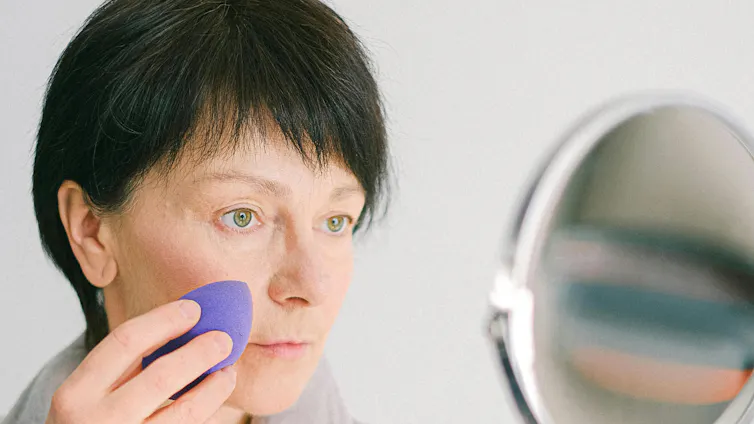
Cosmetic medicine is booming in Australia
Each year, Australians spend more than A$1 billion on more than 500,000 cosmetic procedures. That means we spend more money on cosmetic medicine per capita than the United States.
In 2023, more than a third of Australians were considering having cosmetic surgery in the next decade. Interest is particularly strong among young women, with 54% of young Australian women considering cosmetic surgery at some point in their lives. Most people seeking surgery hope these elective procedures will improve their appearance or self-esteem.
After having cosmetic surgery, about 80–90% of patients are satisfied with the results. Many also report feeling better about their appearance up to five years after the procedure. Some studies also show cosmetic surgery improves patients’ mood and quality of life.
However, some patients may regret a cosmetic procedure or feel worse afterwards. This is why identifying vulnerable patients, especially those considering irreversible procedures, is crucial.
So, what’s the link between cosmetic surgery and mental health?
Research shows a patient’s psychological state before any cosmetic procedure affects how they feel after an operation. People with heightened symptoms of psychological distress, such as anxiety and depression, are more likely to be dissatisfied with the results of a cosmetic procedure. They are also more likely to find their recovery challenging and even experience more physical complications after surgery.
Certain psychological conditions have a greater impact on patients’ mental health after surgery. One example is body dysmorphic disorder, where people often obsess over perceived flaws in their appearance. These so-called flaws can be subtle or not apparent to others. As a result, these patients may look to cosmetic surgery as a way to fix their perceived flaws.
A 2022 review of related studies found up to 20% of patients requesting cosmetic procedures had body dysmorphic disorder. And our 2025 study shows about 12% of Australian cosmetic patients either have unrealistic expectations of cosmetic surgery or show symptoms of body dysmorphic disorder or psychological distress.
Many patients with body dysmorphic disorder still feel dissatisfied with their appearance after cosmetic treatment. This is because they often focus on the same perceived flaw or a completely different one. This can negatively impact their mental health and, in some cases, may lead patients to take legal action against surgeons for not delivering the desired result.
The reason for screening
Nearly three years ago, the Australian Health Practitioner Regulation Agency changed its guidelines about cosmetic procedures.
As a result, doctors who perform cosmetic procedures must screen patients for psychological conditions, such as body dysmorphic disorder. They can do this by conducting interviews or using tools such as a written questionnaire.
If doctors identify any concerns, they must refer patients to a psychologist, psychiatrist or GP before proceeding with treatment.
However, a recent national survey suggests the cosmetic industry is not embracing these reforms. This research shows 84% of plastic surgeons referred fewer than 5% of patients. This is far less than our research would indicate have body dysmorphic disorder. About 70% of plastic surgeons interviewed say they would not continue screening if it were not mandatory.
Some surgeons have made their concerns public. In 2024, one group of surgeons even took the Australian Health Practitioner Regulation Agency to court. They sought to overturn the new guidelines or establish other protections for patients.
From a patient’s perspective, mandatory screening may mean they can’t undergo cosmetic surgery. In our 2025 study involving more than 8,000 Australian cosmetic patients, we found people were much more hesitant to report mental health symptoms in a cosmetic clinic, compared to when completing the same questionnaire anonymously for research. This is likely because they felt they needed to “pass” psychological screening tests to receive cosmetic surgery. So, the self-reporting element of current questionnaires is a major limitation.
So, is psychological screening necessary?
The purpose of screening was never to exclude people from cosmetic treatment. Rather, it was designed to help practitioners and patients make informed decisions.
Almost half of people considering cosmetic procedures report mental health concerns. For most, this does not make them unsuitable candidates. But in certain cases, they may benefit from delaying a cosmetic procedure. This would give them time to seek additional psychological support or talk to a practitioner about what they should expect from cosmetic surgery.
Importantly, screening tools should not be used alone. Instead, they should be part of a broader assessment of a patient’s motivations, goals and overall wellbeing. This includes a discussion of how cosmetic surgery may positively or negatively affect their mental health.
But researchers, like ourselves, are working on new screening questionnaires to help surgeons more accurately assess a patient’s mindset and identify any psychological concerns before they have a cosmetic procedure. But we need more research to know if these will improve outcomes for patients and practitioners.
Yes, talking about your mental health with a cosmetic surgeon may feel uncomfortable. But it helps ensure any decision to change how you look comes from a place of stability, not distress.
Correction: this article originally stated examining patients’ mental health before any cosmetic procedure affects how they feel after an operation. This has been amended to say it’s their psychological state rather than the examination of it.
Toni Pikoos, Adjunct Research Fellow, Swinburne University of Technology; Federation University Australia and Ben Buchanan, Adjunct Research Fellow, School of Psychological Sciences, Monash University
This article is republished from The Conversation under a Creative Commons license. Read the original article.
Don’t Forget…
Did you arrive here from our newsletter? Don’t forget to return to the email to continue learning!

Recommended
Learn to Age Gracefully
Join the 98k+ American women taking control of their health & aging with our 100% free (and fun!) daily emails:
-
Tell Yourself a Better Lie – by Marissa Peer
10almonds is reader-supported. We may, at no cost to you, receive a portion of sales if you purchase a product through a link in this article.
As humans, we generally lie to ourselves constantly. Or perhaps we really believe some of the things we tell ourselves, even if they’re not objectively necessarily true:
- I’ll always be poor
- I’m destined to be alone
- I don’t deserve good things
- Etc.
Superficially, it’s easy to flip those, and choose to tell oneself the opposite. But it feels hollow and fake, doesn’t it? That’s where Marissa Peer comes in.
Our stories that we tell ourselves don’t start where we are—they’re generally informed by things we learned along the way. Sometimes good lessons, sometimes bad ones. Sometimes things that were absolutely wrong and/or counterproductive.
Peer invites the reader to ask “What if…”, unravel how the unhelpful lessons got wired into our brains in the first place, and then set about untangling them.
“Tell yourself a better lie” does not mean self-deceit. It means that we’re the authors of our own stories, so we might as well make them work for us. Many things in life are genuinely fixed; others are open to interpretation.
Sorting one from the other, and then treating them correctly in a way that’s helpful to us? That’s how we can stop hurting ourselves, and instead bring our own stories around to uplift and fortify us.
Get Your Copy of “Tell Yourself A Better Lie” on Amazon Today!
Share This Post
-
Outsmart Your Pain – by Dr. Christiane Wolf
10almonds is reader-supported. We may, at no cost to you, receive a portion of sales if you purchase a product through a link in this article.
Dr. Wolf is a physician turned mindfulness teacher. As such, and holding an MD as well as a PhD in psychosomatic medicine, she knows her stuff.
A lot of what she teaches is mindfulness-based stress reduction (MBSR), but this book is much more specific than that. It doesn’t promise you won’t continue to experience pain—in all likelihood you will—but it does change the relationship with pain, and this greatly lessens the suffering and misery that comes with it.
For many, the most distressing thing about pain is not the sensation itself, but how crippling it can be—getting in the way of life, preventing enjoyment of other things, and making every day a constant ongoing exhausting battle… And every night, a “how much rest am I actually going to be able to get, and in what condition will I wake up, and how will I get through tomorrow?” stress-fest.
Dr. Wolf helps the reader to navigate through all these challenges and more; minimize the stress, maximize the moments of respite, and keep pain’s interference with life to a minimum. Each chapter addresses different psychological aspects of chronic pain management, and each comes with specific mindfulness meditations to explore the new ideas learned.
The style is personal and profound, while coming from a place of deep professional understanding as well as compassion.
Bottom line: if you’ve been looking for a life-ring to help you reclaim your life, this one could be it; we wholeheartedly recommend it.
Click here to check out Outsmart Your Pain, and recover the beauty and joy of life!
Share This Post
-
Microplastics are in our brains. How worried should I be?
10almonds is reader-supported. We may, at no cost to you, receive a portion of sales if you purchase a product through a link in this article.
Plastic is in our clothes, cars, mobile phones, water bottles and food containers. But recent research adds to growing concerns about the impact of tiny plastic fragments on our health.
A study from the United States has, for the first time, found microplastics in human brains. The study, which has yet to be independently verified by other scientists, has been described in the media as scary, shocking and alarming.
But what exactly are microplastics? What do they mean for our health? Should we be concerned?
Daniel Megias/Shutterstock What are microplastics? Can you see them?
We often consider plastic items to be indestructible. But plastic breaks down into smaller particles. Definitions vary but generally microplastics are smaller than five millimetres.
This makes some too small to be seen with the naked eye. So, many of the images the media uses to illustrate articles about microplastics are misleading, as some show much larger, clearly visible pieces.
Microplastics have been reported in many sources of drinking water and everyday food items. This means we are constantly exposed to them in our diet.
Such widespread, chronic (long-term) exposure makes this a serious concern for human health. While research investigating the potential risk microplastics pose to our health is limited, it is growing.
How about this latest study?
The study looked at concentrations of microplastics in 51 samples from men and women set aside from routine autopsies in Albuquerque, New Mexico. Samples were from the liver, kidney and brain.
These tiny particles are difficult to study due to their size, even with a high-powered microscope. So rather than trying to see them, researchers are beginning to use complex instruments that identify the chemical composition of microplastics in a sample. This is the technique used in this study.
The researchers were surprised to find up to 30 times more microplastics in brain samples than in the liver and kidney.
They hypothesised this could be due to high blood flow to the brain (carrying plastic particles with it). Alternatively, the liver and kidneys might be better suited to dealing with external toxins and particles. We also know the brain does not undergo the same amount of cellular renewal as other organs in the body, which could make the plastics linger here.
The researchers also found the amount of plastics in brain samples increased by about 50% between 2016 and 2024. This may reflect the rise in environmental plastic pollution and increased human exposure.
The microplastics found in this study were mostly composed of polyethylene. This is the most commonly produced plastic in the world and is used for many everyday products, such as bottle caps and plastic bags.
This is the first time microplastics have been found in human brains, which is important. However, this study is a “pre-print”, so other independent microplastics researchers haven’t yet reviewed or validated the study.
The most common plastic found was polyethylene, which is used to make plastic bags and bottle caps. Maciej Bledowski/Shutterstock How do microplastics end up in the brain?
Microplastics typically enter the body through contaminated food and water. This can disrupt the gut microbiome (the community of microbes in your gut) and cause inflammation. This leads to effects in the whole body via the immune system and the complex, two-way communication system between the gut and the brain. This so-called gut-brain axis is implicated in many aspects of health and disease.
We can also breathe in airborne microplastics. Once these particles are in the gut or lungs, they can move into the bloodstream and then travel around the body into various organs.
Studies have found microplastics in human faeces, joints, livers, reproductive organs, blood, vessels and hearts.
Microplastics also migrate to the brains of wild fish. In mouse studies, ingested microplastics are absorbed from the gut into the blood and can enter the brain, becoming lodged in other organs along the way.
To get into brain tissue, microplastics must cross the blood-brain-barrier, an intricate layer of cells that is supposed to keep things in the blood from entering the brain.
Although concerning, this is not surprising, as microplastics must cross similar cell barriers to enter the urine, testes and placenta, where they have already been found in humans.
Is this a health concern?
We don’t yet know the effects of microplastics in the human brain. Some laboratory experiments suggest microplastics increase brain inflammation and cell damage, alter gene expression and change brain structure.
Aside from the effects of the microplastic particles themselves, microplastics might also pose risks if they carry environmental toxins or bacteria into and around the body.
Various plastic chemicals could also leach out of the microplastics into the body. These include the famous hormone-disrupting chemicals known as BPAs.
But microplastics and their effects are difficult to study. In addition to their small size, there are so many different types of plastics in the environment. More than 13,000 different chemicals have been identified in plastic products, with more being developed every year.
Microplastics are also weathered by the environment and digestive processes, and this is hard to reproduce in the lab.
A goal of our research is to understand how these factors change the way microplastics behave in the body. We plan to investigate if improving the integrity of the gut barrier through diet or probiotics can prevent the uptake of microplastics from the gut into the bloodstream. This may effectively stop the particles from circulating around the body and lodging into organs.
How do I minimise my exposure?
Microplastics are widespread in the environment, and it’s difficult to avoid exposure. We are just beginning to understand how microplastics can affect our health.
Until we have more scientific evidence, the best thing we can do is reduce our exposure to plastics where we can and produce less plastic waste, so less ends up in the environment.
An easy place to start is to avoid foods and drinks packaged in single-use plastic or reheated in plastic containers. We can also minimise exposure to synthetic fibres in our home and clothing.
Sarah Hellewell, Senior Research Fellow, The Perron Institute for Neurological and Translational Science, and Research Fellow, Faculty of Health Sciences, Curtin University; Anastazja Gorecki, Teaching & Research Scholar, School of Health Sciences, University of Notre Dame Australia, and Charlotte Sofield, PhD Candidate, studying microplastics and gut/brain health, University of Notre Dame Australia
This article is republished from The Conversation under a Creative Commons license. Read the original article.
Share This Post
Related Posts
-
The Keratin Toothpaste That Rebuilds Enamel
10almonds is reader-supported. We may, at no cost to you, receive a portion of sales if you purchase a product through a link in this article.
“When it’s gone, it’s gone” is the common belief when it comes to tooth enamel. Nevertheless, there are such things as hydroxyapatite toothpaste which is not only as pathogen-killing as fluoride, but also has the added bonus of being based on one of the main minerals our teeth are made of (hydroxyapatite is a calcium phosphate compound), so it does aid in rebuilding,
There are pros and cons to both, by the way: Fluoride Toothpaste vs Non-Fluoride Toothpaste – Which is Healthier? ← with interesting numbers on the toxicity of each!
In that comparison (we compared fluoride to hydroxyapatite) we picked the fluoride on the basis of “they both do the job equally well, and they’re both very safe, but technically everything has a toxicity level, and fluoride’s is the relatively safest of these two very safe products”.
However, that’s assuming for the general job of “keeping teeth healthy”. If your teeth need remineralizing, hydroxyapatite will better promote that.
For more details, see: Tooth Remineralization: How To Heal Your Teeth Naturally
So, what’s this about keratin?
As you may be aware, keratin is a protein that can be used to make everything from your eyelashes to the horn of a rhinoceros to the wool of a lamb. Also, less usefully, sebaceous cysts, which (despite the name) or not filled with sebum, but keratin. See: How To Get Rid Of A Sebaceous Cyst
Researchers (Dr. Sara Gamea et al.) have discovered that when combined with calcium and phosphate from saliva (or, indeed, from hydroxyapatite), keratin self-organizes into a crystal-like framework that mimics natural enamel, gradually forming a dense, mineralized barrier over tooth surfaces.
And, which will be a huge relief to many, the keratin layer blocks nerve channels responsible for pain, protects against acid erosion, and prevents further enamel loss, offering both immediate comfort and long-term defense.
You can read the paper in full here: Biomimetic Mineralization of Keratin Scaffolds for Enamel Regeneration
While it’s not on the shelves just yet (discoveries do not leap straight from laboratories to supermarkets), Dr. Gamea and her team expect that the material could appear in consumer toothpaste or dentist-applied gels (like nail varnish) within a few years.
Why a few years? Because that’s how science and industry works: a discovery is made, and while that study is peer-reviewed, the important thing then is for others to also test it and see if they get the same results. So, that’ll require teams of scientists to
beg on their hands and kneesapply for grant money (often tied to the academic year), perform the studies (which will typically take months), get their work published (they hope), and finally get a commercial interest to take it up and mass produce it, and then a distributor to distribute it, and a retailer to retail it, all with contract negotiations in between each step.So, while you’re waiting…
Want to learn more?
You might also like to read our own three-part series on dental health:
- Toothpastes & Mouthwashes: Which Help And Which Harm?
- Flossing Without Flossing?
- Less Common Oral Hygiene Options ← we recommend the miswak! Not only does it clean the teeth as well as or better than traditional brushing, but also it changes the composition of saliva to improve the oral microbiome, effectively turning your saliva into a biological mouthwash that kills unwanted microbes and is comfortable for the ones that should be there.
Take care!
Don’t Forget…
Did you arrive here from our newsletter? Don’t forget to return to the email to continue learning!
Learn to Age Gracefully
Join the 98k+ American women taking control of their health & aging with our 100% free (and fun!) daily emails:
-
The Well-Lived Life – by Dr. Gladys McGarey
10almonds is reader-supported. We may, at no cost to you, receive a portion of sales if you purchase a product through a link in this article.
We often hear from two kinds of people about healthy longevity: doctors, and supercentenarians. The former don’t usually have the lived experience of it, and the latter don’t usually have the medical understanding of it. This author has both!
You might imagine that the six secrets begin diet, exercise, sleep, etc etc, but no. Those things are important, of course, but Dr. McGarey assumes that we are already in the know when it comes to those things, and focuses instead on things easily forgotten. Specifically, things her own patients have sometimes forgotten, and things she has made a very long career out of reminding people about.
So instead, we learn about the importance of one’s zest for life, finding one’s purpose, giving and receiving love, making and maintaining healthy human connections, learning from everything we can in life, how to “spend your energy wisely”. Note that the latter truly is about spending it wisely—not about storing it up like a miser, but really, about wisely spending it.
Indeed, we might have expected no less from the woman largely credited as being “the mother of holistic medicine”.
The style is… So very human. If you’re as soft-hearted as this reviewer, you will cry. But you’ll also learn, you’ll also reawaken, and you’ll live. Which is what it’s all about.
Bottom line: sometimes, healthy longevity is not all about telomeres and c-reactive proteins. This book explores what truly matters in life, and also what truly matters to life, the better to live it more healthily and happily at every age.
Click here to check out The Well-Lived Life, and live life well!
Don’t Forget…
Did you arrive here from our newsletter? Don’t forget to return to the email to continue learning!
Learn to Age Gracefully
Join the 98k+ American women taking control of their health & aging with our 100% free (and fun!) daily emails:
-
How Useful Is Peppermint, Really?
10almonds is reader-supported. We may, at no cost to you, receive a portion of sales if you purchase a product through a link in this article.
Peppermint For Digestion & Against Nausea
Peppermint is often enjoyed to aid digestion, and sometimes as a remedy for nausea, but what does the science say about these uses?
Peppermint and digestion
In short: it works! (but beware)
Most studies on peppermint and digestion, that have been conducted with humans, have been with regard to IBS, but its efficacy seems quite broad:
❝Peppermint oil is a natural product which affects physiology throughout the gastrointestinal tract, has been used successfully for several clinical disorders, and appears to have a good safety profile.❞
However, and this is important: if your digestive problem is GERD, then you may want to skip it:
❝The univariate logistic regression analysis showed the following risk factors: eating 1–2 meals per day (OR = 3.50, 95% CI: 1.75–6.98), everyday consumption of peppermint tea (OR = 2.00, 95% CI: 1.14–3.50), and eating one, big meal in the evening instead of dinner and supper (OR = 1.80, 95% CI: 1.05–3.11).
The multivariate analysis confirmed that frequent peppermint tea consumption was a risk factor (OR = 2.00, 95% CI: 1.08–3.70).❞
~ Dr. Jarosz & Dr. Taraszewska
Source: Risk factors for gastroesophageal reflux disease: the role of diet
Peppermint and nausea
Peppermint is also sometimes recommended as a nausea remedy. Does it work?
The answer is: maybe
The thing with nausea is it is a symptom with a lot of possible causes, so effectiveness of remedies may vary. But for example:
- Aromatherapy for treatment of postoperative nausea and vomiting ← no better than placebo
- The Effect of Combined Inhalation Aromatherapy with Lemon and Peppermint on Nausea and Vomiting of Pregnancy: A Double-Blind, Randomized Clinical Trial ← initially no better than placebo, then performed better on subsequent days
- The Effects of Peppermint Oil on Nausea, Vomiting and Retching in Cancer Patients Undergoing Chemotherapy: An Open Label Quasi-Randomized Controlled Pilot Study ← significant benefit immediately
Summary
Peppermint is useful against wide variety of gastrointestinal disorders, including IBS, but very definitely excluding GERD (in the case of GERD, it may make things worse)
Peppermint may help with nausea, depending on the cause.
Where can I get some?
Peppermint tea, and peppermint oil, you can probably find in your local supermarket (as well as fresh mint leaves, perhaps).
For the “heavy guns” that is peppermint essential oil, here’s an example product on Amazon for your convenience
Enjoy!
Don’t Forget…
Did you arrive here from our newsletter? Don’t forget to return to the email to continue learning!
Learn to Age Gracefully
Join the 98k+ American women taking control of their health & aging with our 100% free (and fun!) daily emails:


