
How scientists are hacking bacteria to treat cancer, self-destruct, then vanish without a trace
10almonds is reader-supported. We may, at no cost to you, receive a portion of sales if you purchase a product through a link in this article.
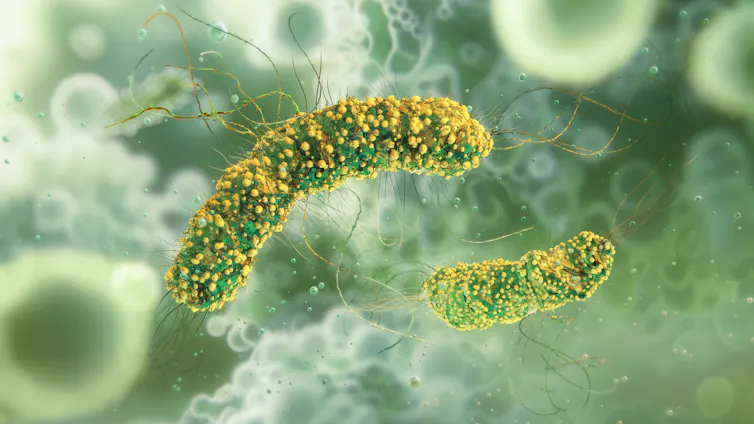
Bacteria are rapidly emerging as a new class of “living medicines” used to kill cancer cells.
We’re still a long way from a “cure” for cancer.
But one day we could have programmable, self-navigating bacteria that find tumours, release treatment only where needed, then vanish without a trace.
Here’s where the science is up to.
Current treatments aren’t perfect
Many tumours are hard to treat. Sometimes, treatments cannot penetrate them. Other times, tumours can “fight back” by suppressing certain parts of the immune system, reducing the impact of treatments. Or tumours can develop resistance to treatments.
Using bacteria could overcome these obstacles.
More than a century ago, surgeons noticed some people with cancer who developed bacterial infections unexpectedly went into remission. That is, their cancer signs or symptoms decreased or disappeared.
Now we’re learning what could explain this. Broadly speaking, bacteria can activate the body’s immune system to attack cancer cells.
In fact, this approach is already used in the clinic. Bacteria are now the treatment of choice worldwide for certain cases of bladder cancer. When doctors deliver a weakened version of Mycobacterium bovis directly into the bladder through a catheter, the body’s immune response destroys the cancer.
Why bacteria?
Certain bacteria have an unusual talent. They can naturally find and grow inside solid tumours – ones that grow in organs and tissues – but leave healthy tissue relatively untouched.
Solid tumours are perfect homes for these bacteria as they contain lots of nutrients from dead cells, are low in oxygen (an environment these bacteria prefer), and typically have reduced immune function, so cannot defend themselves against the bacteria.
All this suggests possible careers for these bacteria as delivery couriers to carry targeted, anti-tumour therapies.
Over the past 30 years or so, more than 500 research papers, 70 clinical trials and 24 startup companies have focused on bacterial cancer therapy, with growth accelerating sharply in the past five years.
Most bacterial cancer therapies in clinical trials today target solid tumours, including pancreatic, lung, and head and neck cancers, which are the kinds that often resist conventional treatments.
Bacteria could deliver cancer vaccines
Cancer vaccines work by presenting a cancer’s unique molecular “fingerprints”, known as tumour antigens, to the immune system so it can hunt down and eliminate tumour cells displaying those antigens.
Bacteria can serve as couriers for these anti-cancer vaccines. Using genetic engineering, the genetic instructions (or DNA) in bacteria that might make us unwell can be removed and replaced with DNA for immune-stimulating tumour antigens.
Listeria monocytogenes is the main character in more than 30 cancer vaccine clinical trials. Unfortunately, most of these trials did not show that these treatments work better than current ones.
The challenge is teaching the immune system to recognise cancer’s telltale antigens strongly enough to remember them, without pushing the body into dangerous overdrive.
Bacteria could boost existing cancer therapies
Nearly half of current clinical trials using bacteria in cancer therapies pair bacteria with immunotherapies or chemotherapy as part of personalised treatment plans to enhance the body’s attack on cancer.
Various approaches have finished phase 2 clinical trials. These include using immunotherapy combined with modified Listeria to activate the immune system for recurrent cervical cancer.
Another trial used modified Salmonella in people with advanced pancreatic cancer alongside chemotherapy to increase survival.
Bacteria could be ‘bugs as drugs’
Arming bacteria with a drug means they could destroy the tumour from the inside, creating “bugs as drugs”.
For this, we need precise genetic control over how bacteria behave. Researchers can already reprogram bacteria to sense, compute and respond to molecular signals around the tumour.
Researchers can also engineer bacteria to self-destruct after delivering a drug, secrete immune-boosting molecules, or activate other therapies on command.
Researchers are building “multi-function” strains that combine several treatment strategies at once.
Probiotic species used in humans for many years are also candidates, including Escherichia coli Nissle, Lactobacillus and Bifidobacterium. These can be engineered to produce cancer-killing molecules or alter the environment around the tumour.
How close are we, really?
While early human trials have shown this approach is generally safe, finding the right dose remains a delicate balance.
Bacteria are also living entities that can evolve in unpredictable ways, and their use in humans demands strict safety controls. Even strains modified for safety can cause infection or trigger excessive inflammation.
So scientists are developing “biocontainment” strategies – engineered safeguards that prevent bacterial spread beyond tumours or triggers them to self-destruct after treatment.
If we can overcome these issues, such “living medicines” would still need to successfully complete clinical trials and receive regulatory approval before being commonly used in the clinic.
If so, this could mark a profound shift in how we treat cancer, from static drugs to adaptive biological systems.
Josephine Wright, Senior Research Fellow,, South Australian Health & Medical Research Institute and Susan Woods, Associate Professor, GESA Bushell Research Fellow, University of Adelaide and Principal Research Fellow, Precision Cancer Medicine, South Australian Health & Medical Research Institute
This article is republished from The Conversation under a Creative Commons license. Read the original article.
Don’t Forget…
Did you arrive here from our newsletter? Don’t forget to return to the email to continue learning!
Recommended
Learn to Age Gracefully
Join the 98k+ American women taking control of their health & aging with our 100% free (and fun!) daily emails:
-
Thinking about acupuncture or herbs for menopause? Read this first
10almonds is reader-supported. We may, at no cost to you, receive a portion of sales if you purchase a product through a link in this article.
Hot flushes, night sweats or swinging mood changes are some of the most common symptoms of menopause – the stage of a woman’s life when menstrual periods stop permanently, and she is no longer fertile.
Some women choose to ride out the symptoms. Some choose hormone replacement therapy (HRT), also known as menopausal hormone therapy or MHT. This contains oestrogen, progesterone or combined therapies. Others use complementary therapies.
But do complementary therapies such as acupuncture and herbal medicines actually help?
Westend61/Getty Remind me, what’s going on with menopause?
Menopause is a normal part of ageing, as is the menopausal transition (or perimenopause), which occurs for several years before it. Some women’s periods stop earlier than others. But most women become menopausal naturally between the ages of 45 and 55.
During menopause, women often have a range of symptoms. These can include hot flushes, night sweats, mood swings, joint discomfort, sleep disturbances, decreased libido, headache or migraine, cardiometabolic disturbances (such as high blood pressure), weight gain, and loss of bone mineral density.
These symptoms can be distressing and can affect women’s quality of life.
Why complementary therapies?
Some women prefer to use complementary therapies alongside conventional treatment, or instead of it, due to side effects of menopausal hormone therapy.
Other women cannot use MHT because of other medical conditions, such as breast cancer.
But what does the evidence say about complementary therapies used in menopause?
Earlier this year, we and our colleagues published a large review to draw together the evidence. We analysed 158 clinical trials and systematic reviews conducted in women over 40. These studies looked at 86 complementary therapies, such as acupuncture, Chinese herbal medicine, vitamin and nutrient supplements, and mind-body approaches.
Most studies were of low or very low quality. This could be because they included a small number of participants, were not double-blinded (when neither the participants nor the researchers knew which people were given which therapy) and sometimes did not use placebos.
So clinicians don’t have sufficient evidence to recommend them.
Now, the detail
Most studies in the review asked women to report the frequency and severity of their symptoms. Some used questionnaires covering a range of symptoms to give an overall menopause score. Others just asked about hot flushes.
Here are some of the findings.
Black cohosh is a flowering plant that improves overall menopausal scores, and hot flushes. Studies found benefits when taken from four to 52 weeks. Women took different products containing black cohosh, on its own or with other herbs. None of these studies reported serious side effects.
Isoflavones also known as phytoestrogens are found in soy and other legumes, and mimic oestrogen in the body. Soy-derived isoflavones improve hot flushes as well as overall menopausal scores. However in the same study, red clover-derived isoflavones did not reduce hot flushes. Side effects to isoflavones are generally mild and improve quickly without needing medical intervention.
Our ability to make vitamin D from sunlight reduces as we get older. In women, this decline starts at about the same time as menopause. For reducing the risk of fracture, women who have diagnosed osteoporosis need to take 800 IU (international units) vitamin D and 1,200 milligram calcium daily under medical supervision. But vitamin D plus calcium are not recommended to women without osteoporosis and without low vitamin D levels. This is because long-term use (over seven years) may increase the risk of cardiovascular disease (such as a heart attack).
Chinese herbal medicines can be combinations of multiple herbs (often between five and 20) in a formula. Seventy studies, using a variety of formulas, showed taking Chinese herbal medicines for seven days to three months improved menopausal scores and sleep quality. The most common formula was Suan Zao Ren Tang. Short-term use (up to a year) appears to be safe, but there are no studies looking at its longer-term use.
Another meta-analysis on Chinese herbal medicines using Rehmannia as the main herb found 17 studies. When taken for two weeks to three months there was an improvement in overall menopausal scores. No adverse events were reported.
Acupuncture comes in several forms and you can have it with and without other therapies. We found no evidence to recommend regular acupuncture for hot flushes. Acupuncture with Chinese herbal medicines improves sleep quality, but only in perimenopausal women with insomnia. Electro-acupunture is a form of acupuncture that passes a gentle current between two needles into your skin. It improves hot flushes.
In summary, most treatments included in our review did not show enough evidence to be able to recommend them clinically. Complementary therapies including soy-isoflavones, vitamin D, black cohosh and Chinese herbal medicine may help some menopausal symptoms, but more high-quality research is needed to understand how effective and safe these treatments truly are.
So what should I do?
The International Menopause Society recommends that if women in midlife choose complementary therapies, these should be alongside MHT.
So always talk to your GP about your plans, and only consider using the complementary therapies that have good evidence for the symptoms you currently have. Your GP can help you think about the risks and benefits for you, and help you make a decision based on the best available scientific evidence.
A healthy lifestyle – including eating well, staying active, looking after your mental wellbeing, getting restorative sleep, maintaining healthy relationships, and avoiding drugs and alcohol – are all important in menopause care.
These are linked with benefits including fewer hot flushes, a healthier weight, a lower risk of heart disease and diabetes, and a lower risk of falls and fractures.
Complementary therapies should not replace these fundamental lifestyle habits.
Correction: the original version of this article incorrectly suggested MHT might not be suitable for women at risk of thromboembolism.
Evangeline Mantzioris, Program Director of Nutrition and Food Sciences, Accredited Practising Dietitian, Adelaide University ; Alison Maunder, Postdoctoral Research Fellow, National Institute of Complementary Medicine, Western Sydney University, and Carolyn Ee, Associate Professor, Cancer Survivorship and Primary Care, Caring Futures Institute, Flinders University; Western Sydney University
This article is republished from The Conversation under a Creative Commons license. Read the original article.
Share This Post
-
Compression Socks: The #1 Mistake Most People Make
10almonds is reader-supported. We may, at no cost to you, receive a portion of sales if you purchase a product through a link in this article.
Dr. John Chuback explains:
The joy of socks
How most* compression socks work: graduated compression is tighter at the ankle and looser as it moves upwards, which improves venous return towards your heart, reduces blood pooling, supports lymphatic drainage, and limits capillary leakage that contributes to swelling.
*there are also other kinds of compression socks, such as:
- those that don’t do that, and are really just tight socks (these don’t work very well)
- exciting bionic socks with a hydraulic peristaltic massage function (these work very well)
Assuming you have well-designed standard compression socks that work, then the way they help is slightly different for different things:
- How they help vs varicose veins and CVI: in chronic venous insufficiency (CVI), faulty vein valves allow blood to pool in your lower legs, and compression reduces venous pressure, relieves aching and heaviness, slows disease progression, and improves comfort but doesn’t repair damaged valves.
- How they help vs edema and lymphedema: compression limits fluid leakage into your tissues and supports lymphatic flow, with lymphedema often requiring higher grades such as 30–40 mmHg and combination therapy like manual lymphatic drainage or complete decongestive therapy.
- How they help for travel, standing, and surgery: compression reduces the risk of deep vein thrombosis during prolonged sitting or standing and supports healing, bruising reduction, and inflammation control after vein procedures, especially when combined with movement and hydration.
However! Dysfunction of specifically the great saphenous vein can cause heaviness, night cramps, and swelling, and while compression controls symptoms. In this case, proper diagnosis with vascular ultrasound mapping is critical, because it may need actual interventions (beyond merely controlling the symptoms).
Some tips to avoid erring in ways that many people indeed err:
- Choose the right compression level: mild support is typically 8–15 mmHg for travel or fatigue, moderate is 15–20 mmHg for mild swelling or small varicosities, medical grade is 20–30 mmHg for significant varicose veins and edema, and 30–40 mmHg is used for more advanced lymphedema or selected post-procedure cases.
- Make sure the fit is correct: this is about the dimensions, not just the compression level! You need to know a bunch of measurements, not just your shoe size. Get professionally fitted if you can, apply garments first thing in the morning when swelling is minimal, avoid rolling the top to prevent a tourniquet effect, ensure they feel snug but not painful, and watch for numbness or tingling.
- Watch out for warning signs/symptoms that merit urgent attention: unilateral leg swelling, skin thickening or darkening, cobblestone texture, severe itching, restless legs, night cramps, open wounds, ulcers, or worsening symptoms despite compression can be signs/symptoms of deep vein thrombosis or advanced venous disease; these do require specialist assessment.
For more on all of this, enjoy:
Click Here If The Embedded Video Doesn’t Load Automatically!
Want to learn more?
You might also like:
Remedies To Reduce Varicose Veins (Or Avoid Them Entirely)
Take care!
Share This Post
-
Is couples counselling right for me, and will the therapist take sides? An expert explains
10almonds is reader-supported. We may, at no cost to you, receive a portion of sales if you purchase a product through a link in this article.
Should we do couples counselling? Are we happy? Are we both pulling in the same direction? How can we get our spark back?
These kinds of questions are normal in a society that places such importance on coupledom, despite there being no handbook or one-size-fits all approach.
Many people seek out couples counselling when going through a rough patch, or wondering how to improve their relationship. And no doubt the hit show Couples Therapy has boosted public interest in this type of counselling.
So, how do you decide if it’s right for you – and what should you expect?
Antoni Shkraba Studio/Pexels Should we get couples counselling?
Relationship satisfaction changes over time. Research shows even knowing this can help couples navigate the usual ups and downs of life together.
Some research also shows couples therapy can help lower relationship distress (which might include things such as frequent arguments or feeling dissatisfied in your relationship).
It may be suitable for some couples who want to work through infidelity or stressors such as caregiving responsibilities.
Others may seek out preventative couples counselling, which is focused on finding ways to improve communications before your relationship reaches crisis point.
Does it work? Well, some research has found certain types of counselling did help cut the divorce rate among newlyweds – but so too did getting couples to simply watch romance movies together and discuss the themes with their partner.
Overall, much depends on your motivation for seeking counselling and the mindset you’re bringing to it. Ask yourself: what do I want to work on, and what do I hope to achieve?
If your goal is to get someone to “take your side”, counselling may not help. A good couples counsellor should remain neutral, and they’re not there to take sides.
Many who seek couples counselling do so because they’re arguing and disagreeing a lot with their partner. If that’s you, it might help to let go of notions about who is “right” and move beyond anger. Instead, the focus in counselling may be on finding new conflict resolution skills.
Counselling may help with:
- improving communication skills
- making better connections with each other
- exploring the couples’ hopes for the future
- identifying what’s blocking them from achieving these goals.
Couples counselling isn’t always about staying together. Some use it to explore how to separate in a way that centres the needs of children.
Others may have specific issues with intimacy or sex. In that case, a sexual health counsellor or sex therapist may be more suitable than a standard couples counsellor. You can find one via professional organisations.
With a sex therapist, you and your partner might talk about things such as:
- mismatched libidos
- bodily changes, for example, to do with ageing
- expectations around sex
- communication around sex
- making adjustments to the way you interact to resolve these issues.
Importantly, though, not everyone needs therapy, or would benefit from it.
It’s no silver bullet.
Not for everyone
The problems or harms in some relationships will not be resolved through talking therapy. The most obvious is where violence and/or coercive control is used: safety planning, not couples counselling, is more appropriate.
And it’s important to remember the problems that lead people to conflict or counselling sometimes have structural causes that can’t be “fixed” by a few therapy sessions. For instance, perhaps your relationship is suffering because you’re experiencing stress at work, financial pressures, or you’re supporting a partner with depression. These are complex structural issues.
It’s also unclear how long the benefits of couples counselling last. One study noted “many distressed couples benefit during relationship education courses but that these benefits decline when the program ends.”
Couples in contented relationships do things daily for each other, such as making a coffee for your partner. Ketut Subiyanto/Pexels How do people choose a counsellor?
There’s a wide range of therapeutic techniques.
One famous approach is called the Gottman method, where couples focus on things such as creating “love maps” recording what you know about your partner, nurturing fondness, turning toward each other instead of away and solving problems. Famously, the Gottman approach also identifies the “four horsemen” of a relationship apocalypse: criticism, contempt, defensiveness and stonewalling.
Other couples counsellors will take more of a psychological or psychoanalytical approach, informed by techniques such as cognitive behavioural therapy.
Relationships Australia provides a range of services including relationship counselling.
At the end of the day what matters most is that you and your couples counsellor “click”; if you don’t gel with yours, it’s OK to find a new one.
Love is about doing
It can be helpful to use American author bell hooks’ idea of love as a practice of “doing” rather than a passive “being”. In other words, love is about doing things (for each other, together, or for yourself to fuel your relationship) rather than just about “being in love”.
Couples in long-term, contented relationships engage in day-to-day love practices, such as making a coffee for your partner, or watching a show together.
So, consider snuggling up on the couch with your partner to watch something together. Perhaps even Couples Therapy can provide a healthy prompt to reflect on and appreciate one another in a new light.
Priscilla Dunk-West, Professor of Social Work, Victoria University
This article is republished from The Conversation under a Creative Commons license. Read the original article.
Share This Post
Related Posts
-
Pine Nuts vs Pecans – Which is Healthier?
10almonds is reader-supported. We may, at no cost to you, receive a portion of sales if you purchase a product through a link in this article.
Our Verdict
When comparing pine nuts to pecans, we picked the pine nuts.
Why?
Both have their merits!
In terms of macros, pine nuts have more protein while pecans have more fiber. They’re about equal on fats, although pine nuts have more polyunsaturated fat and pecans have more monounsaturated fat, of which, both are healthy. They’re also about equal on carbs. So really it comes down to the subjective choice between prioritizing protein and prioritizing fiber. On principle, we pick fiber, which gives the win to pecans, but your preference in this regard may differ; prioritizing the protein would give the win to pine nuts.
In the category of vitamins, pine nuts have more of vitamins B2, B3, B9, E, K, and choline, while pecans have more of vitamins A, B1, B5, B6, and C. Thus, a 6:5 marginal win for pine nuts.
Looking at the minerals, pine nuts have more copper, iron, magnesium, manganese, phosphorus, potassium, and zinc, while pecans have more calcium and selenium. An easy win for pine nuts this time.
Adding up the sections makes for a win for pine nuts, but of course, enjoy either or (preferably) both; diversity is good!
Want to learn more?
You might like to read:
Why You Should Diversify Your Nuts
Enjoy!
Don’t Forget…
Did you arrive here from our newsletter? Don’t forget to return to the email to continue learning!
Learn to Age Gracefully
Join the 98k+ American women taking control of their health & aging with our 100% free (and fun!) daily emails:
-
What is a blood cholesterol ratio? And what should yours be?
10almonds is reader-supported. We may, at no cost to you, receive a portion of sales if you purchase a product through a link in this article.
Have you had a blood test to check your cholesterol level? These check the different blood fat components:
- total cholesterol
- LDL (low-density lipoprotein), which is sometimes called “bad cholesterol”
- HDL (high-density lipoprotein), which is sometimes called “good cholesterol”
- triglycerides.
Your clinician then compares your test results to normal ranges – and may use ratios to compare different types of cholesterol.
High blood cholesterol is a major risk factor for cardiovascular disease. This is a broad term that includes disease of blood vessels throughout the body, arteries in the heart (known as coronary heart disease), heart failure, heart valve conditions, arrhythmia and stroke.
So what does cholesterol do? And what does it mean to have a healthy cholesterol ratio?
Shutterstock What are blood fats?
Cholesterol is a waxy type of fat made in the liver and gut, with a small amount of pre-formed cholesterol coming from food.
Cholesterol is found in all cell membranes, contributing to their structure and function. Your body uses cholesterol to make vitamin D, bile acid, and hormones, including oestrogen, testosterone, cortisol and aldosterone.
When there is too much cholesterol in your blood, it gets deposited into artery walls, making them hard and narrow. This process is called atherosclerosis.
High blood cholesterol is a major risk factor for cardiovascular disease. Halfpoint/Shutterstock Cholesterol is packaged with triglycerides (the most common type of fat in the body) and specific “apo” proteins into “lipo-proteins” as a package called “very-low-density” lipoproteins (VLDLs).
These are transported via the blood to body tissue in a form called low-density lipoprotein (LDL) cholesterol.
Excess cholesterol can be transported back to the liver by high-density lipoprotein, the HDL, for removal from circulation.
Another less talked about blood fat is Lipoprotein-a, or Lp(a). This is determined by your genetics and not influenced by lifestyle factors. About one in five (20%) of Australians are carriers.
Having a high Lp(a) level is an independent cardiovascular disease risk factor.
Knowing your numbers
Your blood fat levels are affected by both modifiable factors:
- dietary intake
- physical activity
- alcohol
- smoking
- weight status.
And non-modifiable factors:
- age
- sex
- family history.
What are cholesterol ratios?
Cholesterol ratios are sometimes used to provide more detail on the balance between different types of blood fats and to evaluate risk of developing heart disease.
Commonly used ratios include:
1. Total cholesterol to HDL ratio
This ratio is used in Australia to assess risk of heart disease. It’s calculated by dividing your total cholesterol number by your HDL (good) cholesterol number.
A higher ratio (greater than 5) is associated with a higher risk of heart disease, whereas a lower ratio is associated with a lower risk of heart disease.
A study of 32,000 Americans over eight years found adults who had either very high, or very low, total cholesterol/HDL ratios were at 26% and 18% greater risk of death from any cause during the study period.
Those with a ratio of greater than 4.2 had a 13% higher risk of death from heart disease than those with a ratio lower than 4.2.
2. Non-HDL cholesterol to HDL cholesterol ratio (NHHR)
Non-HDL cholesterol is the total cholesterol minus HDL. Non-HDL cholesterol includes all blood fats such as LDL, triglycerides, Lp(a) and others. This ratio is abbreviated as NHHR.
This ratio has been used more recently because it compares the ratio of “bad” blood fats that can contribute to atherosclerosis (hardening and narrowing of the arteries) to “good” or anti-atherogenic blood fats (HDL).
Non-HDL cholesterol is a stronger predictor of cardiovascular disease risk than LDL alone, while HDL is associated with lower cardiovascular disease risk.
Because this ratio removes the “good” cholesterol from the non-HDL part of the ratio, it is not penalising those people who have really high amounts of “good” HDL that make up their total cholesterol, which the first ratio does.
Research has suggested this ratio may be a stronger predictor of atherosclerosis in women than men, however more research is needed.
Another study followed more than 10,000 adults with type 2 diabetes from the United States and Canada for about five years. The researchers found that for each unit increase in the ratio, there was around a 12% increased risk of having a heart attack, stroke or death.
They identified a risk threshold of 6.28 or above, after adjusting for other risk factors. Anyone with a ratio greater than this is at very high risk and would require management to lower their risk of heart disease.
The greater this ratio, the greater the chance of having a heart attack or stroke. Alex Yeung/Shutterstock 3. LDL-to-HDL cholesterol ratio
LDL/HDL is calculated by dividing your LDL cholesterol number by the HDL number. This gives a ratio of “bad” to “good” cholesterol.
A lower ratio (ideal is less than 2.0) is associated with a lower risk of heart disease.
While there is lesser focus on LDL/HDL, these ratios have been shown to be predictors of occurrence and severity of heart attacks in patients presenting with chest pain.
If you’re worried about your cholesterol levels or cardiovascular disease risk factors and are aged 45 and over (or over 30 for First Nations people), consider seeing your GP for a Medicare-rebated Heart Health Check.
Clare Collins, Laureate Professor in Nutrition and Dietetics, University of Newcastle and Erin Clarke, Postdoctoral Researcher, Nutrition and Dietetics, University of Newcastle
This article is republished from The Conversation under a Creative Commons license. Read the original article.
Don’t Forget…
Did you arrive here from our newsletter? Don’t forget to return to the email to continue learning!
Learn to Age Gracefully
Join the 98k+ American women taking control of their health & aging with our 100% free (and fun!) daily emails:
-
If you get lost in the bush, can you really survive by drinking your own pee?
10almonds is reader-supported. We may, at no cost to you, receive a portion of sales if you purchase a product through a link in this article.
TV adventurer Bear Grylls has built a global reputation through his often unconventional and sometimes extreme survival feats to stay hydrated.
He has squeezed moisture from elephant dung, sipped the contents of camel intestines, downed yak eyeball juice and, perhaps most famously, drank his own urine.
If you’ve seen Grylls gulp down a mouthful of his own urine on camera, you might conclude it’s a legitimate survival hack. After all, Grylls used to be in the SAS.
In one episode, he tells viewers urinating on the ground would be wasting fluids, drinking your own urine is “safe”, and grimaces while taking a warm, salty mouthful.
Let’s see if this is fact or fiction. https://www.youtube.com/embed/4U_xmfSwYSw?wmode=transparent&start=0 Was Bear Grylls right? Can you really rehydrate by drinking your own pee?
Brook Attakorn/Getty Your urine is like a bin
Fluids make up about 60% of your body’s total weight. To maintain the correct balance of substances in this internal environment, your kidneys will continuously filter about 180 litres of blood fluid (plasma) every day.
Thankfully, we don’t pee out 180L of urine, because our kidneys “throw back” or reabsorb about 99% of what they filter back into the bloodstream.
The best way to imagine this process is by picturing a messy garage. If you tried to pick through the chaos and remove only the unwanted items, you’d be there all day. A more efficient method is to empty everything onto the driveway, keep what matters, toss the rest. Your kidneys use the same strategy.
They ignore the large cells and proteins, and filter the plasma portion of blood, which essentially empties the entire garage. They then selectively return the useful substances back to the bloodstream. What’s left behind becomes urine, the physiological bin.
Its final contents depend on a few factors, including your hydration status, metabolic activity and recent diet (including medications and supplements).
Typically, urine is about 95% water. The rest is:
- urea (about 2%, a byproduct of breaking down protein, which we’ll come back to shortly)
- creatinine (about 0.1%, a by-product of muscle metabolism)
- salts and proteins.
So does urine hydrate you? Is it safe?
The answer … yes and no. The answer isn’t always clear-cut because, as we saw above, what’s in your urine depends on what was in the garage.
If you are well hydrated and healthy, your urine will likely appear clear to straw-coloured, meaning it is mostly water (but will still contain urea, salts and other waste products). A drink of this “first pass” urine will indeed provide you with some degree of hydration.
But in a Grylls-type survival setting, you’d be losing water from your body via other means. For instance you’d lose about 450 millilitres a day via skin sweating and about 300mL a day via water vapour in your breath. If you were in a hot, humid environment, these volumes would increase significantly.
As a result, your kidneys would need to work harder to hold onto precious water and keep it in your blood. This will further concentrate the waste products, and what ends up in the bin will be pretty toxic to your body.
So by drinking urine in a survival setting, you’d be consuming higher concentrations of waste products, including urea, that your body explicitly intended to remove.
By drinking urine with higher concentrations of waste products (and/or if your kidneys are impaired), urea and other metabolic waste products can accumulate in your body. This can become toxic to cells, particularly those in the nervous system.
This can lead to symptoms such as vomiting, muscle cramps, itching and changes in consciousness. Without treatment, this toxic state (known as uraemia) can be life-threatening.
Is your urine sterile?
Toxins aren’t the only issue.
While urine leaving the kidneys is likely sterile, the rest of the urinary tract (bladder and urethra) isn’t. Our bodies are full of resident bacteria that maintain our health and support daily functions – when they stay in their usual place.
So when urine passes through the bladder and urethra, it can collect these bacteria. If you drink that urine, you are re-introducing those bacteria into parts of the body where they don’t belong – mainly the gastrointestinal tract.
In healthy conditions, stomach acid often kills many of these bacteria. But in a survival situation where dehydration, heat stress or poor nutrition can compromise the gut lining, the risk of those bacteria crossing into the bloodstream increases. This can set the stage for life-threatening infections.
That’s the last thing you need while lost in the bush.
In a nutshell
Please don’t rely on drinking your own urine if you’re lost in the bush. It’s basically the equivalent of drinking from the bin.
Matthew Barton, Senior Lecturer, School of Nursing and Midwifery, Griffith University and Michael Todorovic, Associate Professor of Medicine, Bond University
This article is republished from The Conversation under a Creative Commons license. Read the original article.
Don’t Forget…
Did you arrive here from our newsletter? Don’t forget to return to the email to continue learning!
Learn to Age Gracefully
Join the 98k+ American women taking control of their health & aging with our 100% free (and fun!) daily emails:


