

Olive oil is healthy. Turns out olive leaf extract may be good for us too

10almonds is reader-supported. We may, at no cost to you, receive a portion of sales if you purchase a product through a link in this article.

Olive oil is synonymous with the Mediterranean diet, and the health benefits of both are well documented.

Olive oil reduces the risk of heart disease, cancer, diabetes and premature death. Olives also contain numerous healthy nutrients.

Now evidence is mounting about the health benefits of olive leaves, including from studies in a recent review.

Here’s what’s in olive leaves and who might benefit from taking olive leaf extract.
mtphoto19/Shutterstock

What’s in olive leaves?

Olive leaves have traditionally been brewed as a tea in the Mediterranean and drunk to treat fever and malaria.

The leaves contain high levels of a type of antioxidant called oleuropein. Olives and olive oil contain this too, but at lower levels.

Generally, the greener the leaf (the less yellowish) the more oleuropein it contains. Leaves picked in spring also have higher levels compared to ones picked in autumn, indicating levels of oleuropein reduce as the leaves get older.

Olive leaves also contain other antioxidants such as hydroxytyrosol, luteolin, apigenin and verbascoside.

Antioxidants work by reducing the oxidative stress in the body. Oxidative stress causes damage to our DNA, cell membranes and tissues, which can lead to chronic diseases such as cancer and heart disease.

Are olive leaves healthy?

One review and analysis combined data from 12 experimental studies with 819 participants in total. Overall, olive leaf extract improved risk factors for heart disease. This included healthier blood lipids (fats) and lowering blood pressure.

The effect was greater for people who already had high blood pressure.

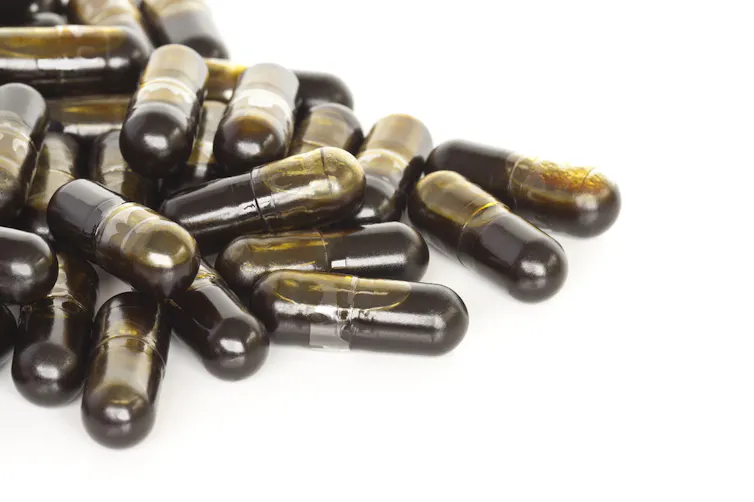
Most studies in this review gave olive leaf extract as a capsule, with daily doses of 500 milligrams to 5 grams for six to 48 weeks.

Another review and analysis published late last year looked at data from 12 experimental studies, with a total of 703 people. Some of these studies involved people with high blood lipids, people with high blood pressure, people who were overweight or obese, and some involved healthy people.

Daily doses were 250-1,000mg taken as tablets or baked into bread.

Individual studies in the review showed significant benefits in improving blood glucose (sugar) control, blood lipid levels and reducing blood pressure. But when all the data was combined, there were no significant health effects. We’ll explain why this may be the case shortly.
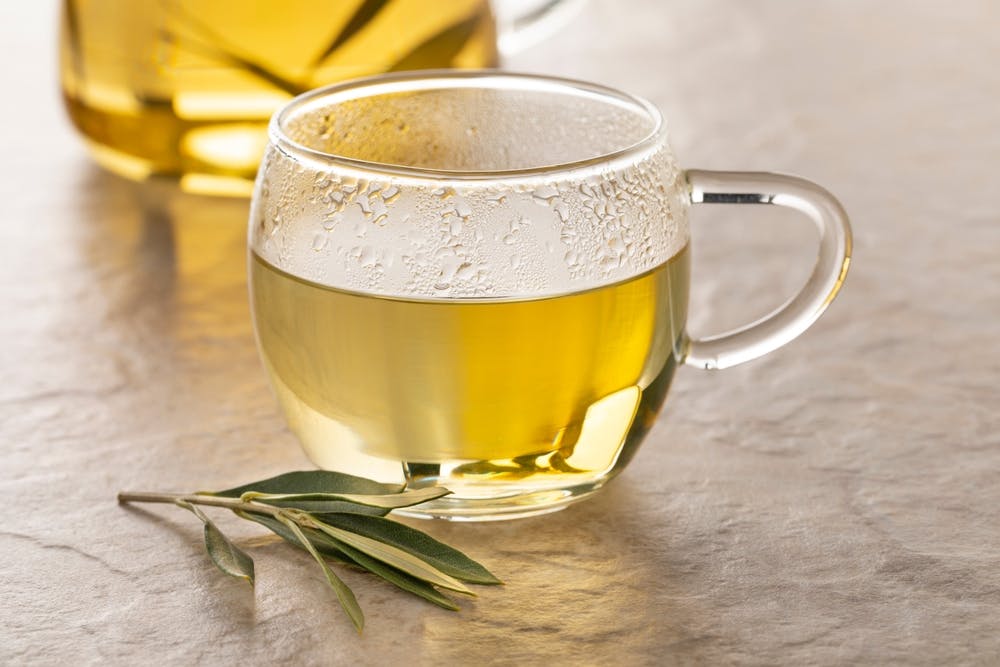
Olive leaf tea in glass cup on counter, olive leaves in front of cup
Olive leaves can be brewed into tea. Picture Partners/Shutterstock

Another review looked at people who took oleuropein and hydroxytyrosol (the antioxidants in olive leaves). This found significant improvement in body weight, blood lipid profiles, glucose metabolism and improvements in bones, joints and cognitive function.

The individual studies included tested either the two antioxidants or olive leaf incorporated into foods such as bread and cooking oils (but not olive oil). The doses were 6-500mg per day of olive leaf extract.

So what can we make of these studies overall? They show olive leaf extract may help reduce blood pressure, improve blood lipids and help our bodies handle glucose.

But these studies show inconsistent results. This is likely due to differences in the way people took olive leaf extract, how much they took and how long for. This type of inconsistency normally tells us we need some more research to clarify the health effects of olive leaves.

Can you eat olive leaves?

Olive leaves can be brewed into a tea, or the leaves added to salads. Others report grinding olive leaves into smoothies.

However the leaves are bitter, because of the antioxidants, which can make them hard to eat, or the tea unpalatable.

Olive leaf extract has also been added to bread and other baked goods. Researchers find this improves the level of antioxidants in these products and people say the foods tasted better.

Sprig of olive leaves
Olive leaves can taste bitter, which can put people off. But you can bake the extract into bread. Repina Valeriya/Shutterstock

Is olive leaf extract toxic?

No, there seem to be no reported toxic effects of eating or drinking olive leaf extract.

It appears safe up to 1g a day, according to studies that have used olive leaf extract. However, there are no official guidelines about how much is safe to consume.

There have been reports of potential toxicity if taken over 85mg/kg of body weight per day. For an 80kg adult, this would mean 6.8g a day, well above the dose used in the studies mentioned in this article.

Pregnant and breastfeeding women are recommended not to consume it as we don’t know if it’s safe for them.

What should I do?

If you have high blood pressure, diabetes or raised blood lipids you may see some benefit from taking olive leaf extract. But it is important you discuss this with your doctor first and not change any medications or start taking olive leaf extract until you have spoken to them.

But there are plenty of antioxidants in all plant foods, and you should try to eat a wide variety of different coloured plant foods. This will allow you to get a range of nutrients and antioxidants.

Olive leaf and its extract is not going to be a panacea for your health if you’re not eating a healthy diet and following other health advice.

Evangeline Mantzioris, Program Director of Nutrition and Food Sciences, Accredited Practising Dietitian, University of South Australia

This article is republished from The Conversation under a Creative Commons license. Read the original article.

Don’t Forget…

Did you arrive here from our newsletter? Don’t forget to return to the email to continue learning!

Learn to Age Gracefully

Join the 98k+ American women taking control of their health & aging with our 100% free (and fun!) daily emails:

  • How Much Do Financial Decline & Cognitive Decline Go Hand In Hand?

    10almonds is reader-supported. We may, at no cost to you, receive a portion of sales if you purchase a product through a link in this article.

    That financial health and physical health are intertwined is a sad fact of our society, but how does it go for cognitive health?

    Well, first of all, the brain is also an organ, and so is the heart that feeds it, and so are the lungs that supply the blood with oxygen, and so is the gut that… You get the idea. There is no cognitive health without physical health.

    But we can also look at cognitive health somewhat in isolation, if we use clever statistical modelling to control for physical health factors that might be adversely affecting cognitive health.

    So, what’s the answer?

    When your bank balance is something you’d rather not remember…

    Researchers (Dr. Katrina Kezios et al.) did exactly that kind of modelling, analyzing data from 7,676 participants in the Health and Retirement Study between 2010–2020, tracking financial well-being and memory over time.

    • How financial well-being was measured: an eight-item index measured both psychosocial strain (stress, dissatisfaction) and material hardship (difficulty paying bills, low income, limited access to necessities)
    • How cognitive decline was measured: direct memory assessments (immediate and delayed 10-word recall tasks) and, for those too cognitively impaired to complete direct assessments, proxy assessments of memory function (proxy’s assessment of participants’ memory performance on a 5-point Likert scale and the 16-item Jorm Informant Questionnaire for Cognitive Decline) were used to generate a composite memory score.

    What Dr. Kezios and her team found is that worsening financial well-being is linked to poorer memory and faster cognitive decline in adults aged 50+.

    How bad is it? In few words, people with significant financial deterioration experienced memory decline comparable to about 5 extra months of aging per year.

    And importantly, this was dynamic in nature and a one-way slope: declines in financial well-being were consistently linked to worse memory, but improvements in finances didn’t reliably lead to cognitive gains (in essence, you can’t buy more cognitive function, but you can lose it if your finances are poor).

    Why does this happen? There are several possibilities, for example study co-author Dr. Adina Zeki Al Hazzouri hypothesized that prolonged financial strain may overload your mental bandwidth, contributing to cognitive decline. Additionally, the paper notes that chronic stress, reduced access to healthcare and nutrition, and less social engagement may all mediate* the relationship between finances and brain health.

    *mediate, in this context, = provide the mechanism of action for, actively facilitate such that it happens, without necessary nailing their colors to the mast of outright declaring it causal (because the scientists acknowledge there could be unknown additional factors at hand, much like how yeast will in technical terms “mediate” bread rising, but it won’t “cause” a thing without the temperature being right)

    You can read the paper in full, here: Katrina L Kezios et al, Changes in financial well-being and memory function and decline in middle-aged and older adults ← if you want to read more than just the abstract, you just need to click on the PDF icon!

    This is consistent, by the way, with the impact of systemic stress on heart health, which we wrote about here: Heart Health vs Systemic Stress

    …and you’ll recall that “what’s good for your heart is good for your brain“, so, do note that the inverse is also true (what’s bad for your heart is bad for your brain)!

    See also: What’s Your Vascular Dementia Risk? ← includes actual numbers and a risk calculator tool and things like that 😎

    Want to learn more?

    You might like this book that we reviewed a while ago:

    Growing Young – by Marta Zaraska ← discusses the social factors involved in healthy aging

    Take care!

    Share This Post

  • 10 Ways To Delay Aging

    10almonds is reader-supported. We may, at no cost to you, receive a portion of sales if you purchase a product through a link in this article.

    This is Dr. Colin Rose; he is a Senior Associate of the Royal Society of Medicine. He’s also a main contributor to EduScience, a program funded by the E.U. which is designed to enhance the teaching and learning of science in schools in Europe.

    His most recent work has been about aging—and how to delay it. We also reviewed his latest book, here:

    Delay Ageing – by Dr. Colin Rose

    So, what does he want us to know? The key lies in his compilation of ten ways in which we age on a cellular level, and what we can to do slow each one of those:

    Damage to DNA accumulates

    While DNA can get damaged without any external stimulus to cause that, there are a lot of modifiable factors that we can do to reduce DNA damage. The list is easy: if it causes cancer, it causes aging.

    Thus, check out: Stop Cancer 20 Years Ago

    Cells become senescent

    Our cells are replaced all the time; some sooner than others, but all of them at some point. The problem occurs when cells are outliving their usefulness. If a cell becomes completely immortal, that is cancer, but happily most don’t. Nevertheless, having senescent (aging) cells in the body means that those senescent cells are what get copied forwards by mitosis, and our DNA becomes like a photocopy of a tattered old photocopy of a tattered old photocopy. Which, needless to say, is not good for our health. So, the best thing to do is to kill them earlier:

    Yes, really: Fisetin: The Anti-Aging Assassin

    Mitochondria become dysfunctional

    Without properly functional mitochondria, no living human cell can do its job properly.

    Options: 7 Ways To Boost Mitochondrial Health To Fight Disease

    Beneficial genes are switched off, harmful genes are on

    It’s easy to think of our genes as being immutable, but epigenetics means that our environment (amongst other factors) can mean that our gene expression changes.

    Imagine it this way: your genes are a set of instructions for your body. However, your body will act or not on those instructions, depending on other factors. Hormones often play a big part in this; for example sex hormones tell the body which set of genetic instructions to read (and thus what kind of body to build/rebuild), and cortisol or oxytocin can tell the body which set of contingency plans to activate or suppress (respectively). A milder example is gray hair; genes have the program for it, but many other factors inform the body when, if, and how to do it.

    Of more concern when it comes to aging is what goes on with more critical systems, such as the brain, in which the aforementioned DNA damage can cause unhelpful instructions to get interpreted, resulting in epigenetic changes that in turn facilitate age-related degeneration.

    As to what can be done, see : Klotho: Unzipping The Genes Of Aging?

    Stem cells become exhausted

    Stem cells can become different kinds of cells, and thus they’re very useful for maintaining a healthy body. However, they get depleted with age. We can slow down the rate of loss, though; for example, intermittent fasting can help:

    Per Dr. Li’s 5 Ways To Beat Cancer (And Other Diseases)

    And for more detail, see:

    Doctor’s Tip: Regeneration (stem cells) — one of your body’s five defense systems

    (complete with lists of foods to eat or avoid for stem cell health)

    Cells fail to communicate properly

    Cells need to talk to each other constantly, to continue doing their jobs. We are one big organism, after all, and not a haphazard colony of the countless cells that constitute such. However, cell signalling gets worse with age, which in turn precipitates others age-related problems. Fortunately, there are nutrients that can improve cellular communication.

    For example: PS, We Love You ← this is about phosphatidylserine, also called “PS”

    Telomeres become shorter

    These protective caps on our DNA suffer the wear-and-tear so that our DNA doesn’t have to. However, as they get shorter, the DNA can start suffering damage. For this reason, telomere length is considered one of the most “Gold Standard” markers of cellular aging.

    Here’s what can be done for that: The Stress Prescription (Against Aging!)

    The body fails to sense nutritional intake properly

    This is mostly about insulin signalling (though problems can occur in other systems too, but we only have so much room here), so it’s important to take care of that.

    See: Turn Back The Clock On Insulin Resistance

    Proteins accumulate errors

    This is due to DNA damage, of course, but there are specific things that can reduce protein error accumulation; see for example:

    A quick fix – preventing protein errors extends lifespan

    See also: Rapamycin Can Slow Aging By 20% (But Watch Out)

    The microbiome becomes unbalanced

    We at 10almonds often mention that gut health affects pretty much every other kind of health, and it’s true for aging as well. So, take care of that microbiome!

    Here’s a primer: Gut Health 101

    Want to know more about delaying aging beyond the cellular level?

    Check out: Age & Aging: What Can (And Can’t) We Do About It?

    Take care!

    Share This Post

  • The facts about ultra-processed foods

    10almonds is reader-supported. We may, at no cost to you, receive a portion of sales if you purchase a product through a link in this article.

    • Ultra-processed foods contain at least one industrially produced ingredient, such as artificial sweeteners, preservatives, or other additives. 
    • Research suggests diets high in certain ultra-processed foods may be linked to health risks, but most studies are observational and cannot prove cause and effect. Researchers have not established that these foods directly cause health problems.
    • Recent state restrictions on ultra-processed foods aim to improve health. But some experts warn they could limit major sources of nutrition for low-income families, disabled individuals, and older adults. 

    Last summer, U.S. health officials announced plans to address concerns about ultra-processed foods. Although the announcement linked the foods to an “epidemic” of chronic disease, the science on their health effects is still evolving. There is no single scientific consensus on exactly how to define an ultra-processed food.

    Here’s what we know so far.

    What are ultra-processed foods?

    Ultra-processed foods are extremely common, accounting for up to 70 percent of the American diet

    The term “processing” refers to anything that changes ingredients from their natural state. Meat, produce, and grains that have been washed, chopped, ground, juiced, cooked, fermented, pasteurized, or refrigerated are all considered processed. 

    The distinction between processed and ultra-processed foods isn’t always clear or consistent.

    Unprocessed or minimally processed foods

    Unprocessed or minimally processed foods are in their natural state or slightly altered from it. Minimal processing typically makes foods safer and more convenient to eat and has little effect on their nutritional value. An apple picked from a tree is unprocessed; fresh apple slices are minimally processed. Raw milk is unprocessed (and unsafe to consume), while pasteurized milk is minimally processed. 

    Processed ingredients

    Processed culinary ingredients are used in food preparation. They are made from unprocessed foods through pressing, churning, grinding, refining, or milling.

    These include cooking fats, salt and pepper, ground herbs, natural and refined sweeteners, and milled grains like flour, rice, and oats. 

    Processed foods

    When processed ingredients are used to prepare unprocessed foods, the result is processed foods. Fresh-baked bread, canned fruit, pickles, cheese, and many homemade meals fall into this category.

    Ultra-processed foods

    Ultra-processed foods are made using one or more industrially produced ingredients. These may include: 

    • Artificial sweeteners, colors, and flavors
    • Hydrogenated fats 
    • Emulsifiers and thickening agents
    • Preservatives that extend shelf life
    • Other additives, including fortified nutrients like iron and vitamin B

    What does science tell us about ultra-processed foods?

    Ultra-processed foods have come under increased scrutiny in recent years, with some researchers and policymakers calling for regulation. However, policies are complicated by the lack of a universally accepted definition of “ultra-processed food.”

    “Health authorities across the globe have rejected using the ‘ultra-processed food’ concept as a basis for public health policy, citing its lack of scientific consensus,” wrote the International Food & Beverage Alliance in a November 2025 statement

    Eating ultra-processed foods is associated with health risks.

    Many studies have identified links between diets high in ultra-processed foods and health risks. A large 2024 BMJ analysis of previous research included data from nearly 10 million people. 

    The analysis found that higher consumption of ultra-processed foods was potentially associated with 32 negative health outcomes. The strongest associations were for obesity, type 2 diabetes, cardiovascular disease, and “common mental disorders.”

    Research consistently shows that people who consume more ultra-processed foods are at higher risk of weight gain, type 2 diabetes, and cardiovascular conditions. This is particularly true for ultra-processed foods high in sugar, sodium, and saturated fats but low in nutrients.

    “Consuming [ultra-processed foods] has two main problems,” said Angela Zivkovic, a nutrition researcher at the University of California, Davis. 

    “We can more easily overconsume calories and thus gain weight, but also that we may be missing the nutrients that we would be getting if we were instead consuming nutrient-dense whole foods.”

    Many health organizations advise reducing intake of ultra-processed foods, particularly those high in salt, sugar, and saturated fats, and replacing them with more nutrient-dense options.

    Research on the direct health impacts of ultra-processed food is extremely limited.

    Despite consistent associations, there is limited evidence that ultra-processed foods directly cause disease.

    In the BMJ analysis, none of the included research studies were rated “high quality,” and much of the evidence was categorized as “weak” or merely “suggestive.” For example, evidence linking ultra-processed foods to overall cancer risk was rated “very low” quality. Evidence for a link with Crohn’s disease (chronic inflammation of the digestive tract) was considered “weak.”

    Most research relies on people self-reporting what they remember eating, which can introduce errors.

    “We have no way of telling whether the association between the reported intake of [ultra-processed foods] and the disease outcome is due to the intake of [ultra-processed foods] or whether it is a reflection of an overall diet and lifestyle,” added Zivkovic.

    “Very few studies that can actually evaluate the direct impacts of [ultra-processed foods] have been performed.” 

    “Ultra-processed” does not equal “unhealthy.”

    The term “ultra-processed food” may bring to mind soda, candy, and chips. But many ultra-processed foods are common parts of healthy diets.

    Milk alternatives, packaged bread, breakfast cereal, store-bought pasta sauce, and flavored yogurt are all ultra-processed foods. 

    Foods fortified with vitamins and minerals are also classified as ultra-processed, often with significant health benefits. 

    In 1998, the U.S. required enriched grains to be fortified with folic acid, a nutrient essential for early nervous system development. Fortification has been credited with dramatically reducing certain serious birth defects.

    What is the health impact of restricting ultra-processed foods? 

    In August, federal health officials commended six states that banned the purchase of certain highly processed foods with federal Supplemental Nutrition Assistance Program benefits

    As of January, at least 18 states have SNAP restrictions, and five others have proposed similar policies. The restrictions include many snack foods, frozen meals, sweetened drinks, packaged desserts, gums, and dried fruits.

    Source: United States Department of Agriculture, January 28, 2026.

    While these policies are intended to promote health, some nutrition experts warn they may limit access to affordable and readily available foods for people with low incomes or disabilities. 

    Ultra-processed foods are often inexpensive, widely available, and shelf-stable. For many households, they provide a significant share of daily calories and nutrients. For others, they are what families can afford and have the time, equipment, or ability to prepare. 

    About one in 10 Americans live in food deserts, without easy access to a full-service grocery store. In some of these areas, shelf-stable and packaged foods are among the most consistently available options.

    Some experts argue that restricting access to ultra-processed foods does not address the underlying barriers to healthy eating, such as cost, transportation, and neighborhood food access.

    “For many households, processed foods provide convenience, affordability and stability,” wrote Beverley O’Hara, a nutrition researcher at Leeds Beckett University, in a 2025 The Conversation article.

    “Shaming people for eating the foods they can afford or grew up with ignores the realities of everyday life.”

    It’s also unclear whether restrictions meaningfully change overall diets. 

    “Randomized controlled trials that have tested the effects of different limitations or incentives on SNAP purchases demonstrate that…there are no meaningful differences on individuals’ overall dietary intake,” said Kate W. Bauer, a nutrition scientist at the University of Michigan, in a 2025 interview

    Bauer cited a 2016 clinical trial that found SNAP restrictions were effective only when paired with incentives that made fresh foods more affordable. 

    “Before considering restrictions, we need to address structural barriers like food deserts, transportation limitations, and the higher cost of nutritious foods,” Bauer continued. 

    “The focus should be on improving food environments rather than restricting choices within inadequate environments.”

    For more information, talk to your health care provider.

    This article first appeared on Public Good News and is republished here under a Creative Commons Attribution-NoDerivatives 4.0 International License.

    Share This Post

  • You Are Not a Before Picture – by Alex Light

    10almonds is reader-supported. We may, at no cost to you, receive a portion of sales if you purchase a product through a link in this article.

    It’s that time of year, and many of us are looking at what we’ll do in the coming days, weeks, and months to level-up our health. So… Is this a demotivational book?

    Quite the opposite! It’s rather a case of an often much-needed reminder to ensure that our plans are really our own, and really are what’s best for us. Why wouldn’t they be, you ask?

    Much of diet culture (ubiquitous! From magazine covers to movie stars to the models advertising anything from health insurance to water filters) has us reaching for “body goals” that are not possible without a different skeleton and genes and compromises and post-production edits.

    Alex Light—herself having moved from the fashion and beauty industry into health education—sets out in a clear, easy-reading manner, how we can look after ourselves, not be neglectful of our bodies, and/but also not get distracted into unhelpful, impossible, castles-in-the-air.

    Bottom line: you cannot self-hate your way into good health, and good health will always be much more attainable than a body that’s just not yours. This book can help you sort out which is which.

    Click here to check out You Are Not A Before Picture, and appreciate all you and your body can (and do) do for each other!

    Don’t Forget…

    Did you arrive here from our newsletter? Don’t forget to return to the email to continue learning!

    Learn to Age Gracefully

    Join the 98k+ American women taking control of their health & aging with our 100% free (and fun!) daily emails:

  • Blueberries vs Grapes – Which is Healthier?

    10almonds is reader-supported. We may, at no cost to you, receive a portion of sales if you purchase a product through a link in this article.

    Our Verdict

    When comparing blueberries to grapes, we picked the blueberries.

    Why?

    Both have the merits, but there was a clear winner:

    In terms of macros, blueberries have more than 2x the fiber, while grapes have slightly more carbs; an easy first-round win for blueberries.

    In the category of vitamins, blueberries have more of vitamins B3, B5, B7, B9, C, E, and K, while grapes have more of vitamins A, B1, B2, and B6, yielding a 7:4 win to blueberries.

    Looking at minerals next, blueberries have more copper, magnesium, phosphorus, and zinc, while grapes have more calcium, manganese, and potassium, giving blueberries a marginal 4:3 win in this round.

    In other considerations, both are great for polyphenols, but blueberries have considerably more, so that’s another point in their favor.

    Adding up the sections makes for a very clear overall win for blueberries, but by all means do enjoy either or both, as diversity is best!

    Want to learn more?

    You might like:

    Can We Drink To Good Health? ← while there are polyphenols such as resveratrol in red wine that per se would boost heart health, there’s so little per glass that you may need 100–1000 glasses per day to get the dosage that provides benefits in mouse studies.

    If you’re not a mouse, you might even need more than that!

    To this end, many people prefer resveratrol supplementation ← link is to an example product on Amazon, but there are plenty more so feel free to shop around 😎

    Enjoy!

    Don’t Forget…

    Did you arrive here from our newsletter? Don’t forget to return to the email to continue learning!

    Learn to Age Gracefully

    Join the 98k+ American women taking control of their health & aging with our 100% free (and fun!) daily emails:

  • Using the”Task Zero” approach

    10almonds is reader-supported. We may, at no cost to you, receive a portion of sales if you purchase a product through a link in this article.

    Jonathan Frakes Asks You Things” Voice:

    • Do you ever find yourself in a room and wonder what you’re doing there?
    • Or set about a to-do list, but get quickly distracted by side-quests?
    • Finally get through to a person in a call center, they ask how they can help, and your mind goes blank?
    • Go to the supermarket and come out with six things, none of which were the one you came for?

    This is a “working memory” thing and you’re not alone. There’s a trick that can help keep you on track more often than not:

    Don’t try to overburden your working memory. It is very limited (this goes for everyone to a greater or lesser degree). Instead, hold only two tasks at once:

    • Task zero (what you are doing right now)
    • Task one (your next task)

    When you’ve completed task zero, task one becomes the new task zero, and you can populate a new task one from your to-do list.

    This way, you will always know what you’re doing right now, and what you’re doing next, and your focus will be so intent on task zero, that you will not get sidetracked by task seventeen!

    Happy focusing

    Don’t Forget…

    Did you arrive here from our newsletter? Don’t forget to return to the email to continue learning!

    Learn to Age Gracefully

    Join the 98k+ American women taking control of their health & aging with our 100% free (and fun!) daily emails: