
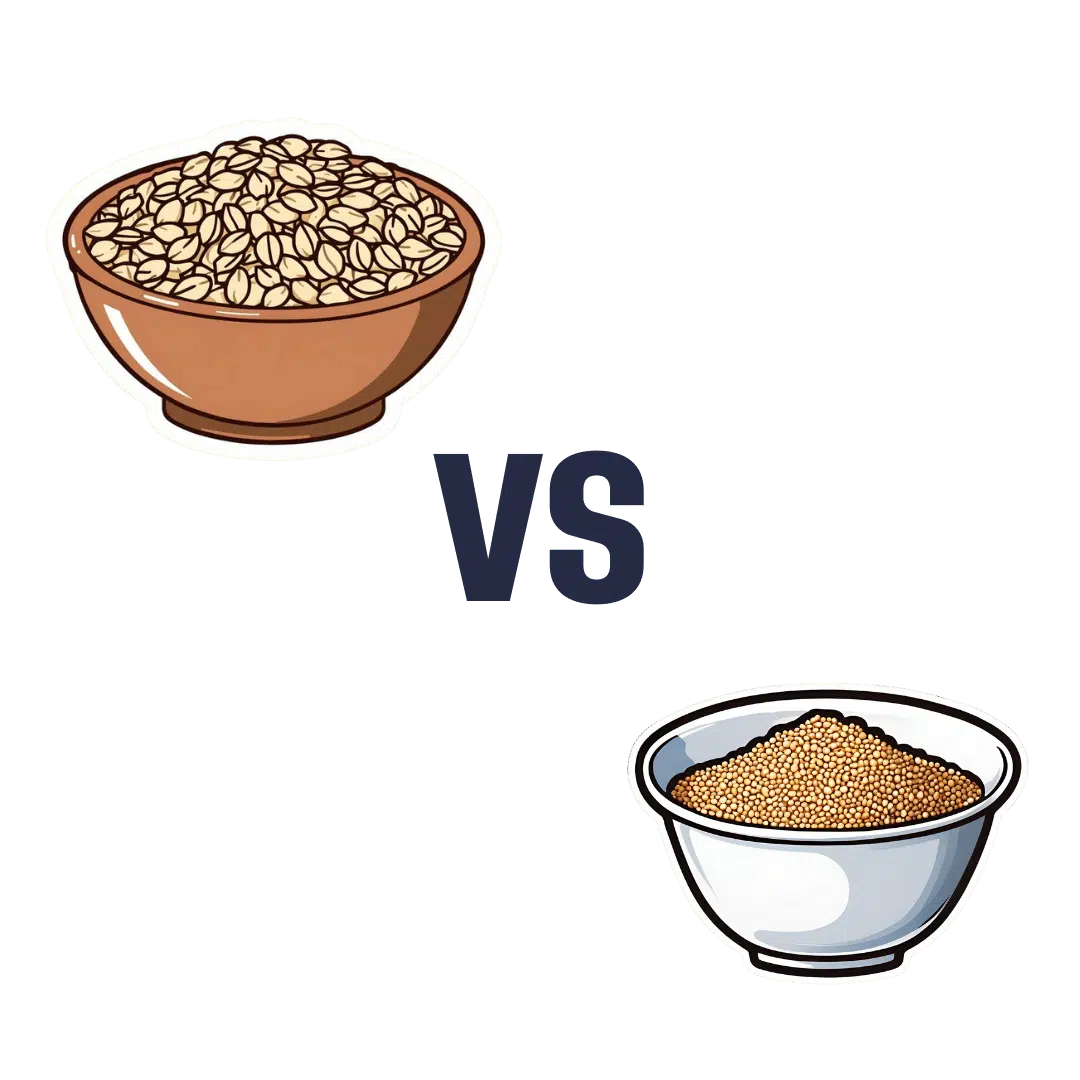
Oats vs Rye – Which is Healthier?
10almonds is reader-supported. We may, at no cost to you, receive a portion of sales if you purchase a product through a link in this article.
Our Verdict
When comparing oats to rye, we picked the oats.
Why?
It was close!
In terms of macros, oats have a little more protein and rye has a little more fiber, and we’ll call this first round a tie on the strength of those.
In the category of vitamins, oats have more of vitamins B1, B7, and B9, while rye has more of vitamins B2, B3, and B6—another tie!
Looking at minerals, this time we have something to set one ahead of the other: oats have more calcium, copper, iron, magnesium, manganese, phosphorus, selenium, and zinc, while rye has just a little more potassium. An easy win for oats in this round.
Adding up the sections makes for an overall win for oats, but both are great, so by all means do enjoy either or both, as diversity is best!
Want to learn more?
You might like:
The Best Kind Of Fiber For Overall Health? ← it’s β-glucan, the kind find abundantly in oats!
Enjoy!
Don’t Forget…
Did you arrive here from our newsletter? Don’t forget to return to the email to continue learning!
Recommended
Learn to Age Gracefully
Join the 98k+ American women taking control of their health & aging with our 100% free (and fun!) daily emails:
-
Keep Inflammation At Bay
10almonds is reader-supported. We may, at no cost to you, receive a portion of sales if you purchase a product through a link in this article.
How to Prevent (or Reduce) Inflammation
You asked us to do a main feature on inflammation, so here we go!
Before we start, it’s worth noting an important difference between acute and chronic inflammation:
- Acute inflammation is generally when the body detects some invader, and goes to war against it. This (except in cases such as allergic responses) is usually helpful.
- Chronic inflammation is generally when the body does a civil war. This is almost never helpful.
We’ll be tackling the latter, which frees up your body’s resources to do better at the former.
First, the obvious…
These five things are as important for this as they are for most things:
- Get a good diet—the Mediterranean diet is once again a top-scorer
- Exercise—move and stretch your body; don’t overdo it, but do what you reasonably can, or the inflammation will get worse.
- Reduce (or ideally eliminate) alcohol consumption. When in pain, it’s easy to turn to the bottle, and say “isn’t this one of red wine’s benefits?” (it isn’t, functionally*). Alcohol will cause your inflammation to flare up like little else.
- Don’t smoke—it’s bad for everything, and that goes for inflammation too.
- Get good sleep. Obviously this can be difficult with chronic pain, but do take your sleep seriously. For example, invest in a good mattress, nice bedding, a good bedtime routine, etc.
*Resveratrol (which is a polyphenol, by the way), famously found in red wine, does have anti-inflammatory properties. However, to get enough resveratrol to be of benefit would require drinking far more wine than will be good for your inflammation or, indeed, the rest of you. So if you’d like resveratrol benefits, consider taking it as a supplement. Superficially it doesn’t seem as much fun as drinking red wine, but we assure you that the results will be much more fun than the inflammation flare-up after drinking.
About the Mediterranean Diet for this…
There are many causes of chronic inflammation, but here are some studies done with some of the most common ones:
- Beneficial effect of Mediterranean diet in systemic lupus erythematosus patients
- How the Mediterranean diet and some of its components modulate inflammatory pathways in arthritis
- The effects of the Mediterranean diet on biomarkers of vascular wall inflammation and plaque vulnerability in subjects with high risk for cardiovascular disease
- Adherence to Mediterranean diet and 10-year incidence of diabetes: correlations with inflammatory and oxidative stress biomarkers*
*Type 1 diabetes is a congenital autoimmune disorder, as the pancreas goes to war with itself. Type 2 diabetes is different, being a) acquired and b) primarily about insulin resistance, and/but this is related to chronic inflammation regardless. It is also possible to have T1D and go on to develop insulin resistance, and that’s very bad, and/but beyond the scope of today’s newsletter, in which we are focusing on the inflammation aspects.
Some specific foods to eat or avoid…
Eat these:
- Leafy greens
- Cruciferous vegetables
- Tomatoes
- Fruits in general (berries in particular)
- Healthy fats, e.g. olives and olive oil
- Almonds and other nuts
- Dark chocolate (choose high cocoa, low sugar)
Avoid these:
- Processed meats (absolute worst offenders are hot dogs, followed by sausages in general)
- Red meats
- Sugar (includes most fruit juices, but not most actual fruits—the difference with actual fruits is they still contain plenty of fiber, and in many cases, antioxidants/polyphenols that reduce inflammation)
- Dairy products (unless fermented, in which case it seems to be at worst neutral, sometimes even a benefit, in moderation)
- White flour (and white flour products, e.g. white bread, white pasta, etc)
- Processed vegetable oils
See also: 9 Best Drinks To Reduce Inflammation, Says Science
Supplements?
Some supplements that have been found to reduce inflammation include:
(links are to studies showing their efficacy)
Consider Intermittent Fasting
Remember when we talked about the difference between acute and chronic inflammation? It’s fair to wonder “if I reduce my inflammatory response, will I be weakening my immune system?”, and the answer is: generally, no.
Often, as with the above supplements and dietary considerations, reducing inflammation actually results in a better immune response when it’s actually needed! This is because your immune system works better when it hasn’t been working in overdrive constantly.
Here’s another good example: intermittent fasting reduces the number of circulating monocytes (a way of measuring inflammation) in healthy humans—but doesn‘t compromise antimicrobial (e.g. against bacteria and viruses) immune response.
See for yourself: Dietary Intake Regulates the Circulating Inflammatory Monocyte Pool ← the study is about the anti-inflammatory effects of fasting
Share This Post
-
The Exercise That Protects Older Adults From Cancer
10almonds is reader-supported. We may, at no cost to you, receive a portion of sales if you purchase a product through a link in this article.
The relationship between exercise and cancer has sometimes been laden with confusion, and in particular, it was long popularly believed that exercise accelerates cancer once it occurs, but now it seems that’s not the case.
You might have read about that, and specifically about how a research team (Dr. Alice Avancini et al.) analysed data from 22 randomized controlled trials (total n=968 participants) that investigated the effects of exercise on various pro-inflammatory biomarkers (mostly interleukin variants, but also c-reactive proteins) that are known to increase breast cancer reoccurrence risk.
What they found was:
❝Exercise induced small to large significant reductions in IL-6 (SMD = -0.85; 95% CI = -1.68 to -0.02; p = .05) and TNF-α (SMD = -0.40; 95% CI = -0.81 to 0.01; p = .05) and a trend for a decrease in CRP.
When stratifying by exercise mode, trends toward reduction in IL-6 and TNF-α were observed for combined exercise, whilst changes were not generally affected by exercise program duration❞
The “combined exercise” mentioned?
Aerobic exercise and resistance training.
This is important, because as regular 10almonds readers may remember…
What Your Metabolism Says About How Aggressive Cancer Is Likely To Be For You ← this makes a huge difference to survival chances
So, this study’s findings are very consistent with that, because:
- Aerobic training increases cardiovascular fitness, improving metabolism
- Resistance training increases muscle mass, improving metabolism*
*because muscle “costs” calories to maintain, prompting an increase in metabolism, whereas fat prompts our metabolism to slow, to conserve energy to face the obvious food shortage that must be coming
See also: Stop Cancer 20 Years Ago
Exercise & aging muscle
Yes, we said “older adults” specifically in the title, and now we’re getting to that part!
Most recently, another team of scientists (Dr. Jun Nishiyama et al.) that healthy skeletal* muscle acts as an anti-tumor organ, releasing tiny particles called extracellular vesicles (EVs) that help suppress the development of tumors.
*This means the muscles that move your skeleton, as opposed to different kinds of muscle such as, for example, the smooth muscle that operates the peristaltic motion of your intestines, or that forms the main part of the walls of your uterus (if you have one), or that wiggle your ears, and so forth.
As muscles age and lose mass (per sarcopenia), they produce fewer of these vesicles. The vesicles that are released also contain lower levels of a molecule (known as miR-7a-5p to its friends) that normally helps restrain tumor growth. As a result, aging muscle can lose a lot of its natural cancer-fighting ability.
The good news is that exercise appears to reverse part of this process. The researchers found that physical activity reactivates a biological pathway involved in EV production, restoring the release of protective signals from muscle.
In other words: exercise more (be it with aerobic activity or resistance training, though ideally both), and greatly reduce your risk of cancer.
You can find this paper in full, here: Sarcopenia promotes tumorigenesis by disrupting NOTCH-SDC2-regulated biogenesis of muscle-derived extracellular vesicles
Want to learn more?
You might like this excellent book we reviewed:
Moving Through Cancer – by Dr. Kathryn Schmitz
Take care!
Share This Post
-
Tea tree oil may affect fertility, the EU says. A pharmacologist explains why that’s so misleading
10almonds is reader-supported. We may, at no cost to you, receive a portion of sales if you purchase a product through a link in this article.
The heady scent of tea tree is one of the iconic smells of the Australian bush. And the essential oils derived from tea trees have been used as medicines, first by Indigenous people, then by colonists.
Today, many of us have a bottle of tea tree oil at home, or use shampoo or creams containing it. Tea tree oil is also a major export earner for Australia.
Now media reports suggest the European Union (EU) is concerned tea tree oil may affect people’s fertility and may ban imports.
Let’s see whether we really need to worry about any impact of tea tree oil on our reproductive system.
Stephanie (strph)/Wikimedia, CC BY-SA The many uses of tea tree oil
Leaves of Melaleuca alternifolia trees and other species of Melaleuca produce an essential oil that’s used medicinally and in a variety of toiletries and cosmetics. This oil is a complex mixture of nearly 100 aromatic compounds.
Tea tree oil has been used as an antiseptic since it became commercially available in the 1930s. It has antibacterial, antifungal, anti-parasite and antioxidant properties.
Laboratory experiments suggest it may also help reduce inflammation and enhance healing.
It’s used to treat acne, seborrhoeic dermatitis, and as a mouthwash to treat gingivitis (gum disease). However, the clinical evidence for these uses is not strong.
Tea tree oil is also used in cosmetics and toiletries, such as shower gel and face wash, in various concentrations.
Is tea tree oil safe?
The most common adverse effects of tea tree oil are when it’s used on the skin. In some people, the skin can become sensitive and allergic contact dermatitis can develop. This is particularly when used neat (using the pure oil) rather than after using cosmetics and toiletries, which contain lower concentrations.
Acute toxicity, when there are rapid side-effects coming on within minutes, to tea tree oil via skin application is rare.
Drinking tea tree oil, even diluted or in small concentrations, is not recommended as this can be deadly. There have been reports of cases of depression of the central nervous system (where brain activity slows down) and possible injury to the lungs.
How about the reproductive system?
The EU has been concerned about the potential impact of tea tree oil on the reproductive system for several years.
In November 2023, the European Chemicals Agency’s Committee for Risk Assessment proposed tea tree oil be classified as a presumed human reproductive toxicant, under category IB.
This classification would mean a ban on tea tree oil in pesticides, and cosmetics and toiletries used in the EU.
The decision rested on the results of reproductive toxicity experiments. This involved administering tea tree oil to rats orally at various concentration for ten days, before mating. Female rats also received tea tree oil while pregnant and up to the weaning of the offspring.
In the females, measures of fertility, including the number of embryos implanted and mean litter size, were no different to those that had not been given tea tree oil.
At the highest doses, the sperm counts of male rats were lower. But this wasn’t the case for rats given tea tree at 25 milligrams of tea tree oil per kilogram of body-weight per day. That’s around 0.028 millilitres of tea tree oil per kilogram a day.
This doesn’t sound much, but for a 60kg human, that would be equivalent to drinking about one-and-a-half millilitres of pure tea tree oil a day. Nobody is going to be drinking that amount day in, day out. Virtually every application says not to ingest any tea tree oil because of its known human oral toxicity.
This is the level that has no effect on reproduction. The level for reproductive toxicity is twice that.
In cosmetics and toiletries, no-one would be exposed to that much tea tree oil. Less than 4% of tea tree oil components are absorbed via the skin. So even if you did smear that much tea tree oil on yourself, the concentration your body would be exposed to is less than a tenth of the amount that has no effect.
Rats also metabolise tea tree oil components differently to humans. They produce a toxic byproduct that affects sperm. By comparison, humans only produce trace levels of this byproduct.
So what happened recently?
In November 2025, another European committee, the Scientific Committee on Consumer Safety gave its update.
It considered the issues of dose and metabolism outlined above. It also considered human pharmacovigilance data (where therapies are monitored over time to track any potential safety issues). The pharmacovigilance data showed no sign of reproductive toxicity associated with human use of existing products.
It considered tea tree oil’s use in cosmetics and toiletries to be safe up to the maximum concentration of:
- 2.0% in shampoo
- 1.0% in shower gel
- 1.0% in face wash
- 0.1% in face cream.
The United Kingdom has also weighed in. In August 2025, its Health and Safety Executive didn’t classify tea tree oil as a reproductive toxicant.
What this means for the EU’s classification of tea tree oil in the future is unclear. Shifting it to another category – toxicity category 2, a suspected human reproductive toxicant – would be an option.
In a nutshell
Europe’s initial evaluation of tea tree oil as a presumed human reproductive toxicant in 2023 understandably sounds alarming. But the 2025 update has toned down warnings.
The subsequent re-evaluation of evidence – of tea tree oil’s concentrations and applications, species-specific toxicity, and real-world data tracking safety in humans – means we can be much more confident of its safety.
Tea tree oil, when used as directed, is much safer than the headlines suggest.
Ian Musgrave, Senior Lecturer in Pharmacology, Adelaide University
This article is republished from The Conversation under a Creative Commons license. Read the original article.
Share This Post
Related Posts
-
Survival of the Prettiest – by Dr. Nancy Etcoff
10almonds is reader-supported. We may, at no cost to you, receive a portion of sales if you purchase a product through a link in this article.
Beauty is in the eye of the beholder, right? And what does it matter, in this modern world, especially if we are already in a happy stable partnership?
The science of it, as it turns out, is less poetic. Not only is evolutionary psychology still the foundation of our perception of human beauty (yes, even if we have zero possibility of further procreation personally), but also, its effects are far, far wider than partner selection.
From how nice people are to you, to how much they trust you, to how easily they will forgive a (real or perceived) misdeed, to what kind of medical care you get (or don’t), your looks shape your experiences.
In this very easy-reading work that nevertheless contains very many references, Dr. Etcoff explores the science of beauty. Not just what traits are attractive and why, but also, what they will do for (or against) us—in concrete terms, with numbers.
Bottom line: if you’d like to better understand the subconscious biases held by yourself and others, this book is a top-tier primer.
Don’t Forget…
Did you arrive here from our newsletter? Don’t forget to return to the email to continue learning!
Learn to Age Gracefully
Join the 98k+ American women taking control of their health & aging with our 100% free (and fun!) daily emails:
-
I have a stuffy nose. How do I know if it’s hay fever or a cold?
10almonds is reader-supported. We may, at no cost to you, receive a portion of sales if you purchase a product through a link in this article.
You’ve been through winter lurgies and escaped the start of spring free of hay fever. Now you wake up with a sniffle you can’t seem to shake.
How do you know if it’s hay fever, a cold, or something else? And how do these two different culprits cause such similar symptoms?
Guido Mieth/Getty Images Hay fever is actually an allergy
Hay fever is an allergic reaction to tiny particles you inhale from “allergens”. These might be pollen, house dust mites, or animal dander (dead skin cells).
Normally, the body won’t respond to these harmless particles. But for some people, the immune system mistakes them for something dangerous.
If you have allergies, your immune system prepares a particular type of antibody, called IgE, to target the culprit allergen.
When you’re next exposed to that allergen, such as grass pollen, your immune system quickly releases chemicals such as histamine, which contributes to an allergic reaction.
Histamine and other inflammatory substances that are released inflame the lining of your nose, eyes and throat. This causes sneezing, a runny or blocked nose, itchy eyes, feeling drained and having trouble concentrating.
Histamine irritates the nerves in your nose, eyes and sometimes your throat or skin, causing the itch. It’s your body’s false alarm, thinking it needs to protect you.
A blocked or runny nose can make breathing at night difficult, affecting your sleep, leaving you tired the next day.
How the body defends against a viral attack
When you catch a cold, viruses enter your body via inhaled droplets or aerosols, landing onto your nose or throat. The viruses use the coating on their surface to attach and enter the cells lining your nose and throat.
That is where a cold virus can replicate, and burst the infected cells to spread and infect more cells in the vicinity. This causes the release of molecules that signal to other immune cells to come to the infected area, and fight the viruses.
During the fight, chemicals including histamine (yes, similar to a hay fever response) and other chemical mediators are released, causing symptoms such as a stuffy, runny nose, sore throat, sneezing and, sometimes, a fever.
Many respiratory viruses can cause cold symptoms: common cold viruses (rhinoviruses), coronaviruses (the non-SARS kind), adenoviruses and more significant ones such as the flu (influenza), respiratory syncytial virus (RSV) and COVID (caused by SARS-CoV-2).
So how can you tell the difference?
While hay fever and cold viruses share some overlapping symptoms, one of the main differences is that, ironically, hay fever doesn’t actually cause a fever, but a cold- or flu-like virus sometimes does.
Other cold or flu symptoms not commonly seen with hay fever could include a sore throat, muscle aches and pains (particularly influenza), and cough with thick mucus (known as sputum).
However, if hay fever is associated with asthma, you might also have a cough and feel breathless.
Feeling itchy – and itchy eyes in particular – is a prominent symptom of hay fever not commonly seen with colds.
Colds don’t usually cause itchy eyes. Mart Production/Pexels Duration and triggers for symptoms can also be a clue. Cold or flu symptoms may resolve within a week or two, with the season typically peaking during winter.
Hay fever symptoms may last for the duration of the spring to summer pollen season (seasonal hay fever), or whenever the person is exposed to the particular allergen that triggers them.
What do you need to watch out for?
Untreated hay fever can have significant impacts on quality of life and performance at work and school. Symptoms can persist for months and recur yearly with allergen exposure, particularly grass pollen.
If hay fever occurs alongside uncontrolled asthma, serious complications such as asthma attacks, may require hospitalisation.
Thunderstorms during high pollen counts can also cause “thunderstorm asthma”, even if you’ve never had asthma before.
Cold viruses usually resolve on their own with rest, fluids and pain relievers such as paracetamol.
However, influenza, SARS-CoV-2 and RSV can cause complications for those with compromised immune systems, young children, pregnant women, older people and those with underlying lung diseases. Complications can include pneumonia (severe lung infection), bronchitis/bronchiolitis (inflamed airways) and even death, so early health care can be crucial.
Why you might get both at the same time
Being exposed to allergens can weaken the immune response in the cells lining your airways. This makes it harder for your body to fight off respiratory viruses, meaning colds can last longer and feel worse.
High levels of airborne pollen have been linked to more hospital admissions for asthma in boys infected with rhinovirus (a cold virus) and even to rises in SARS-CoV-2 (COVID) cases.
Pollen carries a variety of bio-molecules, each of which can directly affect the cells lining our respiratory tract, and possibly facilitate respiratory viral infection.
However, other studies suggest hay fever might actually be a protective factor against severe COVID. This highlights how complex the relationship is between pollen, our immune system and respiratory viruses.
What should we do to control symptoms of allergy?
The best way to treat hay fever symptoms is with a nasal steroid spray, or a steroid spray combined with an antihistamine. Oral antihistamines aren’t as effective at controlling underlying inflammation as nasal steroid sprays.
Reducing or minimising exposure to allergens where possible can be useful, in Australia, daily pollen information can provide an alert on high pollen days.
Testing and further allergy treatment such as immunotherapy may be available with an allergy specialist. Immunotherapy is the process of “desensitising” the immune system so it’s less likely to over-react to triggering allergens.
If you also have asthma, see your doctor to review and update your treatment plan and preventer inhaler every year.
Janet Davies, Respiratory Allergy Stream Co-chair, National Allergy Centre of Excellence; Professor and Head, Allergy Research Group, Queensland University of Technology; Joy Lee, Respiratory Allergy Stream member, National Allergy Centre of Excellence; Associate Professor, School of Translational Medicine, Monash University, and Saeideh Hajighasemi, Postdoctoral Research Fellow, Queensland University of Technology
This article is republished from The Conversation under a Creative Commons license. Read the original article.
Don’t Forget…
Did you arrive here from our newsletter? Don’t forget to return to the email to continue learning!
Learn to Age Gracefully
Join the 98k+ American women taking control of their health & aging with our 100% free (and fun!) daily emails:
-
What Your Tongue Says About Your Health
10almonds is reader-supported. We may, at no cost to you, receive a portion of sales if you purchase a product through a link in this article.
Dr. Siobhan Deshauer explains:
The answers may be on the tip of your tongue
Things to watch out for:
- Red, smooth tongue (glossitis): can indicate vitamin B12 deficiency, often due to pernicious anemia.
- Touching tongue to nose (Gorlin sign): may be a sign of Ehlers-Danlos Syndrome or macroglossia, but is also a rare normal variant in <10% of people.
- Teeth imprints on tongue sides (macroglossia): suggests a large tongue, which can be due to allergies, hypothyroidism, acromegaly, amyloidosis, or congenital causes.
- High Mallampati score (visible mouth structures): indicates a potentially difficult airway and an increased risk of sleep apnea.
- White coating on tongue: may be due to oral thrush, leukoplakia, lichen planus, or hairy leukoplakia (often linked to HIV).
- Reduced tongue mobility: can be an early sign of a neurological issue or a lesion.
- Color changes in tongue from cold (Raynaud’s phenomenon): rare, but may be the first symptom of scleroderma or result from radiation treatment.
- Strawberry tongue: seen in scarlet fever or Kawasaki disease, typically affecting children.
- Geographic tongue: harmless condition possibly related to psoriasis or asthma, with unknown cause.
- Dry tongue: may be a sign of Sjogren’s Syndrome, an autoimmune disease affecting saliva production—can also be a side effect of some medications (read labels / check with your pharmacist).
- Hairy tongue: caused by keratin buildup, often worsened by smoking, antibiotics, poor oral hygiene, or ICU stays.
- Canker sores (aphthous ulcers): painful but benign; recurrent sores may suggest underlying conditions and warrant further evaluation.
- Persistent ulcer or lump: may signal oral cancer, especially with smoking or HPV exposure; needs prompt medical attention.
For more on each of these, plus visual illustrations, enjoy:
Click Here If The Embedded Video Doesn’t Load Automatically!
Want to learn more?
You might also like:
Make Your Saliva Better For Your Teeth ← this is about improving the oral microbiome
Take care!
Don’t Forget…
Did you arrive here from our newsletter? Don’t forget to return to the email to continue learning!
Learn to Age Gracefully
Join the 98k+ American women taking control of their health & aging with our 100% free (and fun!) daily emails:


