
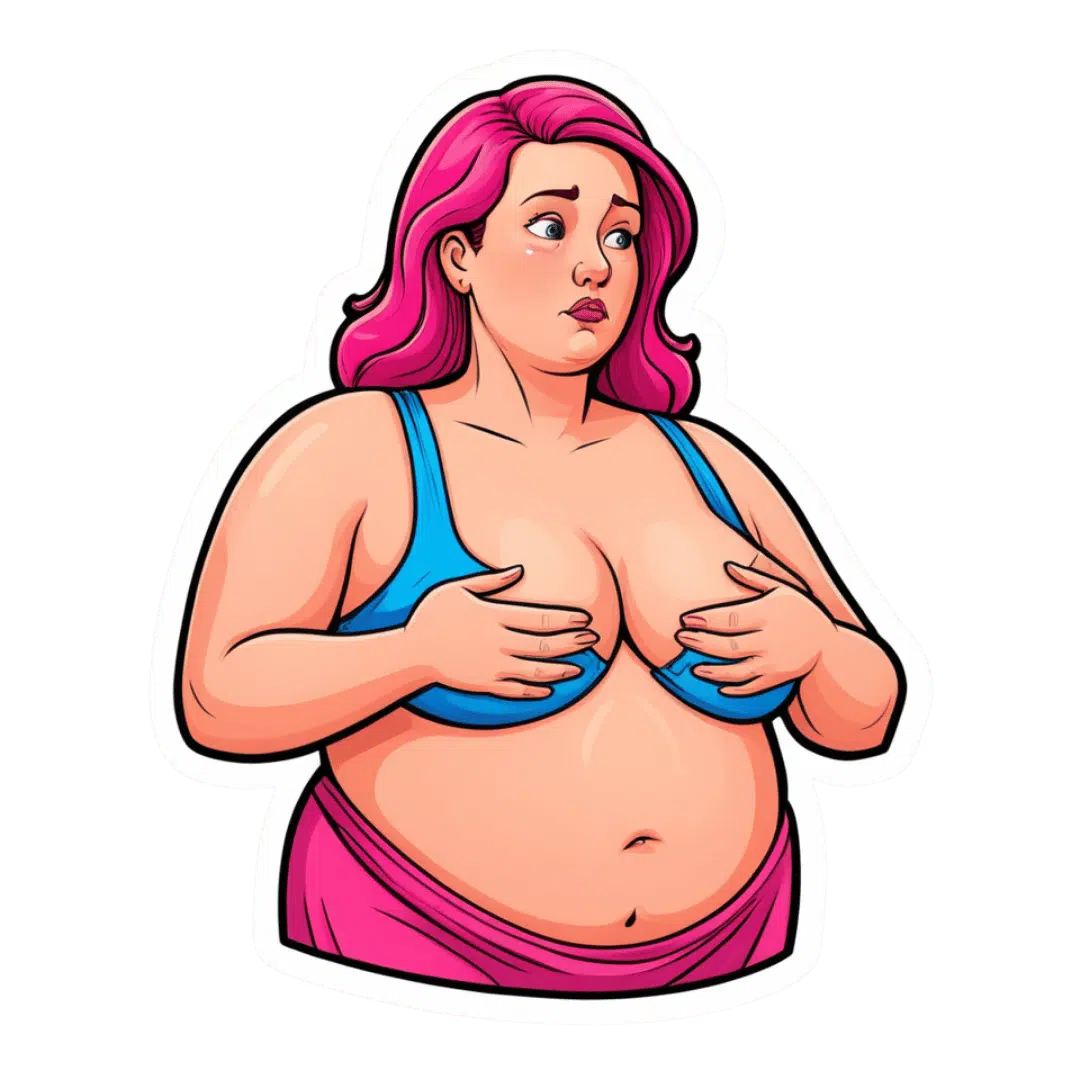
What Your Metabolism Says About How Aggressive Breast Cancer Is Likely To Be For You
10almonds is reader-supported. We may, at no cost to you, receive a portion of sales if you purchase a product through a link in this article.
We’ll get straight to it:
More than 120 million Americans have diabetes or pre-diabetes, and Triple-Negative Breast Cancer (TNBC)* is the most aggressive breast cancer form.
These may seem like unrelated statements, until we consider that patients with obesity-driven** diabetes have much worse TNBC outcomes.
*The “triple-negative” refers to:
- the cancer cells don’t have estrogen receptors
- the cancer cells don’t have progesterone receptors
- the cancer cells don’t make the protein HER2, or at least not in clinically relevant amounts.
**with regard to “obesity-driven”, that is what it is called, and the presence of excess fat does play an important role as we will see, but the fundamental culprit is insulin resistance, as we will also see.
The connection
Superficially, the connection between obesity-driven diabetes and worse TNBC outcomes could be put down to “a person who is already unhealthy will generally fare worse in most health things than an otherwise healthy person”. And, in and of itself, that’s a fair point. Comorbidities certainly do tend to flock together and make each other worse.
On the flipside, this does also mean that the more points of good health we have in our favor, the greater our chances of faring better if something (such as a cancer) does strike us regardless. So, there’s a fair motivation to always keep on top of all aspects of health, so far as reasonably possible.
However, there’s more to it than that.
Dr. Naomi Ko et al., a team of researchers at Boston University, found that diabetes alters breast cancer biology, making TNBC more aggressive and increasing the risk of brain metastasis (i.e., the cancer spreading to the brain).
Specifically, exosomes from fat cells carry microRNAs that worsen TNBC behavior, enhancing the cancer’s:
- cell growth
- movement
- survival under stress
- brain colonization
This also means that certain microRNA patterns predict breast cancer progression and/or survival.
You can find the paper itself here:
Insulin Resistance Increases TNBC Aggressiveness and Brain Metastasis via Adipocyte-derived Exosomes
Why this matters
The researchers argue that their findings suggest the need for special monitoring and treatment for TNBC patients with metabolic disorders like diabetes, and that treating underlying conditions (such as diabetes) alongside cancer is likely to improve outcomes.
On an individual level rather than systemic (assuming you, dear reader, to be a private individual who is not, for example, in charge of health policy for a region, or something like that), what this means is:
We must avoid carrying too much excess fat yes, and/but we must also particularly focus on avoiding/reversing insulin resistance, which can be a silent killer even without excess adiposity, because the noticeable signs and symptoms (including blood sugar irregularities) occur only well into insulin resistance, when the poor overworked pancreas can no longer crank out enough insulin to keep things ticking over.
With that in mind, do check out in particular the two following articles:
How To Lose Weight (Healthily!) ← if applicable. If on the other hand you’re already in the “healthy” body fat percentage range of 20–25% for women or 15–20% for men, then losing what fat you have will not be beneficial, and may even be harmful, depending on other factors.
How To Avoid & Reverse Insulin Resistance ← this one’s super-important!
And of course:
How To Triple Your Breast Cancer Survival Chances
And if you want to get really well-informed, then we highly recommend checking out:
The Smart Woman’s Guide to Breast Cancer – by Dr. Jenn Simmons
Take care!
Don’t Forget…
Did you arrive here from our newsletter? Don’t forget to return to the email to continue learning!

Recommended
Learn to Age Gracefully
Join the 98k+ American women taking control of their health & aging with our 100% free (and fun!) daily emails:
-
Bone on Bone – by Dr. Meredith Warner
10almonds is reader-supported. We may, at no cost to you, receive a portion of sales if you purchase a product through a link in this article.
What this is not: a book about one specific condition, injury, or surgery.
What this is: a guide to dealing with the common factors of many musculoskeletal conditions, inflammatory diseases, and their consequences.
Dr. Warner takes the opportunity to address the whole patient—presumably: the reader, though it could equally be a reader’s loved one, or even a reader’s patient, insofar as this book will probably be read by doctors also.
She takes an “inside-out and outside-in” approach; that is to say, addressing the problem from as many vectors as reasonably possible—including supplements, diet, dietary habits (things like intermittent fasting etc), exercise, and even sleep. And yes, she knows how difficult those latter items can be, and addresses them not merely with a “but it’s important” but also with practical advice.
As an orthopedic surgeon, she’s not a fan of surgery, and counsels the reader to avoid that if reasonably possible. She also talks about how many people in the US are encouraged to have MRI scans for financial reasons (as in, they can be profitable for the doctor/institution), and then any abnormality is used as justification for surgery, to backwards-justify the use of the MRI, even if the abnormality is not actually the cause of the pain.
Noteworthily, humans in general are a typically a pile of abnormalities in a trenchcoat. Our propensity to mutation has made us one of the most adaptable species on the planet, yet many would have us pretend that the insides of people look like they do in textbooks, or else are wrong. The reality is not so, and Dr. Warner rightly shows this for what it is.
Bottom line: if you or a loved one are suffering from, or at risk of, musculoskeletal and/or inflammatory conditions, this is a top-tier book for having a much easier time of it.
Share This Post
-
How To Fix & Prevent Bunions Without Surgery!
10almonds is reader-supported. We may, at no cost to you, receive a portion of sales if you purchase a product through a link in this article.
Will Harlow, the over-50s specialist physio, shows us how:
Healthy feet from the inside
First, what a bunion is: a bunion is a deformity of the first metatarsophalangeal joint where your big toe drifts inwards towards your other toes, creating a bony lump on the side of your foot that can become painful, stiff, arthritic, and irritated by shoes.
As for what causes bunions: genetics can increase your risk, but tight footwear and poor foot and leg mechanics are the main modifiable causes. So, with this in mind, do wear shoes with a wide toe box and a soft upper material, so that your toes aren’t compressed together; narrow dress shoes and high heels can worsen bunions by forcing your toes inward, so be sparing in your use of those.
Massage can help, specifically:
- Massage between your toes: massage the gap between your big toe and second toe, to loosen the dorsal interossei muscles, which can otherwise contribute to your toe drifting inwards; press firmly into the soft tissue for about 5 minutes daily.
- Massage under the ball of your foot: massage the soft tissue beneath the ball of your foot, to loosen the adductor hallucis muscle, which pulls your big toe inwards; press deeply, but avoid excessive pressure directly on the bones for this one.
Strengthening exercises can also help:
- Big toe strengthening exercise: put a finger between your big toe and second toe, pull your big toe outwards, then try to hold it there using your foot muscles before letting it return slowly; this mobilizes the joint and strengthens the abductor hallucis muscle, which opposes the bunion position.
- Hip strengthening exercise: do clamshell exercises by lying on your side with your knees bent, keeping your heels together, and lifting your top knee without rolling your hips backwards; this strengthens your hip abductors and reduces inward collapse of your leg and foot.
- Arch strengthening exercise: do standing inversion exercises with a resistance band around your calves, by lifting your arches while keeping your feet on the ground; this strengthens your tibialis posterior muscle and helps prevent excessive foot pronation that stresses the bunion area.
For more on all of this plus visual demonstrations as appropriate, enjoy:
Click Here If The Embedded Video Doesn’t Load Automatically!
Want to learn more?
You might also like:
The Foot Book – by Dr. Todd Brennan & Dr. Leslie Johnston
Take care!
Share This Post
-
Is it OK to sit on public toilet seats?
10almonds is reader-supported. We may, at no cost to you, receive a portion of sales if you purchase a product through a link in this article.
If you’re a parent or have a chronic health condition that needs quick or frequent trips to the bathroom, you’ve probably mapped out the half-decent public toilets in your area.
But sometimes, you don’t have a choice and have to use a toilet that looks like it hasn’t been cleaned in weeks. Do you brave it and sit on the seat?
What if it looks relatively clean: do you still worry that sitting on the seat could make you sick?
What’s in a public toilet?
Healthy adults produce more than a litre of urine and more than 100 grams of poo daily. Everybody sheds bacteria and viruses in faeces (poo) and urine, and some of this ends up in the toilet.
Some people, especially those with diarrhoea, may shed more harmful microbes (bacteria and viruses) when they use the toilet.
Public toilets can be a “microbial soup”, especially when many people use them and cleaning isn’t frequent as it should be.
What germs are found on toilet seats?
Many types of microbes have been found on toilet seats and surrounding areas. These include:
- bacteria from the gut, such as E. coli, Klebsiella, Enterococcus, and viruses such as norovirus and rotavirus. These can cause gastroenteritis, with bouts of vomiting and diarrhoea
- bacteria from the skin, including Staphylococcus aureus and even multi-drug resistant S.aureus and other bacteria such as pseudomonas and acinetobacter. These can cause infections
- eggs from parasites (worms) that are carried in poo, and single-celled organisms such as protozoa. These can cause abdominal pain.
There’s also something called biofilm, a mix of germs that builds up under toilet rims and on surfaces.
Are toilet seats the dirtiest part?
No. A recent study showed public toilet seats often have fewer microbes than other locations in public toilets, such as door handles, faucet knobs and toilet flush levers. These parts are touched a lot and often with unwashed hands.
Public toilets in busy places are used hundreds or even thousands of times each week. Some are cleaned often, but others (such as those in parks or bus stops) may only be cleaned once a day or much less, so germs can build up quickly. The red flags that a toilet hasn’t been cleaned are the smell of urine, soiled floors and what is obvious to your eyes.
However, the biggest problem isn’t just sitting: it’s what happens when toilets are flushed. When you flush without a lid, a “toilet plume” shoots tiny droplets into the air. These droplets can contain bacteria and viruses from the toilet bowl and travel up to 2 metres. https://www.youtube.com/embed/1Tg7i66GGMI?wmode=transparent&start=0 Here’s what the toilet plume looks like.
Hand dryers blowing air can also spread germs if people don’t wash properly. As well as drying your hands, you might be blowing germs all over yourself, others and the bathroom.
How can germs spread?
You can pick up germs from public toilets in several ways:
- skin contact. Sitting on a dirty seat or touching handles spreads bacteria. Healthy skin is a good barrier, but cuts or scrapes can allow germs to enter
- touching your face. After using the toilet, if you touch your eyes, mouth, or food before washing your hands, germs can get inside your body
- breathing them in. In small or crowded bathrooms, you can breathe in tiny particles from toilet plumes or hand dryers
- toilet water splash. Germs can stay in the water even after several flushes.
What can you do to stay safe?
Here are some easy ways to protect yourself:
- use toilet seat covers or place toilet paper on the seat before sitting
- if the toilet has a lid, wipe it before use with an alcohol wipe and close it before flushing to limit toilet plume exposure. (But note, this doesn’t fully stop the spread)
- wash your hands properly for at least 20 seconds using soap and water
- carry hand sanitiser or antibacterial wipes to clean your hands afterwards if there isn’t any soap
- avoid hand dryers, if you can, as they can spread germs. Use paper towels instead
- sanitise your phone regularly and don’t use it in toilet. Phones often pick up and carry bacteria, especially if you use them in the bathroom
- clean baby changing areas before and after use, and always wash or sanitise your hands.
So is it safe to sit on public toilet seats?
For most healthy people, yes – sitting on a public toilet seat is low-risk. But you can wipe it with an alcohol wipe, or use a toilet seat cover, for peace of mind.
Most infections don’t come from the seat itself, but from dirty hands, door handles, toilet plumes and phones used in bathrooms.
Instead of worrying about sitting, focus on good hygiene. That means washing your hands, opting for paper towel rather than dryers, cleaning the seat if needed, and keeping your phone clean.
And please, don’t hover over the toilet. This tenses the pelvic floor, making it difficult to completely empty the bladder. And you might accidentally spray your bodily fluids.
Lotti Tajouri, Associate Professor, Genomics and Molecular Biology; Biomedical Sciences, Bond University
This article is republished from The Conversation under a Creative Commons license. Read the original article.
Share This Post
Related Posts
-
Metformin For Weight-Loss & More
10almonds is reader-supported. We may, at no cost to you, receive a portion of sales if you purchase a product through a link in this article.
Metformin Without Diabetes?
Metformin is a diabetes drug; it works by:
- decreasing glucose absorption from the gut
- decreasing glucose production in the liver
- increasing insulin sensitivity
It doesn’t change how much insulin is secreted, and is unlikely to cause hypoglycemia, making it relatively safe as diabetes drugs go.
It’s a biguanide drug, and/but so far as science knows (so far), its mechanism of action is unique (i.e. no other drug works the same way that metformin does).
Today we’ll examine its off-label uses and see what the science says!
A note on terms: “off-label” = when a drug is prescribed to treat something other than the main purpose(s) for which the drug was approved.
Other examples include modafinil against depression, and beta-blockers against anxiety.
Why take it if not diabetic?
There are many reasons people take it, including just general health and life extension:
However, its use was originally expanded (still “off-label”, but widely prescribed) past “just for diabetes” when it showed efficacy in treating pre-diabetes. Here for example is a longitudinal study that found metformin use performed similarly to lifestyle interventions (e.g. diet, exercise, etc). In their words:
❝ Lifestyle intervention or metformin significantly reduced diabetes development over 15 years. There were no overall differences in the aggregate microvascular outcome between treatment groups❞
But, it seems it does more, as this more recent review found:
❝Long-term weight loss was also seen in both [metformin and intensive lifestyle intervention] groups, with better maintenance under metformin.
Subgroup analyses from the DPP/DPPOS have shed important light on the actions of metformin, including a greater effect in women with prior gestational diabetes, and a reduction in coronary artery calcium in men that might suggest a cardioprotective effect.
Long-term diabetes prevention with metformin is feasible and is supported in influential guidelines for selected groups of subjects.❞
Source: Metformin for diabetes prevention: update of the evidence base
We were wondering about that cardioprotective effect, so…
Cardioprotective effect
In short, another review (published a few months after the above one) confirmed the previous findings, and also added:
❝Patients with BMI > 35 showed an association between metformin use and lower incidence of CVD, including African Americans older than age 65. The data suggest that morbidly obese patients with prediabetes may benefit from the use of metformin as recommended by the ADA.❞
We wondered about the weight loss implications of this, and…
For weight loss
The short version is, it works:
- Effectiveness of metformin on weight loss in non-diabetic individuals with obesity
- Metformin for weight reduction in non-diabetic patients: a systematic review and meta-analysis
- Metformin induces weight loss associated with gut microbiota alteration in non-diabetic obese women
…and many many more where those came from. As a point of interest, it has also been compared and contrasted to GLP-1 agonists.
Compared/contrasted with GLP-1 agonists
It’s not quite as effective for weight loss, and/but it’s a lot cheaper, is tablets rather than injections, has fewer side effects (for most people), and doesn’t result in dramatic yoyo-ing if there’s an interruption to taking it:
Or if you prefer a reader-friendly pop-science version:
Ozempic vs Metformin: Comparing The Two Diabetes Medications
Is it safe?
For most people yes, but there are a stack of contraindications, so it’s best to speak with your doctor. However, particular things to be aware of include:
- Usually contraindicated if you have kidney problems of any kind
- Usually contraindicated if you have liver problems of any kind
- May be contraindicated if you have issues with B12 levels
See also: Metformin: Is it a drug for all reasons and diseases?
Where can I get it?
As it’s a prescription-controlled drug, we can’t give you a handy Amazon link for this one.
However, many physicians are willing to prescribe it for off-label use (i.e., for reasons other than diabetes), so speak with yours (telehealth options may also be available).
If you do plan to speak with your doctor and you’re not sure they’ll be agreeable, you might want to get this paper and print it to take it with you:
Off-label indications of Metformin – Review of Literature
Take care!
Don’t Forget…
Did you arrive here from our newsletter? Don’t forget to return to the email to continue learning!
Learn to Age Gracefully
Join the 98k+ American women taking control of their health & aging with our 100% free (and fun!) daily emails:
-
Coenzyme Q10 From Foods & Supplements
10almonds is reader-supported. We may, at no cost to you, receive a portion of sales if you purchase a product through a link in this article.
Coenzyme Q10 and the difference it makes
Coenzyme Q10, often abbreviated to CoQ10, is a popular supplement, and is often one of the more expensive supplements that’s commonly found on supermarket shelves as opposed to having to go to more specialist stores or looking online.
What is it?
It’s a compound naturally made in the human body and stored in mitochondria. Now, everyone remembers the main job of mitochondria (producing energy), but they also protect cells from oxidative stress, among other things. In other words, aging.
Like many things, CoQ10 production slows as we age. So after a certain age, often around 45 but lifestyle factors can push it either way, it can start to make sense to supplement.
Does it work?
The short answer is “yes”, though we’ll do a quick breakdown of some main benefits, and studies for such, before moving on.
First, do bear in mind that CoQ10 comes in two main forms, ubiquinol and ubiquinone.
Ubiquinol is much more easily-used by the body, so that’s the one you want. Here be science:
What is it good for?
Benefits include:
- Against aging
- Against skin cancer
- Against breast cancer
- Against prostate cancer
- Against heart failure
- Against obesity
- Against diabetes
- Against Alzheimer’s
- Against Parkinson’s
Can we get it from foods?
Yes, and it’s equally well-absorbed through foods or supplementation, so feel free to go with whichever is more convenient for you.
Read: Intestinal absorption of coenzyme Q10 administered in a meal or as capsules to healthy subjects
If you do want to get it from food, you can get it from many places:
- Organ meats: the top source, though many don’t want to eat them, either because they don’t like them or some of us just don’t eat meat. If you do, though, top choices include the heart, liver, and kidneys.
- Fatty fish: sardines are up top, along with mackerel, herring, and trout
- Vegetables: leafy greens, and cruciferous vegetables e.g. cauliflower, broccoli, sprouts
- Legumes: for example soy, lentils, peanuts
- Nuts and seeds: pistachios come up top; sesame seeds are great too
- Fruit: strawberries come up top; oranges are great too
If supplementing, how much is good?
Most studies have used doses in the 100mg–200mg (per day) range.
However, it’s also been found to be safe at 1200mg (per day), for example in this high-quality study that found that higher doses resulted in greater benefit, in patients with early Parkinson’s Disease:
Effects of coenzyme Q10 in early Parkinson disease: evidence of slowing of the functional decline
Wondering where you can get it?
We don’t sell it (or anything else for that matter), and you can probably find it in your local supermarket or health food store. However, if you’d like to buy it online, here’s an example product on Amazon
Don’t Forget…
Did you arrive here from our newsletter? Don’t forget to return to the email to continue learning!
Learn to Age Gracefully
Join the 98k+ American women taking control of their health & aging with our 100% free (and fun!) daily emails:
-
Ready to Run – by Kelly Starrett
10almonds is reader-supported. We may, at no cost to you, receive a portion of sales if you purchase a product through a link in this article.
If you’d like to get into running, and think that maybe the barriers are too great, this is the book for you.
Kelly Starrett approaches running less from an “eye of the tiger” motivational approach, and more from a physiotherapy angle.
The first couple of chapters of the book are explanatory of his philosophy, the key component of which being:
Routine maintenance on your personal running machine (i.e., your body) can be and should be performed by you.
The second (and largest) part of the book is given to his “12 Standards of Maintenance for Running“. These range from neutral feet and flat shoes, to ankle, knee, and hip mobilization exercises, to good squatting technique, and more.
After that, we have photographs and explanations of maintenance exercises that are functional for running.
The fourth and final part of the book is about dealing with injuries or medical issues that you might have.
And if you think you’re too old for it? In Starrett’s own words:
❝Problems are going to keep coming. Each one is a gift wanting to be opened—some new area of performance you didn’t know you had, or some new efficiency to be gained. The 90- to 95-year-old division of the Masters Track and Field Nationals awaits. A Lifelong commitment to solving each problem that creeps up is the ticket.❞
In short: this is the book that can get you back out doing what you perhaps thought you’d left behind you, and/or open a whole new chapter in your life.
Don’t Forget…
Did you arrive here from our newsletter? Don’t forget to return to the email to continue learning!
Learn to Age Gracefully
Join the 98k+ American women taking control of their health & aging with our 100% free (and fun!) daily emails:


