

Doctors Warn of a Deadly Complication From Measles Outbreaks
10almonds is reader-supported. We may, at no cost to you, receive a portion of sales if you purchase a product through a link in this article.
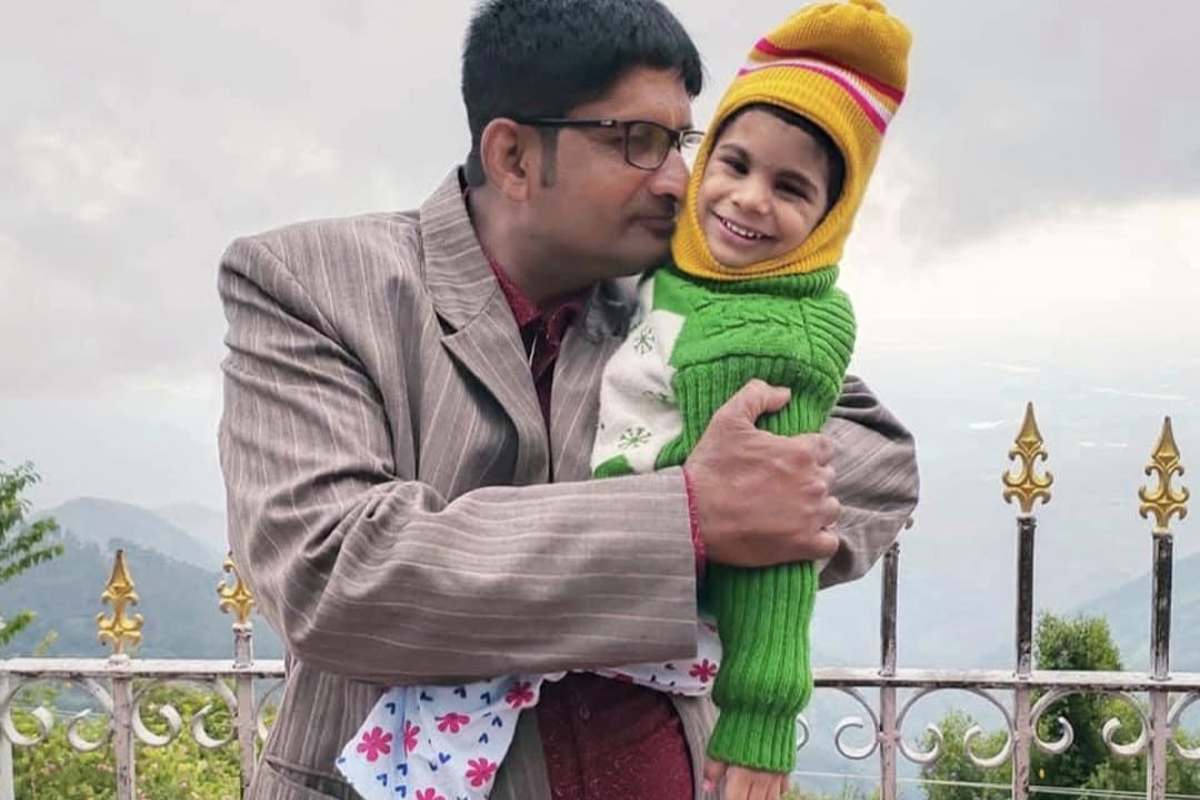
The first sign came when Deepanwita Dasgupta was 5 and started stumbling more while playing at her home in Bangalore in southern India. The girl was always up to something, so her parents figured extra bumps and bruises were just symptoms of an active childhood. Maybe, they thought, it was ill-fitting shoes.
Relatives described the unicorn-loving child as smart, affectionate, and occasionally rascally. Before she learned the alphabet, she had figured out how to find her favorite show, Blippi, on a phone. She was known to sneak butter from the fridge to enjoy a few finger licks.
But then her limbs started jerking. A spinal tap revealed measles in her cerebrospinal fluid. The virus she probably had as an infant had secretly made its way to her brain. Now 8 years old, Deepanwita is paralyzed, unable to talk.
Measles causes complications — ranging from diarrhea to death — in 3 in 10 infected people, according to the Infectious Diseases Society of America. Some are immediate, while others take weeks or months to appear. The one Deepanwita is experiencing, subacute sclerosing panencephalitis, or SSPE, typically takes years to rear its head.
“People think, ‘Oh, you know, if we get measles, then we’ll be fine, because I know my neighbor had it and they’re fine,’” said Yasmin Khakoo, who leads the national Child Neurology Society but spoke to KFF Health News in her capacity as a New York City doctor with expertise in neurologic conditions.
Measles, though, can be dangerous: A 7-year-old in South Carolina will have to relearn how to walk after enduring one of the more immediate complications, brain swelling. And every so often, the virus plants a ticking time bomb in the nervous system. A person can recover from measles and continue life as usual, no longer contagious and without any identifiable symptoms — sometimes for a decade or more — before problems appear. While some patients end up severely disabled for a while, Khakoo said, the condition is almost always fatal.
Before the advent of widespread and effective vaccines, the complication occurred enough in the U.S. that in the 1960s a doctor created a national registry of SSPE patients. Researchers now estimate about 1 in 10,000 people who get measles will develop SSPE, but the risk is significantly higher for those who contract measles before age 5. Populous nations where the virus is endemic, including India, see cases routinely.
Now, doctors and researchers fear that as vaccination rates drop and measles spreads in the U.S., cases of this debilitating complication will also rise here. Since the start of 2025, the Centers for Disease Control and Prevention has recorded over 3,500 measles cases — more than in the entire preceding decade — mostly people who were unvaccinated. Many were children. Last year, Connecticut doctors diagnosed a 6-year-old with SSPE, and in California, a school-age child who’d had measles as an infant died of it.
“We are likely to see SSPE cases going forward, especially if we don’t get this under control,” said Adam Ratner, a member of the American Academy of Pediatrics’ Committee on Infectious Diseases and author of the book Booster Shots.
Concern about SSPE was great enough that in January, the Child Neurology Society published a video to educate U.S. clinicians about the condition, and doctors who have seen such cases are warning their peers.
“We don’t have a way of knowing who’s going to get it, and we don’t have a way of very effectively treating it,” said Aaron Nelson, a professor of neurology with the New York University Grossman School of Medicine. “The one best thing that we can do, ideally, is to prevent children from having to go through it in the first place.”
The recommended two-dose measles vaccine slashes an exposed person’s risk of getting the contagious virus from 90% to 3% — and thus reduces the chance of SSPE. The vaccines carry small risks of febrile seizure and a bleeding condition, but measles itself has a higher risk of causing both.
Cases in the U.S.
A 2017 study of California children who developed SSPE after a measles outbreak there years ago determined that 1 case is diagnosed for about every 1,400 known cases of measles in children under age 5, and 1 for every 600 infected babies.
The researchers also found that, over the years, doctors had missed some cases among patients who had died with undiagnosed neurologic illness.
The possibility that future cases could go undiagnosed spurred Nava Yeganeh and her colleagues to publish a news release in September when a Los Angeles County child died of SSPE.
“We’ve had very few cases of measles in the last 25 years in this country,” said Yeganeh, who is the medical director with the Vaccine Preventable Disease Control Program at the Los Angeles County public health department and has had two patients with SSPE. “Unfortunately, that’s changing, and so we wanted to make sure that everyone was aware of this long-term complication.”
The California child who died had gotten measles as an infant, Yeganeh said, before the child could receive the vaccine. Measles is highly contagious, so at least 95% of the population must be immune to it to protect vulnerable people — including babies too young to vaccinate and people who are immunocompromised — from infection.
“This is an example of someone who did everything right, wanted to protect their child against this infection, and unfortunately ended up losing their child because we didn’t have herd immunity for them,” Yeganeh said.
Shortly after Yeganeh’s group published the news release in California, Nelson was working to get the word out, too.
He had recently seen a 5-year-old whose family had traveled to the U.S. for medical care after the child started stumbling, jerking, hallucinating about bugs and animals, and having seizures. The child had contracted measles as an infant and had been too young to be vaccinated. Nelson diagnosed the child with SSPE.
“Imagine that: Having a child who is healthy and happy, moving to talking less and less, eventually not able to walk,” Nelson said. “It’s a very sad thing.”
He thought he would encounter the condition only in medical school textbooks, as a relic of the past. Instead, in October he found himself presenting the case at the Child Neurology Society’s national conference and participating in the society’s video about the condition. “I’ve now seen something I shouldn’t have ideally seen ever in my career,” he said.
Warning Signs From India
Globally, the number of measles outbreaks has increased in recent years, and physicians in places including the U.K. and Italy have recently seen clusters of SSPE.
The high human cost of measles’ spread is especially evident in India. While total cases aren’t tracked, about 200 families caring for people with SSPE, including Deepanwita’s, are in a single chat group in the Bangalore area.
In New Delhi, Sheffali Gulati studies SSPE and sees about 10 new patients a year with the condition, what she calls the “delayed echo” of measles outbreaks. The youngest she has seen was 3 years old.
“The ages are coming down, and a death or a vegetative state can develop as soon as in six months to five years of onset,” said Gulati, who leads the pediatric neurology program at the All India Institute of Medical Sciences and until recently led India’s Association of Child Neurology.
Gulati hasn’t found any treatments that reverse SSPE’s course, only some that slow its progress. She’s found herself counseling parents: It’s catastrophic, it’s not their fault, and they can do nothing but accept it.
Deepanwita’s relatives try to find joy where they can. They think they noticed the girl smiling when her favorite cousin called recently. Anindita Dasgupta, her mother, said Deepanwita moves her hands and feet on her own and sometimes turns her head, especially when her father enters the room. The girl communicates with her parents through her eyes and a few sounds.
But it’s far from where she was in 2022: At a cousin’s birthday, a few months before noticeable symptoms started, Deepanwita started the birthday song and sang the loudest.
At her own 8th-birthday gathering last year, Deepanwita, wearing a pink eyelet dress and a nasal tube, could only blink and move her eyes as she sat propped up before two cakes that she would not be able to eat. She can no longer swallow, so her mom dabbed a bit of icing on her tongue.
Research That Shouldn’t Be Needed
Roberto Cattaneo, a molecular biologist at the Mayo Clinic in Rochester, Minnesota, has been studying SSPE for years. He recently used postmortem brain tissue to map how the measles virus can spread from the frontal cortex to colonize the entire brain. Still, he said it’s a “black box” what exactly measles is doing in those dormant years between the initial infection and when the symptoms of neurologic damage crop up.
It’s possible the virus replicates in the brain that whole time, undetected, killing off neurons. But with so many neurons in the human brain — 10 times as many as people living on the planet — the brain may find a way to adjust, Cattaneo said, until finally it can’t anymore.
He’s applying for funding to continue research on the disease and possible treatments, though ultimately, he wishes he didn’t have to. The tools to obliterate the condition already exist.
“The problem could be solved with vaccination,” Cattaneo said. The U.S. should have no cases of SSPE, he said. “It’s just painful.”
KFF Health News is a national newsroom that produces in-depth journalism about health issues and is one of the core operating programs at KFF—an independent source of health policy research, polling, and journalism. Learn more about KFF.
This article first appeared on KFF Health News and is republished here under a Creative Commons Attribution-NonCommercial-NoDerivatives 4.0 International License.
Don’t Forget…
Did you arrive here from our newsletter? Don’t forget to return to the email to continue learning!
Recommended

Learn to Age Gracefully
Join the 98k+ American women taking control of their health & aging with our 100% free (and fun!) daily emails:
-
The Modern Art and Science of Mobility – by Aurélien Broussal-Derval
10almonds is reader-supported. We may, at no cost to you, receive a portion of sales if you purchase a product through a link in this article.
We’ve reviewed mobility books before, so what makes this one stand out?
We’ll be honest: the illustrations are lovely.
The science, the information, the exercises, the routines, the programs… All these things are excellent too, but these can be found in many a book.
What can’t usually be found is very beautiful (yet no less clear) watercolor paintings and charcoal sketches as anatomical illustrations.
There are photos too (also of high quality), but the artistry of the paintings and sketches is what makes the reader want to spend time perusing the books.
At least, that’s what this reviewer found! Because it’s all very well having access to a lot of information (and indeed, I read so much), but making it enjoyable increases the chances of rereading it much more often.
As for the rest of the content, the book’s information is divided in categories:
- Pain (what causes it, what it means, and how to manage it)
- Breathing (yes, a whole section devoted to this, and it is aligned heavily to posture also, as well as psychological state and the effect of stress on tension, inflammation, and more)
- Movement (this is mostly about kinds of movement and ranges of movement)
- Mobility (this is about aggregating movements as a fully mobile human)
So, each builds on from the previous because any pain needs addressing before anything else, breathing (and with it, posture) comes next, then we learn about movement, then we bring it all together for mobility.
Bottom line: this is a beautiful and comprehensive book that will make learning a joy
Click here to check out The Modern Art and Science of Mobility, and learn and thrive!
Share This Post
-
Sunflower Corn Burger
10almonds is reader-supported. We may, at no cost to you, receive a portion of sales if you purchase a product through a link in this article.
Burgers are rarely a health food, but in this case, everything in the patty is healthy, and it’s packed with protein, fiber, and healthy fats.
You will need
- 1 can chickpeas
- ¾ cup frozen corn
- ½ cup chopped fresh parsley
- ⅓ cup sunflower seeds
- ⅓ cup cornichon pickles
- ⅓ cup wholegrain bread crumbs (gluten-free, if desired/required)
- ¼ bulb garlic (or more if you want a stronger flavor)
- 1 tbsp extra virgin olive oil, plus more for frying
- 1 tbsp nutritional yeast (or 1 tsp yeast extract)
- 2 tsp ground cumin
- 2 tsp red pepper flakes
- 2 tsp black pepper, coarse ground
- 1 tsp Dijon mustard
- To serve: 4 burger buns; these are not usually healthy, so making your own is best, but if you don’t have the means/time, then getting similarly shaped wholegrain bread buns works just fine.
- Optional: your preferred burger toppings, e.g. greenery, red onion, tomato slices, avocado, jalapeños, whatever does it for you
Note: there is no need to add salt; there is enough already in the pickles.
Method
(we suggest you read everything at least once before doing anything)
1) Combine all the ingredients except the buns (and any optional toppings) in a food processor, pulsing a few times for a coarse texture (not a purée).
2) Shape the mixture into 4 burger patties, and let them chill in the fridge for at least 30 minutes.
3) Heat a skillet over a medium-high heat with some olive oil, and fry the burgers on both sides until they develop a nice golden crust; this will probably take about 4 minutes per side.
4) Assemble in the buns with any toppings you want, and serve:
Enjoy!
Want to learn more?
For those interested in some of the science of what we have going on today:
- Sunflower Seeds vs Pumpkin Seeds – Which is Healthier? ← pumpkin seeds have more micronutrients; sunflower seeds have more healthy fats; feel free to use either or both in this recipe
- What Omega-3 Fatty Acids Really Do For Us
- Level-Up Your Fiber Intake! (Without Difficulty Or Discomfort)
- Making Friends With Your Gut (You Can Thank Us Later)
- Our Top 5 Spices: How Much Is Enough For Benefits?
Take care!
Share This Post
-
The Common Meds That Make You More Likely To Die From A fall
10almonds is reader-supported. We may, at no cost to you, receive a portion of sales if you purchase a product through a link in this article.
A recent (published last month, at time of writing) US-specific paper on this topic begins with the words:
❝In 2023, more than 41 000 individuals older than 65 years died from falls. Among older adults, the number of deaths from falls is more than from breast or prostate cancer and is more than from car crashes, drug overdoses, and all other unintentional injuries combined. More importantly, the mortality rate for falls among older adults in the US has more than tripled during the past 30 years. In contrast, death rates due to falls decreased during the past 30 years in other high-income countries.❞
Let’s take a moment to look at that piece by piece:
“In 2023, more than 41 000 individuals older than 65 years died from falls”
To contextualize this, that’s a lot. That is significantly more people than were killed in the World Trade Center attack in 2001, for example.
“Among older adults, the number of deaths from falls is more than from breast or prostate cancer and is more than from car crashes, drug overdoses, and all other unintentional injuries combined”
This is interesting, because those are all things that a lot of people put a lot of effort into avoiding. We read carefully about what things might affect cancer risk, we do appropriate screenings, we have big national campaigns raising awareness about them, and the same for drink-driving, and let us not even get started on the War on Drugs™.
But how often do we see such attention being paid to reducing the number of deaths from falling?
“More importantly, the mortality rate for falls among older adults in the US has more than tripled during the past 30 years. In contrast, death rates due to falls decreased during the past 30 years in other high-income countries”
Thus, this is a US-specific problem. So, what gives?
Land of the FRIDs
The main reason, the paper argues, is fall-risk-increasing drugs (FRIDs).
This is a broad category, but the drugs found most culpable are those that affect the brain or balance, such as benzodiazepines, opioids, some antidepressants, gabapentin, certain heart drugs, some antihistamines, β-blockers, and anticholinergics, amongst many others.
There are also drugs that don’t increase fall risk per se, but do increase fall mortality, such as proton pump inhibitors, since they increase the risk of an injury during a fall.
You may be wondering: how do we know this is what’s to blame, and not other factors?
And the answer is: we can’t know for sure, but statistical analysis strongly points the finger on this one. And yes, sometimes such analyses can miss something really important; see for example:
Blind Spots: When Medicine Gets It Wrong, and What It Means for Our Health – by Dr. Marty Makary
But as this paper notes:
❝The surge in deaths from falls in the US reflects a new phenomenon. There is no reason to think that older adults today are much more likely to be physically frail, have dementia, have cluttered homes, or drink alcohol and use drugs than age-matched adults 30 years ago, and the percentage living alone has not changed much since 2000.
On the other hand, there is plenty of reason to believe that the surge in fall deaths may be tied to the soaring use of certain prescription drugs, which is a risk factor that, unlike most other factors, clinicians can readily modify.
Older adults in the US are heavily medicated. From 2017 to 2020, 90% of adults older than 65 years were taking prescription drugs, 43% were taking multiple prescription drugs, and 45% were taking prescription drugs that were potentially inappropriate.❞
You can read the paper in full, here: Risky Prescribing and the Epidemic of Deaths From Falls
And as for those potentially inappriopriate medications, check out our previous main feature on such:
Are You Taking PIMs? Getting Off The Overmedication Train
What more can we do?
You may be thinking “but all my medications are definitely necessary”, and you might well be right. So, what then?
For the answer, check out our Fall Special ← this is about how to not fall, and how to make it less likely you’ll be injured by a fall if you do
Take care!
Share This Post
Related Posts
-
Improving Women’s Health Across the Lifespan – by Dr. Michelle Tollefson et al.
10almonds is reader-supported. We may, at no cost to you, receive a portion of sales if you purchase a product through a link in this article.
We say “et al.”, because this hefty book (504 pages) is a compilation of contributions by about 60 authors, of whom, 100% are doctors and about 90% are women.
As one might expect from a book with many small self-contained chapters by such a lot of doctors, the content is very diverse, though the style is consistent throughout, likely due to the authors working from a style sheet, plus the work of the editorial team.
About that content: the focus here is lifestyle medicine, and while much of the advice will go for men too (most people are unlikely to go wrong with “eat more fruits and vegetables and get better sleep” etc), anything more detailed than that (of which there’s a lot) is focussed on women. Hence, we get chapters on optimal nutrition for women, physical activity for women, sleep and women’s health, etc, as well as topics that can affect everyone but disproportionately affect women—ranging from autoimmune diseases to social burdens that affect health in measurable ways. There’s also, as you might expect, plenty about sexual health, pregnancy-related health, menopausal health, and so forth.
The strength of this book is really in its diversity; it’s very much a case of “60 heads are better than one”, and as such, we’re pretty much getting 60 books for the price of one here, as each author brings what they are most specialized in.
Bottom line: if you are a woman and/or love a woman, this book is packed with information that will be of interest and applicable use.
Click here to check out Improving Women’s Health Across The Lifespan, and do just that!
Don’t Forget…
Did you arrive here from our newsletter? Don’t forget to return to the email to continue learning!
Learn to Age Gracefully
Join the 98k+ American women taking control of their health & aging with our 100% free (and fun!) daily emails:
-
Fixing Fascia
10almonds is reader-supported. We may, at no cost to you, receive a portion of sales if you purchase a product through a link in this article.
Fascia: Why (And How) You Should Take Care Of Yours
Fascia is the web-like layer of connective tissue that divides your muscles and organs from each other. It simultaneously holds some stuff in place, and allows other parts to glide over each other with minimal friction.
At least, that’s what it’s supposed to do.
Like any body part, it can go wrong. More on this later. But first…
A quick note on terms
It may seem like sometimes people say “myofascial” because it sounds fancier, but it does actually have a specific meaning too:
- “Fascia” is what we just described above
- “Myofascial” means “of or relating to muscles and fascia”
For example, “myofascial release” means “stopping the fascia from sticking to the muscle where it shouldn’t” and “myofascial pain” means “pain that has to do with the muscles and fascia”. See also:
Myofascial vs Fascia: When To Use Each One? What To Consider
Why fascia is so ignored
For millennia, it was mostly disregarded as a “neither this nor that” tissue that just happens to be in the body. We didn’t pay attention to it, just like we mostly don’t pay attention to the air around us.
But, much like the air around us, we sure pay attention when something goes wrong with it!
However, even in more recent years, we’ve been held back until quite new developments like musculoskeletal ultrasound that could show us problems with the fascia.
What can go wrong
It’s supposed to be strong, thin, supple, and slippery. It holds on in the necessary places like a spiderweb, but for the most part, it is evolved for minimum friction.
Some things can cause it to thicken and become sticky in the wrong places. Things such as:
- Physical trauma, e.g. an injury or surgery—but we repeat ourselves, because a surgery is an injury! It’s a (usually) necessary injury, but an injury nonetheless.
- Compensation for pain. If a body part hurts for some reason, and your posture changes to accommodate that, doing so can mess up your fascia, and cause you different problems somewhere else entirely.
- This is not witchcraft; think of how, when using a corded vacuum cleaner, sometimes the cord can get snagged on something in the next room and we nearly break something because we expected it to just come with us and it didn’t? It’s like that.
- Repetitive movements (repetitive strain injury is partly a myofascial issue)
- Not enough movement: when it comes to range of motion, it’s “use it or lose it”.
- The human body tries its best to be as efficient as possible for us! So eventually it will go “Hey, I notice you never move more than 30º in this direction, so I’m going to stop making fascia that allows you to go past that point, and I’ll just dump the materials here instead”
“I’ll just dump the materials here instead” is also part of the problem—it creates what we colloquially call “knots”, which are not so much part of the muscle as the fascia that covers it. That’s an actual physical sticky lumpy bit.
What to do about it
Firstly, avoid the above things! But, if for whatever reason something has gone wrong and you now have sticky lumpy fascia that doesn’t let you move the way you’d like (if you have any mobility/flexibility issues that aren’t for another known reason, then this is usually it), there are things can be done:
- Heat—is definitely not a cure-all, but it’s a good first step before doing the other things. A heating pad or a warm bath are great.
- Here’s an example of a neck+back+shoulders heating pad; you can get them for different body parts, or just use an electric blanket!
- Massage—ideally, by someone else who knows what they are doing. Self-massage is possible, as is teaching oneself (there are plenty of video tutorials available), but skilled professional therapeutic myofascial release massage is the gold standard.
- Foam rollers are a great no-skill way to get going with self-massage, whether because that’s what’s available to you, or because you just want something you can do between sessions. Here’s an example of the kind we mean.
- Acupuncture—triggering localized muscular relaxation, an important part of myofascial release, is something acupuncture is good at.
- See also: Pinpointing The Usefulness Of Acupuncture ← noteworthily, the strongest criticism of acupuncture for pain relief is that it performs only slightly better than sham acupuncture, but taken in practical terms, all that really means is “sticking little needles in does work, even if not necessarily by the mechanism acupuncturists believe”
- Calisthenics—Pilates, yoga, and other forms of body movement training can help gradually get one’s fascia to where and how it’s supposed to be.
- This is that “use it or lose it” bodily efficiency we talked about!
Remember, the body is always rebuilding itself. It never stops, until you die. So on any given day, you get to choose whether it rebuilds itself a little bit worse or a little bit better.
Take care!
Don’t Forget…
Did you arrive here from our newsletter? Don’t forget to return to the email to continue learning!
Learn to Age Gracefully
Join the 98k+ American women taking control of their health & aging with our 100% free (and fun!) daily emails:
-
The Blood Sugar Freedom Formula − by Matt Vande Vegte
10almonds is reader-supported. We may, at no cost to you, receive a portion of sales if you purchase a product through a link in this article.
It’s often the case that well-educated person who has lived with a chronic disease for many years ends up knowing more about it than general practice doctors, and sometimes more than some specialists, depending on the disease.
This author is such a person. He’s a physiotherapist by profession, an endurance athlete by passion, and a Type 1 Diabetic by chance.
Most books about diabetes out there are for the much more common type 2 diabetes, and while much of the advice carries over (things improve/reduce insulin sensitivity are still going to be good/bad, respectively), a lot does not, because unlike in type 2 diabetes, your pancreas is not making meaningful amounts of insulin (and that’s always going to be a limitation that no dietary change is going to get around), and you have an active autoimmune disease, which as such, has a lot of impact on other aspects of health.
This book details all these things and more, and also discusses what he has found works, based on a foundation of research and thereafter, on personal trial-and-improvement (or sometimes just plain trial-and-error).
The style is a bit hypey, and he does try earnestly to persuade the reader to sign up for his special course and things like that, but there’s more than enough practical information in the book already to make it worthwhile reading.
Bottom line: if you and/or a loved one has Type 1 Diabetes, this is a great book to read!
Click here to check out The Blood Sugar Freedom Formula, and live more easily!
Don’t Forget…
Did you arrive here from our newsletter? Don’t forget to return to the email to continue learning!
Learn to Age Gracefully
Join the 98k+ American women taking control of their health & aging with our 100% free (and fun!) daily emails:


