
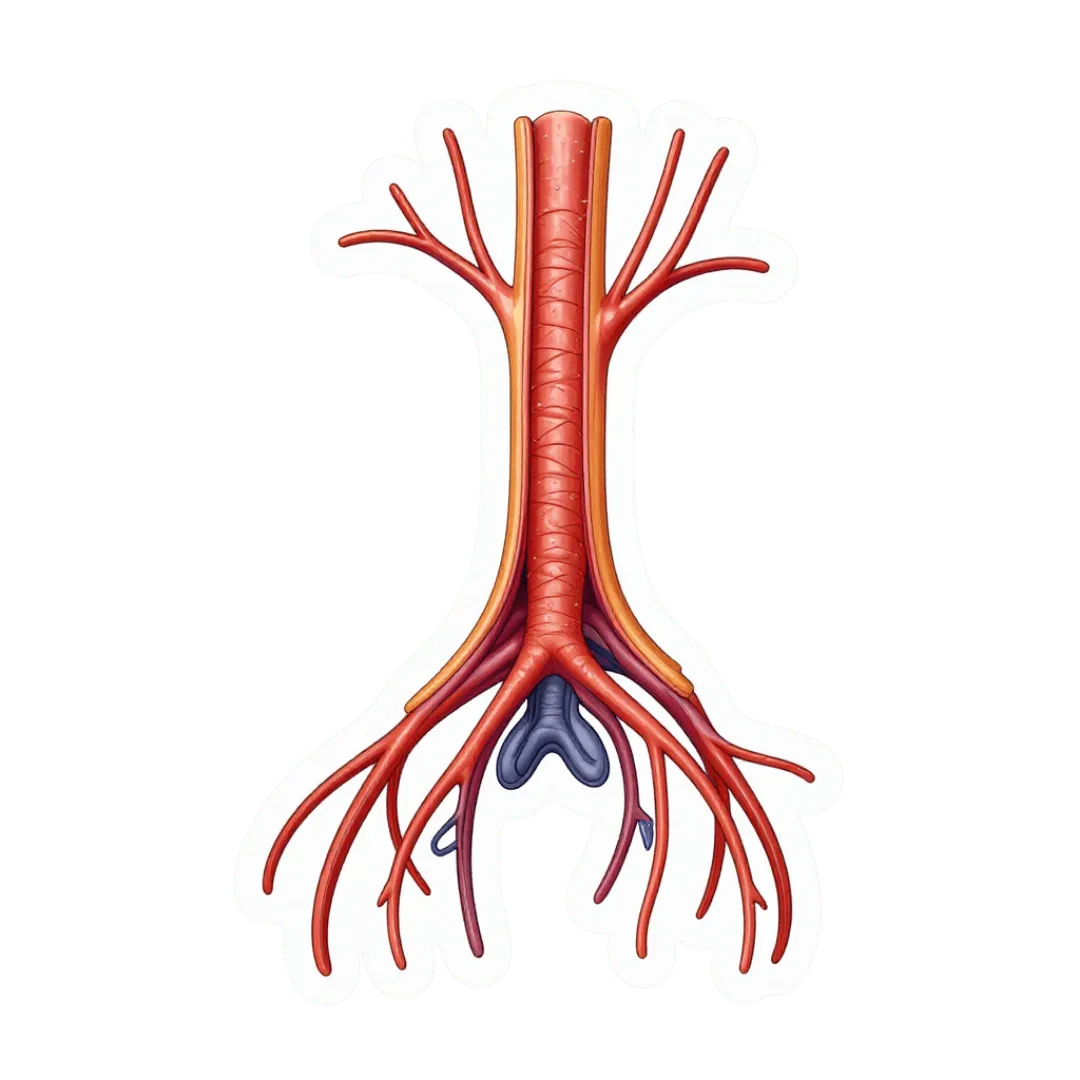
How Useful Is The Vagus Nerve, Really?
10almonds is reader-supported. We may, at no cost to you, receive a portion of sales if you purchase a product through a link in this article.
It’s Q&A Day at 10almonds!
Have a question or a request? We love to hear from you!
In cases where we’ve already covered something, we might link to what we wrote before, but will always be happy to revisit any of our topics again in the future too—there’s always more to say!
No question/request too big or small 😎
❝I keep seeing more and more things that vagus nerve stimulation is supposed to improve but I suspect not everything can really be just hummed away, so… How much is science, and how much is more in the realm of healing crystals?❞
The short answer is that there’s a lot of both!
For example, we’ve written before about how vagus nerve stimulation has been researched and found potentially helpful for managing:
- Depression, inflammation, and heart disease
- Diabetes and glycemic issues in general
- Multiple sclerosis and autoimmune disease in general
- Alzheimer’s disease and dementia in general
- Rheumatoid arthritis (we already mentioned inflammation and autoimmune diseases, but this is an interesting paper so we included it)
You can read about these things and more, here: The Vagus Nerve (And How You Can Make Use Of It)
However, at the same time, the vagus nerve cannot necessarily be used to “reset” everything from your anxiety to your reputation at the local pot-luck.
The McGill Office for Science & Society described it thus:
❝The vagus nerve is a great example of what I would call the boogeyman/panacea myth: everything wrong with you, they claim, is due to the vagus nerve, and every cure passes through the vagus nerve as well. In an ever-complex world, believing a simple story of good and evil can bring clarity, but this lucidity is a mirage.
What the wellness community recommends for stimulating the vagus nerve—eye movements, meditation, massage, cold-water immersion, and singing and humming—, if it works, is likely to be beneficial through a very simple concept: relaxation. Taking a moment to yourself to pause a stressful situation and focus on your breathing can, indeed, temporarily help with feeling unwell. The vagus nerve trappings are just scientific dressing, meant to transform common sense into a cutting-edge, all-natural body hack.
Faced with so much vagal hype, the best response is to rouse ourselves from our parasympathetic state and fight the temptation of easy answers with a healthy dose of skepticism.❞
Read in full: Resetting the Hype Around the Vagus Nerve
There are also, hitting the market these days, a plethora of devices to do the vagus nerve stimulation for you, rather than using massaging or humming techniques. Some have already been given FDA approval, but only for certain uses (including: epilepsy, migraine, depression, rheumatoid arthritis, stroke rehab), though wellness practitioners of various kinds may recommend them for countless “off-label” purposes.
However, research in such technology is slow and patchy, because studies use widely different stimulation settings (e.g. frequency, intensity, waveform, and location) which makes it difficult to compare results across devices or from one RCT to another.
You read more about this here: Using the vagus nerve to treat disease: Review maps today’s science, points to tomorrow’s therapies
And also here: Ethical Issues in Vagus Nerve Stimulation and Deep Brain Stimulation
Want to learn more?
For a much more comprehensive exploration of the topic than we have room for here, you might consider:
Accessing the Healing Power of the Vagus Nerve – by Dr. Stanley Rosenberg ← this is a clear, easy, practical guide. Some of the benefits claimed in here are reaching a bit, so do be aware of that, but on the other hand we’d encourage you to not write the rest of the book off because of it. It’d be a bit like someone extolling the (genuine) virtues of kale and adding in a few things that might be true but science doesn’t support—the overly bold extra claims don’t mean that kale isn’t healthy and doesn’t have the other actually-proven benefits.
The Polyvagal Theory – by Dr. Stephen Porges ← this on the other hand is for if you want a really deep understanding of the topic, and are not afraid of dense, technical language (don’t worry, new terms/ideas are explained the book progresses, so a layperson can benefit just fine if you read it cover to cover, it simply means you might not be able to open it at a random page and immediately understand what’s going on).
Enjoy!
Don’t Forget…
Did you arrive here from our newsletter? Don’t forget to return to the email to continue learning!
Recommended

Learn to Age Gracefully
Join the 98k+ American women taking control of their health & aging with our 100% free (and fun!) daily emails:
-
Peripheral Neuropathy: How To Avoid It, Manage It, Treat It
10almonds is reader-supported. We may, at no cost to you, receive a portion of sales if you purchase a product through a link in this article.
Peripheral neuropathy (and what can be done about it)
Peripheral neuropathy is nerve damage, usually of the extremities. It can be caused by such things as:
- Diabetes
- Alcoholism
- Infection
- Injury
The manifestations can be different:
- In the case of diabetes, it’s also called diabetic neuropathy, and almost always affects the feet first.
- In the case of alcoholism, it is more generalized, but tends towards affecting the extremities first.
- In the case of infection, a lot depends on the nature of the infection and the body’s response.
- In the case of injury, it’ll naturally be the injured part, or a little “downstream” of the injured part.
- This could be the case of a single traumatic injury (e.g. hand got trapped in a slammed door)
This could be the case of a repetitive injury (carpal tunnel syndrome is a kind of peripheral neuropathy, and is usually caused by consistent misalignment of the carpal tunnel, the aperture through which a bundle of nerves make their way from the forearm to the hand)
Prevention is better than cure
If you already have peripheral neuropathy, don’t worry, we’ll get to that. But, if you can, prevention is better than cure. This means:
- Diabetes: if you can, avoid. This may seem like no-brainer advice, but it’s often something people don’t think about until hitting a pre-diabetic stage. Obviously, if you are Type 1 Diabetic, you don’t have this luxury. But in any case, whatever your current status, take care of your blood sugars as best you can, so that your blood can take care of you (and your nerves) in turn. You might want to check out our previous main feature about this:
- Alcoholism: obviously avoid, if you can. You might like this previous edition of 10almonds addressing this:
- Infection: this is so varied that one-liner advice is really just “try to look after your immune health”.
- We’ll do a main feature on this soon!
- Injury: obviously, try to be careful. But that goes for the more insidious version too! For example, if you spend a lot of time at your computer, consider an ergonomic mouse and keyboard.
- There are many kinds available, so read reviews, but here’s an example product on Amazon
Writer’s note: as you might guess, I spend a lot of time at my computer, and a lot of that time, writing. I additionally spend a lot of time reading. I also have assorted old injuries from my more exciting life long ago. Because of this, it’s been an investment in my health to have:
A standing desk
A vertical ergonomic mouse
An ergonomic split keyboard
A Kindle*
*Far lighter and more ergonomic than paper books. Don’t get me wrong, I’m writing to you from a room that also contains about a thousand paper books and I dearly love those too, but more often than not, I read on my e-reader for comfort and ease.
If you already have peripheral neuropathy
Most advice popular on the Internet is just about pain management, but what if we want to treat the cause rather than the symptom?
Let’s look at the things commonly suggested: try ice, try heat, try acupuncture, try spicy rubs (from brand names like Tiger Balm, to home-made chilli ointments), try meditation, try a warm bath, try massage.
And, all of these are good options; do you see what they have in common?
It’s about blood flow. And that’s why they can help even in the case of peripheral neuropathy that’s not painful (it can also manifest as numbness, and/or tingling sensations).
By getting the blood flowing nicely through the affected body part, the blood can nourish the nerves and help them function correctly. This is, in effect, the opposite of what the causes of peripheral neuropathy do.
But also don’t forget: rest
- Put your feet up (literally! But we’re talking horizontal here, not elevated past the height of your heart)
- Rest that weary wrist that has carpal tunnel syndrome (again, resting it flat, so your hand position is aligned with your forearm, so the nerves between are not kinked)
- Use a brace if necessary to help the affected part stay aligned correctly
- You can get made-for-purpose wrist and ankle braces—you can also get versions that are made for administering hot/cold therapy, too. That’s just an example product linked that we can recommend; by all means read reviews and choose for yourself, though. Try them and see what helps.
One more top tip
We did a feature not long back on lion’s mane mushroom, and it’s single most well-established, well-researched, well-evidenced, completely uncontested benefit is that it aids peripheral neurogenesis, that is to say, the regrowth and healing of the peripheral nervous system.
So you might want to check that out:
Share This Post
-
Retirement Can Be A Time Of Great Health! If…
10almonds is reader-supported. We may, at no cost to you, receive a portion of sales if you purchase a product through a link in this article.
Will Harlow, the over-50s specialist physio, observes and advises:
Move with care, but do move
Avoid these three common mistakes:
Mistake 1: Stopping strength-building movements. Many retirees become less active, losing daily movement that used to maintain strength without them thinking about it. This naturally leads to muscle loss (the body will generally not maintain what’s not being used), reduced mobility, increased fall risk, chronic pain (often with arthritis, which in turn came with the reduced mobility), and the like. So instead, do 2–3 short strength-training sessions each week.
Mistake 2: Ignoring small aches and pains. It’s common to dismiss pain as “just age,” but it’s better to take things seriously and deal with them as they arise, and/or best yet, proactively. Many aches can improve with targeted mobility exercises, done gently and consistently.
Mistake 3: Not pushing yourself enough. Being overly cautious, on the other hand, can lead to deterioration. Safe doesn’t necessarily mean easy—a little discomfort or fatigue during exercise is often necessary for results. A good way of pushing yourself without overexerting yourself is to use “reps in reserve” to gauge intensity: stop with 2–3 reps left “in the tank”. For cardio, aim to be slightly breathless but not overly strained.
For more on each of these plus some recommended exercises, enjoy:
Click Here If The Embedded Video Doesn’t Load Automatically!
Want to learn more?
You might also like:
Beyond Stretching: Four Habits That Drastically Improve Mobility
Take care!
Share This Post
-
The Dirt Cure – by Dr. Maya Shetreat-Klein
10almonds is reader-supported. We may, at no cost to you, receive a portion of sales if you purchase a product through a link in this article.
As we discussed in our article “Stop Sabotaging Your Gut”, there is indeed merit to living a little dirty, in particular when it comes to what we put in our mouths. Having the space of an entire book rather than a small article, Dr. Shetreat-Klein expands on this in great detail.
The subtitle mentions “growing healthy kids with food straight from the soil”; it’s worth noting that all the information here (with the exception of concerning breastfeeding etc) is equally applicable to adults too—so if it’s your own health you’re focused on rather than that of kids or grandkids, then that’s fine too.
You may be wondering: what more is there to say than “don’t scrub your vegetables as though you’re about to perform surgery with them”?
There’s a lot of background information on what things help or harm our bodies in the first place, most notably via our gut, and as an important extra consideration, the gut-brain axis. Incidentally, the author is a neurologist by professional background.
Then she gets more specific, into “include and exclude” recommendations. In this matter we have one criticism: she does recommend raw milk over pasteurized, and that is, by overwhelming scientific consensus, a terrible idea. Raw milk is an abundant source of pathogens and a breeding ground for even more. There is “living dirty” and there is “living dangerously”, and drinking raw milk is the latter. See also: Pasteurization: What It Does And Doesn’t Do
However, for the most part, the rest of her advice is sound, and there’s even a recipes section too.
The style is something of a polemic throughout, but the extensive venting does not take away from there being a lot of genuine information in here too.
Bottom line: please skip the raw milk, but aside from that, if you’d like to improve your diet to improve your gut and immune health, then this book can help with that.
Share This Post
Related Posts
-
Just One Thing – by Dr. Michael Mosley
10almonds is reader-supported. We may, at no cost to you, receive a portion of sales if you purchase a product through a link in this article.
This is a collection of easy-to-implement changes that have good science behind them to show how they can benefit us. Some things are obvious (e.g: drink water); others, less so (e.g: sing, to reduce inflammation).
The book is divided thematically into times of the day, though in many cases it’s not a hard rule that a thing needs to be done at a certain time. Others are, like a cold shower in the morning and hot bath before bed—you might not want to switch those around!
The style is very pop-science, and does not have in-line citations for claims, but it does have a bibliography in the bag organized by each “one thing”, e.g. it might say “get some houseplants” and then list a number of references supporting that, with links to the studies showing how that helps. For those with the paper version, don’t worry, you can copy the URL from the book into your browser and see it that way. In any case, there are 2–6 scientific references for each claim, which is very respectable for a pop-sci book.
Bottom line: if you’re looking for evidence-based “one little thing” changes that can make a big difference, this book has lots!
Click here to check out Just One Thing, and improve your life!
Don’t Forget…
Did you arrive here from our newsletter? Don’t forget to return to the email to continue learning!
Learn to Age Gracefully
Join the 98k+ American women taking control of their health & aging with our 100% free (and fun!) daily emails:
-
High Histamine Foods To Avoid (And Low Histamine Foods To Eat Instead)
10almonds is reader-supported. We may, at no cost to you, receive a portion of sales if you purchase a product through a link in this article.
Nour Zibdeh is an Integrative and Functional Dietician, and she helps people overcome food intolerances. Today, it’s about getting rid of the underdiagnosed condition that is histamine intolerance, by first eliminating the triggers, and then not getting stuck on the low-histamine diet
The recommendations
High histamine foods to avoid include:
- Alcohol (all types)
- Fermented foods—normally great for the gut, but bad in this case
- That includes most cheeses and yogurts
- Aged, cured, or otherwise preserved meat
- Some plants, e.g. tomato, spinach, eggplant, banana, avocado. Again, normally all great, but not in this case.
Low histamine foods to eat include:
- Fruits and vegetables not mentioned above
- Minimally processed meat and fish, either fresh from the butcher/fishmonger, or frozen (not from the chilled food section of the supermarket), and eaten the same day they were purchased or defrosted, because otherwise histamine builds up over time (and quite quickly)
- Grains, but she recommends skipping gluten, given the high likelihood of a comorbid gluten intolerance. So instead she recommends for example quinoa, oats, rice, buckwheat, millet, etc.
For more about these (and more examples), as well as how to then phase safely off the low histamine diet, enjoy:
Click Here If The Embedded Video Doesn’t Load Automatically!
Further reading
Food intolerances often gang up on a person (i.e., comorbidity is high), so you might also like to read about:
- Gluten: What’s The Truth?
- Fiber For FODMAP-Avoiders
- Foods For Managing Hypothyroidism (incl. Hashimoto’s)
- Crohn’s, Food Intolerances, & More
Take care!
Don’t Forget…
Did you arrive here from our newsletter? Don’t forget to return to the email to continue learning!
Learn to Age Gracefully
Join the 98k+ American women taking control of their health & aging with our 100% free (and fun!) daily emails:
-
The End of Stress – by Don Joseph Goewey
10almonds is reader-supported. We may, at no cost to you, receive a portion of sales if you purchase a product through a link in this article.
So, we probably know to remember to take a deep breath once in a while, and adopt a “focus on what you can control, rather than what you can’t” attitude. In this book, Goewey covers a lot more.
After an overview of how we have a brain wired for stress, what it does to us, and why we should rewire that, he dives straight into such topics as:
- Letting go of fear—safely!
- Number-crunching the real risks
- Leading with good decisions, and trusting the process
- Actively practicing a peaceful mindset (some very good tips here)
- Transcending shame (and thus sidestepping the stress that it may otherwise bring)
The book brings together a lot of ideas and factors, seamlessly. From scientific data to case studies, to “try this and see”, encouraging us to try certain exercises for ourselves and be surprised at the results.
All in all, this is a great book on not just managing stress, but—as the title suggests—ending it in all and any cases it’s not useful to us. In other words, this book? It is useful to us.
Don’t Forget…
Did you arrive here from our newsletter? Don’t forget to return to the email to continue learning!
Learn to Age Gracefully
Join the 98k+ American women taking control of their health & aging with our 100% free (and fun!) daily emails:


