Genital herpes is on the rise. Here’s what to know about this common infection

10almonds is reader-supported. We may, at no cost to you, receive a portion of sales if you purchase a product through a link in this article.

The World Health Organization (WHO) recently released new estimates suggesting around 846 million people aged between 15 and 49 live with a genital herpes infection.

That’s equivalent to one in every five people from that age group.

At least one person each second (42 million people annually) contracts a new genital herpes infection.

So what is genital herpes, and are cases on the rise? Here’s what to know about this common infection.

Peakstock/Shutterstock

First, what causes genital herpes?

Genital herpes is a sexually transmitted infection (STI) caused by the herpes simplex virus, which also causes cold sores.

There are two types of herpes simplex virus, HSV-1 and HSV-2 (and it’s possible to be infected by both at the same time).

HSV-1 most commonly spreads through oral contact such as kissing or sharing infected objects such as lip balm, cups or utensils, and presents as cold sores (or oral herpes) around the mouth. But it can also be sexually transmitted to cause a genital herpes infection.

An estimated 3.8 billion people under the age of 50 (64%) globally have HSV-1.

HSV-2 is less prevalent, but almost always causes a genital herpes infection. Some 520 million people aged 15–49 (13%) worldwide are believed to have HSV-2.

The initial episode of genital herpes can be quite painful, with blisters, ulcers and peeling skin around the genitals over 7–10 days.

Not all people have severe (or any) initial symptoms. This means a person might not know they have been infected with a herpes virus.

Herpes is a lifelong infection, which means once you contract the virus, you have it forever. After an initial episode, subsequent episodes can occur, but are usually less painful or even symptom free.

Both oral and genital herpes are particularly easy to spread when you have active lesions (cold sores or genital ulcers). But even with no symptoms, herpes can still be spread to a partner.

And although relatively rare, oral herpes can be transmitted to the genital area, and genital herpes can be transmitted to the mouth through oral sex.

If an expectant mother exhibits a genital herpes infection close to childbirth, there are risks to the baby. A herpes infection can be very serious in a baby, and the younger the infant, the more vulnerable they are. This is also one reason why you should avoid kissing a baby on the mouth.

Changing trends

WHO’s recent figures brought together data from around the world to estimate the prevalence of genital herpes in 2020, compared with previous estimates in 2012 and 2016.

This data shows no significant difference in the prevalence of genital herpes caused by HSV-2 since 2016, but does highlight increases in genital herpes infections caused by HSV-1.

The estimated number of genital HSV-1 infections globally was nearly twice as high in 2020 compared with 2016 (376 million compared with 192 million).

A 2022 study looking at Australia, New Zealand and Canada found more than 60% of genital herpes infections are still caused by HSV-2. But this is declining by about 2% each year while new genital infections that result from HSV-1 are rising.
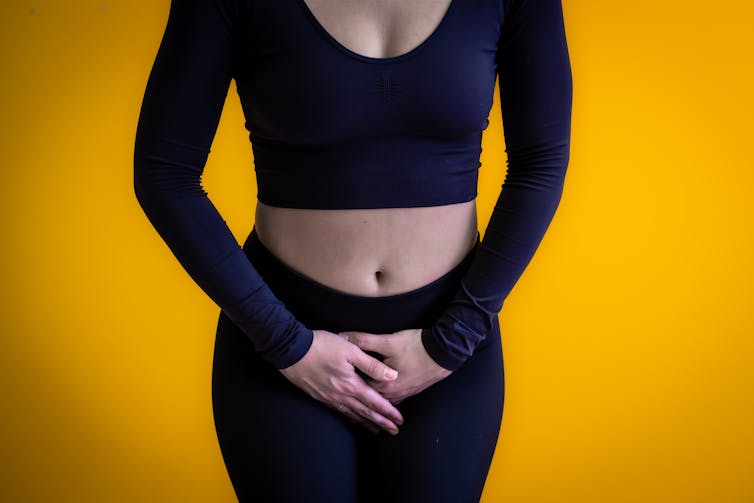
A woman holding her crotch area.
Genital herpes can be quite painful, presenting as sores and lesions that in severe cases, may take up to a month to fully heal. Christian Moro

There’s no simple fix, but safe sex is important

Genital herpes causes a substantial disease burden and economic cost to health-care services.

With such a large proportion of the world’s population infected with HSV-1, evidence this virus is increasingly causing genital herpes is concerning.

There’s no cure for genital herpes, but some medications, such as antivirals, can help reduce the amount of virus present in the system. While this won’t kill it completely, it helps to prevent symptomatic genital herpes recurrences, improve quality of life, and minimise the risk of transmission.

To prevent the spread of genital herpes and other STIs, practise safe sex, particularly if you’re not sure of your partner’s sexual health. You need to use a barrier method such as condoms to protect against STIs (a contraceptive such as the pill won’t work). This includes during oral sex.

As herpes is now so common, testing is not usually included as part of a regular sexual health check-up, except for in specific circumstances such as during pregnancy or severe episodes.

So it’s wise not to let your guard down, even if your partner insists they have received the all-clear from a recent check-up.

If there are herpes lesions present around the genitals, avoid sex entirely. Even condoms are not fully effective at these times, as exposed areas can still transmit the infection.

A woman happily embracing a man.
Practising safe sex can help prevent the spread of herpes. cottonbro studio/Pexels

Immune health

If you are infected with HSV-1 or HSV-2 it’s more likely symptoms will appear when you’re stressed, tired or overwhelmed. During these times, our immune system may not be as functional, and dormant viruses such as herpes can start to develop quickly in our bodies.

To reduce the risk of recurrent herpes infections, try to eat healthily, get at least seven hours of sleep each night if possible, and look out for when your body may be telling you to take a step back and relax. This self-care can go a long way towards keeping latent viruses at bay.

While the prevalence has increased significantly in recent years, we have not lost the war on genital herpes just yet. Safe sexual practices, education and awareness can help reduce its spread, and the stigma around it.

If you have personal concerns, you should discuss them with a medical professional.

Christian Moro, Associate Professor of Science & Medicine, Bond University and Charlotte Phelps, Senior Teaching Fellow in Medicine, Bond University

This article is republished from The Conversation under a Creative Commons license. Read the original article.

Don’t Forget…

Did you arrive here from our newsletter? Don’t forget to return to the email to continue learning!

Learn to Age Gracefully

Join the 98k+ American women taking control of their health & aging with our 100% free (and fun!) daily emails:

  • What Are Nootropics, Really?

    10almonds is reader-supported. We may, at no cost to you, receive a portion of sales if you purchase a product through a link in this article.

    What are nootropics, really?

    A nootropic is anything that functions as a cognitive enhancerin other words, improves our brainpower.

    These can be sensationalized as “smart drugs”, misrepresented excitingly in science fiction, meme-ified in the mundane (“but first, coffee”), and reframed entirely, (“exercise is the best nootropic”).

    So, clearly, “nootropics” can mean a lot of different things. Let’s look at some of the main categories…

    The neurochemical modulators

    These are what often get called “smart drugs”. They are literally drugs (have a chemical effect on the body that isn’t found in our diet), and they affect the levels of certain neurotransmitters in the brain, such as by:

    • Adding more of that neurotransmitter (simple enough)
    • Decreasing the rate at which we lose that neurotransmitter (re-uptake inhibitors)
    • Antagonizing an unhelpful neurotransmitter (doing the opposite thing to it)
    • Blocking an unhelpful neurotransmitter (stopping the receptors from receiving it)

    “Unhelpful” here is relative and subjective, of course. We need all the neurotransmitters that are in our brain, after all, we just don’t need all of them all the time.

    Examples: modafinil, a dopamine re-uptake inhibitor (mostly prescribed for sleep disorders), reduces the rate at which our brains scrub dopamine, resulting in a gradual build-up of dopamine that we naturally produced, so we get to enjoy that dopamine for longer. This will tend to promote wakefulness, and may also help with problem-solving and language faculties—as well as giving a mood boost. In other words, all things that dopamine is used for. Mirtazaрine, an adrenoreceptor agonist (mostly prescribed as an antidepressant), increases noradrenergic neurotransmission, thus giving many other brain functions a boost.

    Why it works: our brains need healthy levels of neurotransmitters, in order to function well. Those levels are normally self-regulating, but can become depleted in times of stress or fatigue, for example.

    The metabolic brain boosters

    These are the kind of things that get included in nootropic stacks (stack = a collection of supplements and/or drugs that complement each other and are taken together—for example, a multivitamin tablet could be described as a vitamin stack) even though they have nothing specifically relating them to brain function. Why are they included?

    The brain needs so much fuel. Metabolically speaking, it’s a gas-guzzler. It’s the single most resource-intensive organ of our body, by far. So, metabolic brain boosters tend to:

    • Increase blood flow
    • Increase blood oxygenation
    • Increase blood general health
    • Improve blood pressure (this is relative and subjective, since very obviously there’s a sweet spot)

    Examples: B-vitamins. Yep, it can be that simple. A less obvious example might be Co-enzyme Q10, which supports energy production on a cellular level, and good cardiovascular health.

    Why it works: you can’t have a healthy brain without a healthy heart!

    We are such stuff as brains are made of

    Our brains are made of mostly fat, water, and protein. But, not just any old fat and protein—we’re at least a little bit special! So, brain-food foods tend to:

    • Give the brain the fats and proteins it’s made of
    • Give the brain the stuff to make the fats and proteins it’s made of (simpler fats, and amino acids)
    • Give the brain hydration! Just having water, and electrolytes as appropriate, does this

    Examples: healthy fats from nuts, seeds, and seafood; also, a lot of phytonutrients from greens and certain fruits. Long-time subscribers may remember our article “Brain Food: The Eyes Have It!” on the importance of dietary lutein in reducing Alzheimer’s risk, for example

    Why it works: this is matter of structural upkeep and maintenance—our brains don’t work fabulously if deprived of the very stuff they’re made of! Especially hydration is seriously underrated as a nootropic factor, by the way. Most people are dehydrated most of the time, and the brain dehydrates quickly. Fortunately, it rehydrates quickly as well when we take hydrating liquids.

    Weird things that sound like ingredients in a witch’s potion

    These are too numerous and too varied in how they work to cover here, but they do appear a lot in nootropic stacks and in popular literature on the subject.

    Often they work by one of the mechanisms described above; sometimes we’re not entirely sure how they work, and have only measured their effects sufficiently to know that, somehow, they do work.

    Examples: panax ginseng is one of the best-studied examples that still remains quite mysterious in many aspects of its mechanism. Lion’s Mane (the mushroom, not the jellyfish or the big cat hairstyle), meanwhile, is known to contain specific compounds that stimulate healthy brain cell growth.

    Why it works: as we say, it varies so much from on ingredient to another in this category, so… Watch out for our Research Review Monday features, as we’ll be covering some of these in the coming weeks!

    (PS, if there’s any you’d like us to focus on, let us know! We always love to hear from you. You can hit reply to any of our emails, or use the handy feedback widget at the bottom)

    Share This Post

  • 3 Mobility Mistakes That Ruin Your Progress

    10almonds is reader-supported. We may, at no cost to you, receive a portion of sales if you purchase a product through a link in this article.

    Don’t sabotage yourself:

    As easy as 1, 2, 3

    We’ll get straight into it:

    • The first mistake is lack of time in the stretch: relying only on dynamic drills keeps mobility at a maintenance level because brief end-range exposure is not enough to drive adaptation.
      • How to fix it: combine dynamic mobility with static stretching, holding stretches for up to two minutes, longer if you’re older, to meaningfully increase your range of motion.
    • The second mistake is lack of consistency: constantly changing exercises prioritizes novelty over volume and prevents your body from adapting to any single movement.
      • How to fix it: commit to a small selection of effective mobility drills or follow a structured program so you repeat the same movements often enough to improve.
    • The third mistake is no progression: repeating a drill with the same range and difficulty each doesn’t challenge your body, which stalls mobility gains, as your body sees no reason to adapt.
      • How to fix it: apply progressive overload to mobility by increasing your range of motion, adding a weight, or using props so the drill gradually becomes harder.

    In other words: repeat the same mobility drills consistently, but do not repeat them at the same difficulty week after week without progression.

    For more on all of this, enjoy:

    Click Here If The Embedded Video Doesn’t Load Automatically!

    Want to learn more?

    You might also like:

    Why Stretching Doesn’t Work After 50 (Unless You Fix These 3 Mistakes) ← for a physiotherapist’s insights on the same topic

    Take care!

    Share This Post

  • Sticky Jackfruit Burgers

    10almonds is reader-supported. We may, at no cost to you, receive a portion of sales if you purchase a product through a link in this article.

    All the taste and experience of pulled pork, without the increased risk of cancer and metabolic disease. On the contrary, jackfruit introduces lots of fiber, vitamins, carotenoids, and flavanones. We’ll have to do a main feature about jackfruit sometime; it’s an unusual fruit especially for its protein content, but for now, let’s get cooking!

    You will need

    • 1 can (14oz/400g) green jackfruit, drained (the flesh will not, in fact, be green—this is referring to the fruit being unripe and thus still firm in texture, which is what we want. The outside of the fruit, which will not be in the can, will have been green)
    • 1/4 red cabbage, thinly sliced
    • 1/2 carrot, grated
    • 6 mangetout, thinly sliced
    • 2 tbsp mayonnaise (your preference what kind, and yes, vegan is fine too)
    • 1 tbsp extra virgin olive oil
    • 1 tbsp gochujang paste (if you can’t find gochujang paste locally, you can either order it online (here it is on Amazon) or substitute with harissa paste, which is not the same—it uses different spices—but will do the same job here re texture, umami taste, and level of spiciness)
    • 1 tbsp soy sauce
    • 1 tbsp balsamic vinegar
    • 1 tsp apple cider vinegar
    • 1 tsp garlic paste
    • 1 tsp tomato paste
    • 1 tsp ginger paste
    • 1 tsp chili flakes
    • 3½ fl oz water
    • 2 burger buns (unless you make them yourself, burger buns will probably not be healthy; you can, however, also look for small round wholemeal breads—the name of which varies far too much by region for us to try to get a catch-all name here—and use them in place of burger buns)

    Method

    (we suggest you read everything at least once before doing anything)

    1) Combine the garlic paste, ginger paste, tomato paste, gochujang paste, soy sauce, balsamic vinegar, and chili flakes in a saucepan

    2) Boil the 3½ fl oz water we mentioned; add it to the saucepan, mixing well, turn on the heat and let it simmer for 5 minutes or until it is thick and sticky (it will thicken more as it cools, too, so don’t worry if it doesn’t seem thick enough yet). Set it aside.

    3) Dry the jackfruit (using strong kitchen paper should be fine), add the olive oil to a skillet and bring it to a high heat; add the jackfruit and fry on both sides for a few minutes, until it looks cooked (remember, while this may look like animal meat, it’s not, so there’s no danger of undercooking here).

    4) When the jackfruit looks a nice golden-brown, add two thirds of the sauce from the saucepan, and break apart the jackfruit a bit (this can be done with a wooden/bamboo spatula, so as to not damage your pan), When it all looks how you’d expect pulled jackfruit (or pulled pork) to look, take it off the heat.

    5) Combine the carrot, cabbage, and mangetout in a small bowl, adding the apple cider vinegar and mixing well; this will be the coleslaw element

    6) Mix the remaining sauce with the mayonnaise

    7) (optional) toast the burger buns

    8) Assemble the burgers; we recommend the following order: bottom bun, pulled jackfruit, coleslaw, gochujang mayo, top bun

    Enjoy!

    Want to learn more?

    For those interested in some of the science of what we have going on today:

    Take care!

    Share This Post

  • Spinach vs Chard – Which is Healthier?

    10almonds is reader-supported. We may, at no cost to you, receive a portion of sales if you purchase a product through a link in this article.

    Our Verdict

    When comparing spinach to chard, we picked the spinach.

    Why?

    In terms of macros, spinach has slightly more fiber and protein, while chard has slightly more carbs. Now, those carbs are fine; nobody is getting metabolic disease from eating greens. But, by the numbers, this is a clear, albeit marginal, win for spinach.

    In the category of vitamins, spinach has more of vitamins A, B1, B2, B3, B5, B6, B9, E, and K, while chard has more of vitamins C and choline. An even clearer victory for spinach this time.

    When it comes to minerals, spinach has more calcium, copper, iron, magnesium, manganese, phosphorus, selenium, and zinc, while chard has more potassium. Once again, a clear win for spinach.

    You may be wondering about oxalates, in which spinach is famously high. However, chard is nearly 2x higher in oxalates. In practical terms, this doesn’t mean too much for most people. If you have kidney problems or a family history of such, it is recommended to avoid oxalates. For everyone else, the only downside is that oxalates diminish calcium bioavailability, which is a pity, as spinach is (by the numbers) a good source of calcium.

    However, oxalates are broken down by heat, so this means that cooked spinach (lightly steamed is fine; you don’t need to do anything drastic) will be much lower in oxalates (if you have kidney problems, do still check with your doctor/dietician, though).

    All in all, spinach beats chard by most metrics, and by a fair margin. Still, enjoy either or both, unless you have kidney problems, in which case maybe go for kale or collard greens instead!

    Want to learn more?

    You might like to read:

    Make Your Vegetables Work Better Nutritionally ← includes a note on breaking down oxalates, and lots of other information besides!

    Enjoy!

    Don’t Forget…

    Did you arrive here from our newsletter? Don’t forget to return to the email to continue learning!

    Learn to Age Gracefully

    Join the 98k+ American women taking control of their health & aging with our 100% free (and fun!) daily emails:

  • Dandelion Greens vs Garden Cress – Which is Healthier?

    10almonds is reader-supported. We may, at no cost to you, receive a portion of sales if you purchase a product through a link in this article.

    Our Verdict

    When comparing dandelion greens to garden cress, we picked the dandelions.

    Why?

    Both are great! But…

    In terms of macros, dandelion greens have more than 3x the fiber, as well as slightly more protein and carbs. An easy win here!

    Looking at vitamins, dandelion greens have more of vitamins A, B1, B6, E, K, and choline, while garden cress has more of vitamins B3, B5, B9, and C. Thus, a 6:4 win for dandelion greens in this category.

    When it comes to minerals, dandelion greens have more calcium, iron, and zinc, while garden cress has more manganese, potassium, and selenium. So, a tie on minerals.

    One more category, polyphenols. We’d be here until next week if we listed all the polyphenols that dandelion greens have, but suffice it to say, dandelion greens have a total of 385.55mg/100g polyphenols, while garden cress has a total of 14.00mg/100g polyphenols. Grabbing a calculator, we see that this means dandelions have more than 2,750% the polyphenol content that garden cress does.

    So, “eat leafy greens” is great advice, but they are definitely not all created equal!

    Let us take this moment to exhort: if you have any space at home where you can grow dandelions, grow them!

    Not only are they great for pollinators, but also they beat the garden cress that beat well-known superfood watercress, and previously, they beat the collard greens that beat well-known superfood kale. And you can have as much as you want, for free, right there.

    Want to learn more?

    You might like:

    21 Most Beneficial Polyphenols & What Foods Have Them

    Enjoy!

    Don’t Forget…

    Did you arrive here from our newsletter? Don’t forget to return to the email to continue learning!

    Learn to Age Gracefully

    Join the 98k+ American women taking control of their health & aging with our 100% free (and fun!) daily emails:

  • Finally! Chronic Fatigue Syndrome Biomarkers Identified

    10almonds is reader-supported. We may, at no cost to you, receive a portion of sales if you purchase a product through a link in this article.

    And other items from this week’s health news:

    Good news for Chronic Fatigue Syndrome sufferers

    Historically considered a syndrome that has no observable signs (only symptoms reported by the sufferer), chronic fatigue syndrome (CFS) now has some biomarkers identified, achieving 90% diagnostic accuracy—offering objective proof for a disease often dismissed due to a lack of lab evidence.

    How it was done: researchers (Dr. Julia Oh et al.) showed how the gut microbiome, immune cells, and metabolites correlate with symptoms like fatigue, pain, and sleep disturbances. ME/CFS patients had reduced butyrate (a gut-beneficial fatty acid), elevated tryptophan and benzoate (indicators of microbial imbalance), and increased inflammatory responses, especially in cells linked to gut health. In terms of which parts did what, immune cell data best predicted overall symptom severity, while gut microbiome data correlated most with gastrointestinal, emotional, and sleep-related symptoms. Meanwhile, symptoms like dizziness, sleep disturbances, and headaches were linked directly to disruptions in gut-immune-metabolic networks, offering a systems-level disease view.

    In other words, a lot of data.

    It was also worthy of note that biological disruptions were less extensive in patients ill for under four years compared to those ill over a decade, implying worsening dysregulation over time.

    Which makes it all the more important that we now have ways to categorically identify and thus usefully diagnose it:

    Read in full: Previously undetectable biomarkers in gut microbiome may predict “invisible” chronic fatigue syndrome, long COVID

    Related: How To Be 7.5x More Likely To Develop Chronic Fatigue Syndrome

    Texas is taking the lead!

    But not in good ways, unfortunately. This time it’s not about measles, though, and rather is about STI rates, especially on a county level. For example, Dallas county ranked 7th (in the US), with 1,314.5 STI cases per 100,000 people.

    You might be wondering what STIs specifically, and: chlamydia and gonorrhea dominate case numbers, but syphilis and HIV are steadily rising, particularly in urban areas.

    The report identified the following factors as being the main reasons the rates are rising so much:

    • inadequate sex education
    • limited access to affordable care and regular testing
    • high infection rates among youth lacking primary care
    • stigma and misinformation
    • racial and economic disparities (impacting accessibility of testing and treatment)

    In Texas, people aged 15–29 represent the largest portion of new infections, but before you write that off as “young people nowadays” who cannot contain their hormones, note that that’s new infections—the only reason older demographics score lower is because each instance of infection is less likely to be one’s first, the further one goes through life. Overall infection rates (i.e., not just “new infections”) are rising the highest in adults over 50.

    Read in full: Texas counties have some of the highest STD rates in US, new report says

    Related: Why STIs Are On The Rise In Older Adults

    The change

    Prostate cancer is one of the major killers of men, the top cancer for men by prevalence, and affects over 60% of men over the age of 60 (with that percentage then rising each year thereafter). Note that this means “if something else doesn’t kill you first, you are more likely to get this than not”.

    Prostate cancer is also something where the early stages of it are often described “nothing to worry about for now; let’s keep an eye on it”.

    Happily, researchers have now discovered how prostate cancer evolves into its most lethal form, neuroendocrine prostate cancer (NEPC). This was a win for medical AI (while both are called “AI”, this is incredibly different from ChatGPT et al.), and specifically, it was a 3d genome mapping breakthrough; using advanced genomic tools, they created the first 3D map of how prostate cancer cells rewire their DNA structure to enable and promote the aforementioned shift to NEPC.

    Some technical bits for those who want it:

    • The key proteins involved have been identified: FOXA2 and NKX2-1 drive the transformation by reprogramming the cancer cells; FOXA2 opens inaccessible DNA regions, allowing NKX2-1 to activate NEPC-related genes.
    • The role of cbp and p300 enzymes have been identified: these enzymes help activate oncogenes crucial to the NEPC transformation, acting as co-drivers of the aggressive cancer form.
    • A potential treatment has been identified: the drug CCS1477, a CBP/p300 inhibitor in clinical trials, successfully halted NEPC tumor growth in lab studies.

    The latter is particularly important, as it allows for new treatment avenues for prostate cancers that become resistant to hormone therapy, by preventing or reversing the NEPC transition.

    Read in full: Study uncovers how prostate cancer becomes deadly, offers hope for new treatments

    Related: Prostate Health: What You Should Know

    Take care!

    Don’t Forget…

    Did you arrive here from our newsletter? Don’t forget to return to the email to continue learning!

    Learn to Age Gracefully

    Join the 98k+ American women taking control of their health & aging with our 100% free (and fun!) daily emails: