
Fix This Silent Hip Problem Before It Destroys Your Knees

10almonds is reader-supported. We may, at no cost to you, receive a portion of sales if you purchase a product through a link in this article.

Over-50s specialist physio Will Harlow explains:

When your hips don’t ply…

Poor hip rotation can damage the knees. This is because if hips can’t rotate, the knee may be forced to rotate, increasing the risk of ligament and meniscus injuries, neither of which are fun. Dynamic valgus (the knee falling inward during movement) is another common issue also linked to poor hip rotation.

As to why it happens in the first place: poor hip rotation can come from arthritis, but mostly it just comes from disuse. To fix this, you can improve both mobility and strength in the hip rotators through exercises such as…

  • Hip windshield wipers: sit with your back supported and your knees bent at about 90°. Let your legs fall from side to side like windshield wipers, allowing one leg to go into external rotation and the other into internal rotation. Perform 20–30 reps, ideally over 1–2 minutes, and repeat a few times throughout the day.
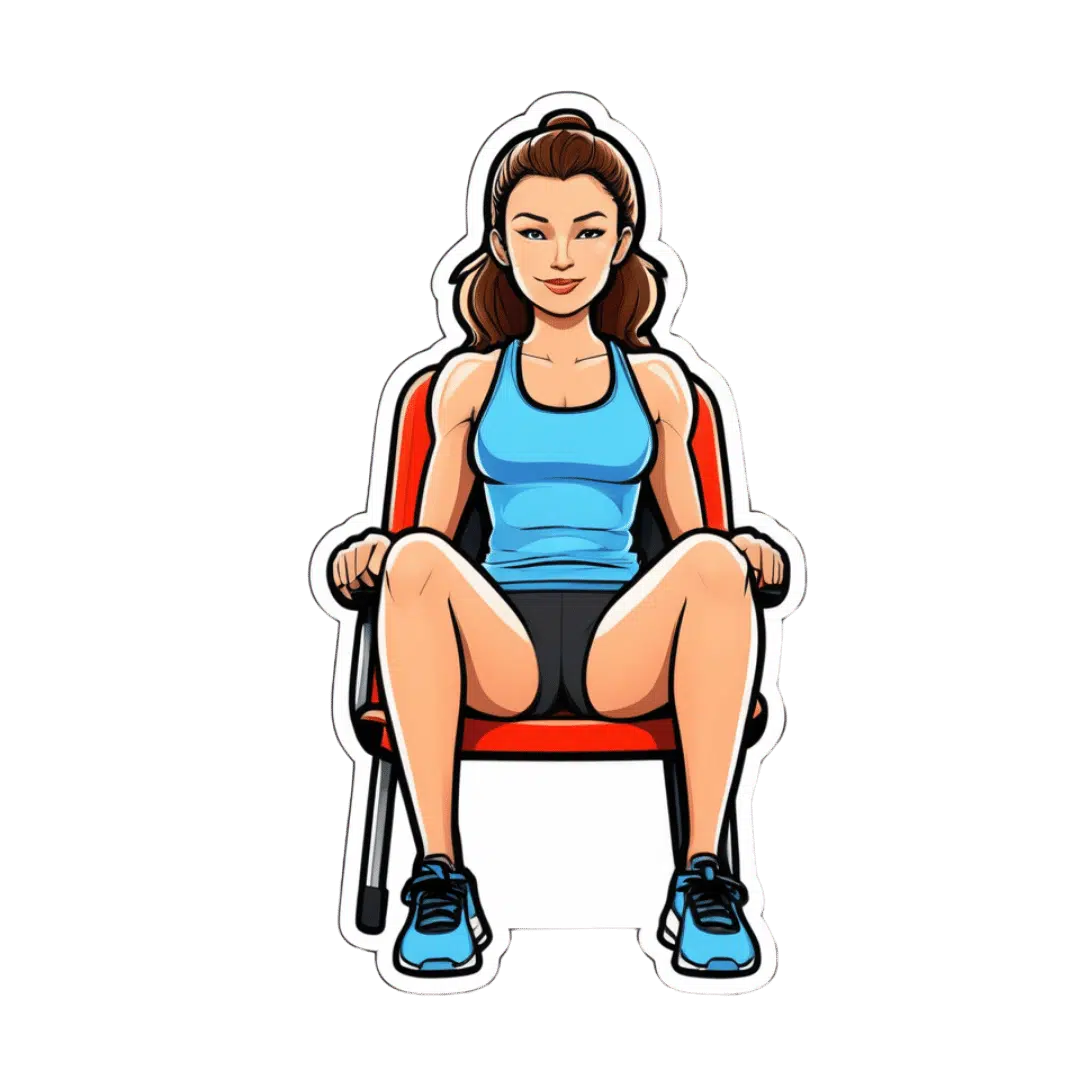
  • Seated external & internal rotation: sit comfortably in a chair and lift one leg at a time. Rotate the leg outward (external rotation) and then inward (internal rotation). Even limited movement is beneficial. Aim for 30 reps in each direction on both legs, twice a day.
  • Clam exercise: lie on your side with your knees and hips bent at 90°. For the basic version, lift the top knee while keeping your feet together. For the advanced version, lift the top knee, then also lift the foot for added rotation. Do 10–20 reps per side and complete 2–3 sets depending on difficulty.
  • Single-leg bridge: lie on your back with your knees bent and perform a standard bridge by lifting your hips. While holding the bridge position, lift one leg without letting your pelvis drop to engage the opposite hip. Hold each leg for 3 seconds, do 5 reps total, and complete 3 sets with about a minute of rest between rounds.

For more on each of these plus visual demonstrations, enjoy:

Click Here If The Embedded Video Doesn’t Load Automatically!

Want to learn more?

You might also like:

The Secret To Better Squats: Foot, Knee, & Ankle Mobility ← if you want to go beyond just hips-and-knees, for a full lower-body mobility routine

Take care!

Don’t Forget…

Did you arrive here from our newsletter? Don’t forget to return to the email to continue learning!

  • Heal Your Stressed Brain
    Therapist Rochelle Walsh reveals how chronic stress wreaks havoc on the brain, affecting memory, reasoning, and increasing disease risk—and offers steps for healing.

Learn to Age Gracefully

Join the 98k+ American women taking control of their health & aging with our 100% free (and fun!) daily emails:

  • Signs Of Low Estrogen In Women: What Your Skin, Hair, & Nails Are Trying To Tell You

    10almonds is reader-supported. We may, at no cost to you, receive a portion of sales if you purchase a product through a link in this article.

    Skin, hair, and nails are often thought of purely as a beauty thing, but in fact they can be indicative of a lot of other aspects of health. Dr. Andrea Suarez takes us through some of them in this video about the systemic (i.e., whole-body, not just related to sex things) effects of estrogen, and/or a deficiency thereof.

    Beyond the cosmetic

    Low estrogen levels are usual in women during and after untreated menopause, resulting in various changes in the skin, hair, and nails, that reflect deeper issues, down to bone health, heart health, brain health, and more. Since we can’t see our bones or hearts or brains without scans (or a serious accident/incident), we’re going to focus on the outward signs of estrogen deficiency.

    Estrogen helps maintain healthy collagen production, skin elasticity, wound healing, and moisture retention, making it essential for youthful and resilient skin. Declining estrogen levels with menopause lead to a thinner epidermis, decreased collagen production, and more pronounced wrinkles. Skin elasticity also diminishes, which slows the skin’s ability to recover from stretching or deformation. Wound healing also becomes slower, increasing the risk of infections and extended recovery periods after injuries or surgeries—bearing in mind that collagen is needed in everything from our skin to our internal connective tissue (fascia) and joints and bones. So all those things are going to struggle to recover from injury (and surgery is also an injury) without it.

    Other visible changes associated with declining estrogen include significant dryness as a result of reduced hyaluronic acid and glycosaminoglycan production, which are essential for moisture retention. The skin becomes more prone to irritation and increased water loss. Additionally, estrogen deficiency results in less resistance to oxidative stress, making the skin more susceptible to damage from environmental factors such as UV radiation and pollution, as well as any from-the-inside pollution that some may have depending on diet and lifestyle.

    Acne and enlarged pores are associated with increased testosterone, but testosterone and estrogen are antagonistic in most ways, and in this case a decrease in estrogen will do the same, due increased unopposed androgen signaling affecting the oil glands. The loss of supportive collagen also causes the skin around pores to lose structure, making them appear larger. The reduction in skin hydration further exacerbates the visibility of pores and can contribute to the development of blackheads due to abnormal cell turnover.

    Blood vessel issues tend to arise as estrogen levels drop, leading to a reduction in angiogenesis, i.e. the formation and integrity of blood vessels. This results in more fragile and leaky blood vessels, making the skin more prone to bruising, especially on areas frequently exposed to the sun, such as the backs of the hands. This weakened vasculature also further contributes to the slower wound healing that we talked about, due to less efficient delivery of growth factors.

    Hair and nail changes often accompany estrogen deficiency. Women may notice hair thinning, increased breakage, and a greater likelihood of androgenic alopecia. The texture of the hair can change, becoming more brittle. Similarly, nails can develop ridges, split more easily, and become more fragile due to reduced collagen and keratin production, which also affects the skin around the nails.

    As for what to do about it? Management options for estrogen-deficient skin include:

    • Bioidentical hormone replacement therapy (HRT), which can improve skin elasticity, boost collagen production, and reduce dryness and fragility, as well as addressing the many more serious internal things that are caused by the same deficiency as these outward signs.
    • Low-dose topical estrogen cream, which can help alleviate skin dryness and increase skin strength, won’t give the systemic benefits (incl. to bones, heart, brain, etc) that only systemic HRT can yield.
    • Plant-based phytoestrogens, which are not well-evidenced, but may be better than nothing if nothing is your only other option. However, if you are taking anything other form of estrogen, don’t use phytoestrogens as well, or they will compete for estrogen receptors, and do the job not nearly so well while impeding the bioidentical estrogen from doing its much better job.

    And for all at any age, sunscreen continues to be one of the best things to put on one’s skin for general skin health, and this is even more true if running low on estrogen.

    For more on all of this, enjoy:

    Click Here If The Embedded Video Doesn’t Load Automatically!

    Want to learn more?

    You might also like:

    These Signs Often Mean These Nutrient Deficiencies (Do You Have Any?)

    Take care!

    Share This Post

  • The Most Underrated Hip Mobility Exercise (Not Stretching)

    10almonds is reader-supported. We may, at no cost to you, receive a portion of sales if you purchase a product through a link in this article.

    Cori Lefkowith, of “Redefining Strength” and “Strong At Every Age” fame, is back to help us keep our hips in good order:

    These tips don’t lie

    It’s less about stretching, and more about range of motion and “use it or lose it”:

    • Full range of motion in lifting exercises enhances joint mobility and stability, whereas strengthening muscles through a limited range of motion (e.g., half squats) can cause tightness.
    • Lifting through a larger range of motion may result in faster strength gains too, so that’s a bonus.
    • Customize your range of motion based on your body type and capability, but do try for what you reasonably can—don’t give up!
    • Lower weights and focus on deeper movements like split squats or single-leg squats, but work up slowly if you have any difficulties to start with.
    • Using exercises like the Bulgarian split squat and deficit split squat can improve hip mobility and strength (you’ll really need to see the video for this one)
    • Fully controlling the range of motion is key to progress, even if it means going lighter; prioritize mobility over brute strength. Strength is good, but mobility is even more critical.
    • Adding instability, such as raising the front foot in lunges, challenges muscles and increases mobility. Obviously, please be safe while doing so, and slowly increase the range of motion while maintaining control, avoiding reliance on momentum.
    • Final tip that most don’t consider: try starting exercises from the bottom position to ensure proper form and muscle engagement!

    For more on each of these plus visual demonstrations, enjoy:

    Click Here If The Embedded Video Doesn’t Load Automatically!

    Want to learn more?

    You might also like to read:

    Take care!

    Share This Post

  • What Your Hormones Mean For Weight Gain/Loss

    10almonds is reader-supported. We may, at no cost to you, receive a portion of sales if you purchase a product through a link in this article.

    Kait Ann-Michelle describes herself as an “exercise scientist”, so what does that mean?

    It means: she has an MS in exercise science, and an MA in clinical psychology.

    With this mind, here’s what she has to say about hormones, weight gain/loss, and more:

    What she wants us to know

    Things to bear in mind over a certain age include:

    • That “certain age” is about 35. If that seems a lifetime ago to you, in a way it could well be, if your hormones were very different then. In popular culture, menopause is often played as a joke, and the bar for having passed it is usually set quite high. But since the hormonal changes themselves begin nearer 35, that’s where to start examining things.
      • A lot of online advice is woefully inappropriate for women over that age. Which is quite an injustice, as the 25–35 age range is such a tiny slice of life, yet it seems 80–90% of everything is aimed at it and tailored for it.
    • Estrogen gets talked about a lot, but there are many hormones involved in perimenopausal symptoms, as one thing affects another, and before you know it, estrogen, progesterone, and even non-sex hormones like cortisol, insulin, thyroid hormones, and melatonin can be entirely out from where they should be. And the longer this goes on, the more pronounced and deep-rooted the effects.
      • That goes for weight too, especially given the cortisol, insulin, and thyroid imbalances.
    • It’s not just a case of “one hormone affects another”, either. Yes, it’s that too, but for example if you have a mood swing due to low estrogen, which creates a stressful situation that ups your cortisol, then you don’t sleep so well, then the next day you are more tired so you skip the exercise you planned, and then and then and then… In short, lifestyle factors matter a lot too; they affect, and are affected by, our hormones.
      • All of this does tend to lead to weight gain if mismanaged.
    • She advises advises taking up HRT once it becomes appropriate (which for most women means around menopause—though other conditions can make HRT indicated earlier or in some cases not at all), and/but also focusing a lot on “lifestyle medicine”, that is to say, diet and exercise, good sleep, stress management, and so forth.
      • All of this does tend to lead to weight loss/maintenance if managed correctly.
    • She doesn’t recommend guesswork when it comes to hormones, though, and rather recommends getting regularly tested for: thyroid panel, estradiol, progesterone, DHEAS, testosterone, CBC, lipid panel, CMP, and hemoglobin A1c, as well as, ideally, “nice-to-have lab values” of cortisol, IGF1, vitamin D3, homocysteine, B12, SHBG, FSH, LH, iron, ferritin, and CRP.
      • That’s a lot of tests, so note, they’re in relative order of importance.

    She notes that your doctor probably won’t want to do all those and will probably try to talk you out of them, so be prepared to advocate for yourself, as comprehensive lab work gives a full picture that the bare minimum does not.

    For more details on all of these, enjoy:

    Click Here If The Embedded Video Doesn’t Load Automatically!

    Want to learn more?

    You might also like to read:

    Take care!

    Share This Post

  • Cabbage vs Kale – Which is Healthier?

    10almonds is reader-supported. We may, at no cost to you, receive a portion of sales if you purchase a product through a link in this article.

    Our Verdict

    When comparing cabbage to kale, we picked the kale.

    Why?

    Here we go again, pitting Brassica oleracea vs Brassica oleracea. One species, many cultivars! Notwithstanding being the same species, there are important nutritional differences:

    In terms of macros, kale has more protein, carbs, and fiber, and even has the lower glycemic index, not that cabbage is bad at all, of course. But nominally, kale gets the win on all counts in this category.

    In the category of vitamins, cabbage has more of vitamins B5 and choline, while kale has more of vitamins A, B1, B2, B3, B6, B7, B9, C, E, and K. An easy win for kale!

    When it comes to minerals, it’s even more decisive: cabbage is not higher in any minerals, while kale has more calcium, copper, iron, magnesium, manganese, phosphorus, potassium, and zinc. Another clear win for kale.

    Adding up the sections makes it very clear that kale wins the day, but we’d like to mention that cabbage was good in all of these metrics too; kale was just better!

    Want to learn more?

    You might like to read:

    21 Most Beneficial Polyphenols & What Foods Have Them

    Enjoy!

    Don’t Forget…

    Did you arrive here from our newsletter? Don’t forget to return to the email to continue learning!

    Learn to Age Gracefully

    Join the 98k+ American women taking control of their health & aging with our 100% free (and fun!) daily emails:

  • Move over, COVID and Flu! We Have “Hybrid Viruses” To Contend With Now

    10almonds is reader-supported. We may, at no cost to you, receive a portion of sales if you purchase a product through a link in this article.

    Move over, COVID and Flu! We have “hybrid viruses” to contend with now

    COVID and influenza viruses can be serious, of course, so let’s be clear up front that we’re not being dismissive of those. But, most people are hearing a lot about them, whereas respiratory syncytial virus (RSV) has flown under a lot of radars.

    Simply put, until recently it hasn’t been considered much of a threat except to the young, the old, or people with other respiratory illnesses. Only these days, the prevalence of “other respiratory illnesses” is a lot higher than it used to be!

    It’s not just a comorbidity

    It’s easy to think “well of course if you have more than one illness at once, especially similar ones, that’s going to suck” but it’s a bit more than that; it produces newer, more interesting, hybrid viruses. Here’s a research paper from last year’s “flu season”:

    Coinfection by influenza A virus and respiratory syncytial virus produces hybrid virus particles

    Best to be aware of this if you’re in the “older” age-range

    It’s not just that the older we are, the more likely we are to get it. Critically, the older we are, the more likely we are to be hospitalized by it.

    And..the older we are, the less likely we are to come back from hospital if hospitalized by it.

    Some years back, the intensive care and mortality rates for people over the age of 65 were 8% and 7%, respectively:

    Respiratory syncytial virus infection in elderly and high-risk adults

    …but a new study this year has found the rates like to be 2.2x that, i.e. 15% intensive care rate and 18% mortality, respectively:

    Adjusting for Case Under-Ascertainment in Estimating RSV Hospitalisation Burden of Older Adults in High-Income Countries: a Systematic Review and Modelling Study

    Want to know more?

    Here are some hot-off-the-press news articles on the topic:

    And as for what to do…

    Same general advice as for COVID and Flu, just, ever-more important:

    • Try to keep to well-ventilated places as much as possible
    • Get any worrying symptoms checked out quickly
    • Mask up when appropriate
    • Get your shots as appropriate

    See also:

    Harvard Health Review | Fall shots: Who’s most vulnerable to RSV, COVID, and the flu, and which shots are the right choice for you to help protect against serious illness and hospitalization?

    Stay safe!

    Don’t Forget…

    Did you arrive here from our newsletter? Don’t forget to return to the email to continue learning!

    Learn to Age Gracefully

    Join the 98k+ American women taking control of their health & aging with our 100% free (and fun!) daily emails:

  • Pumpkin Protein Crackers

    10almonds is reader-supported. We may, at no cost to you, receive a portion of sales if you purchase a product through a link in this article.

    Ten of these (give or take what size you make them) will give you the 20g protein that most people’s body’s can use at a time. Five of these plus some of one of the dips we list at the bottom will also do it:

    You will need

    • 1 cup chickpea flour (also called gram flour or garbanzo bean flour)
    • 2 tbsp pumpkin seeds
    • 1 tbsp chia seeds
    • 1 tsp baking powder
    • ¼ tsp MSG or ½ tsp low-sodium salt
    • 2 tbsp extra virgin olive oil

    Method

    (we suggest you read everything at least once before doing anything)

    1) Preheat the oven to 350℉ / 180℃.

    2) Combine the dry ingredients in a mixing bowl, and mix thoroughly.

    3) Add the oil, and mix thoroughly.

    4) Add water, 1 tbsp at a time, mixing thoroughly until the mixture comes together and you have a dough ball. You’ll probably need 3–4 tbsp in total, but do add them one at a time.

    5) Roll out the dough as thinly and evenly as you can between two sheets of baking paper. Remove the top layer of the paper, and slice the dough into squares or triangles. You could use a cookie-cutter to make other shapes if you like, but then you’ll need to repeat the rolling to use up the offcuts. So we recommend squares or triangles at least for your first go.

    6) Bake them in the oven for 12–15 minutes or until golden and crispy. Enjoy immediately or keep in an airtight container.

    Enjoy!

    Want to learn more?

    For those interested in some things to go with what we have going on today:

    Take care!

    Don’t Forget…

    Did you arrive here from our newsletter? Don’t forget to return to the email to continue learning!

    Learn to Age Gracefully

    Join the 98k+ American women taking control of their health & aging with our 100% free (and fun!) daily emails: