
Building & Maintaining Mobility
10almonds is reader-supported. We may, at no cost to you, receive a portion of sales if you purchase a product through a link in this article.
Building & Maintaining Mobility!
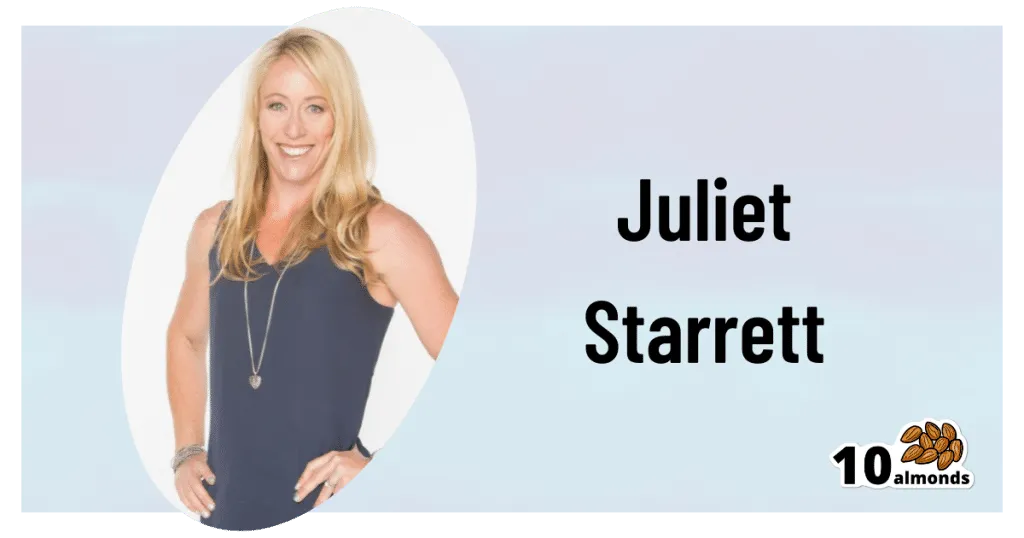
This is Juliet Starrett. Sheโs a CrossFit co-founder, and two-time white-water rafting world champion. Oh, and she won those after battling thyroid cancer. Sheโs now 50 years old, and still going strong, having put aside her career as a lawyer to focus on fitness. Specifically, mobility training.
The Ready State
Together with her husband Kelly, Starrett co-founded The Ready State, of which sheโs CEO.
It used to be called โMobility WODโ (the โWODโ stands for โworkout of the dayโ) but they changed their name as other companies took up the use of the word โmobilityโ, something the fitness world hadnโt previously focussed on much, and โWODโ, which was also hardly copyrightable.
True to its origins, The Ready State continues to offer many resources for building and maintaining mobility.
Why the focus on mobility?
When was the last time you had to bench-press anything larger than a small child? Or squat more than your partnerโs bodyweight? Or do a โfarmerโs walkโ with anything heavier than your groceries?
For most of us, unless our lifestyles are quite extreme, we donโt need ridiculous strength (fun as that may be).
You know what makes a huge difference to our quality of life though? Mobility.
Have you ever felt that moment of panic when you reach for something on a high shelf and your shoulder or back twinges (been there!)? Or worse, you actually hurt yourself and the next thing you know, you need help putting your socks on (been there, too!)?
And we say to ourselves โIโm not going to let that happen to me againโ
But how? How do we keep our mobility strong?
First, know your weaknesses
Starrett is a big fan of mobility tests to pinpoint areas that need more work.
Most of her resources for this arenโt free, and weโre drawing heavily from her book here, so for your convenience, weโll link to some third party sources for this:
- Timed Up and Goโstart with this, before progressing to the next!
- Sit To Rise Testโnot to be underestimated (this page also has excerpts from Starrettโs mobility book, by the way)
- Shoulders/Spine/Hipsโ7 quick tests; note any that you canโt do, or struggle with
Next, eliminate those weaknesses
Do mobility exercises in any weak areas, until theyโre not weak:
Want to train the full body in one session?
Try out The Ready Stateโs 10-Minute Morning Mobility Routine
Want to learn more?
You might enjoy her book that we reviewed previously:
Built to Move: The Ten Essential Habits to Help You Move Freely and Live Fully
You might also enjoy The Ready State App, available for iOS and for Android:
The Ready State Virtual Mobility Coach
Enjoy!
Don’t Forget…
Did you arrive here from our newsletter? Don’t forget to return to the email to continue learning!
Recommended
Learn to Age Gracefully
Join the 98k+ American women taking control of their health & aging with our 100% free (and fun!) daily emails:
-
Everything you need to know about cervical cancer
10almonds is reader-supported. We may, at no cost to you, receive a portion of sales if you purchase a product through a link in this article.
Every year, around 11,500 new cases of cervical cancer are diagnosed in the U.S. While cervical cancer used to be one of the most common causes of cancer death for U.S. women, the vaccine against the human papillomavirus (HPV), and increased early screening and detection have resulted in a decrease in rates.
โCervical cancer is almost always preventable and typically diagnosed in patients who have either never had a screening test or have gone many years without one,โ says Fred Wyand, director of communications at the American Sexual Health Association, which includes the National Cervical Cancer Coalition.
January is Cervical Cancer Awareness Month, so we spoke to experts to learn more about what it is, its symptoms, and what you can do to prevent it.
What is cervical cancer?
Cervical cancer is a type of cancer that starts in the cervixโthe lower part of the uterus that connects the vagina to the uterus. Cervical cancer can affect anyone with a cervix but is most frequently diagnosed in women ages 35 to 44, according to the American Cancer Society.
There are two types:
- Squamous cell carcinoma: Cervical cancer that starts in the thin squamous cells on the outside of the cervix. This is the most common type of cervical cancer.ย
- Adenocarcinoma: Cervical cancer that starts in glandular cells that line the inside of the cervix. This type of cervical cancer is less common.ย
In some cases, cervical cancer has features of both types.
What causes cervical cancer?
Almost all cases of cervical cancer are caused by high-risk cases of HPV, a virus that is spread through sexual activity or other close skin-to-skin contact. But donโt panic: HPV is very common, and getting HPV doesnโt always mean youโll get cervical cancer. Around 85 percent of people in the U.S. will get an HPV infection in their lifetime, but for most people, the virus clears on its own.
However, there are many strains of HPV, and some are linked to cervical cancer. In those cases, when the virus does not clear on its own and the HPV infection persists, it can cause a range of cancers in both men and women, including cancers of the cervix, anus, penis, throat, and vagina.
Thatโs why HPV vaccination is so important for all people: It can help prevent many types of cancer, including cervical cancer caused by those high-risk HPV infections.
What are the symptoms of cervical cancer?
Cervical cancer doesnโt usually have symptoms in its early stages, but once cancer begins to spread, the symptoms can include:
- Vaginal bleeding between periods, after sexual intercourse, or after menopause.ย
- Heavier and longer menstrual periods than usual.
- Vaginal discharge that has a strong odor and is watery.ย
- Pelvic pain or pain during sexual intercourse.
In more advanced stages, symptoms of cervical cancer can include:
- Leg swelling.
- Difficult or painful bowel movements or bleeding during a bowel movement.
- Blood in urine or difficulty urinating.ย
- Back pain.
โMost women present with no symptoms,โ Dr. Kristina A. Butler, gynecologic oncologist at Mayo Clinic, tells PGN. โTherefore, the checkups with visualization of the cervix, speaking with your provider, and having a Pap smear are so important.โ
How can you help prevent or reduce your risk for cervical cancer?
Vaccination: Cervical cancer is highly preventable. The most effective way to help protect yourself from it is by getting the HPV vaccine. The HPV vaccine is most effective before a person is first exposed to HPV, typically before becoming sexually active.
โIf we are able to vaccinate children before they become adults [and] are subsequently exposed, those individuals are maximally protected against the [worst effects] of the virus, which could ultimately be cancer,โ Butler adds.
Youโre eligible to get the vaccine if youโre between 9 and 45 years old, but there are specific guidelines for each age group. The Centers for Disease Control and Prevention recommends HPV vaccination for children ages 11 or 12 (though it can start at 9 years).
The CDC says that you can get catch-up doses until youโre 26 if you didnโt get vaccinated earlier, but if youโre between 26 and 45 years old, you should talk to your health care provider about your individual risk for HPV and to see if you should get the vaccine.
Screenings: This is another effective way to prevent cervical cancer.
Dr. Deanna Gerber, a gynecologic oncologist at NYU Langoneโs Laura and Isaac Perlmutter Cancer Center, tells PGN that regular screenings can catch HPV before it has a chance to become cancer.
โNow that weโre encouraging people to see their gynecologist and get screening more regularly, weโre catching cancer at earlier stages,โ she says.
Screenings for cervical cancer include:
- Pap smear: During a Pap smear, also known as a Pap test, cells are collected from your cervix to find precancerous or cervical cancer cells. Pap smears should start at 21 years old, regardless of when you start having sex.ย
If youโre between 21 and 29, you should get a Pap smear every three years. If youโre 30 to 65 years old, itโs recommended you get one every three years, a Pap and HPV test together every five years, or an HPV test alone every five years.
- HPV test: During an HPV test, cells are collected from your cervix to look for infection with high-risk HPV strains that can cause cervical cancer. If youโre between 21 and 30 years old, itโs only recommended that you get an HPV test if you had an abnormal Pap smear result. After 30, an HPV test is recommended with a Pap smear every five years, as long as other results were normal.ย
(People over 65 years old should talk to their health care provider about whether they need screening.)
Not smoking: Avoiding smoking can reduce your risk of developing cervical cancer because โHPV and smoking tobacco work together to accelerate the negative effects of HPV,โ says Gerber.
Wearing condoms: Although condoms donโt completely prevent HPV infection, they provide some protection. And according to the CDC, the use of condoms has been associated with a lower rate of cervical cancer.
There is hope with early detection
There is hope for people diagnosed with cervical cancer. โCompared to the survival [rates] 10 years ago, women survive much longer now with the great treatments we have,โ adds Butler.
Some of those treatments and advances include radiation, chemotherapy, and surgical therapy.
And while there may be some stigma surrounding sexual health, itโs important to advocate for yourself, says Gerber.
โBeing comfortable and bold talking to your doctor about your health or any concerns that you have, feeling comfortable with your provider by asking all these questions is really the best thing you can do.โ
For more information, talk to your health care provider.
This article first appeared on Public Good News and is republished here under a Creative Commons license.
Share This Post
-
The Mediterranean Diet Cookbook for Beginners โ by Jessica Aledo
10almonds is reader-supported. We may, at no cost to you, receive a portion of sales if you purchase a product through a link in this article.
There are a lot of Mediterranean Diet books on the market, and not all of them actually stick to the Mediterranean Diet. There’s a common mistake of thinking “Well, this dish is from the Mediterranean region, so…”, but that doesn’t make, for example, bacon-laden carbonara part of the Mediterranean Diet!
Jessica Aledo does better, and sticks unwaveringly to the Mediterranean Diet principles.
First, she gives a broad introduction, covering:
- The Mediterranean Diet pyramid
- Foods to eat on the Mediterranean Diet
- Foods to avoid on the Mediterranean Diet
- Benefits of the Mediterranean Diet
Then, it’s straight into the recipes, of which there are 201 (as with many recipe books, the title is a little misleading about this).
They’re divided into sections, thus:
- Breakfasts
- Lunches
- Snacks
- Dinners
- Desserts
The recipes are clear and simple, one per double-page, with high quality color illustrations. They give ingredients/directions/nutrients. There’s no padding!
Helpfully, she does include a shopping list as an appendix, which is really useful!
Bottom line: if you’re looking to build your Mediterranean Diet repertoire, this book is an excellent choice.
Get your copy of The Mediterranean Diet Cookbook for Beginners from Amazon today!
Share This Post
-
The Gut-Healthiest Yogurt
10almonds is reader-supported. We may, at no cost to you, receive a portion of sales if you purchase a product through a link in this article.
Not only is this yogurt, so it’s winning from the start with its probiotic goodness, but also it’s full of several kinds of fiber, and gut-healthy polyphenols too. Plus, it’s delicious. The perfect breakfast, but don’t let us stop you from enjoying it at any time of day!
You will need
- 1 cup yogurt with minimal additives. Live Greek yogurt is a top-tier choice, and plant-based varieties are fine too (just watch out, again, for needless additives)
- 7 dried figs, roughly chopped
- 6 fresh figs, thinly sliced
- 5 oz chopped pitted dates
- 4 tbsp mixed seeds (pumpkin, sunflower, and chia are a great combination)
Method
(we suggest you read everything at least once before doing anything)
1) Soak the dried figs, the dates, and half the seeds in hot water for at least 5 minutes. Drain (be careful not to lose the chia seeds) and put in a blender with ยผ cup cold water.
2) Blend the ingredients from the last step into a purรฉe (you can add a little more cold water if it needs it).
3) Mix this purรฉe into the yogurt in a bowl, and add in the remaining seeds, mixing them in thoroughly.
4) Top with the sliced figs, and serve (or refrigerate, up to a few days, until needed).
Enjoy!
Want to learn more?
For those interested in some of the science of what we have going on today:
- Making Friends With Your Gut (You Can Thank Us Later)
- Dates vs Figs โ Which is Healthier?
- The Tiniest Seeds With The Most Value
Take care!
Share This Post
Related Posts
-
Dr. Stacy Simsโ Guide to Fitness and Nutrition after 40
10almonds is reader-supported. We may, at no cost to you, receive a portion of sales if you purchase a product through a link in this article.
It’s worth noting that Dr. Sims has directed research programs at Stanford University focusing on female athlete health and performance, and she also has 94 peer-reviewed papers on the topic to her name.
Here’s what she has to say for those of us in the “women over 40” bracket:
What most people miss
Some notes on daily rhythm: Dr. Sims recommends to eat within an hour of waking, because cortisol spikes about 30 minutes afterwards, so, we can counter it with breakfast. She also advises we bookend our workouts with food, especially 30โ40g of protein afterwards. Eat regularly through the day, have an adequate dinner, and avoid eating after dinner, to work with normal hormonal fluctuations.
You may be thinking “but I have long since menopaused; I do not have hormonal fluctuations”; in such a case, then do remember that “hormonal” doesn’t just mean sex hormones, it also means cortisol, serotonin, dopamine, leptin, ghrelin, insulin, and many others!
About heavy lifting after 40: declining estrogen changes muscle signalling, so women must rely more on central-nervous-system stimulation. Heavy loads create this stimulus, improving strength, power, lean mass, and nerve firing when hormonal signalling is reduced. So, lift heavy! But, also safely, please.
Some specific notes on high-intensity interval training (HIIT) of various kinds:
- SIT (sprint interval training): very short maximal bursts of 30 seconds or less at perceived exertion 9โ10, followed by long recovery. effective for metabolic control and for signalling between skeletal muscle, the liver, and visceral fat. two intervals are usually the maximum for beginners if the effort is truly maximal.
- High-intensity training in general: true high intensity (e.g. 1โ4 minute efforts at 80โ90% of maximum heartrate with equal recovery) generates hormones that help lower cortisol afterwards. Moderate intensity does not create the same adaptive hormonal response.
On bone density, she recommends:
- Don’t bother with weighted vests for walking: wearing a weighted vest while walking can maintain existing bone but does not stimulate new growth. Basically, it doesn’t improve bone density because it lacks multi-directional stress, which is what’s needed per Wolff’s Law.
- Do use multi-directional jumps: for example, flat-footed pogo stick jumps or jumping rope, for about 10 minutes, three times per week. The โbone jumpโ app (developed from a 5-year study in 35โ45-year-old women with low-normal bone density) provides structured jump progressions.
Two biggest things she wants us all to take into account, if we remember nothing else:
- Address sleep before fine-tuning training. Better sleep improves cravings, gut health, training response, and stress regulation.
- Ignore diet fads and instead focus on meal timing, consistent intake, and sufficient protein. Match your nutrition to your stress levels and training.
For more on all of this, enjoy:
Click Here If The Embedded Video Doesnโt Load Automatically!
Want to learn more?
You might also like:
Next Level โ by Dr. Stacy Sims โ this is her book specifically about going from strength to strength through menopause and beyond ๐
Take care!
Don’t Forget…
Did you arrive here from our newsletter? Don’t forget to return to the email to continue learning!
Learn to Age Gracefully
Join the 98k+ American women taking control of their health & aging with our 100% free (and fun!) daily emails:
-
The “Yes I Can” Salad
10almonds is reader-supported. We may, at no cost to you, receive a portion of sales if you purchase a product through a link in this article.
Sometimes, we are given to ask ourselves: “Can I produce a healthy and tasty salad out of what I have in?” and today we show how, with a well-stocked pantry, the answer is “yes I can”, regardless of what is (or isn’t) in the fridge.
You will need
- 1 can cannellini beans, drained
- 1 can sardines (if vegetarian/vegan, substitute ยฝ can chickpeas, drained)
- 1 can mandarin segments
- 1 handful pitted black olives, from a jar (or from a can, if you want to keep the “yes I can” theme going)
- ยฝ red onion, thinly sliced (this can be from frozen, defrostedโsliced/chopped onion is always a good thing to have in your freezer, by the way; your writer here always has 1โ6 lbs of chopped onions in hers, divided into 1lb bags)
- 1 oz lemon juice
- 1 tbsp chopped parsley (this can be freeze-dried, but fresh is good if you have it)
- 1 tbsp extra virgin olive oil
- 1 tbsp chia seeds
- 1 tsp miso paste
- 1 tsp honey (omit if you don’t care for sweetness; substitute with agave nectar if you do like sweetness but don’t want to use honey specifically)
- 1 tsp red chili flakes
Method
(we suggest you read everything at least once before doing anything)
1) Combine the onion and the lemon juice in a small bowl, massaging gently
2) Mix (in another bowl) the miso paste with the chili flakes, chia seeds, honey, olive oil, and the spare juice from the can of mandarin segments, and whisk it to make a dressing.
3) Add the cannellini beans, sardines (break them into bite-size chunks), mandarin segments, olives, and parsley, tossing them thoroughly (but gently) in the dressing.
4) Top with the sliced onion, discarding the excess lemon juice, and serve:
Enjoy!
Want to learn more?
For those interested in some of the science of what we have going on today:
- Three Daily Servings of Beans?
- We Are Such Stuff As Fish Are Made Of
- Chia: The Tiniest Seeds With The Most Value
Take care!
Don’t Forget…
Did you arrive here from our newsletter? Don’t forget to return to the email to continue learning!
Learn to Age Gracefully
Join the 98k+ American women taking control of their health & aging with our 100% free (and fun!) daily emails:
-
How To Choose The Best New Year’s Resolution(s)!
10almonds is reader-supported. We may, at no cost to you, receive a portion of sales if you purchase a product through a link in this article.
And how to make it work for you:
First: what matters the most?
Most people’s new year’s resolutions are health-related, and we are after all a health science publication, so that is what we will be focusing on today.
But! Mental health is also just health, and it’s worth bearing that in mind too.
Writer’s anecdote:
โThis year, my new year’s resolution was to undertake a “Sunrise Quest”.
In few words: I resolved to see as many sunrises as I reasonably could this year.
In more words: by “reasonably”, I mean that I’d try to, around sunrise time, be in a position to see the sunrise. But I would not go chasing sunrises like a stormchaser.
- Pros: my bedroom faces south-east, where the sun rises at this latitude. So I could often do this without undue effort.
- Cons: in summer, the sun rises at something past four in the morning where I live, and in winter, there is often thick cloud cover.
Result? I saw 106 sunrises this year. Some were very beautiful; others were “yep, the sun is visible now”. All of them gave me a moment to pause and reflect, and experience the momentโwhile still simultaneously being aware of the passage of time, and the importance of making it count.
According to my mood tracker bullet journal app, there’s enough data to conclude I have a better day, on average, when I see the sunrise.
I’m glad I did this; it was a good idea.โ
There can also be other resolutions to be made that aren’t directly related to health, but (like this writer’s “sunrise quest”), can have strong indirect benefits.
Let’s apply this with a larger scope…
Next: what matters the most, in the big picture?
For example: Finding Your Ikigai โthe Japanese concept of “ikigai” is about finding oneโs โpurposeโ. Not merely a function, but what actually drives you in life. And, if Japanese studies can be extrapolated to the rest of the world (and it is reasonable to assume this is so), it has a significant and large impact on mortality.
Seriously, do not underestimate how significant and large the impact on mortality is. We go through the numbers in the above article, but in few words, looking at data from nearly 100,000 people, having or not having a sense of ikigai will decrease or increase (respectively) your mortality risk by a third to a half.
So, finding your ikigai and pursuing it could be the best choice you make. Maybe you’ve already got it figured out, and if so, we can only recommend making sure to tend that particular garden, in the sense of making sure that you stay true to it as you go, for as long as it carries meaning for you.
For example, this writer’s ikigai: to reduce suffering where and how I reasonably can without violating higher principles (e.g. triggering a global apocalypse on the grounds that nobody would be suffering afterwards would not be a way to pursue my ikigai). More prosaically: my work here at 10almonds helps me to fulfil that (by helping you to live your best healthy life!), as does a community volunteer role that I fulfil, as do some charitable endeavors. But it’s not all altruistic, because looking after my own health is part of my ikigai too, for I too am a person capable of suffering, and thus looking after my health helps minimize suffering as well.
So, we’ll ask: Whatโs Your Ikigai?
For more good ideas from Japan, see: 15 Easy Japanese Habits That Will Transform Your Health
Finally: focus, but get synergistic
Let’s assume you do want to do something health-specific (which is unlikely to be in conflict with the above in any case).
So we’ll pose the same question again, just more specific now: what matters the most, healthwise?
We have our own general answer in very broad strokes, in the form of the top 5 things that make the biggest difference to health, namely:
- Good diet
- Good exercise
- Good sleep
- Not drinking
- Not smoking
If we were to add a sixth in terms of things that make a huge difference, it would be โmanage stress effectivelyโ and a seventh, beyond the scope of our newsletter, would be โdonโt be socioeconomically disadvantagedโ (e.g. poor, and/or part of some disprivileged minority group).
But as for those five we listed, it still leaves the question: what are the few most effective things we can do to improve them? Where can we invest our time/energy/effort for greatest effect?
And we answer that question here: These Top Few Things Make The Biggest Difference To Health โ this in turn includes “and what things to do to most benefit those 5 things”
So, what’s this about “focus, but get synergistic”?
It’s about how:
- If you try to do everything at once from scratch, you will probably fail, likely immediately.
- So picking one thing to focus on the most is important.
- If you do only one thing and ignore all other aspects of health, your health will fail, likely quickly.
- For example, “get x amount of protein per day” is great, but you do nothing but that, you might as well book your hospital trip now
So, to avoid falling into either of those traps, it’s best to do a little of everything, with a strong focus on something.
Let’s say you want to focus on your heart health. That’s great. Now remember the 5 things from just above, and ask yourself:
- How will you eat for best heart health?
- Really there is nothing better than the DASH diet, which is a heart-optimized version of the already heart-healthy Mediterranean diet: Four Ways To Upgrade The Mediterranean Diet
- You should also be aware of: Hypertension: Factors Far More Relevant Than Salt
- And, for that matter, What Matters Most For Your Heart? Eat More (Of This) For Lower Blood Pressure โ spoiler: itโs fiber
- How will you exercise for best heart health?
- See for example: How Strong Is Your Heart?
- And, for that matter: How Many Heartbeats Do You Have Left? โ this is about the science behind a popular myth
- How will you sleep for best heart health?
- This is critically important for avoiding adverse cardiac events: How Regularity Of Sleep Can Be Even More Important Than Duration
- This is much less critical, but good to know: Sleeping Positions & Your Heart & Brain
- How will you quit any addictions that are harming your heart health? โ this is the final 2 of the 5 items, aggregated into one more comprehensive question
- Re alcohol, see: Can We Drink To Good Health? (e.g. Red Wine & Heart Health)
- Re nicotine, see: Nicotine Benefits (That We Donโt Recommend)!
- Re cannabis, see: Cannabis & Heart Attacks
- For addictions in general, see: Addiction Myths That Are Hard To Quit: Which Addiction-Quitting Methods Work Best?
Now, we only have so much room (and this writer just noticed she’s already done double the word count of what she’s supposed to, but never mind, you get bonus material today), so we can’t give you a list like that for every possible area of health you might personally choose to focus on, so the message here is “take this model and apply it to the area you want to focus on”.
So, that’s the focus, where’s the synergy?
The synergy comes from applying that model. For example, if you eat better, you’ll sleep better. If you sleep better, you’ll exercise better. And so forth. But since it’s hard to focus on all the things at once, that’s why we pick one focal thing to orient the other things around.
Writer’s example: I will, all being well, have a major operation in a few months. The risk is low; don’t worry about me. However, it means that I’ll be focusing on being in optimal health for that, to do my best to ensure everything goes smoothly, and that I can recover as quickly and easily as possible afterwards. In particular, I’ll be focusing on my circulation, since a) that is where the main risk lies, no matter how small that risk may be, and b) that is what will best hasten my recovery afterwards. I’ll still be looking after all other parts of my health as best I reasonably can, but circulation will be my focal point, that everything else points to. I’ll be asking myself how best to eat for that, how best to exercise for that, etc.
Using the handy search feature in the top right-hand corner of almost any 10almonds page, we can find articles that are relevant to this focus:
www.10almonds.com/?s=circulation โ lots of good things easily forgotten if one doesn’t re-read them from time to time! Much more specific to circulation than the general heart health examples we went through, by the way.
You can do the same, just substituting your own keyword (i.e. your own thing you want to focus on), and then apply the model shown above (where we gave the example of heart health, asking yourself the same questions, just, with your focus, e.g. brain health, mobility, glucose metabolism, gut health, etc)
Want further pointers to get you started?
Check out:
Do You Have A Personalized Health Plan? (Hereโs How)
Want to make sure you actually follow through?
We’ve got you covered:
- How To Really Pick Up (And Keep!) Those Habits
- How To Plan For The Unplannable And Always Follow Through
- How To Keep On Keeping Onโฆ Long Term!
- How To Avoid Slipping Into (Bad) Old Habits
Take care!
Don’t Forget…
Did you arrive here from our newsletter? Don’t forget to return to the email to continue learning!
Learn to Age Gracefully
Join the 98k+ American women taking control of their health & aging with our 100% free (and fun!) daily emails:


