
COVID, flu, RSV: how these common viruses are tracking this winter – and how to protect yourself

10almonds is reader-supported. We may, at no cost to you, receive a portion of sales if you purchase a product through a link in this article.

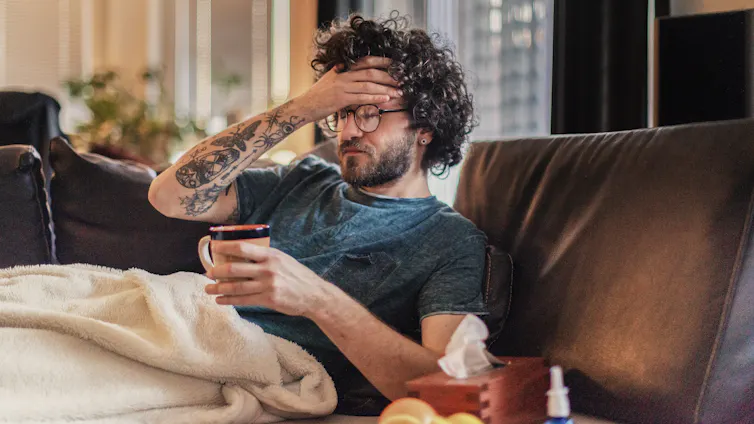
Winter is here, and with it come higher rates of respiratory illnesses. If you’ve been struck down recently with a sore throat, runny nose and a cough, or perhaps even a fever, you’re not alone.

Last week, non-urgent surgeries were paused in several Queensland hospitals due to a surge of influenza and COVID cases filling up hospital beds.

Meanwhile, more than 200 aged care facilities around Australia are reportedly facing COVID outbreaks.

So, just how bad are respiratory infections this year, and which viruses are causing the biggest problems?
nimis69/Getty Images

COVID

Until May, COVID case numbers were about half last year’s level, but June’s 32,348 notifications are closing the gap (compared with 45,634 in June 2024). That said, we know far fewer people test now than they did earlier in the pandemic, so these numbers are likely to be an underestimate.

According to the latest Australian Respiratory Surveillance Report, Australia now appears to be emerging from a winter wave of COVID cases driven largely by the NB.1.8.1 subvariant, known as “Nimbus”.

Besides classic cold-like symptoms, this Omicron offshoot can reportedly cause particularly painful sore throats as well as gastrointestinal symptoms such as nausea and diarrhoea.

While some people who catch COVID have no symptoms or just mild ones, for many people the virus can be serious. Older adults and those with chronic health issues remain at greatest risk of experiencing severe illness and dying from COVID.

Some 138 aged care residents have died from COVID since the beginning of June.

The COVID booster currently available is based on the JN.1 subvariant. Nimbus is a direct descendant of JN.1 – as is another subvariant in circulation, XFG or “Stratus” – which means the vaccine should remain effective against current variants.

Free boosters are available to most people annually, while those aged 75 and older are advised to get one every six months.

Vaccination, as well as early treatment with antivirals, lowers the risk of severe illness and long COVID. People aged 70 and older, as well as younger people with certain risk factors, are eligible for antivirals if they test positive.

Influenza

The 2025 flu season has been unusually severe. From January to May, total case numbers were 30% higher than last year, increasing pressure on health systems.

More recent case numbers seem to be trending lower than 2024, however we don’t appear to have reached the peak yet.

Flu symptoms are generally more severe than the common cold and may include high fever, chills, muscle aches, fatigue, sore throat and a runny or blocked nose.

Most people recover in under a week, but the flu can be more severe (and even fatal) in groups including older people, young children and pregnant women.

An annual vaccination is available for free to children aged 6 months to 4 years, pregnant women, those aged 65+, and other higher-risk groups.

Queensland and Western Australia provide a free flu vaccine for all people aged 6 months and older, but in other states and territories, people not eligible for a free vaccine can pay (usually A$30 or less) to receive one.

RSV

The third significant respiratory virus, respiratory syncytial virus (RSV), only became a notifiable disease in 2021 (before this doctors didn’t need to record infections, meaning data is sparse).

Last year saw Australia’s highest case numbers since RSV reporting began. By May, cases in 2025 were lower than 2024, but by June, they had caught up: 27,243 cases this June versus 26,596 in June 2024. However it looks as though we may have just passed the peak.

RSV’s symptoms are usually mild and cold-like, but it can cause serious illness such as bronchiolitis and pneumonia. Infants, older people, and people with chronic health conditions are among those at highest risk. In young children, RSV is a leading cause of hospitalisation.

A free vaccine is now available for pregnant women, protecting infants for up to six months. A monoclonal antibody (different to a vaccine but also given as an injection) is also available for at-risk children up to age two, especially if their mothers didn’t receive the RSV vaccine during pregnancy.

For older adults, two RSV vaccines (Arexvy and Abrysvo) are available, with a single dose recommended for everyone aged 75+, those over 60 at higher risk due to medical conditions, and all Aboriginal and Torres Strait Islander people aged 60+.

Unfortunately, these are not currently subsidised and cost about $300. Protection lasts at least three years.

The common cold

While viruses including COVID, RSV and influenza dominate headlines, we often overlook one of the most widespread – the common cold.

The common cold can be caused by more than 200 different viruses – mainly rhinoviruses but also some coronaviruses, adenoviruses and enteroviruses.

Typical symptoms include a runny or blocked nose, sore throat, coughing, sneezing, headache, tiredness and sometimes a mild fever.

Children get about 6–8 colds per year while adults average 2–4, and symptoms usually resolve in a week. Most recover with rest, fluids, and possibly over-the-counter medications.

Because so many different viruses cause the common cold, and because these constantly mutate, developing a vaccine has been extremely challenging. Researchers continue to explore solutions, but a universal cold vaccine remains elusive.

How do I protect myself and others?

The precautions we learned during the COVID pandemic remain valid. These are all airborne viruses which can be spread by coughing, sneezing and touching contaminated surfaces.

Practise good hygiene, teach children proper cough etiquette, wear a high-quality mask if you’re at high risk, and stay home to rest if unwell.

You can now buy rapid antigen tests (called panel tests) that test for influenza (A or B), COVID and RSV. So, if you’re unwell with a respiratory infection, consider testing yourself at home.

While many winter lurgies can be trivial, this is not always the case. We can all do our bit to reduce the impact.

Adrian Esterman, Professor of Biostatistics and Epidemiology, University of South Australia

This article is republished from The Conversation under a Creative Commons license. Read the original article.

Don’t Forget…

Did you arrive here from our newsletter? Don’t forget to return to the email to continue learning!
  • Blood-Sugar-Friendly Ice Pops
    Transform popsicles from sugar traps to delicious, blood sugar-friendly treats with our healthy recipe guide – blend, freeze, and enjoy guilt-free!

Learn to Age Gracefully

Join the 98k+ American women taking control of their health & aging with our 100% free (and fun!) daily emails:

  • Don’t Get Caught Out By These “Nontraditional” Stroke Risk Factors

    10almonds is reader-supported. We may, at no cost to you, receive a portion of sales if you purchase a product through a link in this article.

    Some stroke risk factors are modifiable (meaning: we can do something about them); others, not so much.

    So let’s do a quick rundown of the main ones:

    Modifiable risk factors

    • High blood pressure (hypertension): the single most important risk factor for stroke.
    • Smoking: bad for everything and this is no different; smoking damages blood vessels, which significantly increases stroke risk.
    • Diabetes: high blood sugars can damage blood vessels too, cumulatively over time.
    • High cholesterol: commonly leads to plaque buildup in arteries (atherosclerosis), which then creates hypertension, which we mentioned up top.
    • Obesity: increases the risks of hypertension and diabetes, thus indirectly increasing stroke risk.
    • Physical inactivity: again increases the risks of hypertension and diabetes, thus indirectly increasing stroke risk.
    • Excessive alcohol use: once again increases the risks of hypertension and diabetes, thus indirectly increasing stroke risk.
    • Poor diet: increases the risk of all of the above except for smoking (yes, poor diet also increases the risk of physical inactivity, since one who does not eat well will rarely exercise well).

    Non-modifiable risk factors

    • Age: risk increases significantly after age 55. Technically avoidable by dying young, but we don’t recommend that.
    • Sex*: men have a higher risk of having a stroke, but women are more likely to die from it. So, not easy to escape this one.
    • Family history: inheritable genetic factors seem to play a part, though this is not yet well-explored (there is no established “stroke gene”, for example).
    • Ethnicity: most non-white populations have an increased stroke risk compared to white people—since this is based on US data, though, it’s unclear how much of this is due to genetic factors, and how much is due to structural racism (including: disparity of generational wealth/poverty) resulting in worse medical care.
    • Previous stroke or TIA (transient ischemic attack): strong predictor of future strokes. It may seem a bit of a statement of the obvious that “the kind of person who has a stroke is the kind of person who is likely to have a stroke”, but it’d be remiss to not mention it.

    *Ok, since the risk factors for sex are predicted based on hormones (which affect cardiovascular disease risk and thus, indirectly, stroke risk), technically this is modifiable, but we’ll bet very few people are going to trans their gender just to get the opposite stroke risk!

    So what’s this about nontraditional risk factors?

    Recent research looked at over 1,000 Europeans aged 18–49, approximately half of whom (523, to be precise) had experienced a cryptogenic ischemic stroke (that’s a fancy way of saying an ischemic stroke with no clear cause).

    Specifically, they looked at the following “nontraditional” risk factors:

    1. Chronic multisystem disorder
    2. Inflammatory bowel disease
    3. Chronic kidney disease
    4. Chronic liver disease
    5. Autoimmune disease
    6. Hematologic disease or thrombophilia
    7. History of venous thrombosis
    8. History of malignancy
    9. Migraine with aura
    10. Current illicit drug use

    Even more specifically, they weighed these against having (or not having) a congenital heart defect, a patent foramen ovale (PFO), colloquially called a “hole in the heart“. They found:

    • Nontraditional risks had the strongest association with stroke in people with a PFO.
    • Nevertheless, for those without a PFO, each nontraditional factor increased stroke risk by 70%, compared to a 41% increase per traditional risk factor.
    • Female-centric risks outside of hormones (e.g. pregnancy complications, gestational diabetes) raised stroke risk by 70%, independently of other factors.
    • Migraine with aura was the top nontraditional risk, accounting for 46% of strokes in PFO patients and 23% in those without.

    You can read the paper itself here: Burden of Modifiable Risk Factors in Young-Onset Cryptogenic Ischemic Stroke by High-Risk Patent Foramen Ovale

    Since migraines themselves are much-misunderstood, you might want to check out:

    Migraine Mythbusting ← which also includes resources for managing this condition

    Chronic kidney disease was also a top contender for increasing stroke risk, so check out:

    Are your Kidneys Ok? Detect Early To Protect Kidney Health (Here’s How)

    …and also:

    Keeping Your Kidneys Healthy (Especially After 60) ← it’s about a lot more than just hydration!

    Want to learn more?

    Check out:

    Reduce Your Stroke Risk

    Take care!

    Share This Post

  • Seasonal Affective Disorder (Beyond Sunlight!)

    10almonds is reader-supported. We may, at no cost to you, receive a portion of sales if you purchase a product through a link in this article.

    For those of us in the Northern Hemisphere, the time of increasing darkness is upon us again. Depending on our latitude, the sun barely rises before it skitters off again. And depending on other factors of our geography, we might not get much sun during that time (writer’s example: the ancient bog from which I write has been surrounded by fog for two weeks now).

    So, what to do about it?

    Firstly, we can make the most of whatever sun we do get (especially in the morning, if possible), and we can of course make some use of artificial sunlight. To save doubling up, we’ll link to what we previously wrote about optimizing both of those things:

    ‘Tis To Season To Be SAD-Savvy

    More ways to get serotonin

    Sunlight, of course, triggers our bodies to make serotonin, and hence we often make less of it during winter. But, there are other ways to get serotonin too, and one of the best ways is spending time in nature. Yes, even if the weather is gloomy, provided there are still visible green things and you are seeing them, it will promote serotonin production.

    Of course, it may not be the season for picnics, but a morning walk through a local park or other green space is ideal.

    On which note, gardening remains a good activity. Not a lot of people do so much gardening after a certain point in the year, but in one way, it’s more important than ever to get some soil under your fingernails:

    There are bacteria in soil (specifically: Mycobacterium vaccae) that work similarly to antidepressants.

    When something is described as having an effect similar to antidepressants, it’s usually hyperbole. In this case, it’s medicine, and literally works directly on the serotonergic system (as do many, but not all, antidepressants).

    See also: Antidepressants: Personalization Is Key!

    While many antidepressants are selective serotonin uptake inhibitors (i.e., they slow the rate at which your brain loses serotonin), Mycobacterium vaccae increases the rate at which you produce serotonin. So, you feel happier, more relaxed, while also feeling more energized.

    See: Identification of an immune-responsive mesolimbocortical serotonergic system: Potential role in regulation of emotional behavior

    ^this one’s a mouse study, but we’re including it because it covers exactly how it works in the brain, which is something that the ethics board wouldn’t let them do on humans, due to the need for slicing the brains up for examination.

    As to how to benefit: touching soil will get you “infected” by the bacteria, yes, even if you wash your hands later. Growing food in the soil and eating the good (including if you wash and cook it) is even better.

    Boost the other “happiness chemicals”

    Serotonin is just one “happiness hormone”, other feel-good neurotransmitters that are just as important include dopamine and oxytocin.

    Dopamine is most associated with being the “reward chemical”, so it pays to do things that you find rewarding. If you’re stuck for ideas, engaging in small acts of kindness is a sure-fire way to get dopamine flowing and lift your own mood as well as theirs.

    See also: 10 Ways To Naturally Boost Dopamine

    Oxytocin, meanwhile is the “cuddle chemical”, and can be triggered even if you have nobody to cuddle*. If you do, by the way, make it at least 20–30 seconds, as that’s generally how long it takes to get oxytocin flowing.

    *Vividly imagining it has much the same effect, since the brain can’t tell the difference. Alternatively, looking at pictures/videos (your choice) of small cute animals tends to work for most people also.

    For more on these things, check out: Neurotransmitter Cheatsheet

    Take care!

    Share This Post

  • Kettlebell Swings Are Not What Most People Think They Are (They’re Better)

    10almonds is reader-supported. We may, at no cost to you, receive a portion of sales if you purchase a product through a link in this article.

    Commonly assumed to be mostly a shoulders-and-arms exercise, they’re actually mostly about the hips and core:

    From the hips

    Correctly executed kettlebell swings primarily strengthens muscles from the hamstrings and glutes the to abs and back; in other words, muscles whose strength is essential for power, posture, and injury prevention.

    The core in particular is not to be underestimated, with deep stabilizing muscles supporting posture, balance, and movement. Strengthening these areas can also help reduce lower back pain.

    How to do it correctly: start with your feet shoulder-width apart (this is important, if you like having knees) and grip the kettlebell with both hands. Hinge at your hips, lowering the kettlebell between your legs while keeping your back flat and core engaged. Then, drive your hips forward explosively to swing the kettlebell up to shoulder height before allowing it to return down with control. The most common mistake is using the arms to lift the kettlebell, but the real power should come from the hips to maximize benefits and prevent injury.

    Example workout: 30 seconds of kettlebell swings followed by 30 seconds of rest, repeated for 10 sets. This 10-minute routine provides a full-body workout that builds strength and endurance. As you progress, you can increase the weight, duration, number of sets, etc.

    Timeline of changes: within a few weeks of regular kettlebell swings, you should notice stronger glutes, better endurance, and improved posture. After a month, you may experience reduced lower back pain (if you had lower back pain) and more power in your everyday movements. By two to three months, visible muscle definition and fat loss are likely to become noticeable, along with increased overall strength.

    For more on all of this plus visual demonstrations, enjoy:

    Click Here If The Embedded Video Doesn’t Load Automatically!

    Want to learn more?

    You might also like:

    Body Sculpting with Kettlebells for Women – by Lorna Kleidman

    Take care!

    Share This Post

  • Chickpeas vs Soybeans – Which is Healthier?

    10almonds is reader-supported. We may, at no cost to you, receive a portion of sales if you purchase a product through a link in this article.

    Our Verdict

    When comparing chickpeas to soybeans, we picked the soybeans.

    Why?

    Both are great! But:

    In terms of macros, chickpeas have more than 3x the carbs and only very slightly more fiber, while soybeans have more than 2x the protein. Given the ratio of carbs to fiber in each, soybeans also have the lower glycemic index, so all in all, we’re calling this a win for soybeans.

    In the category of vitamins, chickpeas have more of vitamins A, B3, B5, and B9, while soybeans have more of vitamins B1, B2, B6, C, K, and choline—another win for soybeans.

    When it comes to minerals, chickpeas have more manganese and zinc, while soybeans have more calcium, copper, iron, magnesium, phosphorus, potassium, and selenium—meaning soybeans win yet again.

    Two extra things to know:

    • Chickpeas are naturally high in FODMAPs, which can be problematic for a minority of people—however, canned chickpeas are not.
    • Soybeans are famously high in phytoestrogens, however, the human body cannot actually use these as estrogen (we are not plants and our physiology is different). This means that on the one hand they won’t help against menopause (aside from the ways in which any nutrient-dense food would help), but on the other, they aren’t a cancer risk, and no, they won’t feminize men/boys in the slightest. You/they would be more at risk from beef and dairy, as the cows have usually been given extra estrogen, and those are animal hormones, not plant hormones.

    All in all, chickpeas are a wonderful food, but soybeans beat them by most nutritional metrics.

    Want to learn more?

    You might like to read:

    Why You Can’t Skimp On Amino Acids ← soybeans also have a great amino acid profile!

    Enjoy!

    Don’t Forget…

    Did you arrive here from our newsletter? Don’t forget to return to the email to continue learning!

    Learn to Age Gracefully

    Join the 98k+ American women taking control of their health & aging with our 100% free (and fun!) daily emails:

  • Master Your Core – by Dr. Bohdanna Zazulak

    10almonds is reader-supported. We may, at no cost to you, receive a portion of sales if you purchase a product through a link in this article.

    In the category of “washboard abs”, this one isn’t particularly interested in how much or how little fat you have. What it’s more interested in is a strong, resilient, and stable core. Including your abs yes, but also glutes, hips, and back.

    Nor is the focus on superhuman feats of strength, though certainly one could use these exercises to work towards that. Rather, here we see importance placed on functional performance, mobility, and stability.

    Lest mobility and stability seem at odds with each other, understand:

    • By mobility we mean the range of movement we are able to accomplish.
    • By stability, we mean that any movement we make is intentional, and not because we lost our balance.

    Functional performance, meanwhile, is a function of those two things, plus strength.

    How does the book deliver on this?

    There are exercises to do. Exercises of the athletic kind you might expect, and also exercises including breathing exercises, which gets quite a bit of attention too. Not just “do abdominal breathing”, but quite an in-depth examination of such. There are also habits to form, and lifestyle tweaks to make.

    Of course, you don’t have to do all the things she suggests. The more you do, the better results you are likely to get, but if you adopt even some of the practices she recommends, you’re likely to see some benefits. And, perhaps most importantly, reduce age-related loss of mobility, stability, and strength.

    Bottom line: a great all-rounder book of core strength, mobility, and stability.

    Click here to check out Master Your Core and enjoy the more robust health that comes with it!

    Don’t Forget…

    Did you arrive here from our newsletter? Don’t forget to return to the email to continue learning!

    Learn to Age Gracefully

    Join the 98k+ American women taking control of their health & aging with our 100% free (and fun!) daily emails:

  • Ghosted by a friend? 4 expert tips on how to handle the hurt

    10almonds is reader-supported. We may, at no cost to you, receive a portion of sales if you purchase a product through a link in this article.

    When we talk about “ghosting”, we usually think it relates to dating. But what happens when you’ve been ghosted by someone you’ve known for years – your childhood best friend, a parent, a child?

    These disappearances can be harder to explain, and even harder to heal from.

    It’s also surprisingly common. For instance, one study showed 38.6% of people have been ghosted by a friend.

    So why do people ghost those closest to them? What impact does it have on those left behind? How do you begin to move on?

    martin-dm/Getty

    What is ghosting?

    Ghosting is when someone abruptly, or gradually, cuts off all communication without explanation. Whether it’s a friend, family member or love interest, the signs are much the same – messages left on read or calls ignored. Sometimes you’re blocked.

    Ghosting doesn’t just happen online. It can also play out in person, when someone deliberately ignores you – avoiding eye contact, refusing attempts to engage in conversation, pretending you’re not there.

    Unlike relationships that gradually wither over time, or end abruptly after an argument, ghosting is a one-sided withdrawal from a relationship that happens without closure.

    For the person left behind, it can feel like grief.

    Why do people ghost family and friends?

    People often ghost friends for the same reasons they ghost romantic partners.

    Ghosting is more common – and considered more acceptable – in brief or casual romantic relationships or friendships. That’s when people may ghost because they lose interest, wish to avoid confrontation, or find it easier than facing the discomfort of ending things directly.

    In longer-term relationships, ghosting may stem from incompatibility, be prompted by different priorities, physical distance, or growing apart over time.

    Major life transitions – such as becoming a parent, entering the workforce, moving, or going through a divorce – can often provide the catalyst for someone to shrink their social network.

    In some cases, ghosting is driven by self-preservation or concerns for personal safety, particularly when ghosting involves family members.

    People report ghosting in response to toxic, emotionally draining, or abusive relationships, often when previous attempts to resolve issues were met with abuse or aggression. In such instances, ghosting isn’t so much an avoidance strategy, but a last resort to preserve someone’s safety and psychological wellbeing.

    Ghosting has also been linked to certain personality traits. One study found people who reported ghosting others tended to score higher in narcissism (tend towards entitlement and lack of empathy) and borderline traits (so have trouble regulating emotions and are impulsive).

    Why does it hurt so much?

    People often ghost as they hope to spare the other person the pain of rejection. But that is rarely the case.

    Being ghosted by someone you’ve been close to for a long time is often associated with grief, much like the death of the loved one. After the initial shock, there is often anger and sadness.

    Ghosting also involves “ambiguous loss”. This ambiguity – the uncertainty and lack of closure – can almost freeze the grief process, making it particularly hard to move on.

    In addition to grief-like emotions, ghosting is also often associated with self-blame, rumination, feelings of worthlessness, and trust issues that can affect how someone relates to others in the future.

    How to cope if you’ve been ghosted

    There’s no easy fix and you can’t force someone to communicate with you if they don’t want to. But research points to some strategies that may help you move on and ease the pain:

    1. Acknowledge your feelings. Grief-like emotions are a normal reaction to being ghosted. Accept your emotions and express them in healthy ways. This is better than suppressing them, which is linked to depression, low self-esteem and reduced wellbeing.
    2. Seek social support. Social support is linked to a range of mental health benefits. Talk about your experience with friends, family or a mental health professional. This can help reduce feeling of isolation, and low self-worth. Greater social support is also associated with post-traumatic growth – positive psychological change that can emerge after a challenging life event.
    3. Choose self-compassion over rumination. It’s easy to get caught in the trap of replaying what happened and wondering what went wrong. But this can prolong distress and make it harder to move on. Instead treat yourself as you would a close friend – with kindness, compassion and care. Self-compassion has been linked to reduced rumination, anxiety and depression. Exercise, mindfulness and spending time in nature are examples of self-care with similar psychological benefits.
    4. Create your own closure. Being ghosted can often leave you stuck in a cycle of uncertainty and unanswered questions. You may never get an explanation and waiting for answers will only make it harder to move on. Writing a letter you don’t send can help create closure. This form of expressive writing can help you articulate your thoughts and emotions and make sense of your experience – and is linked to a range of psychological benefits.

    Megan Willis, Associate Professor, School of Behavioural and Health Sciences, Australian Catholic University

    This article is republished from The Conversation under a Creative Commons license. Read the original article.

    Don’t Forget…

    Did you arrive here from our newsletter? Don’t forget to return to the email to continue learning!

    Learn to Age Gracefully

    Join the 98k+ American women taking control of their health & aging with our 100% free (and fun!) daily emails: