
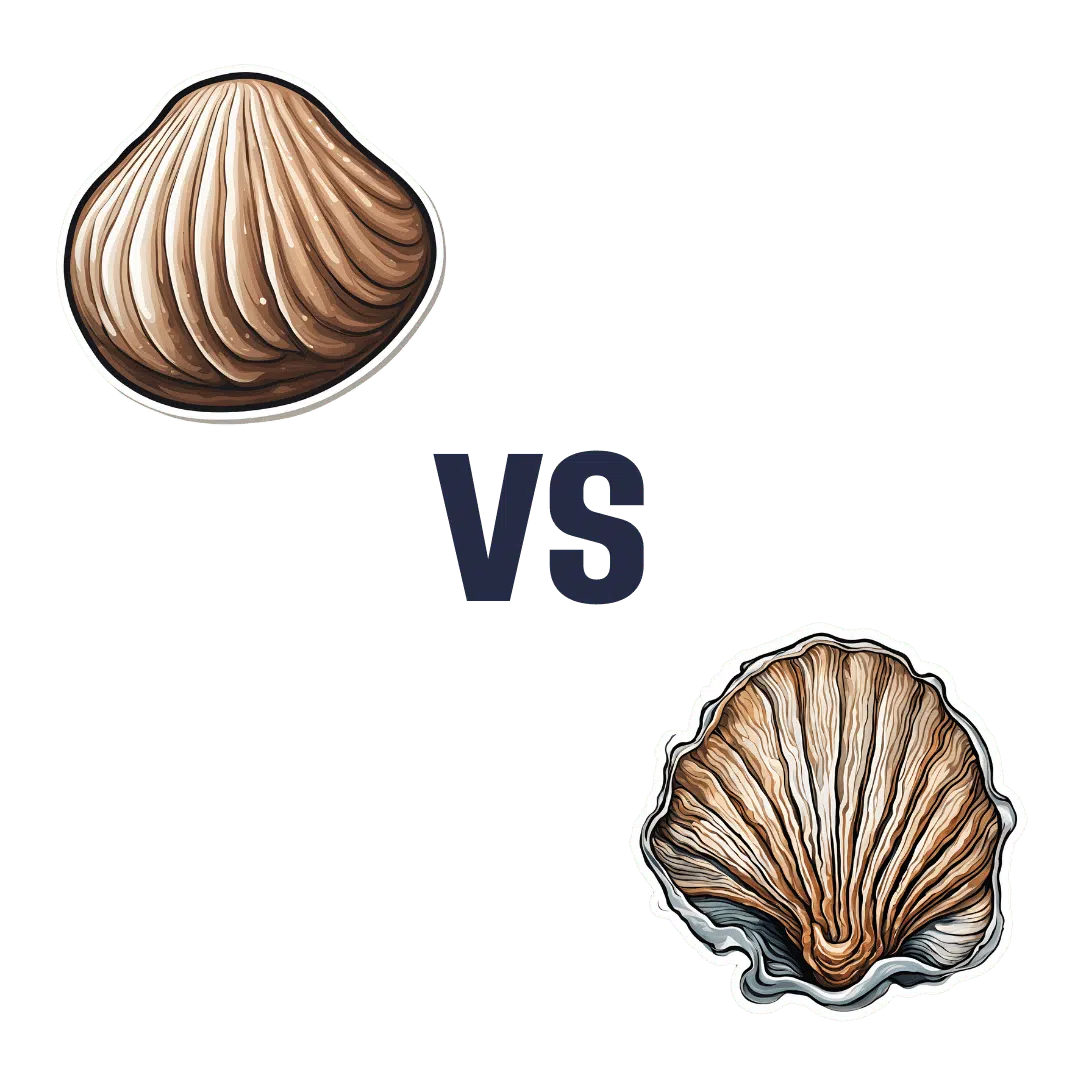
Clams vs Oysters – Which is Healthier?
10almonds is reader-supported. We may, at no cost to you, receive a portion of sales if you purchase a product through a link in this article.
Our Verdict
When comparing clams to oysters, we picked the clams.
Why?
Considering the macros first, clams have more than 2x the protein, while oysters have nearly 2x the fat, of which, a little over 5x the saturated fat. So, in all accounts, clam is the winner here.
In terms of vitamins, clams have more of vitamins A, B1, B2, B3, B5, B6, B7, B9, B12, and C, while oysters are not higher in any vitamins. Another win for clams.
The category of minerals is more balanced; clams are higher in manganese, phosphorus, potassium, and selenium, while oysters are higher in copper, iron, magnesium, and zinc. This makes for a 4:4 tie, though it’s worth noting that the margin of difference for zinc is very large, so that can be an argument for oysters.
Nevertheless, adding up the sections makes for a clear win for clams.
A quick aside on “are oysters an aphrodisiac?”:
That zinc content is probably largely responsible for oysters’ reputation as an aphrodisiac, and zinc is important in the synthesis of both estrogen and testosterone. However, as the synthesis is not instant, and those sex hormones rise most in the morning (around 8am to 9am), to enjoy aphrodisiac benefits it’d be more sensible, on a biochemical level, to eat oysters one day, and then have morning sex the next day when those hormones are peaking. That said, while testosterone is the main driver of male libido, progesterone is usually more relevant for women’s, and unlike estrogen, progesterone usually peaks around 10pm to 2am, and is uninfluenced by having just eaten oysters.
So, in what way, if any, could oysters be responsible for libido in women? Well, the zinc is still important in energy metabolism, so that’s a factor, and also, we might hypothesize that oysters’ high saturated fat and cholesterol content may increase blood pressure which, while not fabulous for the health in general, may be considered desirable in the bedroom since the clitoris is anatomically analogous to the penis, and—while estrogen vs testosterone makes differences to the nervous system down there that are beyond the scope of today’s article—also enjoys localized increased blood pressure (and thus, a flushing response and resultant engorgement) during arousal.
Want to learn more?
You might like to read:
Does Eating Shellfish Really Contribute To Gout? ← short answer is: it can if consumed frequently over a long period of time, but that risk factor is greatly overstated, compared to some other risk factors
Take care!
Don’t Forget…
Did you arrive here from our newsletter? Don’t forget to return to the email to continue learning!
Recommended
Learn to Age Gracefully
Join the 98k+ American women taking control of their health & aging with our 100% free (and fun!) daily emails:
-
Caffeine: Cognitive Enhancer Or Brain-Wrecker?
10almonds is reader-supported. We may, at no cost to you, receive a portion of sales if you purchase a product through a link in this article.
The Two Sides Of Caffeine
We asked you for your health-related opinions on caffeine itself, not necessarily the coffee, tea, energy drinks, etc that might contain it.
We have, by the way previously written about the health effects of coffee and tea specifically:
As for our question about caffeine itself, though, we got the above-depicted, below-described, set of results:
- About 59% said “caffeine is a safe stimulant and cognitive enhancer”
- About 31% said “caffeine is a moderately safe recreational drug”
- About 8% said “caffeine’s addictive properties make it de facto bad”
- One (1) person said “caffeine will leave you a trembling exhausted wreck”
But what does the science say?
Caffeine is addictive: True or False?
True, though one will find occasional academics quibbling the definition. Most of the studies into the mechanisms of caffeine addiction have been conducted on rats, but human studies exist too and caffeine is generally considered addictive for humans, for example:
See also:
Notwithstanding its addictive status, caffeine is otherwise safe: True or False?
True-ish, for most people. Some people with heart conditions or a hypersensitivity to caffeine may find it is not safe for them at all, and for the rest of us, the dose makes the poison. For example:
❝Can too much caffeine kill you? Although quite rare, caffeine can be fatal in cases of overdose; such circumstances are generally not applicable to healthy individuals who typically consume caffeine via beverages such as tea or coffee.❞
this paper, by the way, also includes a good example of academics quibbling the definition of addiction!
Caffeine is a cognitive enhancer: True or False?
True, but only in the case of occasional use. If you are using it all the time, your physiology will normalize it and you will require caffeine in order to function at your normal level. To attain higher than that, once addicted to caffeine, would now require something else.
Read more: Caffeine: benefits and drawbacks for technical performance
Caffeine will leave you a trembling exhausted wreck: True or False?
True or False depending on usage:
- The famously moderate 3–5 cups per day will not, for most people, cause any such problems.
- Using/abusing it to make up for lost sleep (or some other source of fatigue, such as physical exhaustion from exertion), however, is much more likely to run into problems.
In the latter case, caffeine really is the “payday loan” of energy! It’ll give you an adrenal boost now (in return, you must suffer the adrenal dumping later, along with lost energy expended in the adrenaline surge), and also, the tiredness that you thought was gone, was just caffeine’s adenosine-blocking activities temporarily preventing you from being able to perceive the tiredness. So you’ll have to pay that back later, with interest, because of the extra time/exertion too.
Want to make caffeine a little more gentle on your system?
Taking l-theanine alongside caffeine can ameliorate some of caffeine’s less wonderful effects—and as a bonus, l-theanine has some nifty benefits of its own, too:
Enjoy!
Share This Post
-
How Regularity Of Sleep Can Be Even More Important Than Duration
10almonds is reader-supported. We may, at no cost to you, receive a portion of sales if you purchase a product through a link in this article.
A recent, large (n=72,269) 8-year prospective* observational study of adults aged 40-79 has found an association between irregular sleep and major cardiovascular events.
*this means they started the study at a given point, and measured what happened for the next eight years—as opposed to a retrospective study, which would look at what had happened during the previous 8 years.
As to what qualifies as major cardiovascular events, they counted:
- Heart attack
- Cardiac arrest
- Stroke
- Cardiovascular death (any)
Irregular sleep, meanwhile, was defined per a bell curve of participants. Based on a sleep regularity index (SRI) score, those with a score of 87 or more were on the “regular” side of the curve, and those with a score of 72 or lower were on the “irregular” side of the curve.
What they found is that irregular sleep is associated with major cardiovascular events, regardless of the actual amount of sleep that people got. So in other words, you could be sleeping 9 hours per day, but if it’s a different 9 hours each day, your cardiovascular risk will still be higher.
How much higher?
- For those in the middle of the curve (so, moderate irregularity), it was 8% higher than those on the “regular” side.
- For those on the “irregular” side of the curve, it was 26% higher than those on the “regular” side.
All of the above is after taking into account confounding variables such as age, physical activity levels, discretionary screen time, fruit, vegetable, and coffee intake, alcohol consumption, smoking, mental health issues, medication use, and shift work. Which is quite something, given that shift work is a very common reason for irregular sleep schedules in a lot of people.
Limitations
While, as noted above, they did their best to account for a lot of things, this was an observational study, not an interventional study or a randomized controlled trial, and as such, it cannot truly establish cause and effect.
For example, an observational study in the 90s found that the sport most strongly associated with longevity was polo. For any unfamiliar, it’s a game played on horseback with mallets and balls. Why was this game so much better than, say, swimming? And the answer is most likely that polo is played almost entirely by very rich people. It wasn’t the sport that enhanced longevity—it was the wealth.
So similarly here, it could be for example that people who are predisposed to heart conditions, are prone to having irregular schedules. We won’t know for sure until we have interventional studies (and we probably can’t get RCTs for this, for practical reasons).
Still, it seems likely that the association is indeed causal, in which case, having a regular sleep schedule if at all possible seems like a very good way to look after one’s health.
You can read more about the study here:
Irregular sleep may elevate risk of major cardiovascular events
Practical take-away
This study strongly suggests that sleep regularity is even more important than sleep duration.
This means that there is extra reason to not sleep in past one’s normal getting-up time, even if one had a less restful night.
That’s the end of sleep that’s the most important in practical terms, too, because we can control our getting-up time, whereas we can’t really control our going-to-sleep time, because it’s perfectly possible to just lie there awake.
So, controlling the getting-up time is really the key to the whole thing. See also:
Calculate (And Enjoy) The Perfect Night’s Sleep
And for scope, you might enjoy reading:
Morning Larks vs Night Owls: How Much Can We Control Our Sleep Schedule?
Enjoy!
Share This Post
-
What is mantle cell lymphoma? Magda Szubanski’s ‘rare and fast-moving’ cancer, explained
10almonds is reader-supported. We may, at no cost to you, receive a portion of sales if you purchase a product through a link in this article.
Beloved Australian actor, Magda Szubanski, has revealed she’s been diagnosed with a “very rare, very aggressive, very serious” blood cancer called mantle cell lymphoma.
In a post on social media on Thursday, Szubanski said she would be starting treatment in a few weeks for the stage 4 cancer, which she called “one of the nasty ones, unfortunately”.
So, what is mantle cell lymphoma? And how is it treated?
Lisa Maree Williams/Getty What is mantle cell lymphoma?
There are more than 100 subtypes of blood cancers, but they are commonly divided into one of two groups. These are based on where they originate: leukaemias develop in the bone marrow, and lymphomas develop in the lymphatic system.
Lymphomas develop from white blood cells (lymphocytes), which circulate in the blood and lymphatic system and help fight infection.
You may not have heard of the lymphatic system, but it plays a key role in your immune response.
The lymphatic circulatory system is responsible for transporting fluids (lymph) around your body. Lymph comes from blood plasma, and helps remove waste from your tissues.
As part of the lymphatic system, tissues like the spleen and thymus help produce many of the immune cells you use to fight infections.
These cells are then housed in specialised organs called lymph nodes – small pea-sized glands located throughout your body.
The lymphatic system plays a key role in your body’s immune response. Clash_Gene/Shutterstock Lymph nodes are kind of like the “war room” of your immune system.
Your body contains hundreds of lymph nodes, and each contains millions of lymphocytes. These include the T and B cells – the main fighting cells in adaptive immunity.
If B cells in an area of the lymph node known as the “mantle zone” become cancerous, it is called mantle cell lymphoma.
How rare is it?
In 2020, there were 330 cases of mantle cell lymphoma diagnosed in Australia, accounting for a small fraction (5%) of lymphoma cases.
Overall, lymphomas account for around one in twenty new cancer diagnoses. This makes mantle cell lymphoma quite rare.
Mantle cell lymphoma is about three times more common in men than in women, and mostly affects people over the age of 60.
Is there a cure?
Unfortunately, mantle cell lymphoma is largely considered incurable with the therapies currently available.
Like many cancers, mantle cell lymphoma can vary in how quickly it develops and its severity.
As Szubanski’s cancer has been described as “fast-moving” and is already stage 4, it appears that it is a more serious case.
Stage 4 is the most advanced stage – meaning the cancer has spread (metastasised) to other tissues.
Treatment at this stage can be more complicated than when the cancer is caught earlier. But treatment can still help people go on to live for many years.
What does treatment involve?
In her social media post, Szubanski said she will be receiving “one of the best treatments available (the Nordic protocol)”.
This is one of the most common treatments for an aggressive lymphoma.
The main component is “R-CHOP” – a combination therapy. It involves a mixture of different drugs, including chemotherapy, to attack the cancer from multiple angles at the same time.
Different strengths of the drugs can be used (the maximum strength is sometimes called R-maxi-CHOP).
A stem cell transplantation may also be included in the regimen.
How effective this treatment is will depend on many different factors, including the type and stage of the lymphoma.
The aim is to kill as many cancer cells as possible, and therefore extend a patient’s life for as long as possible.
Therapy also focuses on providing a high quality-of-life for patients.
How is it diagnosed?
Szubanski’s mantle cell lymphoma was detected during a breast cancer screen where, she says, “they found my lymph nodes were up”.
Imaging techniques, such as a mammogram or MRI, may detect tell-tale signs of lymphoma, such as swollen lymph nodes.
However a biopsy – a small sample of tissue from the affected area – would then be required to confirm the presence of cancer cells and identify what type.
Blood cancer symptoms can be vague, but it’s good to know what to look for.
As well as swollen lymph nodes, symptoms of lymphoma include nausea, tiredness, loss of appetite, fevers, gastrointestinal issues, unexplained weight loss, and night sweats.
If you have any concerns, you should consult a doctor.
John (Eddie) La Marca, Senior Research Officer, Blood Cells and Blood Cancer, WEHI (Walter and Eliza Hall Institute of Medical Research) and Sarah Diepstraten, Senior Research Officer, Blood Cells and Blood Cancer Division, WEHI (Walter and Eliza Hall Institute of Medical Research)
This article is republished from The Conversation under a Creative Commons license. Read the original article.
Share This Post
Related Posts
-
Lime vs Tangerine – Which is Healthier?
10almonds is reader-supported. We may, at no cost to you, receive a portion of sales if you purchase a product through a link in this article.
Our Verdict
When comparing limes to tangerines, we picked the tangerines.
Why?
It was close!
In terms of macros, limes start off strong with nearly 2x the fiber, while the other macros are approximately equal. So this round is nominally a win for limes, although it’s worth noting that you only get that fiber benefit with the whole fruit—a shot of lime juice in your drink won’t give you this! Given that very few people eat limes and tend to just use the juice, this is a relevant thing to consider.
In the category of vitamins, limes have more of vitamins A, B5, and K, while tangerines have more of vitamins B1, B2, B3, B6, B7, B9, and C. Yes, tangerines have more of the vitamin C for which limes are famous. In any case, a clear win for tangerines in this round!
Looking at minerals, limes have more copper, iron, selenium, and zinc, while tangerines have more magnesium, manganese, phosphorus, and potassium, for a 4:4 tie here.
Adding up the sections one win for each and a draw, but we say the tangerines win overall on tiebreakers, since their win (on minerals) was abundant and clear, whereas limes’ win (on macros) was based on a technicality and not very practical given how limes are usually consumed.
Want to learn more?
You might like:
What’s Your Plant Diversity Score?
Enjoy!
Don’t Forget…
Did you arrive here from our newsletter? Don’t forget to return to the email to continue learning!
Learn to Age Gracefully
Join the 98k+ American women taking control of their health & aging with our 100% free (and fun!) daily emails:
-
Does intermittent fasting have benefits for our brain?
10almonds is reader-supported. We may, at no cost to you, receive a portion of sales if you purchase a product through a link in this article.
Intermittent fasting has become a popular dietary approach to help people lose or manage their weight. It has also been promoted as a way to reset metabolism, control chronic disease, slow ageing and improve overall health.
Meanwhile, some research suggests intermittent fasting may offer a different way for the brain to access energy and provide protection against neurodegenerative diseases like Alzheimer’s disease.
This is not a new idea – the ancient Greeks believed fasting enhanced thinking. But what does the modern-day evidence say?
First, what is intermittent fasting?
Our diets – including calories consumed, macronutrient composition (the ratios of fats, protein and carbohydrates we eat) and when meals are consumed – are factors in our lifestyle we can change. People do this for cultural reasons, desired weight loss or potential health gains.
Intermittent fasting consists of short periods of calorie (energy) restriction where food intake is limited for 12 to 48 hours (usually 12 to 16 hours per day), followed by periods of normal food intake. The intermittent component means a re-occurrence of the pattern rather than a “one off” fast.
Food deprivation beyond 24 hours typically constitutes starvation. This is distinct from fasting due to its specific and potentially harmful biochemical alterations and nutrient deficiencies if continued for long periods.
4 ways fasting works and how it might affect the brain
The brain accounts for about 20% of the body’s energy consumption.
Here are four ways intermittent fasting can act on the body which could help explain its potential effects on the brain.
1. Ketosis
The goal of many intermittent fasting routines is to flip a “metabolic switch” to go from burning predominately carbohydrates to burning fat. This is called ketosis and typically occurs after 12–16 hours of fasting, when liver and glycogen stores are depleted. Ketones – chemicals produced by this metabolic process – become the preferred energy source for the brain.
Due to this being a slower metabolic process to produce energy and potential for lowering blood sugar levels, ketosis can cause symptoms of hunger, fatigue, nausea, low mood, irritability, constipation, headaches, and brain “fog”.
At the same time, as glucose metabolism in the brain declines with ageing, studies have shown ketones could provide an alternative energy source to preserve brain function and prevent age-related neurodegeneration disorders and cognitive decline.
Consistent with this, increasing ketones through supplementation or diet has been shown to improve cognition in adults with mild cognitive decline and those at risk of Alzheimer’s disease respectively.
2. Circadian syncing
Eating at times that don’t match our body’s natural daily rhythms can disrupt how our organs work. Studies in shift workers have suggested this might also make us more prone to chronic disease.
Time-restricted eating is when you eat your meals within a six to ten-hour window during the day when you’re most active. Time-restricted eating causes changes in expression of genes in tissue and helps the body during rest and activity.
A 2021 study of 883 adults in Italy indicated those who restricted their food intake to ten hours a day were less likely to have cognitive impairment compared to those eating without time restrictions.
Matching your eating to the active parts of your day may have brain benefits.
Shutterstock3. Mitochondria
Intermittent fasting may provide brain protection through improving mitochondrial function, metabolism and reducing oxidants.
Mitochondria’s main role is to produce energy and they are crucial to brain health. Many age-related diseases are closely related to an energy supply and demand imbalance, likely attributed to mitochondrial dysfunction during ageing.
Rodent studies suggest alternate day fasting or reducing calories by up to 40% might protect or improve brain mitochondrial function. But not all studies support this theory.
4. The gut-brain axis
The gut and the brain communicate with each other via the body’s nervous systems. The brain can influence how the gut feels (think about how you get “butterflies” in your tummy when nervous) and the gut can affect mood, cognition and mental health.
In mice, intermittent fasting has shown promise for improving brain health by increasing survival and formation of neurons (nerve cells) in the hippocampus brain region, which is involved in memory, learning and emotion.
What we eat can affect our brain, and vice versa.
ShutterstockThere’s no clear evidence on the effects of intermittent fasting on cognition in healthy adults. However one 2022 study interviewed 411 older adults and found lower meal frequency (less than three meals a day) was associated with reduced evidence of Alzheimer’s disease on brain imaging.
Some research has suggested calorie restriction may have a protective effect against Alzheimer’s disease by reducing oxidative stress and inflammation and promoting vascular health.
When we look at the effects of overall energy restriction (rather than intermittent fasting specifically) the evidence is mixed. Among people with mild cognitive impairment, one study showed cognitive improvement when participants followed a calorie restricted diet for 12 months.
Another study found a 25% calorie restriction was associated with slightly improved working memory in healthy adults. But a recent study, which looked at the impact of calorie restriction on spatial working memory, found no significant effect.
Bottom line
Studies in mice support a role for intermittent fasting in improving brain health and ageing, but few studies in humans exist, and the evidence we have is mixed.
Rapid weight loss associated with calorie restriction and intermittent fasting can lead to nutrient deficiencies, muscle loss, and decreased immune function, particularly in older adults whose nutritional needs may be higher.
Further, prolonged fasting or severe calorie restriction may pose risks such as fatigue, dizziness, and electrolyte imbalances, which could exacerbate existing health conditions.
If you’re considering intermittent fasting, it’s best to seek advice from a health professional such as a dietitian who can provide guidance on structuring fasting periods, meal timing, and nutrient intake. This ensures intermittent fasting is approached in a safe, sustainable way, tailored to individual needs and goals.
Hayley O’Neill, Assistant Professor, Faculty of Health Sciences and Medicine, Bond University
This article is republished from The Conversation under a Creative Commons license. Read the original article.
Don’t Forget…
Did you arrive here from our newsletter? Don’t forget to return to the email to continue learning!
Learn to Age Gracefully
Join the 98k+ American women taking control of their health & aging with our 100% free (and fun!) daily emails:
-
A Tale Of Two Cinnamons
10almonds is reader-supported. We may, at no cost to you, receive a portion of sales if you purchase a product through a link in this article.
Cinnamon’s Health Benefits (But Watch Out!)
Cinnamon is enjoyed for its sweet and punchy flavor. It also has important health properties!
Let’s take a look at the science…
A Tale Of Two Cinnamons
In your local supermarket, there is likely “cinnamon” and if you’re lucky, also “sweet cinnamon”. The difference between these is critical to understand before we continue:
“Cinnamon” = Cinnamomum cassia or Cinnamomum aromaticum. This is cheapest and most readily available. It has a relatively high cinnamaldehyde content, and a high coumarin content.
“Sweet cinnamon” Cinnamomum verum or Cinnamomum zeylanicum. It has a lower cinnamaldehyde content, and/but a much lower (almost undetectable) coumarin content.
You may be wondering: what’s with the “or” in both of those cases? Each simply has two botanical names in use. It’s inconvenient and confusing, but that’s how it is.
Great! What’s cinnamaldehyde and what’s coumarin?
Cinnamaldehyde is what gives cinnamon its “spice” aspect; it’s strong and fragrant. It also gives cinnamon most of its health benefits.
As a quick aside: it’s also used as the flavoring element in cinnamon flavored vapes, and in that form, it can cause health problems. So do eat it, but we recommend not to vape it.
Coumarin is toxic in large quantities.
The recommended safe amount is 0.1mg/kg, so you could easily go over this with a couple of teaspoons of cassia cinnamon:
Toxicology and risk assessment of coumarin: focus on human data
…while in Sweet/True/Ceylon cinnamon, those levels are almost undetectable:
Medicinal properties of ‘true’ cinnamon (Cinnamomum zeylanicum): a systematic review
If you have a cinnamon sensitivity, it is likely, but not necessarily, tied to the coumarin content rather than the cinnamaldehyde content.
Summary of this section before moving on:
“Cinnamon”, or cassia cinnamon, has about 50% stronger health benefits than “Sweet Cinnamon”, also called Ceylon cinnamon.
“Cinnamon”, or cassia cinnamon, has about 250% stronger health risks than “Sweet Cinnamon”, also called Ceylon cinnamon.
The mathematics here is quite simple; sweet cinnamon is the preferred way to go.
The Health Benefits
We spent a lot of time/space today looking at the differences. We think this was not only worth it, but necessary. However, that leaves us with less time/space for discussing the actual benefits. We’ll summarize, with links to supporting science:
“Those three things that almost always go together”:
Heart and blood benefits:
- Reduces triglyceride levels
- Reduces high blood pressure
- Reduces insulin insensitivity
- Reduces fasting blood sugar levels
Neuroprotective benefits:
The science does need more testing in these latter two, though.
Where to get it?
You may be able to find sweet cinnamon in your local supermarket, or if you prefer capsule form, here’s an example product on Amazon
Enjoy!
Don’t Forget…
Did you arrive here from our newsletter? Don’t forget to return to the email to continue learning!
Learn to Age Gracefully
Join the 98k+ American women taking control of their health & aging with our 100% free (and fun!) daily emails:


