
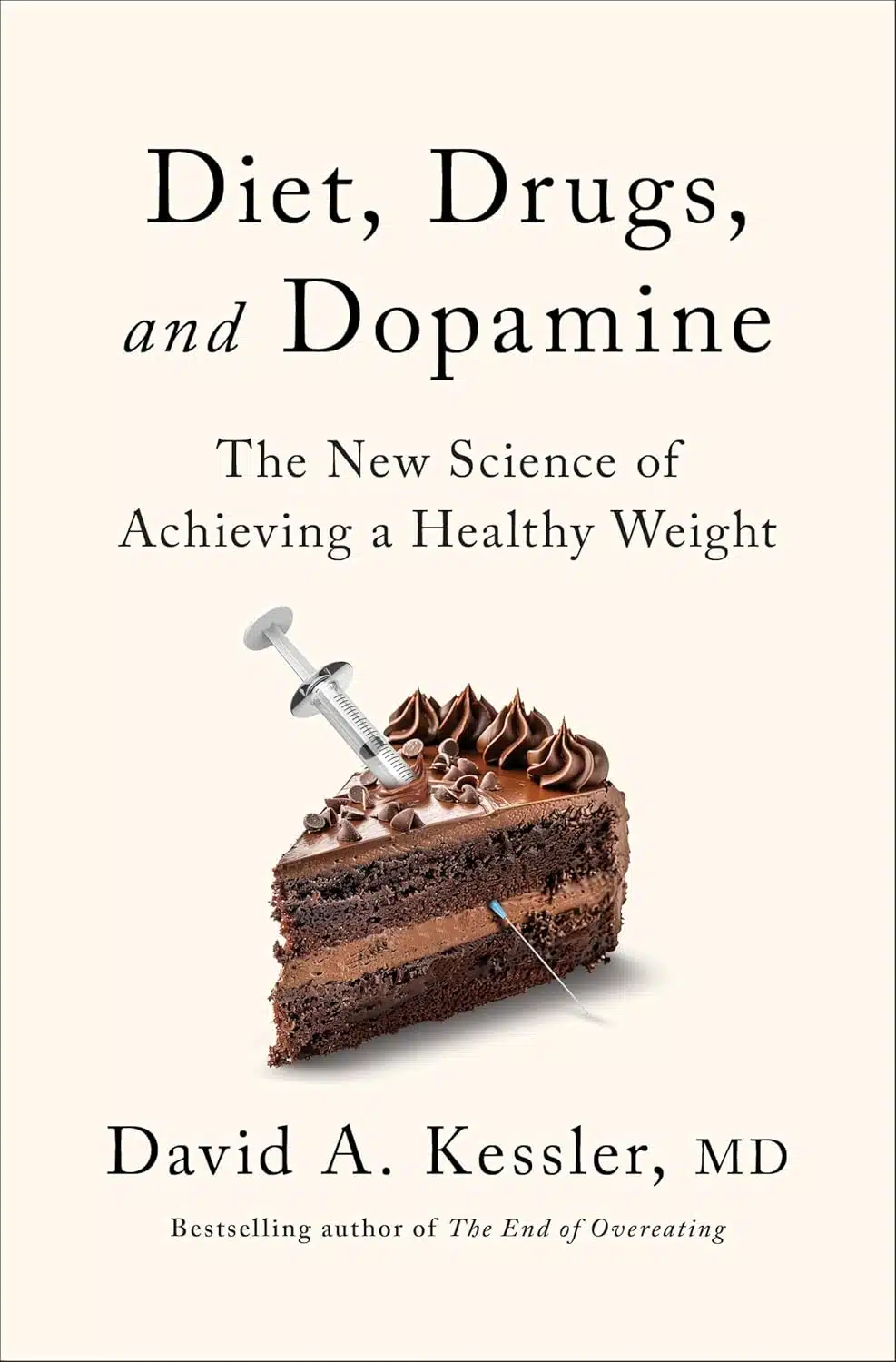
Diet, Drugs, and Dopamine – by Dr. David Kessler
10almonds is reader-supported. We may, at no cost to you, receive a portion of sales if you purchase a product through a link in this article.

Dr. Kessler takes the position that [junk] food addiction is not only real, but also overwhelmingly prevalent in industrialized nations in general, and the US in particular—the latter getting hit extra hard in large part because of much more relaxed regulations when it comes to both food production, and advertising, compared to most industrialized nations. Which results, he explains, in a man-made epidemic of addiction. Just like nicotine (an example he discusses at length, as a parallel), the hooking of the people did not occur by accident; it was calculated and built around the idea of leveraging addiction to secure more sales.
What then, of personal responsibility? He argues that it is not the individual who is at fault at all. Speaking for himself and his lifelong battle with weight, he says:
❝I have two advanced degrees. I attended my third year of medical school and my third year of law school at the same time. I have been dean of two medical schools. I’ve run the FDA. No one would ever accuse me of not having discipline and determination. and yet, throughout my life, I have perpetually taken the path back to [overeating], despite how miserable I know I will be when I get there.❞
As such, he does indeed make the case that it’s not an matter of willpower or intelligence or anything like that, and is much more a factor of biology—the details of which discusses in great depth over many chapters.
The style is very engaging pop-science, easy to read and yet still with 10 pages of bibliography. He tells a lot of stories, and name-drops more often than Tahani Al-Jamil, often at a rate of 3–4 doctors per page, but unlike a lot of authors who seem keen to glamorize their connections, this one (not too surprising, given his own background) treats them for what they are in this context: resources to refer to.
To this end, he even extensively quotes critics of his ideas, even in cases where he does not have an adequate response, and he seems quite self-aware of this, in the sense of: he does not require the ego-prop of always being right or always having all the answers, and is genuinely pleased that the topic is being engaged with in earnest, and he simply hopes that between them they can find the best way forwards.
As for solutions? He considers it a matter of four main pillars: diet, exercise, psychology, and medicine.
In the latter category, he hails GLP-1 receptor agonists as wonderdrugs, while still noting their downsides, and also recommends that, in order to be beneficial in the broadest scope, they need to be used in conjunction with the other things, such that one can take advantage of the cravings-lowering effect of the drugs, in order to change one’s habits in life.
Bottom line: if you’re looking for a quick fix, a “three-week program” or such, this isn’t it. If, however, you’d like to better understand the physiology of food cravings, how this situation was largely engineered by food giants and how to fight back, then this is an excellent book.
Click here to check out Diet, Drugs, & Dopamine, and learn all about it!
Don’t Forget…
Did you arrive here from our newsletter? Don’t forget to return to the email to continue learning!
Learn to Age Gracefully
Join the 98k+ American women taking control of their health & aging with our 100% free (and fun!) daily emails: