
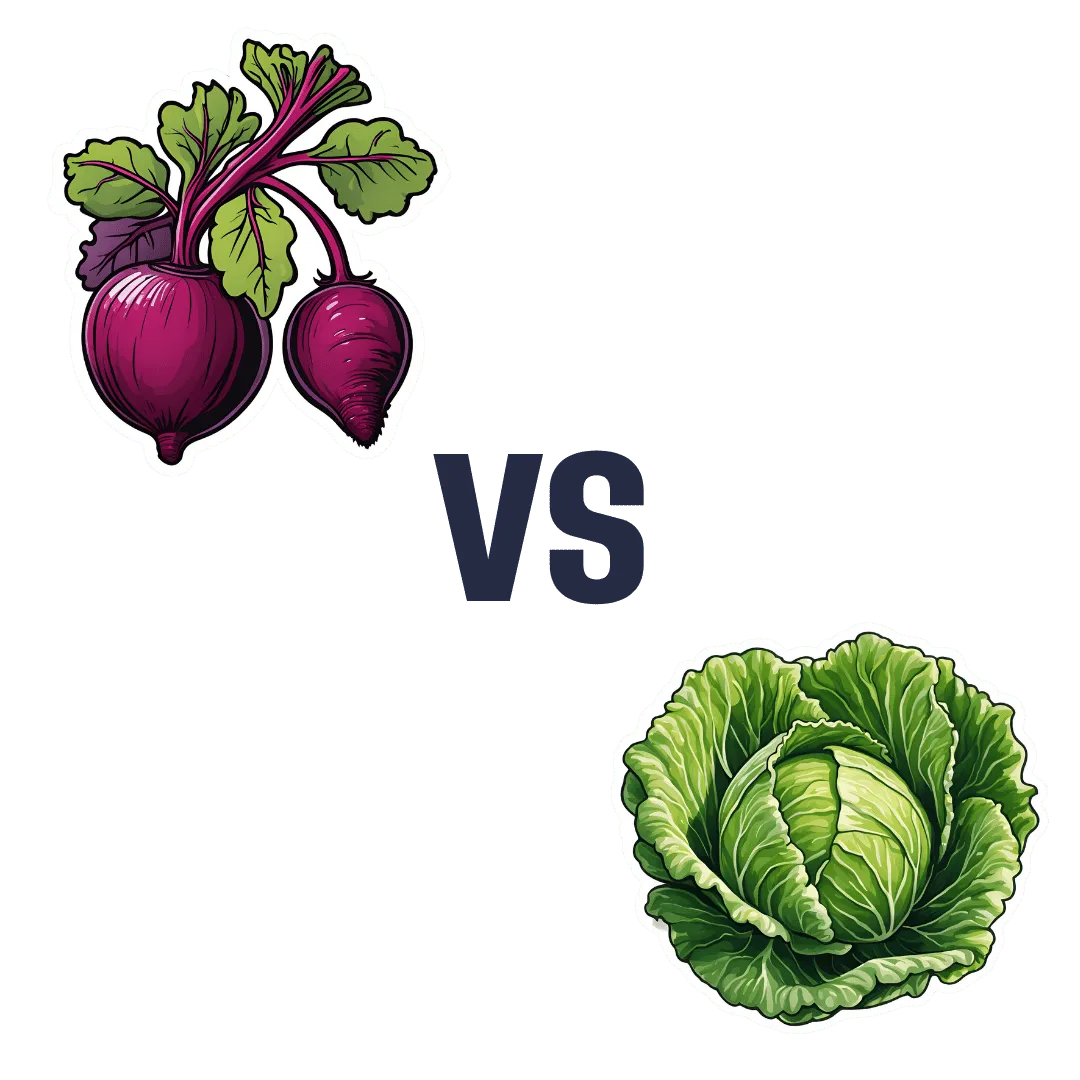
Beetroot vs Cabbage – Which is Healthier?
10almonds is reader-supported. We may, at no cost to you, receive a portion of sales if you purchase a product through a link in this article.
Our Verdict
When comparing beetroot to cabbage, we picked the beetroot.
Why?
In terms of macros, there isn’t much difference between them, but beetroot has slightly more fiber, carbs, and protein, making for a very slender nominal win in this category.
In the category of vitamins, beetroot has more of vitamins B3, B7, and B9, while cabbage has more of vitamins A, B1, B5, B6, C, E, and K, winning this round.
Looking at minerals, beetroot has more copper, iron, magnesium, manganese, phosphorus, potassium, selenium, and zinc, while cabbage has more calcium, yielding an 8:1 win to beetroot here.
In other considerations, beetroot has more nitrates, and cabbage would have more more polyphenols if we count only the roots and not the greens, but if we count both, then beetroot wins on that, too.
Either way, adding up the sections makes for an overall win for beetroot, but by all means do enjoy either or both, as diversity is best!
Want to learn more?
You might like:
Beetroot For More Than Just Your Blood Pressure
Enjoy!
Don’t Forget…
Did you arrive here from our newsletter? Don’t forget to return to the email to continue learning!
Recommended
Learn to Age Gracefully
Join the 98k+ American women taking control of their health & aging with our 100% free (and fun!) daily emails:
-
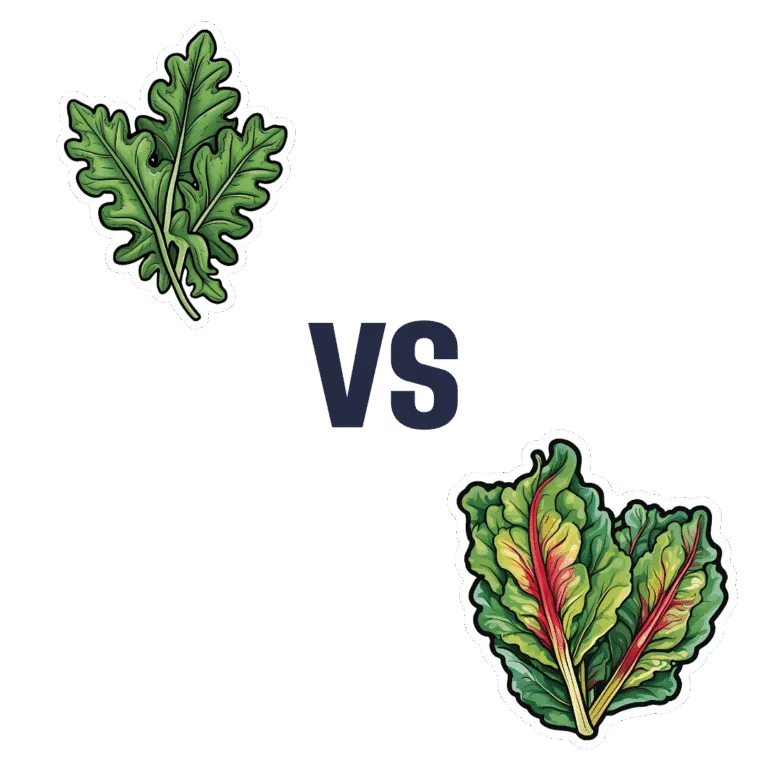
Kale vs Spinach – Which is Healthier?
10almonds is reader-supported. We may, at no cost to you, receive a portion of sales if you purchase a product through a link in this article.
Our Verdict
When comparing kale to spinach, we picked the kale.
Why?
In terms of macros, kale has more fiber, carbs, and protein, making it the more nutrient-dense option in this category.
When it comes to vitamins, kale has more of vitamins A, B1, B3, B5, B6, C, and K, while spinach has more of vitamins B2, B9, and E, yielding a 7:3 victory to kale.
Looking at minerals next, kale has more calcium, copper, and phosphorus, while spinach has more iron, magnesium, and manganese, and as they’re equal in other minerals, that makes this round a 3:3 tie.
In other considerations, kale is highest in carotenoids and polyphenols (though spinach is good too), while spinach is high in oxalates (kale has negligible oxalates), which latter is irrelevant to most people, but if you have kidney issues, it can cause problems there. So, a win for kale in this category because of its higher carotenoids and polyphenols, and the negligible oxalates.
Adding up the sections makes for a clear overall win for kale, but by all means enjoy either or both, unless you need to avoid oxalates, in which case then very definitely opt for the kale!
Want to learn more?
You might like:
Brain Food? The Eyes Have It! ← this is about leafy greens, and their lutein in particular
Enjoy!
Share This Post
-
How Not To Die – by Dr. Michael Greger
10almonds is reader-supported. We may, at no cost to you, receive a portion of sales if you purchase a product through a link in this article.
We previously reviewed this book some years ago, but we’re revisiting it now because:
- It really is a book that should be in every healthspan-enjoyer’s collection
- Our book reviews back then were not as comprehensive as now (though we still generally try to fit into the “it takes about one minute to read this review” idea, sometimes we’ll spend a little extra time).
Dr. Greger (of “Dr. Greger’s Daily Dozen” fame) outlines for us in cold hard facts and stats what’s most likely to be our cause of death. While this is not a cheery premise for a book, he then sets out to work back from there—what could have prevented those specific things?
Thus, while the book doesn’t confer immortality (the title is not “how to not die”, after all), it does teach us how not to die—i.e, from heart disease, lung diseases, brain diseases, digestive cancers, infections, diabetes, high blood pressure, liver disease, blood cancers, kidney disease, breast cancer, suicidal depression, prostate cancer, Parkinson’s disease, and even iatrogenic causes.
This it does with a lot of solid science, explained for the layperson, and/but without holding back when it comes to big words, and a lot of them, at that. If you want to add in daily exercises, just lifting the book could be a start; weighing in at 678 pages, it’s an information-dense tome that’s more likely to be sifted through than read cover-to-cover.
The style is thus dense science somewhat editorialized for lay readability, and well-evidenced with around 3,000 citations. That’s not a typo; there are 178 pages of bibliography at the back with about 15–20 scientific references per page.
In terms of practical use, he does also devote chapters to that, it’s not just all textbook. Indeed, he discusses the reasonings behind the items, portion sizes, and quantities of his “daily dozen” foods, so that the reader will understand how much bang-for-buck they deliver, and then it’ll seem a lot less like an arbitrary list, and more likely to be adopted and maintained.
Bottom line: if you care about not getting life-threatening illnesses (which at the end of the day, come to most people at some point), then this book is a must-read.
Share This Post
-
What to Eat When – by Drs. Michael Roizen and Michael Crupain
10almonds is reader-supported. We may, at no cost to you, receive a portion of sales if you purchase a product through a link in this article.
Here at 10almonds, we cover a lot of the “what to eat”, but tend to only sometimes touch on the “when”—and indeed, this is a reflection of a popular focus. But what if we were to pay a little more attention to that “when”; what would it get us?
According to Drs. Roizen and Crupain… Quite a bit!
In this work, they take into account the various factors affecting the benefit (or harm!) of what we eat when:
- in the context of our circadian rhythm
- in the context of our insulin responses
- in the context of intermittent fasting
The style throughout is very focused on practical actionable advice. For example, amongst other lifestyle-adjustment suggestions, the authors make the case for front-loading various kinds of food earlier in the day, and eating more attentively and mindfully when we do eat.
They also offer a lot of “quick tips” of the kind we love here at 10almonds! Ranging from “how about this breakfast idea” to “roasting chickpeas like this makes a great snack” to “this dessert is three healthy foods disguised as a sundae”
All in all, if you’d like a stack of small tweaks that can add up to a big difference in your overall health, this is a book for you.
Share This Post
Related Posts
-
Your Winter Sleep Problem Explained
10almonds is reader-supported. We may, at no cost to you, receive a portion of sales if you purchase a product through a link in this article.
You would think that with dark winter nights, you’d sleep better.
Dr. Tracey Marks, psychiatrist, explains why this often isn’t the case:
The long night of the…
…suprachiasmatic nucleus. That’s a part of your brain, and the reason winter can be a problem for it, is because reduced winter light sends weaker signals to your brain’s timing center (the aforementioned suprachiasmatic nucleus) that controls sleep, wakefulness, and how restorative sleep feels.
In particular, insufficient morning light delays melatonin suppression, so you stay sleepy longer and struggle to feel alert early in the day. And then, to make matters worse, bright indoor lighting at night tricks your brain into thinking it is still daytime, delaying sleep mode.
In short, these misalignments weaken the normal morning rise and evening fall of cortisol, leading to the classic “tired but wired” feeling. So, a lot of it is actually not about serotonin, although yes, altered light exposure does affect serotonin too, which coupled with the effects on cortisol levels, often results in bad outcomes for emotional regulation, stress tolerance, memory consolidation, and overall mental resilience.
The good news is that your brain can reset quickly: once you provide clear light and timing cues, your brain adapts faster than most people expect.
Here are 5 strategies to fix it quickly:
- Morning light reset: get 10–15 minutes of bright light within the first hour of waking, ideally outdoors or near a window, or use a 10,000 lux light box if needed. However, even cloudy outdoor light delivers far more useful intensity than indoor lighting, giving your brain a strong “day has started” signal.
- Evening light hygiene: reduce bright and blue light about two hours before bed by dimming lights, using warmer bulbs, enabling night mode on screens, or wearing blue-light blocking glasses. This is important, as bright ceiling lights, especially cool white LEDs or CFLs, can disrupt melatonin more than phones because you sit under them for hours.
- Anchor your wake time: keep your wake time consistent within about 30 minutes every day, including weekends, to reduce sleep inertia and stabilize your rhythm.
- Choose your movement timing: light movement in the early morning, such as a short walk or gentle stretching, acts as a circadian cue that boosts alertness when paired with light.
- Enjoy supplement support: low-dose melatonin (0.3–0.5 mg) taken before bedtime can help shift your clock earlier, while magnesium glycinate supports relaxation and sleep quality.
- Not mentioned in the video, but this writer also highly recommends bedtime l-theanine!
Do note also that you don’t need perfection—small, consistent changes can nudge your clock back into sync quite quickly and easily.
If you just pick one thing to focus on first, then morning light has the biggest ripple effect on energy, mood, hormones, and sleep—try it for one week and notice what changes!
For more on all of this, enjoy:
Click Here If The Embedded Video Doesn’t Load Automatically!
Want to learn more?
You might also like:
How Regularity Of Sleep Can Be Even More Important Than Duration
Sweet dreams!
Don’t Forget…
Did you arrive here from our newsletter? Don’t forget to return to the email to continue learning!
Learn to Age Gracefully
Join the 98k+ American women taking control of their health & aging with our 100% free (and fun!) daily emails:
-
Inflammation: The Silent Fire – by Dr. Carly Stewart
10almonds is reader-supported. We may, at no cost to you, receive a portion of sales if you purchase a product through a link in this article.
Despite its relative brevity (188 pages), this book is quite comprehensive, covering a lot more than “eat some fruits and vegetables please”.
In terms of complexity, it starts at the level of “what is inflammation?” and progresses to the nuances of NF-kB inhibitors and the role of clustered regularly interspaced short palindromic repeats and CRISPR-associated protein 9. And we do mean “progresses”; it doesn’t jump from one to the other.
The author, a doctor of physiotherapy, has plenty to say about the role of movement, as you may have guessed, and there’s a whole section on anti-inflammatory exercises to do (mostly derived from yoga), as well as all the things you might expect (and more) about diet, sleep, and so forth, plus a chapter on gut health, one on stress management (beyond the yoga and sleep and such in their respective chapters). She also covers supplements beyond the obvious, as well as medications—again, beyond the obvious.
The style is simple and explanatory, not complicating things more than necessary, nor padding it out with anecdotes or sensationalist fluff.
Bottom line: if you’d like to better manage inflammation, this book is a great resource for that.
Click here to check out Inflammation: The Silent Fire, and dial down yours!
Don’t Forget…
Did you arrive here from our newsletter? Don’t forget to return to the email to continue learning!
Learn to Age Gracefully
Join the 98k+ American women taking control of their health & aging with our 100% free (and fun!) daily emails:
-
How To Really Look After Your Joints
10almonds is reader-supported. We may, at no cost to you, receive a portion of sales if you purchase a product through a link in this article.
The Other Ways To Look After Your Joints
When it comes to joint health, most people have two quick go-to items:
- Stretching
- Supplements like omega-3 and glucosamine sulfate
Stretching, and specifically, mobility exercises, are important! We’ll have to do a main feature on these sometime soon. But for today, we’ll just say: yes, gentle daily stretches go a long way, as does just generally moving more.
And, those supplements are not without their merits. For example:
- Effect of omega-3 on painful symptoms of patients with osteoarthritis of the synovial joints: systematic review and meta-analysis
- Glucosamine sulfate in the treatment of knee osteoarthritis symptoms: a randomized, double-blind, placebo-controlled study using acetaminophen as a side comparator
Of those, glucosamine sulfate may have an extra benefit in now just alleviating the symptoms, but also slowing the progression of degenerative joint conditions (like arthritis of various kinds). This is something it shares with chondroitin sulfate:
Effect of glucosamine or chondroitin sulfate on the osteoarthritis progression: a meta-analysis
An unlikely extra use for the humble cucumber…
As it turns out, cucumber extract beats glucosamine and chondroitin by 200%, at 1/135th of the dose.
You read that right, and it’s not a typo. See for yourself:
Reduce inflammation, have happier joints
Joint pain and joint degeneration in general is certainly not just about inflammation; there is physical wear-and-tear too. But combatting inflammation is important, and turmeric, which we’ve done a main feature on before, is a potent helper in this regard:
See also: Keep Inflammation At Bay
(a whole list of tips for, well, keeping inflammation at bay)
About that wear-and-tear…
Your bones and joints are made of stuff, and that stuff needs to be replaced. As we get older, the body typically gets worse at replacing it in a timely and efficient fashion. We can help it do its job, by giving it more of the stuff it needs.
And what stuff is that?
Well, minerals like calcium and phosphorus are important, but a lot is also protein! Specifically, collagen. We did a main feature on this before, which is good, as it’d take us a lot of space to cover all the benefits here:
We Are Such Stuff As Fish Are Made Of
Short version? People take collagen for their skin, but really, its biggest benefit is for our bones and joints!
Wrap up warmly and… No wait, skip that.
If you have arthritis, you may indeed “feel it in your bones” when the weather changes. But the remedy for that is not to try to fight it, but rather, to strengthen your body’s ability to respond to it.
The answer? Cryotherapy, with ice baths ranking top:
- Effects of an Exercise Program and Cold-Water Immersion Recovery in Patients with Rheumatoid Arthritis (RA): Feasibility Study
- Effectiveness of home-based conventional exercise and cryotherapy on daily living activities in patients with knee osteoarthritis: A randomized controlled clinical trial
- Local Cryotherapy, Comparison of Cold Air and Ice Massage on Pain and Handgrip Strength in Patients with Rheumatoid Arthritis
Note that this can be just localized, so for example if the problem joints are your wrists, a washing-up bowl with water and ice will do just nicely.
Note also that, per that last study, a single session will only alleviate the pain, not the disease itself. For that (per the other studies) more sessions are required.
We did a main feature about cryotherapy a while back, and it explains how and why it works:
A Cold Shower A Day Keeps The Doctor Away?
Take care!
Don’t Forget…
Did you arrive here from our newsletter? Don’t forget to return to the email to continue learning!
Learn to Age Gracefully
Join the 98k+ American women taking control of their health & aging with our 100% free (and fun!) daily emails:


