
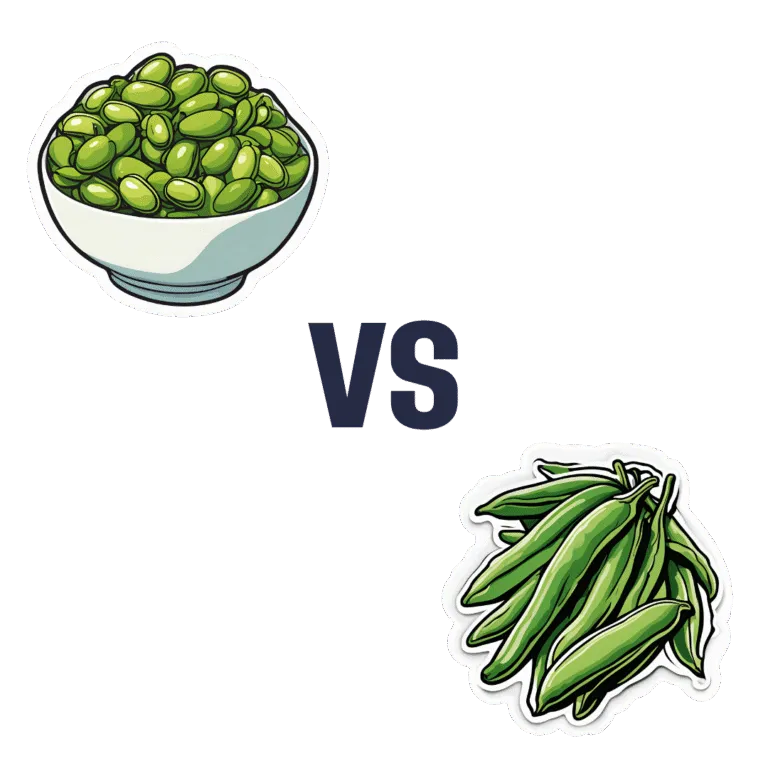
Asparagus vs Peas – Which is Healthier?
10almonds is reader-supported. We may, at no cost to you, receive a portion of sales if you purchase a product through a link in this article.
Our Verdict
When comparing asparagus to peas, we picked the peas.
Why?
Both have their merits! But…
In terms of macros, peas have more than 2x the fiber, carbs, and protein, winning this first round easily.
In the category of vitamins, asparagus has more of vitamins B5, E, and K, while peas have more of vitamins B1, B3, B6, B7, B9, and C, winning a second round tidily.
Looking at minerals, asparagus has more iron and selenium, while peas have more magnesium, manganese, phosphorus, potassium, and zinc, winning their third round in a row.
In other considerations, asparagus is richer in polyphenols, which is a point in its favor.
Adding up the sections makes for a clear overall win for peas, but by all means do enjoy either or both, as diversity is best!
Want to learn more?
You might like:
Your Daily Dose Of B12 From Just 15g Of Pea Shoots!
Enjoy!
Don’t Forget…
Did you arrive here from our newsletter? Don’t forget to return to the email to continue learning!
Recommended
Learn to Age Gracefully
Join the 98k+ American women taking control of their health & aging with our 100% free (and fun!) daily emails:
-
Kiwi vs Pomegranate – Which is Healthier?
10almonds is reader-supported. We may, at no cost to you, receive a portion of sales if you purchase a product through a link in this article.
Our Verdict
When comparing kiwi to pomegranate, we picked the pomegranate.
Why?
Both are certainly excellent! But…
In terms of macros, pomegranate has more fiber, carbs, and protein, winning in its first round.
In the category of vitamins, kiwi has more of vitamins C, E, and K, while pomegranate has more of vitamins B1, B2, B5, B6, B7, and B9, winning again.
Looking at minerals, kiwi has more calcium, magnesium, and potassium, while pomegranate has more copper, manganese, selenium, and zinc, for a marginal third-round win.
In other considerations, kiwi has some cancer-killing properties that pomegranate can’t boast, while pomegranate has a bunch of extra healthful phytochemical properties, albeit in the peel, which most people don’t consume. So for practical purposes, we’d say this last round’s a notional win for kiwi.
Adding up the sections nevertheless makes for a clear overall win for kiwi, but do enjoy either or both, as diversity is best!
Want to learn more?
You might like:
- Top 8 Fruits That Prevent & Kill Cancer ← kiwi is number one on the list!
- Pomegranate’s Health Gifts Are Mostly In Its Peel
Enjoy!
Share This Post
-
Bamboo Shoots vs Cucumber – Which is Healthier?
10almonds is reader-supported. We may, at no cost to you, receive a portion of sales if you purchase a product through a link in this article.
Our Verdict
When comparing bamboo shoots to cucumber, we picked the bamboo shoots.
Why?
This one’s quite clear-cut:
In terms of macros, bamboo has more than 4x the fiber and more than 4x the protein, for slightly more carbs. A clear win for bamboo.
In the category of vitamins, bamboo has more of vitamins B1, B2, B3, B6, B9, B9, C, and E, while cucumber has more of vitamins A, B5, and K. Another easy win for bamboo.
When it comes to minerals, bamboo has more copper, iron, manganese, phosphorus, potassium, selenium, and zinc, while cucumber has more magnesium. One more win for bamboo.
Adding up the sections makes a clear overall win for bamboo, but by all means enjoy either or both; diversity is good!
Want to learn more?
You might like:
What’s Your Plant Diversity Score?
Enjoy!
Share This Post
-
Sciatica Exercises & Home Treatment – by Dr. George Best
10almonds is reader-supported. We may, at no cost to you, receive a portion of sales if you purchase a product through a link in this article.
Dr. Best is a doctor of chiropractic, but his work here is compelling. He starts by giving an overview of the relevant anatomy, and then the assorted possible causes of sciatica, before moving on to the treatments.
As is generally the case for chiropractic, nothing here will be “cured”, but it will give methods for ongoing management to keep you pain-free—which in the case of sciatica, is usually the single biggest thing that most people suffering from it most dearly want.
We get to read a lot about self-massage and exercises, of the (very well-evidenced; about the most well-evidenced thing there is for back pain) McKenzie technique exercises, as well as assorted acupressure-based techniques that are less well-evidenced but have good anecdotal support.
He also writes about preventing sciatica—which if you already have it, that doesn’t mean it’s too late; it just means, in that case do these things (along with the aforementioned exercises) to gradually reverse the harm done and get back to where you were pre-sciatica.
Lastly, he does also speak on when signs might point to your problems being beyond the scope of this book, and seeking professional examination if you haven’t already.
The style throughout is straight to the point, informative, and instructional. There is zero fluff or padding, and no sensationalization. There are diagrams and illustrative photos where appropriate.
Bottom line: if you have, or fear the threat of, sciatica, then this is an excellent book to have and use its exercises.
Click here to check out Sciatica Exercises & Home Treatment, and live pain-free!
Share This Post
Related Posts
-
Support For Long COVID & Chronic Fatigue
10almonds is reader-supported. We may, at no cost to you, receive a portion of sales if you purchase a product through a link in this article.
Long COVID and Chronic Fatigue
Getting COVID-19 can be very physically draining, so it’s no surprise that getting Long COVID can (and usually does) result in chronic fatigue.
But, what does this mean and what can we do about it?
What makes Long COVID “long”
Long COVID is generally defined as COVID-19 whose symptoms last longer than 28 days, but in reality the symptoms not only tend to last for much longer than that, but also, they can be quite distinct.
Here’s a large (3,762 participants) study of Long COVID, which looked at 203 symptoms:
Characterizing long COVID in an international cohort: 7 months of symptoms and their impact
Three symptoms stood at out as most prevalent:
- Chronic fatigue (CFS)
- Cognitive dysfunction
- Post-exertional malaise (PEM)
The latter means “the symptoms get worse following physical or mental exertion”.
CFS, Chronic Fatigue Syndrome, is also called Myalgic Encephalomyelitis (ME).
What can be done about it?
The main “thing that people do about it” is to reduce their workload to what they can do, but this is not viable for everyone. Note that work doesn’t just mean “one’s profession”, but anything that requires physical or mental energy, including:
- Childcare
- Housework
- Errand-running
- Personal hygiene/maintenance
For many, this means having to get someone else to do the things—either with support of family and friends, or by hiring help. For many who don’t have those safety nets available, this means things simply not getting done.
That seems bleak; isn’t there anything more we can do?
Doctors’ recommendations are chiefly “wait it out and hope for the best”, which is not encouraging. Some people do recover from Long COVID; for others, it so far appears it might be lifelong. We just don’t know yet.
Doctors also recommend to journal, not for the usual mental health benefits, but because that is data collection. Patients who journal about their symptoms and then discuss those symptoms with their doctors, are contributing to the “big picture” of what Long COVID and its associated ME/CFS look like.
You may notice that that’s not so much saying what doctors can do for you, so much as what you can do for doctors (and in the big picture, eventually help them help people, which might include you).
So, is there any support for individuals with Long COVID ME/CFS?
Medically, no. Not that we could find.
However! Socially, there are grassroots support networks, that may be able to offer direct assistance, or at least point individuals to useful local resources.
Grassroots initiatives include Long COVID SOS and the Patient-Led Research Collaborative.
The patient-led organization Body Politic also used to have such a group, until it shut down due to lack of funding, but they do still have a good resource list:
Click here to check out the Body Politic resource list (it has eight more specific resources)
Stay strong!
Don’t Forget…
Did you arrive here from our newsletter? Don’t forget to return to the email to continue learning!
Learn to Age Gracefully
Join the 98k+ American women taking control of their health & aging with our 100% free (and fun!) daily emails:
-
Slashed Federal Funding Cancels Vaccine Clinics Amid Measles Surge
10almonds is reader-supported. We may, at no cost to you, receive a portion of sales if you purchase a product through a link in this article.
More than a dozen vaccination clinics were canceled in Pima County, Arizona.
So was a media blitz to bring low-income children in Washoe County, Nevada, up to date on their shots.
Planned clinics were also scuttled in Texas, Minnesota, and Washington, among other places.
Immunization efforts across the country were upended after the federal Centers for Disease Control and Prevention abruptly canceled $11.4 billion in covid-related funds for state and local health departments in late March.
A federal judge temporarily blocked the cuts last week, but many of the organizations that receive the funds said they must proceed as though they’re gone, raising concerns amid a resurgence of measles, a rise in vaccine hesitancy, and growing distrust of public health agencies.
“I’m particularly concerned about the accessibility of vaccines for vulnerable populations,” former U.S. surgeon general Jerome Adams told KFF Health News. Adams served in President Donald Trump’s first administration. “Without high vaccination rates, we are setting those populations and communities up for preventable harm.”
The Department of Health and Human Services, which houses the CDC, does not comment on ongoing litigation, spokesperson Vianca Rodriguez Feliciano said. But she sent a statement on the original action, saying that HHS made the cuts because the covid-19 pandemic is over: “HHS will no longer waste billions of taxpayer dollars responding to a non-existent pandemic that Americans moved on from years ago.”
Still, clinics have also used the money to address other preventable diseases such as flu, mpox, and measles. More than 500 cases of measles so far in a Texas outbreak have led to 57 hospitalizations and the deaths of two school-age children.
In Pima County, Arizona, officials learned that one of its vaccination programs would have to end early because the federal government took away its remaining $1 million in grant money. The county had to cancel about 20 vaccine events offering covid and flu shots that it had already scheduled, said Theresa Cullen, director of the county health department. And it isn’t able to plan any more, she said.
The county is home to Tucson, the second-largest city in Arizona. But it also has sprawling rural areas, including part of the Tohono O’odham Nation, that are far from many health clinics and pharmacies, she said.
The county used the federal grant to offer free vaccines in mostly rural areas, usually on the weekends or after usual work hours on weekdays, Cullen said. The programs are held at community organizations, during fairs and other events, or inside buses turned into mobile health clinics.
Canceling vaccine-related grants has an impact beyond immunization rates, Cullen said. Vaccination events are also a chance to offer health education, connect people with other resources they may need, and build trust between communities and public health systems, she said.
County leaders knew the funding would run out at the end of June, but Cullen said the health department had been in talks with local communities to find a way to continue the events. Now “we’ve said, ‘Sorry, we had a commitment to you and we’re not able to honor it,’” she said.
Cullen said the health department won’t restart the events even though a judge temporarily blocked the funding cuts.
“The vaccine equity grant is a grant that goes from the CDC to the state to us,” she said. “The state is who gave us a stop work order.”
The full effect of the CDC cuts is not yet clear in many places. California Department of Public Health officials estimated that grant terminations would result in at least $840 million in federal funding losses for its state, including $330 million used for virus monitoring, testing, childhood vaccines, and addressing health disparities.
“We are working to evaluate the impact of these actions,” said California Department of Public Health Director Erica Pan.
In Washoe County, Nevada, the surprise cuts in federal funding mean the loss of two contract staffers who set up and advertise vaccination events, including state-mandated back-to-school immunizations for illnesses such as measles.
“Our core team can’t be in two places at once,” said Lisa Lottritz, division director for community and clinical health services at Northern Nevada Public Health.
She expected to retain the contractors through June, when the grants were scheduled to sunset. The health district scrambled to find money to keep the two workers for a few more weeks. They found enough to pay them only through May.
Lottritz immediately canceled a publicity blitz focused on getting children on government insurance up to date on their shots. Vaccine events at the public health clinic will go on, but are “very scaled back” with fewer staff members, she said. Nurses offering shots out and about at churches, senior centers, and food banks will stop in May, when the money to pay the workers runs out.
“The staff have other responsibilities. They do compliance visits, they’re running our clinic, so I won’t have the resources to put on events like that,” Lottritz said.
The effect of the cancellations will reverberate for a long time, said Chad Kingsley, district health officer for Northern Nevada Public Health, and it might take years for the full scope of decreasing vaccinations to be felt.
“Our society doesn’t have a collective knowledge of those diseases and what they did,” he said.
Measles is top of mind in Missouri, where a conference on strengthening immunization efforts statewide was abruptly canceled due to the cuts.
The Missouri Immunization Coalition, which organized the event for April 24-25, also had to lay off half its staff, according to board president Lynelle Phillips. The coalition, which coordinates immunization advocacy and education across the state, must now find alternative funding to stay open.
“It’s just cruel and unthinkably wrong to do this in the midst of a measles resurgence in the country,” Phillips said.
Dana Eby, of the health department in New Madrid County, Missouri, had planned to share tips about building trust for vaccines in rural communities at the conference, including using school nurses and the Vaccines for Children program, funded by the CDC.
New Madrid has one of the highest childhood vaccination rates in the state, despite being part of the largely rural “Bootheel” region that is often noted for its poor health outcomes. Over 98% of kindergartners in the county received the vaccine for measles, mumps, and rubella in 2023-24 compared with the state average of about 91%, and rates in some other counties as low as 61%.
“I will say I think measles will be a problem before I retire,” Eby, 42, said.
Also slated to speak at the Missouri event was former surgeon general Adams, who said he had planned to emphasize the need for community collaboration and the importance of vaccinations in protecting public health and reducing preventable diseases. He said the timing was especially pertinent given the explosion in measles cases in Texas and the rise in whooping cough cases and deaths in Louisiana.
“We can’t make America healthy again by going backwards on our historically high U.S. vaccination rates,” Adams said. “You can’t die from chronic diseases when you’re 50 if you’ve already died from measles or polio or whooping cough when you’re 5.”
California correspondent Christine Mai-Duc contributed to this article.
We’d like to speak with current and former personnel from the Department of Health and Human Services or its component agencies who believe the public should understand the impact of what’s happening within the federal health bureaucracy. Please message KFF Health News on Signal at (415) 519-8778 or get in touch here.
KFF Health News is a national newsroom that produces in-depth journalism about health issues and is one of the core operating programs at KFF—an independent source of health policy research, polling, and journalism. Learn more about KFF.
Subscribe to KFF Health News’ free Morning Briefing.
This article first appeared on KFF Health News and is republished here under a Creative Commons license.
Don’t Forget…
Did you arrive here from our newsletter? Don’t forget to return to the email to continue learning!
Learn to Age Gracefully
Join the 98k+ American women taking control of their health & aging with our 100% free (and fun!) daily emails:
-
Getting Rid Of Warts
10almonds is reader-supported. We may, at no cost to you, receive a portion of sales if you purchase a product through a link in this article.
It’s Q&A Day at 10almonds!
Have a question or a request? We love to hear from you!
In cases where we’ve already covered something, we might link to what we wrote before, but will always be happy to revisit any of our topics again in the future too—there’s always more to say!
As ever: if the question/request can be answered briefly, we’ll do it here in our Q&A Thursday edition. If not, we’ll make a main feature of it shortly afterwards!
So, no question/request too big or small 😎
❝How to get rid of warts and stop them from coming back?❞
First we’ll mention: it does matter what kind of warts they are, and where they are. It’s easier to treat a wart on a finger than on the genitals or an eyelid, for example.
To speak in broad terms, though, warts are caused by human papillomavirus (HPV).
There is a HPV vaccine; you can read about it here: Everything you need to know about cervical cancer*
You can get the vaccine as an adult, but it’s most readily given to children, as it is most effective before first encountering HPV. Otherwise, most people contract the virus at some point, and it is highly contagious, so prevention as early as possible is good. Sometimes people will hand-wring about giving a HPV vaccine to children as HPV is mostly transmitted sexually so it “shouldn’t” be necessary yet, but 1) better to get it done and not have to worry about it later 2) it’s not only transmitted sexually, but by touch in general, and it is highly resistant to disinfectants.
*You may be wondering: why is the link about cervical cancer? And the answer is that almost all cervical cancer is caused by HPV.
However, if you have warts, this does not mean you are necessarily at high risk of cervical cancer (or oropharyngeal cancer, which is also mostly caused by HPV).
There are hundreds of known types of HPV, and the most common wart-inducing types aren’t known to increase cancer risk. Please note that this is not an exhaustive statement though; there are a lot of types where it’s not fully known what they do. Also, many people will have numerous types of HPV.
You asked us about treating warts, so that’s important knowledge, but to save space on discussing the many types of HPV (which is a fascinating topic, especially when it comes to some of the most common types like 2 and 16, and the most risky types like 16 and 18), we’ll direct you to a convenient table of HPV types on Wikipedia that tells which kinds do what.
So, can we destroy the virus once infected?
Yes!
…ish. That is to say, we can destroy them locally (at the site of the wart), but we will still remain infected by the virus, meaning they can always reappear (we can reduce the risks though; more on that later).
Destroying it mostly comes in two main forms:
- Salicylic acid or similar chemical products: needs to be used every day, for weeks, but will destroy the wart tissue (and the virus contained within it) while leaving healthy tissue mostly unaffected (it’s only mildly corrosive to our own flesh) but still, try to get it only on the wart. Here’s an example product on Amazon.
- Liquid nitrogen or other freezing treatments: usually only takes a few treatments to destroy it completely. Liquid nitrogen is usually available only via a doctor, unless for some reason you happen to have access to it yourself, but we recommend getting professional (medical professional!) assistance, as otherwise it can very easily destroy your flesh too. Milder, at-home freezing treatments are not as effective as liquid nitrogen, but still much more effective than corrosive chemical treatments. The at-home kits usually involve a canister containing chemicals that produce an endothermic reaction when mixed, and this mixture is then either sprayed via a nozzle placed around the wart (to avoid getting other tissue), or else isn’t sprayed anywhere, and just cools a conductive metal element the tip of which is then placed on the wart to freeze it off. Here’s an example product on Amazon.
There are a lot of home remedies that people try; most of them do not work.
Here’s a list: 16 Natural Home Remedies for Warts ← we’re not recommending these, but we link them for your interest.
About avoiding reoccurrence
There are two main things here:
- don’t reinfect yourself: so for example try to avoid touching it (spreads it about anywhere else you touch), and consider anything you used on it physically (e.g. pumice stone, nail file, etc) contaminated and now capable of spreading it to other parts of you (or indeed other people, if it’s a shared item, so don’t share it). Remember, it’s very resistant to disinfecting, so unless you have a medical grade autoclave or seriously strong industrial chemicals, you’re very unlikely to successfully disinfect such items at home.
- look after your immune system: most warts go away by themselves in about 18 months. Is it because they just got fed up of being a nuisance? No, it’s because your immune system finally beat them (on that particular battleground, at least). So, look after your immune system, and it will not only help you get rid of extant warts more quickly, but also reduce the risk of reoccurrence.
Learn more about that latter: Beyond Supplements: The Real Immune-Boosters!
Take care!
Don’t Forget…
Did you arrive here from our newsletter? Don’t forget to return to the email to continue learning!
Learn to Age Gracefully
Join the 98k+ American women taking control of their health & aging with our 100% free (and fun!) daily emails:


