
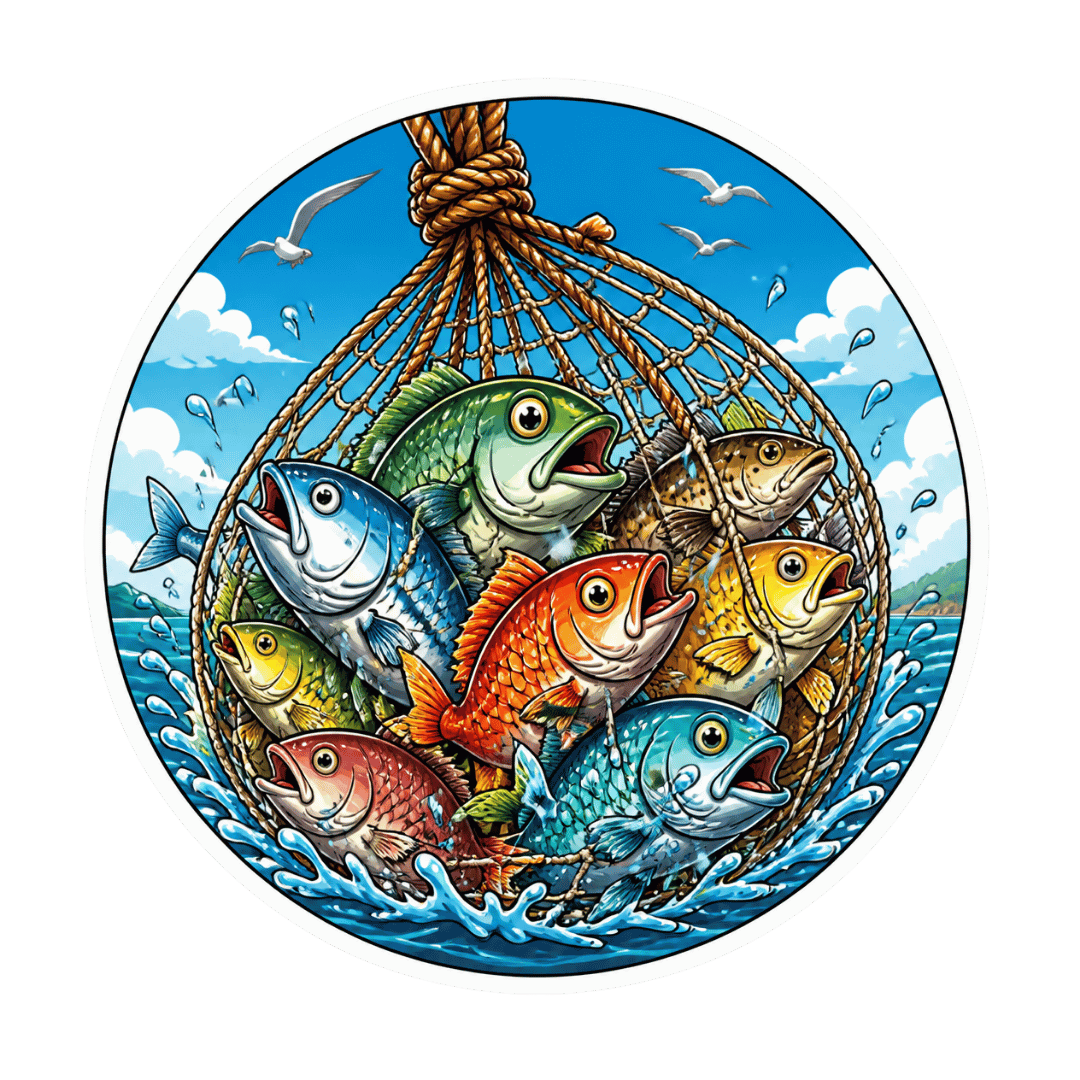
Are You Getting Your Daily Dose Of Microplastics From Fish?
10almonds is reader-supported. We may, at no cost to you, receive a portion of sales if you purchase a product through a link in this article.

It’s Q&A Day at 10almonds!
Have a question or a request? We love to hear from you!
In cases where we’ve already covered something, we might link to what we wrote before, but will always be happy to revisit any of our topics again in the future too—there’s always more to say!
As ever: if the question/request can be answered briefly, we’ll do it here in our Q&A Thursday edition. If not, we’ll make a main feature of it shortly afterwards!
So, no question/request too big or small 😎
❝I read that most plastic pollution is not from plastic straws and things but rather fishing nets, does this mean fish have microplastics too??❞
Yes it does! But while it’s indeed quite possibly the highest source of microplastic pollution in the world, it’s probably not the highest source of microplastic contamination in your life.
Still, let’s look at what fish and other seafood are bringing to the table…
In a recent study, the Korean National Environmental Health Survey analysis examined 4,279 adults, including a subsample of 1,564 with blood measurements of persistent pollutants, to investigate associations between six seafood categories and chemical exposure; here’s what they found:
- Fish specifically: each doubling of finfish (i.e. fish that have fins, this isn’t a specific species) intake was associated with 4.4–14.1% higher serum PFAS, 4.8–13% higher levels of six of seven measured PCBs, and 13.2% higher blood mercury.
- Shellfish: each doubling of intake was associated with 9.4% higher PFOA and 5.9% higher PFOS and PFNA, without significant associations with chlorinated compounds.
- Other seafood: each doubling of intake of other marine products, including squid and sea cucumbers, was associated with 6% higher blood mercury, while crustaceans and seaweed showed no positive independent associations with measured contaminants.
PFAS = per- and polyfluoroalkyl substances
PCBs = polychlorinated biphenyls
PFOA = perfluorooctanoic acid
PFOS =perfluorooctanesulfonic acid
FVNA = perfluorononanoic acid
(none of those things are great additions to your body)
You can read this paper in its entirety, here: Finfish intake is associated with persistent chemical burden and a PFAS-mediated pathway to γ-glutamyltransferase in Korean adults
Of course, microplastics aren’t the only issue with fish; you might want to be aware of heavy metals (mostly from ocean-caught fish) and antibiotics (mostly from farmed and/or freshwater fish) too: Farmed Fish vs Wild Caught
What to do about it?
Well, if you don’t eat fish, you certainly won’t get microplastics from fish.
But for more general practical ideas beyond that, you might want to check out our previous writings on the topic of microplastic contamination in the various most common ways we tend to encounter them, for example:
- We Are Such Stuff As Bottles Are Made Of
- PFAS Exposure & Cancer: The Numbers Are High
- Are You Inhaling Microplastics In Your House?
- The “Forever Chemicals” That Can Triple The Risk Of Liver Disease
- Microplastics Now, Alzheimer’s/Parkinson’s Later?
Want to learn more?
For a much deeper dive into the broader topic of avoiding the toxins the industrial world is keen to throw our way, you might like this book that we reviewed a little while back:
Healthy Living in a Contaminated World – by Dr. Donald Hoernschemeyer
Want to learn less?
If reading entire books isn’t your thing, then you might prefer this:
Here’s a List of Products with PFAS (& How to Avoid Them)
Take care!
Don’t Forget…
Did you arrive here from our newsletter? Don’t forget to return to the email to continue learning!

Learn to Age Gracefully
Join the 98k+ American women taking control of their health & aging with our 100% free (and fun!) daily emails: