
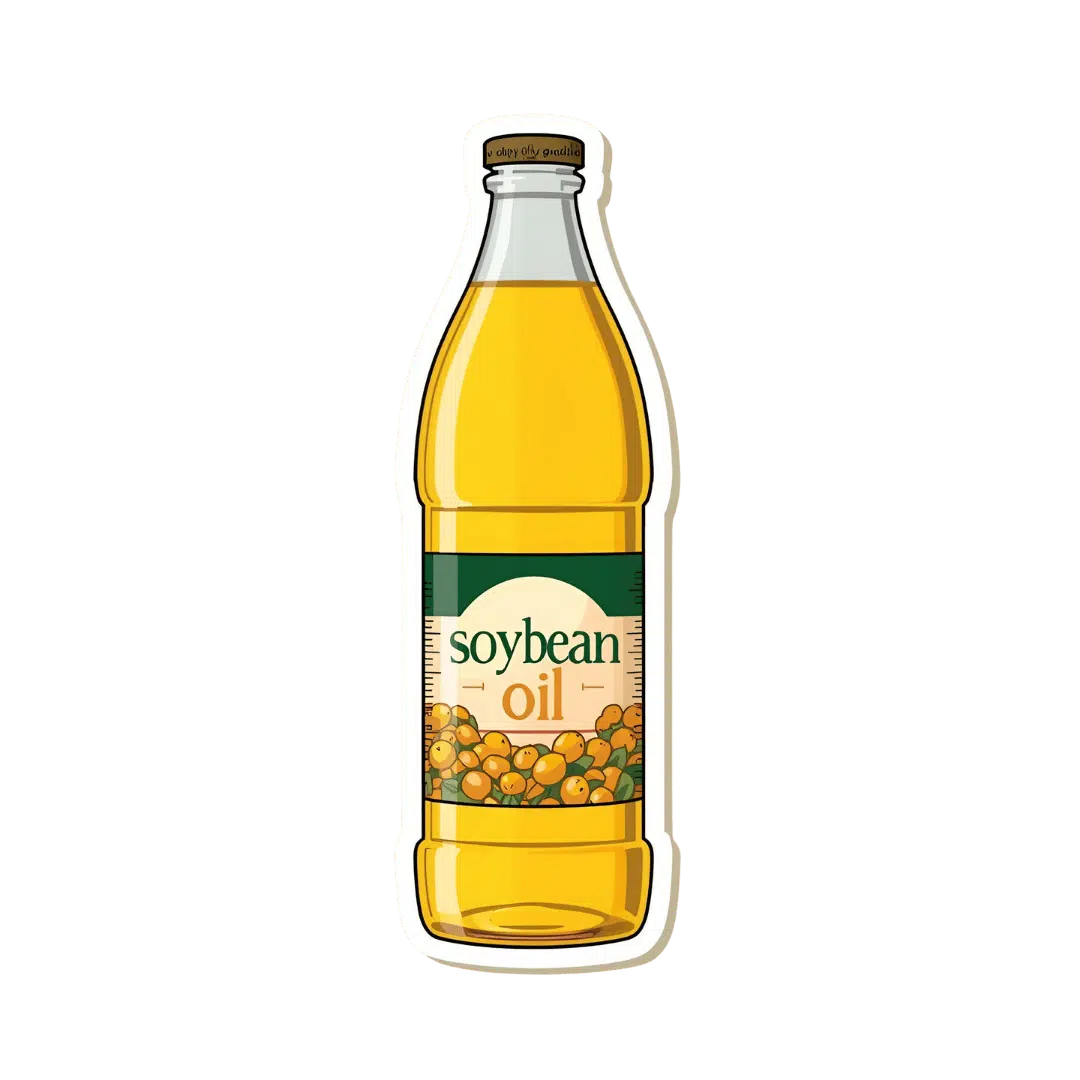
Is Soybean Oil Safe?
10almonds is reader-supported. We may, at no cost to you, receive a portion of sales if you purchase a product through a link in this article.

It’s Q&A Day at 10almonds!
Have a question or a request? We love to hear from you!
In cases where we’ve already covered something, we might link to what we wrote before, but will always be happy to revisit any of our topics again in the future too—there’s always more to say!
As ever: if the question/request can be answered briefly, we’ll do it here in our Q&A Thursday edition. If not, we’ll make a main feature of it shortly afterwards!
So, no question/request too big or small 😎
❝Is soybean oil safe? What is best?❞
A good question! Of course, it makes a difference what you do with it, e.g:
- Using it on salad
- Using it for cooking
- Boiling yourself in it
- Gargling with it
- Putting it on your face
…etc can all have quite different safety outcomes.
Now, some may seem silly, such as “gargling with it”, but actually this is not too far removed from the practice of oil-pulling, which is not gargling, but rather “put in your mouth and swish it around vigorously to clean the teeth”.
Which, for what it’s worth, isn’t particularly harmful, but it also isn’t very effective, so really it’s best as an adjunct to other methods if possible. See: Less Common Alternatives For Oral Hygiene!
We imagine you’re talking about culinary uses, but before we move onto those, let’s quickly note the topical application. We wrote a bit before about vegetable oils of various kinds and the skin, here:
Beyond Castor: Vegetable Oils That Regenerate Your Skin
Now, soybean oil didn’t feature there, but it has been studied, and:
❝Topical application of soybean oil extracts has been shown to decrease the transepidermal water loss of forearm skin. This feature may be linked to the presence of soy phytosterols, which have shown a positive effect on skin barrier recovery.
Moreover, topical soybean oil protects against UVB-induced cutaneous erythema.❞
Read in full: Anti-Inflammatory and Skin Barrier Repair Effects of Topical Application of Some Plant Oils
Soybean oil in the kitchen
First, for contrast, note that we’ve previously written about seed oils in general here:
Do Seed Oils Have A Place In A Healthy Lifestyle?
Soybean oil is, generally, considered a seed oil. That said, it has some interesting metabolism-modulating properties of its own. Have a guess whether it modulates the metabolism in a good way.
If you guessed “no”, then you guessed correctly!
Researchers (Dr. Frances Sladek et al.) looked at this recently, and found that there’s a protein (HNF4α is its name) that changes how we metabolise the linoleic acid found in soybean oil. Basically, we humans produce two forms of that protein, and one form of it changes the expression of hundreds of fat-metabolism genes and promotes the conversion of linoleic acid into oxylipins—molecules linked to inflammation and fat accumulation. The other does the opposite.
This explains why different people can have quite different metabolic responses to the oil—it depends on which protein we make more of, which can also be changed during times of metabolic stress that were induced for other reasons (e.g. chronic illness, fasting, etc).
To quote Dr. Sladek herself:
❝We’ve known since our 2015 study that soybean oil is more obesogenic than coconut oil. But now we have the clearest evidence yet that it’s not the oil itself, or even linoleic acid. It’s what the fat turns into inside the body.
It took 100 years from the first observed link between chewing tobacco and cancer to get warning labels on cigarettes. We hope it won’t take that long for society to recognize the link between excessive soybean oil consumption and negative health effects.
Soybean oil isn’t inherently evil. But the quantities in which we consume it is triggering pathways our bodies didn’t evolve to handle.❞
You can read the paper in full, here: P2-HNF4α Alters Linoleic Acid Metabolism and Mitigates Soybean Oil-Induced Obesity: Role for Oxylipins
And for the 2015 study she mentioned: Soybean Oil Is More Obesogenic and Diabetogenic than Coconut Oil and Fructose
As for what to use instead…
Top-tier healthy options include olive oil and avocado oil. Both are great, though olive oil has quite a strong taste and so isn’t suitable for everything, and avocado oil has a milder but still-present taste, though it is more suitable than olive-oil for higher-temperature cooking.
In any case, deep-frying anything in any oil is always going to be bad, so keeping it to light use is best.
For olive oil, see: All About Olive Oil and Is “Extra Virgin” Worth It?
For how it compares to avocado oil, check out: Avocado Oil vs Olive Oil – Which is Healthier?
If you’re considering butter as an alternative, then literally any plant oil is healthier.
It was a JAMA Internal Medicine cohort study, which followed 221,054 adults (average age 56 at the start of the study, with a standard deviation of 7 years from that age) for up to 33 years.
Why “up to”? Because not everybody survived the study.
Specifically, 50,932 deaths were recorded, including 12,241 from cancer and 11,240 from cardiovascular disease (CVD).
Participants were categorized into quartiles based on butter or plant-based oil intake, and…
- The highest quartile (i.e. the 25% of people who consumed the most) butter intake linked to a 15% higher total mortality.
- The highest quartile (i.e. the 25% of people who consumed the most) plant-based oil intake linked to a 16% lower total mortality.
You can read more about this, here: Butter vs Plant Oils: What The Latest Evidence Shows
And for a full set of head-to-heads (or at least, the ones we’ve head-to-headed so far, at time of writing), see:
- Avocado Oil vs Olive Oil – Which is Healthier?
- Olive Oil vs Coconut Oil – Which is Healthier?
- Sesame Oil vs Almond Oil – Which is Healthier?
- Sunflower Oil vs Canola Oil – Which is Healthier?
- Margarine vs Butter – Which is Healthier
- Butter vs Ghee – Which is Healthier?
Take care!
Don’t Forget…
Did you arrive here from our newsletter? Don’t forget to return to the email to continue learning!
Recommended

Learn to Age Gracefully
Join the 98k+ American women taking control of their health & aging with our 100% free (and fun!) daily emails: