
6 ways to talk to your teens about sex without the cringe

10almonds is reader-supported. We may, at no cost to you, receive a portion of sales if you purchase a product through a link in this article.

Parents play an important role in teaching their children about sex and relationships. But our new report shows many parents – fathers in particular – find it mortifying.

Our national survey of 1,918 parents shows they are most likely to be very confident talking with children about body image (45%) and puberty (38%) and least confident talking about masturbation (12%) or sexual satisfaction (13%).

Mothers are more likely than fathers to start discussions about sex (32.3% vs 23.9%).

Our survey confirms the most common barriers to discussing sex with children are children feeling uncomfortable or refusing to engage. But parents are uncomfortable too, fearing they’ll say the wrong thing, and not knowing how to start the conversation.

But if a teenager knows their parents are up for non-judgemental discussions about sex, they’ll be more likely to share what is happening in their lives, ask questions and seek help when they need it.

Here’s how to start those discussions, even if you feel awkward.
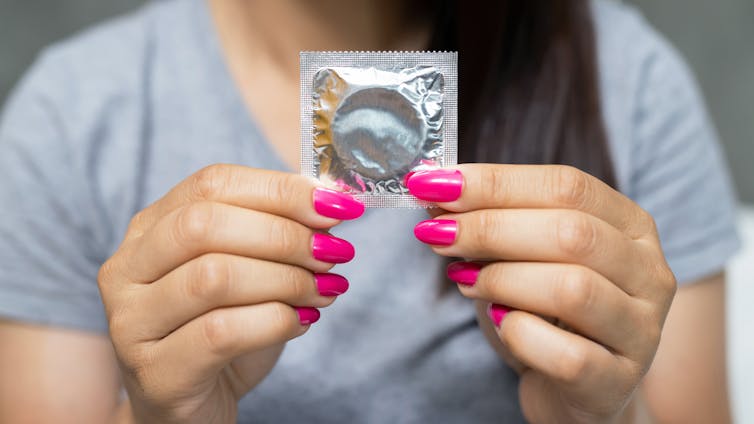
Kamonwan Wankaew/Getty

Our top tips for talking about sex

1. Start when children are young. “The sex talk” is not one single conversation. Parents should aim to open the door to ongoing, age-appropriate dialogue about issues related to bodies, reproduction and puberty when children are young. Even children under five should be learning about their bodies and the basics of reproduction.

Starting conversations when kids are young will make it easier to continue into the teenage years. But it’s never too late. Children will benefit from parents engaging with them on these issues at any age.

2. Find everyday opportunities to ask questions. Television, movies and radio mention sex and relationships all the time.

For instance, issues relating to young people viewing pornography or the impact of social media are regular features on the news. Use these opportunities to ask teenagers what they understand, know or think. Show interest in your teenager’s opinion and ask questions about how this portrayal fits with their experiences or that of their friends.

The conversation doesn’t need to lead to a specific message or outcome. The purpose is to talk and listen.

3. Try not to lead with what not to do. Telling a young person not to have sex or watch pornography is unlikely to stop them doing it and may shut down future conversation. Many young people become sexually active from around 15 to 17 years of age and a majority have viewed pornography at least once by this age.

The best we can do is support them to think carefully and critically about what they need to stay safe. Let them know you can help with things such as finding a good doctor if they need advice on contraception or sexual health care.

4. Tell your teenagers stories about yourself. Young people don’t always appreciate being reminded their parents were once teenagers, but they might be interested in a story about your first relationship, first kiss or an embarrassing date. Showing your own vulnerability may help open dialogue on these topics.

If you aren’t comfortable telling stories about yourself, perhaps tell stories you have read or heard about in the news.

5. Own your embarrassment. It is hard to talk about intimate or embarrassing topics. For some people even saying the word “masturbation” is uncomfortable, let alone speaking with children or teenagers about it.

Keeping it light and being prepared to laugh at your own awkwardness can help break the ice for both you and your teenager.

6. Do some reading and practise talking about it. Most of us don’t have a lot of experience talking intimately about sex or relationships. Do some research on topics you would like to speak with your teenagers about and then have a chat to your partner or a friend about it.

The aim is to get more comfortable talking about things we don’t often talk about. You don’t have to be an expert, you just have to give it a go.

Will talking about sex encourage my child to do it?

Parents are often told they need to be “sex positive” when talking to teenagers about sex. This doesn’t mean avoiding talking about risks and responsibilities. Rather, it means holding the perspective that, in the right circumstances, sex can be a safe, enjoyable and positive part of a young person’s life.

Talking about sex will not encourage a young person to have sex before they are ready.

Teaching young people about sexual consent relies on valuing pleasure. If someone can understand, and articulate, what they like and want, they will be in a stronger position to assert what they do not want. Young people should be encouraged to tune into what they, and their partner, enjoy and value when it comes to sex.

Sexual health messages for young people often focus on dangers and negative outcomes. It can be easy to forget that sex education should also be about supporting young people to have safe and enjoyable sex when they are ready. Parents play a key role in delivering this message.

Talk soon. Talk often: A guide for parents to talk to their kids about sex helps parents judge age-appropriate information and how to talk about it.

Jennifer Power, Principal Research Fellow, Australian Research Centre in Sex, Health and Society, La Trobe University; Alexandra James, Research Fellow, Australian Research Centre in Sex, Health and Society, La Trobe University, and Thomas Norman, Research Fellow, Australian Research Centre in Sex, Health and Society, La Trobe University

This article is republished from The Conversation under a Creative Commons license. Read the original article.

Don’t Forget…

Did you arrive here from our newsletter? Don’t forget to return to the email to continue learning!

Learn to Age Gracefully

Join the 98k+ American women taking control of their health & aging with our 100% free (and fun!) daily emails:

  • Natto vs Tofu – Which is Healthier?

    10almonds is reader-supported. We may, at no cost to you, receive a portion of sales if you purchase a product through a link in this article.

    Our Verdict

    When comparing nattō to tofu, we picked the nattō.

    Why?

    In other words, in the comparison of fermented soy to fermented soy, we picked the fermented soy. But the relevant difference here is that nattō is fermented whole soybeans, while tofu is fermented soy milk of which the coagulated curds are then compressed into a block—meaning that the nattō is the one that has “more food per food”.

    Looking at the macros, it’s therefore no surprise that nattō has a lot more fiber to go with its higher carb count; it also has slightly more protein. You may be wondering what tofu has more of, and the answer is: water.

    In terms of vitamins, nattō has more of vitamins B2, B4, B6, C, E, K, and choline, while tofu has more of vitamins A, B3, and B9. So, a 7:3 win for nattō, even before considering that that vitamin C content of nattō is 65x more than what tofu has.

    When it comes to minerals, nattō has more copper, iron, magnesium, manganese, potassium, and zinc, while tofu has more calcium, phosphorus, and selenium. So, a 6:3 win for nattō, and yes, the margins of difference are comparable (being 2–3x more for most of these minerals).

    In short, both of these foods are great, but nattō is better.

    Want to learn more?

    You might like to read:

    21% Stronger Bones in a Year at 62? Yes, It’s Possible (No Calcium Supplements Needed!)

    Take care!

    Share This Post

  • How Much Do Financial Decline & Cognitive Decline Go Hand In Hand?

    10almonds is reader-supported. We may, at no cost to you, receive a portion of sales if you purchase a product through a link in this article.

    That financial health and physical health are intertwined is a sad fact of our society, but how does it go for cognitive health?

    Well, first of all, the brain is also an organ, and so is the heart that feeds it, and so are the lungs that supply the blood with oxygen, and so is the gut that… You get the idea. There is no cognitive health without physical health.

    But we can also look at cognitive health somewhat in isolation, if we use clever statistical modelling to control for physical health factors that might be adversely affecting cognitive health.

    So, what’s the answer?

    When your bank balance is something you’d rather not remember…

    Researchers (Dr. Katrina Kezios et al.) did exactly that kind of modelling, analyzing data from 7,676 participants in the Health and Retirement Study between 2010–2020, tracking financial well-being and memory over time.

    • How financial well-being was measured: an eight-item index measured both psychosocial strain (stress, dissatisfaction) and material hardship (difficulty paying bills, low income, limited access to necessities)
    • How cognitive decline was measured: direct memory assessments (immediate and delayed 10-word recall tasks) and, for those too cognitively impaired to complete direct assessments, proxy assessments of memory function (proxy’s assessment of participants’ memory performance on a 5-point Likert scale and the 16-item Jorm Informant Questionnaire for Cognitive Decline) were used to generate a composite memory score.

    What Dr. Kezios and her team found is that worsening financial well-being is linked to poorer memory and faster cognitive decline in adults aged 50+.

    How bad is it? In few words, people with significant financial deterioration experienced memory decline comparable to about 5 extra months of aging per year.

    And importantly, this was dynamic in nature and a one-way slope: declines in financial well-being were consistently linked to worse memory, but improvements in finances didn’t reliably lead to cognitive gains (in essence, you can’t buy more cognitive function, but you can lose it if your finances are poor).

    Why does this happen? There are several possibilities, for example study co-author Dr. Adina Zeki Al Hazzouri hypothesized that prolonged financial strain may overload your mental bandwidth, contributing to cognitive decline. Additionally, the paper notes that chronic stress, reduced access to healthcare and nutrition, and less social engagement may all mediate* the relationship between finances and brain health.

    *mediate, in this context, = provide the mechanism of action for, actively facilitate such that it happens, without necessary nailing their colors to the mast of outright declaring it causal (because the scientists acknowledge there could be unknown additional factors at hand, much like how yeast will in technical terms “mediate” bread rising, but it won’t “cause” a thing without the temperature being right)

    You can read the paper in full, here: Katrina L Kezios et al, Changes in financial well-being and memory function and decline in middle-aged and older adults ← if you want to read more than just the abstract, you just need to click on the PDF icon!

    This is consistent, by the way, with the impact of systemic stress on heart health, which we wrote about here: Heart Health vs Systemic Stress

    …and you’ll recall that “what’s good for your heart is good for your brain“, so, do note that the inverse is also true (what’s bad for your heart is bad for your brain)!

    See also: What’s Your Vascular Dementia Risk? ← includes actual numbers and a risk calculator tool and things like that 😎

    Want to learn more?

    You might like this book that we reviewed a while ago:

    Growing Young – by Marta Zaraska ← discusses the social factors involved in healthy aging

    Take care!

    Share This Post

  • Guava vs Strawberries – Which is Healthier?

    10almonds is reader-supported. We may, at no cost to you, receive a portion of sales if you purchase a product through a link in this article.

    Our Verdict

    When comparing guava to strawberries, we picked the guava.

    Why?

    A straightforward one today:

    In terms of macros, guava has nearly 3x the fiber, approximately 2x the carbs, and more than 2x the protein, making it the all-round more nutrient-dense option in the macros category.

    In the category of vitamins, guava has more of vitamins A, B1, B2, B3, B5, B6, B7, B9, C, E, K, and choline, while strawberries are not higher in any vitamin. A complete win for guava.

    When it comes to minerals, guava has more calcium, copper, magnesium, phosphorus, potassium, selenium, and zinc, while strawberries have more iron and manganese. Another overwhelming win for guava.

    Looking at phytochemicals, both are very good, but guava has more polyphenols in total by far.

    Adding up the sections makes for a clear overall win for guava, but by all means enjoy either or both; diversity is good!

    Want to learn more?

    You might like:

    What’s Your Plant Diversity Score?

    Enjoy!

    Share This Post

  • Eat Dirt – by Dr. Josh Axe

    10almonds is reader-supported. We may, at no cost to you, receive a portion of sales if you purchase a product through a link in this article.

    Dr. Axe describes leaky gut as “a serious disease with a silly name”, and hopes for people to take increased intestinal permeability (as it is otherwise known) seriously, because it can be found at the root of very many diseases, especially inflammatory / autoimmune diseases, which obviously also has significant implications for dementia (of which neuroinflammation is a fair part of the pathogenesis) and cancer (which has been described as largely a matter of immune dysfunction).

    He starts strong, albeit anecdotally, with the story of his own mother’s battle with cancer and other diseases, and how her health did a U-turn (for the better) upon taking care of her gut as per the methods described in this book. Dr. Axe doesn’t go so far as to claim the gut-healthy protocol cured her cancer, but makes the (very reasonable) argument that it was a major contributory factor, especially as it was the main input variable that changed.

    The book describes the various things that can go wrong with our gut and why, and for each of them presents a solution.

    Some of it is as you might guess from the title—live a little dirtier, because the ubiquity of antimicrobials is leaving our immune system slack and maladjusted, causing it to varyingly a) turn on us b) not rise to the occasion when an actual pathogen arrives c) often both. Other matters of consideration include normal gut health nutrition (prebiotics and probiotics, skipping inflammatory foods), matters of medication (especially those that harm the gut), nutraceuticals such as Boswellia serrata, and even stress management.

    He provides a program so that the reader can follow along step-by-step, and even a chapter of recipes, but the greatest value in the book is the explanation of gut pathology—because understanding that is foundational to recognizing a lot of things (and he does provide diagnostic questionnaires also, which are helpful).

    Bottom line: if you’d like to improve almost any aspect of your health, then your gut is almost always an excellent place to start, and this book will set you on the right path.

    Click here to check out Eat Dirt, and heal your gut!

    Don’t Forget…

    Did you arrive here from our newsletter? Don’t forget to return to the email to continue learning!

    Learn to Age Gracefully

    Join the 98k+ American women taking control of their health & aging with our 100% free (and fun!) daily emails:

  • Anti-Aging Risotto With Mushrooms, White Beans, & Kale

    10almonds is reader-supported. We may, at no cost to you, receive a portion of sales if you purchase a product through a link in this article.

    This risotto is made with millet, which as well as being gluten-free, is high in resistant starch that’s great for both our gut and our blood sugars. Add the longevity-inducing ergothioneine in the shiitake and portobello mushrooms, as well as the well-balanced mix of macro- and micronutrients, polyphenols such as lutein (important against neurodegeneration) not to mention more beneficial phytochemicals in the seasonings, and we have a very anti-aging dish!

    You will need

    • 3 cups low-sodium vegetable stock
    • 3 cups chopped fresh kale, stems removed (put the removed stems in the freezer with the vegetable offcuts you keep for making low-sodium vegetable stock)
    • 2 cups thinly sliced baby portobello mushrooms
    • 1 cup thinly sliced shiitake mushroom caps
    • 1 cup millet, as yet uncooked
    • 1 can white beans, drained and rinsed (or 1 cup white beans, cooked, drained, and rinsed)
    • ½ cup finely chopped red onion
    • ½ bulb garlic, finely chopped
    • ¼ cup nutritional yeast
    • 1 tbsp balsamic vinegar
    • 2 tsp ground black pepper
    • 1 tsp white miso paste
    • ½ tsp MSG or 1 tsp low-sodium salt
    • Extra virgin olive oil

    Method

    (we suggest you read everything at least once before doing anything)

    1) Heat a little oil in a sauté or other pan suitable for both frying and volume-cooking. Fry the onion for about 5 minutes until soft, and then add the garlic, and cook for a further 1 minute, and then turn the heat down low.

    2) Add about ¼ cup of the vegetable stock, and stir in the miso paste and MSG/salt.

    3) Add the millet, followed by the rest of the vegetable stock. Cover and allow to simmer for 30 minutes, until all the liquid is absorbed and the millet is tender.

    4) Meanwhile, heat a little oil to a medium heat in a skillet, and cook the mushrooms (both kinds), until lightly browned and softened, which should only take a few minutes. Add the vinegar and gently toss to coat the mushrooms, before setting side.

    5) Remove the millet from the heat when it is done, and gently stir in the mushrooms, nutritional yeast, white beans, and kale. Cover, and let stand for 10 minutes (this will be sufficient to steam the kale in situ).

    6) Uncover and fluff the risotto with a fork, sprinkling in the black pepper as you do so.

    7) Serve. For a bonus for your tastebuds and blood sugars, drizzle with aged balsamic vinegar.

    Enjoy!

    Want to learn more?

    For those interested in some of the science of what we have going on today:

    Take care!

    Don’t Forget…

    Did you arrive here from our newsletter? Don’t forget to return to the email to continue learning!

    Learn to Age Gracefully

    Join the 98k+ American women taking control of their health & aging with our 100% free (and fun!) daily emails:

  • Aspirin vs Cancer Metastasis

    10almonds is reader-supported. We may, at no cost to you, receive a portion of sales if you purchase a product through a link in this article.

    Aspirin is a bit of a mixed bag.

    In the category of things in its favor, it’s a modest analgesic with few side effects from occasional use, so it’s a good option if you have a headache, for example.

    Unless you’re already on blood thinners or having a bleeding disorder, in which case, aspirin is not the thing to reach for.

    About aspirin and heart disease

    This is actually a complicated one, and we covered it at length in a dedicated main feature. If you want a one-line summary, it’s “chronic low-dose aspirin use can lower overall CVD risk, but does not reduce CVD mortality or all-cause mortality, and you may pay for it with gastrointestinal bleeding, and increased risk of ulcers“.

    For a more nuanced explanation, see: Aspirin, CVD Risk, & Potential Counter-Risks

    On the other hand, if you are having a heart attack and are waiting for the ambulance that you already called, and have aspirin to hand that you don’t have to go looking for, then it can be good to take a dose then.

    For more on that, see: How To Survive A Heart Attack When You’re Alone

    There are more problems

    In the case of chronic use of low-dose aspirin, not only does it increase the risks of bleeding, especially gastrointestinal bleeding, and ulcers, but also it increases the risk of anemia. Given that anemia also gives the symptom “dizziness”, this is also a significant threat for increasing the incidence of falls in the older population, too, which can of course lead to serious complications and ultimately death.

    For the science about this, see: Low-Dose Aspirin & Anemia

    Now, about aspirin and cancer metastasis

    This one’s a point in aspirin’s favor.

    Cancer is, in and of itself, obviously a big problem. In terms of when it’s most likely to kill someone, that is usually when the cancer becomes metastatic, that is to say, it has spread.

    So, while preventing cancer and, failing that, killing cancer are very important goals, there is a third axis to cancer care, which is preventing metastasis in someone who has cancer.

    And that’s what aspirin does. How, you ask?

    Scientists found this one out by accident!

    They were doing genetic research in mice, to find genes that had an effect on metastasis. In the process, they found a certain gene that instructs the creation of a certain protein, and mice that lacked that gene (and thus its associated protein) had less metastasis.

    The protein in question suppresses T-cells, which are programmed to recognize and kill metastatic cancer cells (amongst having other great jobs; they are an important part of the immune system in general, and one that declines with aging; most people in their 60s or older are producing very few T-cells).

    About that, see: Focusing On Health In Our Sixties

    Tracing the cell signaling, the researchers found that the protein is activated when T-cells are exposed to thromboxane A2 (or TXA2 to its friends).

    And TXA2? That’s produced by platelets, and aspirin works by inhibiting TXA2 production, effectively making platelets (and thus the blood as a whole) less sticky.

    So, that’s quite a few steps in the process, but ultimately:

    1. Aspirin inhibits TXA2 production
    2. Lower TXA2 levels mean ARHGEF1 (that’s the protein) isn’t activated
    3. ARHGEF1 not being activated means T-cells are free to do their thing
    4. T-cells are now free to kill metastatic cancer cells

    You can read the paper here:

    Aspirin prevents metastasis by limiting platelet TXA2 suppression of T cell immunity

    Take care!

    Don’t Forget…

    Did you arrive here from our newsletter? Don’t forget to return to the email to continue learning!

    Learn to Age Gracefully

    Join the 98k+ American women taking control of their health & aging with our 100% free (and fun!) daily emails: