
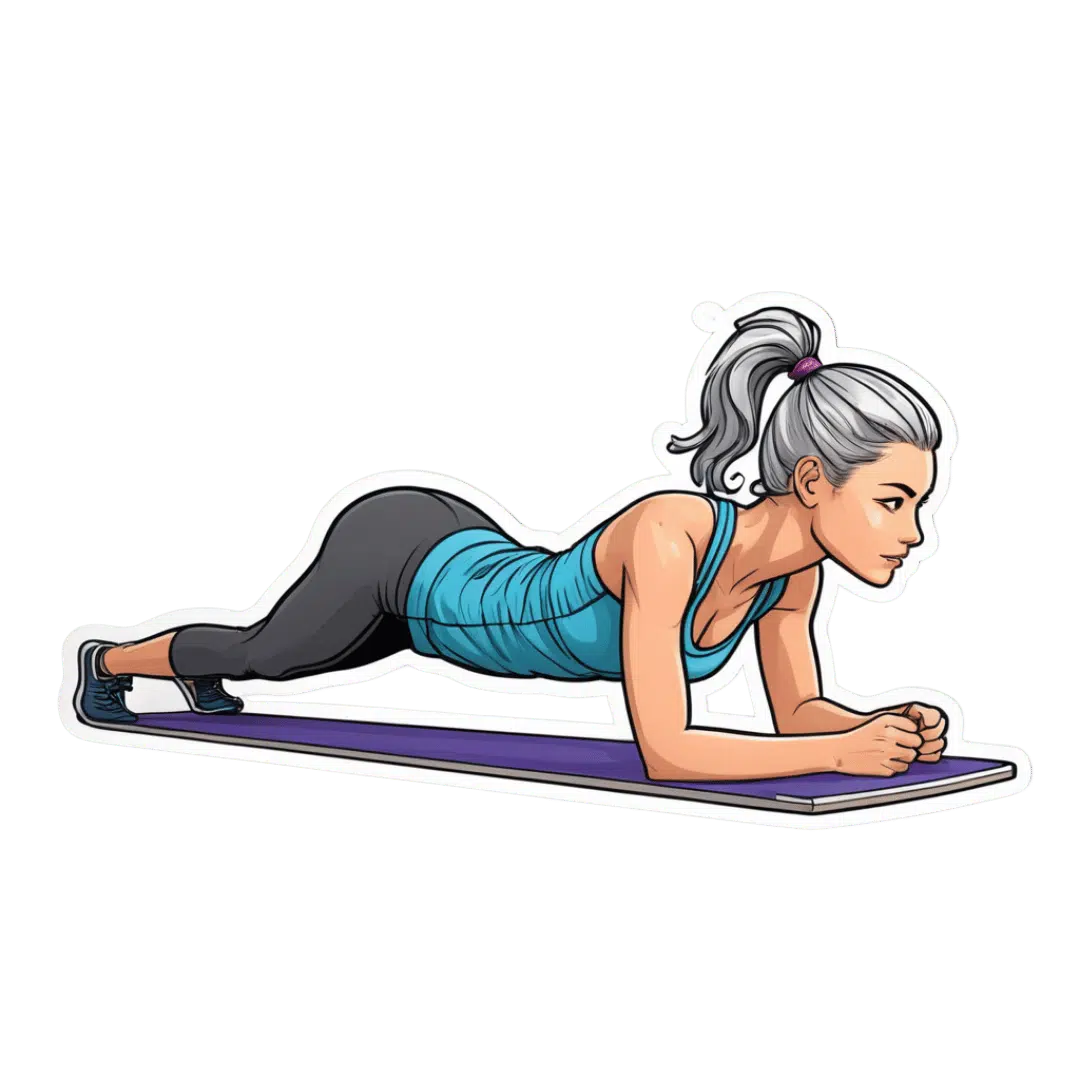
#1 Strength Training Mistake Often Made By Over-50s
10almonds is reader-supported. We may, at no cost to you, receive a portion of sales if you purchase a product through a link in this article.
Will Harlow, over-50s specialist physio, advises:
Adaptive training
The most common mistake is not bad form or the wrong exercises—it’s not training with enough intensity, which stops strength and muscle gains and can even lead to decline over time. Not pushing close enough to your limit means your muscles don’t get the stimulus needed to grow or strengthen—mild discomfort at the end of a set is where progress starts.
Yes, you still need to be sensible and not try to train like professional athlete (unless you are actually at that level, of course), but intensity isn’t about necessarily lifting heavy and it’s certainly not about pushing through pain—it’s about the effort you’re putting in, and that can come just fine from using light or moderate weights or even body weight.
So, after a set, ask how many more reps you could’ve done with good form—aim for just 2–3 reps left in the tank; if you could’ve done 10 more, it was too easy.
Of course, some exercises do not come in reps, like isometric exercises, or running. That’s fine; there are more ways to do it, just by looking at the final period, instead:
How to self-check your effort:
- Was that set/period a 7–8 out of 10 in difficulty?
- Did your last rep/period require real focus (but still with good form)?
- Did you feel muscle fatigue (e.g. shaking, labored breathing, extra concentration)?
Final note: intensity will change as you get stronger, so keep adjusting your effort level gradually while staying safe and avoiding injury.
For more on all of this, enjoy:
Click Here If The Embedded Video Doesn’t Load Automatically!
Want to learn more?
You might also like:
10 Ways To Progress Your Workouts (Without Adding Weight)
Take care!
Don’t Forget…
Did you arrive here from our newsletter? Don’t forget to return to the email to continue learning!

Recommended
Learn to Age Gracefully
Join the 98k+ American women taking control of their health & aging with our 100% free (and fun!) daily emails:
-
Hazelnuts vs Almonds – Which is Healthier?
10almonds is reader-supported. We may, at no cost to you, receive a portion of sales if you purchase a product through a link in this article.
Our Verdict
When comparing hazelnuts to almonds, we picked the almonds.
Why?
It’s closer than you might think! But we say almonds do come out on top.
In terms of macronutrients, almonds have notably more protein, while hazelnuts have notably more fat (healthy fats, though). Almonds are also higher in both carbs and fiber. Looking at Glycemic Index, hazelnuts’ GI is low and almonds’ GI is zero. We could call the macros category a tie, but ultimately if we need to prioritize any of these things, it’s protein and fiber, so we’ll call this a nominal win for almonds.
When it comes to vitamins, hazelnuts have more of vitamins B1, B5, B6, B9 C, and K. Meanwhile, almonds have more of vitamins B2, B3, E, and choline. So, a moderate win for hazelnuts.
In the category of minerals, almonds retake the lead with more calcium, magnesium, phosphorus, potassium, selenium, and zinc, while hazelnuts boast more copper and manganese. A clear win for almonds.
Adding up the categories, this makes for a marginal win for almonds. Of course, both of these nuts are very healthy (assuming you are not allergic), and best is to enjoy both if possible.
Want to learn more?
You might like to read:
Take care!
Share This Post
-
The Complete Anti-Inflammatory Diet for Beginners – by Dorothy Calimeris and Lulu Cook
10almonds is reader-supported. We may, at no cost to you, receive a portion of sales if you purchase a product through a link in this article.
First, about the authors: notwithstanding the names, Calimeris is the cook, and Cook is the nutritionist (and an RDN at that).
As for the book: we get a good primer on the science of inflammation, what it is, why it happens, what things are known to cause/trigger it, and what things are known to fight it. They do also go outside of nutrition a bit for this, speaking briefly on other lifestyle factors too, but the main focus is of course nutrition.
As for the recipes: while distinctly plants-forward (as one might expect of an anti-inflammatory eating book), it’s not outright vegan or even vegetarian, indeed, in the category of main dishes, there are sections for:
- Vegetarian and vegan
- Fish and shellfish
- Poultry and meat
…as well as, before and after those, sections for breakfast and brunch and snacks and sweets. As well as a not-to-be-underestimated section, for sauces, condiments, and dressings. This is important, because those are quite often the most inflammatory parts of an otherwise healthy meal! So being able to make anti-inflammatory versions is a real boon.
The recipes are mostly not illustrated, but the steps are very clearly described and easy to follow.
Bottom line: if inflammation is currently on your to-tackle list, this book will be an excellent companion in the kitchen.
Share This Post
-
Allen Carr’s Easy Way to Quit Emotional Eating – by Allen Carr
10almonds is reader-supported. We may, at no cost to you, receive a portion of sales if you purchase a product through a link in this article.
We’ve reviewed books before on quitting drinking; is this book about emotional eating so different?
There are overlaps, but important points of contrast, too. After all, alcohol and junk food are both often unhealthy coping mechanisms for other things, though:
- Alcohol has in principle the stronger grip (making it harder to give up)
- Junk food is so much easier to justify (making it harder to give up)
Author Allen Carr is of course most well-known for his debut book about quitting smoking, and he brings a lot of that expertise to bear on the slightly different beast that is emotional eating.
Focused on reframing quitting as being less about self-denial and more about self-liberation, he helps readers to understand that giving up a substance (in this case, junk food) does not mean giving up happiness—rather, it means finding happiness beyond it.
If this book has a downside, it’s that some parts can be a little repetitive, and it can sometimes seem like one of those “this book could have been an article” situations.
On the other hand, many people benefit from repeated messages to truly inculcate an idea, so this could be a positive for a lot of readers.
Bottom line: if you’ve tried to eat more healthily but find that you keep reaching for an unhealthy comfort food, then this book may make a difference that other methods didn’t.
Click here to check out The Easy Way To Quit Emotional Eating, and find your own freedom!
Share This Post
Related Posts
-
15 Easy Japanese Habits That Will Transform Your Health
10almonds is reader-supported. We may, at no cost to you, receive a portion of sales if you purchase a product through a link in this article.
The original title says “no-cost habits”, but in fairness, for most of us food is not usually free (alas). So, we will say “easy” instead, because they are indeed easy to build into your life:
15 Healthy Habits To Adopt
We’ll not keep them a mystery; they are:
- Intermittent fasting: naturally fasting for at least 12 hours overnight improves digestion and sleep quality.
- Fermented foods: regularly consuming fermented foods (like kimchi, or even just sauces like miso and shio koji) supports gut health.
- Rice & legumes over wheat: choosing wholegrain rice as a staple reduces bloating and benefits skin health (lentils are even better).
- Big breakfast, light dinner: eating a heavier breakfast and a lighter dinner gives energy in the morning and allows digestion to rest at night.
- Balancing indulgences: enjoying social meals without guilt and balancing food intake the next day.
- Daily gentle exercise: doing at least 15 minutes of yoga, Pilates, or light walking for long-term health.
- Daily baths: taking a warm bath boosts blood circulation and relaxation.
- Eating seasonal & diverse foods: including a variety of fresh, seasonal ingredients for balanced nutrition.
- Consistent morning routine: waking up at the same time, cleansing and moisturizing, and having a proper breakfast.
- Enjoying soup with meals: consuming nutrient-rich soups with vegetables and protein to prevent overeating.
- Chewing food thoroughly: eating slowly and chewing well aids digestion and enhances enjoyment.
- Light seasoning in food: avoiding overly salty or flavorful meals to appreciate natural tastes.
- Maintaining good posture: paying attention to posture during daily activities for better overall health.
- Prioritizing protein intake: eating protein-rich foods like tofu, beans, eggs, and fish, to maintain skin firmness as well as muscletone.
- Confidence in aging: focusing on internal well-being over external opinions and embracing health at every age.
For more on each of these, enjoy:
Click Here If The Embedded Video Doesn’t Load Automatically!
Want to learn more?
You might also like:
Take care!
Don’t Forget…
Did you arrive here from our newsletter? Don’t forget to return to the email to continue learning!
Learn to Age Gracefully
Join the 98k+ American women taking control of their health & aging with our 100% free (and fun!) daily emails:
-
Holistic Approach To Resculpting A Face Affected By Hypothyroidism, PCOS, Or Menopause
10almonds is reader-supported. We may, at no cost to you, receive a portion of sales if you purchase a product through a link in this article.
Mila Magnani has PCOS and hypothyroidism, but the principles are the same for menopause because both menopause and PCOS are a case of a hormone imbalance resulting in androgenic effects, so there’s a large amount of overlap.
Obviously, a portion of the difference in the thumbnail is a matter of angle and make-up, but as you can see in the video itself, there’s also a lot of genuine change underneath, too:
Stress-free method
Firstly, she bids us get lab tests and work with a knowledgeable doctor to address potential thyroid, hormonal, or nutrient imbalances. Perhaps we already know at least part of what is causing our problems, but even if so, it doesn’t hurt to take steps to rule the others out. Imagine spending ages unsuccessfully battling PCOS or menopause, only to discover it was a thyroid issue, and you were fighting the wrong battle!
Magnani used a natural route to manage her PCOS and hypothyroidism, while acknowledging that medication is fine too; it’s usually cheaper and more convenient—and there’s a lot more standardization for medications than there is for supplements, which makes it a lot easier to navigate, find what works, and keep getting the exact same thing once it does work.
Other things she recommends include:
- Lymphatic drainage: addressing the lymphatic system to reduce puffiness. Techniques include lymphatic drainage massage, stretching, rebounding (trampoline), and dry brushing. She emphasizes that for facial de-puffing, it’s important to treat the whole upper body, not just the face.
- Low-impact exercise: she switched from high-intensity workouts to low-impact exercises like nature walking and gentle stretching to reduce stress and improve health.
- Nervous system regulation: she worked on nervous system regulation by means of journaling, breathwork, and stimulating the vagus nerve, which improved sleep and reduced stress and anxiety. These things, of course, have knock-on benefits for almost every part of health.
- Diet: she adopted a low-glycemic diet, reduced salt intake, and cooked at home to avoid water retention caused by high sodium in restaurant meals.
- Natural diuretics: she uses teas like hibiscus and chamomile to reduce puffiness after consuming high-sodium foods.
- Sauna and sweating: consider a sauna mat or hot baths to detox and reduce swelling; that’s what she uses in lieu of a convenient sauna.
You may be wondering how quickly you can expect results: it took 3–6 months of daily effort to see significant changes, and she now maintains the routine less frequently (every 2–3 days, instead of daily).
For more on all this, enjoy:
Click Here If The Embedded Video Doesn’t Load Automatically!
Want to learn more?
You might also like to read:
- What Does “Balance Your Hormones” Even Mean?
- 7-Minute Face Fitness For Lymphatic Drainage & Youthful Jawline
- Saunas: Health Benefits (& Caveats)
Take care!
Don’t Forget…
Did you arrive here from our newsletter? Don’t forget to return to the email to continue learning!
Learn to Age Gracefully
Join the 98k+ American women taking control of their health & aging with our 100% free (and fun!) daily emails:
-
How to handle teen ‘big feelings’ as the social media ban kicks in
10almonds is reader-supported. We may, at no cost to you, receive a portion of sales if you purchase a product through a link in this article.
Watching your teenager grieve the loss of their social media account can be confronting. Many are genuinely distressed or struggling with the change, and many parents are unsure how to respond.
Australia’s social media ban, which started this week, means teens under the age of 16, have lost accounts to platforms such as TikTok, Snapchat and Instagram.
These are the platforms they relied on to talk to friends, find support, follow interests, or decompress after school.
While some teens feel relieved or not fussed, many are feeling sad, worried, powerless, helpless, disappointed or angry.
These aren’t signs of entitlement. They’re signs your teen may need support. https://www.youtube.com/embed/u4KrMG6H0zg?wmode=transparent&start=0 A mixed bag: here’s what more than 17,000 teenagers think of the ban.
Maskot/Getty Why losing social media hits some teens hard
There’s a neurological reason why the loss of social media can hit teens so hard.
Adolescence is a period of enormous social, neurological and emotional change. Teen brains are wired for peer connection, and their brains become more sensitive to feedback from their peers. Meanwhile the brain regions responsible for impulse control, managing strong emotions and long-term planning are still developing.
When teens say losing social media feels like being “cut off”, they aren’t being dramatic. Their neurological systems are reacting to a loss of social reinforcement.
Connect and validate their feelings
If your teen is upset, the instinct might be to justify the government’s decision or to explain why life offline is healthier. However, advice lands badly when a young person feels unheard. Teens often perceive even well-meaning advice as criticism.
Accepting their feelings about the changes helps validate their experience. You can say:
Feeling angry or sad makes total sense. I know you used those sites to stay connected with your friends.
Losing your account feels huge. It’s a big change to deal with.
Then pause and listen.
Or you can sit with them without saying much. Some teens prefer parents to just listen sympathetically.
Supporting your teen doesn’t mean you agree with their perspective. It means you’re acknowledging their emotional reality. When teens feel understood, they become more open to talking – and eventually, to problem-solving.
The first two weeks may be the toughest. Some teens may experience grief and withdrawal-like symptoms: boredom, anxiety, irritability, restlessness and a powerful urge to “just check once”.
Help teens understand these reactions are normal. Social media platforms are designed to keep users hooked.
Understand the ‘why’ together
It might help to explore the governement’s concerns about social media with your teen – but not as a lecture. The ban isn’t about social media being inherently bad, but about how platforms are designed.
You can talk about algorithms maximising engagement using the same mechanisms as gambling to encourage dependence and addiction. Or you can talk about how feeds are personalised to keep users scrolling for longer.
Ask your teen what they think about these concerns. This isn’t about convincing them the ban is right, but developing their awareness of how digital platforms work. This prepares them for use when they’re older.
Help teens rebuild what social media gave them
To support your teen, it helps to understand the function social media played in their life. Was it to:
- connect with friends?
- find community around a niche interest or identity?
- share creative work, or find outlets for self-expression?
- de-stress after a busy day?
- know what others are talking about?
Once you understand this, you can help them find alternatives that genuinely meet their needs. They might be able to maintain:
- connection by organising a get-together, make FaceTime calls, join clubs, or have group chats on allowed platforms
- creativity by finding other outlets such as photography, video-making, music, writing, art, or gaming communities with safe age settings
- relaxation by reading, exercise, podcasts, nature time, shows you can watch together.
Many teens won’t immediately know what they want to try. They may need time and space to have their feelings first. Once they are ready, inviting them to brainstorm a few options (without pressuring them) can help.
Problem-solve together, notice efforts
Once emotions settle, gently shift to collaborative problem-solving. You can ask:
What’s been the hardest part this week?
How could we help you stay connected in ways that are allowed?
What would make this change even a tiny bit easier?
Let your teen lead. Young people are much more likely to follow through on strategies they helped design.
Even small signs of coping deserve acknowledgement. You can say:
I can see you’ve been finding other ways to talk to friends. That takes maturity.
I’m proud of how open you’ve been about how you’re feeling.
But if something doesn’t work, treat it like an experiment. You can say:
OK, that didn’t help as much as we hoped. What else could we try?
Check in later
For teens, losing social media isn’t simply losing an app. It can feel like losing a community, a creative outlet, or a place where they felt understood.
Keep an eye out and offer opportunities to check in with how they are going. This ensures teens don’t navigate this transition alone or become secretive – and that your relationship remains a source of support.
The eSafety Commissioner website explains why the rules were brought in and how they will work; youth mental health service headspace has seven tips for navigating the social media ban; the Raising Children’s website explains how teens use technology for entertainment; tips for digital wellness and how to draw up a “contract” for use of a child’s first phone are also available.
Christiane Kehoe, Senior Lecturer in Psychiatry, The University of Melbourne and Elizabeth Westrupp, Associate Professor in Psychology, Deakin University
This article is republished from The Conversation under a Creative Commons license. Read the original article.
Don’t Forget…
Did you arrive here from our newsletter? Don’t forget to return to the email to continue learning!
Learn to Age Gracefully
Join the 98k+ American women taking control of their health & aging with our 100% free (and fun!) daily emails:


