
You can now order all kinds of medical tests online. Our research shows this is (mostly) a bad idea
10almonds is reader-supported. We may, at no cost to you, receive a portion of sales if you purchase a product through a link in this article.


Many of us have done countless rapid antigen tests (RATs) over the course of the pandemic. Testing ourselves at home has become second nature.
But there’s also a growing worldwide market in medical tests sold online directly to the public. These are “direct-to-consumer” tests, and you can access them without seeing a doctor.
While this might sound convenient, the benefits to most consumers are questionable, as we discovered in a recent study.
What are direct-to-consumer tests?
Let’s start with what they’re not. We’re not talking about patients who are diagnosed with a condition, and use tests to monitor themselves (for example, finger-prick testing to monitor blood sugar levels for people with diabetes).
We’re also not talking about home testing kits used for population screening, such as RATs for COVID, or the “poo tests” sent to people aged 50 and over for bowel cancer screening.
Direct-to-consumer tests are products marketed to anyone who is willing to pay, without going through their GP. They can include hormone profiling tests, tests for thyroid disease and food sensitivity tests, among many others.
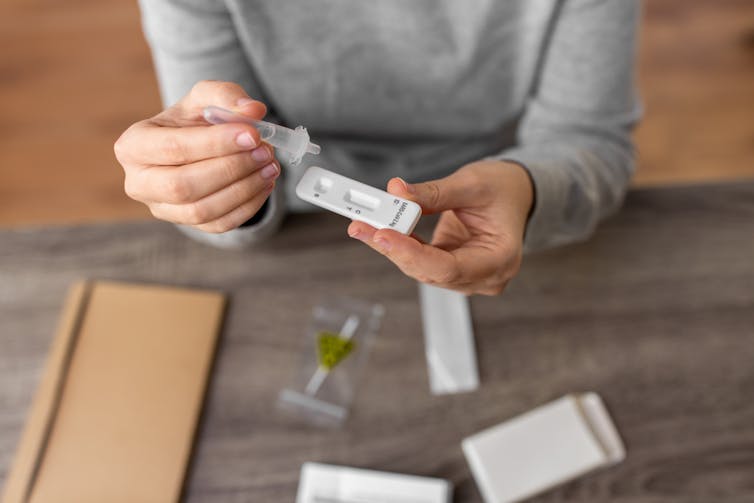
Some direct-to-consumer tests allow you to complete the test at home, while self-collected lab tests give you the equipment to collect a sample, which you then send to a lab. You can now also buy pathology requests for a lab directly from a company without seeing a doctor.
Ground Picture/Shutterstock
What we did in our study
We searched (via Google) for direct-to-consumer products advertised for sale online in Australia between June and December 2021. We then assessed whether each test was likely to provide benefits to those who use them based on scientific literature published about the tests, and any recommendations either for or against their use from professional medical organisations.
We identified 103 types of tests and 484 individual products ranging in price from A$12.99 to A$1,947.
We concluded only 11% of these tests were likely to benefit most consumers. These included tests for STIs, where social stigma can sometimes discourage people from testing at a clinic.
A further 31% could possibly benefit a person, if they were at higher risk. For example, if a person had symptoms of thyroid disease, a test may benefit them. But the Royal Australian College of General Practitioners does not recommend testing for thyroid disease in people without symptoms because evidence showing benefits of identifying and treating people with early thyroid disease is lacking.
Some 42% were commercial “health checks” such as hormone and nutritional status tests. Although these are legitimate tests – they may be ordered by a doctor in certain circumstances, or be used in research – they have limited usefulness for consumers.
A test of your hormone or vitamin levels at a particular time can’t do much to help you improve your health, especially because test results change depending on the time of day, month or season you test.
Most worryingly, 17% of the tests were outright “quackery” that wouldn’t be recommended by any mainstream health practitioner. For example, hair analysis for assessing food allergies is unproven and can lead to misdiagnosis and ineffective treatments.
More than half of the tests we looked at didn’t state they offered a pre- or post-test consultation.
fizkes/Shutterstock
Products available may change outside the time frame of our study, and direct-to-consumer tests not promoted or directly purchasable online, such as those offered in pharmacies or by commercial health clinics, were not included.
But in Australia, ours is the first and only study we know of mapping the scale and variety of direct-to-consumer tests sold online.
Research from other countries has similarly found a lack of evidence to support the majority of direct-to-consumer tests.
4 questions to ask before you buy a test online
Many direct-to-consumer tests offer limited benefits, and could even lead to harms. Here are four questions you should ask yourself if you’re considering buying a medical test online.
1. If I do this test, could I end up with extra medical appointments or treatments I don’t need?
Doing a test yourself might seem harmless (it’s just information, after all), but unnecessary tests often find issues that would never have caused you problems.
For example, someone taking a diabetes test may find moderately high blood sugar levels see them labelled as “pre-diabetic”. However, this diagnosis has been controversial, regarded by many as making patients out of healthy people, a large number of whom won’t go on to develop diabetes.
2. Would my GP recommend this test?
If you have worrying symptoms or risk factors, your GP can recommend the best tests for you. Tests your GP orders are more likely to be covered by Medicare, so will cost you a lot less than a direct-to-consumer test.
3. Is this a good quality test?
A good quality home self-testing kit should indicate high sensitivity (the proportion of true cases that will be accurately detected) and high specificity (the proportion of people who don’t have the disease who will be accurately ruled out). These figures should ideally be in the high 90s, and clearly printed on the product packaging.
For tests analysed in a lab, check if the lab is accredited by the National Association of Testing Authorities. Avoid tests sent to overseas labs, where Australian regulators can’t control the quality, or the protection of your sample or personal health information.
4. Do I really need this test?
There are lots of reasons to want information from a test, like peace of mind, or just curiosity. But unless you have clear symptoms and risk factors, you’re probably testing yourself unnecessarily and wasting your money.
Direct-to-consumer tests might seem like a good idea, but in most cases, you’d be better off letting sleeping dogs lie if you feel well, or going to your GP if you have concerns.
Patti Shih, Senior Lecturer, Australian Centre for Health Engagement, Evidence and Values, University of Wollongong; Fiona Stanaway, Associate Professor in Clinical Epidemiology, University of Sydney; Katy Bell, Associate Professor in Clinical Epidemiology, Sydney School of Public Health, University of Sydney, and Stacy Carter, Professor and Director, Australian Centre for Health Engagement, Evidence and Values, University of Wollongong
This article is republished from The Conversation under a Creative Commons license. Read the original article.
Don’t Forget…
Did you arrive here from our newsletter? Don’t forget to return to the email to continue learning!
Recommended
Learn to Age Gracefully
Join the 98k+ American women taking control of their health & aging with our 100% free (and fun!) daily emails:
-
Science of Pilates – by Tracy Ward
10almonds is reader-supported. We may, at no cost to you, receive a portion of sales if you purchase a product through a link in this article.
We’ve reviewed other books in this series, “Science of Yoga” and “Science of HIIT” (they’re great too; check them out!). What does this one add to the mix?
Pilates is a top-tier “combination exercise” insofar as it checks a lot of boxes, e.g:
- Strength—especially core strength, but also limbs
- Mobility—range of motion and resultant reduction in injury risk
- Stability—impossible without the above two things, but Pilates trains this too
- Fitness—many dynamic Pilates exercises can be performed as cardio and/or HIIT.
The author, a physiotherapist, explains (as the title promises!) the science of Pilates, with:
- the beautifully clear diagrams we’ve come to expect of this series,
- equally clear explanations, with a great balance of simplicity of terms and depth where necessary, and
- plenty of citations for the claims made, linking to lots of the best up-to-date science.
Bottom line: if you are in a position to make a little time for Pilates (if you don’t already), then there is nobody who would not benefit from reading this book.
Click here to check out Science of Pilates, and keep your body well!
Share This Post
-
The weight loss drug Mounjaro has been approved to treat sleep apnoea. How does it work?
10almonds is reader-supported. We may, at no cost to you, receive a portion of sales if you purchase a product through a link in this article.
Last week, Australia’s Therapeutic Goods Administration (TGA) approved the weight-loss drug Mounjaro to treat sleep apnoea, a condition in which breathing stops and starts repeatedly during sleep.
The TGA has indicated Mounjaro can be used to treat moderate to severe obstructive sleep apnoea in adults with obesity (a body-mass index of 30 or above).
The United States Food and Drug Administration approved the same drug for sleep apnoea last year.
So how could this drug, most commonly used for weight management and conditions such as type 2 diabetes, help people with sleep apnoea?
coldsnowstorm/Getty Images What is sleep apnoea?
Obstructive sleep apnoea is a common sleep disorder affecting almost 1 billion people worldwide. It’s characterised by repeated closures of the airway during sleep (called “apnoeas”). These can be partial or complete closures, meaning breathing can become shallow or stop completely.
As well as causing fragmented sleep, repeated collapse of the airway disrupts oxygen flow to the body. This strains the heart and contributes to an increased risk of cardiovascular and metabolic complications such as diabetes, high blood pressure and stroke.
One of the key risk factors for obstructive sleep apnoea is obesity. About 80% of people with the condition live with obesity. In fact, obesity and sleep apnoea share a bidirectional relationship, with obesity increasing the risk of developing sleep apnoea, and vice versa.
Obesity increases the risk of sleep apnoea by adding fat around the neck, which narrows the airway and impacts breathing during sleep.
In turn, sleep apnoea can contribute to weight gain by disrupting hormones that regulate hunger (ghrelin) and fullness signals (leptin). Fatigue also contributes, making it harder to maintain a healthy weight and easier to gain weight over time, creating a vicious cycle where each condition worsens the other.
Weight loss is a key part of treating sleep apnoea. It helps reduce the severity of symptoms and also lowers the risk of heart disease and other health problems which may arise as a result of sleep apnoea. However, achieving and sustaining weight loss through lifestyle changes is often challenging.
A continuous positive airway pressure (CPAP) machine is generally the first-line therapy for managing moderate to severe sleep apnoea. It delivers a steady stream of pressurised air through a mask to keep the airway open during sleep, which stabilises breathing and improves sleep quality.
Despite being an effective treatment, many people find the CPAP machine uncomfortable, unattractive or hard to use regularly. This can mean people don’t always stick to it.
Given the significant human and economic costs of sleep apnoea it’s pertinent to keep exploring new prevention and management strategies.
CPAP machines are currently the first line of treatment for moderate to severe sleep apnoea. Anastasija Vujic/Shutterstock What is Mounjaro, and how could it help people with sleep apnoea?
Mounjaro is the brand name of a drug called tirzepatide. Elsewhere, it goes by other brand names, such as Zepbound.
Tirzepatide works by mimicking two hormone receptors in the gut, glucagon-like peptide-1 (GLP-1) and glucose-dependent insulinotropic polypeptide (GIP).
These two hormones play a key role in regulating our appetite, food intake and blood sugar levels. GLP-1 and GIP are released naturally in the body when we eat, but by mimicking their effects, tirzepatide allows people to feel fuller with smaller meals.
If a person is eating less overall, this can lead to weight loss.
In a study of 469 people with obesity and moderate to severe obstructive sleep apnoea, one year of tirzepatide treatment was associated with up to a 60% reduction in sleep apnoea severity. This is compared to a 3% reduction in people receiving a placebo.
In addition, evidence shows tirzepatide is associated with improvements in several key health indicators, including reduced systemic inflammation, enhanced insulin sensitivity and lower blood pressure. Changes such as these may improve respiratory function and help protect against cardiovascular and metabolic complications, which are common outcomes of untreated sleep apnoea.
Are there any side effects?
While Mounjaro could be helpful for people with sleep apnoea, gastrointestinal side effects are relatively common with this medication. These can include nausea, vomiting, diarrhoea, constipation and loss of appetite. These side effects typically go away as the person gets used to the medication.
Some patients have also reported gallbladder problems.
Despite these concerns, there is an interest in Mounjaro as sleep apnoea treatment as it provides the first pharmaceutical option for a condition that has traditionally relied on mechanical treatments such as CPAP machines.
That said, it’s important to note Mounjaro is indicated for use in patients with obesity, and not all patients with sleep apnoea are overweight or obese.
In some people of a healthy weight, narrow skeletal structure or upper airway anatomy, such as larger soft palates (which can reduce airway space and make it more prone to collapse during sleep), could contribute to obstructive sleep apnoea.
For those patients, non-pharmacological treatment options such as mandibular advancement devices (oral appliances that move the lower jaw forward and keep the airway open) and upper airway surgery may be needed to effectively manage the condition.
Mounjaro is given as a weekly injection. In Australia, Mounjaro is not currently subsidised under the Pharmaceutical Benefits Scheme and is available only by private prescription, with prices beginning at around A$395 per month. The significant out-of-pocket cost will limit access to Mounjaro for many patients.
Mounjaro’s approval for the treatment of sleep apnoea may offer new hope for many people. But considering the diversity in patient presentations and limited data from large population studies, it’s too early to say whether this will transform sleep apnoea care in Australia.
Yaqoot Fatima, Professor of Sleep Health, University of the Sunshine Coast and Nisreen Aouira, Research Program Manager, Thompson Institute, University of the Sunshine Coast
This article is republished from The Conversation under a Creative Commons license. Read the original article.
Share This Post
-
8 Signs Of Hypothyroidism Beyond Tiredness & Weight Gain
10almonds is reader-supported. We may, at no cost to you, receive a portion of sales if you purchase a product through a link in this article.
When it comes to hypothyroidism, most people know to look out for tiredness and weight gain, and possibly menstrual disturbances in those who menstruate. But those symptoms could be caused by very many things, so what more specific signs and symptoms of hypothyroidism should we look out for?
Dr. James O’Donovan shows us in this short video:
The lesser-known signs
Dr. O’Donovan discusses:
- Asteatotic eczema (also called: eczema craquelé): dry, cracked skin with a “crazy paving” appearance, leading to fissures. It’s common on the lower legs, back, torso, and arms, especially in older patients and especially in winter.
- Cold peripheries with pale, dry, coarse skin: cold hands and feet, along with dryness due to decreased sweating; these invariably come together, though the exact link is unclear.
- Yellowish hue to the skin (carotenoderma): yellow-orange discoloration from elevated beta-carotene levels. This can easily be mistaken for jaundice and also occurs in diabetes, liver, and kidney diseases.
- Thin, brittle hair: the hair on one’s head may become dry, coarse, and fall out in handfuls.
- Loss of hair on the outer third of eyebrows: thinning or disappearance of hair in this very specific area.
- Slow-growing, rigid, brittle nails: slowed nail growth due to decreased cell turnover rate. Ridges may form as keratin cells accumulate.
- Myxedema: puffy face, eyelids, legs, and feet caused by tissue swelling from cutaneous deposition.
- Delayed wound healing: is what it sounds like; a slower healing process.
10almonds note: this video, like much of medical literature as well, does focus on what things are like for white people. Black people with hypothyroidism are more likely to see a lightening of hair pigmentation, and, in contrast, hyperpigmentation of the skin, usually in patches. We couldn’t find data for other ethnicities or skintones, but it does seem that most of the signs and symptoms (unrelated to pigmentation) should be the same for most people.
Meanwhile, for more on the above 8 signs, with visuals, enjoy:
Click Here If The Embedded Video Doesn’t Load Automatically!
Want to learn more?
You might also like to read:
The Three Rs To Boost Thyroid-Related Energy Levels
Take care!
Share This Post
Related Posts
-
6 Signs Of Stroke (One Month In Advance)
10almonds is reader-supported. We may, at no cost to you, receive a portion of sales if you purchase a product through a link in this article.
Most people can recognise the signs of a stroke when it’s just happened, but knowing the signs that appear a month beforehand would be very useful. That’s what this video’s about!
The Warning Signs
- Persistently elevated blood pressure: one more reason to have an at-home testing kit and use it regularly! Or a smartwatch or similar that’ll do it for you. The reason this is relevant is because high blood pressure can lead to damaging blood vessels, causing a stroke.
- Excessive fatigue: of course, this one can have many possible causes, but one of them is a “transient ischemic attack” (TIA), which is essentially a micro-stroke, and can be a precursor to a more severe stroke. So, we’re not doing the Google MD thing here of saying “if this, then that”, but we are saying: paying attention to the overall patterns can be very useful. Rather than fretting unduly about a symptom in isolation, see how it fits into the big picture.
- Vision problems: especially if sudden-onset with no obvious alternative cause can be a sign of neural damage, and may indicate a stroke on the way.
- Speech problems: if there’s not an obvious alternative explanation (e.g. you’ve just finished your third martini, or was this the fourth?), then speech problems (e.g. slurred speech, trouble forming sentences, etc) are a very worrying indicator and should be treated as a medical emergency.
- Neurological problems: a bit of a catch-all category, but memory issues, loss of balance, nausea without an obvious alternative cause, are all things that should get checked out immediately just in case.
- Numbness or weakness in the extremities: especially if on one side of the body only, is often caused by the TIA we mentioned earlier. If it’s both sides, then peripheral neuropathy may be the culprit, but having a neurologist take a look at it is a good idea either way.
Click Here If The Embedded Video Doesn’t Load Automatically!
Want to learn more?
You might also like to read:
Two Things You Can Do To Improve Stroke Survival Chances
Take care!
Don’t Forget…
Did you arrive here from our newsletter? Don’t forget to return to the email to continue learning!
Learn to Age Gracefully
Join the 98k+ American women taking control of their health & aging with our 100% free (and fun!) daily emails:
-
Do you taste words or hear colours? Here’s the neuroscience behind synaesthesia
10almonds is reader-supported. We may, at no cost to you, receive a portion of sales if you purchase a product through a link in this article.
Have you ever tasted a word, or seen colours while listening to music?
If you have, you may be among the 1% to 4% of people who have a fascinating trait known as synaesthesia.
Synaesthesia is a neurological phenomenon where the activation of one sense, such as hearing, triggers the activation of another usually unrelated sense, such as sight. This means people with synaesthesia often experience additional sensations compared to the rest of us.
We’ve devoted a lot of time to understanding this rare phenomenon. While there’s much more to unpack, what we do know shows we don’t all perceive the world in the same way.
Vitally Gariev/Unsplash What is synaesthesia?
People with synaesthesia are known as synaesthetes. Research suggests synaesthesia may be more common among women, although this could reflect sampling biases, and may be influenced by genetics.
There are many different types of synaesthesia. Some people have auditory-visual synaesthesia, meaning they see colours when they hear sounds. Others see colours when they read, hear or think about letters or numbers. This is known as grapheme-colour synaesthesia. Another example is mirror-touch synaesthesia, where a person feels sensations on their own body when they see another person being touched.
All of us naturally combine information from different senses. For instance, when you watch someone speak, your brain blends what you see and hear to understand them better. In synaesthesia these links are a bit different – a sound might, for example, trigger a visual experience – but may still depend on the same mechanisms.
People with synaesthesia don’t have any control over how their senses collide. Instead, these are spontaneous, vivid experiences that usually stay the same over time. For example, today a person with grapheme-colour synaesthesia may perceive the letter “A” as being red. And they’ll most likely see it as being the same shade even years later.
It’s worth noting synaesthesia is not an illness or disorder. And it doesn’t cause harm or impairment, although some people may find their synaesthesia overwhelming at times. For example, if they feel pain every time they see someone else in pain, going to the movies can be quite disturbing. However, on the whole it does not seem to interfere with daily life. In fact, many people don’t realise they have synaesthesia because it’s simply how they perceive the world.
What causes it?
We don’t yet know exactly what causes synaesthesia. But scientists have come up with two main theories.
1. Synaesthetes have more connections in their brain
According to this view, known as the cross-activation theory, people with synaesthesia have more connections between different parts of their brain. This could happen because their brain hasn’t gotten rid of unused connections between brain cells. This process, known as synaptic pruning, helps the brain work more efficiently and is part of normal development.
Under this theory, a person with grapheme-colour synaesthesia for example, would have the region that recognises letters directly linked to the part that processes colour. So when they see a letter, they perceive it with a colour.
2. Synaesthetes have slightly different activity in their brain
The other main theory is that people with synaesthesia have the same neural connections as non-synaesthetes, but certain pathways might be stronger or more active. Synaesthesia does seem to build on mechanisms we all have. For example, when you see a picture of a grey banana, you know bananas are usually yellow. We even see patterns of brain activity that reflect this. Grapheme-colour synaesthetes might also do this with letters so that when they see black letters, their brain activates specific colours.
Simply put, the debate about what causes synaesthesia comes down to whether synaesthetes have a different brain structure or just use their brains in an alternative way.
Does it make you more creative?
You might’ve heard artists such as Kandinsky or musicians such as Lorde describe their synaesthesia-like experiences. And there is some evidence to suggest synaesthesia is more common among people in creative fields.
One large survey of Australian synaesthetes found roughly 24% had creative occupations, such as being an artist, musician, architect or graphic designer. This is compared to the less than 2% of people in the general population who have these jobs. This gap is striking, even though we don’t understand what’s behind it. One reason may be synaesthetes link ideas and sensations in unusual ways, helping them think more creatively. Research suggests people with certain kinds of synaesthesia may form stronger memories or have more vivid imaginations, but only to a limited extent.
Synaesthesia is a powerful window into how our brains make sense of the world. It reminds us perception is not a fixed, one-size-fits-all process. Rather, it’s something the brain actively builds in ways that are often more varied, and far richer, than we might expect.
Sophie Smit, Postdoctoral Research Associate in Cognitive Neuroscience, University of Sydney and Anina Rich, Associate Professor and Head of Synaesthesia Research Group, Macquarie University
This article is republished from The Conversation under a Creative Commons license. Read the original article.
Don’t Forget…
Did you arrive here from our newsletter? Don’t forget to return to the email to continue learning!
Learn to Age Gracefully
Join the 98k+ American women taking control of their health & aging with our 100% free (and fun!) daily emails:
-
Lithium Deficiency & Alzheimer’s?
10almonds is reader-supported. We may, at no cost to you, receive a portion of sales if you purchase a product through a link in this article.
We have written before avoiding Alzheimer’s in many different ways, for example: Alzheimer’s Causative Factors To Avoid
…and regular readers will also be aware of our dictum “what’s good for the heart, is good for the brain”, which is because the heart feeds the brain, with oxygen and nutrients, and also ultimately clears away detritus like beta-amyloid (associated with Alzheimer’s).
For much more detail on this, see: What’s Your Vascular Dementia Risk? ← includes actual numbers and a risk calculator tool!
So, it’s no surprise of course that exercise is protective against dementia, and as per the above, typically the most important thing here is heart health, so getting regular cardiovascular exercise, such walking, running, or dancing is great.
But what about diet?
We know that diet is important for all aspects of health, and so that includes brain health. Of course, part of that is through the gut → heart → brain pipeline, whereby you can’t have a healthy brain without a healthy gut and a healthy heart. We talked about that a bit here: Your Health Audit, From Head To Toe ← while “head to toe” is the popular expression, we do also note that in fact, a lot of important health things flow from the gut upwards!
We’ve even written about The 6 Pillars Of Nutritional Psychiatry, to best furnish your brain with optimal health.
But… Lithium?! Seriously?
Now, researchers have investigated the role of lithium deficiency—essentially, viewing lithium as an essential mineral that is seen to be depleted in the brains of people with Alzheimer’s disease, with the extent of the depletion correlating to the extent of the progression (they found that lithium levels are high in cognitively healthy people, but greatly reduced in those with mild impairment or advanced Alzheimer’s; this pattern replicated across multiple brain banks).
Specifically, they found that amyloid beta plaques (known to be strongly associated with Alzheimer’s disease, and almost universally believed to be a causal factor) bind to lithium, lowering brain lithium levels and impairing all major brain cell types.
In fact, their analysis of human brain and blood samples (plus mouse studies) showed lithium depletion is one of the earliest changes in Alzheimer’s progression.
Why we care about the mouse studies as well as the human ones: lacing the mice’s food with truly tiny amounts of lithium orotate, a compound that avoids amyloid capture, restored memory, prevented brain cell damage, and reversed disease pathology in mice at one-thousandth the dose of standard lithium treatments.
Which is good, because while lithium can be useful in the treatment of some other psychiatric disorders, its side effects are generally not well-loved. So, a miniscule dose being effective for this is a big bonus. Another bonus is that while the currently most-popularly-prescribed forms of lithium (e.g. lithium carbonate) can be toxic in older adults, lithium orotate appears to show no toxicity (still early days, though, and of course everything is toxic at high enough doses, including oxygen and water, so it’s just a matter of establishing the safe boundaries, which for lithium orotate hasn’t been done yet in humans, and is merely recognized as “higher than this”).
In terms of benefits, such lithium supplementation was found to be not only restorative, but also preventative if started early.
This knowledge has two potential benefits for humans:
- measuring lithium in blood could screen for Alzheimer’s much earlier than is otherwise currently possible
- certain amyloid-evading lithium compounds appear to be effective at safe, low doses, so could be a preventative/treatment
We say “may” and “could be”, because you know what science is like in the early stages, and this hasn’t progressed to human trials yet—just (deceased) human brains and (live) mice.
The researchers did also note, though, that higher environmental lithium (e.g. in drinking water) is linked to lower dementia rates; lithium may be a missing link explaining why some with amyloid/tau pathology avoid dementia.
You can read the paper in full, here: Lithium deficiency and the onset of Alzheimer’s disease
So, should I self-medicate?
The researchers (predictably, given the cautious nature of researchers when making declarations) aren’t advising such at this time, and we at 10almonds cannot advise on this matter; we simply present the science for your information, because indeed, “forewarned is forearmed” as they say.
We will mention, however, that lithium orotate is widely available as a dietary supplement (here’s an example product on Amazon) so, make of that what you will!
Want to learn more?
We recommend considering the following:
How To Reduce Your Alzheimer’s Risk
Take care!
Don’t Forget…
Did you arrive here from our newsletter? Don’t forget to return to the email to continue learning!
Learn to Age Gracefully
Join the 98k+ American women taking control of their health & aging with our 100% free (and fun!) daily emails:


