
What are the key risk factors for developing knee osteoarthritis? We reviewed theĀ evidence

10almonds is reader-supported. We may, at no cost to you, receive a portion of sales if you purchase a product through a link in this article.

Osteoarthritis is the most common joint disease, affecting more than 3 million Australians and over 500 million people worldwide.

The knee is the most commonly affected joint, but osteoarthritis can also affect other joints including the hips and hands. The condition causes painful and stiff joints.

For someone with knee osteoarthritis, simple activities that many people take for granted such as walking, going up and down stairs or squatting can be very challenging.

There’s currently no cure for osteoarthritis. Most available treatments, such as exercise, walking aids and medicines (including paracetamol and non-steroidal anti-inflammatory drugs), focus on managing symptoms. But it’s important to consider how we can prevent knee osteoarthritis in the first place.

With this in mind, we undertook a systematic review to summarise the risk factors for developing knee osteoarthritis. Our findings, published today in the journal Osteoarthritis and Cartilage, can help us better understand how to lower the risk of this condition.

What we found

We gathered data from studies which followed people over time, to see which risk factors were associated with developing knee osteoarthritis. We included a total of 131 studies, involving more than 5 million people.

We identified more than 150 factors that influenced the risk of developing knee osteoarthritis.

Some key factors which increased the risk of developing knee osteoarthritis included being overweight or obese, past knee injury and occupational physical activity such as lifting heavy objects and shift work.

We also found several other possible risk factors, including:

  • eating large amounts of ultra-processed foods (which include ā€œjunk foodsā€, sugary drinks and processed meats)
  • poor sleep quality (for example, sleeping less than six hours a day or having 1–2 restless nights per week)
  • feeling depressed.

Being overweight or obese and past knee injury together accounted for 14% of the overall risk of developing knee osteoarthritis.

In other words, if we were able to completely remove these two risk factors, we could potentially reduce the incidence of knee osteoarthritis in the population by 14%.

Females had almost double the risk of developing knee osteoarthritis, and older age was slightly related to developing knee osteoarthritis.

A man's hand holding his knee.
Osteoarthritis of the knee affects millions of people worldwide. Towfiqu barbhuiya/Pexels

Protective factors

On the other hand, we found some factors may lower the risk of developing knee osteoarthritis. These included following a Mediterranean diet (which includes plenty of vegetables, olive oil, nuts, fruit and healthy fats found in fish), and following a diet higher in fibre.

Avoiding the things which increase the risk of developing knee osteoarthritis such as a diet high in ultra-processed foods, knee injury, weight gain and heavy lifting can also help a person reduce their risk of developing the condition.

Exercise is an effective treatment for knee osteoarthritis. It can reduce pain and improve function.

There was not enough information in our study to determine what types of physical activity (for example, walking, running, swimming) and how much time spent doing these activities could lower the risk of developing knee osteoarthritis, so this is an important area for future research.

How can we explain these links?

The studies we included did not generally explore the possible mechanisms linking key risk factors with the development of knee osteoarthritis.

However other research may provide some helpful insights. Knee injury can lead to instability of the knee joint and additional wear on the knee which can lead to knee osteoarthritis. Similarly, occupational physical activity such as kneeling, squatting, climbing or heavy lifting can increase the risk of wear and tear on the knee.

Poor sleep has been linked to weight gain and depression.

The duration and quality of sleep has been found to affect how much we eat and the hormones responsible for regulating metabolism. Depression has been linked to reduced physical activity which can lead to weight gain. Carrying extra weight can increase the load on the knee and contribute to knee osteoarthritis.

Shift work can lead to bad food choices and lack of sleep, which in turn can increase the risk of knee osteoarthritis.

So it seems that while the risk factors we found may be contributing individually to the development of knee osteoarthritis, they may also be interacting together to increase the risk.

It’s not clear why women are at greater risk of developing knee osteoarthritis. However this is likely to be due to a combination of factors, including lifestyle, biological and hormonal factors.

A Mediterranean diet is high in polyphenols, which can reduce inflammation in the body and destruction of cartilage. It may lower the risk of developing knee osteoarthritis in this way.
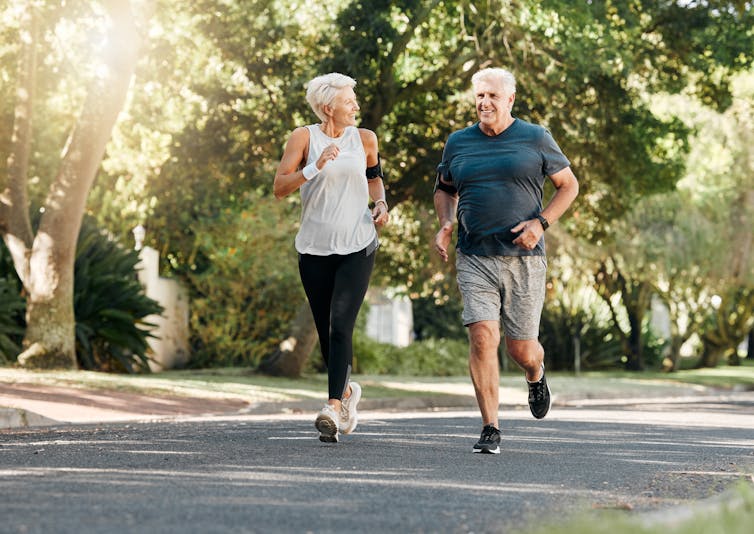
A middle-aged couple running in a park.
Lifestyle changes could reduce the risk of knee osteoarthritis. PeopleImages.com – Yuri A/Shutterstock

Most risk factors are modifiable

There were some limitations with the available evidence. Most studies were based on populations from the United States, or did not report on ethnicity. We know little about the risk of developing knee osteoarthritis in certain groups such as people from Hispanic, African and Southeast Asian backgrounds. We need more studies exploring risk factors in other countries and populations.

Nonetheless, a review like this allows us to better understand what can be done to lower the risk of developing knee osteoarthritis.

We found most risk factors associated with developing knee osteoarthritis are modifiable, which means they can be changed or better managed with healthy diet and lifestyle choices. Eating healthy, maintaining a healthy weight and taking proactive steps to prevent injuries in the workplace and sporting communities can potentially lower a person’s risk of developing the condition.

Public health strategies aimed at encouraging healthy eating and weight loss (for example, subsidised nutrition programs and education programs starting from a young age to promote optimal diet and physical activity) could reduce the burden of knee osteoarthritis and have broader health benefits as well.

Programs like these, as well as reducing heavy lifting in the workplace where possible, should be the focus of government strategies to address the burden of this painful condition globally.

Christina Abdel Shaheed, Associate Professor, School of Public Health, University of Sydney; David Hunter, Professor of Medicine, University of Sydney; Lyn March, Liggins Professor of Rheumatology and Musculosketal Epidemiology Medicine, Northern Clinical School, University of Sydney, and Vicky Duong, Research Fellow, Kolling Institute of Medical Research, University of Sydney

This article is republished from The Conversation under a Creative Commons license. Read the original article.

Don’t Forget…

Did you arrive here from our newsletter? Don’t forget to return to the email to continue learning!

Learn to Age Gracefully

Join the 98k+ American women taking control of their health & aging with our 100% free (and fun!) daily emails:

  • Should I kick my diet soft-drink habit? Where do I start?

    10almonds is reader-supported. We may, at no cost to you, receive a portion of sales if you purchase a product through a link in this article.

    The average Australian drinks almost 60 litres of soft drink a year. Many people see diet soft drinks as a ā€œhealthierā€ choice than regular ones, and when it comes to sugar, that’s true.

    For example, a 375 millilitre can of Coca-Cola contains about seven teaspoons of added sugar (almost to 40 grams). That’s close to the World Health Organization’s (WHO) daily recommended limit for added sugars of 50g.

    In comparison, the Diet Coke version is sweetened with artificial sweeteners such as aspartame and does not contain sugar.

    So if you reach for diet soft drinks, is that so bad? Or is it worth giving them up too?

    Towfiqu barbhuiya/Pexels

    Are diet soft drinks really that bad?

    Diet soft drinks provide few nutrients. They often contain artificial sweeteners and caffeine, and while they’re low in energy (kilojoules), they aren’t filling.

    People who regularly drink diet soft drinks may have a higher risk of developing conditions such as heart disease and type 2 diabetes.

    But this doesn’t necessarily mean the drinks cause these conditions. People who already have health concerns or are trying to manage their weight may be more likely to choose diet drinks, which might make this evidence a little misleading.

    How about artificial sweeteners?

    In 2023, the WHO classified aspartame (a common sweetener found in many diet soft drinks) as ā€œpossibly carcinogenic to humansā€. This means the evidence linking aspartame to cancer is currently limited and not conclusive.

    The WHO also emphasised that the public generally consumes safe levels of aspartame and only has evidence for concern if people drink the equivalent to 14 cans of soft drink a day.

    There is also emerging evidence some artificial sweeteners might irritate the gut or alter the balance of gut bacteria. These effects are still being investigated. But they’ve added to concerns about the health impacts of drinking diet soft drinks over a long period of time.

    Can I get used to the sweetness?

    An occasional diet drink isn’t likely to fuel an addiction to sweet foods, but cutting back is still a good idea if this has become a daily habit.

    After people cut back on very sweet foods or drinks, some research suggests they start noticing sweetness more easily and find very sweet things taste too sweet.

    So if you’re trying to enjoy less-sweet drinks, give it time. Within a few weeks you might actually prefer the less-sweet taste.

    Here are three evidence-based strategies to help you adjust.

    1. Water it down

    A gentle first step is to dilute your soft drink. Start by pouring less soft drink into a glass and topping it up with water or soda water, then gradually adjust the ratio over time.

    It may taste less sweet at first, but your taste buds will adapt. This slow, steady approach can make change feel easier and more sustainable than quitting abruptly.

    2. Make smarter swaps

    Try replacing diet soft drink with a healthier alternative that still delivers flavour or fizz. Sparkling water or soda water with a squeeze of lime or lemon and a few mint leaves gives you the same bubbly refreshment with a natural and refreshing flavour. Add ice if it is a hot day, or to provide some crunch.

    If you prefer plain water but it feels boring, infuse it with slices of fruit, cucumber, berries or herbs.

    You could also try unsweetened iced tea, such as black, green or herbal tea. These offer a mild caffeine lift without the added sweeteners and can be served cold with ice and lemon.

    Coconut water can also be a healthier alternative as it is low in sugar while providing some additional electrolytes, which help balance fluid in the body.

    3. Know your triggers

    If you often reach for a soft drink out of habit, boredom or an afternoon energy slump, paying attention to these moments can help. Once you spot your triggers, you can plan a different response. Take a short walk, call a friend or make a cup of tea instead.

    Keeping a chilled, reusable water bottle nearby also helps. If your drink is always within reach, you’re less likely to grab a diet soft drink when you’re out and about.

    If you drink diet soft drinks because you’re hungry, reach for something nourishing instead, such as a handful of nuts, a yoghurt or a piece of fruit. These foods will satisfy you for longer than a can of diet soft drink because they have nutrients, such as fibre, to keep you fuller for longer.

    The bottom line

    You don’t have to give up diet soft drinks altogether. But being mindful of how much soft drink you drink, and how often, can help you make choices that better support your long-term health.

    Start small, be consistent and let your taste buds adjust. Over time, you might find what once tasted ā€œflatā€ now feels refreshingly natural.

    Lauren Ball, Professor of Community Health and Wellbeing, The University of Queensland; Emily Burch, Accredited Practising Dietitian and Lecturer, Southern Cross University, and Mackenzie Derry, Nutritionist, Dietitian & PhD Candidate, The University of Queensland

    This article is republished from The Conversation under a Creative Commons license. Read the original article.

    Share This Post

  • Apple vs Mango – Which is Healthier?

    10almonds is reader-supported. We may, at no cost to you, receive a portion of sales if you purchase a product through a link in this article.

    Our Verdict

    When comparing apple to mango, we picked the mango.

    Why?

    In terms of macros, apples have slightly more fiber for the same carbs, for a marginal win in this first category.

    However…

    In the category of vitamins, apples are not higher in any vitamins, while mangos have more of vitamins A, B1, B2, B3, B5, B6, B7, B9, C, E, K, and choline, winning by huge margins in many of those.

    Looking at minerals, apples are not higher in any minerals, while mangos have more calcium, copper, iron, magnesium, manganese, phosphorus, potassium, selenium, and zinc, thus, another overwhelming win for mangos.

    Adding up the sections makes for a clear overall win for mangos, but by all means enjoy either or both; diversity is good!

    Want to learn more?

    You might like:

    From Apples to Bees, and High-Fructose Cs: Which Sugars Are Healthier, And Which Are Just The Same?

    Enjoy!

    Share This Post

  • Doctors Are as Vulnerable to Addiction as Anyone. California Grapples With a Response

    10almonds is reader-supported. We may, at no cost to you, receive a portion of sales if you purchase a product through a link in this article.

    BEVERLY HILLS, Calif. — Ariella Morrow, an internal medicine doctor, gradually slid from healthy self-esteem and professional success into the depths of depression.

    Beginning in 2015, she suffered a string of personal troubles, including a shattering family trauma, marital strife, and a major professional setback. At first, sheer grit and determination kept her going, but eventually she was unable to keep her troubles at bay and took refuge in heavy drinking. By late 2020, Morrow could barely get out of bed and didn’t shower or brush her teeth for weeks on end. She was up to two bottles of wine a day, alternating it with Scotch whisky.

    Sitting in her well-appointed home on a recent autumn afternoon, adorned in a bright lavender dress, matching lipstick, and a large pearl necklace, Morrow traced the arc of her surrender to alcohol: ā€œI’m not going to drink before 5 p.m. I’m not going to drink before 2. I’m not going to drink while the kids are home. And then, it was 10 o’clock, 9 o’clock, wake up and drink.ā€

    As addiction and overdose deaths command headlines across the nation, the Medical Board of California, which licenses MDs, is developing a new program to treat and monitor doctors with alcohol and drug problems. But a fault line has appeared over whether those who join the new program without being ordered to by the board should be subject to public disclosure.

    Patient advocates note that the medical board’s primary mission is ā€œto protect healthcare consumers and prevent harm,ā€ which they say trumps physician privacy.

    The names of those required by the board to undergo treatment and monitoring under a disciplinary order are already made public. But addiction medicine professionals say that if the state wants troubled doctors to come forward without a board order, confidentiality is crucial.

    Public disclosure would be ā€œa powerful disincentive for anybody to get helpā€ and would impede early intervention, which is key to avoiding impairment on the job that could harm patients, said Scott Hambleton, president of the Federation of State Physician Health Programs, whose core members help arrange care and monitoring of doctors for substance use disorders and mental health conditions as an alternative to discipline.

    But consumer advocates argue that patients have a right to know if their doctor has an addiction. ā€œDoctors are supposed to talk to their patients about all the risks and benefits of any treatment or procedure, yet the risk of an addicted doctor is expected to remain a secret?ā€ Marian Hollingsworth, a volunteer advocate with the Patient Safety Action Network, told the medical board at a Nov. 14 hearing on the new program.

    Doctors are as vulnerable to addiction as anyone else. People who work to help rehabilitate physicians say the rate of substance use disorders among them is at least as high as the rate for the general public, which the federal Substance Abuse and Mental Health Services Administration put at 17.3% in a Nov. 13 report.

    Alcohol is a very common drug of choice among doctors, but their ready access to pain meds is also a particular risk.

    ā€œIf you have an opioid use disorder and are working in an operating room with medications like fentanyl staring you down, it’s a challenge and can be a trigger,ā€ said Chwen-Yuen Angie Chen, an addiction medicine doctor who chairs the Well-Being of Physicians and Physicians-in-Training Committee at Stanford Health Care. ā€œIt’s like someone with an alcohol use disorder working at a bar.ā€

    From Pioneer to Lagger

    California was once at the forefront of physician treatment and monitoring. In 1981, the medical board launched a program for the evaluation, treatment, and monitoring of physicians with mental illness or substance use problems. Participants were often required to take random drug tests, attend multiple group meetings a week, submit to work-site surveillance by colleagues, and stay in the program for at least five years. Doctors who voluntarily entered the program generally enjoyed confidentiality, but those ordered into it by the board as part of a disciplinary action were on the public record.

    The program was terminated in 2008 after several audits found serious flaws. One such audit, conducted by Julianne D’Angelo Fellmeth, a consumer interest lawyer who was chosen as an outside monitor for the board, found that doctors in the program were often able to evade the random drug tests, attendance at mandatory group therapy sessions was not accurately tracked, and participants were not properly monitored at work sites.

    Today, MDs who want help with addiction can seek private treatment on their own or in many cases are referred by hospitals and other health care employers to third parties that organize treatment and surveillance. The medical board can order a doctor on probation to get treatment.

    In contrast, the California licensing boards of eight other health-related professions, including osteopathic physicians, registered nurses, dentists, and pharmacists, have treatment and monitoring programs administered under one master contract by a publicly traded company called Maximus Inc. California paid Maximus about $1.6 million last fiscal year to administer those programs.

    When and if the final medical board regulations are adopted, the next step would be for the board to open bidding to find a program administrator.

    Fall From Grace

    Morrow’s troubles started long after the original California program had been shut down.

    The daughter of a prominent cosmetic surgeon, Morrow grew up in Palm Springs in circumstances she describes as ā€œbeyond privileged.ā€ Her father, David Morrow, later became her most trusted mentor.

    But her charmed life began to fall apart in 2015, when her father and mother, Linda Morrow, were indicted on federal insurance fraud charges in a well-publicized case. In 2017, the couple fled to Israel in an attempt to escape criminal prosecution, but later they were both arrested and returned to the United States to face prison sentences.

    The legal woes of Morrow’s parents, later compounded by marital problems related to the failure of her husband’s business, took a heavy toll on Morrow. She was in her early 30s when the trouble with her parents started, and she was working 16-hour days to build a private medical practice, with two small children at home. By the end of 2019, she was severely depressed and turning increasingly to alcohol. Then, the loss of her admitting privileges at a large Los Angeles hospital due to inadequate medical record-keeping shattered what remained of her self-confidence.

    Morrow, reflecting on her experience, said the very strengths that propel doctors through medical school and keep them going in their careers can foster a sense of denial. ā€œWe are so strong that our strength is our greatest threat. Our power is our powerlessness,ā€ she said. Morrow ignored all the flashing yellow lights and even the red light beyond which serious trouble lay: ā€œI blew through all of it, and I fell off the cliff.ā€

    By late 2020, no longer working, bedridden by depression, and drinking to excess, she realized she could no longer will her way through: ā€œI finally said to my husband, ā€˜I need help.’ He said, ā€˜I know you do.ā€™ā€

    Ultimately, she packed herself off to a private residential treatment center in Texas. Now sober for 21 months, Morrow said the privacy of the addiction treatment she chose was invaluable because it shielded her from professional scrutiny.

    ā€œI didn’t have to feel naked and judged,ā€ she said.

    Morrow said her privacy concerns would make her reluctant to join a state program like the one being considered by the medical board.

    Physician Privacy vs. Patient Protection

    The proposed regulations would spare doctors in the program who were not under board discipline from public disclosure as long as they stayed sober and complied with all the requirements, generally including random drug tests, attendance at group sessions, and work-site monitoring. If the program put a restriction on a doctor’s medical license, it would be posted on the medical board’s website, but without mentioning the doctor’s participation in the program.

    Yet even that might compromise a doctor’s career since ā€œhaving a restricted license for unspecified reasons could have many enduring personal and professional implications, none positive,ā€ said Tracy Zemansky, a clinical psychologist and president of the Southern California division of Pacific Assistance Group, which provides support and monitoring for physicians.

    Zemansky and others say doctors, just like anyone else, are entitled to medical privacy under federal law, as long as they haven’t caused harm.

    Many who work in addiction medicine also criticized the proposed new program for not including mental health problems, which often go hand in hand with addiction and are covered by physician health programs in other states.

    ā€œTo forgo mental health treatment, I think, is a grave mistake,ā€ Morrow said. For her, depression and alcoholism were inseparable, and the residential program she attended treated her for both.

    Another point of contention is money. Under the current proposal, doctors would bear all the costs of the program.

    The initial clinical evaluation, plus the regular random drug tests, group sessions, and monitoring at their work sites could cost participants over $27,000 a year on average, according to estimates posted by the medical board. And if they were required to go for 30-day inpatient treatment, that would add an additional $40,000 — plus nearly $36,000 in lost wages.

    People who work in the field of addiction medicine believe that is an unfair burden. They note that most programs for physicians in other states have outside funding to reduce the cost to participants.

    ā€œThe cost should not be fully borne by the doctors, because there are many other people that are benefiting from this, including the board, malpractice insurers, hospitals, the medical association,ā€ said Greg Skipper, a semi-retired addiction medicine doctor who ran Alabama’s state physician health program for 12 years. In Alabama, he said, those institutions contribute to the program, significantly cutting the amount doctors have to pay.

    The treatment program that Morrow attended in spring of 2021, at The Menninger Clinic in Houston, cost $80,000 for a six-week stay, which was covered by a concerned family member. ā€œIt saved my life,ā€ she said.

    Though Morrow had difficulty maintaining her sobriety in the first year after treatment, she has now been sober since April 2, 2022. These days, Morrow regularly attends therapy and Alcoholics Anonymous and has pivoted to become an addiction medicine doctor.

    ā€œI am a better doctor today because of my experience — no question,ā€ Morrow said. ā€œI am proud to be a doctor who’s an alcoholic in recovery.ā€

    This article was produced by KFF Health News, which publishes California Healthline, an editorially independent service of the California Health Care Foundation. 

    KFF Health News is a national newsroom that produces in-depth journalism about health issues and is one of the core operating programs at KFF—an independent source of health policy research, polling, and journalism. Learn more about KFF.

    Subscribe to KFF Health News’ free Morning Briefing.

    Share This Post

  • How To Get More Nutrition From The Same Food

    10almonds is reader-supported. We may, at no cost to you, receive a portion of sales if you purchase a product through a link in this article.

    How To Get More Out Of What’s On Your Plate

    Where does digestion begin? It’s not the stomach. It’s not even the mouth.

    It’s when we see and smell our food; maybe even hear it! ā€œSell the sizzle, not the steakā€ has a biological underpinning.

    At that point, when we begin to salivate, that’s just one of many ways that our body is preparing itself for what we’re about to receive.

    When we grab some ready-meal and wolf it down, we undercut that process. In the case of ready-meals, they often didn’t have much nutritional value, but even the most nutritious food isn’t going to do us nearly as much good if it barely touches the sides on the way down.

    We’re not kidding about the importance of that initial stage of our external senses, by the way:

    So, mindful eating is not just something for Instagrammable ā€œwhat I eat in a dayā€ aesthetic photos, nor is just for monks atop cold mountains. There is actual science here, and a lot of it.

    It starts with ingredients

    ā€œEating the rainbowā€ (no, Skittles do not count) is great health advice for getting a wide variety of micronutrients, but it’s also simply beneficial for our senses, too. Which, as above-linked, makes a difference to digestion and nutrient absorption.

    Enough is enough

    That phrase always sounds like an expression of frustration, ā€œEnough is enough!ā€. But, really:

    Don’t overcomplicate your cooking, especially if you’re new to this approach. You can add in more complexities later, but for now, figure out what will be ā€œenoughā€, and let it be enough.

    The kitchen flow

    Here we’re talking about flow in the Csikszentmihalyi sense of the word. Get ā€œinto the swing of thingsā€ and enjoy your time in the kitchen. Schedule more time than you need, and take it casually. Listen to your favourite music. Dance while you cook. Taste things as you go.

    There are benefits, by the way, not just to our digestion (in being thusly primed and prepared for eating), but also to our cognition:

    In The Zone: Flow State and Cognition in Older Adults

    Serve

    No, not just ā€œput the food on the tableā€, but serve.

    Have a pleasant environment; with sensory pleasures but without too many sensory distractions. Think less ā€œthe news on in the backgroundā€ and more smooth jazz or Mozart or whatever works for you. Use your favourite (small!) plates/bowls, silverware, glasses. Have a candle if you like (unscented!).

    Pay attention to presentation on the plate / in the bowl / in any ā€œserve yourselfā€ serving-things. Use a garnish (parsley is great if you want to add a touch of greenery without changing the flavor much). Crack that black pepper at the table. Make any condiments count (less ā€œketchup bottleā€ and more ā€œelegant dipā€).

    Take your time

    Say grace if that fits with your religious traditions, and/or take a moment to reflect on gratitude.

    In many languages there’s a pre-dinner blessing that most often translates to ā€œgood appetiteā€. This writer is fond of the Norwegian ā€œVelbekommenā€, and it means more like ā€œMay good come of it for youā€, or ā€œMay it do you goodā€.

    Then, enjoy the food.

    For the most even of blood sugar levels, consider eating fiber, protein/fat, carbs, in that order.

    Why? See: 10 Ways To Balance Blood Sugars

    Chew adequately and mindfully. Put your fork (or spoon, or chopsticks, or whatever) down between bites. Drink water alongside your meal.

    Try to take at least 20 minutes to enjoy your meal, and/but any time you go to reach for another helping, take a moment to check in with yourself with regard to whether you are actually still hungry. If you’re not, and are just eating for pleasure, consider deferring that pleasure by saving the food for later.

    At this point, people with partners/family may be thinking ā€œBut it won’t be there later! Someone else will eat it!ā€, and… That’s fine! Be happy for them. You can cook again tomorrow. You prepared delicious wholesome food that your partner/family enjoyed, and that’s always a good thing.

    Want to know more about the science of mindful eating?

    Check out Harvard’s Dr. Lilian Cheung on Mindful Eating here!

    Don’t Forget…

    Did you arrive here from our newsletter? Don’t forget to return to the email to continue learning!

    Learn to Age Gracefully

    Join the 98k+ American women taking control of their health & aging with our 100% free (and fun!) daily emails:

  • Kiwi vs Lime – Which is Healthier?

    10almonds is reader-supported. We may, at no cost to you, receive a portion of sales if you purchase a product through a link in this article.

    Our Verdict

    When comparing kiwi to lime, we picked the kiwi.

    Why?

    In terms of macros, kiwi has more protein, more carbs, and more fiber. As with most fruits, the fiber is the number we’re most interested in for health purposes; in this case, kiwi is just slightly ahead of limes on all three of those. So, a modest win for kiwis.

    In the category of vitamins, kiwi has more of vitamins A, B2, B3, B6, B9, C, E, and K, while lime has a tiny bit more vitamin B5. That’s vitamin B as in, the vitamin that’s in pretty much anything and is practically impossible to be deficient in unless you are literally starving to death. You may be thinking: aren’t limes a famously good source of vitamin C? And yes, yes they are. But kiwis have >3x more. In other big differences, kiwis also have >6x more vitamin E and >67 times more vitamin K. So this round’s a super-easy win for kiwis.

    Looking at minerals, kiwi has more calcium, copper, magnesium, manganese, phosphorus, potassium, and zinc, while lime has more iron and selenium. Another clear win for kiwis.

    In other considerations, kiwi has some anticancer properties that lime can’t boast, so that’s another point in favor of kiwi.

    Adding up the sections makes for an overwhelming overall win for kiwi, but by all means enjoy either or both, as diversity is best!

    Want to learn more?

    You might like to read:

    Top 8 Fruits That Prevent & Kill Cancer ← kiwi is top of the list; it promotes cancer cell death while sparing healthy cells šŸ˜Ž

    Take care!

    Don’t Forget…

    Did you arrive here from our newsletter? Don’t forget to return to the email to continue learning!

    Learn to Age Gracefully

    Join the 98k+ American women taking control of their health & aging with our 100% free (and fun!) daily emails:

  • 10 “Healthy” Foods That Are Often Worse Than You Think

    10almonds is reader-supported. We may, at no cost to you, receive a portion of sales if you purchase a product through a link in this article.

    “This is healthy, it’s a…” is an easy mistake to make if one doesn’t read the labels. Here are 10 tricksters to watch out for in particular!

    Don’t be fooled by healthy aesthetics on the packaging…

    Notwithstanding appearances and in many cases reputations, these all merit extra attention:

    • Yogurt: sweetened yogurts, especially “fruit at the bottom / in the corner” types, often have 15–30g of sugar per serving. Plain Greek yogurt is a better choice, offering 15–20g of protein with no added sugar. You can always add fresh fruits or spices like sweet cinnamon for flavor without added sugar.
    • Oatmeal: prepackaged oatmeal can contain 12–15 grams of added sugar per serving, similar to a glazed donut. Additionally, finely milled oats (as in “instant” oatmeal) can cause blood sugar spikes by itself, due to the loss of fiber. Better is plain oats, and if you like, you can sweeten them naturally with sweet cinnamon and/or fresh fruit for a healthier breakfast.
    • Sushi: while sushi contains nutritious fish, it often has too much white rice (and in the US, sushi rice is also often cooked with sugar to ā€œimproveā€ the taste and help cohesion) and sugary sauces. This makes many rolls much less healthy. So if fish (the sashimi component of sushi) is your thing, then focus on that, and minimize sugar intake for a more balanced meal.
    • Baked beans: store-bought baked beans can have up to 25g of added sugar per cup, similar to soda. Better to opt for plain beans and prepare them at home so that nothing is in them except what you personally put there.
    • Deli meats: deli meats are convenient but often are more processed than they look, containing preservatives linked to health risks. Fresh, unprocessed meats like chicken or turkey breast are healthier and can still be cost-effective when bought in bulk.
    • Fruit juices: fruit juices lack fiber (meaning their own natural sugars also become harmful, with no fiber to slow them down) and often contain added sugars too. Eating whole fruits is a much better way to get fiber, nutrients, and controlled healthy sugar intake.
    • Hazelnut spread: hazelnut spreads are usually 50% added sugar and contain unhealthy oils like palm oil. So, skip those, and enjoy natural nut butters for healthier fats and proteins.
    • Granola: granola is often loaded with added sugars and preservatives, so watch out for those.
    • Sports drinks: sports drinks, with 20–25g of added sugar per serving, are unnecessary and unhelpful (except, perhaps, in case of emergency for correcting diabetic hypoglycemia). Stick to water or electrolyte drinks—and even in the latter case, check the labels for added sugar and excessive sodium!
    • Dark chocolate: dark chocolate with 80% or more cocoa has health benefits but still typically contains a lot of added sugar. Check labels carefully!

    For more on each of these, enjoy:

    Click Here If The Embedded Video Doesn’t Load Automatically!

    Want to learn more?

    You might also like to read:

    From Apples to Bees, and High-Fructose Cs: Which Sugars Are Healthier, And Which Are Just The Same?

    Take care!

    Don’t Forget…

    Did you arrive here from our newsletter? Don’t forget to return to the email to continue learning!

    Learn to Age Gracefully

    Join the 98k+ American women taking control of their health & aging with our 100% free (and fun!) daily emails: