
Should I kick my diet soft-drink habit? Where do I start?
10almonds is reader-supported. We may, at no cost to you, receive a portion of sales if you purchase a product through a link in this article.
The average Australian drinks almost 60 litres of soft drink a year. Many people see diet soft drinks as a “healthier” choice than regular ones, and when it comes to sugar, that’s true.
For example, a 375 millilitre can of Coca-Cola contains about seven teaspoons of added sugar (almost to 40 grams). That’s close to the World Health Organization’s (WHO) daily recommended limit for added sugars of 50g.
In comparison, the Diet Coke version is sweetened with artificial sweeteners such as aspartame and does not contain sugar.
So if you reach for diet soft drinks, is that so bad? Or is it worth giving them up too?
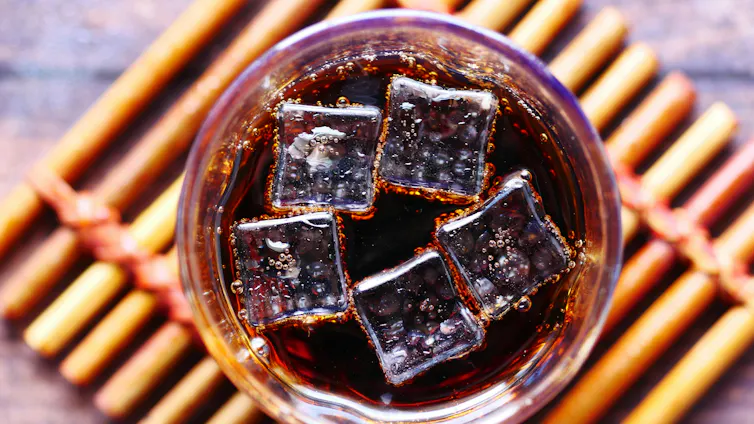
Are diet soft drinks really that bad?
Diet soft drinks provide few nutrients. They often contain artificial sweeteners and caffeine, and while they’re low in energy (kilojoules), they aren’t filling.
People who regularly drink diet soft drinks may have a higher risk of developing conditions such as heart disease and type 2 diabetes.
But this doesn’t necessarily mean the drinks cause these conditions. People who already have health concerns or are trying to manage their weight may be more likely to choose diet drinks, which might make this evidence a little misleading.
How about artificial sweeteners?
In 2023, the WHO classified aspartame (a common sweetener found in many diet soft drinks) as “possibly carcinogenic to humans”. This means the evidence linking aspartame to cancer is currently limited and not conclusive.
The WHO also emphasised that the public generally consumes safe levels of aspartame and only has evidence for concern if people drink the equivalent to 14 cans of soft drink a day.
There is also emerging evidence some artificial sweeteners might irritate the gut or alter the balance of gut bacteria. These effects are still being investigated. But they’ve added to concerns about the health impacts of drinking diet soft drinks over a long period of time.
Can I get used to the sweetness?
An occasional diet drink isn’t likely to fuel an addiction to sweet foods, but cutting back is still a good idea if this has become a daily habit.
After people cut back on very sweet foods or drinks, some research suggests they start noticing sweetness more easily and find very sweet things taste too sweet.
So if you’re trying to enjoy less-sweet drinks, give it time. Within a few weeks you might actually prefer the less-sweet taste.
Here are three evidence-based strategies to help you adjust.
1. Water it down
A gentle first step is to dilute your soft drink. Start by pouring less soft drink into a glass and topping it up with water or soda water, then gradually adjust the ratio over time.
It may taste less sweet at first, but your taste buds will adapt. This slow, steady approach can make change feel easier and more sustainable than quitting abruptly.
2. Make smarter swaps
Try replacing diet soft drink with a healthier alternative that still delivers flavour or fizz. Sparkling water or soda water with a squeeze of lime or lemon and a few mint leaves gives you the same bubbly refreshment with a natural and refreshing flavour. Add ice if it is a hot day, or to provide some crunch.
If you prefer plain water but it feels boring, infuse it with slices of fruit, cucumber, berries or herbs.
You could also try unsweetened iced tea, such as black, green or herbal tea. These offer a mild caffeine lift without the added sweeteners and can be served cold with ice and lemon.
Coconut water can also be a healthier alternative as it is low in sugar while providing some additional electrolytes, which help balance fluid in the body.
3. Know your triggers
If you often reach for a soft drink out of habit, boredom or an afternoon energy slump, paying attention to these moments can help. Once you spot your triggers, you can plan a different response. Take a short walk, call a friend or make a cup of tea instead.
Keeping a chilled, reusable water bottle nearby also helps. If your drink is always within reach, you’re less likely to grab a diet soft drink when you’re out and about.
If you drink diet soft drinks because you’re hungry, reach for something nourishing instead, such as a handful of nuts, a yoghurt or a piece of fruit. These foods will satisfy you for longer than a can of diet soft drink because they have nutrients, such as fibre, to keep you fuller for longer.
The bottom line
You don’t have to give up diet soft drinks altogether. But being mindful of how much soft drink you drink, and how often, can help you make choices that better support your long-term health.
Start small, be consistent and let your taste buds adjust. Over time, you might find what once tasted “flat” now feels refreshingly natural.
Lauren Ball, Professor of Community Health and Wellbeing, The University of Queensland; Emily Burch, Accredited Practising Dietitian and Lecturer, Southern Cross University, and Mackenzie Derry, Nutritionist, Dietitian & PhD Candidate, The University of Queensland
This article is republished from The Conversation under a Creative Commons license. Read the original article.
Don’t Forget…
Did you arrive here from our newsletter? Don’t forget to return to the email to continue learning!
Recommended
Learn to Age Gracefully
Join the 98k+ American women taking control of their health & aging with our 100% free (and fun!) daily emails:
-
Can You Change Your Sleep Schedule?
10almonds is reader-supported. We may, at no cost to you, receive a portion of sales if you purchase a product through a link in this article.
There is science to it:
To take arms against a sea of sleepiness and, by opposing, end it?
While people can be broadly categorized into “early birds” or “night owls”, most fall somewhere along a spectrum determined by their circadian system.
This circadian rhythm is regulated by nerve cell clusters in the hypothalamus, which detect light through your eyes and synchronize your body’s internal clock with the day-night cycle. This circadian system acts like a conductor, coordinating hormone release and helping organs function in sync, while managing the necessary transitions between wakefulness and sleep.
Note: the circadian system can’t directly force sleep, but it predicts when you’ll need rest based on your habitual light exposure and sleep patterns, then prepares your body by releasing hormones such as melatonin. This means that if you consistently go to bed at the same time, melatonin production typically begins about two hours beforehand to promote sleepiness.
Early birds vs night owls: early birds generally experience a cortisol surge just before waking, while night owls often reach peak cortisol levels around 30 minutes after getting up.
There is inherent difficulty in fighting biology: maintaining a schedule that strongly opposes your natural preferences is challenging, and a single disrupted night can quickly shift your circadian timing back towards its baseline.
So the options become:
- Go with the flow and end up wherever it takes you (can be dangerous if life’s responsibilities mean that this results in irregular sleep)
- Make small changes and shift your sleep schedule gradually to where you want it to be, then consciously maintain it there, by using light/dark cues and other “time anchors” that you can usually control, such as mealtimes and exercise times.
For more on all of this, enjoy:
Click Here If The Embedded Video Doesn’t Load Automatically!
Want to learn more?
You might also like:
Early Bird Or Night Owl? Genes vs Environment
Take care!
Share This Post
-
The Rest Revolution: – by Amanda Littlejohn
10almonds is reader-supported. We may, at no cost to you, receive a portion of sales if you purchase a product through a link in this article.
Whether you are working all hours around the clock, or retired and now expected to tend to everyone else’s needs as well as your own increasing amount of time spent on medical appointments and the like, as a general rule the world commonly asks of us more than we are reasonably able to give. And yet so often, we try anyway.
This book covers where this societal push came from, and why it’s been perpetuated despite ultimately serving very few people’s interests. How it results in “back-burnering” things that matter, and how we can recalibrate to put what matters back on the front burner.
Ultimately, she argues, overworking is not even best for personal productivity (because of burnout and diminishing marginal returns on the way to burnout), and thus neither is it even best for achieving personal ambitions. Her prescribed antidote for this covers realigning our time and space, restoring our connections where they are important, and—yes, we can still be productive—working with what we find is working for us, rather than what isn’t.
The style is personal at the same time as being delivered with professional skill and clarity.
Bottom line: if ever you feel like you’re not enough for all that is expected (or “needed”) of you, this book may be an important reset-point.
Click here to check out The Rest Revolution, and reclaim your energy!
Share This Post
-
The Hormone Therapy That Reduces Breast Cancer Risk & More
10almonds is reader-supported. We may, at no cost to you, receive a portion of sales if you purchase a product through a link in this article.
The Hormone Balancing Act
We’ve written before about menopausal HRT:
What You Should Have Been Told About Menopause Beforehand
…and even specifically about the considerations when it comes to breast cancer risk:
Menopausal Hormone Replacement Therapy
this really does bear reading, by the way—scroll down to the bit about breast cancer risk, because it’s not a simple increased/decreased risk; it can go either way, and which way it goes will depend on various factors including your medical history and what HRT, if any, you are taking.
Hormone Modulating Therapy
Hormone modulating therapy, henceforth HMT, is something a little different.
Instead of replacing hormones, as hormone replacement therapy does, guess what hormone modulating therapy does instead? That’s right…
MHT can modulate hormones by various means, but the one we’re going to talk about today does it by blocking estrogen receptors,
Isn’t that the opposite of what we want?
You would think so, but since for many people with an increased breast cancer risk, the presence of estrogen increases that risk, which leaves menopausal (peri- or post) people in an unfortunate situation, having to choose between increased breast cancer risk (with estrogen), or osteoporosis and increased dementia risk, amongst other problems (without).
However, the key here (in fact, that’s a very good analogy) is in how the blocker works. Hormones and their receptors are like keys and locks, meaning that the wrong-shaped hormone won’t accidentally trigger it. And when the right-shaped hormone comes along, it gets activated and the message (in this case, “do estrogenic stuff here!” gets conveyed). A blocker is sufficiently similar to fit into the receptor, without being so similar as to otherwise act as the hormone.
In this case, it has been found that HMT blocking estrogen receptors was sufficient to alleviate the breast cancer risk, while also being associated with a 7% lower risk of developing Alzheimer’s disease or related dementias, with that risk reduction being even greater for some demographics depending on race and age. Black women in the 65–74 age bracket enjoyed a 24% relative risk reduction, with white women of the same age getting an 11% relative risk reduction. Black women enjoyed the same benefits after that age, whereas white women starting it at that age did not get the same benefits. The conclusion drawn from this is that it’s good to start this at 65 if relevant and practicable, especially if white, because the protective effect is strongest when gained aged 65–69.
Here’s a pop-science article that goes into the details more deeply than we have room for here:
Hormone therapy for breast cancer linked with lower dementia risk
And here’s the paper itself; we highly recommend reading at least the abstract, because it goes into the numbers in much more detail than we reasonably can here. It’s a huge cohort study of 18,808 women aged 65 years or older, so this is highly relevant data:
Want to learn more?
If you’d like a much deeper understanding of breast cancer risk management, including in the context of hormone therapy, you might like this excellent book that we reviewed recently:
The Smart Woman’s Guide to Breast Cancer – by Dr. Jenn Simmons
Take care!
Share This Post
Related Posts
-
Kombucha vs Kimchi – Which is Healthier
10almonds is reader-supported. We may, at no cost to you, receive a portion of sales if you purchase a product through a link in this article.
Our Verdict
When comparing kombucha to kimchi, we picked the kombucha.
Why?
While both are very respectable gut-healthy fermented products,
• the kombucha contains fermented tea, a little apple cider vinegar, and a little fiber
• the kimchi contains (after the vegetables) 810 mg sodium in that little tin, and despite the vegetables, no fiber.You may reasonably be surprised that they managed to take something that is made of mostly vegetables and ended up with no fiber without juicing it, but they did. Fermented vegetables are great for the healthy bacteria benefits (and are tasty too!), but the osmotic pressure due to the salt destroys the cell walls and thus the fiber.
Thus, we chose the kombucha that does the same job without delivering all that salt.
However! If you are comparing kombucha and kimchi out in the wilds of your local supermarket, do still check individual labels. It’s not uncommon, for example, for stores to sell pre-made kombucha that’s loaded with sugar.
About sugar and kombucha…
Sugar is required to make kombucha, to feed the yeast and helpful bacteria. However, there should be none of that sugar left (or only the tiniest trace amount) in the final product, because the yeast (and friends) consumed and metabolized it.
What some store brands do, however, is add in sugar afterwards, as they believe it improves the taste. This writer cannot imagine how, but that is their rationale in any case. Needless to say, it is not a healthy addition, and specifically, it’s bad for your gut, which (healthwise) is the whole point of drinking kombucha in the first place.
Want some? Here is an example product on Amazon, but feel free to shop around as there are many flavors available!
Read more about gut health: Gut Health 101
Don’t Forget…
Did you arrive here from our newsletter? Don’t forget to return to the email to continue learning!
Learn to Age Gracefully
Join the 98k+ American women taking control of their health & aging with our 100% free (and fun!) daily emails:
-
Fermenting Everything – by Andy Hamilton
10almonds is reader-supported. We may, at no cost to you, receive a portion of sales if you purchase a product through a link in this article.
This is not justanother pickling book! This is, instead, what it says on the front cover, “fermenting everything”.
Ok, maybe not literally everything, but every kind of thing that can reasonably be fermented, and it’s probably a lot more things than you might think.
From habanero chutney to lacto-lemonade, aioli to kombucha, Ukrainian fermented tomatoes to kvass. We could go on, but we’d soon run out of space. You get the idea. If it’s a fermented product (food, drink, condiment) and you’ve heard of it, there’s probably a recipe in here.
All in all, this is a great way to get in your gut-healthy daily dose of fermented products!
He does also talk safety, and troubleshooting too. And so long as you have a collection of big jars and a fairly normally-furnished kitchen, you shouldn’t need any more special equipment than that, unless you decide to you your fermentation skills for making beer (which does need some extra equipment, and he offers advice on that—our advice as a health science publication is “don’t drink beer”, though).
Bottom line: with this in hand, you can create a lot of amazing foods/drinks/condiments that are not only delicious, but also great for gut health.
Click here to check out Fermenting Everything, and widen your culinary horizons!
Don’t Forget…
Did you arrive here from our newsletter? Don’t forget to return to the email to continue learning!
Learn to Age Gracefully
Join the 98k+ American women taking control of their health & aging with our 100% free (and fun!) daily emails:
-
PFAS Exposure & Cancer: The Numbers Are High
10almonds is reader-supported. We may, at no cost to you, receive a portion of sales if you purchase a product through a link in this article.
PFAS & Cancer Risk: The Numbers Are High
Image Credits Mount Sinai This is Dr. Maaike van Gerwen. Is that an MD or a PhD, you wonder? It’s both.
She’s also Director of Research in the Department of Otolaryngology at Mount Sinai Hospital in New York, Scientific Director of the Program of Personalized Management of Thyroid Disease, and Member of the Institute for Translational Epidemiology and the Transdisciplinary Center on Early Environmental Exposures.
What does she want us to know?
She’d love for us to know about her latest research published literally today, about the risks associated with PFAS, such as the kind widely found in non-stick cookware:
Per- and polyfluoroalkyl substances (PFAS) exposure and thyroid cancer risk
Dr. van Gerwen and her team tested this several ways, and the very short and simple version of the findings is that per doubling of exposure, there was a 56% increased rate of thyroid cancer diagnosis.
(The rate of exposure was not just guessed based on self-reports; it was measured directly from PFAS levels in the blood of participants)
- PFAS exposure can come from many sources, not just non-stick cookware, but that’s a “biggie” since it transfers directly into food that we consume.
- Same goes for widely-available microwaveable plastic food containers.
- Relatively less dangerous exposures include waterproofed clothing.
To keep it simple and look at the non-stick pans and microwavable plastic containers, doubling exposure might mean using such things every day vs every second day.
Practical take-away: PFAS may be impossible to avoid completely, but even just cutting down on the use of such products is already reducing your cancer risk.
Isn’t it too late, by this point in life? Aren’t they “forever chemicals”?
They’re not truly “forever”, but they do have long half-lives, yes.
See: Can we take the “forever” out of forever chemicals?
The half-lives of PFOS and PFOA in water are 41 years and 92 years, respectively.
In the body, however, because our body is constantly trying to repair itself and eliminate toxins, it’s more like 3–7 years.
That might seem like a long time, and perhaps it is, but the time will pass anyway, so might as well get started now, rather than in 3–7 years time!
Read more: National Academies Report Calls for Testing People With High Exposure to “Forever Chemicals”
What should we use instead?
In place of non-stick cookware, cast iron is fantastic. It’s not everyone’s preference, though, so you might also like to know that ceramic cookware is a fine option that’s functionally non-stick but without needing a non-stick coating. Check for PFAS-free status; they should advertise this.
In place of plastic microwaveable containers, Pyrex (or equivalent) glass dishes (you can get them with lids) are a top-tier option. Ceramic containers (without metallic bits!) are also safely microwaveable.
See also:
Here’s a List of Products with PFAS (& How to Avoid Them)
Take care!
Don’t Forget…
Did you arrive here from our newsletter? Don’t forget to return to the email to continue learning!
Learn to Age Gracefully
Join the 98k+ American women taking control of their health & aging with our 100% free (and fun!) daily emails:


