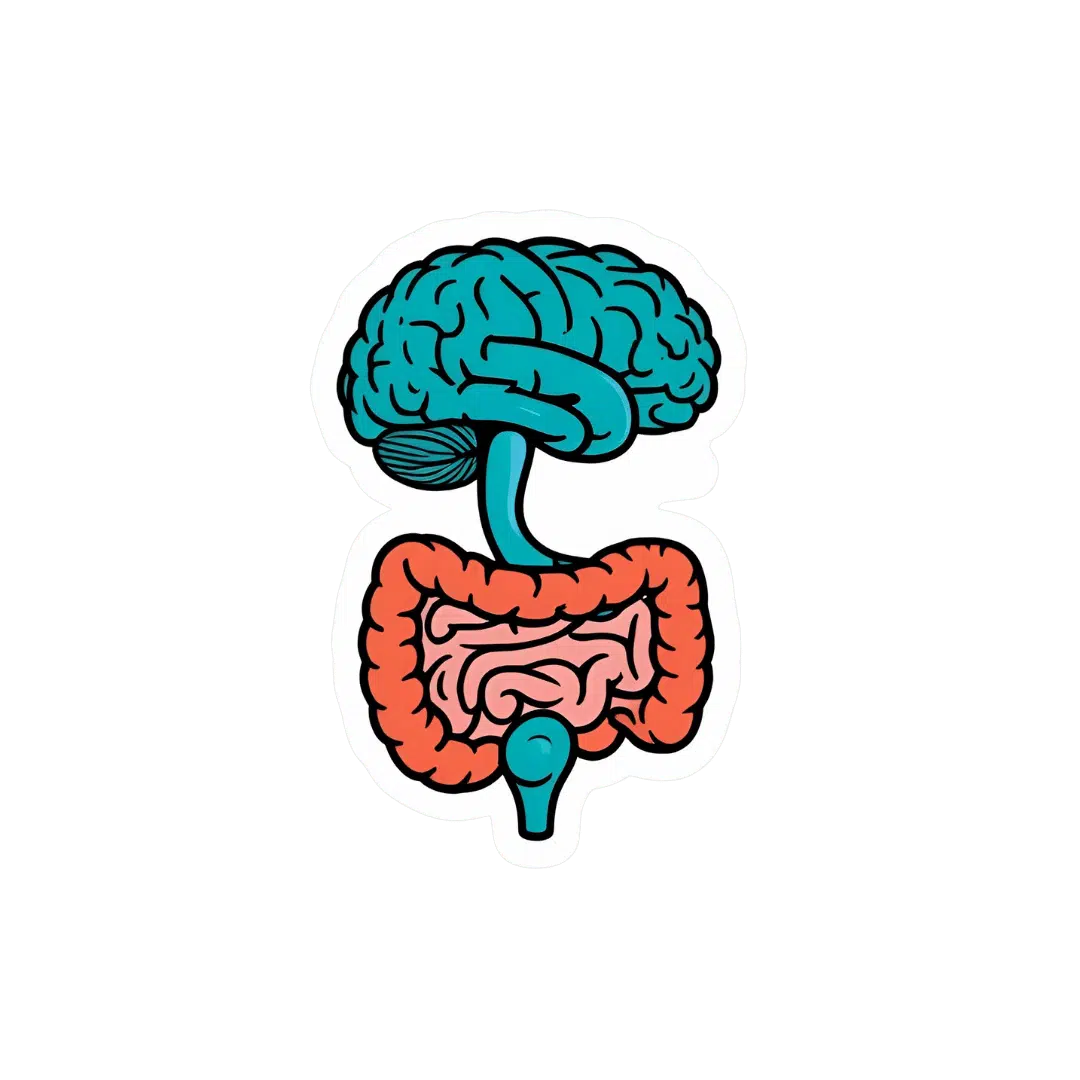
The Alzheimer’s Gut-Brain Connection—Caught On X-Ray!

10almonds is reader-supported. We may, at no cost to you, receive a portion of sales if you purchase a product through a link in this article.

We’ve written before about Alzheimer’s disease (a lot), and if you’re just joining us, then a great place to start is here:

How To Reduce Your Alzheimer’s Risk

We’ve also written about gut health (a lot), and if you’re just joining us, then a great place to start is here:

Make Friends With Your Gut! (Here’s Why & How)

And as a hat trick, yes, we’ve also written (admittedly not as much) about the gut-brain connection; here’s a primer:

The Brain-Gut Highway: A Two-Way Street

Because of how gut microbes influence brain function, behavior, and cognition, scientists wondered whether one’s microbiome might play a role in Alzheimer’s development. Recently, scientists from Italy’s Institute of Nanotechnology, working with the European Synchrotron Radiation Facility (ESRF), found some concrete answers:

How gut health affects Alzheimer’s

When the gut loses its healthy balance of bacteria, harmful bacteria (and fungi, like C. albicans, also popularly called by its first name, “Candida”) take the wheel. This problem (called “dysbiosis”) allows harmful microbes to produce toxic substances, leading to inflammation and weakening the protective barriers between the gut and brain.

In some cases, like the aforementioned C. albicans, they’ll even put roots through your gut wall (and interact with your nervous system, and they are a common reason for sugar and alcohol cravings—your CNS has literally been hacked by a fungal colony that wants sugar (including the sugar that occurs when alcohol is broken down—and that’s without considering the fact that alcohol also kills several of C. albicans competitors that rank amongst the “good bacteria”). Suffice it to say, the holes it puts in your gut wall aren’t great for the health either.

In any case, once the gut barrier is breached, it’s been hypothesized that harmful bacteria may even travel to the brain, triggering Alzheimer’s.

How the x-rays helped

To better understand gut changes in Alzheimer’s, scientists used a technique called nano- and micro- x-ray phase-contrast tomography (XPCT) at the aforementioned ESRF. That very fancy string of words refers to a commensurately powerful imaging method, which allows researchers to see detailed structures inside the gut without damaging tissue, or even adding contrast agents (like those unpleasant drinks that are sometimes required to be taken before soft-tissue x-rays).

The study examined gut samples from mice with Alzheimer’s (so yes, this does need to be repeated with humans, but in this case there’s no obvious reason why it shouldn’t be the same).

The scans revealed important changes in gut structures, including:

  • The tiny finger-like villi and corresponding crypts in the gut lining
  • Important cells* that help with digestion and protection
  • Neurons involved in gut function

*e.g. Paneth cells, goblet cells, telocytes, and erythrocytes, all of whom would take more explanation than we have room for here, but suffice it to say they’re important to both digestion and correct mucus production (bearing in mind, mucus membranes are one of the main physical barriers to harmful bacteria—as humans, our conscious interactions with mucus are usually only the nuisance that occurs when we get a cold or something, but rest assured, mucus keeps us alive).

In short, all these findings suggest (we’d say “show”, but technically cause and effect have not been proven) gut health indeed plays a crucial role in Alzheimer’s disease pathogenesis and pathology (i.e., how the disease begins and progresses, respectively).

Why it matters

To quote Dr. Alessia Cedola,

❝This technique represents a real breakthrough for the thorough analysis of the gut, and it could be pivotal in early detection and prognosis of the disease.

By gaining a deeper understanding of these processes, we hope to identify new therapeutic targets and develop innovative treatments for this devastating disease.❞

In short: the technology can be used as a super-early diagnostic tool, and ultimately, improve prevention (by encouraging people to focus on gut health) as well as, hopefully, leading to new treatments, too.

Want to see it?

Here’s the paper itself, where there are also abundant very clear images:

Investigating gut alterations in Alzheimer’s disease: In-depth analysis with micro- and nano-3D X-ray phase contrast tomography

Are you on top of your gut health already?

If not, do refer back to that first link we dropped about gut health, up top!

If you are already sure you’re looking after your gut and want to do something else to avoid Alzheimer’s coming to call, you might want to consider:

How To Clean Your Brain (Glymphatic Health Primer) ← your glymphatic system, something many people neglect, is the brain’s cleanup crew, and removes things like the beta-amyloid proteins that are implicated in Alzheimer’s pathogenesis. So, it’s worth knowing how to keep it in working order!

Take care!

Don’t Forget…

Did you arrive here from our newsletter? Don’t forget to return to the email to continue learning!

Learn to Age Gracefully

Join the 98k+ American women taking control of their health & aging with our 100% free (and fun!) daily emails:

  • Broad Beans vs Green Beans – Which is Healthier?

    10almonds is reader-supported. We may, at no cost to you, receive a portion of sales if you purchase a product through a link in this article.

    Our Verdict

    When comparing broad beans to green beans, we picked the broad.

    Why?

    It’s quite a straightforward one today:

    In terms of macros, broad beans have 2.5x the protein, and slightly more fiber and carbs, so we pick the broad beans as the more nutrient-dense option here.

    In the category of vitamins, broad beans have more of vitamins B1, B3, B9, and C, while green beans have more of vitamins A and B6 (with comparable margins of difference for both beans’ winning vitamins), so another win for broad beans, based on the 4:2 numerical advantage.

    When it comes to minerals, broad beans have more copper, iron, magnesium, phosphorus, potassium, and selenium, while green beans have more calcium and manganese. Again, comparable mostly margins of difference (except for broad beans bing 5x richer in selenium, which is a bit of an outlier, but it’s not because broad beans are an amazing source of selenium, but rather, that green beans have only a tiny amount), so it’s a clear 7:2 win for broad beans.

    Adding up the three wins for broad beans makes an overall win for them, but by all means, enjoy either or both; diversity is good!

    Want to learn more?

    You might like:

    Dr. Greger’s Daily Dozen

    Enjoy!

    Share This Post

  • Chipotle Chili Wild Rice

    10almonds is reader-supported. We may, at no cost to you, receive a portion of sales if you purchase a product through a link in this article.

    This is a very gut-healthy recipe that’s also tasty and filling, and packed with polyphenols too. What’s not to love?

    You will need

    • 1 cup cooked wild rice (we suggest cooking it with 1 tbsp chia seeds added)
    • 7 oz cooked sweetcorn (can be from a tin or from frozen or cook it yourself)
    • 4 oz charred jarred red peppers (these actually benefit from being from a jar—you can use fresh or frozen if necessary, but only jarred will give you the extra gut-healthy benefits from fermentation)
    • 1 avocado, pitted, peeled, and cut into small chunks
    • ½ red onion, thinly sliced
    • 6–8 sun-dried tomatoes, chopped
    • 2 tbsp extra virgin olive oil
    • 2 tsp chipotle chili paste (adjust per your heat preferences)
    • 1 tsp black pepper, coarse ground
    • ½ tsp MSG or 1 tsp low-sodium salt
    • Juice of 1 lime

    Method

    (we suggest you read everything at least once before doing anything)

    1) Mix the cooked rice, red onion, sweetcorn, red peppers, avocado pieces, and sun-dried tomato, in a bowl. We recommend to do it gently, or you will end up with guacamole in there.

    2) Mix the olive oil, lime juice, chipotle chili paste, black pepper, and MSG/salt, in another bowl. If perchance you have a conveniently small whisk, now is the time to use it. Failing that, a fork will suffice.

    3) Add the contents of the second bowl to the first, tossing gently but thoroughly to combine well, and serve.

    Enjoy!

    Want to learn more?

    For those interested in some of the science of what we have going on today:

    Take care!

    Share This Post

  • Say That Again: Using Hearing Aids Can Be Frustrating for Older Adults, but Necessary

    10almonds is reader-supported. We may, at no cost to you, receive a portion of sales if you purchase a product through a link in this article.

    It was an every-other-day routine, full of frustration.

    Every time my husband called his father, who was 94 when he died in 2022, he’d wait for his dad to find his hearing aids and put them in before they started talking.

    Even then, my father-in-law could barely hear what my husband was saying. “What?” he’d ask over and over.

    Then, there were the problems my father-in-law had replacing the devices’ batteries. And the times he’d end up in the hospital, unable to understand what people were saying because his hearing aids didn’t seem to be functioning. And the times he’d drop one of the devices and be unable to find it.

    How many older adults have problems of this kind?

    There’s no good data about this topic, according to Nicholas Reed, an assistant professor of epidemiology at Johns Hopkins Bloomberg School of Public Health who studies hearing loss. He did a literature search when I posed the question and came up empty.

    Reed co-authored the most definitive study to date of hearing issues in older Americans, published in JAMA Open Network last year. Previous studies excluded people 80 and older. But data became available when a 2021 survey by the National Health and Aging Trends Study included hearing assessments conducted at people’s homes.

    The results, based on a nationally representative sample of 2,803 people 71 and older, are eye-opening. Hearing problems become pervasive with advancing age, exceeding 90% in people 85 and older, compared with 53% of 71- to 74-year-olds. Also, hearing worsens over time, with more people experiencing moderate or severe deficits once they reach or exceed age 80, compared with people in their 70s.

    However, only 29% of those with hearing loss used hearing aids. Multiple studies have documented barriers that inhibit use. Such devices, which Medicare doesn’t cover, are pricey, from nearly $1,000 for a good over-the-counter set (OTC hearing aids became available in 2022) to more than $6,000 for some prescription models. In some communities, hearing evaluation services are difficult to find. Also, people often associate hearing aids with being old and feel self-conscious about wearing them. And they tend to underestimate hearing problems that develop gradually.

    Barbara Weinstein, a professor of audiology at the City University of New York Graduate Center and author of the textbook “Geriatric Audiology,” added another concern to this list when I reached out to her: usability.

    “Hearing aids aren’t really designed for the population that most needs to use them,” she told me. “The move to make devices smaller and more sophisticated technologically isn’t right for many people who are older.”

    That’s problematic because hearing loss raises the risk of cognitive decline, dementia, falls, depression, and social isolation.

    What advice do specialists in hearing health have for older adults who have a hard time using their hearing aids? Here are some thoughts they shared.

    Consider larger, customized devices. Many older people, especially those with arthritis, poor fine motor skills, compromised vision, and some degree of cognitive impairment, have a hard time manipulating small hearing aids and using them properly.

    Lindsay Creed, associate director of audiology practices at the American Speech-Language-Hearing Association, said about half of her older clients have “some sort of dexterity issue, whether numbness or reduced movement or tremor or a lack of coordination.” Shekinah Mast, owner of Mast Audiology Services in Seaford, Delaware, estimates nearly half of her clients have vision issues.

    For clients with dexterity challenges, Creed often recommends “behind-the-ear hearing aids,” with a loop over the ear, and customized molds that fit snugly in the ear. Customized earpieces are larger than standardized models.

    “The more dexterity challenges you have, the better you’ll do with a larger device and with lots of practice picking it up, orienting it, and putting it in your ear,” said Marquitta Merkison, associate director of audiology practices at ASHA.

    For older people with vision issues, Mast sometimes orders hearing aids in different colors for different ears. Also, she’ll help clients set up stands at home for storing devices, chargers, and accessories so they can readily find them each time they need them.

    Opt for ease of use. Instead of buying devices that require replacing tiny batteries, select a device that can be charged overnight and operate for at least a day before being recharged, recommended Thomas Powers, a consultant to the Hearing Industries Association. These are now widely available.

    People who are comfortable using a smartphone should consider using a phone app to change volume and other device settings. Dave Fabry, chief hearing health officer at Starkey, a major hearing aid manufacturer, said he has patients in their 80s and 90s “who’ve found that being able to hold a phone and use larger visible controls is easier than manipulating the hearing aid.”

    If that’s too difficult, try a remote control. GN ReSound, another major manufacturer, has designed one with two large buttons that activate the volume control and programming for its hearing aids, said Megan Quilter, the company’s lead audiologist for research and development.

    Check out accessories. Say you’re having trouble hearing other people in restaurants. You can ask the person across the table to clip a microphone to his shirt or put the mike in the center of the table. (The hearing aids will need to be programmed to allow the sound to be streamed to your ears.)

    Another low-tech option: a hearing aid clip that connects to a piece of clothing to prevent a device from falling to the floor if it becomes dislodged from the ear.

    Wear your hearing aids all day. “The No. 1 thing I hear from older adults is they think they don’t need to put on their hearing aids when they’re at home in a quiet environment,” said Erika Shakespeare, who owns Audiology and Hearing Aid Associates in La Grande, Oregon.

    That’s based on a misunderstanding. Our brains need regular, not occasional, stimulation from our environments to optimize hearing, Shakespeare explained. This includes noises in seemingly quiet environments, such as the whoosh of a fan, the creak of a floor, or the wind’s wail outside a window.

    “If the only time you wear hearing aids is when you think you need them, your brain doesn’t know how to process all those sounds,” she told me. Her rule of thumb: “Wear hearing aids all your waking hours.”

    Consult a hearing professional. Everyone’s needs are different, so it’s a good idea to seek out an audiologist or hearing specialist who, for a fee, can provide guidance.

    “Most older people are not going to know what they need” and what options exist without professional assistance, said Virginia Ramachandran, the head of audiology at Oticon, a major hearing aid manufacturer, and a past president of the American Academy of Audiology.

    Her advice to older adults: Be “really open” about your challenges.

    If you can’t afford hearing aids, ask a hearing professional for an appointment to go over features you should look for in over-the-counter devices. Make it clear you want the appointment to be about your needs, not a sales pitch, Reed said. Audiology practices don’t routinely offer this kind of service, but there’s good reason to ask since Medicare started covering once-a-year audiologist consultations last year.

    We’re eager to hear from readers about questions you’d like answered, problems you’ve been having with your care, and advice you need in dealing with the health care system. Visit http://kffhealthnews.org/columnists to submit your requests or tips.

    KFF Health News is a national newsroom that produces in-depth journalism about health issues and is one of the core operating programs at KFF—an independent source of health policy research, polling, and journalism. Learn more about KFF.

    Subscribe to KFF Health News’ free Morning Briefing.

    Share This Post

  • Never Too Late To Start Over: Finding Purpose At Any Age

    10almonds is reader-supported. We may, at no cost to you, receive a portion of sales if you purchase a product through a link in this article.

    Dana Findwell’s late 50s were not an easy time, but upon now hitting 60 (this week, at time of writing), she’s enthusiastically throwing herself into the things that bring her purpose, and so can you.

    Start where you are

    Findwell was already no stranger to starting again, having been married and divorced twice, and having moved frequently, requiring constant “life resets”.

    Nevertheless, she always had her work to fall back on; she was a graphic designer and art director for 30 years… Until burnout struck.

    And when burnout struck, so did COVID, resulting in the loss of her job. Her job wasn’t the only thing she lost though, as her mother died around the same time. All in all, it was a lot, and not the fun kind of “a lot”.

    Struggling to find a new career direction, she ended up starting a small business for herself, so that she could direct the pace; pressing forwards as and when she had the energy. This became her new “ikigai“, the main thing that brings a sense of purpose to her life, but getting one part of her life back into order brought her attention to the rest; she realized she’d neglected her health, so she joined a gym. And a weightlifting class. And a hip-hop class. And she took up the practice of Japanese drumming (for the unfamiliar, this can be a rather athletic ability; it’s not a matter of sitting at a drum kit).

    And now? Her future is still not clear, but that’s ok, because she’s making it as she goes, and she’s doing it her way, trusting in her ability to handle what may come up, and doing the things now that future-her will be glad of having done (e.g. laying the groundwork of both financial security and good health).

    Change can sometimes be triggered by adverse circumstances, but there’s always the opportunity to find something better. For more on all of this, enjoy:

    Click Here If The Embedded Video Doesn’t Load Automatically!

    Want to learn more?

    You might also like to read:

    Our Resources About Ikigai

    Take care!

    Don’t Forget…

    Did you arrive here from our newsletter? Don’t forget to return to the email to continue learning!

    Learn to Age Gracefully

    Join the 98k+ American women taking control of their health & aging with our 100% free (and fun!) daily emails:

  • Brown Rice vs Pearl Barley – Which is Healthier?

    10almonds is reader-supported. We may, at no cost to you, receive a portion of sales if you purchase a product through a link in this article.

    Our Verdict

    When comparing brown rice to pearl barley, we picked the barley.

    Why?

    Both have their strong merits! But…

    In terms of macros, pearl barley has more than 4x the fiber, for the same carbs and slightly more protein. So, a clear win for pearl barley in this category.

    In the category of vitamins, brown rice has more of vitamins B1, B3, B5, B6, and E, while pearl barley has more of vitamins A, B2, and K, yielding to rice a 5:3 win in this round.

    Looking at minerals next, brown rice has more magnesium, manganese, and phosphorus, while pearl barley has notably more calcium, copper, iron, potassium, and selenium, giving pearl barley the win here.

    Adding up the sections makes for a clear overall win for pearl barley, but do enjoy either or both, as diversity is best!

    Unless you have a gluten allergy, in which case, maybe skip the pearl barley, which is indeed barley that has been pearled, and thus does have gluten. But for most people that’s a non-issue, so we won’t include it in the general reckoning.

    Want to learn more?

    You might like:

    Enjoy!

    Don’t Forget…

    Did you arrive here from our newsletter? Don’t forget to return to the email to continue learning!

    Learn to Age Gracefully

    Join the 98k+ American women taking control of their health & aging with our 100% free (and fun!) daily emails:

  • Semaglutide’s Surprisingly Unexamined Effects

    10almonds is reader-supported. We may, at no cost to you, receive a portion of sales if you purchase a product through a link in this article.

    Semaglutide’s Surprisingly Big Research Gap

    GLP-1 receptor agonists like Ozempic, Wegovy, and other semaglutide drugs. are fast becoming a health industry standard go-to tool in the weight loss toolbox. When it comes to recommending that patients lose weight, “Have you considered Ozempic?” is the common refrain.

    Sometimes, this may be a mere case of kicking the can down the road with regard to some other treatment that it can be argued (sometimes even truthfully) would go better after some weight loss:

    How weight bias in health care can harm patients with obesity: Research

    …which we also covered in fewer words in the second-to-last item here:

    Shedding Some Obesity Myths

    But GLP-1 agonists work, right?

    Yes, albeit there’s a litany of caveats, top of which are usually:

    • there are often adverse gastrointestinal side effects
    • if you stop taking them, weight regain generally ensues promptly

    For more details on these and more, see:

    Semaglutide For Weight Loss?

    …but now there’s another thing that’s come to light:

    The dark side of semaglutide’s weight loss

    In academia, “dark” is often used to describe “stuff we don’t have much (or in some cases, any) direct empirical evidence of, but for reasons of surrounding things, we know it’s there”.

    Well-known examples include “dark matter” in physics and the Dark Ages in (European) history.

    In the case of semaglutide and weight loss, a review by a team of researchers (Drs. Sandra Christenen, Katie Robinson, Sara Thomas, and Dominique Williams) has discovered how little research has been done into a certain aspect of GLP-1 agonist’s weight loss effects, namely…

    Dietary changes!

    There’s been a lot of popular talk about “people taking semaglutide eat less”, but it’s mostly anecdotal and/or presumed based on parts of the mechanism of action (increasing insulin production, reducing glucagon secretions, modulating dietary cravings).

    Where studies have looked at dietary changes, it’s almost exclusively been a matter of looking at caloric intake (which has been found to be a 16–39% reduction), and observations-in-passing that patients reported reduction in cravings for fatty and sweet foods.

    This reduction in caloric intake, by the way, is not significantly different to the reduction brought about by counselling alone (head-to-head studies have been done; these are also discussed in the research review).

    However! It gets worse. Very few studies of good quality have been done, even fewer (two studies) actually had a registered dietitian nutritionist on the team, and only one of them used the “gold standard” of nutritional research, the 24-hour dietary recall test. Which, in case you’re curious, you can read about what that is here:

    Dietary Assessment Methods: What Is A 24-Hour Recall?

    Of the four studies that actually looked at the macros (unlike most studies), they found that on average, protein intake decreased by 17.1%. Which is a big deal!

    It’s an especially big deal, because while protein’s obviously important for everyone, it’s especially important for anyone trying to lose weight, because muscle mass is a major factor in metabolic base rate—which in turn is much important for fat loss/maintenance than exercise, when it comes to how many calories we burn by simply existing.

    A reasonable hypothesis, therefore, is that one of the numerous reasons people who quit GLP-1 agonists immediately put fat back on, is because they probably lost muscle mass in amongst their weight loss, meaning that their metabolic base rate will have decreased, meaning that they end up more disposed to put on fat than before.

    And, that’s just a hypothesis and it’s a hypothesis based on very few studies, so it’s not something to necessarily take as any kind of definitive proof of anything, but it is to say—as the researchers of this review do loudly say—more research needs to be done into this, because this has been a major gap in research so far!

    Any other bad news?

    While we’re talking research gaps, guess how many studies looked into micronutrient intake changes in people taking GLP-1 agonists?

    If you guessed zero, you guessed correctly.

    You can find the paper itself here:

    Dietary intake by patients taking GLP-1 and dual GIP/GLP-1 receptor agonists: A narrative review and discussion of research needs

    What’s the main take-away here?

    On a broad, scoping level: we need more research!

    On a “what this means for individuals who want to lose weight” level: maybe we should be more wary of this still relatively new (less than 10 years old) “wonder drug”. And for most of those 10 years it’s only been for diabetics, with weight loss use really being in just the past few years (2021 onwards).

    In other words: not necessarily any need to panic, but caution is probably not a bad idea, and natural weight loss methods remain very reasonable options for most people.

    See also: How To Lose Weight (Healthily!)

    Take care!

    Don’t Forget…

    Did you arrive here from our newsletter? Don’t forget to return to the email to continue learning!

    Learn to Age Gracefully

    Join the 98k+ American women taking control of their health & aging with our 100% free (and fun!) daily emails: