Peach vs Persimmon – Which is Healthier?

10almonds is reader-supported. We may, at no cost to you, receive a portion of sales if you purchase a product through a link in this article.

Our Verdict

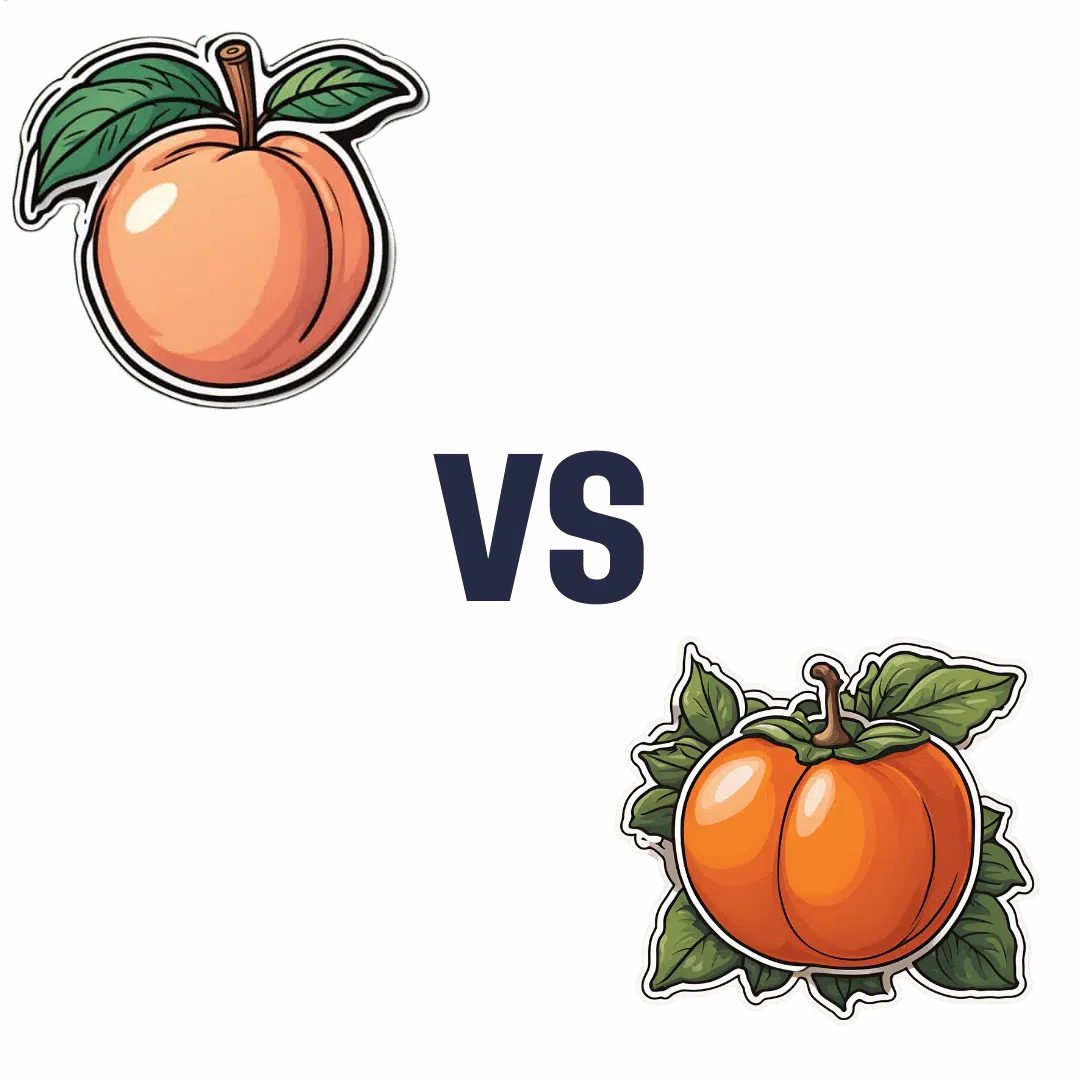
When comparing peach to persimmon, we picked the peach.

Why?

All (non-poisonous) fruit is good, but there’s a clear winner here:

In terms of macros, peach has more fiber and protein, while persimmon has more carbs. An easy win for peach.

In the category of vitamins, peaches have more of vitamins A, B1, B2, B3, B5, B6, B7, B9, E, K, and choline, while persimmon has more vitamin C. Another win for peaches!

Looking at minerals, peaches have more copper, magnesium, manganese, selenium, and zinc, while persimmon has more calcium, iron, phosphorus, and potassium. A marginal 5:4 win this time, but another win for peaches nonetheless.

In terms of phytochemicals, peaches have more polyphenols by a long way, plus some specific anticancer properties. Another category that’s a win for peaches.

Adding up the section makes a clear overall win for peaches, but by all means enjoy either or both; diversity is good!

Want to learn more?

You might like:

Top 8 Fruits That Prevent & Kill Cancer

Enjoy!

Don’t Forget…

Did you arrive here from our newsletter? Don’t forget to return to the email to continue learning!

Learn to Age Gracefully

Join the 98k+ American women taking control of their health & aging with our 100% free (and fun!) daily emails:

  • How to Think Like Leonardo da Vinci – by Michael J. Gelb

    10almonds is reader-supported. We may, at no cost to you, receive a portion of sales if you purchase a product through a link in this article.

    Authors often try to bring forward the best minds of the distant past, and apply them to today’s world. One could fill a library with business advice adaptations from Sun Tzu’s Art of War alone, same goes for Miyamoto Musashi’s Book of Five Rings, and let’s not get started on Niccolò Machiavelli. What makes this book different?

    Michael Gelb explores the principles codified and used by the infamous Renaissance Man to do exactly what he did: pretty much everything. Miyamoto Musashi had no interest in business, but Leonardo da Vinci really did care a lot about learning, creating, problem-solving, human connections, and much more. And best of all, he took notes. So many notes, for himself, of which we now enjoy the benefit.

    How To Think Like Leonardo da Vinci explores these notes and their application by the man himself, and gives real, practical examples of how you can (and why you should) put them into action in your daily life, no matter whether you are a big business CEO or a local line cook or a reclusive academic, Leonardo has lessons for you.

    See today’s book on Amazon!

    Share This Post

  • Dr. Suzanne Steinbaum’s Heart Book – by Dr. Suzanne Steinbaum

    10almonds is reader-supported. We may, at no cost to you, receive a portion of sales if you purchase a product through a link in this article.

    The book is divided into three parts:

    1. What you should know
    2. What you should do
    3. All about you

    This is a very useful format, since it lays out all the foundational knowledge, before offering practical advice and “how to” explanations, before finally wrapping up with personalizing things.

    The latter is important, because while our basic risk factors can be assembled in a few lines of data (age, sex, race, genes, diet, exercise habits, etc) there’s a lot more to us than that, and oftentimes the data that doesn’t make the cut, makes the difference. Hormones on high on this list; we can say that a person is a 65-year-old woman and make a guess, but that’s all it is: a guess. Very few of us are the “average person” that statistical models represent accurately. And nor are social and psychological factors irrelevant; in fact often they are deciding factors!

    So, it’s important to be able to look at ourselves as the whole persons we are, or else we’ll get a heart-healthy protocol that works on paper but actually falls flat in application, because the mathematical model didn’t take into account that lately we have been very stressed about such-and-such a thing, and deeply anxious about so-and-so, and a hopefully short-term respiratory infection has reduced blood oxygen levels, and all these kinds of things need to be taken into account too, for an overall plan to work.

    The greatest strength of this book is that it attends to that.

    The style of the book is a little like a long sales pitch (when all that’s being sold, by the way, is the ideas the book is offering; she wants you to take her advice with enthusiasm), but there’s plenty of very good information all the way through, making it quite worth the read.

    Bottom line: if you’re a woman and/or love at least one woman, then you can benefit from this important book for understanding heart health that’s not the default.

    Click here to check out Dr. Suzanne Steinbaum’s Heart Book, and enjoy a heart-healthy life!

    Share This Post

  • Brazil Nuts vs Cashews – Which is Healthier?

    10almonds is reader-supported. We may, at no cost to you, receive a portion of sales if you purchase a product through a link in this article.

    Our Verdict

    When comparing Brazil nuts to cashews, we picked the cashews.

    Why?

    Looking at the macros first, Brazil nuts have more fat and fiber, while cashews have more carbs and protein. So, it really comes down to what you want to prioritize. We’d generally consider fiber the tie-breaker, making this category a subjective marginal win for Brazil nuts—and especially marginal since they are both low glycemic index foods in any case.

    When it comes to vitamins, Brazil nuts have more of vitamins C, E, and choline, while cashews have more of vitamins B2, B3, B5, B6, B7, B9, and K, so while both are great, this category is a clear by-the-numbers win for cashews.

    The category of minerals is an interesting one. Brazil nuts have more calcium, magnesium, phosphorus, and selenium, while cashews have more copper, iron, manganese, and zinc. That would be a 4:4 tie, but let’s take a closer look at those selenium levels:

    • A cup of cashews contains 109% of the RDA of selenium. Your hair will be luscious and shiny.
    • A cup of Brazil nuts contains 10,456% of the RDA of selenium. This is way past the point of selenium toxicity, and your (luscious, shiny) hair will fall out.

    For this reason, it’s recommended to eat no more than 3–4 Brazil nuts per day.

    We consider that a point against Brazil nuts.

    Adding up the section makes for a win for cashews. Of course, enjoy Brazil nuts too if you will, but in careful moderation please!

    Want to learn more?

    You might like to read:

    Why You Should Diversify Your Nuts

    Take care!

    Share This Post

  • How Serious Are Antidepressant Side Effects?

    10almonds is reader-supported. We may, at no cost to you, receive a portion of sales if you purchase a product through a link in this article.

    It’s Q&A Day at 10almonds!

    Have a question or a request? We love to hear from you!

    In cases where we’ve already covered something, we might link to what we wrote before, but will always be happy to revisit any of our topics again in the future too—there’s always more to say!

    As ever: if the question/request can be answered briefly, we’ll do it here in our Q&A Thursday edition. If not, we’ll make a main feature of it shortly afterwards!

    So, no question/request too big or small 😎

    ❝I have been considering Antidepressants, but am concerned about the side effects including depression (how is that even possible) , suicidal thoughts, and anxiety, I don’t want to make things worse, should I be worred?❞

    First of all: we hope things get better for you, whether with meds or not!

    Secondly: we’ll quickly draw attention to our standard medical/legal disclaimer; we provide bite-size health science information here, and/but absolutely cannot give medical advice; for that see your own pharmacist or doctor (with the former generally being the better-informed about medication side effects), who will be aware of your personal circumstances.

    Thirdly: we’ll now look at the actual topic with which you’ve kindly presented us 🙂

    Most antidepressants work by increasing levels of one or more neurotransmitters in the brain, by one or more mechanisms. If that sounds vague, it’s because there’s a lot of antidepressants out there, and they fall into a lot of different categories of drugs.

    For an overview, see: Antidepressants: Personalization Is Key! ← which also covers why antidepressants seem to work a lot better for some people than for others

    Consequently, because “antidepressants” is really an umbrella term for a lot of different drugs working in a lot of different ways, each of which may or may not help one specific person with their (or your!) specific kind of depression, there are numerous possible outcomes from taking antidepressants, including:

    • nothing discernible happens
    • nothing discernible happens, which is a crushing emotional blow as the person had been really counting on this working, so now they feel even more hopeless and wretched
    • depression lifted, but an excess of one or more neurotransmitters in the brain (from having been boosted by the antidepressants) is now causing a different problem, such as anxiety
    • depression slightly lifted, which means that a person who was previously feeling suicidal but unmotivated to do anything, is now capable of doing things, and thus more likely to act on the urge
    • depression gone and no new problems (yay)

    There are also other less obviously brain-related potential side effects, with weight gain being a common one for many antidepressants, but

    • it’s usually not severe
    • it can also be a matter of regaining healthy weight that one lost unhealthily while depressed

    For more on that, see: How Much Weight Gain Do Antidepressants Cause?

    Back to the potential outcomes of increased suicidality, depression, or anxiety:

    With regard to suicidal ideation and thus potential suicidality, in this writer’s experience: key is understanding suicide prevention methods, and consciously choosing to employ them for oneself.

    We wrote about that, here: How To Stay Alive (When You Really Don’t Want To)

    Perhaps most importantly in this case: understand in advance that you might feel that way, and understand that it’s because depression lies to you, and that you have decided to defy that, live anyway, and come out the other side into depression-free life.

    With regard to increased depression: chances are it was just the wrong antidepressant for you. If it’s not working out for you after a few weeks, you might want to consider rolling the dice again on a different class of antidepressant, or else trying a different (i.e. non-medicated) approach. See also: The Mental Health First-Aid That You’ll Hopefully Never Need ← this is about depression-management strategies, whether in yourself or a loved one

    With regard to increased anxiety: assuming that your meds indeed eased your depression, while giving you anxiety, then only you can decide for yourself whether that’s worth it. If you are open to the use of Cognitive Behavioral Therapy, then that has much higher success rates with anxiety than depression—because it’s a lot easier to flowchart one’s way through “maybe they didn’t reply to my text because they’re busy, and not because I’m a contemptible idiot and they hate me”, than it is flowchart one’s way out of feeling nothing and feeling like doing nothing. See also: Radical CBT Tools To Try

    One tool with a good record against both depression and anxiety is Behavioral Activation, so check out: Behavioral Activation Against Depression & Anxiety

    Last but not least….

    Here are some traps to not fall into:

    5 Self-Care Trends That Are Actually Ruining Your Mental Health

    Take care!

    Don’t Forget…

    Did you arrive here from our newsletter? Don’t forget to return to the email to continue learning!

    Learn to Age Gracefully

    Join the 98k+ American women taking control of their health & aging with our 100% free (and fun!) daily emails:

  • Intermittent Fasting In Women

    10almonds is reader-supported. We may, at no cost to you, receive a portion of sales if you purchase a product through a link in this article.

    It’s Q&A Day at 10almonds!

    Have a question or a request? We love to hear from you!

    In cases where we’ve already covered something, we might link to what we wrote before, but will always be happy to revisit any of our topics again in the future too—there’s always more to say!

    As ever: if the question/request can be answered briefly, we’ll do it here in our Q&A Thursday edition. If not, we’ll make a main feature of it shortly afterwards!

    So, no question/request too big or small

    ❝Does intermittent fasting differ for women, and if so, how?❞

    For the sake of layout, we’ve put a shortened version of this question here, but the actual wording was as below, and merits sharing in full for context

    Went down a rabbit hole on your site and now can’t remember how I got to the “Fasting Without Crashing” article on intermittent fasting so responding to this email lol, but was curious what you find/know about fasting for women specifically? It’s tough for me to sift through and find legitimate studies done on the results of fasting in women, knowing that our bodies are significantly different from men. This came up when discussing with my sister about how I’ve been enjoying fasting 1-2 days/week. She said she wanted more reliable sources of info that that’s good, since she’s read more about how temporary starvation can lead to long-term weight gain due to our bodies feeling the need to store fat. I’ve also read about that, but also that fasting enables more focused autophagy in our bodies, which helps with long-term staving off of diseases/ailments. Curious to know what you all think!

    ~ 10almonds subscriber

    So, first of all, great question! Thanks for asking it

    Next up, isn’t it strange? Books come in the format:

    • [title]
    • [title, for women]

    You would not think women are a little over half of the world’s population!

    Anyway, there has been some research done on the difference of intermittent fasting in women, but not much.

    For example, here’s a study that looked at 1–2 days/week IF, in other words, exactly what you’ve been doing. And, they did have an equal number of men and women in the study… And then didn’t write down whether this made a difference or not! They recorded a lot of data, but neglected to note down who got what per sex:

    Intermittent fasting two days versus one day per week, matched for total energy intake and expenditure, increases weight loss in overweight/obese men and women

    Here’s a more helpful study, that looked at just women, and concluded:

    ❝In conclusion, intermittent fasting could be a nutritional strategy to decrease fat mass and increase jumping performance.

    However, longer duration programs would be necessary to determine whether other parameters of muscle performance could be positively affected by IF. ❞

    ~ Dr. Martínez-Rodríguez et al.

    Read in full: Effect of High-Intensity Interval Training and Intermittent Fasting on Body Composition and Physical Performance in Active Women

    Those were “active women”; another study looked at just women who were overweight or obese (we realize that “active women” and “obese or overweight women” is a Venn diagram with some overlap, but still, the different focus is interesting), and concluded:

    ❝IER is as effective as CER with regard to weight loss, insulin sensitivity and other health biomarkers, and may be offered as an alternative equivalent to CER for weight loss and reducing disease risk.❞

    ~ Dr. Michelle Harvie et al.

    Read in full: The effects of intermittent or continuous energy restriction on weight loss and metabolic disease risk markers: a randomised trial in young overweight women

    As for your sister’s specific concern about yo-yoing, we couldn’t find studies for this yet, but anecdotally and based on books on Intermittent Fasting, this is not usually an issue people find with IF. This is assumed to be for exactly the reason you mention, the increased cellular apoptosis and autophagy—increasing cellular turnover is very much the opposite of storing fat!

    You might, by the way, like Dr. Mindy Pelz’s “Fast Like A Girl”, which we reviewed previously

    Take care!

    Don’t Forget…

    Did you arrive here from our newsletter? Don’t forget to return to the email to continue learning!

    Learn to Age Gracefully

    Join the 98k+ American women taking control of their health & aging with our 100% free (and fun!) daily emails:

  • Iron Deficiency Signs Your Skin, Hair & Nails Are Trying To Warn You About

    10almonds is reader-supported. We may, at no cost to you, receive a portion of sales if you purchase a product through a link in this article.

    Dr. Andrea Suarez shows us what to watch out for:

    When you need to be a little more ironic

    Iron’s pretty important; it’s critical for oxygen delivery, energy production, and brain function, and low iron can cause fatigue, brain fog, poor concentration, exercise intolerance, and symptoms long before anemia appears.

    What to watch out for: as well as the aforementioned symptoms (fatigue etc, which let’s face it, could be many things), tell-tale signs include diffuse hair shedding (telogen effluvium), pale or dull skin, dryness, itch without a rash, spoon-shaped or brittle nails, a smooth pale tongue, cracks at the corners of your mouth, ice cravings (pagophagia), and restless legs.

    There are ways of testing to be sure. While ferritin is the key blood test for iron stores, with ferritin below 30ng/mL often suggesting deficiency, there are other tests too, for example transferrin saturation helps assess available iron, and/but normal hemoglobin doesn’t rule out iron deficiency before anemia itself develops.

    The risk is increased for: anyone who’s menstruating or pregnant, people with heavy blood loss, athletes, those with gastrointestinal disorders or poor absorption, chronic proton pump inhibitor users, and GLP-1 users, as well as anyone with chronic illness(es), especially in the case of inflammatory illness(es).

    For more on all of this, enjoy:

    Click Here If The Embedded Video Doesn’t Load Automatically!

    Want to learn more?

    You might also like:

    Avoiding Anemia (More Than Just “Get More Iron”)

    Take care!

    Don’t Forget…

    Did you arrive here from our newsletter? Don’t forget to return to the email to continue learning!

    Learn to Age Gracefully

    Join the 98k+ American women taking control of their health & aging with our 100% free (and fun!) daily emails: