
Lonely? Here’s how to connect with old friends – and make new ones
10almonds is reader-supported. We may, at no cost to you, receive a portion of sales if you purchase a product through a link in this article.
Loneliness is quietly emerging as one of the most significant health issues in Australia, and it can affect people of all ages, backgrounds and life stages.
Long-term survey data released last month showed the number of Australians who agree with the statement “I seem to have a lot of friends” has fallen noticeably since 2010.
The way we feel about the quality and quantity of our relationships matters. Loneliness is a subjective experience: it’s the gap between the social relationships we desire, and our actual network.
So, what can we do about it?
Loneliness is often compounded by economic and social factors, which are not down to individuals to fix.
But if you feel like your friendship circle has shrunk in recent years – and it bothers you – it might be time to refresh your approach. Here’s what you can do, and why it’s good for your health.
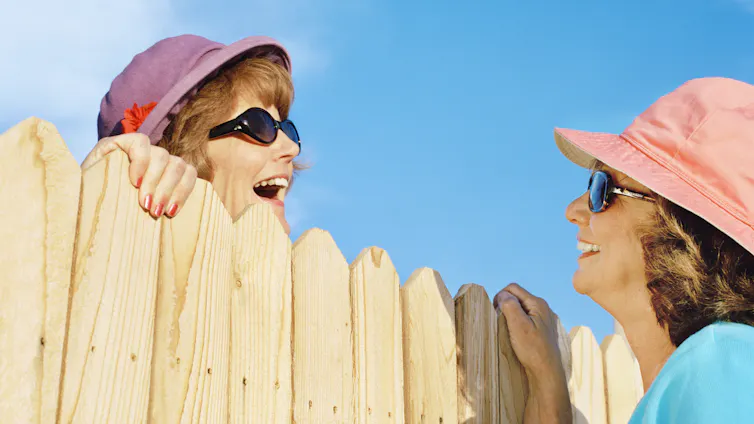
How friends affect health
There is a strong relationship between loneliness and psychological distress.
In contrast, adult friendships – especially high quality ones that provide social support and companionship – can protect against mental health issues such as depression and anxiety.
Friendships can also reduce how strongly the brain reacts to stress, shown to help protect people’s mental health after experiences of adversity.
In fact, having friends and social connections has even been linked to physical health benefits such as lower blood pressure and a healthy BMI.
What you can do
As adults, we often find it harder to make friends than when we were kids.
We’re busier. But many of us also find it harder to trust new people and may fear rejection.
Illness, disability or reduced mobility – as well as financial stress – can also leave us more socially isolated.
So what can we do about it?
Get involved
Activities based around a shared community can be a great way to meet people with similar interests. You could join a local running group, yoga class, choir or language meet-up, or try dining with strangers via websites such as Timeleft and The First Round. Many book clubs and craft groups meet in person or online.
Volunteer
This can be a way to meet new people of different ages and make friends. Volunteering increases opportunities for social interactions and can positively influence your wellbeing, sense of identity and belonging. There are many ways you can volunteer without leaving the house.
Put in the time
Researchers in the United States have tried to quantify how long it takes to build a friendship, estimating it takes roughly 50 hours of shared contact to move from acquaintances to friends.
Most of us also know when we don’t spend quality time with a friend we may fall out of touch – even when we haven’t fallen out.
You can start by setting aside ten minutes a day to focus on nurturing your friendships or rekindling old ones. It can be something small: sending a text, forwarding a funny video, sending a voice memo or giving someone a quick call.
Be prepared to be vulnerable
Listening and sharing personal parts of your life can help strengthen your bond, and move you from talking about what you do to also talking about how you feel.
It’s a good idea to start slow, and gradually build emotional intimacy. Be attentive if someone shares something personal and follow up with questions to show you care. You might find yourself sharing similar experiences.
Take the leap and reach out
Research shows people are surprisingly hesitant to reach out to old friends. But they tend to overestimate the awkwardness of getting in touch, and underestimate the positive feelings it generates – both for them and the other person.
Most would prefer the other person initiate contact. So take the leap, and next time something reminds you of that person – a place, a song, a photo – send them a message. Or just try a simple: “Hi, how are you? It’s been a while since we’ve last spoken and you crossed my mind.”
Remember – not everyone has to be a ‘best friend’
While close friendships are important, don’t forget that day-to-day social interactions can also help us feel less lonely.
This might mean a quick chat with a neighbour, or greeting the regular barista at the local coffee shop.
Evidence shows these “microconnections” are also important for boosting mood and a sense of belonging, and even provide support when we’re struggling.
So, if loneliness feels overwhelming, and trying to make new friends feels too big, it can help to start small and be open to unexpected connections.
Loneliness is a normal, natural emotion, and we don’t need to feel ashamed of it. But it sends an important message: we need connection.
Anastasia Hronis, Clinical Psychologist, Lecturer and Research Supervisor, Graduate School of Health, University of Technology Sydney
This article is republished from The Conversation under a Creative Commons license. Read the original article.
Don’t Forget…
Did you arrive here from our newsletter? Don’t forget to return to the email to continue learning!

Recommended
Learn to Age Gracefully
Join the 98k+ American women taking control of their health & aging with our 100% free (and fun!) daily emails:
-
Blueberries vs Kiwi – Which is Healthier?
10almonds is reader-supported. We may, at no cost to you, receive a portion of sales if you purchase a product through a link in this article.
Our Verdict
When comparing blueberries to kiwi, we picked the kiwi.
Why?
In terms of macros, kiwi has more fiber and protein, while the two fruits are equal on carbs, giving kiwi the win in this round.
In the category of vitamins, blueberries have more of vitamins B1, B2, and B3, while kiwi has more of vitamins A, B5, B6, B7, B9, C, E, K, and choline, winning here too.
Looking at minerals, blueberries have more manganese, while kiwi has more calcium, copper, magnesium, phosphorus, potassium, and selenium, winning its third round in a row.
When it comes to other considerations, blueberries have more polyphenols, and kiwi has anticancer properties unique to it; this could be swung either way depending on how you want to weight the relative importance of those, but we’ll call this round a tie.
Adding up the sections makes for a clear overall win for kiwi, but by all means enjoy either or both; diversity is good!
Want to learn more?
You might like:
Top 8 Fruits That Prevent & Kill Cancer
Enjoy!
Share This Post
-
One Exercise To Walk Better After 60
10almonds is reader-supported. We may, at no cost to you, receive a portion of sales if you purchase a product through a link in this article.
And no, it’s not “walking”; it’s what you can do in advance of the walking to make the walking easier and less likely to cause pain & fatigue:
It’s in your hips
Slowing down and/or find it more difficult walking after 60 is often caused less by weak legs, and more by reduced hip extension. This is because when your leg no longer moves effectively whenever it’s behind your body, your glutes stop generating strong push-off, leading to shorter strides, shuffling, slower speed, higher risk of tripping, and less confidence.
The key idea here: it’s important to build/restore glute strength through hip extension, rather than relying mainly on stretching. This can be done by training one key movement: the controlled backward drive of your leg.
This can be achieved through what’s basically one exercise, that can be done in various ways ranging from more easy to more difficult:
- Active hip extension: hold a chair or counter or such for balance, shift your weight onto one leg, move your free leg directly backwards about 10 degrees, squeeze your glute, and return slowly without leaning forwards or swinging, but with a pause at each end.
- Banded hip extension: add a resistance band around your ankles, and repeat the same motion while maintaining tension, pushing into resistance at the end range, and controlling the return all the way.
- Plank hip extension: do the same glute-driven leg lift from a forearm plank, to combine hip extension with core strength, keeping your body straight and avoiding twisting.
As with most such things, start as easy as necessary and work up to the more difficult levels, prioritize good form throughout, and also prioritize consistency over intensity.
For more on all of this plus visual demonstrations, enjoy:
Click Here If The Embedded Video Doesn’t Load Automatically!
Want to learn more?
You might also like:
Take care!
Share This Post
-
Fixing Your Sleep (From The Other Side)
10almonds is reader-supported. We may, at no cost to you, receive a portion of sales if you purchase a product through a link in this article.
Because sleep is an output, not a switch:
Let’s count to 10
The core premise here is that sleep is an output, not a switch, and this every daytime decision sets up whether or not our system can effectively “power down” at night.
So, with that in mind, consider building these 10 habits into your days, if they’re not already there:
- Morning movement: begin the day with gentle, natural movement to wake your nervous system gradually instead of spiking it with screens, caffeine, and noise.
- Breathwork: use slow breathing with long exhales and pauses to signal safety to your nervous system and reduce nighttime hyperarousal.
- Exercise cut-off: avoid heavy training in the evening, as it raises cortisol, body temperature, and sympathetic nervous system activation, all of which interfere with sleep.
- Movement breaks: take short, frequent movement breaks during the day to prevent/undo tension accumulation that otherwise carries into the night.
- True downregulation: replace numbing distractions with physical cues like floorwork, slow mobility drills, long exhales, dim light, and quiet to clearly signal that the day is over.
- Decompression: counter daily stresses by creating space in your body through hanging, thoracic opening, rib expansion, and hip opening; this will reduce bracing and waking up during the night.
- Hot and cold therapy: combining sauna with cold immersion (not simultaneously, but in the same routine) for a lowered core temperature later and strongly deepened sleep, especially when done several hours before bed.
- Evening gear shift: build a clear transition from stimulation to rest using low light, gentle movement, breathing into your ribs, and stopping food intake well before bed. Yes, this is more or less the same as number 5, but we didn’t make the list.
- Morning light: get real daylight soon after waking to anchor your circadian rhythm and align cortisol, melatonin, and sleep–wake timing.
- Daytime sleep practice: no, not “practise sleeping during the day”, but rather, treat sleep as something you prepare for all day through movement, breath, tension management, and consistent safety signals.
If ever it seems you’re fighting a losing battle when it comes to getting good sleep, remember that your ability to sleep is (for most people) not broken; it’s just overwhelmed by incorrect inputs. As such, things start to go better as soon as rhythm, movement, and nervous-system regulation improve—which they almost always will, when implementing the above habits.
For more on all of this, enjoy:
Click Here If The Embedded Video Doesn’t Load Automatically!
Want to learn more?
You might also like:
10 Tips for Better Sleep: Starting In The Morning
Take care!
Share This Post
Related Posts
-
What Really Works For Anti-Aging? Science-Backed Skincare Ingredients
10almonds is reader-supported. We may, at no cost to you, receive a portion of sales if you purchase a product through a link in this article.
Dr. Andrea Suarez, dermatologist, goes beyond her pet hate skincare myths (e.g. sunscreen causes cancer, tanning is healthy), and talks about how actually one of her biggest frustrations is people wasting money on ineffective skincare products.
She also details what works, according to the evidence:
Science vs hype
Dr. Suarez explains that the root causes of skin aging are sun exposure, lifestyle habits, and menopause-related hormone decline (as applicable). However, skin aging is not the same for everyone, as for example paler skin tends to show more wrinkling and yellowing while richly melanated skin resists wrinkling but develops more pigmentation and texture issues.
With this in mind, here are the products that she ranks as…
Best:
- Sunscreen is the most effective anti-aging product with strong evidence for reversing and preventing damage in all skin tones.
- Topical retinoids like tretinoin and adapalene improve collagen, reduce wrinkles, and even skin tone.
- Alpha hydroxy acids such as glycolic acid and ammonium lactate exfoliate and hydrate, improving texture and skin thickness.
- Niacinamide is a marvelously multitasking antioxidant that improves moisture, dark spots, redness, and sallowness.
- Vitamin C works best in the form of stable ascorbic acid combined with vitamin E and ferulic acid.
Questionable:
- Topical peptides may hydrate and reduce water loss but lack strong evidence for significant anti-aging effects.
- Topical estrogen may boost collagen in menopausal skin but may also cause pigmentation and vascular changes.
Worthless:
- Growth factors are unlikely to be effective at all and probably act only as moisturisers
- Exosomes and PDRN lack clinical evidence and are mostly marketing hype
In short: an effective anti-aging skincare routine includes cleansing, moisturising, daily sunscreen, and possibly a retinoid. Also important are lifestyle factors like healthy diet, stress reduction, and avoiding smoking and alcohol. Thus, she bids us skip trendy products and stick with simple, proven ingredients used consistently.
For more on all of these, enjoy:
Click Here If The Embedded Video Doesn’t Load Automatically!
Want to learn more?
You might also enjoy:
The Evidence-Based Skincare That Beats Product-Specific Hype ← in case you’d like a second opinion from another dermatologist
Take care!
Don’t Forget…
Did you arrive here from our newsletter? Don’t forget to return to the email to continue learning!
Learn to Age Gracefully
Join the 98k+ American women taking control of their health & aging with our 100% free (and fun!) daily emails:
-
The Brain Health Kitchen – by Dr. Annie Fenn
10almonds is reader-supported. We may, at no cost to you, receive a portion of sales if you purchase a product through a link in this article.
This is a cookbook built around the MIND diet, which we talked about in our “Four Ways To Upgrade The Mediterranean Diet” article.
As such, it’s a top-tier gold-standard diet to be following for brain health, and having it as a book of recipes makes actually eating this way a lot easier!
The book does talk about the science first before getting to the recipes, so don’t worry, you won’t have to reverse engineer the dietary guidelines from the recipes; everything is explained well.
The recipes (of which there are 100) are diverse enough to be interesting without being so complicated as to be difficult. The ingredients are largely nutritional powerhouses, and most if not all can be found in your nearest reasonable-sized supermarket. Also, the recipes are (as you might reasonably expect), very plant-forward, but not entirely plant-based (as you might have guessed from the salmon on the front cover).
Bottom line: if you’d like to eat more healthily for your brain, but are a little stumped on what to do with the four ingredients you remember are brain-healthy, this book will help expand your horizons—not to mention your culinary repertoire!
Don’t Forget…
Did you arrive here from our newsletter? Don’t forget to return to the email to continue learning!
Learn to Age Gracefully
Join the 98k+ American women taking control of their health & aging with our 100% free (and fun!) daily emails:
-
52 Weeks to Better Mental Health – by Dr. Tina Tessina
10almonds is reader-supported. We may, at no cost to you, receive a portion of sales if you purchase a product through a link in this article.
We’ve written before about the health benefits of journaling, but how to get started, and how to make it a habit, and what even to write about?
Dr. Tessina presents a year’s worth of journaling prompts with explanations and exercises, and no, they’re not your standard CBT flowchart things, either. Rather, they not only prompt genuine introspection, but also are crafted to be consistently uplifting—yes, even if you are usually the most disinclined to such positivity, and approach such exercises with cynicism.
There’s an element of guidance beyond that, too, and as such, this book is as much a therapist-in-a-book as you might find. Of course, no book can ever replace a competent and compatible therapist, but then, competent and compatible therapists are often harder to find and can’t usually be ordered for a few dollars with next-day shipping.
Bottom line: if undertaken with seriousness, this book will be an excellent investment in your mental health and general wellbeing.
Click here to check out 52 Weeks to Better Mental Health, and get on the best path for you!
Don’t Forget…
Did you arrive here from our newsletter? Don’t forget to return to the email to continue learning!
Learn to Age Gracefully
Join the 98k+ American women taking control of their health & aging with our 100% free (and fun!) daily emails:


