
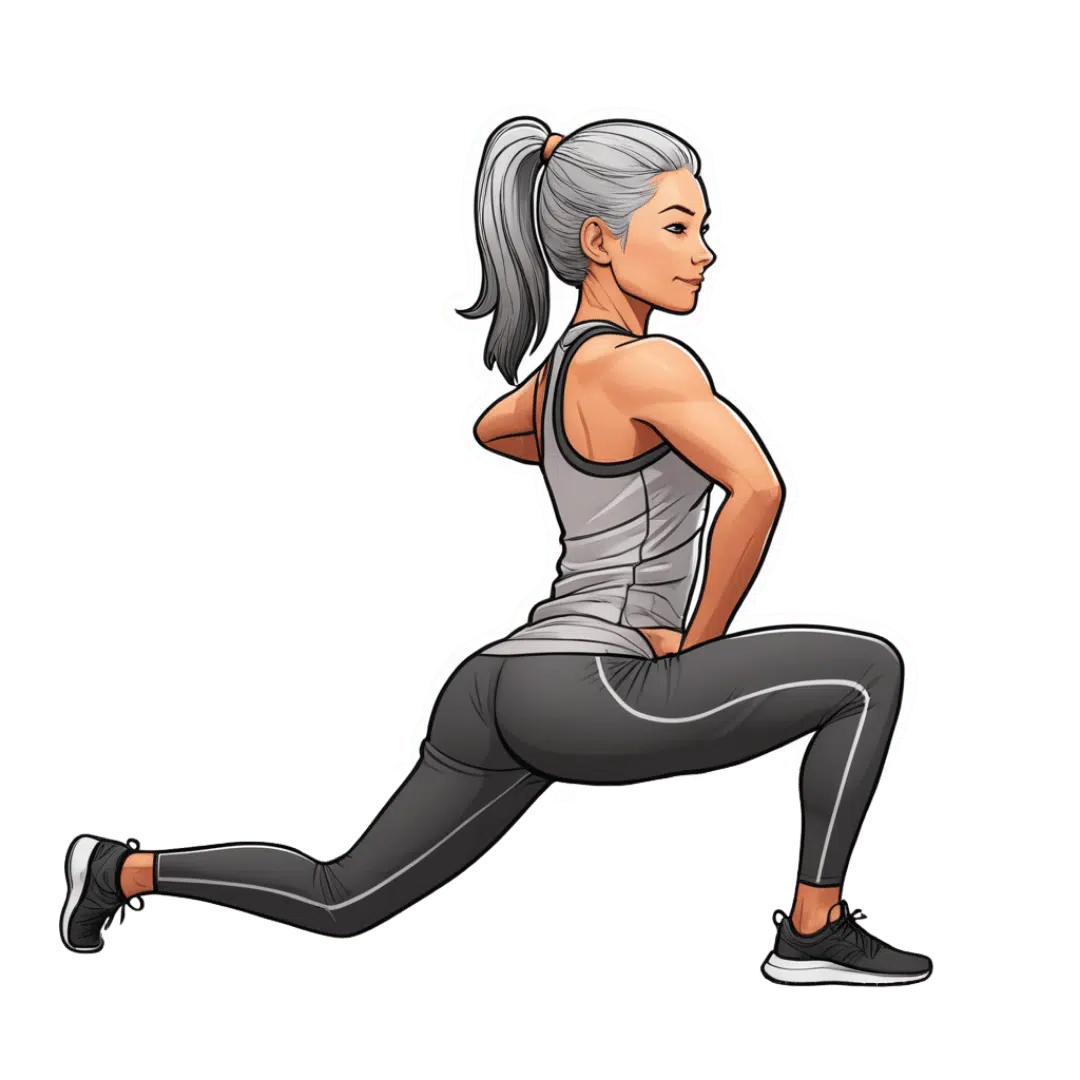
Knee Pain? The Problem Might Be Your Ankles
10almonds is reader-supported. We may, at no cost to you, receive a portion of sales if you purchase a product through a link in this article.
Dr. Alyssa Kuhn, arthritis expert, tells us what most people don’t know (and what to do about it):
The root of mobility
Fun fact: knee pain during squatting, stairs, and walking can come from stiff ankles, because our ankles are meant to absorb stress before it travels up to our knees.
This means that limited ankle movement from old sprains, arthritis, or inactivity shifts extra load to the knees, forcing them to compensate.
Quick self-test: stand a hand’s width from a wall, drive your knee forwards while keeping your heel on the floor; difficulty touching the wall or a lifting heel suggests limited ankle mobility—do test both sides, as they often differ.
If you do the test and find it’s indeed an issue, then here are some exercises that, if done little-and-often, can fix that:
- Ankle rocking: use a staggered stance and rock your weight backwards to lift your toes, then forwards to lift your back heel; this warms your ankles and calves and improves movement before walking or lower-body exercise.
- Heel raises: rise onto your toes and slowly lower your heels; this strengthens your calf muscles while helping them lengthen, which supports better ankle mobility—can be done on the floor, a step, or one leg if you feel comfortable doing so.
- Toe lifts at a wall: stand with your hips, back, and shoulders against a wall and lift your toes; this strengthens the muscles along your shins that help your ankles bend properly.
For more on all of this plus visual demonstrations, enjoy:
Click Here If The Embedded Video Doesn’t Load Automatically!
Want to learn more?
You might also like:
The Secret To Better Squats: Foot, Knee, & Ankle Mobility
Take care!
Don’t Forget…
Did you arrive here from our newsletter? Don’t forget to return to the email to continue learning!

Recommended
Learn to Age Gracefully
Join the 98k+ American women taking control of their health & aging with our 100% free (and fun!) daily emails:
-
Celeriac vs Sweetcorn – Which is Healthier?
10almonds is reader-supported. We may, at no cost to you, receive a portion of sales if you purchase a product through a link in this article.
Our Verdict
When comparing celeriac to sweetcorn, we picked the corn.
Why?
It’s quite close in each category, but the wins do add up:
In terms of macros, sweetcorn has more fiber, carbs, and protein, winning in this round.
In the category of vitamins, celeriac has more of vitamins B6, C, E, and K, while sweetcorn has more of vitamins A, B1, B3, B5, B7, and B9, winning its second round in a row.
Looking at minerals, celeriac has more calcium, copper, iron, phosphorus, and selenium, while sweetcorn has more magnesium and zinc, so celeriac wins a round here.
In other considerations, sweetcorn is higher in carotenoids such as lutein, which is another point in its favor.
Adding up the sections makes for an overall win for sweetcorn, but by all means do enjoy either or both, as diversity is best!
Want to learn more?
You might like:
Brain Food? The Eyes Have It! ← this is mostly about lutein
Enjoy!
Share This Post
-
7 Ways To Increase Your Metabolism At Any Age
10almonds is reader-supported. We may, at no cost to you, receive a portion of sales if you purchase a product through a link in this article.
Yes, age usually means a metabolic slowdown. But that doesn’t mean there’s nothing we can do.
How many of these are you doing?
Better than before
Cori Lefkowitz of “Redefining Strength” and “Strong At Every Age”, recommends:
- Strong body = strong metabolism: prioritize building and maintaining muscle through strength-focused workouts (bodyweight ones are fine if you don’t like weights), since muscle boosts metabolism by increasing calorie burn at rest and improving overall metabolic function.
- Get off to a gut start: help your gut to help you, by giving it fiber, prebiotics, and probiotics to improve nutrient absorption, lipid metabolism, and reduce belly fat risk.
- Walk + sprint: combine regular walking (8,000–10,000 steps/day) with sprint workouts (2–3 times a week) to maximize fat burning, hormonal balance, and general metabolic health.
- Plenty of protein: increase protein intake to avoid age-related muscle loss, feel fuller during calorie deficits, and raise metabolism due to its higher thermic effect compared to other macros.
- Sleep well: improve the quality—not just quantity—of sleep to reduce cravings and unhelpful hormonal imbalances. While you’re at it, avoid extreme dieting and ensure adequate protein, carbs, magnesium, and other nutrients for better rest!
- Remember the micros: Especially B vitamins, zinc, and vitamin D, to support your energy metabolism, insulin sensitivity, hormone levels, fat loss, and more.
- Skip the quick fixes: because they rarely help. Avoid fat burners, extreme cardio, and aggressive calorie deficits, which can harm metabolism long-term.
For more on each of these, enjoy:
Click Here If The Embedded Video Doesn’t Load Automatically!
Want to learn more?
You might also like:
Let’s Burn! Metabolic Tweaks & Hacks
Take care!
Share This Post
-
Gut Health 2.0
10almonds is reader-supported. We may, at no cost to you, receive a portion of sales if you purchase a product through a link in this article.
Gene Expression & Gut Health
This is Dr. Tim Spector. After training in medicine and becoming a consultant rheumatologist, he’s turned his attention to medical research, and is these days a specialist in twin studies, genetics, epigenetics, microbiome, and diet.
What does he want us to know?
For one thing: epigenetics are for more than just getting your grandparents’ trauma.
More usefully: there are things we can do to improve epigenetic factors in our body
DNA is often seen as the script by which our body does whatever it’s going to do, but it’s only part of the story. Thinking of DNA as some kind of “magical immutable law of reality” overlooks (to labor the metaphor) script revisions, notes made in the margins, directorial choices, and ad-lib improvizations, as well as the quality of the audience’s hearing and comprehension.
Hence the premise of one of Dr. Spector’s older books, “Identically Different: Why We Can Change Our Genes”
(*in fact, it was his first, from all the way back in 2013, when he’d only been a doctor for 34 years)
Gene expression will trump genes every time, and gene expression is something that can often be changed without getting in there with CRISPR / a big pair of scissors and some craft glue.
How this happens on the micro level is beyond the scope of today’s article; part of it has to do with enzymes that get involved in the DNA transcription process, and those enzymes in turn are despatched or not depending on hormonal messaging—in the broadest sense of “hormonal”; all the body’s hormonal chemical messengers, not just the ones people think of as hormones.
However, hormonal messaging (of many kinds) is strongly influenced by something we can control relatively easily with a little good (science-based) knowledge: the gut.
The gut, the SAD, and the easy
In broad strokes: we know what is good for the gut. We’ve written about it before at 10almonds:
Making Friends With Your Gut (You Can Thank Us Later)
This is very much in contrast with what in scientific literature is often abbreviated “SAD”, the Standard American Diet, which is very bad for the gut.
However, Dr. Spector (while fully encouraging everyone to enjoy an evidence-based gut-healthy diet) wanted to do one better than just a sweeping one-size-fits-all advice, so he set up a big study with 15,000 identical twins; you can read about it here: TwinsUK
The information that came out of that was about a lot more than just gene expression and gut health, but it did provide the foundation for Dr. Spector’s next project, ZOE.
ZOE crowdsources huge amounts of data including individual metabolic responses to standardized meals in order to predict personalized food responses based on individual biology and unique microbiome profile.
In other words, it takes the guesswork out of a) knowing what your genes mean for your food responses b) tailoring your food choices with your genetic expression in mind, and c) ultimately creating a positive feedback loop to much better health on all levels.
Now, this is not an ad for ZOE, but if you so wish, you can…
- Get the free ZOE gut health guide (this is good, but generic, gut health information)
- Take the ZOE home gut health test (quiz followed by offers of lab tests)
- Browse the ZOE Health Academy, its education wing
Want to know more?
Dr. Spector has a bunch of books out, including some that we’ve reviewed previously:
- Spoon-Fed: Why Almost Everything We’ve Been Told About Food Is Wrong
- The Diet Myth: The Real Science Behind What We Eat
- Food for Life: The New Science of Eating Well
You can also check out our own previous main feature, which wasn’t about Dr. Spector’s work but was very adjacent:
The Brain-Gut Highway: A Two-Way Street
Enjoy!
Share This Post
Related Posts
-
Do TikTok ‘anti-inflammatory diets’ really work?
10almonds is reader-supported. We may, at no cost to you, receive a portion of sales if you purchase a product through a link in this article.
“Cut out all dairy. Ditch gluten. Never touch sugar again.” More than 20 million people have watched TikTok videos listing these kinds of rules under the banner of “anti-inflammatory diets.”
The promise is simple: avoid entire food groups and you’ll lose weight, banish bloating and transform your health.
But while the idea of eating to reduce inflammation has a scientific foundation, the social media version strips out nuance and risks becoming unnecessarily restrictive.
Let’s check what’s going on.
Abraham Gonzalez Fernandez/Getty Images What is inflammation?
People often think of inflammation as something to avoid at all costs, but it’s actually a healthy and normal process that helps the body heal and defend itself against infections, injuries, or diseases. Without it, we wouldn’t recover from even small injuries.
Inflammation and the immune system work together: when the body notices injury or infection, the immune system starts to trigger inflammation, which brings immune cells, nutrients and oxygen to the affected area. This helps with healing.
Inflammation can be short-term (acute) or long-term (chronic). Acute inflammation is helpful and part of normal healing. For example, a scraped knee becomes red, swollen and warm as the skin repairs, or a sore throat swells while fighting infection.
Chronic inflammation, on the other hand, can be harmful. It occurs at a low level over time and is often unnoticed, but is linked with many chronic diseases including heart disease, type 2 diabetes and cancer.
What causes chronic inflammation?
Factors such as age, smoking, sedentary behaviour, obesity, hormonal changes, stress and irregular sleep patterns have all been linked with chronic inflammation.
Diet also plays a key role. A typical Western diet, which is high in ultra-processed foods such as packaged baked goods, soft drinks, fast food, processed meats and confectionery, and low in fresh fruits and vegetables, has been strongly linked with higher levels of inflammation.
Can anti-inflammatory diets help?
Yes. What we eat can influence inflammation in the body. Diets rich in fruits, vegetables, wholegrains, legumes and healthy fats – and low in highly processed foods and added sugars – are associated with lower levels of inflammation.
The Mediterranean-style diet is the most researched example. It’s packed with vegetables, fruits, wholegrains, nuts, seeds and olive oil, with moderate amounts of fish, chicken, eggs and dairy, and minimal red or processed meat and added sugars.
In 2022, researchers reviewed the best available evidence and found people following a Mediterranean-type diet had lower levels of inflammatory markers in their blood, suggesting it can help reduce chronic inflammation.
Growing research also suggests diets high in processed foods and low in fibre can change the balance of bacteria in the gut, which may contribute to low-level, chronic inflammation.
Where TikTok gets it right… and wrong
Right: probiotics may help
Many TikTok videos recommend probiotic supplements to lower inflammation, and there is emerging science to support this. A 2020 review of randomised controlled trials (the strongest form of evidence) found probiotics may reduce some inflammatory blood markers in both healthy people and those living with a health condition.
But while promising, researchers caution more studies are needed to determine which strains and doses are most effective.
Wrong: ‘avoid lists’ (gluten, dairy) without a medical reason
TikTok advice to avoid dairy or gluten to reduce inflammation isn’t backed by strong science for most people.
Inflammation from dairy or gluten typically only occurs in those with allergies or coeliac disease, in which case, medical dietary restriction is necessary. Cutting them out without cause risks unnecessary nutrient gaps.
For the general population, systematic reviews show dairy products often have neutral or even protective effects on inflammation.
Plus, foods such as yogurt, kefir and certain cheeses are rich in probiotics, which are helpful in reducing inflammation.
Many people believe cutting out gluten will lower chronic inflammation and avoid it to help with gut issues or fatigue.
But there’s little scientific evidence to back this up. In fact, wholegrain consumption has been shown to positively affect health status by improving inflammation.
A Mediterranean-style diet already avoids most processed, gluten-heavy foods such as cakes, pastries, white bread, fast food and packaged snacks. If you feel sensitive to gluten, this way of eating naturally keeps your intake low, without the need to cut out nutritious wholegrains that can benefit your health.
Who might benefit from an anti-inflammatory diet?
For people with certain medical conditions, an anti-inflammatory eating pattern can play a useful role alongside conventional care.
Research suggests potential benefits for conditions such as polycystic ovary syndrome (PCOS), endometriosis, autoimmune conditions and arthritis, where chronic inflammation contributes to symptoms or disease progression.
In these cases, dietary approaches should be guided by an accredited practising dietitian to ensure that changes are safe, balanced and tailored to individual needs.
The bottom line for healthy people
If you’re otherwise healthy, you don’t need to cut out entire food groups to reduce inflammation.
Instead, focus on balance, variety and minimally processed foods: essentially a Mediterranean-style eating pattern. Support your body’s natural defences with a colourful plate full of vegetables and fruit, enough fibre, healthy fats such as olive oil and nuts. No TikTok “avoid list” required.
Alongside a balanced diet, being physically active, getting good-quality sleep, drinking only minimal alcohol and not smoking all help the body keep inflammation in check. These healthy habits work together to strengthen the immune system and lower the risk of chronic disease.
Lauren Ball, Professor of Community Health and Wellbeing, The University of Queensland and Emily Burch, Accredited Practising Dietitian and Lecturer, Southern Cross University
This article is republished from The Conversation under a Creative Commons license. Read the original article.
Don’t Forget…
Did you arrive here from our newsletter? Don’t forget to return to the email to continue learning!
Learn to Age Gracefully
Join the 98k+ American women taking control of their health & aging with our 100% free (and fun!) daily emails:
-
What do people mean when they say their nervous system is overloaded or needs a reset?
10almonds is reader-supported. We may, at no cost to you, receive a portion of sales if you purchase a product through a link in this article.
You might have heard people talking about their nervous system being “overloaded” or “dysregulated” when they’re going through periods of heightened stress.
Or perhaps you’ve been offered ways to “heal” or “reset” your nervous system on social media or at expensive wellness retreats.
But how does the nervous system actually work? And can it be overloaded and reset?
MoMo Productions/Getty Images What does the nervous system do?
The autonomic nervous system influences bodily functions that aren’t in our conscious control, such as the workings of our organ systems, body temperature regulation and emotions. It’s organised into two separate branches: sympathetic and parasympathetic.
The sympathetic nervous system helps us deal with stressful situations, activating our survival responses of fight, flight, freeze and fawn.
The parasympathetic nervous system has an opposite role, bringing our automatic responses back to normal functioning after activation due to stress.
While we have evolved to be able to respond well to immediate threats, our stress-response system is terrible at helping us deal with the chronic stressors of modern life: heavy workloads, financial stress or the long-term pressures of fitting caring responsibilities into already busy lives.
“Nervous system overload” isn’t clearly defined but usually refers to the bodily effects of stress when we feel beyond our ability to cope. This might happen when we have numerous threats outside our control or when we haven’t had a chance to de-stress from one thing before another hits.
Is this the ‘nervous breakdown’ of our times?
“Nervous breakdown” is another lay term, though an outdated one, without a clear medical definition.
It was considered as a sort of collapse in the ability to fulfil one’s usual social roles. Being completely out of action – like a car broken down on the side of the road – due to a sudden and extreme mental health episode.
“Nervous system overload” is described in almost opposite terms. People may still able to go about their daily lives but feel more frazzled and sensitive, and less able to cope with the usual ups and downs.
Why is the nervous system having a moment?
Dysregulation of the nervous system has long been understood to be part of what goes wrong, biologically, in post-traumatic stress disorder.
But the nervous system – and its overload – seems to have become a mainstream self-help buzz word, particularly since the pandemic.
One reason could be rising awareness of the biological bases of emotions. There are physiological changes that are interpreted by the brain, which lead to the experience of emotions.
The recently debunked polyvagal theory has also risen in popularity. This theory posits evolutionary and neurophysiological explanations for the role of the vagus nerve in the autonomic nervous system, and is often referenced in relation to trauma.
While there aren’t many studies of therapies developed from polyvagal theory to know if they work, a recent consensus statement from 39 experts in related fields debunked the central premises of polyvagal theory.
More broadly, our fascination with the nervous system could be a move towards seeing distress as a brain or biological problem, rather than something based on our experience. Using medical-sounding term such as nervous system overload might feel easier than saying you’re feeling overwhelmed.
Using biological explanations for stress or mental ill-health can reduce stigma and shame but it also means problems can feel more long-lasting and outside our control.
There is also the risk of “concept creep”, where people extend diagnostic labels that are usually reserved for severe symptoms to relatively mild experiences. This can turn everyday problems into medical or psychiatric disorders.
Talking about “resetting the nervous system” can give the impression that something in the body is seriously wrong, even though ups and downs in our health and wellbeing are a normal part of being human.
You can’t reset the nervous system
“Nervous system resets” are described online as anything from deep breathing and time in nature to £13,000 (A$25,000) a day health retreats favoured by former British royals.
While there’s nothing wrong with any of these self-help strategies (or fancy health retreats), there’s no clear evidence that they can “reset” the nervous system or that such a thing is even possible.
So how can you actually manage stress?
Re-framing “nervous system overload” as chronic stress can help to identify some more affordable, evidence-based ways to cope.
Lifestyle interventions such as regular physical activity, adequate sleep and healthier diet patterns have all been shown to reduce chronic stress.
Mindfulness and meditation practices, which could include breathing exercises, can reduce cortisol (a stress hormone) levels in blood and saliva.
Time in nature has been shown to reduce other measures of stress such as blood pressure and self-reported stress.
Making or experiencing art – visual art, music, dance or drama – has also been shown to help with stress management and prevention.
For greater levels of distress, or for support implementing these kinds of methods, seek professional support. Psychologists are well-versed in using evidence-based therapies for helping people manage stress.
However, unlike a “reset”, sustainable change is usually gradual and requires ongoing effort. And prevention is key. If you can, reflect on how to make life more manageable over the long term before your body shows physical signs of distress.
Amy Loughman, Senior Lecturer in Psychology, The University of Melbourne
This article is republished from The Conversation under a Creative Commons license. Read the original article.
Don’t Forget…
Did you arrive here from our newsletter? Don’t forget to return to the email to continue learning!
Learn to Age Gracefully
Join the 98k+ American women taking control of their health & aging with our 100% free (and fun!) daily emails:
-
Crohn’s Disease: Cause Finally Revealed!
10almonds is reader-supported. We may, at no cost to you, receive a portion of sales if you purchase a product through a link in this article.
If you have Crohn’s, or perhaps someone close to you has it, then you’ll be familiar with the common medical refrain of “we don’t know”.
While this honesty is laudable, it’s not reassuring. So, it’s good that researchers in recent years have been making progress in understanding such things as why many people with Crohn’s may respond differently not only to lifestyle interventions, but also to various relevant drugs—allowing doctors to gradually get better at prescribing the right treatment for the right person.
For example, last year, researchers (Dr. Pradipta Ghosh et al.) created gut organoids from adult stem cells taken directly from Crohn’s patients during colonoscopies. Unlike organoids made from reprogrammed pluripotent stem cells, these retained the “epigenetic memory” of each patient’s gut—its microbial history, inflammation patterns, and oxygen/pH conditions—allowing a faithful replication of the disease environment.
That didn’t tell us the cause, though. But now…
When macrophages go wrong
Dr. Ghosh didn’t stop there; she assembled another team, and—by analysing thousands of macrophage gene expression profiles—identified a 53-gene signature that distinguishes inflammatory macrophages from healing ones—pinpointing girdin (a particular kind of protein) as a critical player in this process.
Let’s back up slightly and explain:
Macrophages are part of the immune system, specialist white blood cells that “eat” things that need to be removed. There are two kinds, inflammatory and non-inflammatory. The former aggressively “eat” invaders. The latter are more like cellular janitors.
In Crohn’s disease, the balance of these two kinds of macrophage becomes imbalanced, and guess which kind goes on the rampage. If you guessed “not the janitors”, you guessed correctly.
But why exactly they become imbalanced has been a mystery until now, and where science doesn’t understand the cause, it’s difficult to treat anything deeper than the symptoms.
Now we know: in a healthy gut, NOD2 gene binds to girdin in non-inflammatory macrophages, helping them suppress inflammation and promote tissue repair. The most common Crohn’s-linked mutation deletes the part of NOD2 that connects to girdin, disrupting this balance and allowing chronic inflammation to take over.
This discovery was made by very complex statistical modelling, but then it was tested empirically:
How, you ask? Mice bred without the girdin protein developed intense gut inflammation, gut microbiome disruption, and (often fatal) sepsis, confirming the NOD2-girdin connection in maintaining intestinal immune balance.
You can read about this here: Distinct colitis-associated macrophages drive NOD2-dependent bacterial sensing and gut homeostasis
You may be wondering: great, but what am I supposed to do if I have this mutation?
And well, it’s still a case of doing what we can to dial down the inflammation (see for example: How to Prevent (or Reduce) Inflammation)
However, armed with more knowledge, knowing that this has to do with gut dysbiosis, then we can now also focus on addressing that directly, for example: How Much Difference Do Probiotic Supplements Make, Really?
And in order for those probiotics to actually work, see: Stop Sabotaging Your Gut
“But I can’t eat fibrous foods, it all flares up!”, we here you (validly) cry.
…and unfortunately, that changes everything, in terms of what’s usually considered healthiest for most people, i.e. a whole-foods majority plant-based diet.
What stays the same:
- You still ideally want to eat a lot of plants
- You definitely want to avoid meat and dairy in general
- Eating fish is still usually fine, same with eggs
- Get plenty of water
What needs to change:
- Consider swapping grains for potatoes or pasta (at least: avoid grains)
- Peel vegetables that are peelable; discard the peel or use it to make stock
- Consider steaming fruit and veg for easier digestion
- Skip spicy foods (moderate spices, like ginger, turmeric, and black pepper, are usually fine in moderation)
Much of this latter list is opposite to the advice for people without Crohn’s Disease.
To that end, if you take probiotics supplements that come with their own tiny-but-right-there supply of prebiotic fiber (such as inulin), that will probably be enough to help your probiotics “take”, without simultaneously setting your macrophages off because you just fed your entire gut microbiome at once with a big meal full of fiber.
Here’s an example product on Amazon, but by all means feel free to shop around, and if you’re working with a dietician, do discuss it with them, of course.
Take care!
Don’t Forget…
Did you arrive here from our newsletter? Don’t forget to return to the email to continue learning!
Learn to Age Gracefully
Join the 98k+ American women taking control of their health & aging with our 100% free (and fun!) daily emails:


