
Important Stretching Mistakes To Avoid
10almonds is reader-supported. We may, at no cost to you, receive a portion of sales if you purchase a product through a link in this article.
When it comes to stretching, what you do makes a difference, but what matters most is…
How you do it
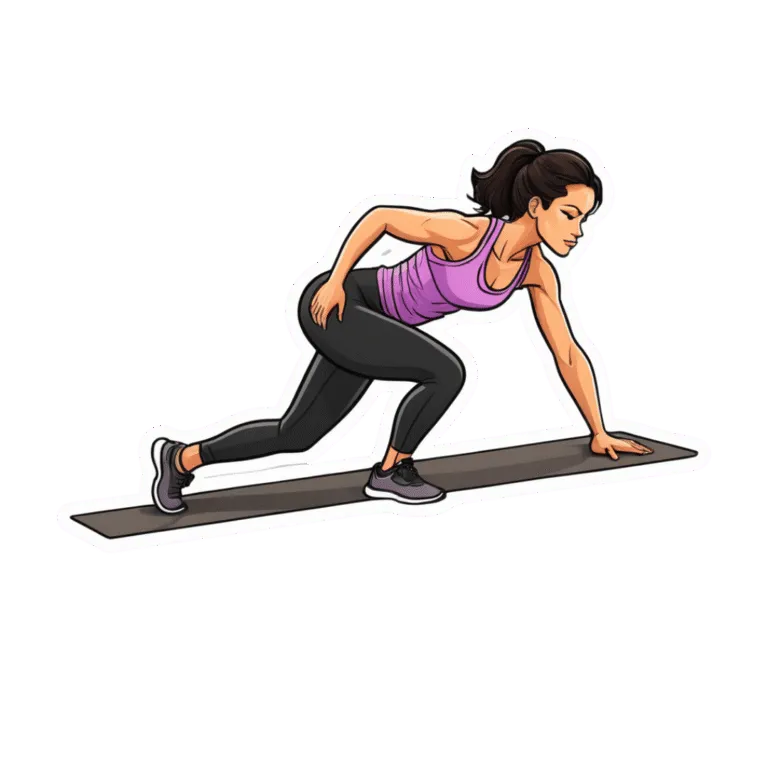
While different stretches will yield different results (as per the thumbnail of this video), the following mistakes are much more certain to sabotage progress:
- Entering stretches too quickly: stretching too fast activates the stretch reflex, causing muscles to contract and resist the stretch. Instead, ease into stretches gradually in phases to help the nervous system relax and allow flexibility gains.
- Not timing your stretches: due to subjective time distortion/dilation, not timing how long you hold each stretch often leads to durations shorter than needed, especially on the second side. Use a timer* and aim for at least 30 seconds per muscle to be effective.
- Lacking intensity in stretches: stretching without enough intensity won’t trigger the changes needed to increase flexibility. Stretches should be mildly uncomfortable but controlled, where breathing is calm and muscles not being stretched can stay relaxed.
*Because stretches often require having one’s spine a certain way and not craning around to see the timer, and it can be tedious to have to keep moving the timer to where one’s face is going to be next, this writer’s personal solution is simply to stretch in a room with an audibly ticking clock, and count the ticks
For more detailed explanations of these three things, enjoy:
Click Here If The Embedded Video Doesn’t Load Automatically!
Want to learn more?
You might also like:
The 4 Best Stretches To Do Before Bed (And Even: To Do In Bed!) ← for any who are wondering “yes but what actual stretches should I do?”, this is a great, easy, effective, starting place!
Take care!
Don’t Forget…
Did you arrive here from our newsletter? Don’t forget to return to the email to continue learning!
Recommended
Learn to Age Gracefully
Join the 98k+ American women taking control of their health & aging with our 100% free (and fun!) daily emails:
-
The Threshold For Binge-Drinking Is Lower Than Most Think… Do You Qualify?
10almonds is reader-supported. We may, at no cost to you, receive a portion of sales if you purchase a product through a link in this article.
The term “binge-drinking” typically conjures images of people in the 18–22 age range (general figure; if we get geographic about it, then perhaps 21–25 in the US, or 15–21 in Europe) swinging around lampposts while very drunk, very loud, minimally-clothed, and liable to waking up somewhere new and exciting that they’ve never seen before.
But in fact, while definitions do vary a bit, a prevailing and representative scientific definition is:
❝consuming four or more standard drinks on one occasion for women and five or more standard drinks on one occasion for men❞
Learn more: Heterogeneity of definitions and measurements of binge drinking in research on adolescents and young adults
Now, that paper’s looking at research on adolescents and younger adults because that’s where most of the research is, but it doesn’t mean older adults are magically immune—quite the opposite!
As we can learn from…
The Death Database
It’s not a cheery heading, is it? Doesn’t bode well.
But…
Researchers (Dr. Esme Fuller-Thomsom et al.) analyzed 129,470 adults aged 50 and older using the 2005–2014 Canadian Community Health Survey linked to the Canadian Vital Statistics Death Database and followed participants for up to 12 years (“up to”, because more than 14,740 of those participants died during the study).
Some notes:
- Prevalence: 40% of older adults who drank alcohol at least monthly reported binge-drinking at least once in the previous year, and 8% reported binge-drinking weekly or more.
- Mortality risk: there was a strong association between binge-drinking frequency and all-cause mortality, with risk increasing as binge-drinking became more frequent. After controlling for sociodemographic and health factors, those who never binge-drank had a 19% lower mortality risk than those who occasionally did.
You can read the paper in full, here: Binge drinking and mortality among older adults: Findings from the Canadian Community Health Survey linked to the Canadian Vital Statistics Death Database
So, what does this mean, in practical terms?
❝Public health messaging tends to focus on college campuses, but our findings show we need to think about retirement communities too❞
~ Dr Esme Fuller-Thomson
And for you, dear reader… Based on the above statistics, tens of thousands of our readers fall into the binge-drinking category. Maybe you are one.
Note that that “four standard drinks” is often only two drinks where each drink is a “double measure”, such as a double-shot of spirits or a large glass of wine.
This gets particularly relevant for those who “only drink on special occasions”, but then have several drinks.
Here’s a good example of that: You’d Better Watch Out: Why More Cardiac Deaths Happen On Dec 25 Than Any Other Day
Want to not do that?
Let us also remember that per the World Health Organization, the only safe amount of alcohol is zero.
So, with that in mind, you might want to check out: How To Reduce Or Quit Alcohol
Or for a deeper dive, we recommend: Quit Drinking – by Rebecca Dolton
Take care!
Share This Post
-
4 Critical Things Female Runners Should Know
10almonds is reader-supported. We may, at no cost to you, receive a portion of sales if you purchase a product through a link in this article.
When it comes to keeping up performance in the face of menopause, Shona Hendricks has advice:
Don’t let menopause run you down
- Prioritize recovery! Overtraining without adequate recovery just leads to decreased performance in the long term, and remember, you may not recover as quickly as you used to. If you’re still achey from your previous run, give it another day, or at least make it a lighter run.
- Slow down in easy and long runs! This isn’t “taking the easy way out”; it will improve your overall performance, reducing muscle damage, allowing for quicker recovery and ultimately better fitness gains.
- Focus on nutrition! And that means carbs too. A lot of people fighting menopausal weight gain reduce their intake of food, but without sufficient energy availability, you will not be able to run well. In particular, carbohydrates are vital for energy. Consume them sensibly and with fiber and proteins and fats rather than alone, but do consume them.
- Incorporate strength training! Your run is not “leg day” by itself. Furthermore, do whole-body strength training, to prevent injuries and improve overall performance. A strong core is particularly important.
For more on each of these (and some bonus comments about mobility training for runners), enjoy:
Click Here If The Embedded Video Doesn’t Load Automatically!
Want to learn more?
You might also like to read:
Take care!
Share This Post
-
To-Do List Formula – by Damon Zahariades
10almonds is reader-supported. We may, at no cost to you, receive a portion of sales if you purchase a product through a link in this article.
The first part of this book is given to reviewing popular to-do list methods that are already widely “out there”. This treatment is practical and exploratory, looking at the pros and cons of each.
The second part of the book is more Zahariades’ own method, taking what he sees as the best of each, plus some tricks and practices of his own. With these, he builds (and shares!) his optimized system.
You may be wondering what you, dear reader, can expect to get out of this book. Well, that depends on where you’re coming from:
Are you new to approaching your general to-dos with a system more organized than post-it notes on your fridge? If so, this will be a great initial introduction to many systems.
Or are you, perhaps, a veteran of GTD, ToDoist, assorted Pomodoro-based systems, and more? Do you do/delegate/defer/ditch tasks more deftly and dextrously than Serena Williams despatches tennis balls?
If so, what you’re more likely to gain here is a fresh perspective on old ideas, and maybe a trick or two you didn’t know before. At the very least, a boost to your motivation, getting you fired up for doing what you know best again.
All in all, a very respectable book for anyone’s to-read list!
Pick Up Your Copy of Zahariades’ To-Do List Formula on Amazon Today!
Share This Post
Related Posts
-
Green Tea Allergies and Capsules
10almonds is reader-supported. We may, at no cost to you, receive a portion of sales if you purchase a product through a link in this article.
It’s Q&A Day at 10almonds!
Have a question or a request? You can always hit “reply” to any of our emails, or use the feedback widget at the bottom!
In cases where we’ve already covered something, we might link to what we wrote before, but will always be happy to revisit any of our topics again in the future too—there’s always more to say!
As ever: if the question/request can be answered briefly, we’ll do it here in our Q&A Thursday edition. If not, we’ll make a main feature of it shortly afterwards!
So, no question/request too big or small
❝Hey Sheila – As always, your articles are superb !! So, I have a topic that I’d love you guys to discuss: green tea. I used to try + drink it years ago but I always got an allergic reaction to it. So the question I’d like answered is: Will I still get the same allergic reaction if I take the capsules ? Also, because it’s caffeinated, will taking it interfere with iron pills, other vitamins + meds ? I read that the health benefits of the decaffeinated tea/capsules are not as great as the caffeinated. Any info would be greatly appreciated !! Thanks much !!❞
Hi! I’m not Sheila, but I’ll answer this one in the first person as I’ve had a similar issue:
I found long ago that taking any kind of tea (not herbal infusions, but true teas, e.g. green tea, black tea, red tea, etc) on an empty stomach made me want to throw up. The feeling would subside within about half an hour, but I learned it was far better to circumvent it by just not taking tea on an empty stomach.
However! I take an l-theanine supplement when I wake up, to complement my morning coffee, and have never had a problem with that. In all likelihood, the issue is neither caffeine (or else it’d happen for coffee or other sources of caffeine) nor theanine (or it’d happen for theanine supplements), but rather, the tannins in tea.
Of course, my physiology is not your physiology, and this “shouldn’t” be happening to either of us in the first place, so it’s not something there’s a lot of scientific literature about, and we just have to figure out what works for us.
This last Monday I wrote (inspired in part by your query) about l-theanine supplementation, and how it doesn’t require caffeine to unlock its benefits after all, by the way. So that’s that part in order.
I can’t speak for interactions with your other supplements or medications without knowing what they are, but I’m not aware of any known issue, beyond that l-theanine will tend to give a gentler curve to the expression of some neurotransmitters. So, if for example you’re talking anything that affects that (e.g. antidepressants, antipsychotics, ADHD meds, sleepy/wakefulness meds, etc) then checking with your doctor is best.
Don’t Forget…
Did you arrive here from our newsletter? Don’t forget to return to the email to continue learning!
Learn to Age Gracefully
Join the 98k+ American women taking control of their health & aging with our 100% free (and fun!) daily emails:
-
30 Days Of Weight Vest Use: Lessons Learned
10almonds is reader-supported. We may, at no cost to you, receive a portion of sales if you purchase a product through a link in this article.
Robin, from “The Science of Self-Care”, has insights:
How to have an easier time of it
Per peer-reviewed science (linked under the video on YouTube), there are some benefits:
- Cardiovascular fitness: increases workout intensity, improving heart and lung health.
- Muscle strength & endurance: strengthens core, legs, glutes, and calves.
- Bone density: helps prevent osteoporosis through weight-bearing exercise.
- Caloric expenditure: burns more calories, aiding in weight loss.
- Balance & posture: improves balance, though posture effects were mixed.
She chose a 30 lb weighted vest, which felt much heavier than expected. Initially, this was uncomfortable but became comforting over time (much like a weighted blanket). She also found that walks became noticeably more intense, leading to increased sweating and hunger.
Over the course of the month, she found:
- Week 1: adjusting to the extra weight; walks felt significantly harder.
- Weeks 2-3: strength improvements; carrying groceries felt easier, walking without the vest felt effortless.
- Week 3: started craving the weighted vest, but also began experiencing shoulder discomfort.
- Week 4: reduced walk duration to 20 minutes due to shoulder strain.
She concluded that the vest design was flawed—all weight rested on shoulders instead of distributing across the body, which led to shoulder discomfort and posture issues. To mitigate these things, she switched to wearing the vest around the waist like a skirt. She now plans to try a weighted belt for better weight distribution, though also simply a different kind of vest would work better (the kind that looks like combat body armor distributes the weight a lot more easily)
In short, her verdict:
- Weighted walking: 10/10, highly beneficial and easy to incorporate into daily routines.
- Vest used: 2/10, poor weight distribution, causing discomfort and shoulder strain.
For more on all of this, plus links to the relevant scientific papers, enjoy:
Click Here If The Embedded Video Doesn’t Load Automatically!
Want to learn more?
You might also like:
Weight Vests Against Osteoporosis: Do They Really Build Bone?
Take care!
Don’t Forget…
Did you arrive here from our newsletter? Don’t forget to return to the email to continue learning!
Learn to Age Gracefully
Join the 98k+ American women taking control of their health & aging with our 100% free (and fun!) daily emails:
-
10 Unsexy (But Lifechanging) Tips
10almonds is reader-supported. We may, at no cost to you, receive a portion of sales if you purchase a product through a link in this article.
If you don’t want your efforts to go to waste, these tips will help you make sure everything’s at least a slight improvement—and then the same again the next day!
Bit by bit
If you have the right approach to these things, the rest will fall into place by itself:
- Like vs want/need: what feels good isn’t always what you want or need; progress often requires uncomfortable new habits that align with your goals/desires rather than your immediate inclinations. You may not enjoy every action, but you’ll like the results that come from them.
- Train hard if you want, but rest well: you can only train as hard as you can recover; burnout usually comes from under-recovering, not from overtraining. So, prioritize sleep, nutrition, and mobility work before changing your workouts.
- Eat more: sustainable fat loss comes from small calorie deficits at most, not starvation. Extreme or long-term restriction slows your metabolism, minimizes fat loss, and leads to rebound weight gain. Fuel your body properly so you can look leaner, feel energized, and maintain your results.
- Fearing carbs/fat: don’t demonize any macronutrient; both carbs and fats are essential for energy, hormones, and metabolism. Your ideal balance will change with your goals, activity, and life stage, so stay adaptable. If in doubt, follow your gut, and just make sure to get plenty of fiber either way.
- Don’t “set and forget”: there’s no one perfect “lifestyle”; our goals, body, and routines will evolve, so your nutrition and workouts must too. True progress comes from constant small adjustments and long-term consistency.
- Daily mobility: do the boring mobility work—foam roll, stretch, and activate—every day. A few minutes of “prehab” prevents injuries, improves performance, and keeps you training pain-free as you age.
- Don’t blame circumstances: even if it’s true! You can’t control everything, but you can always control your response. Focus on solutions, not the negatives, to keep moving forwards.
- Don’t define yourself by specific routines or labels: as you grow and your goals change, your habits should too. Evolving your approach is a sign of progress, not failure.
- Slow down to speed up: when life gets busy, doing something is better than doing nothing. A few workouts or partial effort still move you forwards; perfectionism only keeps you stuck.
- Track things the easy way: measure what you do so you can manage it. Using apps for this gives you clarity, direction, and the ability to adjust intelligently instead of guessing.
For more on all of this, enjoy:
Click Here If The Embedded Video Doesn’t Load Automatically!
Want to learn more?
You might also like:
How To Actually Get Abs (10 Annoying Tips That Work!)
Take care!
Don’t Forget…
Did you arrive here from our newsletter? Don’t forget to return to the email to continue learning!
Learn to Age Gracefully
Join the 98k+ American women taking control of their health & aging with our 100% free (and fun!) daily emails:


