
Forming new habits can take longer than you think. Here are 8 tips to help you stick with them
10almonds is reader-supported. We may, at no cost to you, receive a portion of sales if you purchase a product through a link in this article.
If you’ve ever tried to build a new habit – whether that’s exercising more, eating healthier, or going to bed earlier – you may have heard the popular claim that it only takes 21 days to form a habit.
It’s a neat idea. Short, encouraging and full of promise. But there’s just one problem: it’s not true.
The 21-day myth can be traced back to Maxwell Maltz, a plastic surgeon in the 1960s, who observed it took about three weeks for his patients to adjust to physical changes. This idea was later picked up and repeated in self-help books, eventually becoming accepted wisdom.
But as psychologists and behavioural scientists have since discovered, habit formation is much more complex.
How long does it really take?
A 2010 study followed volunteers trying to build simple routines – such as drinking water after breakfast or eating a daily piece of fruit – and found it took a median of 66 days for the behaviour to become automatic.
We recently reviewed several studies looking at how long it took people to form health-related habits. We found, on average, it took around two to five months.
Specifically, the studies that measured time to reach automaticity (when a behaviour becomes second nature) found that habit formation took between 59 and 154 days. Some people developed a habit in as few as four days. Others took nearly a year.
This wide range highlights that habit formation isn’t one-size-fits-all. It depends on what the behaviour is, how often it’s repeated, how complex it is, and who’s doing it.
What determines whether a habit will stick?
Habit strength plays a key role in consistency. A 2021 systematic review focused on physical activity and found the stronger the habit (meaning the more automatic and less effortful the behaviour felt) the more likely people were to exercise regularly.
It’s not entirely surprising that easy, low-effort behaviours such as drinking water or taking a daily vitamin tend to form faster than complex ones like training for a marathon.
But whatever the habit, research shows sticking to it is not just about boosting motivation or willpower. Interventions that actively support habit formation – through repetition, cues and structure – are much more effective for creating lasting change.
For example, programs that encourage people to schedule regular exercise at the same time each day, or apps that send reminders to drink water after every meal, help build habits by making the behaviour easier to repeat and harder to forget.
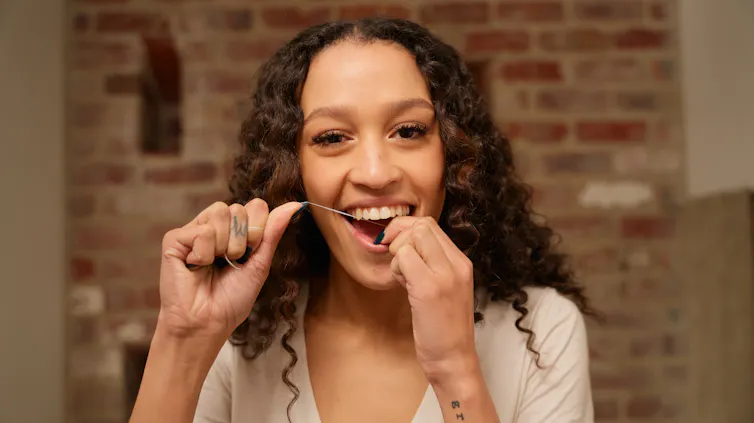
Our research, which drew on data from more than 2,600 people, showed habit-building interventions can make a real difference across a range of behaviours – from flossing and healthy eating to regular exercise.
But what stood out most was that even small, everyday actions can grow into powerful routines, when repeated consistently. It’s not about overhauling your life overnight, but about steadily reinforcing behaviours until they become second nature.
8 tips for building lasting habits
If you’re looking to build a new habit, here are some science-backed tips to help them stick:
- Give it time. Aim for consistency over 60 days. It’s not about perfection – missing a day won’t reset the clock.
- Make it easy. Start small. Choose a behaviour you can realistically repeat daily.
- Attach your new habit to an existing routine. That is, make the new habit easier to remember by linking it to something you already do – such as flossing right before you brush your teeth.
- Track your progress. Use a calendar or app to tick off each successful day.
- Build in rewards, for example making a special coffee after a morning walk or watching an episode of your favourite show after a week of consistent workouts. Positive emotions help habits stick, so celebrate small wins.
- Morning is best. Habits practised in the morning tend to form more reliably than those attempted at night. This may be because people typically have more motivation and fewer distractions earlier in the day, making it easier to stick to new routines before daily demands build up.
- Personal choice boosts success. People are more likely to stick with habits they choose themselves.
- Repetition in a stable context is key. Performing the same behaviour in the same situation (such as walking right after lunch each day) increases the chances it will become automatic.

Why the 21-day myth matters
Believing habits form in 21 days sets many people up to fail. When change doesn’t “click” within three weeks, it’s easy to feel like you’re doing something wrong. This can lead to frustration, guilt and giving up entirely.
By contrast, understanding the real timeline can help you stay motivated when things feel slow.
Evidence shows habit formation usually takes at least two months, and sometimes longer. But it also shows change is possible.
Our research and other evidence confirm that repeated, intentional actions in stable contexts really do become automatic. Over time, new behaviours can feel effortless and deeply ingrained.
So whether you’re trying to move more, eat better, or improve your sleep, the key isn’t speed – it’s consistency. Stick with it. With time, the habit will stick with you.
Ben Singh, Research Fellow, Allied Health & Human Performance, University of South Australia and Ashleigh E. Smith, Associate Professor, Healthy Ageing, University of South Australia
This article is republished from The Conversation under a Creative Commons license. Read the original article.
Don’t Forget…
Did you arrive here from our newsletter? Don’t forget to return to the email to continue learning!

Recommended
Learn to Age Gracefully
Join the 98k+ American women taking control of their health & aging with our 100% free (and fun!) daily emails:
-
Cannabinoid products may reduce total sleep time in adults with insomnia
10almonds is reader-supported. We may, at no cost to you, receive a portion of sales if you purchase a product through a link in this article.
You might have heard cannabis and cannabinoid products can help people sleep. Data shows one of the top reasons people use cannabis is to help them sleep.
But there’s a dearth of high-quality research on how medicinal cannabis products actually affect sleep.
To find out more, our research team conducted a small pilot study involving 20 people. We wanted to compare how they slept after using a medicinal cannabis product, compared to a placebo.
The results of the study, published today in the Journal of Sleep Research, surprised us.
We found a single oral dose of a cannabinoid product decreased total sleep time and the time spent in REM sleep (rapid eye movement, which is when we tend to dream). We didn’t observe any change in objective alertness the day after the treatment.
Our study is small and only measured the effect of a single dose, so more research is clearly needed.
But overall, our findings suggest cannabinoids may acutely influence sleep, primarily by suppressing REM sleep, without noticeable next-day impairment.
Lysenko Andrii/Shutterstock What we did
All 20 people (16 of whom were female) involved in our study had a clinical diagnosis of insomnia disorder.
This means they reported having challenges falling asleep and/or maintaining sleep and that these disturbances impact day-to-day functioning socially, at work, or in other important areas of life.
The average age of our study participants was about 46 years.
At our lab, the study participants were interviewed by a doctor and had their medical history taken. All participants also underwent an overnight diagnostic sleep study. This was done to confirm their sleeplessness was truly insomnia and not other conditions such as sleep apnoea.
Once the participant was able to start the study, they were asked to sleep for two nights at our lab, with at least one week between those two visits.
On one of their visits, they were given a placebo.
On the other, they were given a single oral dose of a medical-grade cannabis oil containing 10 mg THC (tetrahydrocannabinol, the compound responsible for the psychoactive effects of cannabis) and 200 mg CBD (cannabidiol, which does not produce a “high”).
Using a product with a precise, known dose ensures the results are relevant to what doctors in Australia are already prescribing.
The order in which participants received either the treatment or the placebo was randomised, so they didn’t know which one they were taking.
After taking either the treatment or the placebo, they slept at our lab while wearing a special cap with 256 monitors on it. This high-density electroencephalogram or EEG allowed us to record the electrical activity of the brain while the person slept.
The next morning, after they either woke or were woken, they performed a driving simulation test around the time of their normal morning commute.
They also underwent a test that assessed their ability to stay awake in a quiet, dimly lit environment. To track their alertness throughout the day, they repeated this test four times while wearing the high-density EEG cap. This was so we could test their alertness the day after either the treatment or the placebo.
What we found
Our results were not what we expected.
We found the THC/CBD treatment decreased total sleep time by an average of 24.5 minutes. This was largely driven by a significant impact on REM sleep (the phase associated with dreaming), which not only decreased by an average of 33.9 minutes but also took significantly longer for participants to enter. The treatment also offered no benefit in helping participants stay asleep throughout the night.
Perhaps most intriguingly, this objective worsening of sleep wasn’t reflected in the participants’ own perceptions; they reported no change in their subjective sleep quality. This disconnect continued into the next day.
While participants noted feeling slightly more sleepy after the treatment, their objective alertness – measured by their ability to stay awake in a quiet, dimly lit room – was reassuringly unchanged, as was their cognitive and simulated driving performance.
This leads to a crucial question: if a single dose produces these changes, what are the cumulative effects on a person’s sleep after weeks, months, or years of nightly use?
We simply don’t have the answers yet, especially with a medical-grade cannabis product.
A growing body of research
Our findings underscore a significant gap between the widespread public perception of cannabis for sleep and the complex scientific reality. As highlighted by a review we published in the journal Current Psychiatry Reports, the evidence base remains thin.
We reviewed 21 recent studies (published between 2021 and 2024) of cannabinoids being used for insomnia, subjective sleep impairment, obstructive sleep apnoea, rapid eye movement sleep behaviour disorder, and restless legs syndrome.
We found that, despite its widespread use, there’s not enough research yet to support the use of medical cannabis to treat sleep disorders.
This is why this kind of research is so vital. It provides the first pieces of a much larger puzzle.
To give doctors and patients the clear guidance they need, there is an urgent need for adequately funded, well-designed clinical trials with larger sample sizes and longer treatment durations to truly understand the long-term impacts of medicinal cannabis on sleep and daytime functioning.
Camilla Hoyos, Senior Lecturer in the Centre for Sleep and Chronobiology, Macquarie University and Anastasia Suraev, Senior Research Fellow, Healthy Brain Ageing Program, Brain and Mind Centre, University of Sydney
This article is republished from The Conversation under a Creative Commons license. Read the original article.
Share This Post
-
Osteoporosis & Exercises: Which To Do (And Which To Avoid)
10almonds is reader-supported. We may, at no cost to you, receive a portion of sales if you purchase a product through a link in this article.
It’s Q&A Day at 10almonds!
Have a question or a request? You can always hit “reply” to any of our emails, or use the feedback widget at the bottom!
In cases where we’ve already covered something, we might link to what we wrote before, but will always be happy to revisit any of our topics again in the future too—there’s always more to say!
As ever: if the question/request can be answered briefly, we’ll do it here in our Q&A Thursday edition. If not, we’ll make a main feature of it shortly afterwards!
So, no question/request too big or small
❝Any idea about the latest research on the most effective exercises for osteoporosis?❞
While there isn’t much new of late in this regard, there is plenty of research!
First, what you might want to avoid:
- Sit-ups, and other exercises with a lot of repeated spinal flexion
- Running, and other high-impact exercises
- Skiing, horse-riding, and other activities with a high risk of falling
- Golf and tennis (both disproportionately likely to result in injuries to wrists, elbows, and knees)
Next, what you might want to bear in mind:
While in principle resistance training is good for building strong bones, good form becomes all the more important if you have osteoporosis, so consider working with a trainer if you’re not 100% certain you know what you’re doing:
Some of the best exercises for osteoporosis are isometric exercises:
5 Isometric Exercises for Osteoporosis (with textual explanations and illustrative GIFs)
You might also like this bone-strengthening exercise routine from corrective exercise specialist Kendra Fitzgerald:
Enjoy!
Share This Post
-
Blueberries vs Cranberries – Which is Healthier?
10almonds is reader-supported. We may, at no cost to you, receive a portion of sales if you purchase a product through a link in this article.
Our Verdict
When comparing blueberries to cranberries, we picked the blueberries.
Why?
It’s close!
In terms of macros, blueberries have slightly more protein and carbs, while cranberries have slightly more fiber. We say the extra fiber’s more important than the (even more minimally) extra protein, so this is the slightest of marginal wins for cranberries in this category.
In the category of vitamins,blueberries have much more of vitamins B1, B2, B3, B9, and K, while cranberries have slightly more of vitamins A, B5, B6, C, and E. That’s a 5:5 tie, but the margins of difference are much greater for blueberries’ vitamins, breaking the tie compellingly in blueberries’ favor.
When it comes to minerals,blueberries have slightly more iron, manganese, phosphorus, and zinc, while cranberries have slightly more calcium. The margins of difference are small in both cases, but this is a 4:1 win for blueberries.
Both of these berries are famously full of antioxidants; blueberries have far more polyphenols and thus more antioxidant power overall, though cranberries have some specific benefits such as being better than antibiotics against UTIs—though there are some contraindications too (e.g. increased risk of kidney stones, so a bad idea if you have kidney problems); check out the link below for more on that!
Adding up the sections here makes for a modest win for blueberries, but by all means, enjoy either or both (unless one of the contraindications applies to you).
Want to learn more?
You might like to read:
Health Benefits Of Cranberries (But: You’d Better Watch Out)
Take care!
Share This Post
Related Posts
-
How Sprinting Changes Your Body (Once Per Week Is Sufficient)
10almonds is reader-supported. We may, at no cost to you, receive a portion of sales if you purchase a product through a link in this article.
Sprinting is often thought of as a pursuit of the young, but it can bring particularly important health benefits in later life:
And… Go!
Sprinting once per week can drastically improve health and fitness as we age. Specifically, it offers benefits some of which are unique to sprinting:
- Enhances range of motion and resilience.
- Burns 200 kcal in 2.5 minutes
- Boosts daily calorie burn by up to 950 kcal*
- Reduces cognitive decline and supports brain health.
- Builds bone density, especially in the tibia, but everywhere upwards from the tibia too.
*this is specific to sprinting, be it a running sprint or other kind of sprint (e.g. cycling, swimming, etc), and is a topic we’ve explored a lot in the category of high-intensity interval training (HIIT). In short, HIIT “confuses” the heart in a good way, which results in a sustained metabolic increase to meet the perceived needs (i.e. the body thinks “we might have to suddenly sprint again any minute, so let’s stay ready for that”), instead of the post-exercise metabolic compensatory slump that occurs after longer exercise sessions (e.g. endurance training). Note that if you sprint, once, that’s basically just a single interval of HIIT, and has the same benefits as such. Of course, if you do more intervals, you’ll get more benefits, but the point is that one interval is already doing your body good.
For more on all of this plus illustrative examples, enjoy:
Click Here If The Embedded Video Doesn’t Load Automatically!
Want to learn more?
You might also like:
How To Do HIIT (Without Wrecking Your Body)
Take care!
Don’t Forget…
Did you arrive here from our newsletter? Don’t forget to return to the email to continue learning!
Learn to Age Gracefully
Join the 98k+ American women taking control of their health & aging with our 100% free (and fun!) daily emails:
-
Spelt vs Bulgur – Which is Healthier?
10almonds is reader-supported. We may, at no cost to you, receive a portion of sales if you purchase a product through a link in this article.
Our Verdict
When comparing spelt to bulgur, we picked the spelt.
Why?
An argument could be made for bulgur, but we say spelt comes out on top. Speaking of “sorting the wheat from the chaff”, be aware: spelt is a hulled wheat product and bulgur is a cracked wheat product.
Looking at macros first, it’s not surprising therefore that spelt has proportionally more carbs and bulgur has proportionally more fiber, resulting in a slightly lower glycemic index. That said, for the exact same reason, spelt is proportionally higher in protein. Still, fiber is usually the most health-relevant aspect in the macros category, so we’re going to call this a moderate win for bulgur.
When it comes to micronutrients, however, spelt is doing a lot better:
In the category of vitamins, spelt is higher in vitamins A, B1, B2, B3, and E (with the difference in E being 26x more!), while bulgur is higher only in vitamin B9 (and that, only slightly). A clear win for spelt here.
Nor are the mineral contents less polarized; spelt has more copper, iron, magnesium, manganese, phosphorus, potassium, selenium, and zinc, while bulgur is not higher in any minerals. Another easy win for spelt.
Adding these up makes a win for spelt, but again we’d urge to not underestimate the importance of fiber. Enjoy both in moderation, unless you are avoiding wheat/gluten in which case don’t, and for almost everyone, mixed whole grains are always going to be best.
Want to learn more?
You might like to read:
- Grains: Bread Of Life, Or Cereal Killer?
- Gluten: What’s The Truth?
- Why You’re Probably Not Getting Enough Fiber (And How To Fix It)
Take care!
Don’t Forget…
Did you arrive here from our newsletter? Don’t forget to return to the email to continue learning!
Learn to Age Gracefully
Join the 98k+ American women taking control of their health & aging with our 100% free (and fun!) daily emails:
-
How To Reduce Cortisol Levels Naturally
10almonds is reader-supported. We may, at no cost to you, receive a portion of sales if you purchase a product through a link in this article.
Cortisol is a hormone that is important for us (we’d struggle to get up in the morning without it, for a start), but in this modern world we often have too much of it, too much of the time. How can we rebalance it? Dr. Mindy Pelz explains:
Lifestyle adjustments
A note in advance: the video makes frequent reference to things that “spike cortisol levels”, but this is probably intended as a stand-in for “raise cortisol levels”. Because, unlike for some things, in the case of cortisol, spikes aren’t usually a problem (indeed, they can be beneficial, and this is a large part of why cold showers and ice baths can be healthy; it’s an artificially induced cortisol spike, and this hormesis has an assortment of healthy benefits, each related to improving our body’s ability to switch quickly between states as appropriate); rather, it’s chronically high cortisol levels that are the problem. However, the video discusses things that can increase resting cortisol levels, so where she says “spike”, we suggest to read “raise”.
Dr. Pelz, an advocate of intermittent fasting, mentions that done incorrectly and/or for the same way for too long, fasting can raise cortisol levels and thus sabotage our efforts—so varying our fasting style can help avoid that. For example, 16:8, 5:2, longer fasts less frequently, etc.
On the topic of food, she also warns us of the dangers of ultra-processed food, harmful oils, and foods with added sugar, as these can all raise cortisol levels.
When it comes to exercise, she notes that intense exercise without adequate recovery can raise cortisol levels, so again it’s good to mix up one’s methods, vary one’s exercise routine, and allow each well-worked muscle-group adequate rest afterwards.
Dr. Pelz also talks mindset, and has her own interesting way of framing the well-established science that chronic stress means chronically high stress hormone (cortisol) levels; Dr. Pelz prefers to see it as negative vs positive thoughts, environments, etc.
Any discussion of cortisol management would be incomplete without discussing the importance of good quality sleep. Dr. Pelz doesn’t mention this at all in her video, but it’s important to bear in mind too!
Click Here If The Embedded Video Doesn’t Load Automatically!
Want to learn more?
You might also like to read:
Lower Your Cortisol! (Here’s Why & How)
Take care!
Don’t Forget…
Did you arrive here from our newsletter? Don’t forget to return to the email to continue learning!
Learn to Age Gracefully
Join the 98k+ American women taking control of their health & aging with our 100% free (and fun!) daily emails:


