
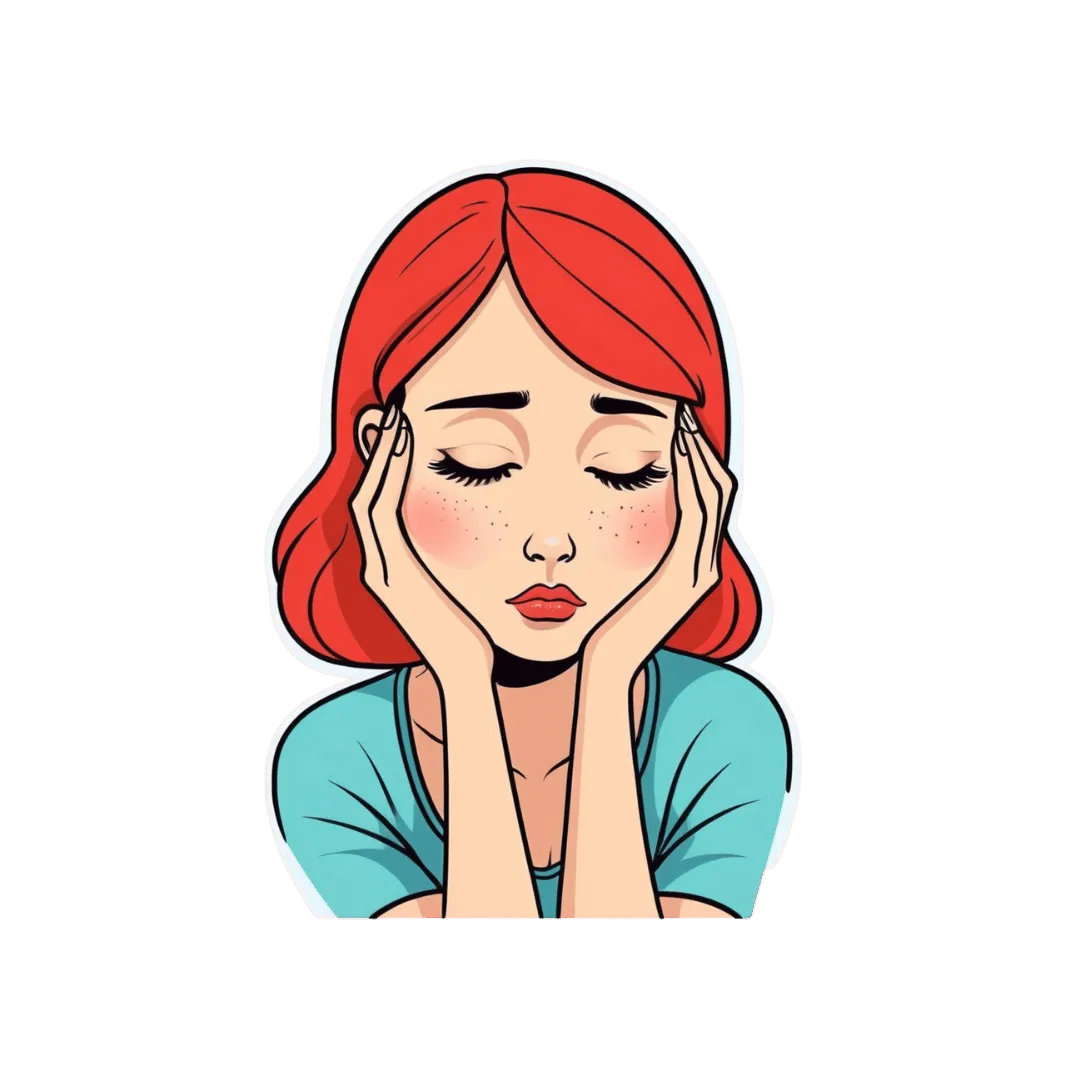
Exploding head syndrome: the surprisingly common condition with a terrifying name
10almonds is reader-supported. We may, at no cost to you, receive a portion of sales if you purchase a product through a link in this article.
Have you ever been drifting off to sleep when suddenly you hear what sounds like a gunshot, a door slamming, or an explosion inside your head? You jolt awake, heart pounding, sit upright in bed, but the room is silent.
Nothing has happened – but it felt very real.
This experience has a dramatic name: exploding head syndrome.
Despite the alarming name, it’s not dangerous, not painful, and not a sign something is wrong with the brain.
What is it?
Exploding head syndrome is a type of sleep disorder known as a parasomnia.
Parasomnias are unusual experiences that occur while sleeping or during transitions between sleep and wakefulness.
In exploding head syndrome, a person “hears” a sudden noise that seem to originate from deep inside the head. It’s a sensory perception generated by the brain rather than an external sound.
It typically occurs when drifting in or out of sleep, most commonly when a person is drowsy and about to fall asleep.
People commonly describe a sudden bang or loud metallic noise, gunshots, an explosion, crashing waves, buzzing electricity, a door slamming, or fireworks.
Exploding head syndrome can be intensely frightening. The loud noise may be accompanied by other sensations, including a brief stab of pain in the head (though it’s normally painless), flashes of light, out-of-body sensations, or the sensation of electricity coursing through the body.
The episode only lasts for a split second or a few seconds, and typically disappears completely once the person wakes up. Some people experience only a single episode, while others may have occasional episodes or brief clusters before the condition settles.
Because the experience is so sudden and unusual, many fear they’ve had a stroke or seizure, or that something catastrophic has happened. Others interpret it as a supernatural or ominous event.
The distress is caused not by pain, but by confusion and the body’s alarm response. The brain is partially awake, disoriented, and briefly activates the fight-or-flight system.
What causes it?
We don’t know the exact cause, but researchers have proposed several theories.
Because episodes occur during the transition into and out of sleep, they may be related to the same processes that produce what are known as hypnagogic hallucinations (vivid sensory experiences you can get while falling asleep).
As we fall asleep, different parts of the brain gradually switch off in a coordinated sequence.
In exploding head syndrome, that process may be linked to the shutting down of neural systems that inhibit auditory sensory processing. Your brain may end up interpreting this as a loud sound.
A related theory proposes a brief reduction in activity of the brainstem, particularly the reticular activating system (which is involved in regulating transitions between wakefulness and sleep).
Exploding head syndrome typically does not involve pain, and is therefore different from headaches and migraines.
The syndrome’s distinct features also makes epilepsy an unlikely explanation for most people.
How common is it?
Exploding head syndrome is more common than you may think.
It occurs in at least 10% of the population, and around 30% of people will experience it at least once in their lifetime.
It can occur at any age, often after the age of 50. It may be slightly more common in women, but we don’t know why.
Exploding head syndrome is more likely in people who have other sleep disturbances, such as insomnia or sleep paralysis.
It is also associated with:
- being more stressed or emotionally tense than usual
- anxiety
- disrupted sleep patterns or poor sleep associated with daytime tiredness.
How is it treated?
Exploding head syndrome is harmless and not a sign of a serious brain problem. Episodes are usually brief, and may occur sporadically or in brief clusters before resolving on their own.
Once people are reassured the condition is not harmful and not a sign of brain damage or serious disease, episodes may become less frightening and frequent.
Medications are considered if episodes are frequent and very distressing but there haven’t been any large clinical trials that can guide treatment. Some sufferers have benefited from medications such as such as clomipramine but the evidence is limited, and more research is needed.
More commonly, treatment consists of reassurance and improving sleep habits. Some people report that addressing sleep problems such as insomnia, reducing tiredness and practising mindfulness and breathing techniques can help.
Generally harmless
In 1619 French philosopher René Descartes described having three dreams he regarded as a sign of divine revelation. In one, he heard a loud sound and saw a bright flash of light when he woke up. Some researchers have suggested what he was really experiencing was exploding head syndrome.
Despite its dramatic name, exploding head syndrome is harmless. For many people, the most effective intervention is understanding what it is – and knowing that it is not dangerous.
Although it is generally harmless, you should seek medical advice if episodes occur frequently, impact on your quality of life or are causing distress. Consult a doctor if they are painful, or associated with seizures, prolonged confusion, loss of consciousness or severe headache.
Flavie Waters, Research Professor, School of Psychological Science, The University of Western Australia
This article is republished from The Conversation under a Creative Commons license. Read the original article.
Don’t Forget…
Did you arrive here from our newsletter? Don’t forget to return to the email to continue learning!
Recommended
Learn to Age Gracefully
Join the 98k+ American women taking control of their health & aging with our 100% free (and fun!) daily emails:
-
Avoiding Anemia (More Than Just “Get More Iron”)
10almonds is reader-supported. We may, at no cost to you, receive a portion of sales if you purchase a product through a link in this article.
The Iron Dilemma: Factors To Consider
Anemia affects around 10% of American seniors, and that number jumps to 34–39% if there’s a comorbidity such as diabetes, hypertension, or hypercholesterolemia, which in turn climbs with increasing age or with other chronic conditions:
So, what can we do about it?
Get iron yes, but how?
We’d be remiss not to say: yes, do of course make sure you get plenty of iron.
Most people know that red meats, which are terrible for the heart and for cancer risk, are good sources of iron.
Well, good insofar as they provide plenty of it! They’re bad for other reasons.
❝Studies consistently show that consumption of red meat has been contributory to a multitude of chronic conditions such as diabetes, CVD, and malignancies.
There are various emerging reasons that strengthen this link-from the basic constituents of red meat like the heme iron component, the metabolic reactions that take place after consumption, and finally to the methods used to cook it.
The causative links show that even occasional use raises the risk of T2DM.❞
Source: Red Meat Consumption (Heme Iron Intake) and Risk for Diabetes and Comorbidities?
To heme or not to heme
Did you catch that in the middle there, about the heme iron component?
Dietary iron is broadly divided into two kinds: heme, and non-heme.
- Heme iron comes from animals
- Non-heme iron comes from plants
Bad news for vegans: non-heme iron is not so easily absorbed as heme iron.
This means that if you’re just eating plants, the RDA may be significantly lowballing the amount actually required. As a rule, about 1.8x more iron may be needed for vegans, to compensate for it being less easily absorbed.
Why this happens: it’s because of the phytic acid / phytate in the plants that contain the iron, blocking its absorption.
Good news for vegans: however, taking iron with vitamin C increases its absorption rate by about 5x better absorption, and several other side-along nutrients do similarly, including allium (from garlic), carotenoids (from many colorful plants), and fermented foods.
Why this happens: it’s because they bind with similar sites as phytic acid, without causing the same effect. To make a metaphor: these foods steal phytic acid’s parking space, so phytic acid can’t do its iron-blocking thing.
By happy coincidence, today’s featured recipe has all of these things in, by the way (vitamin C, allium, carotenoids, and fermented foods), and the star ingredient (fava beans) is a rich source of iron.
What are good sources of iron, then?
In the category of plants:
- Beans (pick your favorites / eat a variety)
- Lentils (pick your favorites / eat a variety)
- Greens (especially dark leafy greens)
- Apricots (you can get these dried, for convenience!)
- Dark chocolate (5mg per 1oz square!)*
*Ok, technically dark chocolate is not a plant; cacao is a plant; dark chocolate is usually plant-based, though, as there is no reason to add milk.
In the category of dairy products:
That’s not a publication error; dairy products are just not great for iron. Cheeses are more nutrient-dense than milk, and have less than 0.5mg per oz, in other words, the top dairy product has around 10x less iron than dark chocolate, which came in 5th place and let’s face it, we were doing broad categories there. If we listed all the beans, lentils, greens, etc it’d be a much longer list.
Eggs, which are sometimes considered under the category of dairy by virtue of not being an animal (yet!) but an animal product, have around 1mg per egg, by the way, so considering eggs are nearer 2oz, that’s not much better than the cheese.
“But what about if…”
The above is good science and general good advice for most people. That said, some people may have conditions that preclude the foods we recommended, or have other considerations, and so things may be different. Anemia can sometimes be caused by things that can’t be fixed by diet (beyond the scope of today’s article; another time, perhaps), but for example, if you have leukemia then definitely discuss things with your doctors first. Other illnesses, and some medications, can also have troublesome effects that can contribute to anemia. Again, we can offer very good general information here, but we don’t know your medical history, and our standard legal/medical disclaimer applies as always.
See also: Do We Need Animal Products To Be Healthy?
Take care!
Share This Post
-
Thinking about acupuncture or herbs for menopause? Read this first
10almonds is reader-supported. We may, at no cost to you, receive a portion of sales if you purchase a product through a link in this article.
Hot flushes, night sweats or swinging mood changes are some of the most common symptoms of menopause – the stage of a woman’s life when menstrual periods stop permanently, and she is no longer fertile.
Some women choose to ride out the symptoms. Some choose hormone replacement therapy (HRT), also known as menopausal hormone therapy or MHT. This contains oestrogen, progesterone or combined therapies. Others use complementary therapies.
But do complementary therapies such as acupuncture and herbal medicines actually help?
Westend61/Getty Remind me, what’s going on with menopause?
Menopause is a normal part of ageing, as is the menopausal transition (or perimenopause), which occurs for several years before it. Some women’s periods stop earlier than others. But most women become menopausal naturally between the ages of 45 and 55.
During menopause, women often have a range of symptoms. These can include hot flushes, night sweats, mood swings, joint discomfort, sleep disturbances, decreased libido, headache or migraine, cardiometabolic disturbances (such as high blood pressure), weight gain, and loss of bone mineral density.
These symptoms can be distressing and can affect women’s quality of life.
Why complementary therapies?
Some women prefer to use complementary therapies alongside conventional treatment, or instead of it, due to side effects of menopausal hormone therapy.
Other women cannot use MHT because of other medical conditions, such as breast cancer.
But what does the evidence say about complementary therapies used in menopause?
Earlier this year, we and our colleagues published a large review to draw together the evidence. We analysed 158 clinical trials and systematic reviews conducted in women over 40. These studies looked at 86 complementary therapies, such as acupuncture, Chinese herbal medicine, vitamin and nutrient supplements, and mind-body approaches.
Most studies were of low or very low quality. This could be because they included a small number of participants, were not double-blinded (when neither the participants nor the researchers knew which people were given which therapy) and sometimes did not use placebos.
So clinicians don’t have sufficient evidence to recommend them.
Now, the detail
Most studies in the review asked women to report the frequency and severity of their symptoms. Some used questionnaires covering a range of symptoms to give an overall menopause score. Others just asked about hot flushes.
Here are some of the findings.
Black cohosh is a flowering plant that improves overall menopausal scores, and hot flushes. Studies found benefits when taken from four to 52 weeks. Women took different products containing black cohosh, on its own or with other herbs. None of these studies reported serious side effects.
Isoflavones also known as phytoestrogens are found in soy and other legumes, and mimic oestrogen in the body. Soy-derived isoflavones improve hot flushes as well as overall menopausal scores. However in the same study, red clover-derived isoflavones did not reduce hot flushes. Side effects to isoflavones are generally mild and improve quickly without needing medical intervention.
Our ability to make vitamin D from sunlight reduces as we get older. In women, this decline starts at about the same time as menopause. For reducing the risk of fracture, women who have diagnosed osteoporosis need to take 800 IU (international units) vitamin D and 1,200 milligram calcium daily under medical supervision. But vitamin D plus calcium are not recommended to women without osteoporosis and without low vitamin D levels. This is because long-term use (over seven years) may increase the risk of cardiovascular disease (such as a heart attack).
Chinese herbal medicines can be combinations of multiple herbs (often between five and 20) in a formula. Seventy studies, using a variety of formulas, showed taking Chinese herbal medicines for seven days to three months improved menopausal scores and sleep quality. The most common formula was Suan Zao Ren Tang. Short-term use (up to a year) appears to be safe, but there are no studies looking at its longer-term use.
Another meta-analysis on Chinese herbal medicines using Rehmannia as the main herb found 17 studies. When taken for two weeks to three months there was an improvement in overall menopausal scores. No adverse events were reported.
Acupuncture comes in several forms and you can have it with and without other therapies. We found no evidence to recommend regular acupuncture for hot flushes. Acupuncture with Chinese herbal medicines improves sleep quality, but only in perimenopausal women with insomnia. Electro-acupunture is a form of acupuncture that passes a gentle current between two needles into your skin. It improves hot flushes.
In summary, most treatments included in our review did not show enough evidence to be able to recommend them clinically. Complementary therapies including soy-isoflavones, vitamin D, black cohosh and Chinese herbal medicine may help some menopausal symptoms, but more high-quality research is needed to understand how effective and safe these treatments truly are.
So what should I do?
The International Menopause Society recommends that if women in midlife choose complementary therapies, these should be alongside MHT.
So always talk to your GP about your plans, and only consider using the complementary therapies that have good evidence for the symptoms you currently have. Your GP can help you think about the risks and benefits for you, and help you make a decision based on the best available scientific evidence.
A healthy lifestyle – including eating well, staying active, looking after your mental wellbeing, getting restorative sleep, maintaining healthy relationships, and avoiding drugs and alcohol – are all important in menopause care.
These are linked with benefits including fewer hot flushes, a healthier weight, a lower risk of heart disease and diabetes, and a lower risk of falls and fractures.
Complementary therapies should not replace these fundamental lifestyle habits.
Correction: the original version of this article incorrectly suggested MHT might not be suitable for women at risk of thromboembolism.
Evangeline Mantzioris, Program Director of Nutrition and Food Sciences, Accredited Practising Dietitian, Adelaide University ; Alison Maunder, Postdoctoral Research Fellow, National Institute of Complementary Medicine, Western Sydney University, and Carolyn Ee, Associate Professor, Cancer Survivorship and Primary Care, Caring Futures Institute, Flinders University; Western Sydney University
This article is republished from The Conversation under a Creative Commons license. Read the original article.
Share This Post
-
Brown Rice vs Russet Potatoes – Which is Healthier?
10almonds is reader-supported. We may, at no cost to you, receive a portion of sales if you purchase a product through a link in this article.
Our Verdict
When comparing brown rice to russet potatoes, we picked the rice.
Why?
First we’ll note: for brevity and to avoid undue repetitiveness, we’re henceforth going to just say “rice” and “potato”, respectively, but values and conclusions are still for brown rice and russet potatoes. Also, we are including the flesh and skin into the metrics for the potato (without the skin, many nutrients are no longer present).
In terms of macros, the rice has more fiber, carbs, and protein. It’s difficult to compare glycemic indices in this case, because they both need cooking before eating, and how one cooks them (and whether one cools them) along with other preparatory methods will change the GI considerably. Thus, we’ll simply go with the more nutritionally dense option, and that’s the rice.
In the category of vitamins, the rice has much more of vitamins B1, B2, B3, B5, B6, B7, B9, E, and choline, while the potato has more of vitamins C and K. A clear win for rice (and by the way, that’s 60x the vitamin E, but as potatoes don’t have much vitamin E, in practical terms, it’s actually the B-vitamins where rice’s strengths really show, as potatoes aren’t a bad source but rice is amazing).
When it comes to minerals, rice has a lot more copper, iron, magnesium, manganese, phosphorus, selenium, and zinc, while potato has more calcium and potassium. Another easy win for rice.
You may be wondering about phytic acid: brown rice contains this by default, and it is something of an antinutrient (i.e., if left as-is, it reduces the bioavailability of other nutrients), and/but the phytic acid content is reduced to negligible by two things: soaking and heating (especially if those two things are combined) ← doing this the way described results in bioavailability of nutrients that’s even better than if there were just no phytic acid, albeit it requires you having the time to soak, and do so at temperature.
All in all, adding up the sections makes for an overall win for brown rice, but by all means enjoy either or both; diversity is good!
Want to learn more?
You might like:
Carb-Strong or Carb-Wrong? Should You Go Light Or Heavy On Carbs?
Enjoy!
Share This Post
Related Posts
-
At The Heart Of Women’s Health
10almonds is reader-supported. We may, at no cost to you, receive a portion of sales if you purchase a product through a link in this article.
A woman’s heart is a particular thing
For the longest time (and still to a large degree now), “women’s health” is assumed to refer to the health of organs found under a bikini. But there’s a lot more to it than that. We are whole people, with such things as brains and hearts and more.
Today (Valentine’s Day!) we’re focusing on the heart.
A quick recap:
We’ve talked previously about some of these sex differences when it comes to the heart, for example:
Heart Attack: His & Hers (Be Prepared!)
…but that’s fairly common knowledge at least amongst those who are attentive to such things, whereas…
…is much less common knowledge, especially with the ways statins are more likely to make things worse for a lot of women (not all though; see the article for some nuance about that).
We also talked about:
What Menopause Does To The Heart
…which is well worth reading too!
A question:
Why are women twice as likely to die from a heart attack as their age-equivalent male peers? Women develop heart disease later, but die from it sooner. Why is that?
That’s been a question scientists have been asking (and tentatively answering, as scientists do—hypotheses, theories, conclusions even sometimes) for 20 years now. Likely contributing factors include:
- A lack of public knowledge of the different symptoms
- A lack of confidence of bystanders to perform CPR on a woman
- A lack of public knowledge (including amongst prescribers) about the sex-related differences for statins
- A lack of women in cardiology, comparatively.
- A lack of attention to it, simply. Men get heart disease earlier, so it’s thought of as a “man thing”, by health providers as much as by individuals. Men get more regular cardiovascular check-ups, women get a mammogram and go.
Statistically, women are much more likely to die from heart disease than breast cancer:
- Breast cancer kills around 0.02% of us.
- Heart disease kills one in three.
And yet…
❝In a nationwide survey, only 22% of primary care doctors and 42% of cardiologists said they feel extremely well prepared to assess cardiovascular risks in women.
We are lagging in implementing risk prevention guidelines for women.
A lot of women are being told to just watch their cholesterol levels and see their doctor in a year. That’s a year of delayed care.❞
Source: The slowly evolving truth about heart disease and women
(there’s a lot more in that article than we have room for in ours, so do check it out!)
Some good news:
The “bystanders less likely to feel confident performing CPR on a woman” aspect may be helped by the deployment of new automatic external defibrillator, that works from four sides instead of one.
It’s called “double sequential external defibrillation”, and you can learn about it here:
A new emergency procedure for cardiac arrests aims to save more lives—here’s how it works
(it’s in use already in Canada and Aotearoa)
Gentlemen-readers, thank you for your attention to this one even if it was mostly not about you! Maybe someone you love will benefit from being aware of this
On a lighter note…
Since it’s Valentine’s Day, a little more on affairs of the heart…
Is chocolate good for the heart? And is it really an aphrodisiac?
We answered these questions and more in our previous main feature:
Chocolate & Health: Fact or Fiction?
Enjoy!
Don’t Forget…
Did you arrive here from our newsletter? Don’t forget to return to the email to continue learning!
Learn to Age Gracefully
Join the 98k+ American women taking control of their health & aging with our 100% free (and fun!) daily emails:
-
Brazil Nuts vs Hazelnuts – Which is Healthier?
10almonds is reader-supported. We may, at no cost to you, receive a portion of sales if you purchase a product through a link in this article.
Our Verdict
When comparing Brazil nuts to hazelnuts, we picked the hazelnuts.
Why?
In terms of macros, Brazil nuts have more fats (including more omega-3, and/but also including more saturated fat) while hazelnuts have more fiber, carbs, and protein. So, which one wins this round is a little subjective; we’d say it’s the fiber for hazelnuts that cinch it, but we could also reasonably declare this round a tie.
In the category of vitamins, Brazil nuts are not higher in any vitamins, while hazelnuts are higher in vitamins A, B1, B2, B3, B5, B6, B7, B9, C, E, K, and choline. And the margins of difference are large in most cases. An easy win for hazelnuts here.
When it comes to minerals, things get interesting: Brazil nuts have more calcium, magnesium, phosphorus, and selenium, while hazelnuts have more iron, manganese, and potassium, but!
Before we crown Brazil nuts with a 4:3 win in this category, though, let’s take a closer look at those selenium levels:
- A cup of hazelnuts contains 13% of the RDA of selenium. Your hair will be luscious and shiny.
- A cup of Brazil nuts contains 10,456% of the RDA of selenium. This is way past the point of selenium toxicity, and your (luscious, shiny) hair will fall out.
For this reason, it’s recommended to eat no more than 3–4 Brazil nuts per day.
We consider that a point against Brazil nuts.
Adding up the sections makes for an overall win for hazelnuts, but by all means enjoy either or both, we just recommend to practise moderation when it comes to the Brazil nuts!
Want to learn more?
You might like:
Why You Should Diversify Your Nuts
Enjoy!
Don’t Forget…
Did you arrive here from our newsletter? Don’t forget to return to the email to continue learning!
Learn to Age Gracefully
Join the 98k+ American women taking control of their health & aging with our 100% free (and fun!) daily emails:
-
MSG vs. Salt: Sodium Comparison
10almonds is reader-supported. We may, at no cost to you, receive a portion of sales if you purchase a product through a link in this article.
It’s Q&A Day at 10almonds!
Q: Is MSG healthier than salt in terms of sodium content or is it the same or worse?
Great question, and for that matter, MSG itself is a great topic for another day. But your actual question, we can readily answer here and now:
- Firstly, by “salt” we’re assuming from context that you mean sodium chloride.
- Both salt and MSG do contain sodium. However…
- MSG contains only about a third of the sodium that salt does, gram-for-gram.
- It’s still wise to be mindful of it, though. Same with sodium in other ingredients!
- Baking soda contains about twice as much sodium, gram for gram, as MSG.
Wondering why this happens?
Salt (sodium chloride, NaCl) is equal parts sodium and chlorine, by atom count, but sodium’s atomic mass is lower than chlorine’s, so 100g of salt contains only 39.34g of sodium.
Baking soda (sodium bicarbonate, NaHCO₃) is one part sodium for one part hydrogen, one part carbon, and three parts oxygen. Taking each of their diverse atomic masses into account, we see that 100g of baking soda contains 27.4g sodium.
MSG (monosodium glutamate, C₅H₈NO₄Na) is only one part sodium for 5 parts carbon, 8 parts hydrogen, 1 part nitrogen, and 4 parts oxygen… And all those other atoms put together weigh a lot (comparatively), so 100g of MSG contains only 12.28g sodium.
Don’t Forget…
Did you arrive here from our newsletter? Don’t forget to return to the email to continue learning!
Learn to Age Gracefully
Join the 98k+ American women taking control of their health & aging with our 100% free (and fun!) daily emails:


