
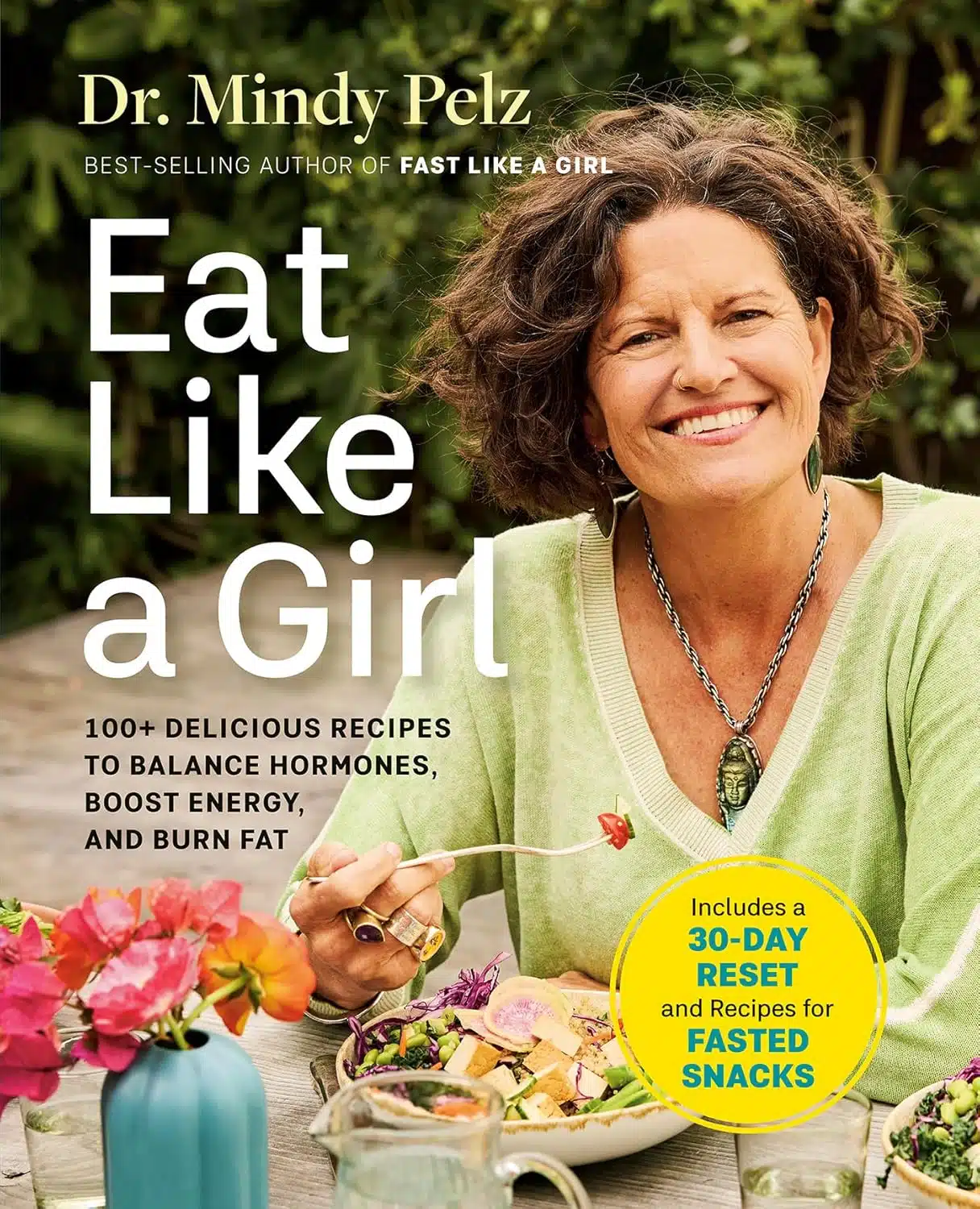
Eat Like A Girl – by Dr. Mindy Pelz

10almonds is reader-supported. We may, at no cost to you, receive a portion of sales if you purchase a product through a link in this article.

We previously reviewed Dr. Pelz’s “Fast Like A Girl”, but what about when we’re not fasting? So, this one covers what to indeed eat, with female health in mind first and foremost.

We say “first and foremost”, because most of the advice in this book is applicable to men too, and that which isn’t, is at worst irrelevant to men, and not actually problematic. Contrary to popular belief, eating foods that are “good for estrogen” will not increase men’s estrogen levels in the slightest; in fact, what’s good nutritionally for estrogen is usually good for testosterone too, as they are made of the same fundamental stuff and there’s just one molecular difference between them. Which gets made (if either) just depends on what you have going on anatomically and physiologically before you ate what you did.

But let’s face it, most health books out there that don’t specify female focus, are usually based on assuming maleness as a default condition, and women’s health is the same plus breasts and different genitals, which is simply not the case. So, it’s refreshing to have books like this one.

The advice Dr. Pelz gives here is varied and yet consistent; that is to say, she approaches health from numerous angles:

  • She talks about integrating what to eat around fasting, how best to break the fast etc
  • She talks about why blood sugars matter but calories don’t
  • She talks about what to eat for natural hormone support (for hormone production and hormone metabolism; the latter is often forgotten, but not by Dr. Pelz!)
  • She talks about how to handle things nutritionally if you have no cycle (or if you do, but it’s a HRT-mediated cycle and you’re not bleeding)
  • She talks about what to do for gut health in the context of both eating and fasting

As the subtitle promises, there are indeed recipes, which take up the latter half of the book. They’re respectable and yet not too complicated; ingredients are the kind that can be found in any large supermarket, though if you live in a rural area you might struggle with some. The recipes are mostly not vegan and many are not even vegetarian, but they are still quite low on meat by default and avoid unfermented dairy, and substitutions are mostly easy and obvious if you are vegan or vegetarian.

Bottom line: if you’d like a dietary approach that’s optimized for female health around intermittent fasting, then this is it.

Click here to check out Eat Like A Girl, and eat like a girl (a healthy one, at that)!

Don’t Forget…

Did you arrive here from our newsletter? Don’t forget to return to the email to continue learning!
Learn to Age Gracefully

Join the 98k+ American women taking control of their health & aging with our 100% free (and fun!) daily emails:

  • What’s the difference between physical and chemical sunscreens? And which one should you choose?

    10almonds is reader-supported. We may, at no cost to you, receive a portion of sales if you purchase a product through a link in this article.

    Sun exposure can accelerate ageing, cause skin burns, erythema (a skin reaction), skin cancer, melasmas (or sun spots) and other forms of hyperpigmentation – all triggered by solar ultraviolet radiation.

    Approximately 80% of skin cancer cases in people engaged in outdoor activities are preventable by decreasing sun exposure. This can be done in lots of ways including wearing protective clothing or sunscreens.

    But not all sunscreens work in the same way. You might have heard of “physical” and “chemical” sunscreens. What’s the difference and which one is right for you?

    How sunscreens are classified

    Sunscreens are grouped by their use of active inorganic and organic ultraviolet (UV) filters. Chemical sunscreens use organic filters such as cinnamates (chemically related to cinnamon oil) and benzophenones. Physical sunscreens (sometimes called mineral sunscreens) use inorganic filters such as titanium and zinc oxide.

    These filters prevent the effects of UV radiation on the skin.

    Organic UV filters are known as chemical filters because the molecules in them change to stop UV radiation reaching the skin. Inorganic UV filters are known as physical filters, because they work through physical means, such as blocking, scattering and reflection of UV radiation to prevent skin damage.

    Nano versus micro

    The effectiveness of the filters in physical sunscreen depends on factors including the size of the particle, how it’s mixed into the cream or lotion, the amount used and the refraction index (the speed light travels through a substance) of each filter.

    When the particle size in physical sunscreens is large, it causes the light to be scattered and reflected more. That means physical sunscreens can be more obvious on the skin, which can reduce their cosmetic appeal.

    Nanoparticulate forms of physical sunscreens (with tiny particles smaller than 100 nanometers) can improve the cosmetic appearance of creams on the skin and UV protection, because the particles in this size range absorb more radiation than they reflect. These are sometimes labelled as “invisible” zinc or mineral formulations and are considered safe.

    So how do chemical sunscreens work?

    Chemical UV filters work by absorbing high-energy UV rays. This leads to the filter molecules interacting with sunlight and changing chemically.

    When molecules return to their ground (or lower energy) state, they release energy as heat, distributed all over the skin. This may lead to uncomfortable reactions for people with skin sensitivity.

    Generally, UV filters are meant to stay on the epidermis (the first skin layer) surface to protect it from UV radiation. When they enter into the dermis (the connective tissue layer) and bloodstream, this can lead to skin sensitivity and increase the risk of toxicity. The safety profile of chemical UV filters may depend on whether their small molecular size allows them to penetrate the skin.

    Chemical sunscreens, compared to physical ones, cause more adverse reactions in the skin because of chemical changes in their molecules. In addition, some chemical filters, such as dibenzoylmethane tend to break down after UV exposure. These degraded products can no longer protect the skin against UV and, if they penetrate the skin, can cause cell damage.

    Due to their stability – that is, how well they retain product integrity and effectiveness when exposed to sunlight – physical sunscreens may be more suitable for children and people with skin allergies.

    Although sunscreen filter ingredients can rarely cause true allergic dermatitis, patients with photodermatoses (where the skin reacts to light) and eczema have higher risk and should take care and seek advice.

    What to look for

    The best way to check if you’ll have a reaction to a physical or chemical sunscreen is to patch test it on a small area of skin.

    And the best sunscreen to choose is one that provides broad-spectrum protection, is water and sweat-resistant, has a high sun protection factor (SPF), is easy to apply and has a low allergy risk.

    Health authorities recommend sunscreen to prevent sun damage and cancer. Chemical sunscreens have the potential to penetrate the skin and may cause irritation for some people. Physical sunscreens are considered safe and effective and nanoparticulate formulations can increase their appeal and ease of use.The Conversation

    Yousuf Mohammed, Dermatology researcher, The University of Queensland and Khanh Phan, Postdoctoral research associate, Frazer Institute, The University of Queensland

    This article is republished from The Conversation under a Creative Commons license. Read the original article.

    Share This Post

  • What Are The “Bright Lines” Of Bright Line Eating?

    10almonds is reader-supported. We may, at no cost to you, receive a portion of sales if you purchase a product through a link in this article.

    This is Dr. Susan Thompson. She’s a cognitive neuroscientist who has turned her hand to helping people to lose weight and maintain it at a lower level, using psychology to combat overeating. She is the founder of “Bright Line Eating”.

    We’ll say up front: it’s not without some controversy, and we’ll address that as we go, but we do believe the ideas are worth examining, and then we can apply them or not as befits our personal lives.

    What does she want us to know?

    Bright Line Eating’s general goal

    Dr. Thompson’s mission statement is to help people be “happy, thin, and free”.

    You will note that this presupposes thinness as desirable, and presumes it to be healthy, which frankly, it’s not for everyone. Indeed, for people over a certain age, having a BMI that’s slightly into the “overweight” category is a protective factor against mortality (which is partly a flaw of the BMI system, but is an interesting observation nonetheless):

    When BMI Doesn’t Quite Measure Up

    Nevertheless, Dr. Thompson makes the case for the three items (happy, thin, free) coming together, which means that any miserable or unhealthy thinness is not what the approach is valuing, since it is important for “thin” to be bookended by “happy” and “free”.

    What are these “bright lines”?

    Bright Line Eating comes with 4 rules:

    1. No flour (no, not even wholegrain flour; enjoy whole grains themselves yes, but flour, no)
    2. No sugar (and as a tag-along to this, no alcohol) (sugars naturally found in whole foods, e.g. the sugar in an apple if eating an apple, is ok, but other kinds are not, e.g. foods with apple juice concentrate as a sweetener; no “natural raw cane sugar” etc is not allowed either; despite the name, it certainly doesn’t grow on the plant like that)
    3. No snacking, just three meals per day(not even eating the ingredients while cooking—which also means no taste-testing while cooking)
    4. Weigh all your food (have fun in restaurants—but more seriously, the idea here is to plan each day’s 3 meals to deliver a healthy macronutrient balance and a capped calorie total).

    You may be thinking: “that sounds dismal, and not at all bright and cheerful, and certainly not happy and free”

    The name comes from the idea that these rules are lines that one does not cross. They are “bright” lines because they should be observed with a bright and cheery demeanour, for they are the rules that, Dr. Thompson says, will make you “happy, thin, and free”.

    You will note that this is completely in opposition to the expert opinion we hosted last week:

    What Flexible Dieting Really Means

    Dr. Thompson’s position on “freedom” is that Bright Line Eating is “very structured and takes a liberating stand against moderation”

    Which may sound a bit of an oxymoron—is she really saying that we are going to be made free from freedom?

    But there is some logic to it, and it’s about the freedom from having to make many food-related decisions at times when we’re likely to make bad ones:

    Where does the psychology come in?

    Dr. Thompson’s position is that willpower is a finite, expendable resource, and therefore we should use it judiciously.

    So, much like Steve Jobs famously wore the same clothes every day because he had enough decisions to make later in the day that he didn’t want unnecessary extra decisions to make… Bright Line Eating proposes that we make certain clear decisions up front about our eating, so then we don’t have to make so many decisions (and potentially the wrong decisions) later when hungry.

    You may be wondering: ”doesn’t sticking to what we decided still require willpower?”

    And… Potentially. But the key here is shutting down self-negotiation.

    Without clear lines drawn in advance, one must decide, “shall I have this cake or not?”, perhaps reflecting on the pros and cons, the context of the situation, the kind of day we’re having, how hungry we are, what else there is available to eat, what else we have eaten already, etc etc.

    In short, there are lots of opportunities to rationalize the decision to eat the cake.

    With clear lines drawn in advance, one must decide, “shall I have this cake or not?” and the answer is “no”.

    So while sticking to that pre-decided “no” still may require some willpower, it no longer comes with a slew of tempting opportunities to rationalize a “yes”.

    Which means a much greater success rate, both in adherence and outcomes. Here’s an 8-week interventional study and 2-year follow-up:

    Bright Line Eating | Research Publications

    Counterpoint: pick your own “bright lines”

    Dr. Thompson is very keen on her 4 rules that have worked for her and many people, but she recognizes that they may not be a perfect fit for everyone.

    So, it is possible to pick and choose our own “bright lines”; it is after all a dietary approach, not a religion. Here’s her response to someone who adopted the first 3 rules, but not the 4th:

    Bright Lines as Guidelines for Weight Loss

    The most important thing for Bright Line Eating, therefore, is perhaps the action of making clear decisions in advance and sticking to them, rather than seat-of-the-pantsing our diet, and with it, our health.

    Want to know more from Dr. Thompson?

    You might like her book, which we reviewed a while ago:

    Bright Line Eating – by Dr. Susan Peirce Thompson

    Enjoy!

    Share This Post

  • How Intermittent Fasting Changes Your Brain

    10almonds is reader-supported. We may, at no cost to you, receive a portion of sales if you purchase a product through a link in this article.

    We’ve written before about the benefits of intermittent fasting, such as:

    Intermittent fasting is mostly enjoyed for its metabolic benefits, such as How To Prevent And Reverse Type 2 Diabetes.

    We also covered a very related topic, with intermittent fasting once again being on the suggestions list:

    Improve Your Insulin Sensitivity! ← this is actually more important even that blood sugar control itself, important as that latter is!

    Next, some additional background. This topic (the relationship between intermittent fasting and brain/cognitive health) has been touched on before by one of our guest articles:

    Does intermittent fasting have benefits for our brain?

    …which detailed several ways it can help, and/but ultimately concluded with a commentary on the need for more research.

    Today we’ll spotlight one of those much-needed studies!

    From the gut up

    As regular 10almonds readers will know, the gut and brain talk to each other, a lot, largely by means of the vagus nerve running between them.

    See also: The Brain-Gut Highway: A Two-Way Street

    For this reason, intermittent fasting was one of the habits recommended in a book we reviewed a little while back, 7 Healthy Gut Habits For Women Over 40 – by Lara West.

    Researchers (Dr. Xiaoling Wu et al.) conducted an experiment whose participants (who were all there with the goal of losing weight) completed a 2-month intermittent fasting program, while Dr. Wu and her team tracked their body composition, blood markers, gut bacteria, and brain activity using fMRI.

    The results, at a glance:

    • Weight loss:, as expected participants lost an average of 7.6 kg, equivalent to 7.8% of their starting body weight, while reducing body fat and waist circumference.
    • Metabolic improvements: blood pressure, fasting glucose, total cholesterol, LDL cholesterol, HDL cholesterol, and liver enzyme activity all decreased, showcasing broader metabolic benefits beyond weight loss.
    • Gut microbiome changes: beneficial or obesity-associated bacteria such as Faecalibacterium prausnitzii, Parabacteroides distasonis, and Bacteroides uniformis increased, while Escherichia coli (usually known to its friends simply as E. coli) decreased.
    • Brain (neurological) changes: activity decreased in several regions linked to appetite, reward, cravings, emotion, learning, and cognitive control, including the inferior frontal orbital gyrus, putamen, and anterior cingulate cortex.
    • Gut-brain link, specifically: shifts in specific gut bacteria correlated with changes in brain activity, strongly suggesting that the microbiome and brain adapt together during intermittent fasting-induced weight loss.

    As for why this happens this way, gut microbes produce neurotransmitters and other compounds that affect the nervous system, while the brain influences eating behavior and food choices, creating the two-way communication system known as the gut-brain axis, as per our article linked up above.

    In practical terms, this means a synergistic effect, that you (or at least, most people, probably including you) can leverage to get all manner of health benefits, at once!

    You can read the paper in full, here: Dynamical alterations of brain function and gut microbiome in weight loss

    Want to learn more?

    You might like this book that we reviewed; we recommend it:

    Complete Guide To Fasting – By Dr. Jason Fung

    Enjoy!

    Share This Post

  • Lyssavirus is rare, but deadly. What should you do if a bat bites you?

    10almonds is reader-supported. We may, at no cost to you, receive a portion of sales if you purchase a product through a link in this article.

    A man in his 50s has died from lyssavirus in New South Wales after being bitten by a bat several months ago.

    This is Australia’s fourth human case of bat lyssavirus and the first confirmed case in NSW since the virus was first identified in 1996 in a black flying fox in Queensland.

    So what is lyssavirus? And how can you protect yourself if you come into contact with a bat?

    Ken Griffiths/Getty Images

    A close relative of rabies

    Australian bat lyssavirus belongs to the Rhabdoviridae family, the same group of viruses that causes rabies.

    It primarily infects bats. Active monitoring suggests fewer than 1% of healthy bats carry the virus, though prevalence rises to 5–10% in sick or injured bats.

    In bats, the virus often causes no obvious symptoms, though some show neurological signs such as disorientation, aggression, muscle spasms and paralysis. Some will die.

    The virus has been confirmed in all four mainland flying fox species (Pteropus alecto, P. poliocephalus, P. scapulatus and P. conspicillatus) as well as the yellow-bellied sheathtail bat (Saccolaimus flaviventris), a species of microbat.

    However, serological evidence – where scientists test for antibodies in bats’ blood – suggests other microbats could be susceptible too. So we should be cautious with all Australian bat species when it comes to lyssavirus.

    Rare, but potentially deadly

    Unlike rabies, which causes roughly 59,000 human deaths annually, predominantly in Africa and Asia, human infection with bat lyssavirus is extremely rare.

    Australian bat lyssavirus, as the name suggests, is unique to Australia. But other bat lyssaviruses, such as European bat lyssavirus, have similarly caused rare human infections.

    Human infection with bat lyssavirus occurs through direct contact with infected bat saliva via bites, scratches or open skin. It can also occur if our mucous membranes (eyes, nose, mouth) are exposed to bat saliva.

    There’s no risk associated with bat faeces, urine, blood, or casual proximity to roosts.

    If someone has been exposed, there’s an incubation period which can range from weeks to more than two years. During this time the virus slowly moves through the body’s nerves to the brain, staying hidden and symptom-free.

    Treating the virus during the incubation period can prevent the illness. But if it’s not treated, symptoms are serious and it’s invariably fatal.

    The nature of the illness in humans mirrors rabies, beginning with flu-like symptoms (fever, headache, fatigue), then quickly progressing to severe neurological disease, including paralysis, delirium, convulsions, and loss of consciousness. Death generally occurs within 1–2 weeks of symptom onset.

    All four recorded human cases in Australia – three in Queensland (in 1996, 1998 and 2013) and the recent NSW case – have been fatal.

    There’s no effective treatment once symptoms develop

    If someone is potentially exposed to bat lyssavirus and seeks medical attention, they can be treated with post-exposure prophylaxis, consisting of rabies antibodies and the rabies vaccine.

    This intervention is highly effective if initiated promptly – preferably within 48 hours, and no later than seven days post-exposure – before the virus enters the central nervous system.

    But no effective treatment exists for Australian bat lyssavirus once symptoms develop. Emerging research on monoclonal antibodies offers potential future therapies, however these are not yet available.

    So what’s the best protection? And what if a bat bites you?

    Pre-exposure rabies vaccination, involving three doses over one month, is recommended for high-risk groups. This includes veterinarians, animal handlers, wildlife rehabilitators, and laboratory workers handling lyssaviruses.

    It’s important for members of the public to avoid all direct contact with bats. Only vaccinated, trained professionals, such as wildlife carers or veterinarians, should handle bats.

    Public education campaigns are essential to reduce risky interactions, especially in bat-populated areas.

    If you get bitten or scratched by a bat, it’s vital to act immediately. Wash the wound thoroughly with soap and water for at least 15 minutes, apply an antiseptic (such as betadine), and seek urgent medical attention.

    This tragic case in NSW underscores that while extremely rare, bat lyssavirus is an important public health threat. We need to see enhanced public awareness and ensure vaccination for high-risk groups, alongside ongoing bat monitoring and research into new treatments.

    Vinod Balasubramaniam, Associate Professor (Molecular Virology), Monash University

    This article is republished from The Conversation under a Creative Commons license. Read the original article.

    Don’t Forget…

    Did you arrive here from our newsletter? Don’t forget to return to the email to continue learning!

    Learn to Age Gracefully

    Join the 98k+ American women taking control of their health & aging with our 100% free (and fun!) daily emails:

  • Surgery won’t fix my chronic back pain, so what will?

    10almonds is reader-supported. We may, at no cost to you, receive a portion of sales if you purchase a product through a link in this article.

    This week’s ABC Four Corners episode Pain Factory highlighted that our health system is failing Australians with chronic pain. Patients are receiving costly, ineffective and risky care instead of effective, low-risk treatments for chronic pain.

    The challenge is considering how we might reimagine health-care delivery so the effective and safe treatments for chronic pain are available to millions of Australians who suffer from chronic pain.

    One in five Australians aged 45 and over have chronic pain (pain lasting three or more months). This costs an estimated A$139 billion a year, including $12 billion in direct health-care costs.

    The most common complaint among people with chronic pain is low back pain. So what treatments do – and don’t – work?

    Opioids and invasive procedures

    Treatments offered to people with chronic pain include strong pain medicines such as opioids and invasive procedures such as spinal cord stimulators or spinal fusion surgery. Unfortunately, these treatments have little if any benefit and are associated with a risk of significant harm.

    Spinal fusion surgery and spinal cord stimulators are also extremely costly procedures, costing tens of thousands of dollars each to the health system as well as incurring costs to the individual.

    Addressing the contributors to pain

    Recommendations from the latest Australian and World Health Organization clinical guidelines for low back pain focus on alternatives to drug and surgical treatments such as:

    • education
    • advice
    • structured exercise programs
    • physical, psychological or multidisciplinary interventions that address the physical or psychological contributors to ongoing pain.
    Woman sits on exercise ball and uses stretchy band
    Pain education is central. Monkey Business Images/Shutterstock

    Two recent Australian trials support these recommendations and have found that interventions that address each person’s physical and psychological contributors to pain produce large and sustained improvements in pain and function in people with chronic low back pain.

    The interventions have minimal side effects and are cost-effective.

    In the RESOLVE trial, the intervention consists of pain education and graded sensory and movement “retraining” aimed to help people understand that it’s safe to move.

    In the RESTORE trial, the intervention (cognitive functional therapy) involves assisting the person to understand the range of physical and psychological contributing factors related to their condition. It guides patients to relearn how to move and to build confidence in their back, without over-protecting it.

    Why isn’t everyone with chronic pain getting this care?

    While these trials provide new hope for people with chronic low back pain, and effective alternatives to spinal surgery and opioids, a barrier for implementation is the out-of-pocket costs. The interventions take up to 12 sessions, lasting up to 26 weeks. One physiotherapy session can cost $90–$150.

    In contrast, Medicare provides rebates for just five allied health visits (such as physiotherapists or exercise physiologists) for eligible patients per year, to be used for all chronic conditions.

    Private health insurers also limit access to reimbursement for these services by typically only covering a proportion of the cost and providing a cap on annual benefits. So even those with private health insurance would usually have substantial out-of-pocket costs.

    Access to trained clinicians is another barrier. This problem is particularly evident in regional and rural Australia, where access to allied health services, pain specialists and multidisciplinary pain clinics is limited.

    Higher costs and lack of access are associated with the increased use of available and subsidised treatments, such as pain medicines, even if they are ineffective and harmful. The rate of opioid use, for example, is higher in regional Australia and in areas of socioeconomic disadvantage than metropolitan centres and affluent areas.

    So what can we do about it?

    We need to reform Australia’s health system, private and public, to improve access to effective treatments for chronic pain, while removing access to ineffective, costly and high-risk treatments.

    Better training of the clinical workforce, and using technology such as telehealth and artificial intelligence to train clinicians or deliver treatment may also improve access to effective treatments. A recent Australian trial, for example, found telehealth delivered via video conferencing was as effective as in-person physiotherapy consultations for improving pain and function in people with chronic knee pain.

    Advocacy and improving the public’s understanding of effective treatments for chronic pain may also be helpful. Our hope is that coordinated efforts will promote the uptake of effective treatments and improve the care of patients with chronic pain.

    Christine Lin, Professor, University of Sydney; Christopher Maher, Professor, Sydney School of Public Health, University of Sydney; Fiona Blyth, Professor, University of Sydney; James Mcauley, Professor of Psychology, UNSW Sydney, and Mark Hancock, Professor of Physiotherapy, Macquarie University

    This article is republished from The Conversation under a Creative Commons license. Read the original article.

    Don’t Forget…

    Did you arrive here from our newsletter? Don’t forget to return to the email to continue learning!

    Learn to Age Gracefully

    Join the 98k+ American women taking control of their health & aging with our 100% free (and fun!) daily emails:

  • Hashimoto’s Food Pharmacology – by Dr. Izabella Wentz

    10almonds is reader-supported. We may, at no cost to you, receive a portion of sales if you purchase a product through a link in this article.

    The author is a doctor of pharmacology, and we’ve featured her before as an expert on Hashimoto’s, which she has. She has recommendations about specific blood tests and medications, but in this book she’s mainly focussing on what she calls the “three Rs” of managing hypothyroidism:

    1. Remove the causes and triggers of your hypothyroidism, so far as possible
    2. Repair the damage caused to your body, especially your gut
    3. Replace the thyroid hormones and related things in which your body has become deficient

    To this end, she provides recipes that avoid processed meats and unfermented dairy, and include plenty of nutrient-dense whole foods specifically tailored to meet the nutritional needs of someone with hypothyroidism.

    A nice bonus of the presentation of recipes (of which there are 125, if we include things like “mint tea” and “tomato sauce” and “hot lemon water” as recipes) is explaining the thyroid-supporting elements of each recipe.

    A downside for some will be that if you are vegetarian/vegan, this book is very much not, and since many recipes are paleo-style meat dishes, substitutions will change the nutritional profile completely.

    Bottom line: if you have hypothyroidism (especially if: Hashimoto’s) and like meat, this will be a great recipe book for you.

    Click here to check out Hashimoto’s Food Pharmacology, and get cooking!

    Don’t Forget…

    Did you arrive here from our newsletter? Don’t forget to return to the email to continue learning!

    Learn to Age Gracefully

    Join the 98k+ American women taking control of their health & aging with our 100% free (and fun!) daily emails: