
Does ‘fasted’ cardio help you lose weight? Here’s the science

10almonds is reader-supported. We may, at no cost to you, receive a portion of sales if you purchase a product through a link in this article.

Every few years, the concept of fasted exercise training pops up all over social media.

Fasted training refers to exercising in the morning, before eating breakfast.

Fans will claim it’s the most efficient way to lose body fat. Opponents say it’s a terrible idea and will cause you to gain weight.

Who’s right and what does the research evidence say?
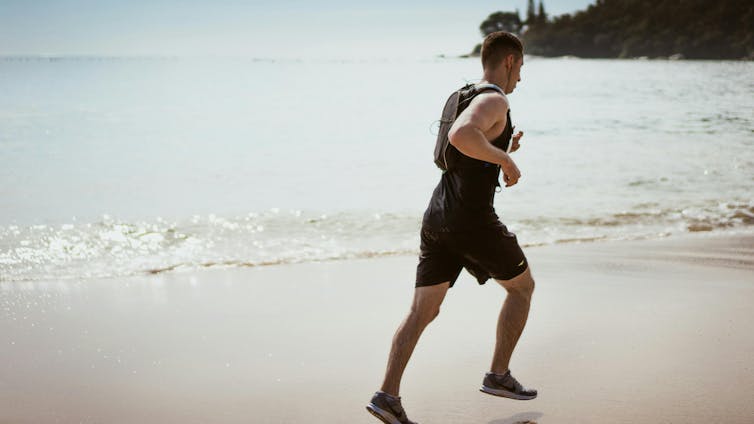
Photo by Leandro Boogalu/Pexels

Where did the idea come from?

Fasted exercise, proponents say, will cause better changes in body composition – the proportion of lean mass (muscle), bone and fat. In particular, they say fasted exercise leads to fat loss.

Positive changes in body composition can occur through losses of fat mass, while either maintaining or gaining lean mass. Or even through gaining lean mass in the absence of any loss of body fat. All of which may be considered positive.

The idea fasted exercises leads to such positive body composition changes stems from research that shows exercising after eating versus exercise before eating affects metabolism differently.

Aerobic exercise in a fasted state causes you to burn more fat as a fuel (what researchers would call “fat oxidation”) when measured at a single point in time.

So it wasn’t a big leap to assume this would translate to longer-term fat loss.

However, a 2017 systematic review from my team demonstrated that a fasted exercise training program doesn’t seem to translate into long-term differences in body fat loss.

This discrepancy between fat burned as a fuel during exercise, and changes in body fat in the long term has often been misunderstood.

This apparent contradiction may come down to the fact the body seems to find ways to compensate. Fat burning seems to reduce once you eat, and people who have exercised hard may end up expending less total energy over the course of the day.

In exercise science, it’s actually pretty common to find that short-term effects don’t always translate to longer-term impacts.

For example, intense short-term exercise can negatively affect your immune system in the moment, but doing regular exercise can actually affect it positively in the longer term.

A woman prepares for a deadlift
Exercising after eating improves performance in activities lasting over 60 minutes. Photo by Jonathan/Pexels

What does eating soon after or just before your workout do?

Eating a meal featuring carbohydrates and protein close to when you exercise is likely to help with performance during your next exercise session.

However, whether that meal is before or after your workout seems to have limited impact.

Interestingly, research has shown that increasing the proportion of the food you eat in the morning – and in particular, eating more protein – may help to improve body composition and enhance weight loss.

However, this timing is not in relation to exercise, rather in relation to when in the day you eat.

What about sports performance?

It’s fairly clear eating before exercising improves performance in activities lasting over 60 minutes but has little effect on performance of shorter duration activities.

This is also evidenced by the lack of elite athletes supporting fasted exercise. A survey completed by almost 2,000 endurance athletes showed non-professional athletes are more likely to exercise fasted compared to professional athletes.

What about strength training?

So do you get differences in muscle strength, size, and body composition changes in response to doing resistance training (such as weightlifting) when you’ve fasted versus when you’ve eaten? Unfortunately, the research is limited and low quality.

This limited evidence so far suggests it makes no difference.

One recent randomised controlled trial also found no difference in strength, power, or lean body mass when resistance training was done twice a week for 12 weeks either after fasting or after eating.

What are the potential drawbacks?

Fasted training can make you feel really hungry after exercise, which can lead you to make poorer food choices.

Some people may even get headaches and nausea when trying to exercise fasted. This isn’t universal experience, though; social media is full of people who say exercising while fasting makes them feel great.

In summary, there is no clear winner.

The evidence doesn’t support the superiority of fasted exercise for weight loss, or sports performance.

However, the evidence also doesn’t show it causes a problem in many scenarios (except perhaps elite sports performance).

So if you’re short on time and skipping breakfast is going to allow you to get out and get that run or workout in, then go for it. Don’t worry too much about the consequence.

But if the idea of exercising on an empty tummy makes you want to avoid the gym, then grab some breakfast before you go. Rest assured it won’t be working against your goals.

Exercise fads and wellness hacks come and go but the thing backed by solid and consistent evidence is exercise.

Simply doing it matters the most.

Not the time of day, not the exact exercise choice, not even the exact amount – and definitely, not if you have or haven’t eaten before you exercise.

Mandy Hagstrom, Senior Lecturer, Exercise Physiology. School of Health Sciences, UNSW Sydney

This article is republished from The Conversation under a Creative Commons license. Read the original article.

Don’t Forget…

Did you arrive here from our newsletter? Don’t forget to return to the email to continue learning!

Recommended

  • These Women Had Their Breasts Removed To Thwart Cancer. Then Came the Pain.
  • How To Make Disease Disappear – by Dr. Rangan Chatterjee
    Dr. Chatterjee’s book, a spin on the Four Pillar Plan, promises a balance of relax, eat, move, sleep strategies to “make disease disappear” through habitual good health practices.

Learn to Age Gracefully

Join the 98k+ American women taking control of their health & aging with our 100% free (and fun!) daily emails:

  • An Unexpected Extra Threat Of Alcohol

    10almonds is reader-supported. We may, at no cost to you, receive a portion of sales if you purchase a product through a link in this article.

    If You Could Use Some Exotic Booze…

    …then for health reasons, we’re going to have to say “nay”.

    We’ve written about alcohol before, and needless to say, it’s not good:

    Can We Drink To Good Health?

    (the answer is “no, we cannot”)

    In fact, the WHO (which unlike government regulatory bodies setting “safe” limits on drinking, makes no profit from taxes on alcohol sales) has declared that “the only safe amount of alcohol is zero”:

    WHO: No level of alcohol consumption is safe for our health

    Up there, where the air is rarefied…

    If you’re flying somewhere this summer (Sinatra-style flying honeymoon or otherwise), you might want to skip the alcohol even if you normally do imbibe, because:

    ❝…even in young and healthy individuals, the combination of alcohol intake with sleeping under hypobaric conditions poses a considerable strain on the cardiac system and might lead to exacerbation of symptoms in patients with cardiac or pulmonary diseases.

    These effects might be even greater in older people; cardiovascular symptoms have a prevalence of 7% of inflight medical emergencies, with cardiac arrest causing 58% of aircraft diversions.❞

    Source: Alcohol plus cabin pressure at higher altitude may threaten sleeping plane passengers’ heart health

    The experiment divided subjects into a control group and a study group; the study group were placed in simulated cabin pressure as though at altitude, which found, when giving some of them two small(we’re talking the kind given on flights) alcoholic drinks:

    ❝The combination of alcohol and simulated cabin pressure at cruising altitude prompted a fall in SpO2 to an average of just over 85% and a compensatory increase in heart rate to an average of nearly 88 beats/minute during sleep.

    In contrast, that was 77 beats/minute for those who had alcohol but weren’t at altitude pressure, or 64 beats/minute for those who neither drank nor were at altitude pressure.

    Lots more metrics were recorded and the study is interesting to read; if you’ve ever slept on a plane and thought “that sleep was not restful at all”, then know: it wasn’t just the seat’s fault, nor the engine, nor the recycled nature of the air—it was the reduced pressure causing hypoxia (defined as having oxygen levels lower than the healthy clinical norm of 90%) and almost halving your sleep’s effectiveness for a less than 10% drop in available oxygen in the blood (the sleepers not at altitude pressure averaged 96% SpO2, compared to the 85% at altitude).

    We say “almost halving” because the deep sleep phase of sleep was reduced from 84 minutes (control) to 67.5 minutes at altitude without alcohol, or 46.5 minutes at altitude with alcohol.

    Again, this was a pressure cabin in a lab—so this wasn’t about the other conditions of an airplane (seats, engine hundreds of other people, etc).

    Which means: in an actual airplane it’s probably even worse.

    Oh, and the study participants? All healthy individuals aged 18–40, so again probably worse for those older (or younger) than that range, or with existing health conditions!

    Want to know more?

    You can read the study in full here:

    Effects of moderate alcohol consumption and hypobaric hypoxia: implications for passengers’ sleep, oxygen saturation and heart rate on long-haul flights

    Want to drop the drink at any altitude? Check out:

    How To Reduce Or Quit Alcohol

    Want to get that vacation feel without alcohol? You’re going to love:

    Mocktails – by Moira Clark (book)

    Enjoy!

    Share This Post

  • The Best Exercise to Stop Your Legs From Giving Out

    10almonds is reader-supported. We may, at no cost to you, receive a portion of sales if you purchase a product through a link in this article.

    Dr. Doug Weiss, seniors-specialist physio, has an exercise that stops your knees from being tricked into collapsing (which is very common) by a misfiring (also common) reflex.

    Step up…

     Setup to step up thus:

    •         Use a sturdy support like a countertop or chair.
    •         Have an aerobic step or similar firm surface to step onto.

       When you’re ready:

    •         Stand facing away from the step.
    •         Place one hand on the support for stability.
    •         Step backwards up onto the step with your right leg, then your left leg, so both feet are on the step.
    •         Step forward to come back down.

    Once you’re confident of the series of movements, do it without the support, and do it for a few minutes each day. Don’t worry about how easy it becomes; this is not, first and foremost, a strength-training exercise; you don’t have to start adding weights or anything (although of course you can if you want).

    How it works: there’s a part of you called the Golgi tendon organ, and it can trigger a Golgi tendon reflex, which is one of the body’s equivalents of a steam valve. However, instead of letting off steam to avoid a boiler explosion, it collapses a joint to save it from overload. However, if not exercised regularly, it can get overly sensitive, causing it to mistake your mere bodyweight for an overload. So, it collapses, thinking it is saving you from snapping a tendon, but it’s not. By exercising in the way described, the Golgi tendon reflex will go back to only being triggered by an actual overload, not the mere act of stepping.

    Meanwhile, for more on all of the above plus a visual demonstration, enjoy:

    Click Here If The Embedded Video Doesn’t Load Automatically!

    Want to learn more?

    You might also like:

    What Nobody Teaches You About Strengthening Your Knees

    Take care!

    Share This Post

  • Magic mushrooms may one day treat anorexia, but not just yet

    10almonds is reader-supported. We may, at no cost to you, receive a portion of sales if you purchase a product through a link in this article.

    Anorexia nervosa is a severe mental health disorder where people fear weight gain. Those with the disorder have distorted body image and hold rigid beliefs their body is too big. They typically manage this through restricted eating, leading to the serious medical consequences of malnutrition.

    Anorexia has one of the highest death rates of any mental illness. Yet there are currently no effective drug treatments and the outcomes of psychotherapy (talk therapy) are poor. So we’re desperately in need of new and improved treatments.

    Psilocybin, commonly known as magic mushrooms, is one such novel treatment. But while it shows early promise, you won’t see it used in clinical practice just yet – more research is needed to test if it’s safe and effective.

    Ground Picture/Shutterstock

    What does treatment involve?

    The treatment involves the patient taking a dose of psilocybin in a safe environment, which is usually a specifically set up clinic. The patient undergoes preparation therapy before the dosing session and integration therapy after.

    Psilocybin, extracted from mushrooms, is a psychedelic, which means it can produce altered thinking, sense of time and emotions, and can often result in hallucinations. It also has the potential to shift patients out of their rigid thinking patterns.

    Psilocybin is not administered alone but instead with combined structured psychotherapy sessions to help the patient make sense of their experiences and the changes to their thinking. This is an important part of the treatment.

    What does the research show?

    Research has shown improved effects of psilocybin-assisted psychotherapy after one or two dosing sessions, a couple of weeks apart. Most research to date has targeted depression.

    Psilocybin has been found to increase cognitive flexibility – our ability to adjust our thinking patterns according to changing environments or demands. This is one of the ways researchers believe psilocybin might improve symptoms for conditions such as depression and alcohol use disorder, which are marked by rigid thinking styles.

    People with anorexia similarly struggle with rigid thinking patterns. So researchers and clinicians have recently turned their attention to anorexia.

    In 2023, a small pilot study of ten women with anorexia was published in the journal Nature Medicine. It showed psilocybin-assisted psychotherapy (with 25mg of psilocybin) was safe and acceptable. There were no significant side effects and participants reported having valuable experiences.

    Although the trial was not a formal efficacy trial, 40% of the patients did have significant drops in their eating disorder behaviour.

    However, the trial only had one dosing session and no long-term follow up, so further research is needed.

    Lab technician holds mushroom with tweezer
    Researchers are still working out dosages and frequency. 24K-Production/Shutterstock

    A recent animal study using rats examined whether rigid thinking could be improved in rats when given psilocybin. After the psilocybin, rats gained weight and had more flexible thinking (using a reversal learning task).

    These positive changes were related to the serotonin neurotransmitter system, which regulates mood, behaviour and satiety (feeling full).

    Brain imaging studies in humans show serotonin disturbances in people with anorexia. Psilocybin-assisted psychotherapy is showing promise at modifying the serotonin disturbances and cognitive inflexibility that have been shown to be problematic in anorexia.

    Research with animals can provide unique insights into the brain which can sometimes not be investigated in living humans. But animal models can never truly mimic human behaviour and the complex nature of chronic mental health conditions.

    What’s next for research?

    Further clinical trials in humans are very much needed – and are underway from a research team at the University of Sydney and ours at Swinburne.

    Our trial will involve an initial 5mg dose followed by two subsequent doses of 25mg, several weeks apart. An initial low dose aims to help participants prepare for what is likely to be a new and somewhat unpredictable experience.

    Our trial will examine the usefulness of providing psychotherapy that directly addresses body image disturbance. We are also investigating if including a family member or close friend in the treatment increases support for their loved one.

    Drazen Zigic/Shutterstock
    We’re investigating whether including a family member or close friend in treatment could help. Shutterstock

    Data from other mental health conditions has suggested that not everyone sees benefits, with some people having bad trips and a deterioration in their mental health. So this treatment won’t be for everyone. It’s important to work out who is most likely to respond and under what conditions.

    New trials and those underway will be critical in understanding whether psilocybin-assisted psychotherapy is a safe and effective treatment for anorexia, and the optimal conditions to improve the patient’s response. But we are some way off from seeing this treatment in the clinic. One of the big issues being the cost of this intervention and how this will be funded.

    Susan Rossell, Director Clinical Trials and Professor Cognitive Neuropsychiatry Centre for Mental Health and Brain Sciences, Swinburne University of Technology and Claire Finkelstein, Clinical Psychologist and PhD candidate, Swinburne University of Technology

    This article is republished from The Conversation under a Creative Commons license. Read the original article.

    Share This Post

Related Posts

  • These Women Had Their Breasts Removed To Thwart Cancer. Then Came the Pain.
  • Morning Routine To Feel Like You’re in Your 20s Again 

    10almonds is reader-supported. We may, at no cost to you, receive a portion of sales if you purchase a product through a link in this article.

    Spoiler: it’s not “sleep until midday and eat cold pizza” (for those for whom that was their routine in their student years).

    Rather, it’s about getting the body to behave a certain way:

    A good start, every day

    Mobility coach Marina Sarenac makes the observation that stiffness in the morning makes your posture, energy, and overall movement feel older, whereas a short routine wakes up your muscles, improves circulation, and prepares your body for the day.

    First, she advises to breathe correctly. Deep belly breathing calms your nervous system, lowers morning stress, and prepares your body for smoother movement. So, place one hand on your chest and one on your belly, keep your chest still, inhale through your nose, and let your belly rise (and repeat).

    Then move onto some mobility drills. Here’s her advice on how to do that:

    • Ankle mobility movements: move your ankles slowly through dorsiflexion, plantarflexion, and controlled circles to wake up your lower body and support healthier knees, hips, and posture.
    • Alternating spinal twist: lying on your back with your knees bent, let your knees fall gently side to side so gravity loosens your lower back and releases your hips.
    • Modified cobra with hip opener: lying on your stomach, place your hands under your shoulders and bring one leg out to the side at 90°; lift your chest gently to open your hips and reduce tension in your lower back.
    • Thoracic rotation: in a kneeling position, place one hand on the floor and the other behind your head; rotate your upper body upwards to loosen your middle spine and help your posture and breathing.
    • Neck mobility movements: with a tall spine and relaxed shoulders, move your neck gently through flexion, extension, rotations, and a light side stretch to ease any stress-related stiffness and reduce tension.

    For more on all of this plus visual demonstrations, enjoy:

    Click Here If The Embedded Video Doesn’t Load Automatically!

    Want to learn more?

    You might also like:

    10 Tips To Reduce Morning Pain & Stiffness With Arthritis

    Take care!

    Don’t Forget…

    Did you arrive here from our newsletter? Don’t forget to return to the email to continue learning!

    Learn to Age Gracefully

    Join the 98k+ American women taking control of their health & aging with our 100% free (and fun!) daily emails:

  • Over 50? Do These 3 Stretches Every Morning To Avoid Pain

    10almonds is reader-supported. We may, at no cost to you, receive a portion of sales if you purchase a product through a link in this article.

    Will Harlow, over-50s specialist physiotherapist, recommends these three stretches be done daily for cumulative benefits over time, especially if you have arthritis, stiff joints, or similar morning pain:

    The good-morning routine

    These stretches are designed for people with arthritis and stiff joints, but if you experience any extra pain, or are aware of having some musculoskeletal irregularity, do seek professional advice (such as from a local physiotherapist). Otherwise, the three stretches he recommends are:

    Quad hip flexor stretch

    This one is performed while lying on your side in bed:

    • Bring the top leg up toward your body, grab the shin, and pull the leg backward to stretch.
    • Feel the stretch in the front of the leg (quadriceps and hip flexor).
    • Hold for 30 seconds and repeat on both sides.
    • Use a towel or band if you can’t reach your shin.

    Book-opener

    This one helps improve mobility in the lower and mid-back:

    • Lie on your side with arms at a 90-degree angle in front of your body.
    • Roll backward, opening the top arm while keeping legs in place.
    • Hold for 20–30 seconds or repeat the movement several times.
    • Optionally, allow your head to rotate for a neck stretch.

    Calf stretch with chest-opener

    This one combines a calf and chest stretch:

    • Stand in a lunged position, keeping the back leg straight and heel down for the calf stretch.
    • Place hands behind your head, open elbows, and lift your head slightly for a chest stretch.
    • Hold for 20–30 seconds, then switch legs.

    For more on all the above plus visual demonstrations, enjoy:

    Click Here If The Embedded Video Doesn’t Load Automatically!

    Want to learn more?

    You might also like:

    Top 5 Anti-Aging Exercises

    Take care!

    Don’t Forget…

    Did you arrive here from our newsletter? Don’t forget to return to the email to continue learning!

    Learn to Age Gracefully

    Join the 98k+ American women taking control of their health & aging with our 100% free (and fun!) daily emails:

  • Get On It! – by Jane Aronovitch, Miriane Taylor, & Colleen Craig

    10almonds is reader-supported. We may, at no cost to you, receive a portion of sales if you purchase a product through a link in this article.

    Balance is important; without it, we die early. That’s quite a strong selling point for improving one’s balance, but why this book in particular?

    This is—with one drawback—the best book of balance ball exercises we’ve seen. Notwithstanding the cover photo, many exercises do, by the way, involve standing on it with one or both feet, doing various kinds of squats, lunges, get-ups, and so forth. The ball (it’s not really a ball so much as an oblate hemisphere) can also be flipped and used the other way around, with a flat platform that will now wobble per your weight distribution, and train balance in different ways (dome-up trains large stabilizing muscles more; platform-up trains smaller stabilizing muscles more).

    Indeed, that’s where the brand name Bosu, often stylized “BOSU”, comes from: both sides up!

    So, what’s the drawback? Alas, the photos are black and white, which means in some cases they’re not as clear as they could be. Nothing that will prevent understanding the exercises, which are well-explained in any case, but it does mean that sometimes it’s necessary to look closely to see which leg is in front of the other for a given exercise, for example.

    Still, with 80 different exercises it really does cover the whole body, and even gives workout program varieties for those who want that, including targeted to particular areas, e.g. lower body, core, upper body, or complete.

    Bottom line: if you’d like to improve your balance (and have, or are willing to acquire, a balance ball like the Bosu), then this book will give you everything else you need in that regard.

    Click here to check out Get On It!, and get on it!

    Don’t Forget…

    Did you arrive here from our newsletter? Don’t forget to return to the email to continue learning!

    Learn to Age Gracefully

    Join the 98k+ American women taking control of their health & aging with our 100% free (and fun!) daily emails: