
Do TikTok ‘anti-inflammatory diets’ really work?

10almonds is reader-supported. We may, at no cost to you, receive a portion of sales if you purchase a product through a link in this article.

“Cut out all dairy. Ditch gluten. Never touch sugar again.” More than 20 million people have watched TikTok videos listing these kinds of rules under the banner of “anti-inflammatory diets.”

The promise is simple: avoid entire food groups and you’ll lose weight, banish bloating and transform your health.

But while the idea of eating to reduce inflammation has a scientific foundation, the social media version strips out nuance and risks becoming unnecessarily restrictive.

Let’s check what’s going on.
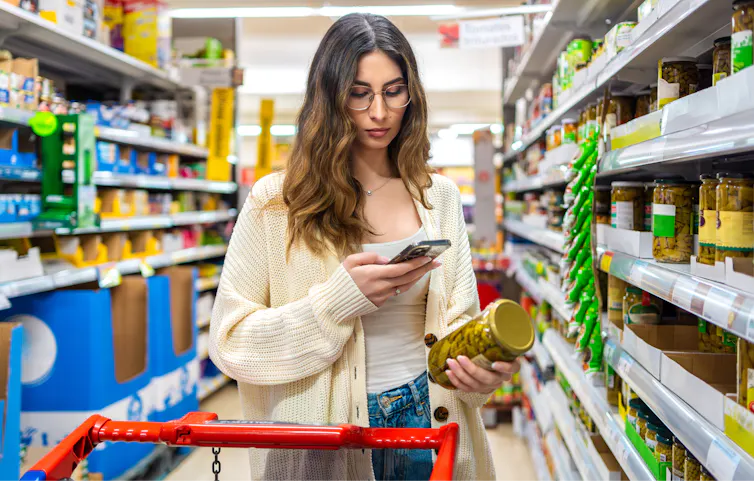
Abraham Gonzalez Fernandez/Getty Images

What is inflammation?

People often think of inflammation as something to avoid at all costs, but it’s actually a healthy and normal process that helps the body heal and defend itself against infections, injuries, or diseases. Without it, we wouldn’t recover from even small injuries.

Inflammation and the immune system work together: when the body notices injury or infection, the immune system starts to trigger inflammation, which brings immune cells, nutrients and oxygen to the affected area. This helps with healing.

Inflammation can be short-term (acute) or long-term (chronic). Acute inflammation is helpful and part of normal healing. For example, a scraped knee becomes red, swollen and warm as the skin repairs, or a sore throat swells while fighting infection.

Chronic inflammation, on the other hand, can be harmful. It occurs at a low level over time and is often unnoticed, but is linked with many chronic diseases including heart disease, type 2 diabetes and cancer.

What causes chronic inflammation?

Factors such as age, smoking, sedentary behaviour, obesity, hormonal changes, stress and irregular sleep patterns have all been linked with chronic inflammation.

Diet also plays a key role. A typical Western diet, which is high in ultra-processed foods such as packaged baked goods, soft drinks, fast food, processed meats and confectionery, and low in fresh fruits and vegetables, has been strongly linked with higher levels of inflammation.

Can anti-inflammatory diets help?

Yes. What we eat can influence inflammation in the body. Diets rich in fruits, vegetables, wholegrains, legumes and healthy fats – and low in highly processed foods and added sugars – are associated with lower levels of inflammation.

The Mediterranean-style diet is the most researched example. It’s packed with vegetables, fruits, wholegrains, nuts, seeds and olive oil, with moderate amounts of fish, chicken, eggs and dairy, and minimal red or processed meat and added sugars.

In 2022, researchers reviewed the best available evidence and found people following a Mediterranean-type diet had lower levels of inflammatory markers in their blood, suggesting it can help reduce chronic inflammation.

Growing research also suggests diets high in processed foods and low in fibre can change the balance of bacteria in the gut, which may contribute to low-level, chronic inflammation.

Where TikTok gets it right… and wrong

Right: probiotics may help

Many TikTok videos recommend probiotic supplements to lower inflammation, and there is emerging science to support this. A 2020 review of randomised controlled trials (the strongest form of evidence) found probiotics may reduce some inflammatory blood markers in both healthy people and those living with a health condition.

But while promising, researchers caution more studies are needed to determine which strains and doses are most effective.

Wrong: ‘avoid lists’ (gluten, dairy) without a medical reason

TikTok advice to avoid dairy or gluten to reduce inflammation isn’t backed by strong science for most people.

Inflammation from dairy or gluten typically only occurs in those with allergies or coeliac disease, in which case, medical dietary restriction is necessary. Cutting them out without cause risks unnecessary nutrient gaps.

For the general population, systematic reviews show dairy products often have neutral or even protective effects on inflammation.

Plus, foods such as yogurt, kefir and certain cheeses are rich in probiotics, which are helpful in reducing inflammation.

Many people believe cutting out gluten will lower chronic inflammation and avoid it to help with gut issues or fatigue.

But there’s little scientific evidence to back this up. In fact, wholegrain consumption has been shown to positively affect health status by improving inflammation.

A Mediterranean-style diet already avoids most processed, gluten-heavy foods such as cakes, pastries, white bread, fast food and packaged snacks. If you feel sensitive to gluten, this way of eating naturally keeps your intake low, without the need to cut out nutritious wholegrains that can benefit your health.

Who might benefit from an anti-inflammatory diet?

For people with certain medical conditions, an anti-inflammatory eating pattern can play a useful role alongside conventional care.

Research suggests potential benefits for conditions such as polycystic ovary syndrome (PCOS), endometriosis, autoimmune conditions and arthritis, where chronic inflammation contributes to symptoms or disease progression.

In these cases, dietary approaches should be guided by an accredited practising dietitian to ensure that changes are safe, balanced and tailored to individual needs.

The bottom line for healthy people

If you’re otherwise healthy, you don’t need to cut out entire food groups to reduce inflammation.

Instead, focus on balance, variety and minimally processed foods: essentially a Mediterranean-style eating pattern. Support your body’s natural defences with a colourful plate full of vegetables and fruit, enough fibre, healthy fats such as olive oil and nuts. No TikTok “avoid list” required.

Alongside a balanced diet, being physically active, getting good-quality sleep, drinking only minimal alcohol and not smoking all help the body keep inflammation in check. These healthy habits work together to strengthen the immune system and lower the risk of chronic disease.

Lauren Ball, Professor of Community Health and Wellbeing, The University of Queensland and Emily Burch, Accredited Practising Dietitian and Lecturer, Southern Cross University

This article is republished from The Conversation under a Creative Commons license. Read the original article.

Don’t Forget…

Did you arrive here from our newsletter? Don’t forget to return to the email to continue learning!

  • The Truth About Handwashing
    Handwashing habits exposed: 54% overwash, yet under 80% are truthful. Soap beats sanitizer, antibacterial claims debunked – all wrapped in science’s embrace.

Learn to Age Gracefully

Join the 98k+ American women taking control of their health & aging with our 100% free (and fun!) daily emails:

  • Drug Metabolism (When You’re Not Average!)

    10almonds is reader-supported. We may, at no cost to you, receive a portion of sales if you purchase a product through a link in this article.

    When Your Medications Run Out… Of You

    Everybody knows that alcohol can affect medications’ effects, but what of smoking, and what of obesity? And how does the alcohol thing work anyway?

    It’s all about the enzymes

    Medicines that are processed by the liver (which is: most medicines) are metabolized there by specialist enzymes, and the things we do can increase or decrease the quantity of those enzymes—and/or how active they are.

    Dr. Kata Wolff Pederson and her team of researchers at Aarhus University in Denmark examined the livers of recently deceased donors in ways that can’t (ethically) be done with live patients, and were able to find the associations between various lifestyle factors and different levels of enzymes responsible for drug metabolism.

    And it’s not always how you might think!

    Some key things they found:

    • Smokers have twice as high levels of enzyme CYP1A2 than non-smokers, which results in the faster metabolism of a lot of drugs.
    • Drinkers have 30% higher levels of enzyme CYP2E1, which also results in a faster metabolism of a lot of drugs.
    • Patients with obesity have 50% lower levels of enzyme CYP3A4, resulting in slower metabolism of many drugs

    This gets particularly relevant when we take into account the next fact:

    • Of the individuals in the study, 40% died from poisoning from a mixture of drugs (usually: prescription and otherwise)

    Read in full: Sex- and Lifestyle-Related Factors are Associated with Altered Hepatic CYP Protein Levels

    Read a pop-sci article about it: Your lifestyle can determine how well your medicine will work

    How much does the metabolism speed matter?

    It can matter a lot! If you’re taking drugs and carefully abiding by the dosage instructions, those instructions were assuming they know your speed of metabolism, and this is based on an average.

    • If your metabolism is faster, you can get too much of a drug too quickly, and it can harm you
    • If your metabolism is faster, it also means that while yes it’ll start working sooner, it’ll also stop working sooner
      • If it’s a painkiller, that’s inconvenient. If it’s a drug that keeps you alive, then well, that’s especially unfortunate.
    • If your metabolism is slower, it can mean your body is still processing the previous dose(s) when you take the next one, and you can overdose (and potentially die)

    We touched on this previously when we talked about obesity in health care settings, and how people can end up getting worse care:

    Let’s Shed Some Obesity Myths

    As for alcohol and drugs? Obviously we do not recommend, but here’s some of the science of it with many examples:

    Why it’s a bad idea to mix alcohol with some medications

    Take care!

    Share This Post

  • From Painkillers To Hunger-Killers

    10almonds is reader-supported. We may, at no cost to you, receive a portion of sales if you purchase a product through a link in this article.

    Here’s this week’s selection of health news discoveries, the science behind them, what they mean for you, and where you can go from there:

    Killing more than pain

    It’s well-known that overuse of opioids can lead to many problems, and here’s another one: messing with the endocrine system. This time, mostly well-evidenced in men—however, the researchers are keen to point out that absence of evidence is very much not evidence of absence, hence “the hidden effects” in the headline below. It’s not that the effects are hard to see—it’s that a lot of the research has yet to be done. For now, though, we know at the very least that there’s an association between opioid use and hyperprolactinemia in men. The same research also begins to shine a light on the effects of opioid use on the hypothalamic-pituitary system and bone health, too:

    Read in full: The hidden effects of opioid use on the endocrine system

    Related: The 7 Approaches To Pain Management

    Gut microbiome dysbiosis may lead to slipping disks

    These things sound quite unconnected, but the association is strong. The likely mechanism of action is that the gut dysbiosis influences systemic inflammation, and thus spinal health—because the gut-spine axis cannot really be disconnected (while you’re alive, at least). It’s especially likely if you’re over 50 and female:

    Read in full: Are back problems influenced by your gut?

    Related: Is Your Gut Leading You Into Osteoporosis?

    The Internet is really really great (for brains)

    It’s common to see many articles on the Internet telling us, paradoxically, that we should spend less time on the Internet. However… Remember when in the 90s, it was all about “the information superhighway”? It turns out, the fact that it’s more like “the information spaghetti junction” these days doesn’t change the fact that stimulation is good for our brains, and daily Internet use improves memory, because of the different way that we index and store information that came from a virtual source. While there are parts of your brain for “things at home” and “things at the local supermarket”, there are also parts for “things at 10almonds” and “things at Facebook” and so forth. You are, in effect, building a vast mental library as you surf:

    Read in full: Daily internet use supercharges your memory!

    Related: Make Social Media Work For Your Mental Health

    Fall back

    Around this time of year in many places in the Northern Hemisphere, the clocks go back an hour (it’s next weekend in the US and Canada, by the way, and this weekend in most of Europe). Many enjoy this as the potential for an extra hour’s sleep, but for night owls, it can be more of a nuisance than a benefit—throwing out what’s often an already difficult relationship with the clock, and presenting challenges both practical and physiological (different processing of melatonin, for instance). Here be science:

    Read in full: Why night owls struggle more when the clocks go back

    Related: Early Bird Or Night Owl? Genes vs Environment

    Can you outrun your hunger?

    It seems so, though benefits are strongest in women. We say “outrun”, though this study did use stationary cycling. To put it in few words, intense exercise (but not moderate exercise) significantly reduced acylated ghrelin (hunger hormone) levels, and subjective reports of hunger, especially in women:

    Read in full: Study finds intense exercise may suppress appetite in healthy humans

    Related: 3 Appetite Suppressants Better Than Ozempic

    Take care!

    Share This Post

  • When “Sleeping It Off” Helps, & When It Harms

    10almonds is reader-supported. We may, at no cost to you, receive a portion of sales if you purchase a product through a link in this article.

    At 10almonds, we’re often encouraging our readers to get more sleep, and especially in the context of the common myth that older people require less sleep; the reality is that sleeping less and not dying of it does not equate to needing less.

    See also: Sleep: Yes, You Really Do Still Need It! and How Sleep-Deprived Are You, Really?

    As well as ensuring to get in a good quantity of Zs, we also urge you to get good quality, too—see: The 6 Dimensions Of Sleep (And Why They Matter) ← duration is just one dimension out of the six!

    Sleep & stress (or rather: stress & sleep)

    ❝Sleep that knits up the ravell’d sleave of care,
    The death of each day’s life, sore labour’s bath,
    Balm of hurt minds, great nature’s second course,
    Chief nourisher in life’s feast.❞

    ~ William Shakespeare (Macbeth, Act 2 Sc. 2)

    It’s very reasonable that after stressful events have exhausted us, whatever their nature or cause, we will at some point crash (energywise), and want to sleep.

    But watch out! Because that can turn out to be a bad idea, sometimes. More on that later.

    First, let’s examine the situation before the sleep: stress can both disrupt and promote sleep; the outcome depends on stress type, context, and timing.

    Sometimes, some kinds of stress will keep us at night and thus prevent us from getting restorative rest. That’s usually a bad thing. See: What’s Really Keeping You Awake? The Brain’s Role in Sleepless Nights ← in other words: when things might well be “all in your head”, and/but that’s the worst place for things to be when you’re trying to sleep

    Sometimes, on the other hand, other types of stress (including psychological or purely physical stressors, such as emotional or immune issues, respectively) can lead to sleep that helps us to recover and build resilience. This isn’t a vague wishy-washy thing or a nod to the broadly restorative effect of sleep; it has to do with specific brain-things we can point to, in the ventral tegmental area (VTA) and lateral habenula; we’ll link to the science for this shortly.

    Notably, stress-activated sleep-promoting neurons reduce anxiety, too; this has to do with GABA-signalling; see: A Neurotransmitter Less Talked-About: GABA Against Stress/Anxiety

    Practical tip: it’s important to try to get good, healthy, complete sleep cycles in after stress, because both REM and non-REM sleep have important parts to play;

    • Non-REM sleep: for physiological repair while autonomic nervous system activity is reduced
    • REM sleep: for emotional processing and memory consolidation.

    You can read all about these things here: Sleep and the recovery from stress ← whose short title belies the fact that it’s a very comprehensive review of many kinds of evidence from human and animal studies; we particularly recommend checking out figure 3 for a graphical representation, too

    Now comes the “but watch out”….

    The researchers note that improving sleep after stress (per CBT, sleep hygiene, etc) can reduce our vulnerability to anxiety, depression, or PTSD. They also note that poor sleep after stress can (and often will) worsen these conditions.

    However, paradoxically: immediate sleep deprivation after trauma can reduce formation of traumatic memories—meaning that there is nuance to how we must go about this, as sometimes it can do more harm than good, when trying to “sleep it off” can effectively do the opposite, and engrain a traumatic experience permanently.

    This goes for PTSD-inducing events of the kind that might come to mind when PTSD is mentioned, but it’s also another point in favor of the common marital advice to “never go to bed on an argument“, too. It’s better to process those kinds of things healthily before sleeping, rather than let your brain decide that you need a permanent easy-access record of such unpleasantries, to regularly replay it in your mind later—which is usually neither fun nor beneficial.

    Learn more: How Your Brain Chooses What To Remember ← this is about the neurophysiology of sleep and memory consolidation

    Want to learn more?

    Here are some resources that might help with this, depending on your individual situation, of course:

    Take care!

    Share This Post

  • Low-Dose Aspirin & Anemia

    10almonds is reader-supported. We may, at no cost to you, receive a portion of sales if you purchase a product through a link in this article.

    We recently wrote about…

    How To Survive A Heart Attack When You’re Alone

    …and one of the items was “if you have aspirin readily available, then after calling an ambulance is the time to take it—but don’t exert yourself trying to find some”.

    But what of aspirin as a preventative?

    Many people take low-dose aspirin daily as a way to reduce the risk of atherothrombosis specifically (and thus, indirectly, they hope to reduce the risk of heart attacks).

    The science of how helpful this is both clear and complicated—that is to say, the stats are not ambiguous*, but there are complicating factors of which many people are unaware.

    *it will reduce the overall risk of cardiovascular events, but will not affect CVD mortality; in other words, it may improve your recovery from minor cardiac events, but is not likely to save you from major ones.

    And also, it has unwanted side effects that can constitute a more relevant threat for many people. We’ll share more on that at the end of today’s article, but first…

    A newly identified threat from daily aspirin use

    A large (n=313,508) study of older adults (median age 73) were sorted into those who used low-dose aspirin as a preventative, and those who did not.

    The primary outcome was incidence of anemia sufficient to require treatment, and the secondary outcome was major bleeding. And, at least 1 in 5 of those who experienced anemia also experienced bleeding.

    The bleeding issue was not “newly identified” and will not surprise many people; after all, the very reason that aspirin is taken as a CVD preventative is for its anti-clotting property of allowing blood to flow more freely.

    The anemia, however, has been getting increasing scientific scrutiny lately, after long going unnoticed in the wild. Given that anemia also gives the symptom “dizziness”, this is also a significant threat for increasing the incidence of falls in the older population, too, which can of course lead to serious complications and ultimately death.

    Here’s the paper itself:

    Low-Dose Aspirin and Risk of Anaemia in Older Adults: Insights from a Danish Register-based Cohort Study

    Want to know more?

    As promised, here’s what we wrote previously about some of aspirin’s other risks:

    Aspirin, CVD Risk, & Potential Counter-Risks

    Take care!

    Don’t Forget…

    Did you arrive here from our newsletter? Don’t forget to return to the email to continue learning!

    Learn to Age Gracefully

    Join the 98k+ American women taking control of their health & aging with our 100% free (and fun!) daily emails:

  • Fava Beans vs Soybeans – Which is Healthier?

    10almonds is reader-supported. We may, at no cost to you, receive a portion of sales if you purchase a product through a link in this article.

    Our Verdict

    When comparing fava beans to soybeans, we picked the soy.

    Why?

    It was quite one-sided today:

    In terms of macros, fava beans have more carbs, while soybeans have more fiber and more than 2x the protein, which we say is a clear win for soy in this category.

    In the category of vitamins, fava beans have more of vitamins A, B3, and B9, while soybeans have more of vitamins B1, B2, B5, B6, B7, C, E, and K, winning in this round too.

    Looking at minerals, fava beans are not higher in any mineral, while soybeans boast more calcium, copper, iron, magnesium, manganese, phosphorus, potassium, selenium, and zinc, winning their third round in a row.

    Adding up the sections makes for a clear overall win for soy, but by all means enjoy either or both—unless you have a soy allergy, of course, which would change everything!

    Want to learn more?

    You might like:

    Why You Can’t Skimp On Amino Acids

    Enjoy!

    Don’t Forget…

    Did you arrive here from our newsletter? Don’t forget to return to the email to continue learning!

    Learn to Age Gracefully

    Join the 98k+ American women taking control of their health & aging with our 100% free (and fun!) daily emails:

  • Can You Pass This 10-Second Walking Test?

    10almonds is reader-supported. We may, at no cost to you, receive a portion of sales if you purchase a product through a link in this article.

    This 10-second walking test should actually only take about 4 seconds, but it’s very important:

    Stepping into good health

    Set up a 12ft walkway (it doesn’t have to be anything special, just a flat floor on which you can walk in a straight line for about 12ft). Walk at a normal pace while timing yourself, and if it takes longer than about 4 seconds to walk that distance, then your walking speed is in a risk zone for future loss of independence.

    Why walking speed matters: slower walking, especially after age 60, strongly predicts falls, fatigue, and declining independence, often before people realize there’s a problem.

    So, what causes slow walking speed? Weak calves, stiff hips, and weak glutes are the three most common and most fixable reasons walking speed drops with age. Of those,

    • Weak glutes: the gluteus maximus provides push-off power and upright stability, and when it isn’t firing, walking feels flat, slow, and draining.
    • Weak calves: calves act as your walking engine, and when they weaken, pushing forwards feels harder, balance worsens, and walking becomes slower and more tiring.
    • Stiff hips: tight hip flexors shorten your stride, making walking slower and more effortful, with prolonged sitting being the biggest contributor.

    So, what to do about it?

    • Prone glute training: lie on your front, gently squeeze your glutes, lift one leg slightly while keeping your lower back relaxed, then lower with control to target your glutes rather than your spine.
    • Single-leg donkey calf raise: lean forwards with your hands on a chair or counter, lift one foot, and repeatedly push up onto your tiptoes and lower with control, using both legs if balance feels unsafe.
    • Skateboard swings: no skateboard necessary; just stand holding a support, keep your back upright, place your weight on one leg, and swing the free leg forwards and backwards in a controlled motion to restore hip extension.

    For more on all of this plus visual demonstrations, enjoy:

    Click Here If The Embedded Video Doesn’t Load Automatically!

    Want to learn more?

    You might also like:

    90% Of People Over 50 Fail This Balance Test. Will You?

    Take care!

    Don’t Forget…

    Did you arrive here from our newsletter? Don’t forget to return to the email to continue learning!

    Learn to Age Gracefully

    Join the 98k+ American women taking control of their health & aging with our 100% free (and fun!) daily emails: