
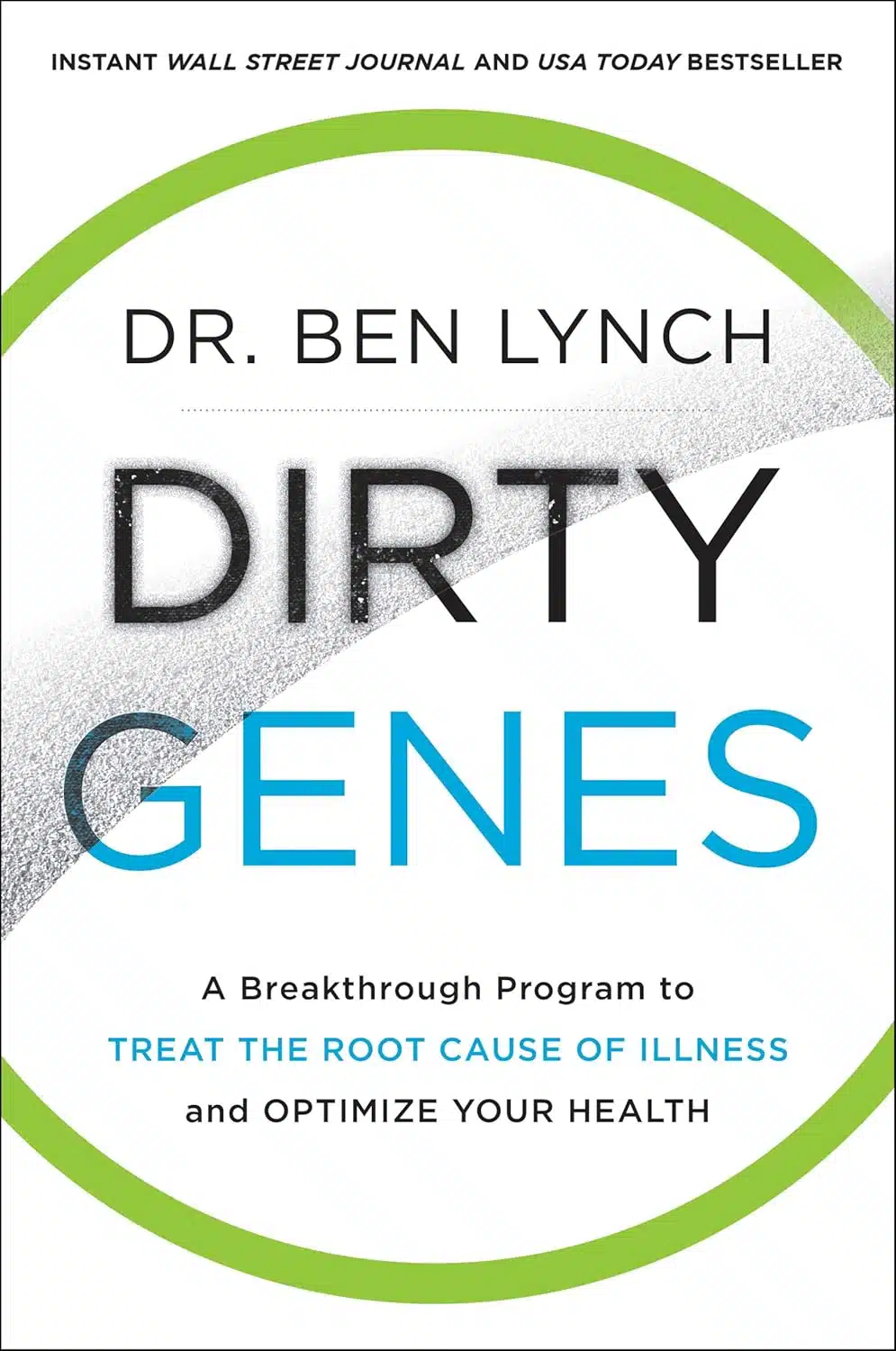
Dirty Genes – by Ben Lynch, ND
10almonds is reader-supported. We may, at no cost to you, receive a portion of sales if you purchase a product through a link in this article.
Even with a full set of interpreted data from a personal genomics service, understanding one’s own genetic information can be daunting. This book aims to make it less so, and give practical tools to help make the most of the genes we have.
The author explains the common functions of an assortment of important genes, and what they can do. With an emphasis on “can”, because every gene will have a lot more possibilities than actualities. This is partly because of the co-influencing factors of other genes, and partly because just because we have a certain gene, doesn’t mean it is expressed a certain way.
Genes are just the blueprints, after all, and the body can and often will disregard one set of instructions to do something else, especially in the case of genes with hormonally-mediated expression. In other words, those genes whereby they’ll have “if this, then that” instructions, that may be dependent on your levels of a given hormone; maybe estrogen, maybe a thyroid hormone, maybe cortisol, you get the idea. A wide array of lifestyle factors can also play a huge part. The gut microbiome can alter gene expression, too. And so on.
The main thrust of this book, therefore, is to understand some of the most important on/off switches to be aware of, and what to do in order to switch them the way you want.
Once you’ve got to grips with such mighty genes as the MTHFR and the DAO to name just a couple from the first “laundry list”, you’ll also dive into single nucleotide polymorphisms (SNPs), pronounced “snips” to their friends. These are specific bits of genes that can be a little bit different, and are often used as markers for traits/risks in health genomics. The same approach is then taken with regard to knowing what to do to make the most of benefits / minimize risks.
The style is lighter pop-science than you might be expecting, similar perhaps to what you read here at 10almonds, and the bibliography is a little more modest than you might expect too.
Bottom line: if you’re looking for deep science, this isn’t it. But if you’re looking for a practical guide to demystifying your genes, SNPs, and relevant epigenetic factors, then this book makes things very clear and comprehensible.
Click here to check out Dirty Genes, and work your way through those laundry lists!
Don’t Forget…
Did you arrive here from our newsletter? Don’t forget to return to the email to continue learning!
Recommended
Learn to Age Gracefully
Join the 98k+ American women taking control of their health & aging with our 100% free (and fun!) daily emails:
-
One Exercise To Walk Better After 60
10almonds is reader-supported. We may, at no cost to you, receive a portion of sales if you purchase a product through a link in this article.
And no, it’s not “walking”; it’s what you can do in advance of the walking to make the walking easier and less likely to cause pain & fatigue:
It’s in your hips
Slowing down and/or find it more difficult walking after 60 is often caused less by weak legs, and more by reduced hip extension. This is because when your leg no longer moves effectively whenever it’s behind your body, your glutes stop generating strong push-off, leading to shorter strides, shuffling, slower speed, higher risk of tripping, and less confidence.
The key idea here: it’s important to build/restore glute strength through hip extension, rather than relying mainly on stretching. This can be done by training one key movement: the controlled backward drive of your leg.
This can be achieved through what’s basically one exercise, that can be done in various ways ranging from more easy to more difficult:
- Active hip extension: hold a chair or counter or such for balance, shift your weight onto one leg, move your free leg directly backwards about 10 degrees, squeeze your glute, and return slowly without leaning forwards or swinging, but with a pause at each end.
- Banded hip extension: add a resistance band around your ankles, and repeat the same motion while maintaining tension, pushing into resistance at the end range, and controlling the return all the way.
- Plank hip extension: do the same glute-driven leg lift from a forearm plank, to combine hip extension with core strength, keeping your body straight and avoiding twisting.
As with most such things, start as easy as necessary and work up to the more difficult levels, prioritize good form throughout, and also prioritize consistency over intensity.
For more on all of this plus visual demonstrations, enjoy:
Click Here If The Embedded Video Doesn’t Load Automatically!
Want to learn more?
You might also like:
Take care!
Share This Post
-
Just One Thing – by Dr. Michael Mosley
10almonds is reader-supported. We may, at no cost to you, receive a portion of sales if you purchase a product through a link in this article.
This is a collection of easy-to-implement changes that have good science behind them to show how they can benefit us. Some things are obvious (e.g: drink water); others, less so (e.g: sing, to reduce inflammation).
The book is divided thematically into times of the day, though in many cases it’s not a hard rule that a thing needs to be done at a certain time. Others are, like a cold shower in the morning and hot bath before bed—you might not want to switch those around!
The style is very pop-science, and does not have in-line citations for claims, but it does have a bibliography in the bag organized by each “one thing”, e.g. it might say “get some houseplants” and then list a number of references supporting that, with links to the studies showing how that helps. For those with the paper version, don’t worry, you can copy the URL from the book into your browser and see it that way. In any case, there are 2–6 scientific references for each claim, which is very respectable for a pop-sci book.
Bottom line: if you’re looking for evidence-based “one little thing” changes that can make a big difference, this book has lots!
Click here to check out Just One Thing, and improve your life!
Share This Post
-
The Vagus Nerve (And How You Can Make Use Of It)
10almonds is reader-supported. We may, at no cost to you, receive a portion of sales if you purchase a product through a link in this article.
The Vagus Nerve: The Brain-Gut Highway
The longest cranial nerve is the vagus nerve; it runs all the way from your brain to your colon. It’s very important, and (amongst other tasks) it largely regulates your parasympathetic nervous system, and autonomous functions like:
- Breathing
- Heart rate
- Vasodilation & vasoconstriction
- Blood pressure
- Reflex actions (e.g. coughing, sneezing, swallowing, vomiting, hiccuping)
That’s great, but how does knowing about it help us?
Because of vagal maneuvers! This means taking an action to stimulate the vagus nerve, and prompt it to calm down various bodily functions that need calming down. This can take the form of:
- Massage
- Electrostimulation
- Diaphragmatic breathing
Massage is perhaps the simplest; “vagus” means “wandering”, and the nerve is accessible in various places, including behind the ears. That’s the kind of thing that’ easier to show than tell, though, so we’ll include a video at the end.
Electrostimulation is the fanciest, and has been used to treat migraines and cluster headaches. Check out, for example:
Update on noninvasive neuromodulation for migraine treatment-Vagus nerve stimulation
Diaphragmatic breathing means breathing from the diaphragm—the big muscular tissue that sits under your lungs. You might know it as “abdominal breathing”, and refers to breathing “to the abdomen” rather than merely to the chest.
Even though your lungs are obviously in your chest not your abdomen, breathing with a focus on expanding the abdomen (rather than the chest) when breathing in, will result in much deeper breathing as the diaphragm allows the lungs to fill downwards as well as outwards.
Why this helps when it comes to the vagus nerve is simply that the vagus nerve passes by the diaphragm, such that diaphragmatic breathing will massage the vagus nerve deep inside your body.
More than just treating migraines
Vagus nerve stimulation has also been researched and found potentially helpful for managing:
- Depression, inflammation, and heart disease
- Diabetes and glycemic issues in general
- Multiple sclerosis and autoimmune disease in general
- Alzheimer’s disease and dementia in general
- Rheumatoid arthritis (we already mentioned inflammation and autoimmune diseases, but this is an interesting paper so we included it)
All this is particularly important as we get older, because vagal response reduces with age, and vagus nerve stimulation, which improves vagal tone, makes it easier not just to manage the aforementioned maladies, but also simply to relax more easily and more deeply.
See: Influence of age and gender on autonomic regulation of heart
We promised a video for the massage, so here it is:
! Share This Post
Related Posts
-
The 3 Best Predictors Of How Well You’ll Age
10almonds is reader-supported. We may, at no cost to you, receive a portion of sales if you purchase a product through a link in this article.
Dr. Juulia Jylhävä explains:
This will age well
Unlike many organisms, such as trees with their annual growth rings, your body neither knows nor cares how many times you’ve flown around the sun, and your biological age is actually a composite of a number of different ways of measuring biological aging, including:
- Telomere shortening: gradual shortening of chromosomes’ end-caps (like the aglets on the ends of shoelaces) tracks cellular aging very usefully, because telomeres erode with each cell division, eventually limiting replication and making length an imperfect-but-useful marker of biological age.
- DNA methylation: predictable shifts in methyl-tag patterns create quite reliable epigenetic clocks, because certain genomic sites change steadily with age. We don’t fully understand how this happens yet, but it’s clear that it does happen, like clockwork.
- Inflammation: rising baseline immune-protein levels lead to inflammatory aging, sometimes called “inflammaging”, as repeated stressors and senescent cells raise chronic inflammation over time.
All that said, while age clocks (based on the above markers) can help guide personalized healthcare by detecting hidden disease earlier and tracking the effectiveness of interventions, it remains unclear whether these markers actually drive aging, or merely reflect it.
For more on all of this, enjoy:
Click Here If The Embedded Video Doesn’t Load Automatically!
Want to learn more?
You might also like:
Age & Aging: What Can (And Can’t) We Do About It?
Take care!
Don’t Forget…
Did you arrive here from our newsletter? Don’t forget to return to the email to continue learning!
Learn to Age Gracefully
Join the 98k+ American women taking control of their health & aging with our 100% free (and fun!) daily emails:
-
Metformin vs Cancer/Aging
10almonds is reader-supported. We may, at no cost to you, receive a portion of sales if you purchase a product through a link in this article.
…and other items from this week’s health science news:
Metabolic health is more than most people think
Researchers (Dr. Emilie Lavallée et al.) found that ATP5I is a direct molecular target of metformin. This may not mean much to most readers, so: ATP5I is part of the enzyme complex that produces ATP, the primary “energy currency” of cells. Specifically it seems to help organize and assemble the ATP synthase machinery, rather than directly carrying out ATP production itself.
In other words: it helps your cellular energy mechanisms work better
As for why you should care about cellular energy mechanisms: you are made of cells, and the energy they have is the energy you have*.
*unless we want to get pedantic, in which case yes, you also have some gravitational potential energy due to your mass, including non-cellular mass, and its relationship to gravity. But that won’t help you get through your day, for the most part.
Usefully, this also highlights a likely reason why people who take metformin have a lower risk of many cancers, bearing in mind that while things like diabetes and heart disease are thought of as metabolic disorders (and they are), so are cancer and aging:
Read in full: Why metformin matters beyond diabetes: New target could reshape aging and cancer research
Related: How Metformin Reduces Long COVID Risk By 63%
Kidney disease is fast becoming epidemic
Bad news: early chronic kidney disease (CKD) often causes no noticeable symptoms, allowing kidney damage to progress for years before being detected.
Worse news: CKD has entered the world’s top 10 causes of death, with approximately 1.5 million deaths in the US attributed directly to the disease in 2023 (yes, science typically lags with numbers like that, because of peer review, here we are in 2026 at time of writing, reading stats from 2023, but it’s better to have correct stats from a couple of years ago than guess at more recent ones without appropriate scientific rigor).
Further, impaired kidney function contributed to about 12% of global cardiovascular deaths, making all-too-clear the strong connection between kidney disease and heart disease.
Underdiagnosis remains a major problem too: many people are never tested, so the true prevalence may be higher than current estimates suggest; researchers emphasized greater use of urine testing and kidney function screening in at-risk individuals.
Good news: treatment options are improving! Newer medications, including SGLT2 inhibitors, GLP-1–based therapies, and nonsteroidal mineralocorticoid receptor antagonists, can help protect kidney function and reduce cardiovascular risk in appropriate patients.
However, prevention definitely remains much better than treatment, so it’s as well to get ahead of things and check out our “related” link below to learn now:
Read in full: A silent kidney crisis is spreading far faster than experts expected
Related: Are your Kidneys Ok? Detect Early To Protect Kidney Health (Here’s How)
When industry has beef with scientists
Researchers (Dr. Katherine Sievert et al.) researchers reviewed 500 nutrition studies published between 2014 and 2023 that examined links between meat consumption and health outcomes, then compared study conclusions with declared funding sources, author affiliations, and conflicts of interest.
In few words: a lot of those 500 studies had some form of meat-industry involvement (i.e: the meat industry paid for those studies, in part or in full), and these studies were 16x more likely to conclude that meat was harmless, beneficial, or health-promoting than studies without such ties to the meat industry.
So, in other words: when encountering headlines claiming that meat is healthy, it is worth checking who funded the study, whether authors disclosed financial relationships, and whether the findings align with the broader body of independent evidence.
Read in full: How ‘big meat’ shapes science to give steak a healthy glow up
Related: What Health Difference Does Pasture-Raised Beef Actually Make?
Take care!
Don’t Forget…
Did you arrive here from our newsletter? Don’t forget to return to the email to continue learning!
Learn to Age Gracefully
Join the 98k+ American women taking control of their health & aging with our 100% free (and fun!) daily emails:
-
Melatonin Supplementation & Your Heart
10almonds is reader-supported. We may, at no cost to you, receive a portion of sales if you purchase a product through a link in this article.
We previously wrote about about melatonin:
❝Melatonin is a hormone normally made in our pineal gland. It helps regulate our circadian rhythm, by making us sleepy.
It has other roles too—it has a part to play in regulating immune function, something that also waxes and wanes as a typical day goes by.
Additionally, since melatonin and cortisol are antagonistic to each other, a sudden increase in either will decrease the other. Our brain takes advantage of this, by giving us a cortisol spike in the morning to help us wake up.
As a supplement, it’s generally enjoyed with the intention of inducing healthy, natural, restorative sleep.❞
Read in full: Melatonin: A Safe, Natural Sleep Aid? ← our research review article that does cover the pros and cons, and yes, there are indeed downsides too, including some contraindications e.g. melatonin helps regulate immune function, so that’s something to bear in mind if you’re on immunosuppressants or otherwise have an autoimmune disorder. It can also interfere with blood pressure medications and blood thinners, and may make epilepsy meds less effective.
The new news
Researchers (Dr. Ekenedilichukwu Nnadi et al.) looked at 130,828 adults (of whom, mostly women, average age 56) with insomnia, and found an important association with regard to long-term melatonin use.
Specifically: in adults with chronic insomnia, documented melatonin use for ≥12 months was linked with 90% higher 5-year risk of incident heart failure versus matched non-users (4.6% vs 2.7%), plus 3.5x higher risk of heart-failure hospitalization and 81% higher all-cause mortality.
There are some limitations: this was an observational study, based on electronic health records (TriNetX), and doesn’t outright prove causation.
For example, OTC users might have been misclassified as non-users, dosing and adherence weren’t known, and further data-confounding from variations in insomnia severity, mental health, or other meds is plausible too.
Still, the association is strong, so that seems like cause for concern, when likely nobody will die from not supplementing with melatonin.
The principle here is, like in the Hippocratic oath, “first, do no harm”.
In other words: if not taking the meds is definitely safe, and taking the meds may be unsafe, then erring on the side of not taking them is likely the best option.
See also: Are You Taking PIMs? Getting Off The Overmedication Train ← “PIMs” is the medical shorthand for “potentially inappropriate medications”
And, for that matter, The Common Meds That Make You More Likely To Die From A Fall ← when, statistically speaking, after a certain age, a fall is much more likely to kill you than taking longer to get to sleep
If you have been using melatonin most nights for months, consider tapering your dose downwards and switching to things like CBT-I and more focused sleep-hygiene strategies, for example:
- How to Fall Asleep Faster: CBT-Insomnia Treatment
- Don’t Do These Things If You’re Over 50 (And Want Better Sleep) ← this about common mistakes, including one involving melatonin supplementation
Of course, do discuss any long-term use with your doctor/pharmacist—especially if you have cardiovascular risk or symptoms (e.g. breathlessness, ankle swelling, unusual fatigue).
If you’d like to read the AHA’s press release for the study we talked about (it has a lot more details than we have room for here), then here you go:
Want to try some?
Since the above is only about chronic long-term use, perhaps you’d still like some for short term use, ideally after consulting with your doctor and/or pharmacist.
If that’s the case, then as ever, we don’t sell it (or anything else), but for your convenience, here is an example product on Amazon.
Enjoy!
Don’t Forget…
Did you arrive here from our newsletter? Don’t forget to return to the email to continue learning!
Learn to Age Gracefully
Join the 98k+ American women taking control of their health & aging with our 100% free (and fun!) daily emails:


