Celeriac vs Onion – Which is Healthier?

10almonds is reader-supported. We may, at no cost to you, receive a portion of sales if you purchase a product through a link in this article.

Our Verdict

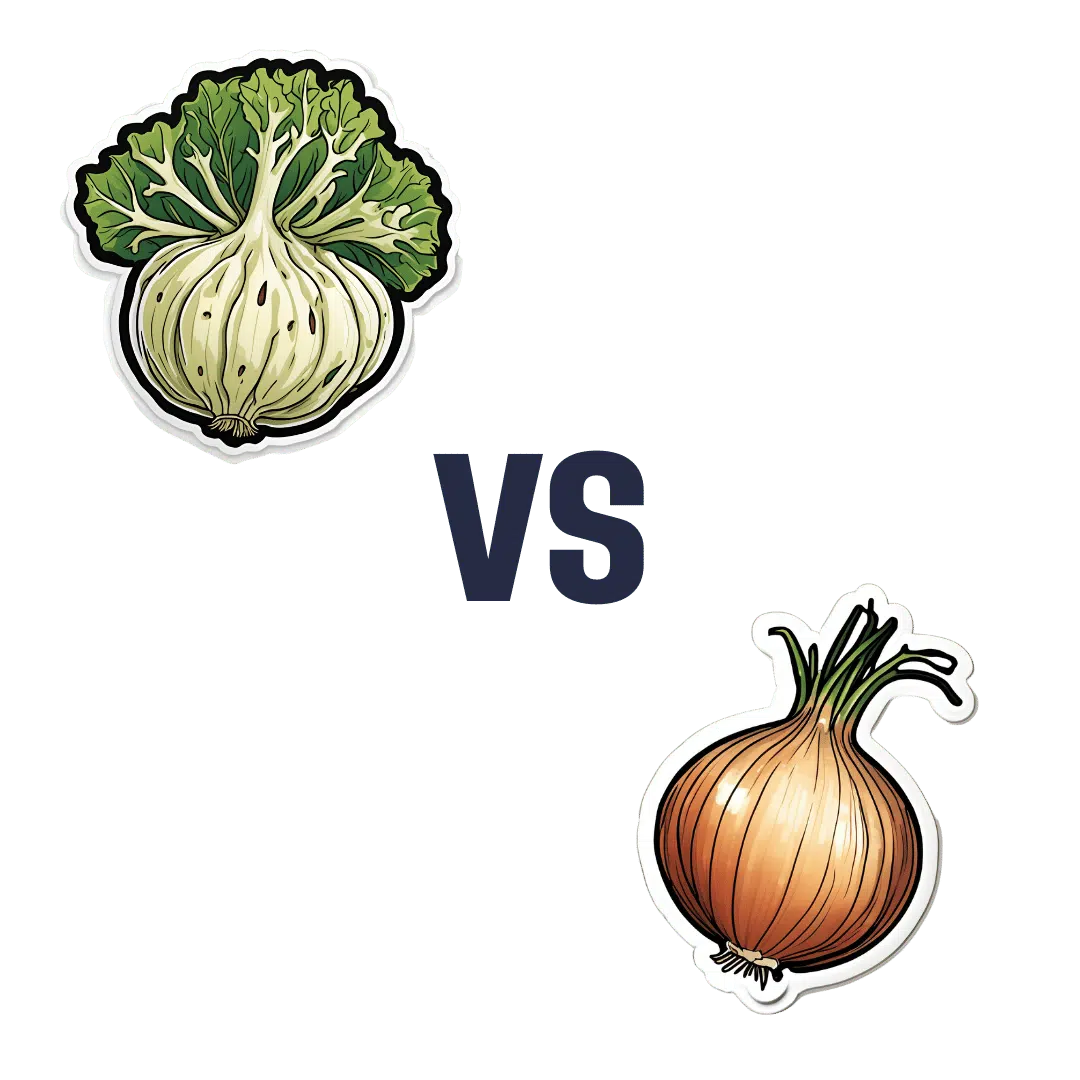
When comparing celeriac to onion, we picked the celeriac.

Why?

In terms of macros, celeriac has slightly more fiber and protein, while onions have slightly more carbs, so this category is a nominal win for celeriac, but really it’s very close, so can just as easily be called a tie in this first round.

In the category of vitamins, celeriac has more of vitamins B1, B2, B3, B5, B6, B7, C, E, and K (in fact, 100x more vitamin K), while onions have more vitamin B9; an easy win for celeriac in this round.

Looking at minerals, celeriac has more calcium, copper, iron, magnesium, manganese, phosphorus, potassium, selenium, and zinc, while onions are not higher in any minerals. Another overwhelming win for celeriac here.

Adding up the sections makes for a very clear overall win for celeriac, but by all means do enjoy either or both, as diversity is best!

Want to learn more?

You might like:

What’s Your Plant Diversity Score?

Enjoy!

Don’t Forget…

Did you arrive here from our newsletter? Don’t forget to return to the email to continue learning!

Learn to Age Gracefully

Join the 98k+ American women taking control of their health & aging with our 100% free (and fun!) daily emails:

  • Strawberries vs Blackberries – Which is Healthier?

    10almonds is reader-supported. We may, at no cost to you, receive a portion of sales if you purchase a product through a link in this article.

    Our Verdict

    When comparing strawberries to blackberries, we picked the blackberries.

    Why?

    Shocking nobody, both are very healthy options. However, blackberries do come out on top:

    In terms of macros, the main thing that sets them apart is that blackberries have more than 2x the fiber. Other differences in macros are also in blackberries’ favor, but only very marginally, so we’ll not distract with those here. The fiber difference is distinctly significant, though.

    In the category of vitamins, blackberries lead with more of vitamins A, B2, B3, B5, B9, E, and K, as well as more choline. Meanwhile, strawberries boast more of vitamins B1, B6, and C. So, a 8:2 advantage for blackberries (and some of the margins are very large, such as 9x more choline, 4x more vitamin E, and nearly 18x more vitamin A).

    When it comes to minerals, things are not less clear: blackberries have considerably more calcium, copper, iron, magnesium, manganese, and zinc. The two fruits are equal in other minerals that they both contain, and strawberries don’t contain any mineral in greater amounts than blackberries do.

    A discussion of these berries’ health benefits would be incomplete without at least mentioning polyphenols, but both of them are equally good sources of such, so there’s no distinction to set one above the other in this category.

    As ever, enjoy both, though! Diversity is good.

    Want to learn more?

    You might like to read:

    Take care!

    Share This Post

  • Don’t Train Harder (Yet); Fix Your Form First

    10almonds is reader-supported. We may, at no cost to you, receive a portion of sales if you purchase a product through a link in this article.

    Cori Lefkowitz, of Strong at Every Age, shows us how to make it count:

    You might want to sit up and pay attention to this

    Prioritizing “training harder” can cause more problems than you might expect, because progressing too quickly causes your hips and lower back to compensate. Instead, it’s best to work up very gradually. For example, build up from a pelvic tilt hold to a march, a double knee tuck, a single leg lower, and finally a double leg lower to properly train a posterior pelvic tilt, and protect your lower back.

    Some other mistakes to avoid:

    • Avoiding or misusing spinal flexion: include crunches and sit-ups since your abs are meant to flex your spine, and control the curl one vertebra at a time—round forwards as you reach towards your toes and lower with control—so you don’t rely on momentum or your hip flexors.
    • Not focusing on true muscle engagement: prioritize curling your pelvis towards your ribs in reverse crunches and leg raises, monitor what you feel working, and regress or adjust if your hip flexors dominate instead of your abs.
    • Prioritizing fatigue and quantity over quality and intensity: spread your ab work across three to four sessions per week, maintain controlled reps, and create full-body tension in movements like a plank by bracing your core, slightly tucking your pelvis, engaging your glutes and quads, and driving back through your heels so shorter, high-effort sets replace longer, relaxed holds.

    In fewer words, the advice here is to avoid forcing advanced variations before mastering fundamentals, and instead focus on the controlled, intentional reps that actually build strong abs.

    For more on all of this, enjoy:

    Click Here If The Embedded Video Doesn’t Load Automatically!

    Want to learn more?

    You might also like:

    Is A Visible Six-Pack Obtainable Regardless Of Genetic Predisposition?

    Take care!

    Share This Post

  • What should I do if I can’t see a psychiatrist?

    10almonds is reader-supported. We may, at no cost to you, receive a portion of sales if you purchase a product through a link in this article.

    People presenting at emergency with mental health concerns are experiencing the longest wait times in Australia for admission to a ward, according to a new report from the Australasian College of Emergency Medicine.

    But with half of New South Wales’ public psychiatrists set to resign next week after ongoing pay disputes – and amid national shortages in the mental health workforce – Australians who rely on psychiatry support may be wondering where else to go.

    If you can’t get in to see a psychiatrist and you need help, there are some other options. However in an emergency, you should call 000.

    Why do people see a psychiatrist?

    Psychiatrists are doctors who specialise in mental health and can prescribe medication.

    People seek or require psychiatry support for many reasons. These may include:

    • severe depression, including suicidal thoughts or behaviours
    • severe anxiety, panic attacks or phobias
    • post-traumatic stress disorder (PTSD)
    • eating disorders, such as anorexia or bulimia
    • attention deficit hyperactivity disorder (ADHD).

    Psychiatrists complement other mental health clinicians by prescribing certain medications and making decisions about hospital admission. But when psychiatry support is not available a range of team members can contribute to a person’s mental health care.

    Can my GP help?

    Depending on your mental health concerns, your GP may be able to offer alternatives while you await formal psychiatry care.

    GPs provide support for a range of mental health concerns, regardless of formal diagnosis. They can help address the causes and impact of issues including mental distress, changes in sleep, thinking, mood or behaviour.

    The GP Psychiatry Support Line also provides doctors advice on care, prescription medication and how support can work.

    It’s a good idea to book a long consult and consider taking a trusted person. Be explicit about how you’ve been feeling and what previous supports or medication you’ve accessed.

    What about psychologists, counsellors or community services?

    Your GP should also be aware of supports available locally and online.

    For example, Head to Health is a government initiative, including information, a nationwide phone line, and in-person clinics in Victoria. It aims to improve mental health advice, assessment and access to treatment.

    Medicare Mental Health Centres provide in-person care and are expanding across Australia.

    There are also virtual care services in some areas. This includes advice on individualised assessment including whether to go to hospital.

    Some community groups are led by peers rather than clinicians, such as Alternatives to Suicide.

    How about if I’m rural or regional?

    Accessing support in rural or regional areas is particularly tough.

    Beyond helplines and formal supports, other options include local Suicide Prevention Networks and community initiatives such as ifarmwell and Men’s sheds.

    Should I go to emergency?

    As the new report shows, people who present at hospital emergency departments for mental health should expect long wait times before being admitted to a ward.

    But going to a hospital emergency department will be essential for some who are experiencing a physical or mental health crisis.

    Managing suicide-related distress

    With the mass resignation of NSW psychiatrists looming, and amid shortages and blown-out emergency waiting times, people in suicide-related distress must receive the best available care and support.

    Roughly nine Australians die by suicide each day. One in six have had thoughts of suicide at some point in their lives.

    Suicidal thoughts can pass. There are evidence-based strategies people can immediately turn to when distressed and in need of ongoing care.

    Safety planning is a popular suicide prevention strategy to help you stay safe.

    What is a safety plan?

    This is a personalised, step-by-step plan to remain safe during the onset or worsening of suicidal urges.

    You can develop a safety plan collaboratively with a clinician and/or peer worker, or with loved ones. You can also make one on your own – many people like to use the Beyond Now app.

    Safety plans usually include:

    1. recognising personal warning signs of a crisis (for example, feeling like a burden)
    2. identifying and using internal coping strategies (such as distracting yourself by listening to favourite music)
    3. seeking social supports for distraction (for example, visiting your local library)
    4. letting trusted family or friends know how you’re feeling – ideally, they should know they’re in your safety plan
    5. knowing contact details of specific mental health services (your GP, mental health supports, local hospital)
    6. making the environment safer by removing or limiting access to lethal means
    7. identifying specific and personalised reasons for living.

    Our research shows safety planning is linked to reduced suicidal thoughts and behaviour, as well as feelings of depression and hopelessness, among adults.

    Evidence from people with lived experience shows safety planning helps people to understand their warning signs and practice coping strategies.

    A serious-looking woman touches a man's shoulder as they sit on a couch.
    Sharing your safety plan with loved ones may help understand warning signs of a crisis. Dragana Gordic/Shutterstock

    Are there helplines I can call?

    There are people ready to listen, by phone or online chat, Australia-wide. You can try any of the following (most are available 24 hours a day, seven days a week):

    Suicide helplines:

    There is also specialised support:

    Additionally, each state and territory will have its own list of mental health resources.

    With uncertain access to services, it’s helpful to remember that there are people who care. You don’t have to go it alone.

    Monika Ferguson, Senior Lecturer in Mental Health, University of South Australia and Nicholas Procter, Professor and Chair: Mental Health Nursing, University of South Australia

    This article is republished from The Conversation under a Creative Commons license. Read the original article.

    Share This Post

  • How safe are the chemicals in sunscreen? A pharmacology expert explains

    10almonds is reader-supported. We may, at no cost to you, receive a portion of sales if you purchase a product through a link in this article.

    Last week, the Therapeutic Goods Administration (TGA) released its safety review of seven active ingredients commonly used in sunscreens.

    It found five were low-risk and appropriate for use in sunscreens at their current concentrations.

    However, the TGA recommended tighter restrictions on two ingredients – homosalate and oxybenzone – to reduce how much can be used in a product. This is based on uncertainty about their potential effects on the endocrine system, which creates and releases hormones.

    This news, together with recent reports some products may have inflated their claims of SPF coverage, might make Australians worried about whether their sunscreen products are working – and safe.

    But it’s not time to abandon sunscreens. In Australia, all sunscreens must pass a strict approval process before going on the market. The TGA tests the safety and efficacy of all ingredients, and this recent review is part of the TGA’s continuing commitment to safety.

    The greatest threat sunscreen poses to Australians’ health is not using it.

    Australia has the highest incidence of melanoma and non-melanoma skin cancer worldwide, and approximately 95% of melanoma cases in Australia are linked to ultraviolet (UV) exposure.

    Still, it’s understandable people want to know what’s in their products, and any changes that might affect them. So let’s take a closer look at the safety review and what it found.

    aquaArts studio/Getty

    What are the active ingredients in sunscreen?

    There are two main types of sunscreen: physical and chemical. This is based on the different active ingredients they use.

    An active ingredient is a chemical component in a product that has an effect on the body – basically, what makes the product “work”.

    In sunscreens, this is the compound that absorbs UV rays from the Sun. The other ingredients – for example, those that give the sunscreen its smell or help the skin absorb it – are “inactive”.

    Physical sunscreens typically use minerals, such as titanium dioxide and zinc oxide, that can absorb the Sun’s rays but also reflect some of them.

    Chemical sunscreens use a variety of chemical ingredients to absorb or scatter UV light, both long wave (UVA) or short wave (UVB).

    The seven active ingredients in this review are in chemical sunscreens.

    Why did the TGA do the review?

    Our current limits for the concentrations of these chemicals in sunscreen are generally consistent with other regulatory agencies, such as the European Union and the US Food and Drug Administration.

    However, safety is an evolving subject. The TGA periodically reexamines the safety of all therapeutic goods.

    Last year, the TGA revised its method of estimating sunscreen exposure to more closely model how skin is exposed to sunscreens over time.

    This model considers how much sunscreen someone typically applies, how much skin they cover (whole body versus face and hands, or just face) and how it’s absorbed through the skin.

    Given this new model – along with changes in the EU and US approaches to sunscreen regulation – the TGA selected seven common sunscreen ingredients to investigate in depth.

    Determining what’s safe

    When evaluating whether chemicals are safe for human use, testing will often consider studies in animals – especially when there is no or limited data on humans. These animal tests are done by the manufacturers, not the TGA.

    To take into account any unforeseen sensitivity humans may have to these chemicals, a “margin of safety” is built in. This is typically a concentration 50–100 times lower than the dose at which no negative effect was seen in animals.

    The sunscreen review used a margin of safety 100 times lower than this dose as the safety threshold.

    For most of the seven investigated sunscreen chemicals, the TGA found the margin of safety was above 100.

    This means they’re considered safe and low-risk for long-term use.

    However, two ingredients, homosalate and oxybenzone, were found to be below 100. This was based on the highest estimated sunscreen exposure, applied to the body at the maximum permitted concentration: 15% for homosalate, 10% for oxybenzone.

    At lower concentrations, other uses – such as just the hands and face – could be considered low-risk for both ingredients.

    What are the health concerns?

    Homosalate and oxybenzone have low acute oral toxicity – meaning you would need to swallow a lot of it to experience toxic effects, nearly half a kilogram of these chemicals – and don’t cause irritation to eyes or skin.

    There is inconclusive evidence about oxybenzone potentially causing cancer in rats and mice – but only at concentrations to which humans will never be exposed via sunscreens.

    The key issue is whether the two ingredients affect the endocrine system.

    While effects have been seen at high concentrations in animal studies, it is not clear whether these translate to humans exposed to sunscreen levels.

    No effect has been seen in clinical studies on fertility, hormones, weight gain and, in pregnant women, fetal development.

    The TGA is being very cautious here, using a very wide margin of safety under worst-case scenarios.

    What are the recommendations?

    The TGA recommends the allowed concentration of homosalate and oxybenzone be reduced.

    But exactly how much it will be lowered is complicated, depending on whether the product is intended for adults or children, specifically for face, or the whole body, and so on.

    However, some sunscreens would need to be reformulated or warning labels placed on particular formulations. The exact changes will be decided after public consultation. Submissions close on August 12.

    What about benzophenone?

    There is also some evidence benzophenone – a chemical produced when sunscreen that contains octocrylene degrades – may cause cancer at high concentrations.

    This is based on studies in which mice and rats were fed benzophenone well above the concentration in sunscreens.

    Octocrylene degrades slowly over time to benzophenone. Heat makes it degrade faster, especially at temperatures above 40°C.

    The TGA has recommended restricting benzophenone to 0.0383% in sunscreens to ensure it remains safe during the product’s shelf life.

    The Cancer Council advises storing sunscreens below 30°C.

    The bottom line

    The proposed restrictions are very conservative, based on worst-case scenarios.

    But even in worst-case scenarios, the margin of safety for these ingredients is still below the level at which any negative effect was seen in animals.

    The threat of cancer from sun exposure is far more serious than any potential negative effect from sunscreens.

    If you do wish to avoid these chemicals before new limits are imposed, several sunscreens are available that provide high levels of protection with little or no homosalate and oxybenzone. For more information, consult product labels.

    Ian Musgrave, Senior Lecturer in Pharmacology, University of Adelaide

    This article is republished from The Conversation under a Creative Commons license. Read the original article.

    Don’t Forget…

    Did you arrive here from our newsletter? Don’t forget to return to the email to continue learning!

    Learn to Age Gracefully

    Join the 98k+ American women taking control of their health & aging with our 100% free (and fun!) daily emails:

  • Psychoactive Drugs Are Having a Moment. The FDA Will Soon Weigh In.

    10almonds is reader-supported. We may, at no cost to you, receive a portion of sales if you purchase a product through a link in this article.

    Lori Tipton is among the growing number of people who say that MDMA, also known as ecstasy, saved their lives.

    Raised in New Orleans by a mother with untreated bipolar disorder who later killed herself and two others, Tipton said she endured layers of trauma that eventually forced her to seek treatment for crippling anxiety and hypervigilance. For 10 years nothing helped, and she began to wonder if she was “unfixable.”

    Then she answered an ad for a clinical trial for MDMA-assisted therapy to treat post-traumatic stress disorder. Tipton said the results were immediate, and she is convinced the drug could help a lot of people. But even as regulators weigh approval of the first MDMA-based treatment, she’s worried that it won’t reach those who need it most.

    “The main thing that I’m always concerned about is just accessibility,” the 43-year-old nonprofit project manager said. “I don’t want to see this become just another expensive add-on therapy for people who can afford it when people are dying every day by their own hand because of PTSD.”

    MDMA is part of a new wave of psychoactive drugs that show great potential for treating conditions such as severe depression and PTSD. Investors are piling into the nascent field, and a host of medications based on MDMA, LSD, psychedelic mushrooms, ketamine, the South American plant mixture ayahuasca, and the African plant ibogaine are now under development, and in some cases vying for approval by the Food and Drug Administration.

    Proponents hope the efforts could yield the first major new therapies for mental illness since the introduction of modern antidepressants in the 1980s. But not all researchers are convinced that their benefits have been validated, or properly weighed against the risks. And they can be difficult to assess using traditional clinical trials.

    The first MDMA-assisted assisted therapy appeared to be on track for FDA approval this August, but a recent report from an independent review committee challenged the integrity of the trial data from the drug’s maker, Lykos Therapeutics, a startup founded by a psychedelic research and advocacy group. The FDA will convene a panel of independent investigators on June 4 to determine whether to recommend the drug’s approval.

    Proponents of the new therapies also worry that the FDA will impose treatment protocols, such as requiring multiple trained clinicians to monitor a patient for extended periods, that will render them far too expensive for most people.

    Tipton’s MDMA-assisted therapy included three eight-hour medication sessions overseen by two therapists, each followed by an overnight stay at the facility and an integration session the following day.

    “It does seem that some of these molecules can be administered safely,” said David Olson, director of the University of California-Davis Institute for Psychedelics and Neurotherapeutics. “I think the question is can they be administered safely at the scale needed to really make major improvements in mental health care.”

    Breakthrough Therapies?

    Psychedelics and other psychoactive substances, among the medicines with the oldest recorded use, have long been recognized for their potential therapeutic benefits. Modern research on them started in the mid-20th century, but clinical trial results didn’t live up to the claims of advocates, and they eventually got a bad name both from their use as party drugs and from rogue CIA experiments that involved dosing unsuspecting individuals.

    The 1970 Controlled Substances Act made most psychoactive drugs illegal before any treatments were brought to market, and MDMA was classified as a Schedule 1 substance in 1985, which effectively ended any research. It wasn’t until 2000 that scientists at Johns Hopkins University were granted regulatory approval to study psilocybin anew.

    Ketamine was in a different category, having been approved as an anesthetic in 1970. In the early 2000s, researchers discovered its antidepressant effects, and a ketamine-based therapy, Spravato, received FDA approval in 2019. Doctors can also prescribe generic ketamine off-label, and hundreds of clinics have sprung up across the nation. A clinical trial is underway to evaluate ketamine’s effectiveness in treating suicidal depression when used with other psychiatric medications.

    Ketamine’s apparent effectiveness sparked renewed interest in the therapeutic potential of other psychoactive substances.

    They fall into distinct categories: MDMA is an entactogen, also known as an empathogen, which induces a sense of connectedness and emotional communion, while LSD, psylocibin, and ibogaine are psychedelics, which create altered perceptual states. Ketamine is a dissociative anesthetic, though it can produce hallucinations at the right dose.

    Despite the drugs’ differences, Olson said they all create neuroplasticity and allow the brain to heal damaged neural circuits, which imaging shows can be shriveled up in patients with addiction, depression, and PTSD.

    “All of these brain conditions are really disorders of neural circuits,” Olson said. “We’re basically looking for medicines that can regrow these neurons.”

    Psychedelics are particularly good at doing this, he said, and hold promise for treating diseases including Alzheimer’s.

    A number of psychoactive drugs have now received the FDA’s “breakthrough therapy” designation, which expedites development and review of drugs with the potential to treat serious conditions.

    But standard clinical trials, in which one group of patients is given the drug and a control group is given a placebo, have proven problematic, for the simple reason that people have no trouble determining whether they’ve gotten the real thing.

    The final clinical trial for Lykos’ MDMA treatment showed that 71% of participants no longer met the criteria for PTSD after 18 weeks of taking the drug versus 48% in the control group.

    A March report by the Institute for Clinical and Economic Review, an independent research group, questioned the company’s clinical trial results and challenged the objectivity of MDMA advocates who participated in the study as both patients and therapists. The institute also questioned the drug’s cost-effectiveness, which insurers factor into coverage decisions.

    Lykos, a public benefit company, was formed in 2014 as an offshoot of the Multidisciplinary Association for Psychedelic Studies, a nonprofit that has invested more than $150 million into psychedelic research and advocacy.

    The company said its researchers developed their studies in partnership with the FDA and used independent raters to ensure the reliability and validity of the results.

    “We stand behind the design and results of our clinical trials,” a Lykos spokesperson said in an email.

    There are other hazards too. Psychoactive substances can put patients in vulnerable states, making them potential victims for financial exploitation or other types of abuse. In Lykos’ second clinical trial, two therapists were found to have spooned, cuddled, blindfolded, and pinned down a female patient who was in distress.

    The substances can also cause shallow breathing, heart issues, and hyperthermia.

    To mitigate risks, the FDA can put restrictions on how drugs are administered.

    “These are incredibly potent molecules and having them available in vending machines is probably a bad idea,” said Hayim Raclaw of Negev Capital, a venture capital fund focused on psychedelic drug development.

    But if the protocols are too stringent, access is likely to be limited.

    Rachel del Dosso, a trauma therapist in the greater Los Angeles area who offers ketamine-assisted therapy, said she’s been following the research on drugs like MDMA and psilocybin and is excited for their therapeutic potential but has reservations about the practicalities of treatment.

    “As a therapist in clinical practice, I’ve been thinking through how could I make that accessible,” she said. “Because it would cost a lot for [patients] to have me with them for the whole thing.”

    Del Dosso said a group therapy model, which is sometimes used in ketamine therapy, could help scale the adoption of other psychoactive treatments, too.

    Artificial Intelligence and Analogs

    Researchers expect plenty of new discoveries in the field. One of the companies Negev has invested in, Mindstate Design Labs, uses artificial intelligence to analyze “trip reports,” or self-reported drug experiences, to identify potentially therapeutic molecules. Mindstate has asked the FDA to green-light a clinical trial of the first molecule identified through this method, 5-MeO-MiPT, also known as moxy.

    AlphaFold, an AI program developed by Google’s DeepMind, has identified thousands of potential psychedelic molecules.

    There’s also a lot of work going into so-called analog compounds, which have the therapeutic effects of hallucinogens but without the hallucinations. The maker of a psilocybin analog announced in March that the FDA had granted it breakthrough therapy status.

    “If you can harness the neuroplasticity-promoting properties of LSD while also creating an antipsychotic version of it, then that can be pretty powerful,” Olson said.

    This article was produced by KFF Health News, which publishes California Healthline, an editorially independent service of the California Health Care Foundation. 

    KFF Health News is a national newsroom that produces in-depth journalism about health issues and is one of the core operating programs at KFF—an independent source of health policy research, polling, and journalism. Learn more about KFF.

    Subscribe to KFF Health News’ free Morning Briefing.

    Don’t Forget…

    Did you arrive here from our newsletter? Don’t forget to return to the email to continue learning!

    Learn to Age Gracefully

    Join the 98k+ American women taking control of their health & aging with our 100% free (and fun!) daily emails:

  • Korean pear juice, IV drips, vitamin patches: do these trendy hangover cures actually work?

    10almonds is reader-supported. We may, at no cost to you, receive a portion of sales if you purchase a product through a link in this article.

    We’ve all been there. The pounding headache, relentless nausea, and the kind of tired no amount of coffee can fix. Hangovers are a reminder that last night’s fun comes at a cost.

    These days, hangovers aren’t just something to complain about over a greasy breakfast – they’re big business. The global market for hangover cures is now valued at US$2.29 billion (A$3.53 billion) and projected to reach US$6.71 billion (A$10.33 billion) by 2032.

    These products – ranging from capsules to drinks to patches – appear to be popular. Nearly 70% of drinkers say they would buy an effective hangover remedy. But any scientific evidence they work is thin.

    Isabella Mendes/Pexels

    First, what causes hangovers?

    Despite years of research, the exact cause of a hangover is still unclear. But we know several biological processes contribute to that hungover feeling.

    1. Your immune system is in overdrive

    When you drink, your body treats alcohol like a threat. It breaks alcohol down into acetaldehyde, a toxic byproduct that triggers an immune response, releasing inflammatory chemicals called cytokines.

    These chemicals are the same ones your body uses to fight infections, which is why a hangover can feel eerily similar to being sick.

    2. You’re dehydrated

    Alcohol blocks vasopressin, a hormone that helps the body retain water. Without it, you make more frequent trips to the bathroom and lose more fluid than you take in, leading to thirst, dry mouth, and the classic hangover headache.

    3. Your sleep takes a hit

    Although alcohol might help you fall asleep faster, it disrupts your natural sleep pattern. You get more deep sleep early on, but less rapid eye movement (REM) and light sleep stages.

    As the alcohol wears off, your brain rebounds with more REM sleep and frequent wake ups, leaving you groggy and cognitively impaired the next day.

    4. Your brain is recalibrating

    Alcohol disrupts several brain chemicals. It boosts gamma-aminobutyric acid, a calming neurotransmitter, and suppresses glutamate, which normally keeps you stimulated and alert. That’s part of why drinking feels relaxing. But as your body tries to rebalance, you may be left feeling anxious or irritable.

    A man sitting on the edge of a bed holding his forehead.
    When we feel rough the day after a big night of drinking, several things are happening in our body. Andrea Piacquadio/Pexels

    What’s in hangover ‘remedies’?

    Modern hangover remedies have evolved well beyond the “hair of the dog”. You’ve got liver-protecting capsules, electrolyte-packed drinks, vitamin patches for while you party, and strips that dissolve on your tongue – all with the goal of accelerating recovery.

    A 2025 analysis which looked at hangover products marketed in Australia found B vitamins and sodium were the most common ingredients, appearing in nearly half of all products reviewed.

    B vitamins are often included based on the idea alcohol depletes them, while sodium is thought to support rehydration. However, there’s little solid evidence that either significantly improves hangover symptoms in otherwise healthy people.

    Natural ingredients such as ginger and dihydromyricetin, a compound extracted from the Japanese raisin tree, were also popular, featuring in more than one-quarter and one-third of products respectively.

    Ginger is widely used to treat nausea and vomiting, and there’s some evidence to support its effectiveness for gastrointestinal symptoms. However, this is not specific to hangovers.

    Dihydromyricetin has been marketed as a revolutionary hangover fighter, with claims it helps the liver process alcohol more efficiently. Yet, when tested under controlled conditions, it failed to reduce hangover severity more than a placebo.

    Other popular ingredients show similarly underwhelming results. The amino acid L-cysteine has shown some benefits in one study, but the sample was too small to draw firm conclusions.

    Another product often marketed as a hangover remedy is Korean pear juice. If consumed before drinking, it may help the body break down alcohol more efficiently. A 2013 study found it slightly lowered blood alcohol levels and improved focus. However the effects were small, and it offered little benefit once a hangover had already set in.

    Korean pears on a tree.
    The juice from Korean pears is often sold as a hangover remedy. ND700/Shutterstock

    Another natural remedy that has shown some promise is red ginseng. One study found participants who drank red ginseng extract after alcohol were less thirsty, fatigued, had fewer stomach aches, and even had improved memory compared to people who drank just plain water.

    Mouse trials of ginseng have also shown consistent benefits across symptoms and biological markers of alcohol-related stress.

    How about IV drips and vitamin patches?

    Not all remedies come in pill or plant form. IV drips, often marketed as wellness boosters for energy, immunity, and even glowing skin, are now offered at clinics and “drip bars” for hangovers too. But unless you’re severely dehydrated, there’s little evidence these pricey infusions work any better than water, food and rest.

    Vitamin patches are also trending, claiming to deliver nutrients through the skin while bypassing digestion. But again, studies don’t necessarily support this. Most vitamins are better absorbed through food or oral supplements.

    There’s no magic cure for a hangover

    As the hangover remedy market continues to grow, science hasn’t kept pace with marketing claims. However, these science-backed strategies may help:

    • pacing yourself and having no more than one standard drink an hour gives your liver time to keep up, so you’re less likely to feel too drunk or hungover the next day
    • stay hydrated by alternating alcoholic drinks with water
    • eating before drinking slows alcohol absorption and can help reduce stomach irritation
    • get plenty of sleep after a big night out, as your body does most of its recovery while you rest. Even a short nap the next day can help you feel better.

    Practising moderation can be difficult in the moment. But it’s likely to be your best bet to avoid waking up feeling rough the next day.

    Blair Aitken, Postdoctoral Research Fellow in Psychopharmacology, Swinburne University of Technology and Rebecca Rothman, PhD Candidate in Clinical Psychology, School of Health Sciences, Swinburne University of Technology

    This article is republished from The Conversation under a Creative Commons license. Read the original article.

    Don’t Forget…

    Did you arrive here from our newsletter? Don’t forget to return to the email to continue learning!

    Learn to Age Gracefully

    Join the 98k+ American women taking control of their health & aging with our 100% free (and fun!) daily emails: