
The Mediterranean Diet’s Modern Problem
10almonds is reader-supported. We may, at no cost to you, receive a portion of sales if you purchase a product through a link in this article.

The Mediterranean Diet is considered by many to be the current “gold standard” of healthy eating, and with good reason. With 10,000+ studies underpinning it and counting, it has a pretty hefty weight of evidence.
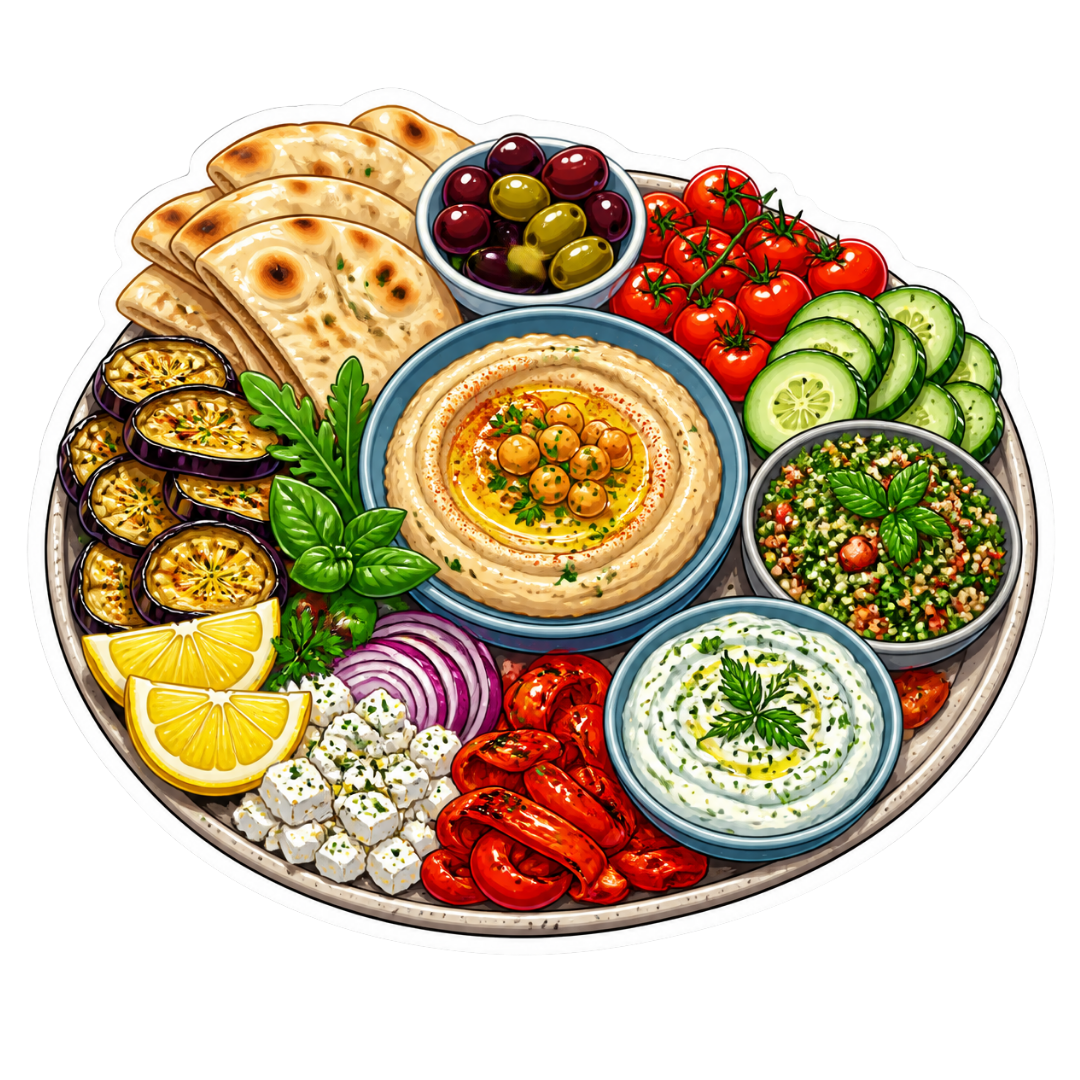
Wondering what the Mediterranean Diet consists of? We outlined it in a previous main feature, so here it is for your convenience:
The Mediterranean Diet: What Is It Good For? ← also covers which foods actually go into it, and which don’t 😎
To get us started today, we’ll quickly drop some links to a few of those Mediterranean Diet studies from the top:
- Definition of the Mediterranean Diet; a Literature Review
- Mediterranean Diet In Healthy Aging
- Cancer and Mediterranean Diet: A Review
- Impact of Mediterranean Diet on Chronic Non-Communicable Diseases and Longevity
- Mediterranean diet and cardiovascular disease: a systematic review and meta-analysis of observational studies
- Adherence to Mediterranean diet and health status: meta-analysis
The short version is: it’s good
So… What’s this about a problem?
Who’s eating it?
Fewer people, that’s who. At least, percentagewise, because of course the global population has increased considerably in past 60 years or so that the Mediterranean diet has been a defined thing that gets examined for health science.
Researchers (Dr. Izamara de Oliveira et al.) recently did a big research review, and found (all claims backed by citations in the research review in question; we’ll just link you to that once rather than the 116 papers that it cites in turn):
- One of the main reasons that the percentage of people eating the Mediterranean diet has declined, is due to cost and accessibility, whereby around 3 billion people cannot afford a healthy diet.
- These environmental factors matter a a lot; in one of the studies cited, the participants’ workplace providing Mediterranean-style canteen lunches for 12 months increased diet adherence scores from 4.8 to 7.4 and reduced the prevalence of metabolic syndrome from 24% to 15.6%.
- Notably, lower adherence to the Mediterranean diet is associated with smoking, high stress, urban living, low physical activity, and lower income, while traditional Mediterranean living also includes communal meals and everyday movement.
Dr. de Oliviera and her team also conclude that sometimes, modern problems require modern solutions, for example that ready-to-eat foods can be formulated with improved nutritional profiles, acceptable taste, and shelf life, which means they can incorporate Mediterranean ingredients to provide fiber, unsaturated fats, and polyphenols.
Further, they posit, tech such as supercritical fluid and ultrasound-assisted extraction can recover bioactive compounds from agricultural byproducts, including olive leaves, date seeds, almond shells, and blueberry pomace, for potential use in functional foods.
All of which we love to see! And indeed talked about some of them in our article: Mediterranean Diet… In A Pill?
To read this research review in full, see: The Mediterranean Diet vs. 21st Century Lifestyle: A Review
Want to learn more?
You have options:
Want to make it even better? See: Better Than The Mediterranean?
Want to expand your culinary repertoire? See: More Mediterranean – by American’s Test Kitchen
Enjoy!
Don’t Forget…
Did you arrive here from our newsletter? Don’t forget to return to the email to continue learning!

Learn to Age Gracefully
Join the 98k+ American women taking control of their health & aging with our 100% free (and fun!) daily emails: